
This framework is developed by a team of former McKinsey and Big 4 consultants. The presentation follows the headline-body-bumper slide format used by global consulting firms.
Explore a 6-step framework for Digital Transformation, crafted by ex-McKinsey and Big 4 consultants. Master the 4 Business Ecosystems to achieve Digital Leadership. Path to Digital Leadership is a 26-slide PPT PowerPoint presentation template (PPT) available for immediate download upon purchase.
We are living in the Digital Age. For organizations to remain competitive, they must develop and execute robust Digital Transformation Strategies.
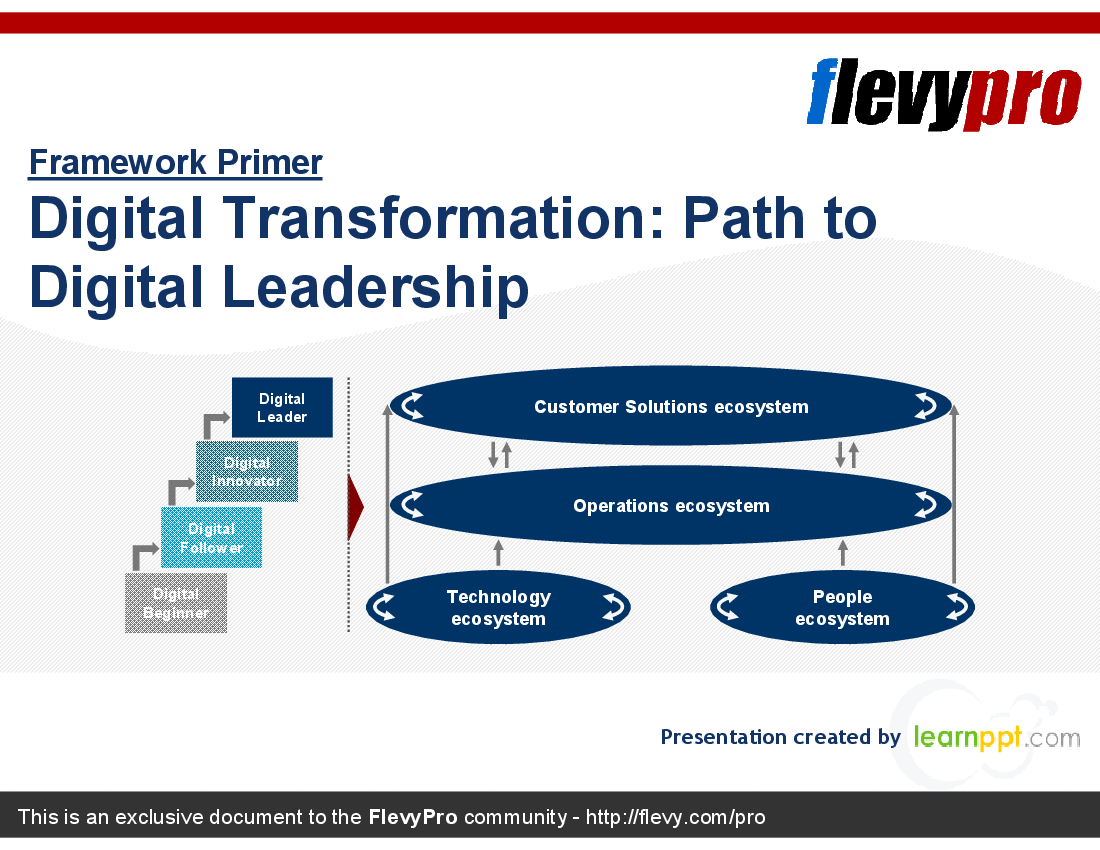
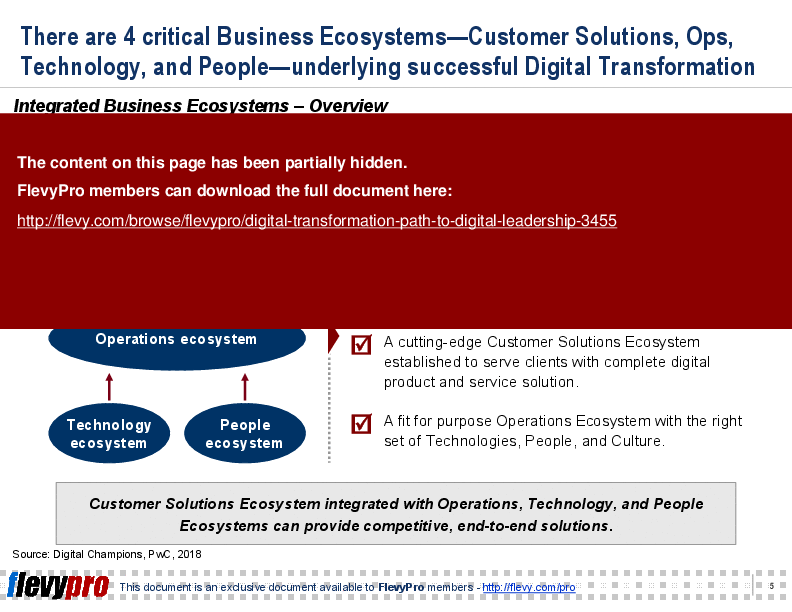
Organizations that have excelled in Digital Transformation, known as Digital Leaders, distinguish themselves through their mastery of the 4 critical Business Ecosystems:
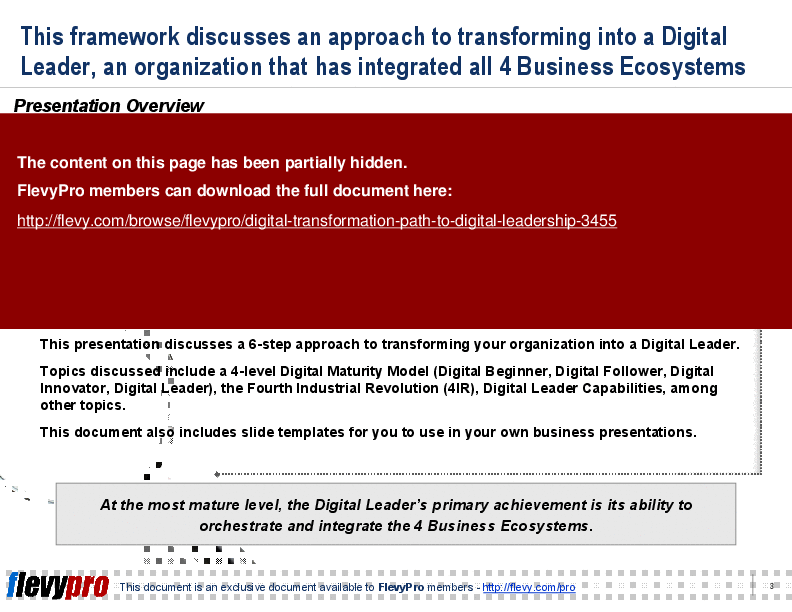
This presentation discusses a 6-step approach to transforming your organization into a Digital Leader.
Topics discussed include a 4-level Digital Maturity Model (Digital Beginner, Digital Follower, Digital Innovator, Digital Leader), the Fourth Industrial Revolution (4IR), Digital Leader Capabilities, among other topics.
This document also includes slide templates for you to use in your own business presentations.
This comprehensive guide offers a deep dive into the integration of the four critical Business Ecosystems—Customer Solutions, Operations, Technology, and People. It provides actionable insights into creating a cutting-edge Customer Solutions Ecosystem that serves clients with complete digital products and services. The PPT also emphasizes the importance of a fit-for-purpose Operations Ecosystem equipped with the right technologies, people, and culture.
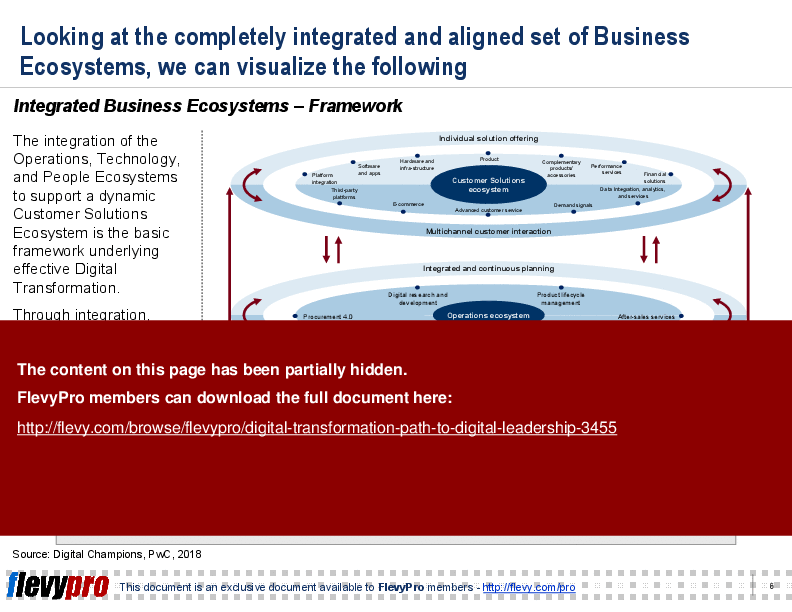
The framework outlined in this presentation is designed to help organizations visualize and implement a fully integrated and aligned set of Business Ecosystems. This integration is fundamental for supporting a dynamic Customer Solutions Ecosystem, which is the cornerstone of effective Digital Transformation. By leveraging these interconnected ecosystems, businesses can achieve seamless and continuous planning, advanced customer service, and competitive product offerings.
For organizations aiming to reach the pinnacle of Digital Maturity, this document is an invaluable resource. It not only discusses the theoretical aspects of Digital Transformation, but also provides practical templates and step-by-step approaches to becoming a Digital Leader. The iterative approach to Digital Transformation ensures that companies can adapt and evolve their strategies to stay ahead in the Fourth Industrial Revolution (4IR).
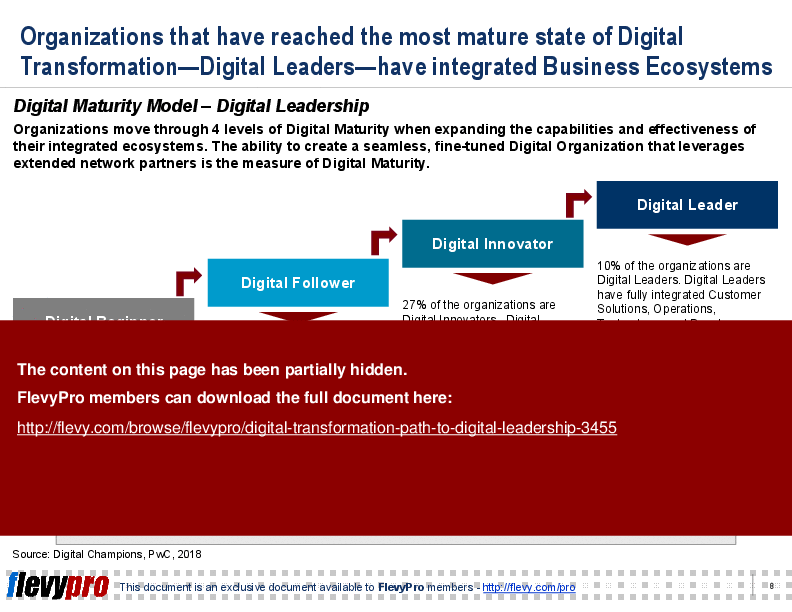
This PPT slide template evaluates digital maturity among companies regarding Fourth Industrial Revolution (4IR) readiness. A 2018 PwC survey reveals only 18% of companies have achieved advanced digital maturity, indicating significant room for improvement. Over one-third of companies have integrated data analytics into specific functions, driving operational efficiency and decision-making. Additionally, 14% have established dedicated data analysis departments, reflecting a growing recognition of data-driven strategies. Key challenges include a lack of workforce skills and ad hoc data governance, which hinder effective data utilization. "First Movers," or early adopters of digital transformation, are more likely to embed data analytics, gaining a strategic edge in performance and adaptability. Addressing these challenges is essential for realizing the potential of data analytics capabilities.
Digital Leaders in digital transformation view digitization as a comprehensive strategy that integrates multiple ecosystem layers. They create an organizational environment that maximizes opportunities from digitization, fostering a culture receptive to change and leveraging digital advancements for strategic benefit. Digital Leaders engage with internal and external partners to develop the 4 ecosystems, indicating a collaborative approach to innovation and growth. Mastery of integration and orchestration is critical, as they align various components of their organization and ecosystem towards common objectives. While not all Digital Leaders excel in every ecosystem, they can enhance their capabilities across all layers, providing valuable insights for organizations navigating digital transformation.
This PPT slide template outlines essential steps for Digital Leaders navigating Digital Transformation. The first step is conducting an internal ecosystem assessment to create transparency about the company's current position, forming the foundation for transformative efforts. This assessment identifies existing shortcomings and growth opportunities influenced by technological advancements and shifts in user behavior. The second step involves defining an ecosystem vision and value proposition, aligning with organizational aspirations and guiding strategic decision-making on product and service positioning. A clear ecosystem vision is crucial for the Digital Transformation journey, emphasizing the iterative nature of the process and the necessity of a well-defined vision for effective management of digital ecosystems.
This PPT slide template evaluates digital maturity among companies regarding Fourth Industrial Revolution (4IR) readiness. A 2018 PwC survey reveals only 18% of companies have achieved advanced digital maturity, indicating significant room for improvement. Over one-third of companies have integrated data analytics into specific functions, driving operational efficiency and decision-making. Additionally, 14% have established dedicated data analysis departments, reflecting a growing recognition of data-driven strategies. Key challenges include a lack of workforce skills and ad hoc data governance, which hinder effective data utilization. "First Movers," or early adopters of digital transformation, are more likely to embed data analytics, gaining a strategic edge in performance and adaptability. Addressing these challenges is essential for realizing the potential of data analytics capabilities.
Digital Leaders in digital transformation view digitization as a comprehensive strategy that integrates multiple ecosystem layers. They create an organizational environment that maximizes opportunities from digitization, fostering a culture receptive to change and leveraging digital advancements for strategic benefit. Digital Leaders engage with internal and external partners to develop the 4 ecosystems, indicating a collaborative approach to innovation and growth. Mastery of integration and orchestration is critical, as they align various components of their organization and ecosystem towards common objectives. While not all Digital Leaders excel in every ecosystem, they can enhance their capabilities across all layers, providing valuable insights for organizations navigating digital transformation.
This PPT slide template outlines essential steps for Digital Leaders navigating Digital Transformation. The first step is conducting an internal ecosystem assessment to create transparency about the company's current position, forming the foundation for transformative efforts. This assessment identifies existing shortcomings and growth opportunities influenced by technological advancements and shifts in user behavior. The second step involves defining an ecosystem vision and value proposition, aligning with organizational aspirations and guiding strategic decision-making on product and service positioning. A clear ecosystem vision is crucial for the Digital Transformation journey, emphasizing the iterative nature of the process and the necessity of a well-defined vision for effective management of digital ecosystems.
Source: Best Practices in Leadership, Digital Transformation, Maturity Model, Digital Leadership PowerPoint Slides: Digital Transformation: Path to Digital Leadership PowerPoint (PPT) Presentation Slide Deck, LearnPPT Consulting
This framework is developed by a team of former McKinsey and Big 4 consultants. The presentation follows the headline-body-bumper slide format used by global consulting firms.
For $10.00 more, you can download this document plus 2 more FlevyPro documents. That's just $13 each.
ABOUT FLEVYPRO
This document is part of the FlevyPro Library, a curated knowledge base of documents for our FlevyPro subscribers.

FlevyPro is a subscription service for on-demand business frameworks and analysis tools. FlevyPro subscribers receive access to an exclusive library of curated business documents—business framework primers, presentation templates, Lean Six Sigma tools, and more—among other exclusive benefits.
The average daily rate of a McKinsey consultant is $6,625 (not including expenses). The average price of a Flevy document is $65.
Trusted by over 10,000+ Client Organizations
Since 2012, we have provided business templates to over 10,000 businesses and organizations of all sizes, from startups and small businesses to the Fortune 100, in over 130 countries.
"Flevy.com has proven to be an invaluable resource library to our Independent Management Consultancy, supporting and enabling us to better serve our enterprise clients.
The value derived from our [FlevyPro] subscription in terms of the business it has helped to gain far exceeds the investment made, making a subscription a no-brainer for any growing consultancy – or in-house strategy team."
– Dean Carlton, Chief Transformation Officer, Global Village Transformations Pty Ltd.
"I am extremely grateful for the proactiveness and eagerness to help and I would gladly recommend the Flevy team if you are looking for data and toolkits to help you work through business solutions."
– Trevor Booth, Partner, Fast Forward Consulting
"As an Independent Management Consultant, I find Flevy to add great value as a source of best practices, templates and information on new trends. Flevy has matured and the quality and quantity of the library is excellent. Lastly the price charged is reasonable, creating a win-win value for
the customer, Flevy and the various authors. This is truly a service that benefits the consulting industry and associated clients. Thanks for providing this service.
"
– Jim Schoen, Principal at FRC Group
"FlevyPro provides business frameworks from many of the global giants in management consulting that allow you to provide best in class solutions for your clients."
– David Harris, Managing Director at Futures Strategy
"As a niche strategic consulting firm, Flevy and FlevyPro frameworks and documents are an on-going reference to help us structure our findings and recommendations to our clients as well as improve their clarity, strength, and visual power. For us, it is an invaluable resource to increase our impact and value."
– David Coloma, Consulting Area Manager at Cynertia Consulting
"The wide selection of frameworks is very useful to me as an independent consultant. In fact, it rivals what I had at my disposal at Big 4 Consulting firms in terms of efficacy and organization."
– Julia T., Consulting Firm Owner (Former Manager at Deloitte and Capgemini)
"My FlevyPro subscription provides me with the most popular frameworks and decks in demand in today’s market. They not only augment my existing consulting and coaching offerings and delivery, but also keep me abreast of the latest trends, inspire new products and service offerings for my practice, and educate me
in a fraction of the time and money of other solutions. I strongly recommend FlevyPro to any consultant serious about success.
"
– Bill Branson, Founder at Strategic Business Architects
"I have used FlevyPro for several business applications. It is a great complement to working with expensive consultants. The quality and effectiveness of the tools are of the highest standards."
– Moritz Bernhoerster, Global Sourcing Director at Fortune 500
Download our free compilation of 50+ slides and templates on Organizational Design, Change Management, and Corporate Culture. Methodologies include ADKAR, Burke-Litwin Change Model, McKinsey 7-S, Competing Values Framework, etc.