
Critical Thinking for Problem Solving   128-slide PPT PowerPoint presentation slide deck (PPTX)
$89.00

Critical Thinking for Problem Solving (128-slide PPT PowerPoint presentation slide deck (PPTX)) Preview Image
Log in to unlock full preview.
Critical Thinking for Problem Solving (128-slide PPT PowerPoint presentation slide deck (PPTX)) Preview Image
Arrow   Click main image to view in full screen.

Critical Thinking for Problem Solving (PowerPoint PPTX Slide Deck)

PowerPoint (PPTX) + Word (DOCX) 128 Slides

$89.00
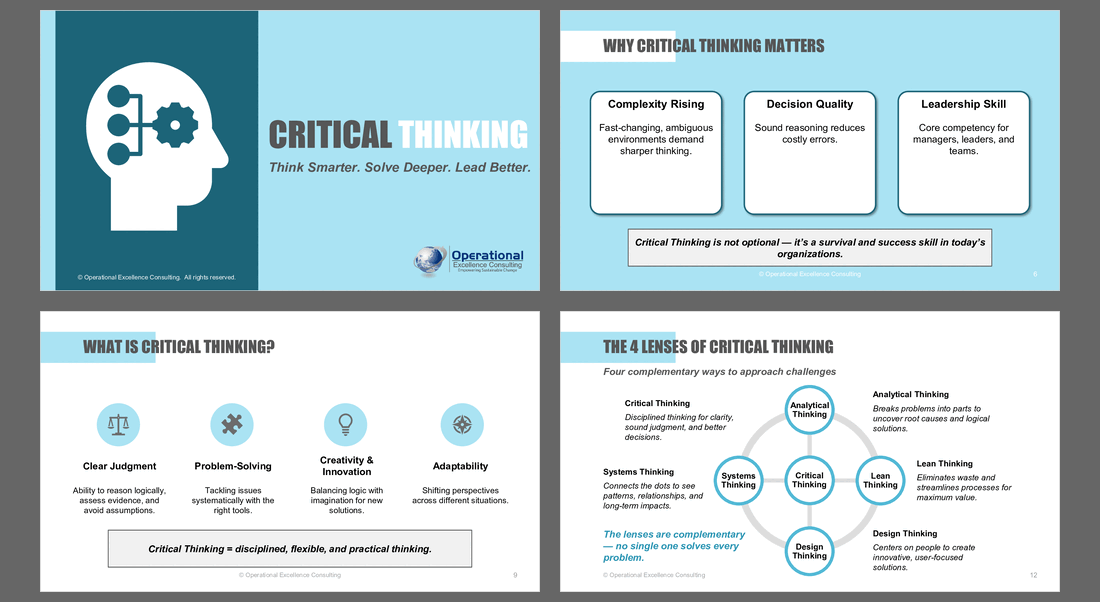
Developed by a seasoned Management Consultant (ex-Microsoft and IBM), this slide deck integrates four powerful lenses--Analytical, Lean, Design, and Systems Thinking for smarter problem-solving and sustainable impact.
Add to Cart


Immediate download
Fully editable PowerPoint
Free lifetime updates

BENEFITS OF THIS POWERPOINT DOCUMENT

  1. Innovative & Unique: The only framework combining 4 complementary thinking models into one holistic approach.
  2. Practical & Actionable: Packed with tools, diagrams, and real-world case studies.
  3. Professional & Ready-to-Use: Ideal for facilitators, trainers, and consultants.

PROBLEM SOLVING PPT DESCRIPTION

Editor Summary 128-slide PowerPoint training presentation (PPTX) with a supplemental Capstone Case-Challenges facilitator guide (DOCX) that frames critical thinking as an integrated capability across 4 lenses: Analytical, Lean, Design, and Systems Thinking. Read more

Most critical thinking programs focus narrowly on logic, arguments, or academic models. This professional, ready-to-use slide deck takes a broader, more practical approach.

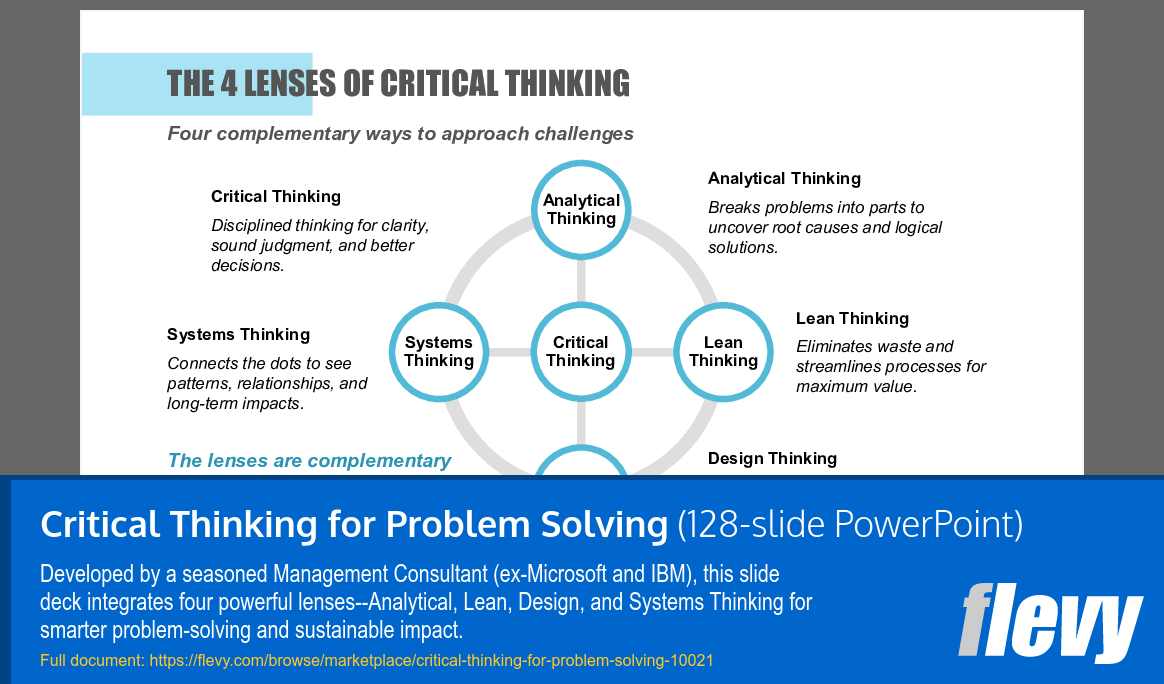
It introduces Critical Thinking as an integrated capability, built on four complementary lenses – Analytical, Lean, Design, and Systems Thinking. This unique framework enables leaders, managers, and teams to adapt their thinking flexibly to the situation at hand – whether diagnosing root causes, improving processes, innovating with empathy, or addressing systemic complexity.

Backed by real-world case studies, practical tools, and structured exercises, this deck equips facilitators, trainers, and consultants to deliver impactful workshops or build internal problem-solving capability.

||||||||||||||||||||||||||||||||||||||||||||||||||||||||||||||||||||||||||||||||||||||||||||||||||||||||||||||||||||||||||||||||||||||||||||||||||||||
This training package includes:
1. Critical Thinking PPT training presentation (PowerPoint format, 16:9 widescreen)
2. Capstone Case-Challenges facilitator guide (Word format)
||||||||||||||||||||||||||||||||||||||||||||||||||||||||||||||||||||||||||||||||||||||||||||||||||||||||||||||||||||||||||||||||||||||||||||||||||||||

LEARNING OBJECTIVES

1. Understand Critical Thinking as a holistic capability built on four complementary lenses.
2. Apply Analytical Thinking tools and structured problem-solving frameworks (PDCA, 5 Whys, Fishbone) to define and resolve issues logically.
3. Leverage Lean Thinking to identify waste, improve processes, and create value with efficiency.
4. Practice Design Thinking to empathize with stakeholders and generate innovative, human-centered solutions.
5. Use Systems Thinking to map interconnections, anticipate ripple effects, and address complex challenges.
6. Select and integrate the right lens (or combination of lenses) based on the situation for more effective decision-making.

CONTENTS

1. Foundations of Critical Thinking
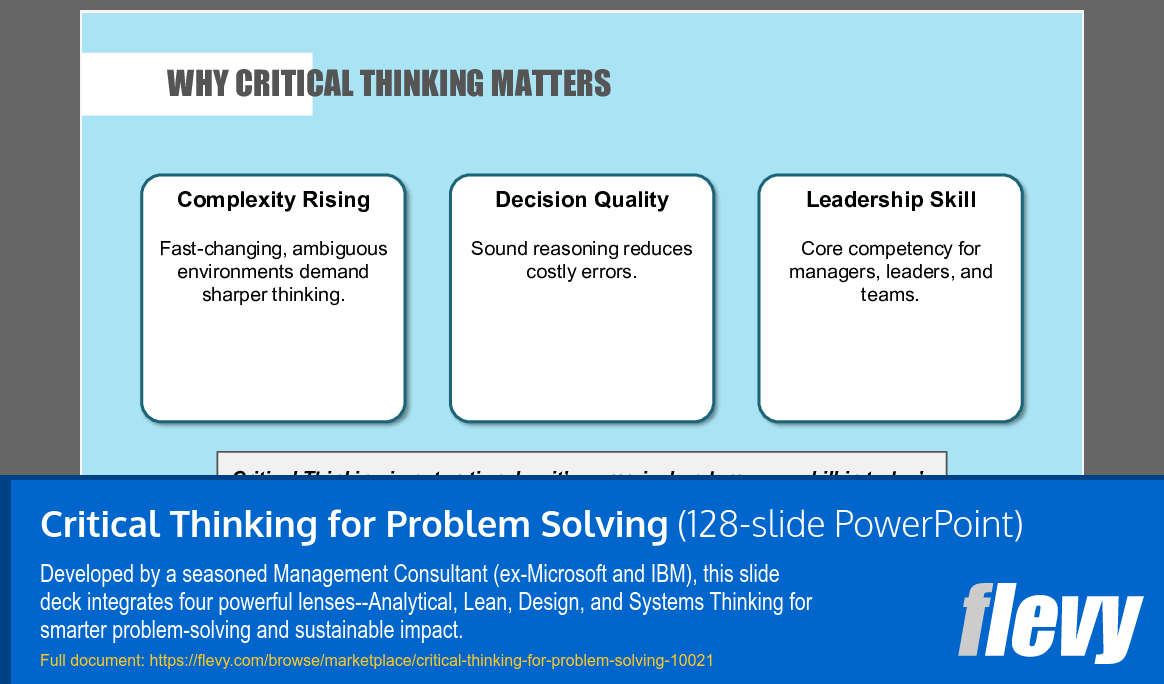
•  Why critical thinking matters
•  The 4 lenses model
•  Overcoming biases and mental traps
•  Lens selection flowchart

2. Analytical Thinking Lens
•  PDCA framework
•  Root cause tools (5 Whys, Fishbone, Pareto)
•  Data-based reasoning and visual mapping
•  Business case examples

3. Lean Thinking Lens
•  The 5 Lean Principles
•  Identifying and eliminating waste
•  Gemba walks, Kaizen, visual management
•  Lean successes and failures

4. Design Thinking Lens
•  The 5 phases of Design Thinking
•  Tools for empathy, ideation, prototyping
•  Innovation case studies (success & failure)
•  Barriers to adoption

5. Systems Thinking Lens
•  Principles: interconnections, feedback, leverage points
•  Iceberg Model and causal loop diagrams
•  Systems archetypes & applications
•  Real-world case studies

6. Integration & Application
•  The 4 lenses working together
•  Integration flowchart & matrix
•  Multi-lens business cases
•  Group activity: Capstone case-challenges

Got a question about the product? Email us at support@flevy.com or ask the author directly by using the "Ask the Author a Question" form. If you cannot view the preview above this document description, go here to view the large preview instead.

MARCUS OVERVIEW

This synopsis was written by Marcus [?] based on the analysis of the full 128-slide presentation.


Executive Summary
The "Critical Thinking for Problem Solving" presentation is a comprehensive training resource designed to enhance decision-making capabilities within organizations. Developed by a seasoned management consultant with experience at Microsoft and IBM, this slide deck integrates 4 essential lenses—Analytical, Lean, Design, and Systems Thinking. It equips leaders and teams with the tools to tackle complex challenges, improve processes, and foster innovative solutions. Participants will learn to apply structured frameworks and methodologies, such as PDCA and Fishbone diagrams, to drive smarter problem-solving and sustainable impact.

Who This Is For and When to Use
•  Corporate executives seeking to enhance organizational decision-making and problem-solving skills
•  Integration leaders responsible for implementing effective strategies across teams
•  Consultants aiming to improve client outcomes through structured thinking
•  Training and development teams focused on building critical thinking capabilities

Best-fit moments to use this deck:
•  During leadership training sessions to foster a culture of critical thinking
•  When addressing complex organizational challenges requiring multi-dimensional solutions
•  In workshops aimed at improving team collaboration and innovative problem-solving

Learning Objectives
•  Understand critical thinking as a holistic capability built on 4 complementary lenses
•  Apply Analytical Thinking tools and problem-solving frameworks to define and resolve issues logically
•  Leverage Lean Thinking to identify waste, improve processes, and create value with efficiency
•  Practice Design Thinking to empathize with stakeholders and generate innovative, human-centered solutions
•  Use Systems Thinking to map interconnections, anticipate ripple effects, and address complex challenges
•  Select and integrate the right lens based on the situation for more effective decision-making

Table of Contents
•  Foundations of Critical Thinking (page 1)
•  Analytical Thinking & Problem Solving (page 2)
•  Lean Thinking (page 3)
•  Design Thinking (page 4)
•  Systems Thinking (page 5)
•  Integrating the Lenses (page 6)

Primary Topics Covered
•  Foundations of Critical Thinking - Introduces the concept of critical thinking as a holistic capability essential for effective decision-making.
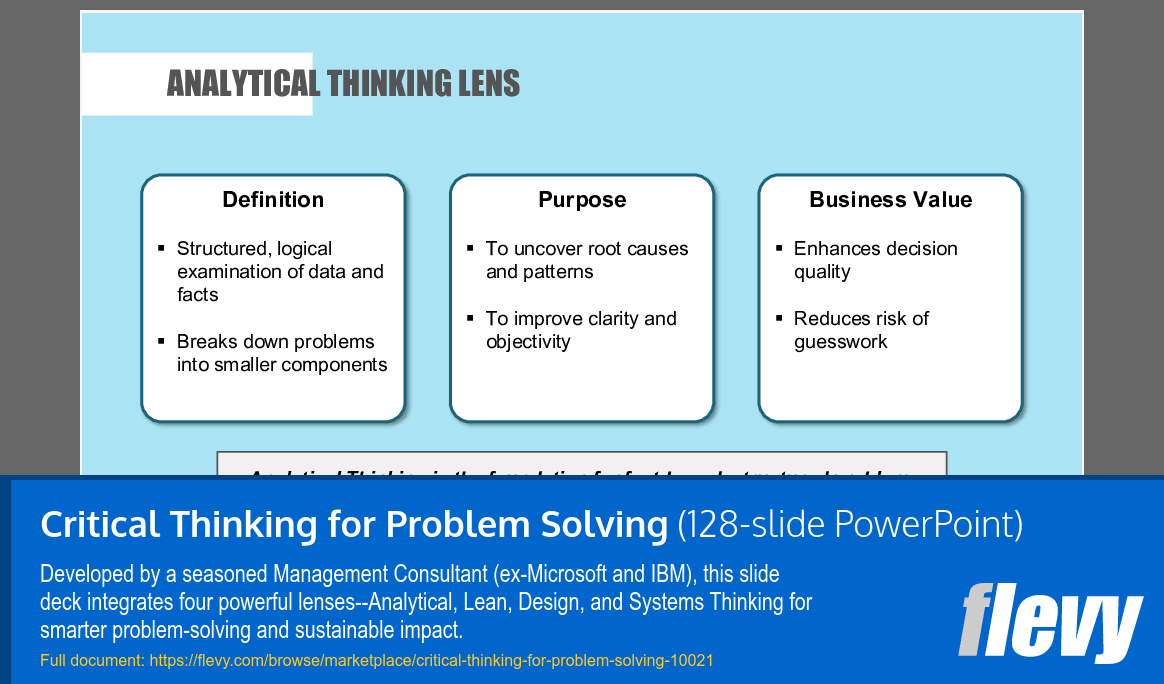
•  Analytical Thinking - Focuses on breaking down problems to uncover root causes and logical solutions using structured frameworks.
•  Lean Thinking - Emphasizes eliminating waste and streamlining processes to maximize value and efficiency.
•  Design Thinking - Centers on understanding user needs to create innovative, human-centered solutions through iterative processes.
•  Systems Thinking - Encourages viewing challenges holistically to understand interconnections and long-term impacts.
•  Integrating the Lenses - Discusses the importance of combining different lenses for a comprehensive approach to problem-solving.

Deliverables, Templates, and Tools
•  PDCA cycle template for structured problem-solving
•  5 Whys analysis worksheet for root cause identification
•  Fishbone diagram template for categorizing causes of problems
•  Causal loops template for visualizing feedback mechanisms
•  Stock and flow diagram template for understanding system dynamics
•  Empathy map template for user-centered insights

Slide Highlights
•  Overview of the 4 lenses of critical thinking and their interconnections
•  Case studies illustrating the impact of effective problem-solving
•  Visual tools like flowcharts and diagrams that simplify complex processes
•  Interactive activities designed to engage participants and reinforce learning

Potential Workshop Agenda
Critical Thinking Foundations Session (90 minutes)
•  Introduction to critical thinking and its importance in organizations
•  Overview of the 4 lenses and their applications

Analytical Thinking Workshop (60 minutes)
•  Hands-on practice with PDCA and 5 Whys frameworks
•  Group activity to analyze a real-world problem

Lean Thinking Session (60 minutes)
•  Discussion on the principles of Lean Thinking
•  Identify waste in a provided case study

Design Thinking Exercise (90 minutes)
•  Empathy mapping and ideation for user-centered solutions
•  Group presentations of innovative ideas

Systems Thinking Overview (60 minutes)
•  Introduction to systems thinking and its relevance
•  Mapping interconnections in a complex scenario

Customization Guidance
•  Tailor the presentation to reflect specific organizational challenges or case studies
•  Adjust terminology and examples to align with industry-specific language
•  Incorporate company metrics and goals into the frameworks for relevance

Secondary Topics Covered
•  Overcoming cognitive biases in decision-making
•  The importance of collaboration across functions
•  Strategies for fostering a culture of continuous improvement

Topic FAQ

What are the main lenses of critical thinking and how do they differ?

Critical thinking in this approach uses 4 complementary lenses: Analytical Thinking for breaking down problems and root-cause analysis; Lean Thinking for identifying waste and improving flow; Design Thinking for empathy-led ideation and prototyping; and Systems Thinking for mapping interconnections and feedback. The framework centers on these 4 lenses.

When should I use PDCA versus 5 Whys during a problem-solving session?

Use PDCA when you need an iterative cycle to test, implement, and refine process improvements; use 5 Whys when you need to drill into a single issue to surface an underlying cause quickly. Both tools are provided in Flevy's Critical Thinking for Problem Solving as PDCA and 5 Whys templates.

How can systems thinking help prevent unintended consequences when changing processes?

Systems thinking helps by mapping interconnections and feedback loops so changes in one area don’t create downstream problems; tools like causal loop diagrams, stock-and-flow models, and the Iceberg Model reveal leverage points and delays. Visualizing feedback reduces surprises using causal loop and stock-and-flow templates.

What should I look for when choosing a training deck to teach critical thinking in my organization?

Prioritize a deck that presents multiple lenses (analytical, lean, design, systems), includes practical templates for diagnosis and improvement, offers facilitator guidance and case studies, and adapts for in-person or virtual delivery. Useful deliverables include PDCA, Fishbone, empathy map, and a facilitator guide.

How much value do ready-made templates deliver compared with building training materials from scratch?

Ready-made templates accelerate workshop design, provide tested formats for root-cause and systems work, and help facilitators focus on application rather than creation; they also support consistency across sessions. Typical practical items provided include a training PPT and a Word capstone facilitator guide.

I need to run a post-merger workshop to improve cross-team problem-solving—what framework should I use?

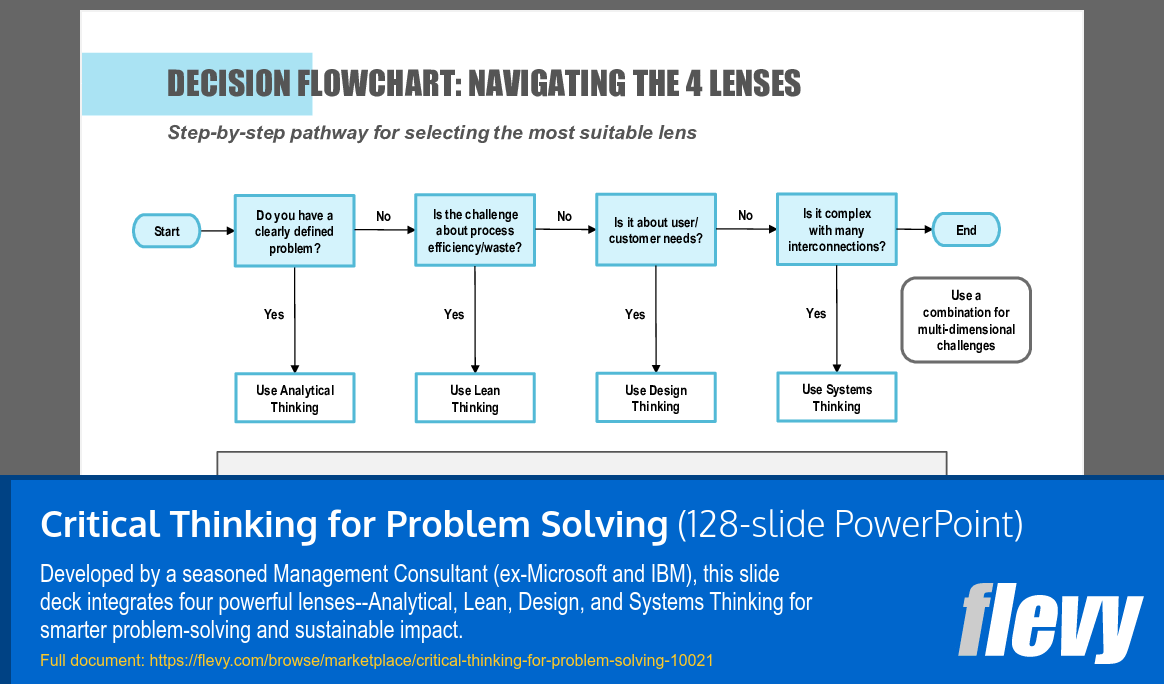
Use an integrated approach: Systems Thinking to map interfaces and feedback, Lean Thinking to remove waste in combined processes, Analytical Thinking for root-cause diagnosis, and Design Thinking to surface user pain points. Flevy's Critical Thinking for Problem Solving provides an integration flowchart and capstone case-challenges to structure such workshops.

How can I teach design thinking as part of a broader critical thinking program?

Embed Design Thinking within the four-lens curriculum by teaching the 5 phases (empathize, define, ideate, prototype, test), using empathy maps to surface stakeholder needs, and running rapid prototyping exercises that link back to analytical validation and systems impact. Include an empathy map template and the 5 design-thinking phases.

What should facilitator materials include for capstone case-challenges in a workshop?

Facilitator materials should include case narratives, step-by-step activity instructions, timing and group size guidance, slide decks for participant briefings, and debrief rubrics for assessing outcomes. The package should also supply a Capstone Case-Challenges facilitator guide in Word for running exercises.

Document FAQ
These are questions addressed within this presentation.

What are the 4 lenses of critical thinking?
The 4 lenses are Analytical Thinking, Lean Thinking, Design Thinking, and Systems Thinking. Each lens offers a unique perspective for tackling complex problems.

How can this presentation be customized for my organization?
The presentation can be tailored to include specific case studies, metrics, and terminology relevant to your industry and organizational goals.

What tools are included in this training?
The training includes templates for PDCA cycles, 5 Whys analysis, Fishbone diagrams, and more, designed to facilitate structured problem-solving.

How long is the training program?
The program consists of 6 modules, each designed to build upon the previous one, covering foundational concepts to advanced integration techniques.

Can this training be delivered remotely?
Yes, the presentation is designed to be adaptable for both in-person and virtual training sessions.

What outcomes can I expect from this training?
Participants will gain enhanced critical thinking skills, improved problem-solving capabilities, and a shared language for addressing organizational challenges.

Is there a follow-up after the training?
Yes, follow-up sessions can be arranged to reinforce learning and support the application of concepts in real-world scenarios.

How does critical thinking impact business performance?
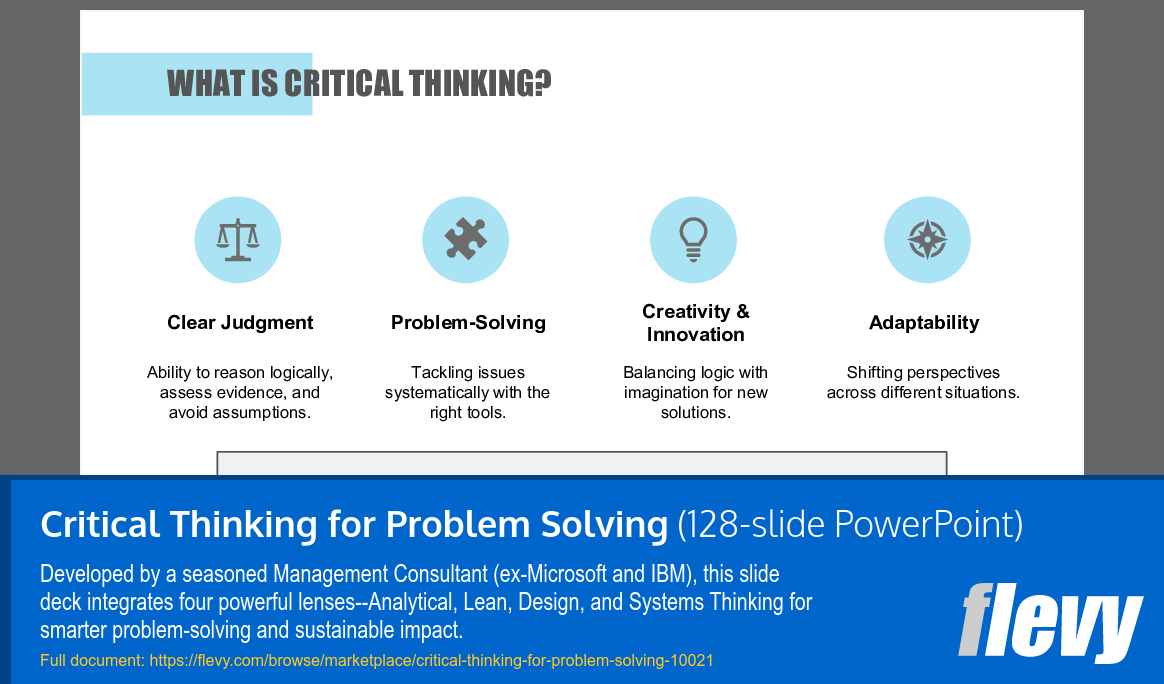
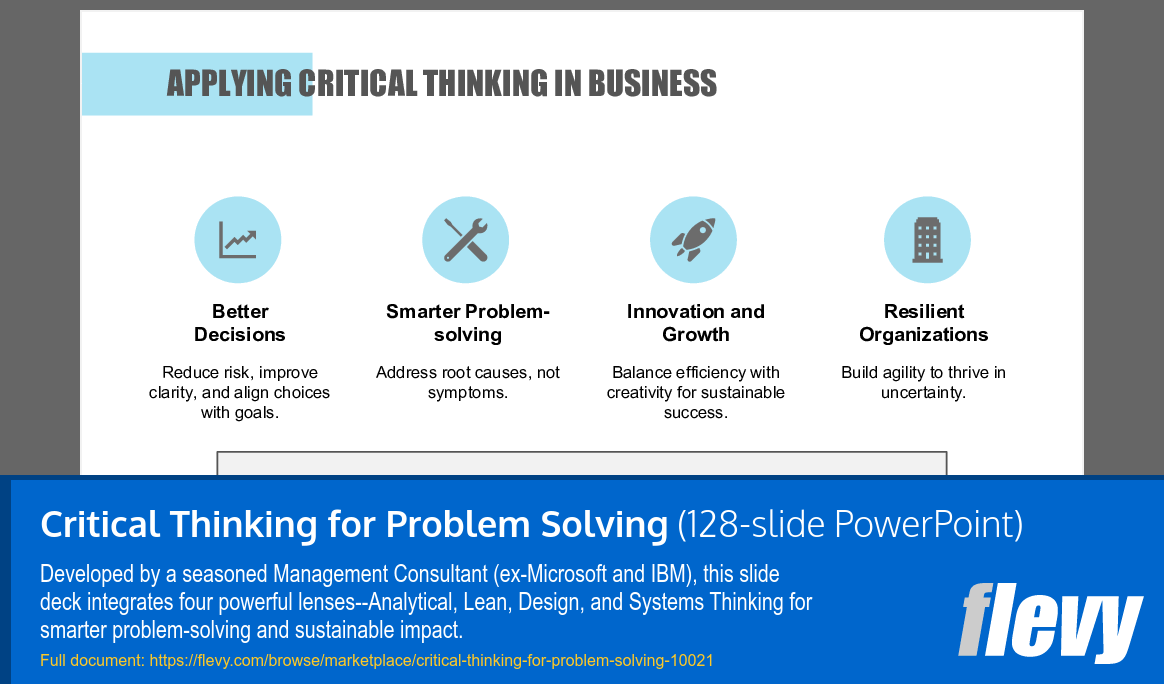
Critical thinking enhances decision quality, reduces costly errors, and fosters innovation, ultimately driving better business outcomes.

Glossary
•  Critical Thinking - Disciplined, flexible, and practical thinking that enhances judgment and decision-making.
•  Analytical Thinking - A structured approach to problem-solving that breaks issues into manageable parts.
•  Lean Thinking - A methodology focused on maximizing value by minimizing waste in processes.
•  Design Thinking - An iterative process that emphasizes empathy and user-centered solutions.
•  Systems Thinking - A holistic approach to understanding complex interconnections within systems.
•  PDCA - Plan-Do-Check-Act, a cyclical framework for continuous improvement.
•  5 Whys - A root cause analysis technique that involves asking "why" multiple times to identify underlying issues.
•  Fishbone Diagram - A visual tool for categorizing potential causes of a problem.
•  Causal Loop Diagram - A representation of feedback loops within a system that shows how variables influence one another.
•  Empathy Map - A tool used to visualize user needs and experiences.
•  Stock and Flow Diagram - A visual representation of how stocks (resources) change over time due to inflows and outflows.
•  Value Stream Mapping - A Lean tool used to analyze and optimize the flow of materials and information.
•  Kaizen - A Japanese term meaning "continuous improvement," often used in Lean methodologies.
•  Gemba Walk - A Lean practice of going to the place where work is done to observe and understand processes.
•  Feedback Loop - A system structure where outputs are circled back as inputs, influencing future behavior.
•  Holistic View - Understanding that systems are interconnected and that changes in one part affect the whole.
•  Bias - A tendency to favor one perspective or outcome over others, which can cloud judgment.
•  Interconnectedness - The principle that all parts of a system are linked and influence one another.
•  Siloed Thinking - A mindset where departments or teams operate in isolation, hindering collaboration and communication.
•  Continuous Improvement - Ongoing efforts to enhance products, services, or processes over time.

Source: Best Practices in Problem Solving PowerPoint Slides: Critical Thinking for Problem Solving PowerPoint (PPTX) Presentation Slide Deck, Operational Excellence Consulting


$89.00
Developed by a seasoned Management Consultant (ex-Microsoft and IBM), this slide deck integrates four powerful lenses--Analytical, Lean, Design, and Systems Thinking for smarter problem-solving and sustainable impact.
Add to Cart
  

ABOUT THE AUTHOR

Author image
Additional documents from author: 257
Terms of usage (for all documents from this author)

Operational Excellence Consulting, founded in 2009 by Allan Ung, draws from extensive experience at Microsoft, IBM, and Underwriters Laboratories (UL). We specialize in strategy deployment, customer experience design, and operational excellence, applying Design Thinking, Lean, and Systems Thinking to maximize customer value and minimize waste.

Our ... [read more]

Ask the Author a Question

You must be logged in to contact the author.

Click here to log in Click here register

Did you know?
The average daily rate of a McKinsey consultant is $6,625 (not including expenses). The average price of a Flevy document is $65.



Trusted by over 10,000+ Client Organizations
Since 2012, we have provided business templates to over 10,000 businesses and organizations of all sizes, from startups and small businesses to the Fortune 100, in over 130 countries.
AT&T GE Cisco Intel IBM Coke Dell Toyota HP Nike Samsung Microsoft Astrazeneca JP Morgan KPMG Walgreens Walmart 3M Kaiser Oracle SAP Google E&Y Volvo Bosch Merck Fedex Shell Amgen Eli Lilly Roche AIG Abbott Amazon PwC T-Mobile Broadcom Bayer Pearson Titleist ConEd Pfizer NTT Data Schwab


Read Customer Testimonials

 
"As a small business owner, the resource material available from FlevyPro has proven to be invaluable. The ability to search for material on demand based our project events and client requirements was great for me and proved very beneficial to my clients. Importantly, being able to easily edit and tailor "

– Michael Duff, Managing Director at Change Strategy (UK)
 
"As an Independent Management Consultant, I find Flevy to add great value as a source of best practices, templates and information on new trends. Flevy has matured and the quality and quantity of the library is excellent. Lastly the price charged is reasonable, creating a win-win value for "

– Jim Schoen, Principal at FRC Group
 
"Flevy.com has proven to be an invaluable resource library to our Independent Management Consultancy, supporting and enabling us to better serve our enterprise clients.

The value derived from our [FlevyPro] subscription in terms of the business it has helped to gain far exceeds the investment made, making a subscription a no-brainer for any growing consultancy – or in-house strategy team."

– Dean Carlton, Chief Transformation Officer, Global Village Transformations Pty Ltd.
 
"FlevyPro provides business frameworks from many of the global giants in management consulting that allow you to provide best in class solutions for your clients."

– David Harris, Managing Director at Futures Strategy
 
"The wide selection of frameworks is very useful to me as an independent consultant. In fact, it rivals what I had at my disposal at Big 4 Consulting firms in terms of efficacy and organization."

– Julia T., Consulting Firm Owner (Former Manager at Deloitte and Capgemini)
 
"I have used FlevyPro for several business applications. It is a great complement to working with expensive consultants. The quality and effectiveness of the tools are of the highest standards."

– Moritz Bernhoerster, Global Sourcing Director at Fortune 500
 
"I have used Flevy services for a number of years and have never, ever been disappointed. As a matter of fact, David and his team continue, time after time, to impress me with their willingness to assist and in the real sense of the word. I have concluded in fact "

– Roberto Pelliccia, Senior Executive in International Hospitality
 
"Flevy is now a part of my business routine. I visit Flevy at least 3 times each month.

Flevy has become my preferred learning source, because what it provides is practical, current, and useful in this era where the business world is being rewritten.

In today's environment where there are so "

– Omar Hernán Montes Parra, CEO at Quantum SFE


Customers Also Bought These Documents


Customers Also Like These Documents

Explore Templates on Related Management Topics


Your Recently Viewed Documents
Receive our FREE whitepaper on the Top 101 Consulting Frameworks

Download our 200+ page guide summarizing the Top 101 Management Consulting Frameworks. Each framework provides a structured approach to analyzing and solving a common business problem.