
 Click main image to view in full screen. Unlock all 12 preview images:
Business Continuity Management System – PowerPoint PPTX Template
PowerPoint (PPTX) 60 Slides


BCP PPT TEMPLATE DESCRIPTION
Business Continuity Management System (BCMS) Implementation Toolkit (ISO 22301)
Mastering Resilience: Your ISO 22301 BCMS Implementation Toolkit
Chapter 1: The Unseen Threat – Why Business Continuity Matters
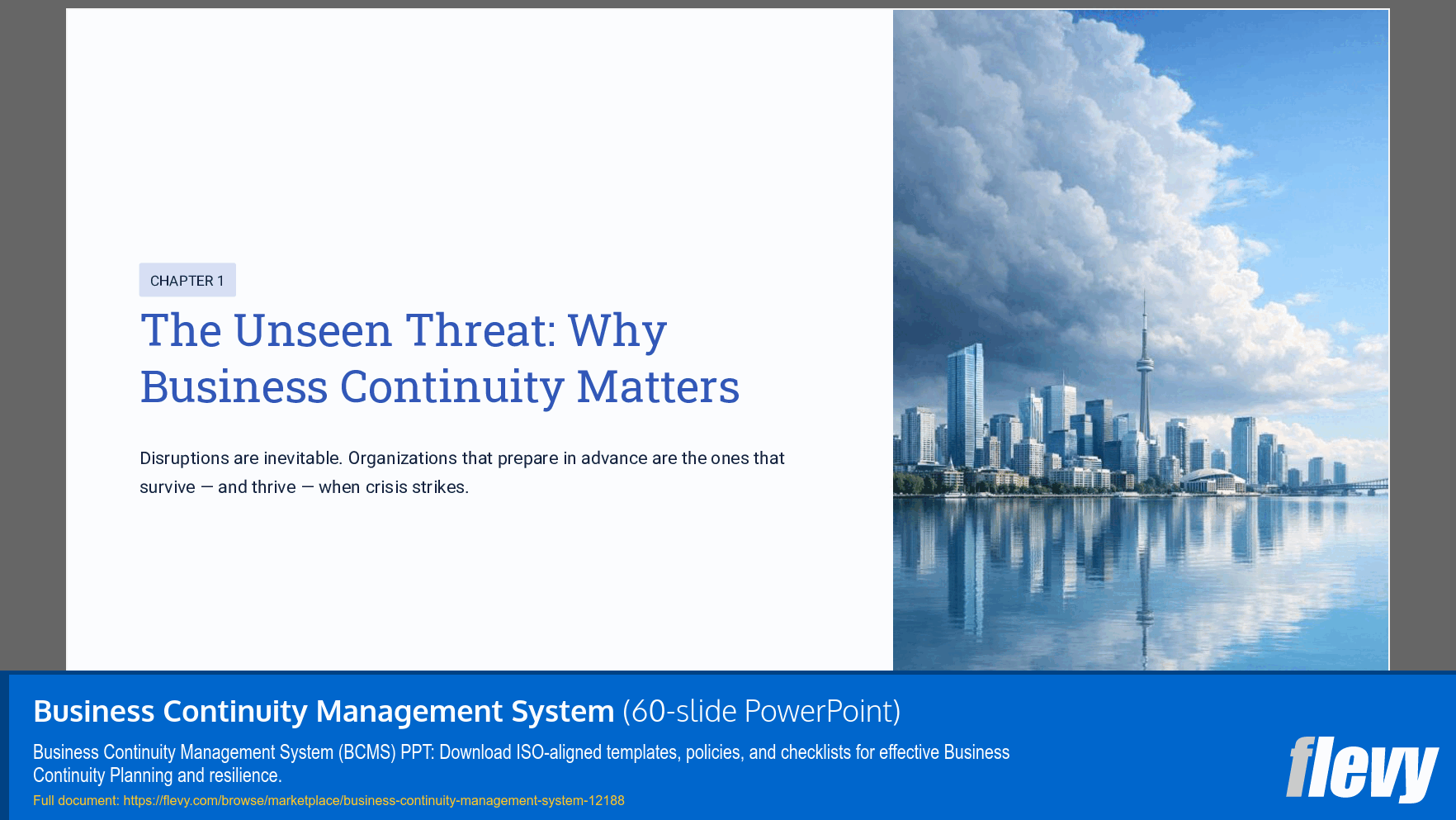
The Unpredictable World of Disruptions
• From cyberattacks to natural disasters, the modern business landscape is fraught with risk.
• Example: The 2021 global semiconductor shortage crippled automotive production, costing the industry an estimated $210 billion.
• Example: The SolarWinds cyberattack in 2020 compromised over 18,000 organizations, including U.S. government agencies.
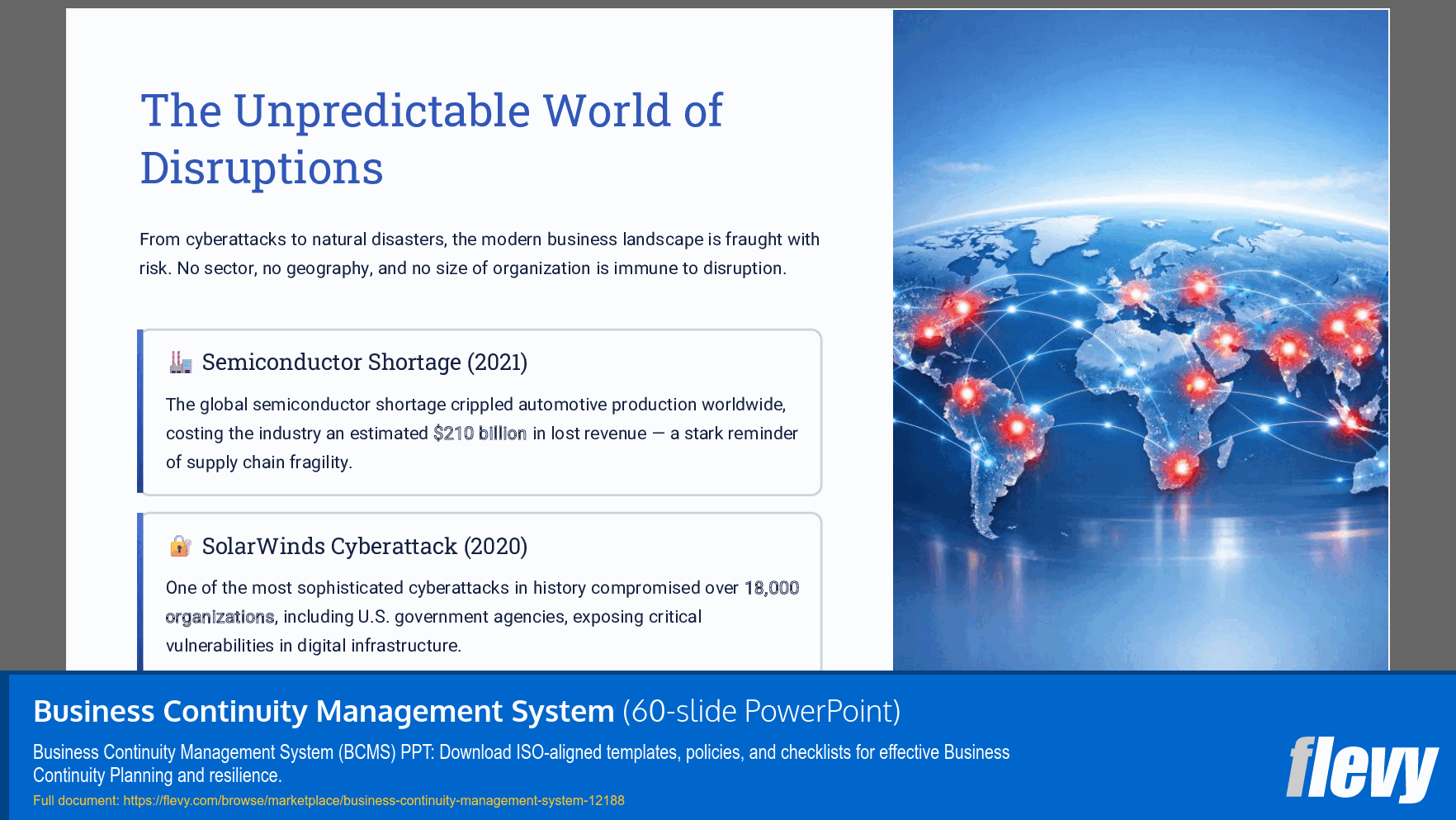
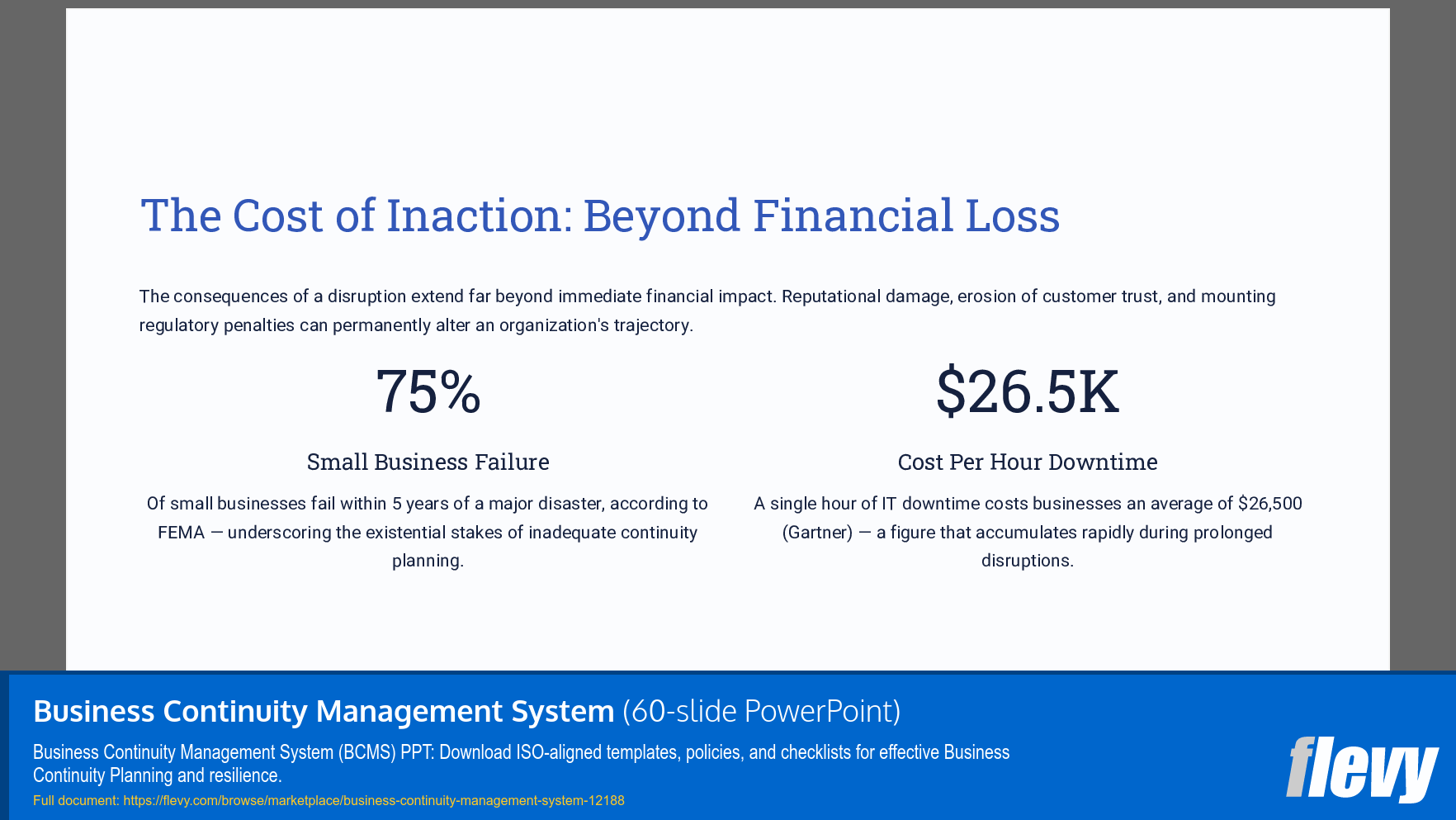
The Cost of Inaction: Beyond Financial Loss
• Reputational damage, loss of customer trust, and regulatory penalties.
• Statistic: 75% of small businesses fail within 5 years of a major disaster. (Source: FEMA)
• Statistic: A single hour of IT downtime can cost businesses an average of $26,500. (Source: Gartner)
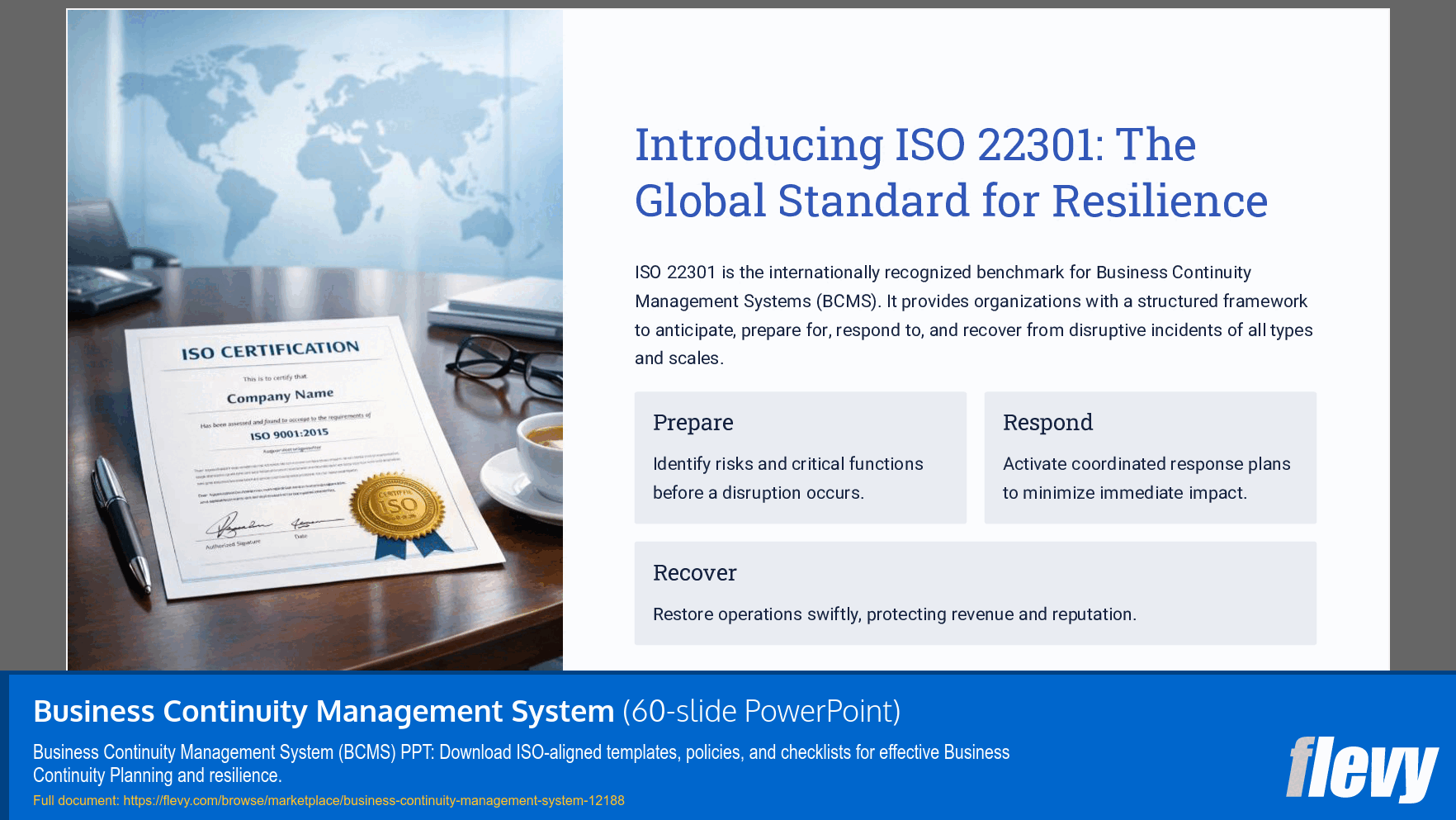
Introducing ISO 22301: The Global Standard for Resilience
• The international benchmark for Business Continuity Management Systems (BCMS).
• Provides a framework to prepare for, respond to, and recover from disruptions.
• Ensures operational resilience and minimizes downtime.
Chapter 2: Your Blueprint for Resilience – The BCMS Toolkit
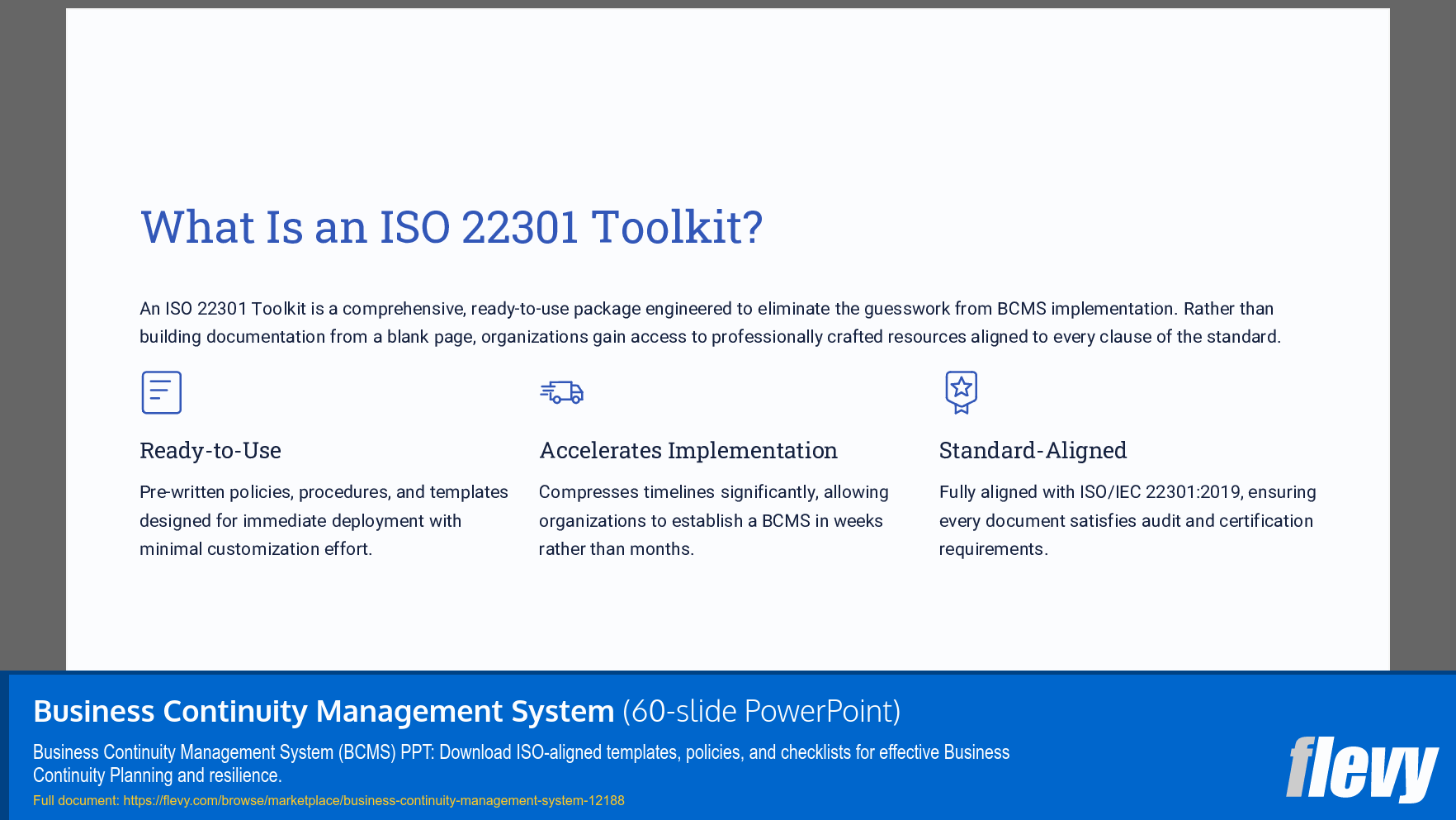
What is an ISO 22301 Toolkit?
• A comprehensive, ready-to-use package of policies, procedures, templates, and supporting tools.
• Designed to accelerate the establishment, implementation, and maintenance of an effective BCMS.
• Aligned with the ISO/IEC 22301:2019 standard.
Key Components of a BCMS Toolkit
• Policies & Procedures: Documented guidelines for BCMS operations.
• Templates: Pre-formatted documents for analysis, planning, and reporting.
• Checklists: Tools to ensure all requirements are met and tasks are completed.
• Supporting Tools: Guidance documents, project plans, and presentation materials.
[image] A visual representation of interconnected documents and processes forming a robust shield, text: "Your Shield Against Disruption"
Trusted Providers: Your Partners in Compliance
• CertiKit: Offers 70+ documents, unlimited email support, lifetime updates, and expert review. Priced at £395.00 (Excl. VAT).
• : Provides 139 professionally developed files across 15 folders, available in Word and Excel formats for $256.00.
• Compliance Toolkits: Offers a comprehensive documentation toolkit for ISO 22301.
• : Features a dedicated ISO 22301 Toolkit with various supporting products.
Chapter 3: Building Your BCMS – The Implementation Journey
Phase 1: Understanding Your Context
• Clause 4: Context of the Organization: Identifying internal and external issues, interested parties, and the scope of the BCMS.
• Toolkit Support: Includes documents like "BCMS Overview," "Project Initiation Document," and "Gap Assessment Tool."
Phase 2: Leadership and Commitment
• Clause 5: Leadership: Demonstrating commitment from top management, establishing the BCMS policy, and assigning roles and responsibilities.
• Toolkit Support: Provides "BCMS Policy," "Roles and Responsibilities Matrix," and "Management Review Meeting Agenda."
Phase 3: Planning for Continuity
• Clause 6: Planning: Conducting Business Impact Analysis (BIA) and Risk Assessment (RA).
• Toolkit Support: Offers "Business Impact Analysis Template," "Risk Assessment Methodology," and "Continuity Strategy Development Guide."
[image] A flowchart illustrating the steps of a Business Impact Analysis, from identifying critical activities to determining recovery time objectives.
Phase 4: Operationalizing Continuity
• Clause 7: Support: Ensuring necessary resources, competence, awareness, communication, and documented information.
• Toolkit Support: Includes "Training and Awareness Program," "Communication Plan," and "Document Control Procedure."
Phase 5: Exercising and Testing
• Clause 8: Operation: Implementing and operating procedures, conducting exercises and tests, and managing incidents.
• Toolkit Support: Provides "Exercise and Testing Plan," "Incident Response Procedures," and "Crisis Management Plan."
Phase 6: Performance Evaluation
• Clause 9: Performance Evaluation: Monitoring, measurement, analysis, and evaluation of the BCMS.
• Toolkit Support: Offers "BCMS Performance Monitoring Template," "Internal Audit Procedure," and "Corrective Action Report."
Phase 7: Continual Improvement
• Clause 10: Improvement: Addressing nonconformities, taking corrective actions, and ensuring continual improvement of the BCMS.
• Toolkit Support: Includes "Continual Improvement Procedure" and "Management Review Meeting Minutes."
[image] A circular diagram representing the PDCA (Plan-Do-Check-Act) cycle, emphasizing continuous improvement.
Chapter 4: The Power of the Toolkit – Accelerating Your Success
Faster Implementation, Reduced Costs
• Benefit: Pre-written documents save significant time and resources compared to drafting from scratch.
• Example: A toolkit can reduce implementation time by up to 50%. (Source: Industry estimates)
Enhanced Consistency and Control
• Benefit: Standardized templates ensure a consistent approach across the organization.
• Benefit: Improved documentation control for easier audits and updates.
Strengthened Resilience
• Benefit: A well-structured BCMS, guided by the toolkit, leads to more effective response and recovery.
• Real-world Impact: Organizations with robust BCMS are better equipped to withstand and recover from disruptions, protecting revenue and reputation.
Demonstrating Conformity
• Benefit: Toolkits are designed to meet ISO 22301:2019 requirements, simplifying the path to certification.
• Benefit: Provides clear evidence for auditors, regulators, customers, and stakeholders.
[image] A graphic showing a business thriving amidst a storm, with the ISO 22301 logo as a protective shield.
Chapter 5: Beyond Certification – Realizing the Benefits
Increased Stakeholder Confidence
• Benefit: Certification signals a commitment to resilience and reliability.
• Impact: Attracts and retains clients, partners, and investors who value business continuity.
Competitive Advantage
• Benefit: Differentiates your organization in the marketplace.
• Impact: Ability to continue operations when competitors falter during a crisis.
Improved Organizational Culture
• Benefit: Fosters a culture of preparedness and risk awareness throughout the organization.
• Impact: Empowered employees who understand their role in maintaining business continuity.
[image] A diverse team collaborating around a table, looking confident and prepared.
Chapter 6: Making the Right Choice – Selecting Your Toolkit
Key Considerations When Choosing a Toolkit
• Comprehensiveness: Does it cover all clauses of ISO 22301?
• Customizability: Can documents be easily adapted to your organization's specific needs?
• Support: What level of expert support is provided (email, phone, reviews)?
• Updates: Are lifetime updates included?
[image] A checklist graphic with icons representing comprehensiveness, customization, support, and format.
Understanding the Investment
• Value Proposition: The investment in a toolkit is significantly less than the cost of a major disruption or the time spent developing documentation from scratch.
Demo and Samples: A Sneak Peek
• Many providers offer free demos or downloadable samples.
• Action: Explore these resources to assess the quality and suitability of the toolkit. (e.g., CertiKit, )
Chapter 7: Common Pitfalls and How to Avoid Them
Pitfall 1: Treating BCMS as a "Check-the-Box" Exercise
• Problem: Implementing BCMS solely for certification without genuine commitment.
• Solution: Ensure leadership buy-in and integrate BCMS into the organizational culture.
Pitfall 2: Insufficient Business Impact Analysis (BIA)
• Problem: Failing to accurately identify critical business functions and their recovery needs.
• Solution: Dedicate sufficient time and resources to the BIA, involving key stakeholders.
[image] A puzzle piece missing from a larger puzzle, symbolizing an incomplete BCMS.
Pitfall 3: Inadequate Testing and Exercising
• Problem: Plans are created but never tested, leaving their effectiveness unproven.
• Solution: Regularly conduct realistic exercises and tests, and update plans based on lessons learned.
Pitfall 4: Poor Communication and Awareness
• Problem: Employees are unaware of their roles and responsibilities during a disruption.
• Solution: Implement comprehensive training and communication programs.
Pitfall 5: Over-reliance on Technology Alone
• Problem: Assuming technology will solve all continuity issues without considering human factors and processes.
• Solution: Develop integrated plans that address people, processes, and technology.
Chapter 8: The Future of Resilience – Beyond ISO 22301
Evolving Threats, Evolving Strategies
• The BCMS is not static; it must adapt to new risks and technologies.
• Emerging Risks: AI-driven threats, climate change impacts, supply chain vulnerabilities.
Integrating BCMS with Other Management Systems
• Synergy with ISO 27001 (Information Security), ISO 9001 (Quality Management), etc.
• Creates a more holistic and efficient governance framework.
[image] A network diagram showing BCMS interconnected with other ISO standards and risk management frameworks.
The Role of Technology in Modern BCMS
• Cloud-based solutions, AI for threat detection, automated recovery processes.
• Enhancing speed, efficiency, and accuracy of BC operations.
Building a Resilient Organization: A Continuous Journey
• BCMS is an ongoing process, not a one-time project.
• Requires sustained commitment, adaptation, and improvement.
Chapter 9: Your Call to Action – Embrace Resilience Today
The Time to Act is Now
• Don't wait for a crisis to realize the importance of business continuity.
• Proactive planning is the most effective strategy.
[image] A hand reaching out to grasp a growing plant, symbolizing growth and preparedness.
Leverage the Power of ISO 22301 Toolkits
• Accelerate your implementation.
• Ensure comprehensive coverage.
• Gain expert guidance.
Take the First Step: Download a Free Guide or Demo
• Explore resources from providers like CertiKit or .
• Understand the scope and benefits firsthand.
Invest in Your Organization's Future
• A robust BCMS is an investment in stability, reputation, and long-term success.
[image] A graphic showing a company logo with a strong, stable foundation beneath it.
Summary of Benefits
• Reduced downtime and financial losses.
• Enhanced customer and stakeholder confidence.
• Improved operational efficiency.
• Competitive advantage.
• Regulatory compliance.
The Journey to Resilience Starts Here.
Questions & Discussion
Thank You
Got a question about the product? Email us at support@flevy.com or ask the author directly by using the "Ask the Author a Question" form. If you cannot view the preview above this document description, go here to view the large preview instead.
Source: Best Practices in BCP PowerPoint Slides: Business Continuity Management System PowerPoint (PPTX) Presentation Slide Deck, Mohamed Alshamey
ABOUT THE AUTHOR

Senior Consultant in Cybersecurity GRC, Data Governance, Cybersecurity, Privacy, and Data Management, with over 20 years of experience in information technology, consulting, training, and technical capacity building. holds a PhD. In AI & Data Privacy, he has a master's degree in cybersecurity and is currently pursuing research focused on data privacy. possesses extensive expertise in ... [read more]
Ask the Author a Question
You must be logged in to contact the author.




























