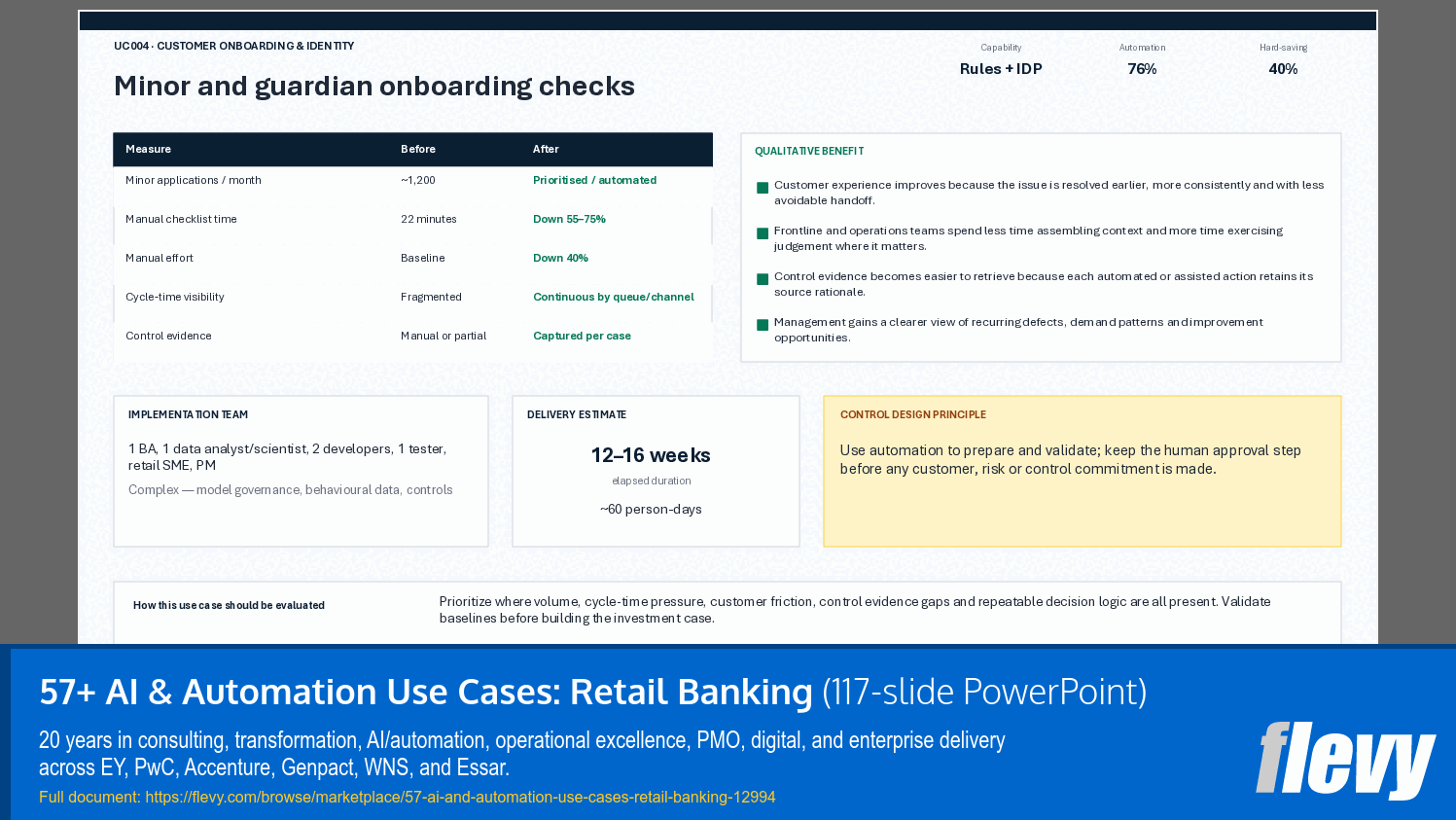
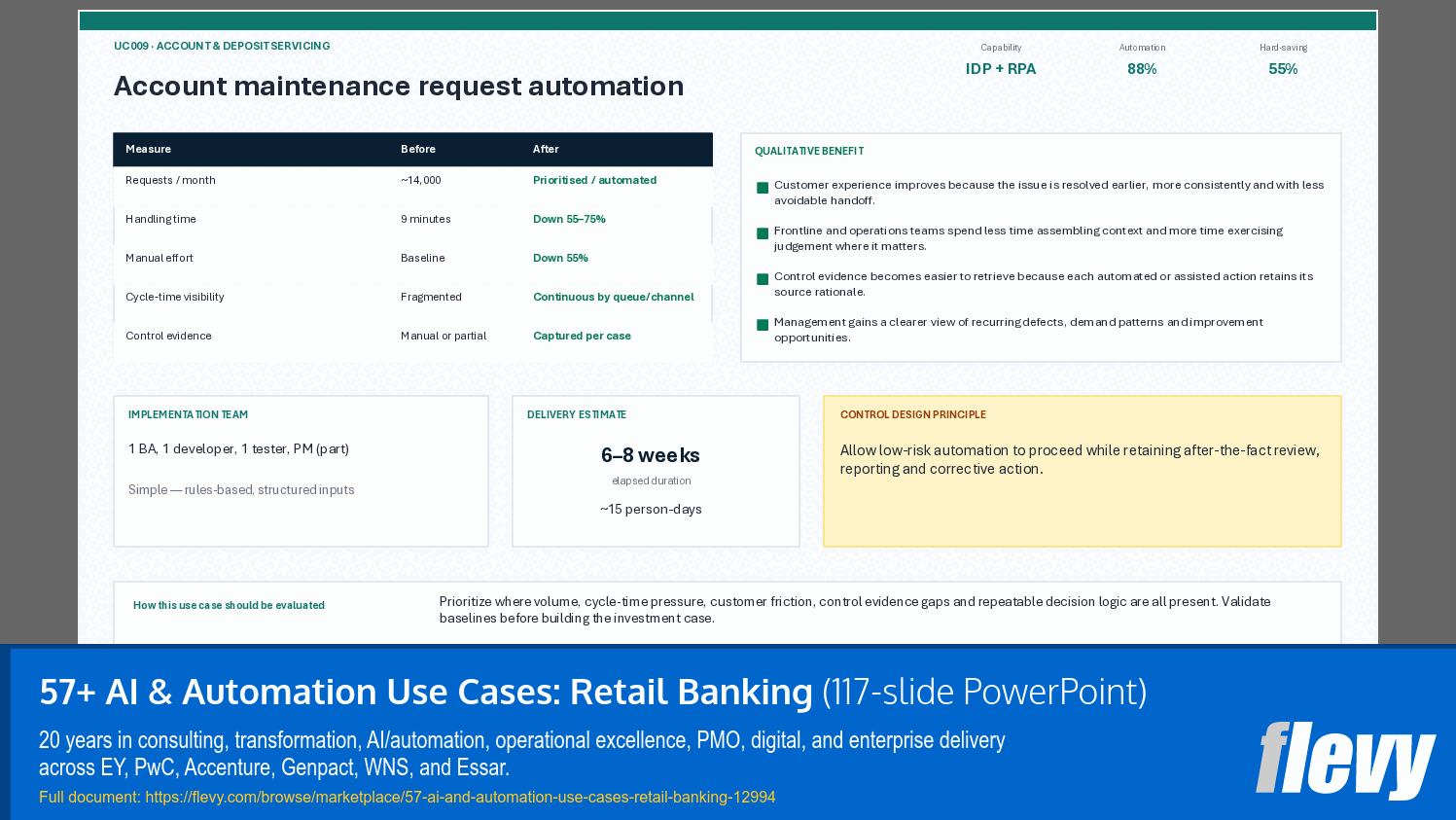
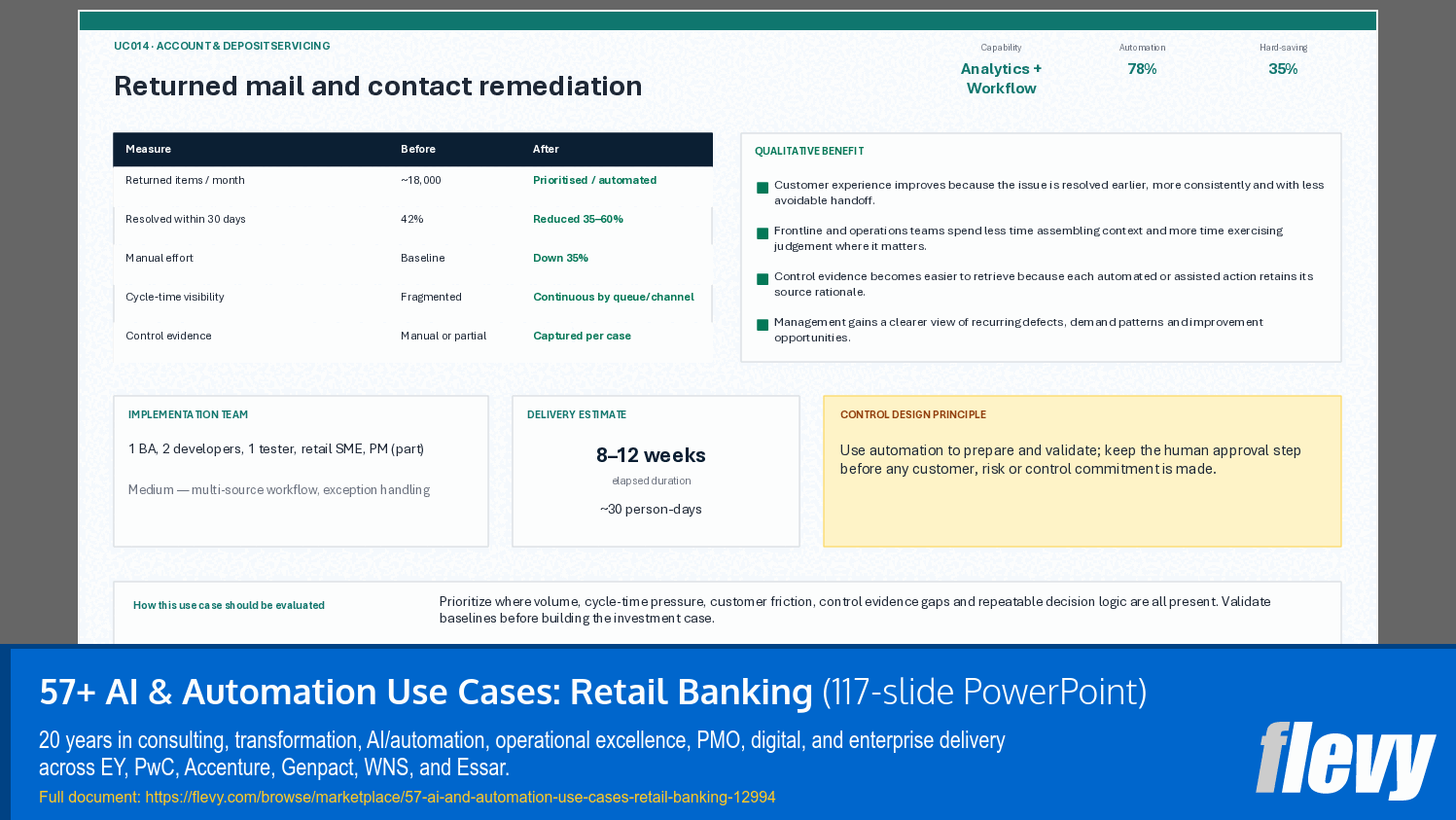
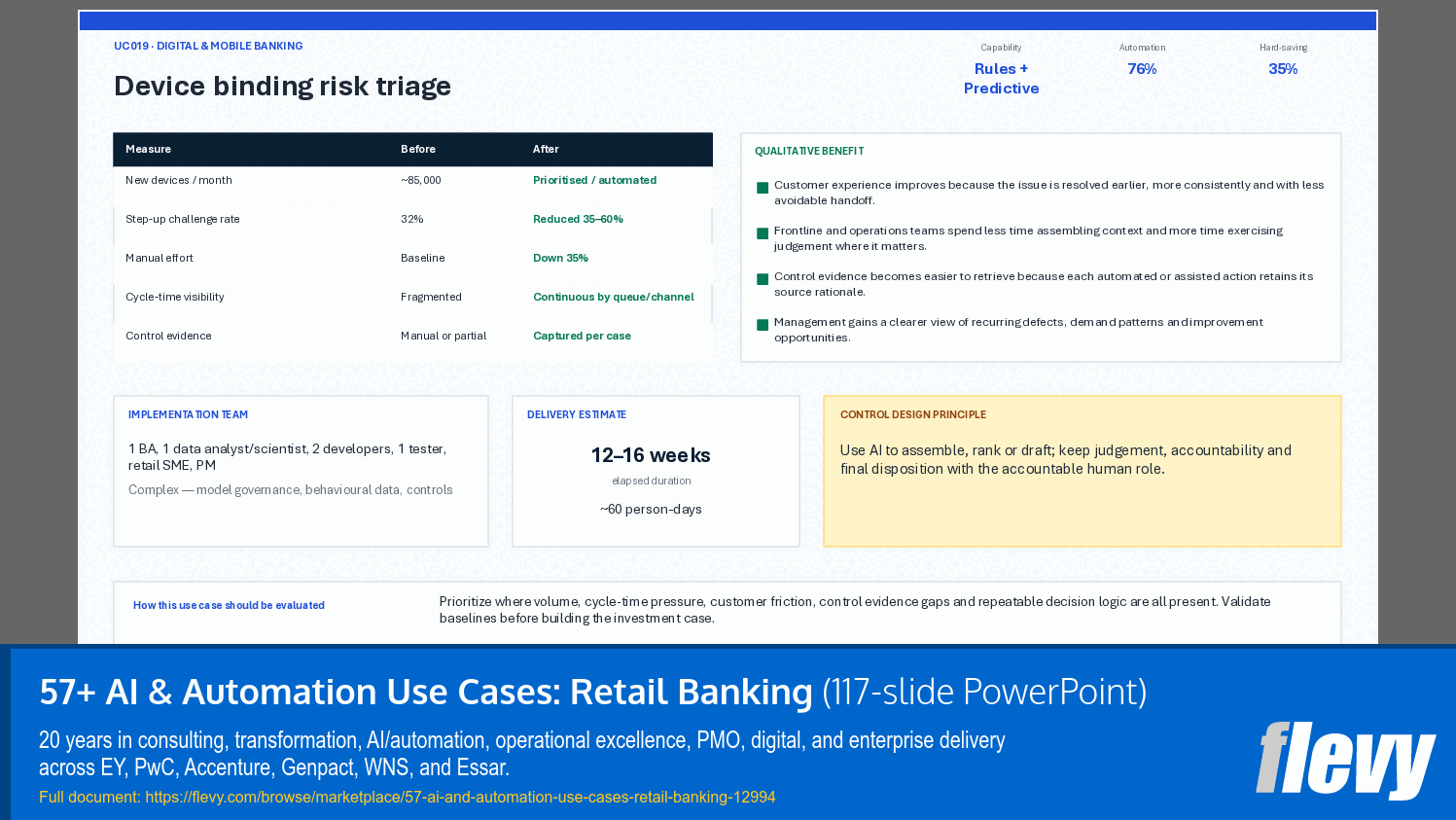

 Click main image to view in full screen. Unlock all 12 preview images:
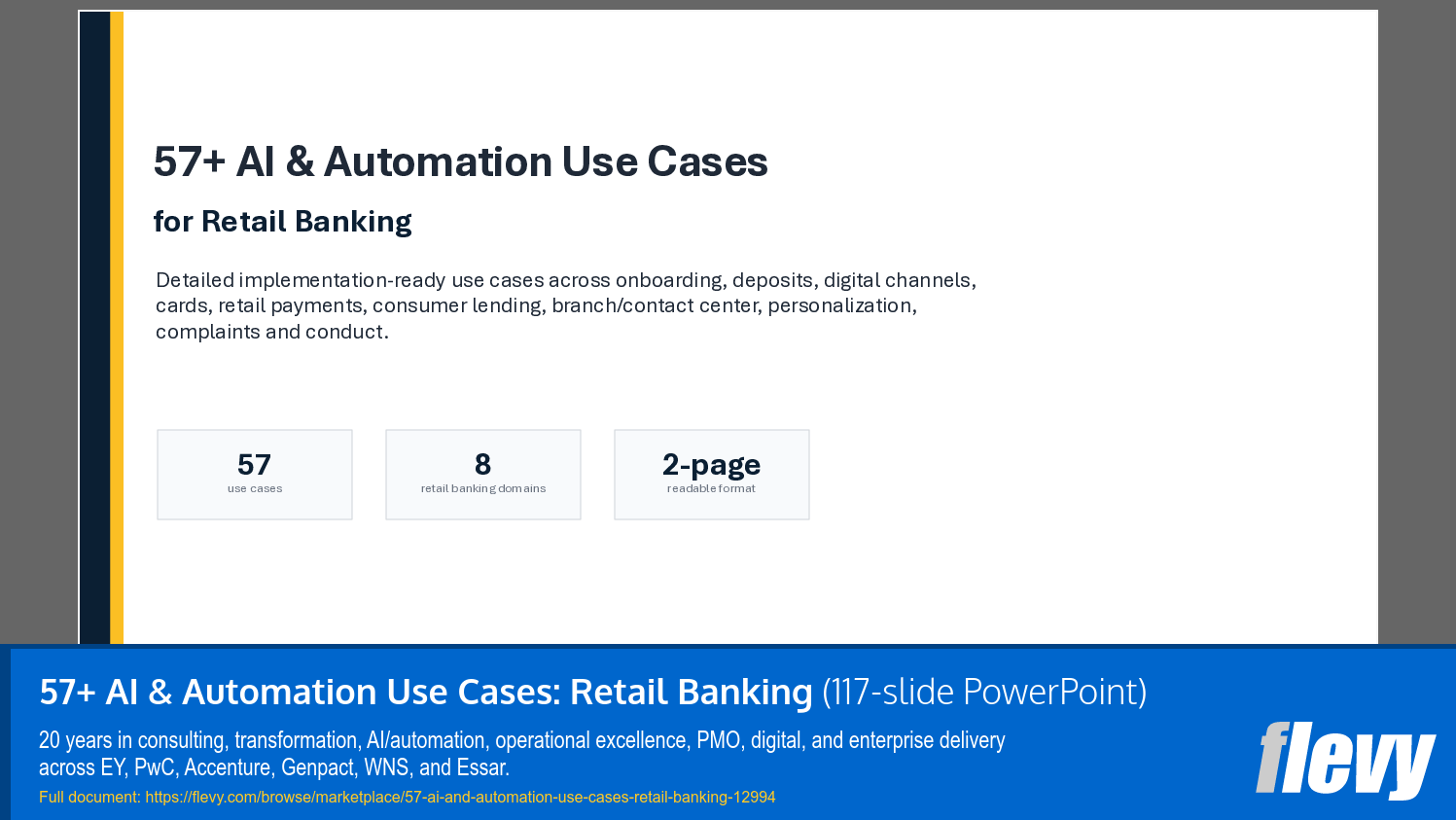
57+ AI & Automation Use Cases: Retail Banking – PowerPoint PPTX Template
PowerPoint (PPTX) + Excel (XLSX) 117 Slides


BENEFITS OF THIS DOWNLOADABLE POWERPOINT DOCUMENT
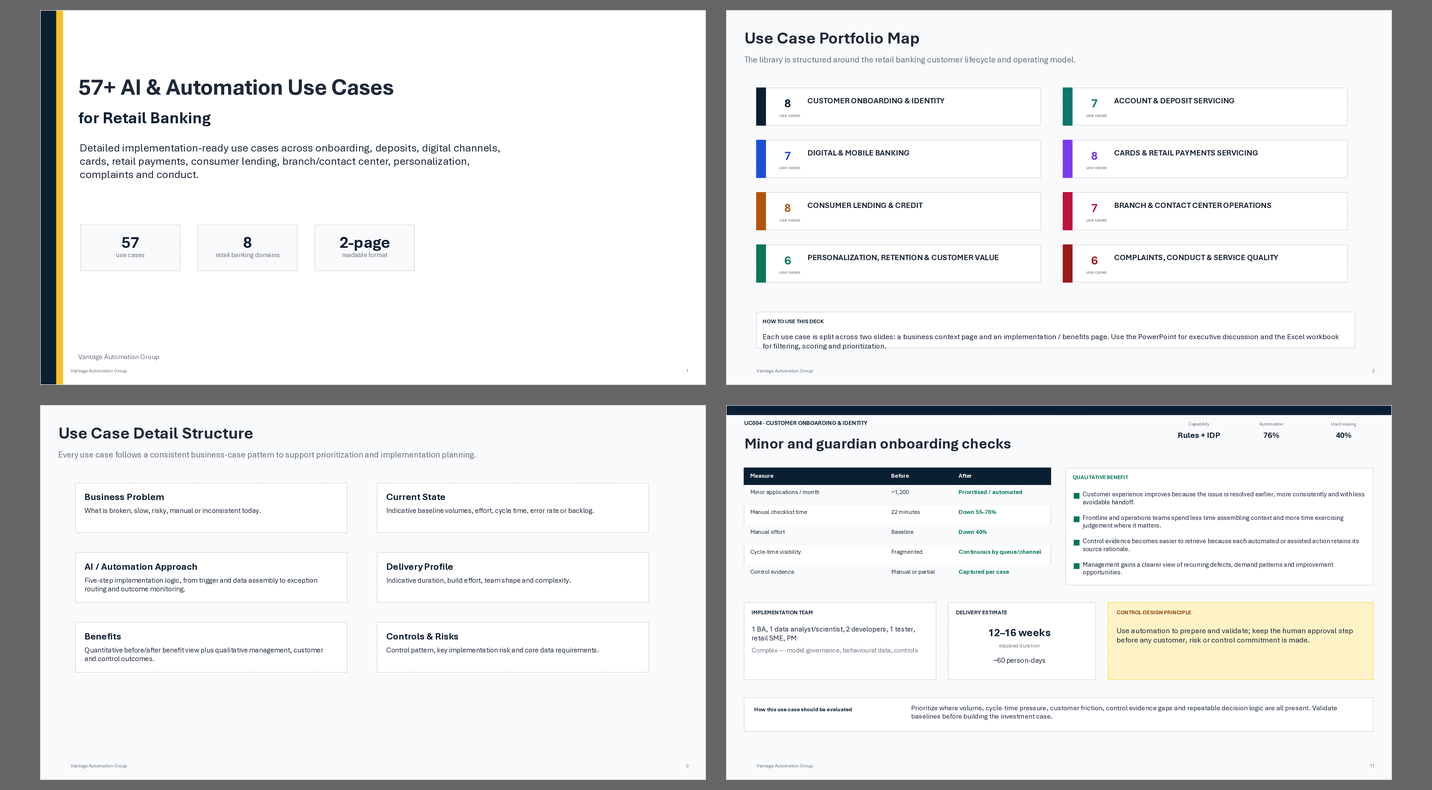
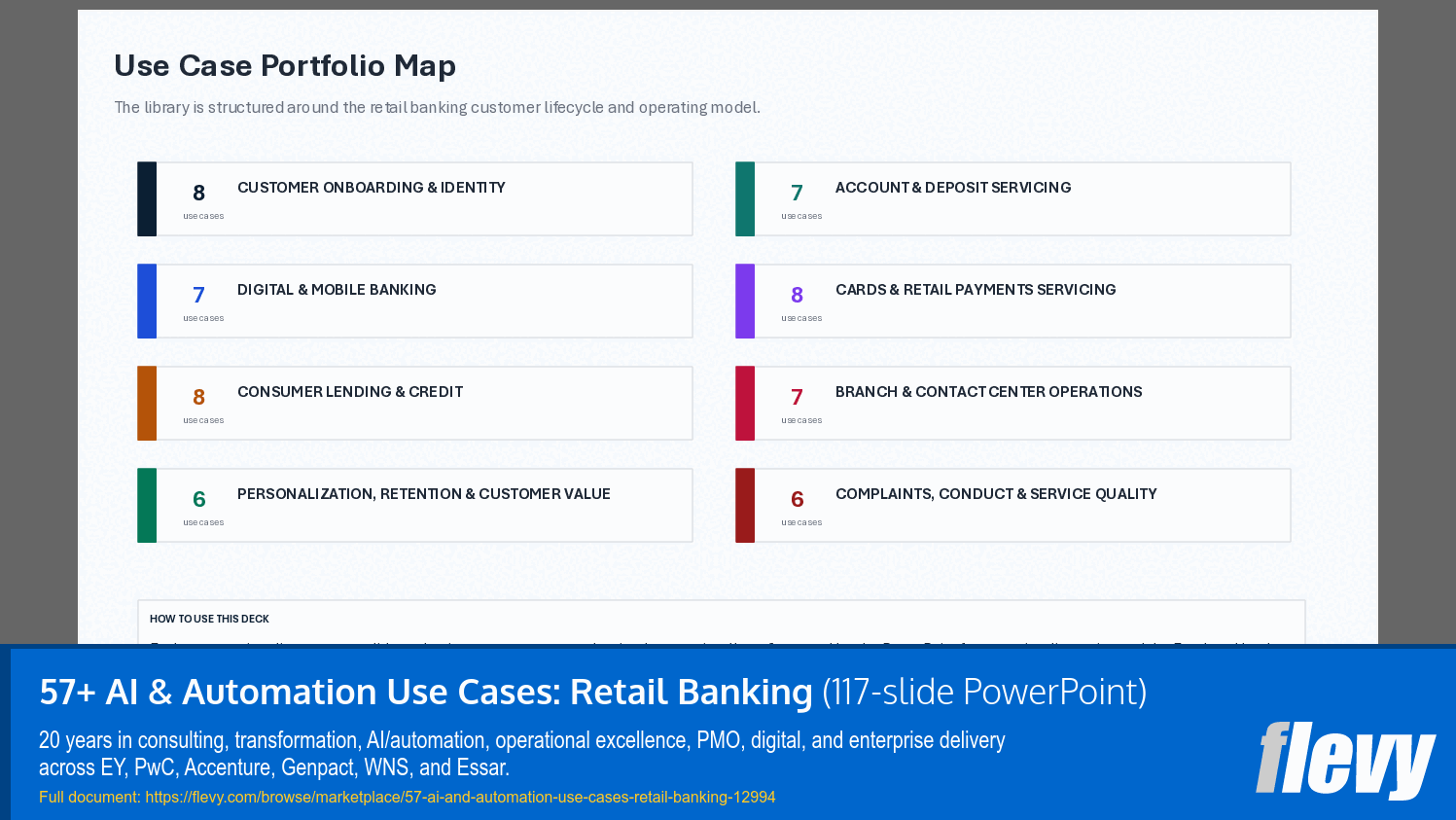
- Build a practical AI pipeline for retail banking with 57 detailed use cases across onboarding, deposits, digital, cards, lending, branch, contact center, personalization, complaints, and conduct
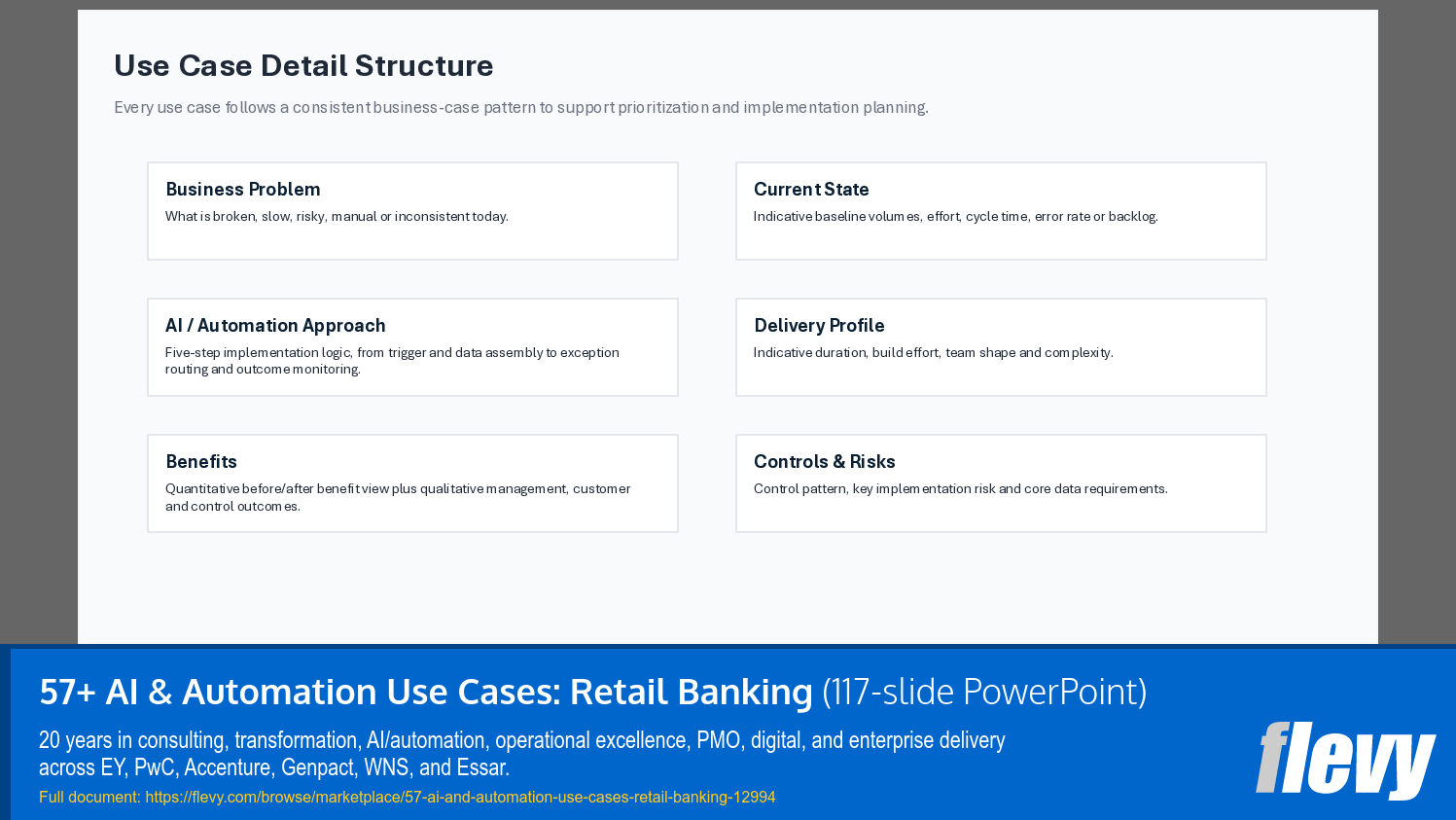
- Move beyond generic AI ideas with use cases that include problem statements, current state, approach, team, complexity, quantitative benefits, controls, risks, and data requirements
- Use the supporting Excel workbook to filter, score, prioritize, and sequence retail banking opportunities into a structured AI and automation roadmap
ARTIFICIAL INTELLIGENCE PPT TEMPLATE DESCRIPTION
Retail banks are under constant pressure to become faster, more digital, more personalized, and more efficient while still protecting customers, meeting conduct obligations, and maintaining strong operational controls. Artificial Intelligence and Intelligent Automation can address many of these pressures, but most institutions struggle with a practical first step: identifying the right use cases, describing them clearly, and converting broad AI ambition into a realistic execution pipeline.
This toolkit is designed to solve that problem.
57+ AI & Automation Use Cases: Retail Banking provides a detailed, implementation-oriented library of retail banking opportunities across the full customer and operating lifecycle. The use cases cover customer onboarding, account and deposit servicing, digital and mobile banking, cards and retail payments servicing, consumer lending, branch and contact center operations, personalization, customer retention, complaints, conduct risk, and service quality.
This is not a generic list of AI ideas. Each use case is written as a practical mini-business case that can support opportunity identification, prioritization, workshop facilitation, consulting discussions, roadmap development, business case preparation, and early solution design. Every use case includes a clear problem statement, current-state indicators, a five-step implementation approach, indicative delivery profile, estimated team size, complexity level, quantitative benefit logic, qualitative benefits, control pattern, key risk, and data requirements.
The structure allows users to move quickly from "Where can AI help in retail banking?" to "Which opportunities are worth exploring, what would be required, what benefits could be expected, and what controls must be designed?" This makes the toolkit useful for banking executives, consultants, digital teams, AI Centers of Excellence, automation teams, transformation offices, product owners, operations leaders, and branch/contact center leaders.
The deck is intentionally practical. It recognizes that retail banking automation cannot be designed as technology alone. Many opportunities require human-in-the-loop controls, customer consent checks, policy alignment, evidence retention, exception routing, conduct safeguards, and clear accountability. As a result, the use cases distinguish between full automation, approve-before-commit, review-after-commit, and machine-assisted human decision patterns.
The toolkit is supported by an Excel workbook that converts the PowerPoint library into a structured working asset. The workbook includes a searchable use case library, domain classification, capability type, automation potential, hard-saving potential, problem descriptions, implementation approach, delivery assumptions, quantitative benefits, risks, data requirements, and a prioritization model. This enables users to filter, compare, score, and sequence the use cases into a practical retail banking AI and automation roadmap.
The content has been developed from a senior consulting and transformation practitioner perspective, grounded in 18+ years of experience across consulting, transformation, program governance, digital delivery, enterprise architecture, operational excellence, automation, PMO, and large-scale change. The author's professional background includes experience across globally recognized organizations including EY, PwC, Accenture, Genpact, WNS, and Essar. Professional development and certifications include MBA, INSEAD Emerging Leaders, Lean Ace, Six Sigma Black Belt, and Agile Scrum.
The value of this toolkit is its implementation orientation. A retail bank can use it to run an AI opportunity-identification workshop, a consultant can use it to structure a client discussion, a transformation office can use it to populate an AI pipeline, and a digital banking team can use it to challenge whether its roadmap is focused on the right value pools.
The quantitative baselines and benefits included in the use cases are indicative planning assumptions intended to support early business case thinking. They should be calibrated to the buyer's own volume, process performance, technology landscape, operating model, risk appetite, and control environment before investment decisions are made
Got a question about the product? Email us at support@flevy.com or ask the author directly by using the "Ask the Author a Question" form. If you cannot view the preview above this document description, go here to view the large preview instead.
Source: Best Practices in Artificial Intelligence, Banking PowerPoint Slides: 57+ AI & Automation Use Cases: Retail Banking PowerPoint (PPTX) Presentation Slide Deck, Vantage Automation Group
ABOUT THE AUTHOR
Vantage Automation Group publishes decision-grade frameworks, financial models and operating model blueprints for people running large-scale operations and transformation programmes.
The material is drawn from nineteen years of enterprise delivery -- across global consulting firms and industry -- covering operations transformation, target operating model design, operational resilience and
... [read more]
Ask the Author a Question
You must be logged in to contact the author.




























