 Click main image to view in full screen.
12 AI & Automation Use Cases for Trade Finance – PowerPoint PPTX Template
PowerPoint (PPTX) + Excel (XLSX) 13 Slides


BENEFITS OF THIS DOWNLOADABLE POWERPOINT DOCUMENT
- Modernize trade operations with 12 detailed AI and automation use cases spanning LC examination, guarantees, sanctions, TBML, document processing, collections and supply-chain finance
- Capture both value and control -- each case includes problem, current state, 5-step approach, team, effort, complexity, quantitative benefits, qualitative benefits, control pattern, risk and data needs
- Use the included Excel workbook to filter and prioritize trade opportunities by automation potential, hard-saving potential and delivery complexity for workshops, roadmaps and business cases
ARTIFICIAL INTELLIGENCE PPT TEMPLATE DESCRIPTION
Trade Finance remains one of banking's most document-intensive and expertise-dependent domains. Letters of credit, guarantees, shipping documents, sanctions checks, discrepancy handling, and trade-based money-laundering controls require staff to interpret complex documentation under strict time pressure. Expertise is often concentrated in relatively small teams, creating both productivity constraints and key-person dependency. AI and intelligent automation can materially improve this operating model when technology is used to structure documents, apply rules consistently, surface exceptions, and preserve expert judgment where interpretation matters.
This toolkit presents 12 detailed AI and automation use cases for Trade Finance. It is designed for trade-finance executives, operations teams, product leaders, financial-crime and sanctions teams, transformation offices, automation Centers of Excellence, consultants, architects, business analysts, and technology teams seeking practical opportunities rather than generic AI concepts.
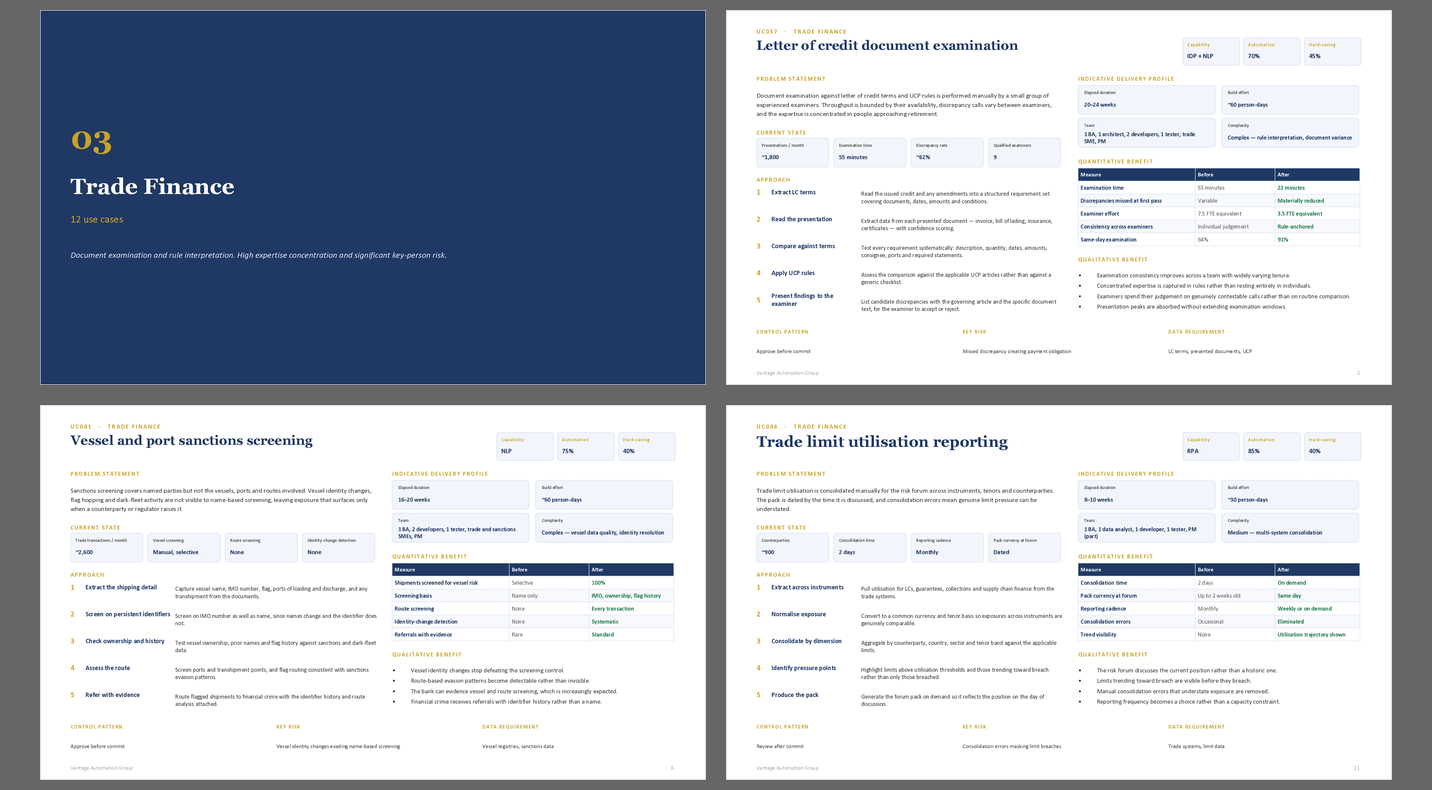
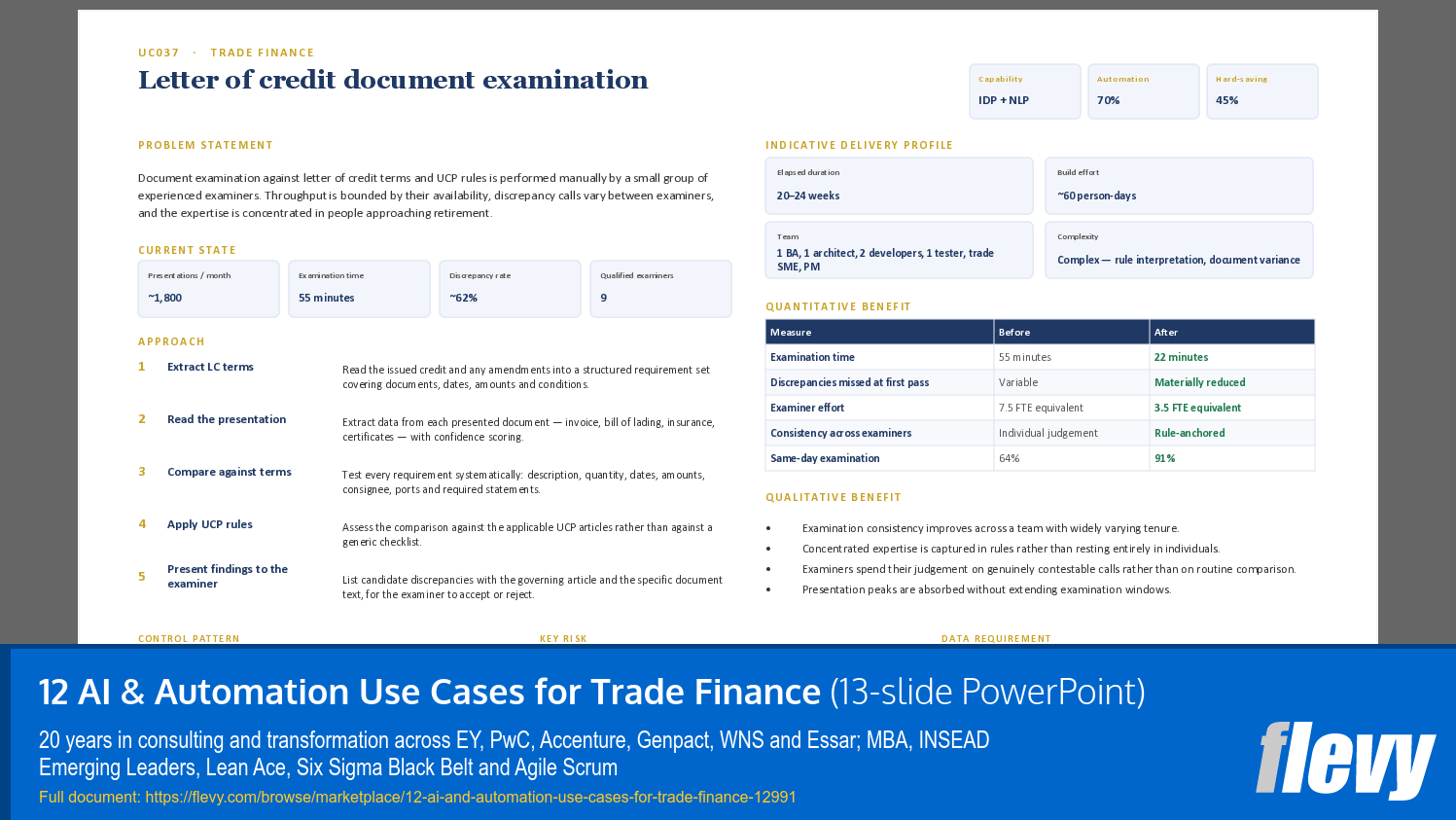
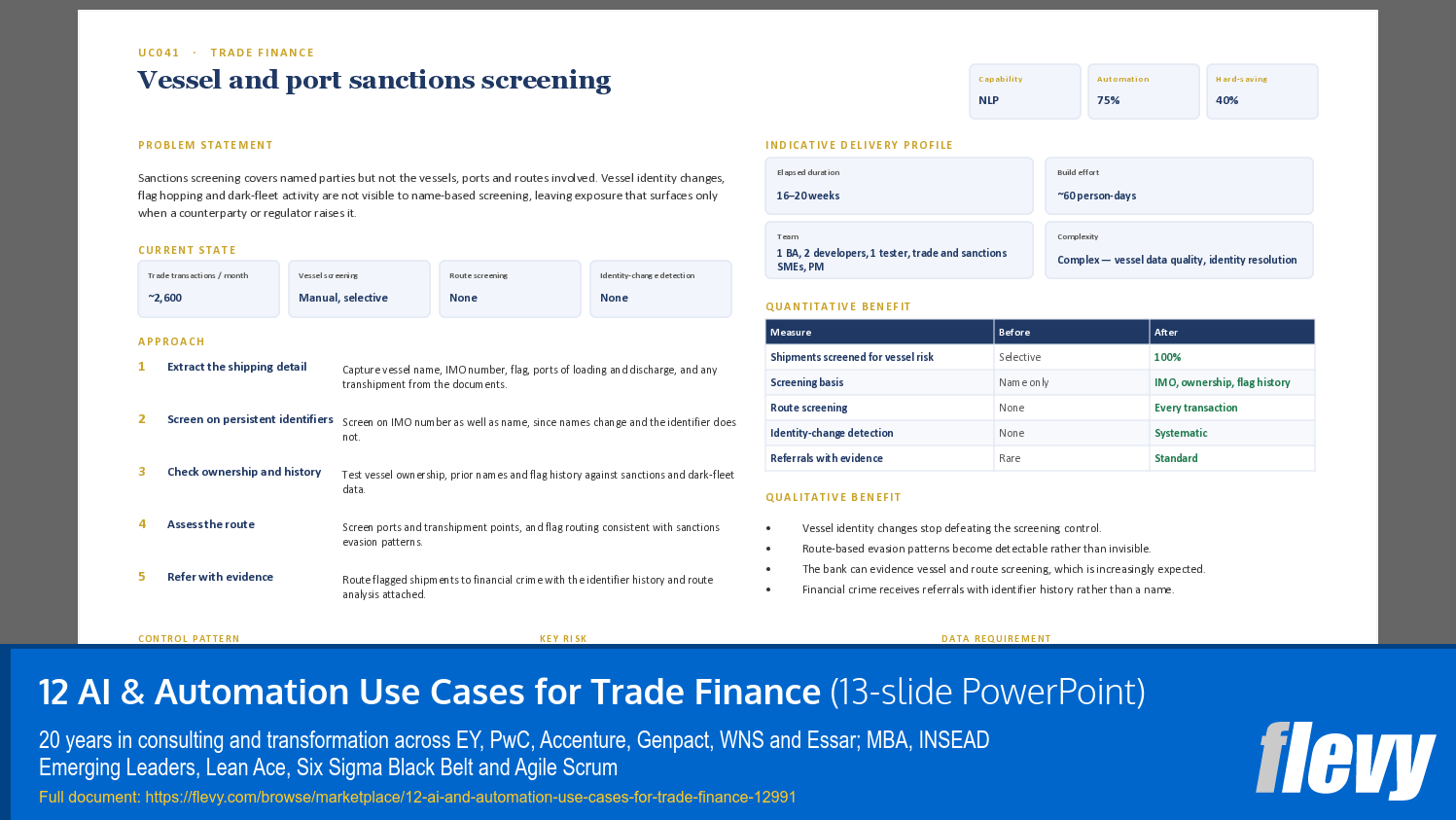
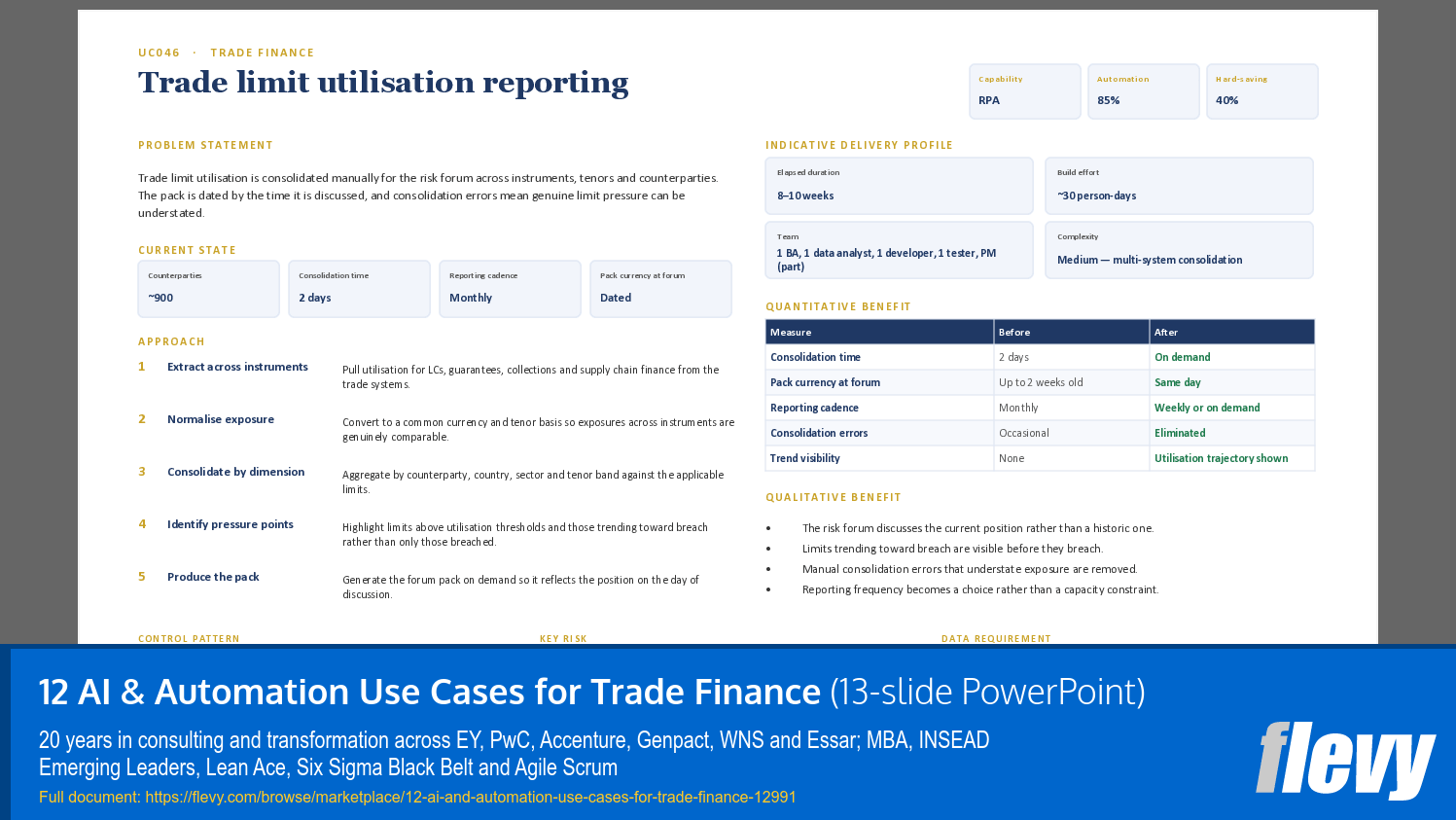
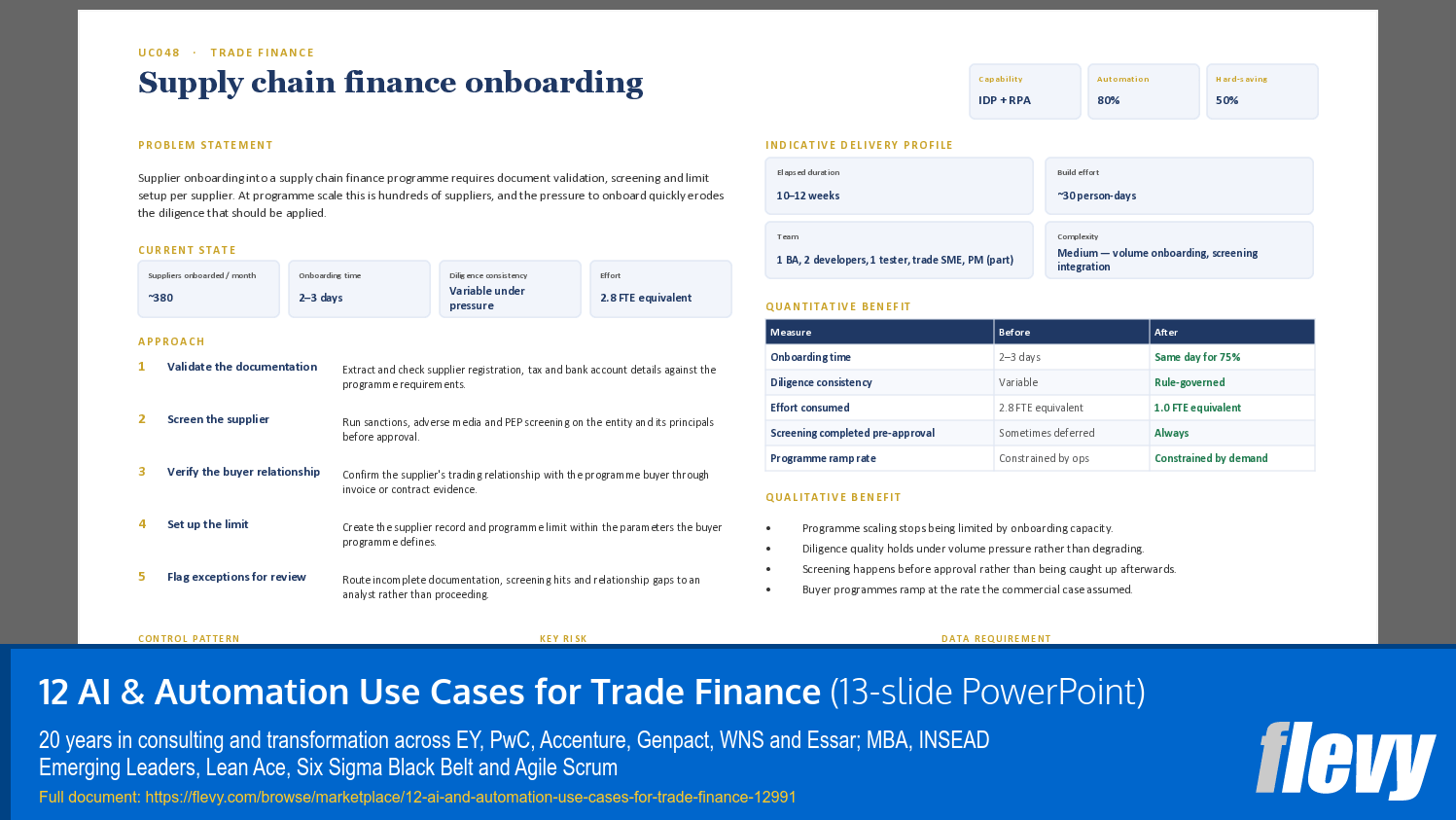
Each use case is presented as a mini implementation case. The PowerPoint includes the problem statement, current-state operating baseline, capability type, indicative automation potential, hard-saving potential, a five-step solution approach, elapsed delivery duration, build effort, indicative team composition, implementation complexity, before-and-after quantitative benefit measures, qualitative benefits, control pattern, key risk, and data requirements.
The 12 use cases cover critical trade activities: letter-of-credit document examination, trade-based money-laundering red-flag detection, bank-guarantee text validation, LC issuance data capture, vessel and port sanctions screening, trade-document classification and indexing, discrepancy-correspondence drafting, commodity-price plausibility checking, export-collection tracking, trade-limit utilization reporting, Incoterm and document consistency checking, and supply-chain-finance onboarding.
The toolkit reflects the reality that trade automation is not simply an OCR exercise. Effective solutions often require Intelligent Document Processing, NLP, rules, analytics, external reference data, entity and vessel resolution, workflow integration, and explicit human approval. For example, technology can extract letter-of-credit terms and compare presented documents systematically, but an experienced examiner should remain accountable for genuinely contestable discrepancy judgments. Similarly, AI can surface trade-based money-laundering indicators, but it should present evidence for financial-crime assessment rather than assert a conclusion.
A separate Excel supporting workbook makes the material easier to operationalize. It contains a filterable use-case library, a normalized quantitative-benefit matrix, and a prioritization sheet comparing automation potential, hard-saving potential, and delivery complexity. The workbook can be used in opportunity-identification workshops, trade-modernization programs, business-case development, architecture discussions, and investment prioritization.
The material has been developed from a senior consulting and transformation practitioner perspective shaped by more than 18 years of experience across transformation, operational excellence, program governance, digital initiatives, automation, enterprise architecture, and operational resilience. The author's professional background includes experience across EY (Ernst & Young), PwC (PricewaterhouseCoopers), Accenture, Genpact, WNS, and Essar. Credentials include an MBA, INSEAD Emerging Leaders, Lean Ace, Six Sigma Black Belt, and Agile Scrum.
The objective is to help trade teams identify where technology can reduce manual examination, accelerate turnaround, improve consistency, strengthen sanctions and TBML controls, preserve specialist knowledge, and provide a traceable evidence base for decisions.
All transaction volumes, benefit percentages, savings assumptions, team sizes, effort estimates, and delivery timelines are indicative scenario assumptions for planning and comparison. They are not represented as realized results at any named bank, client, or employer. Buyers should validate each case against their own product set, UCP and local requirements, sanctions policy, financial-crime framework, data availability, technology stack, risk appetite, and control model before implementation.
For organizations modernizing Trade Finance, these 12 use cases provide a focused, implementation-oriented reference that connects AI and automation opportunity directly to process design, controls, delivery requirements, and measurable value
Got a question about the product? Email us at support@flevy.com or ask the author directly by using the "Ask the Author a Question" form. If you cannot view the preview above this document description, go here to view the large preview instead.
Source: Best Practices in Artificial Intelligence, Banking PowerPoint Slides: 12 AI & Automation Use Cases for Trade Finance PowerPoint (PPTX) Presentation Slide Deck, Vantage Automation Group
ABOUT THE AUTHOR
Vantage Automation Group publishes decision-grade frameworks, financial models and operating model blueprints for people running large-scale operations and transformation programmes.
The material is drawn from nineteen years of enterprise delivery -- across global consulting firms and industry -- covering operations transformation, target operating model design, operational resilience and
... [read more]
Ask the Author a Question
You must be logged in to contact the author.




























