
 Click main image to view in full screen. Unlock all 17 preview images:
360-Degree Feedback Method – PowerPoint PPTX Template
PowerPoint (PPTX) 52 Slides


BENEFITS OF THIS DOWNLOADABLE POWERPOINT DOCUMENT
- Provides a framework for Designing a 360o Feedback Project & Select The Applications
- Provides a diagrams for Implementing a 360o Feedback
- Provides of Conduct the Evaluations & User Assessment
FEEDBACK PPT TEMPLATE DESCRIPTION
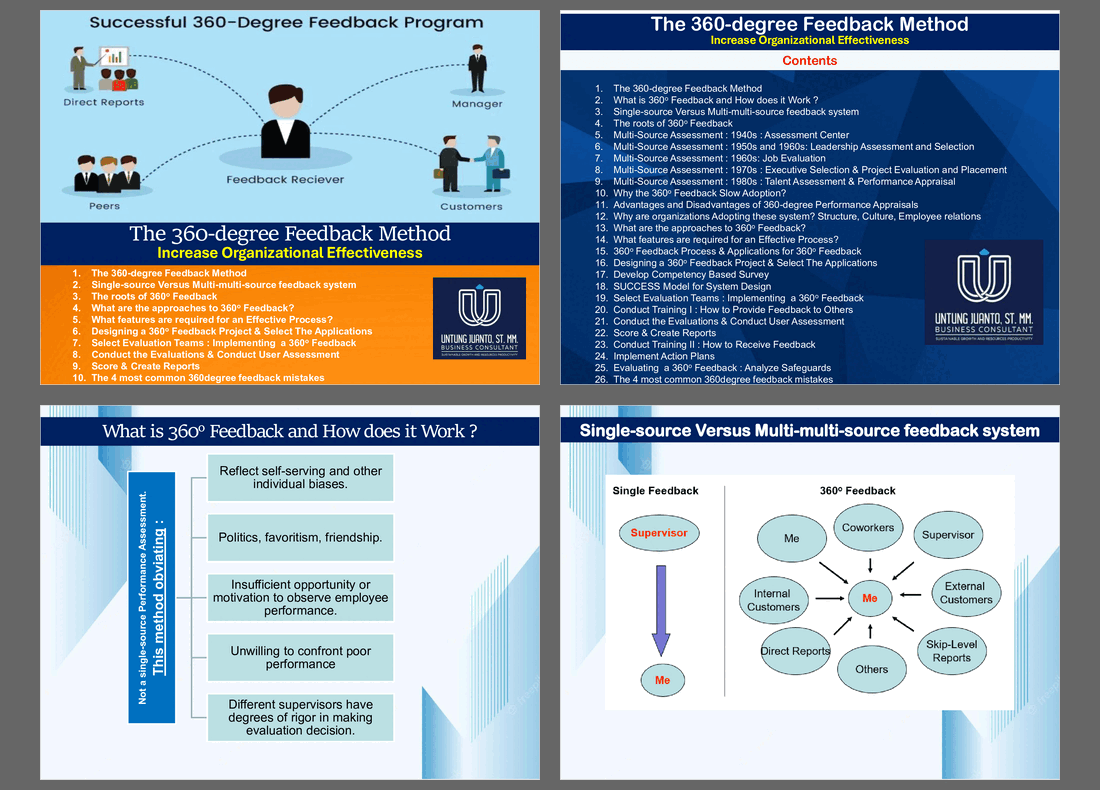
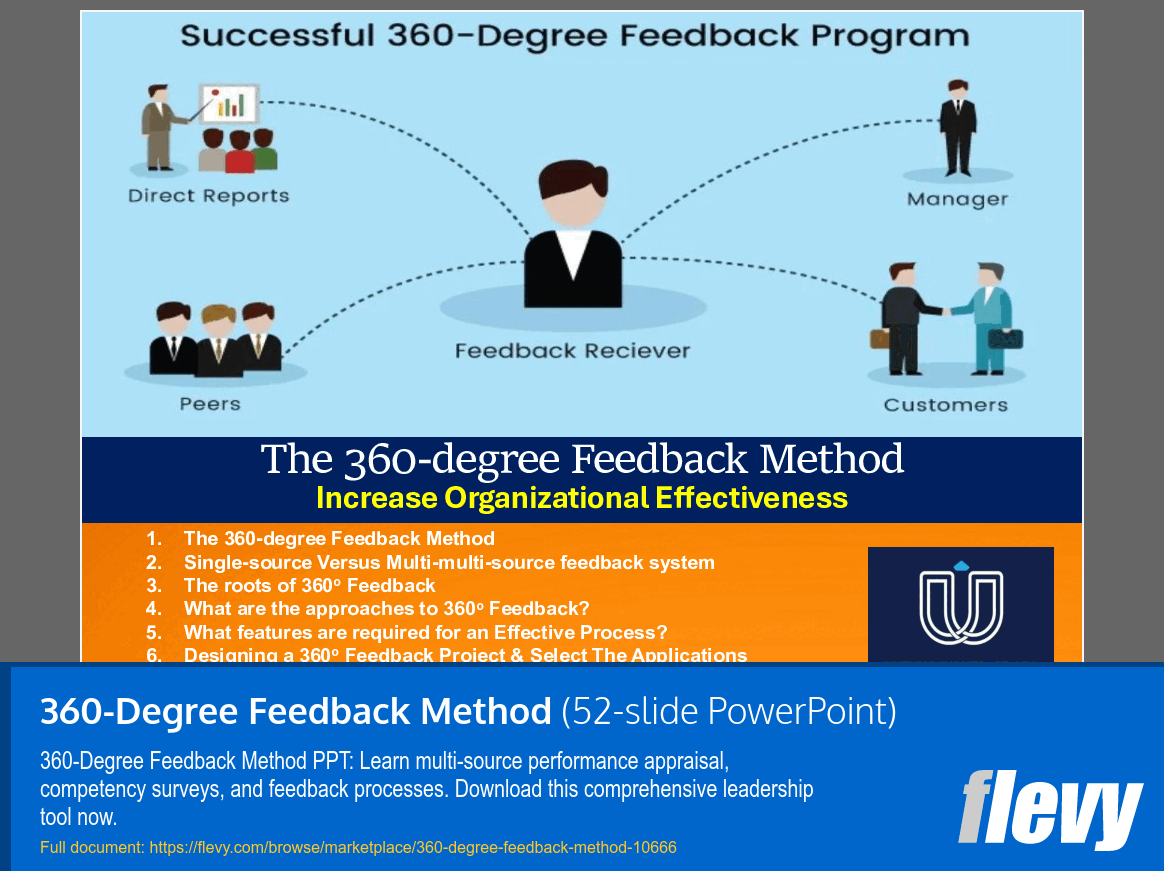
The 360-degree Feedback Method
Increase Organizational Effectiveness
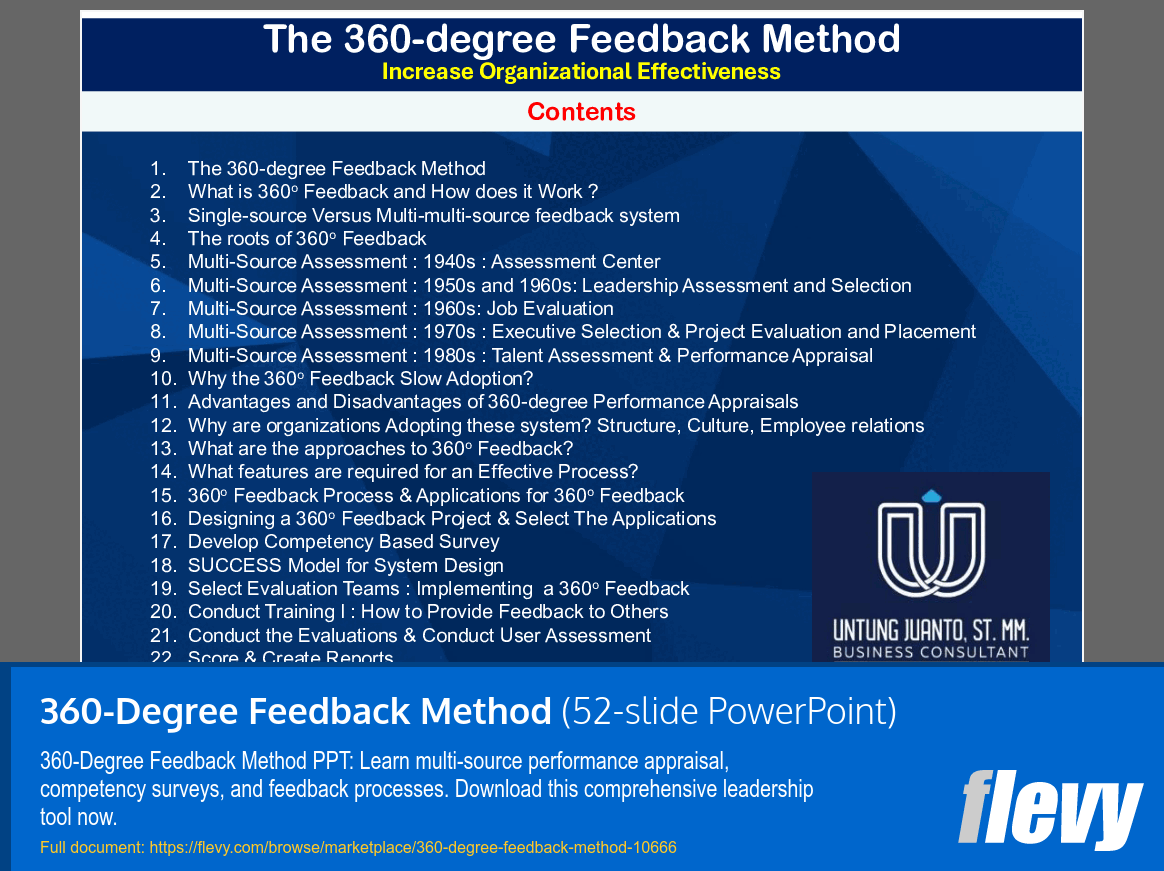
Contents
1. The 360-degree Feedback Method
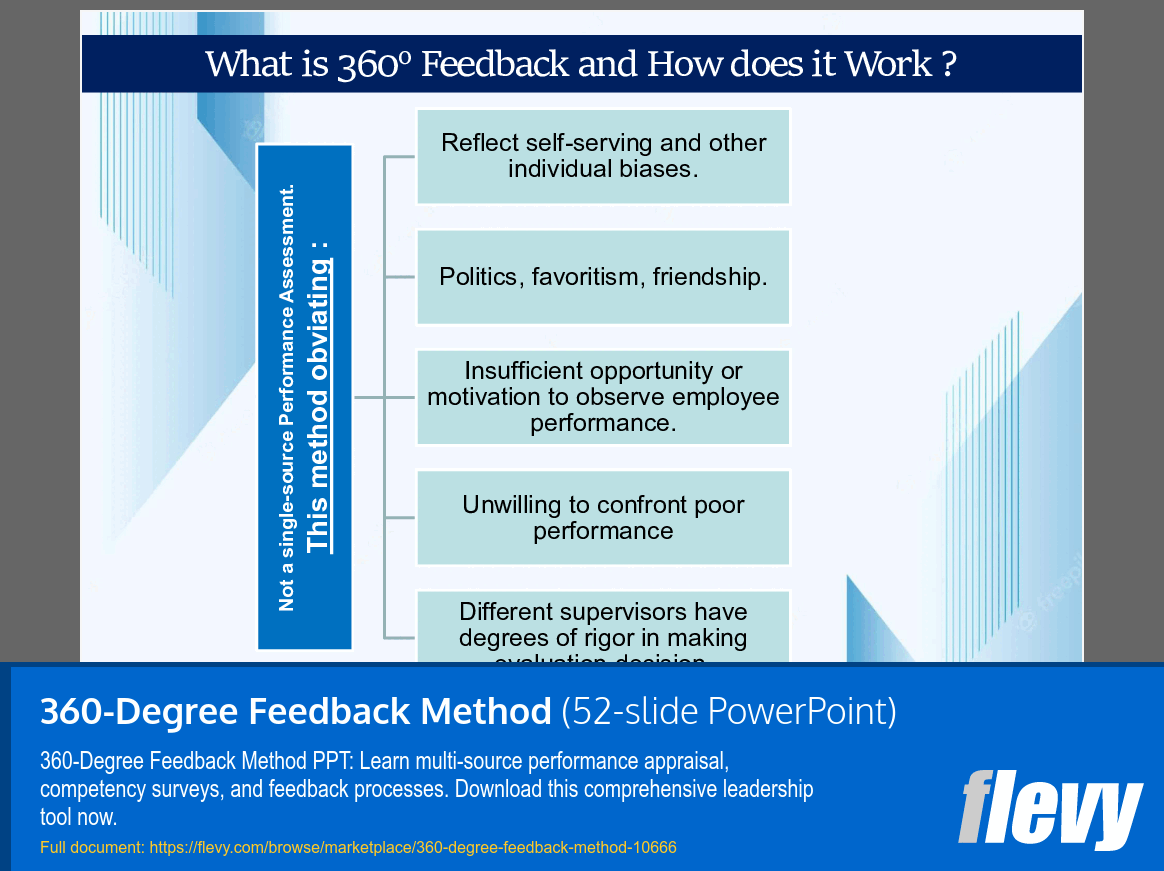
2. What is 360o Feedback and How does it Work ?
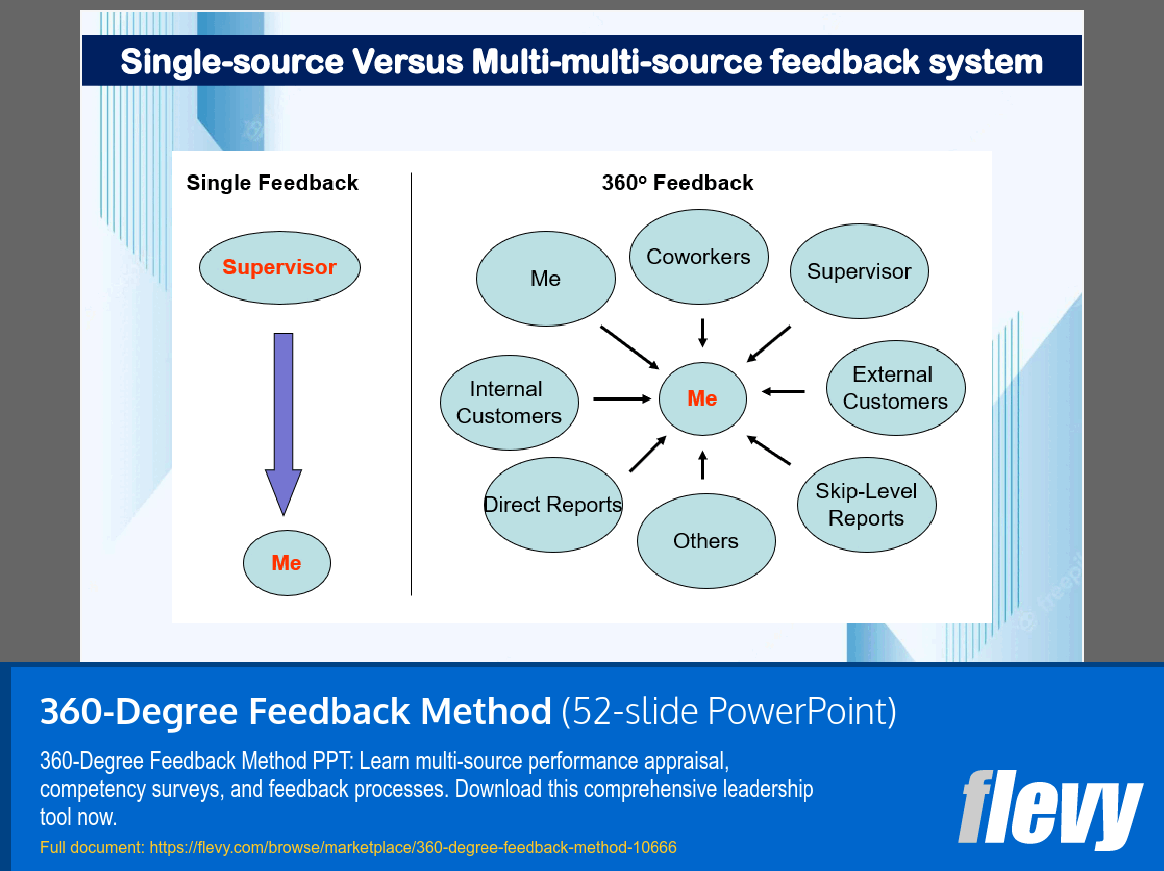
3. Single-source Versus Multi-multi-source feedback system
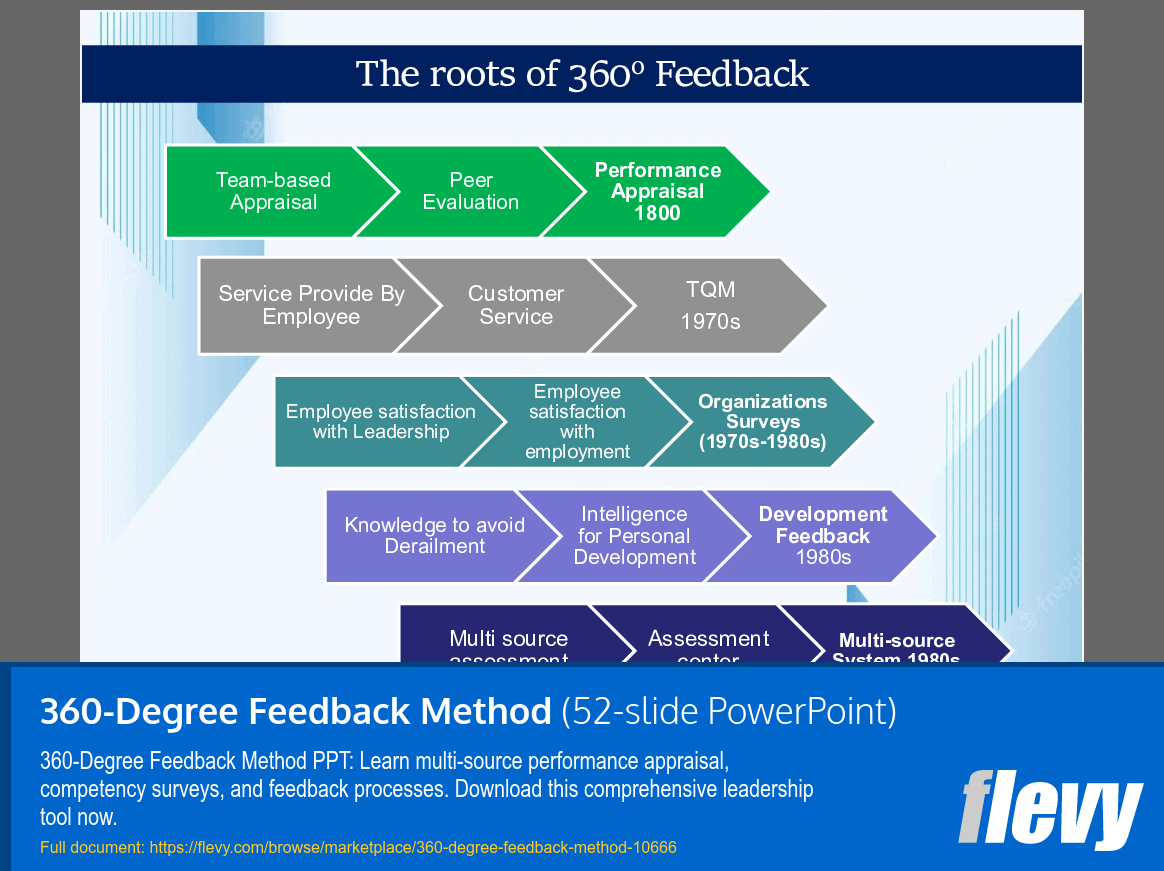
4. The roots of 360o Feedback
5. Multi-Source Assessment : 1940s : Assessment Center
6. Multi-Source Assessment : 1950s and 1960s: Leadership Assessment and Selection
7. Multi-Source Assessment : 1960s: Job Evaluation
8. Multi-Source Assessment : 1970s : Executive Selection & Project Evaluation and Placement
9. Multi-Source Assessment : 1980s : Talent Assessment & Performance Appraisal
10. Why the 360o Feedback Slow Adoption?
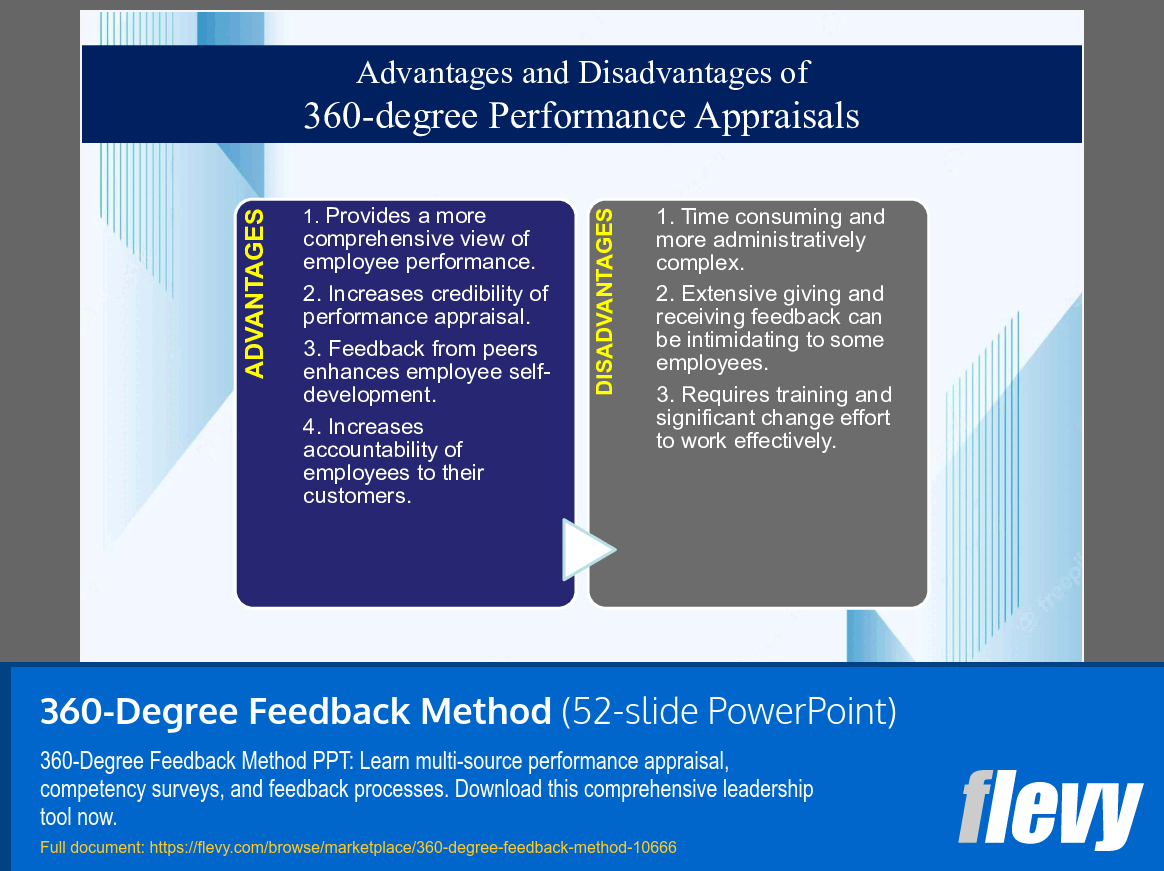
11. Advantages and Disadvantages of 360-degree Performance Appraisals
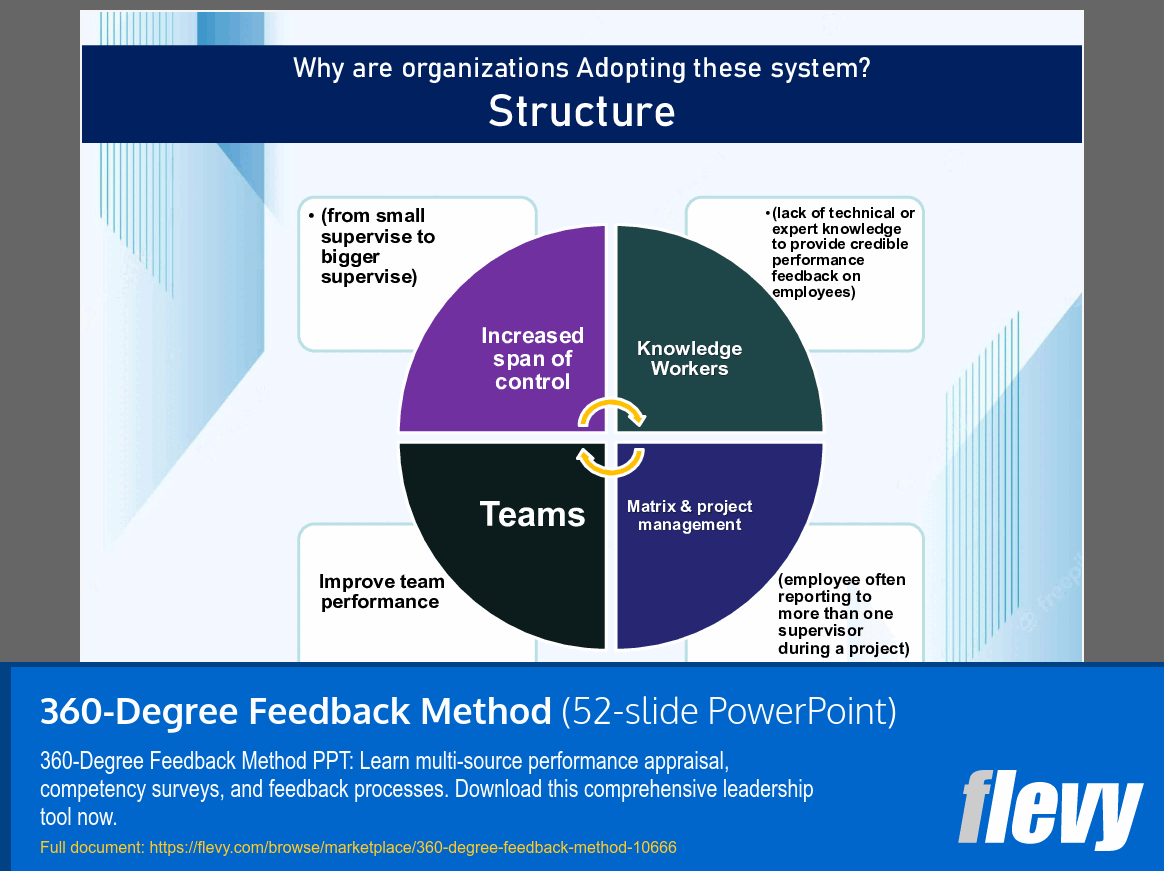
12. Why are organizations Adopting these system? Structure, Culture, Employee relations
13. What are the approaches to 360o Feedback?
14. What features are required for an Effective Process?
15. 360o Feedback Process & Applications for 360o Feedback
16. Designing a 360o Feedback Project & Select The Applications
17. Develop Competency Based Survey
18. SUCCESS Model for System Design
19. Select Evaluation Teams : Implementing a 360o Feedback
20. Conduct Training I : How to Provide Feedback to Others
21. Conduct the Evaluations & User Assessment
22. Score & Create Reports
23. Conduct Training II : How to Receive Feedback
24. Implement Action Plans
25. Evaluating a 360o Feedback : Analyze Safeguards
26. The 4 most common 360degree feedback mistakes
Traditionally, employee performance reviews have been conducted in a one-way fashion, with managers providing feedback to their direct reports. However, this approach can be limited, as it only takes into account the manager's perspective.
360-degree job evaluation, also known as multi-rater feedback, is a more holistic approach to performance reviews. It involves gathering feedback from a variety of stakeholders, including the employee's manager, peers, direct reports, and even customers. This provides a more complete picture of the employee's performance and areas for improvement.
Data, stats, and industry references
1. According to a survey by the Society for Human Resource Management, 94% of organizations use 360-degree feedback in some form.
2. A study by Deloitte found that 85% of employees believe that 360-degree feedback is helpful for their development.
3. A study by the American Psychological Association found that 360-degree feedback can lead to a 12% increase in employee performance.
4. A study by the Harvard Business Review found that 360-degree feedback can help to reduce turnover by 15%.
5. A study by the Gallup Organization found that 360-degree feedback can help to improve employee engagement by 20%.
Industry references
1. Technology: Google, Microsoft, and Amazon all use 360-degree feedback for their employees.
2. Consulting: McKinsey & Company, Bain & Company, and Boston Consulting Group all use 360-degree feedback for their employees.
3. Financial services: Goldman Sachs, JPMorgan Chase, and Citigroup all use 360-degree feedback for their employees.
4. Healthcare: Kaiser Permanente, Mayo Clinic, and Cleveland Clinic all use 360-degree feedback for their employees.
5. Education: Stanford University, Harvard University, and the University of Michigan all use 360-degree feedback for their employees.
360-degree job evaluation is a valuable tool for improving employee performance and engagement. By gathering feedback from a variety of stakeholders, employers can get a more complete picture of the employee's strengths and weaknesses. This information can then be used to develop a plan for improvement and help the employee to reach their full potential.
Best Regards
UJ Consulting
Got a question about the product? Email us at support@flevy.com or ask the author directly by using the "Ask the Author a Question" form. If you cannot view the preview above this document description, go here to view the large preview instead.
Source: Best Practices in Feedback PowerPoint Slides: 360-Degree Feedback Method PowerPoint (PPTX) Presentation Slide Deck, UJ Consulting _ Strategy-Insight-Impact
ABOUT THE AUTHOR

UJ Consulting | Strategy • Insight • Impact
UJ Consulting is an executive management consulting and business transformation practice founded by Untung Juanto, ST., MM., a senior executive, consultant, and transformation practitioner with more than 25 years of professional experience across local and multinational companies and diverse industries.
His career progressed from frontline
... [read more]
Ask the Author a Question
You must be logged in to contact the author.




























