
This framework is developed by a team of former McKinsey and Big 4 consultants. The presentation follows the headline-body-bumper slide format used by global consulting firms.
Explore a comprehensive framework on Sustainability-driven Management, crafted by ex-McKinsey and Big 4 consultants. Enhance your strategy with proven practices and templates. Sustainability-driven Management: Sustainability Leaders is a 25-slide PPT PowerPoint presentation slide deck (PPTX) available for immediate download upon purchase.
Corporate commitment to Sustainability-based Management is strengthening.
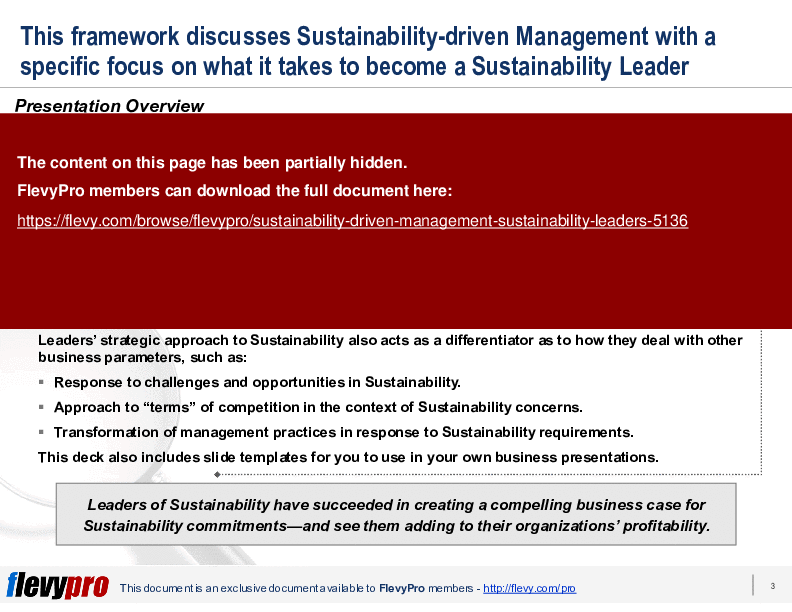
Even as organizations overall are strengthening their commitments to Sustainability, one cohort of organizations is expanding its commitments far more aggressively than others. They have emerged as Sustainability Strategy Leaders.
Studies show strategic approach to Sustainability is the main driver to become a Sustainability Leader. Sustainability Leaders act on their belief that Sustainability is already at the core of their business and is a necessity to respond well to shifting customer preference. The remaining organizations, i.e. Sustainability Laggards, view Sustainability in terms of Risk Management and efficiency gains.
Leaders' strategic approach to Sustainability also acts as a differentiator as to how they deal with other business parameters, such as:
• Response to challenges and opportunities in Sustainability.
• Approach to "terms" of competition in the context of Sustainability concerns.
• Transformation of management practices in response to Sustainability requirements.
Leaders of Sustainability have succeeded in creating a compelling business case for Sustainability commitments. They see these efforts adding to their organizations’ profitability.
This deck also includes slide templates for you to use in your own business presentations.
This PPT delves into the core benefits of Sustainability-Based Management, emphasizing its mainstream adoption and the tangible advantages it brings to business performance and profitability. It highlights six key advantages, including stakeholder engagement, risk management, and innovation, which are essential for driving competitive advantage in today's market. Executives are urged to integrate sustainability deeply into their business strategies to foster innovation and build loyalty among employees, customers, and investors.
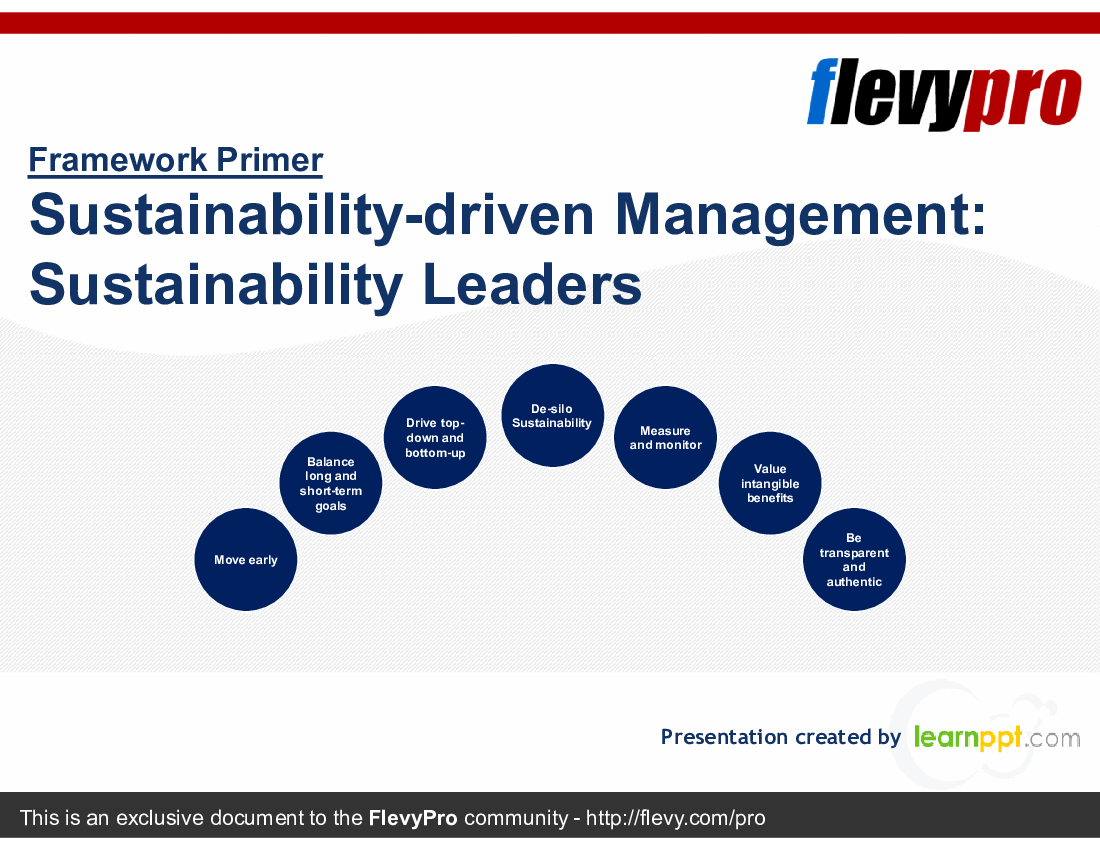
The presentation also outlines seven key practices of Sustainability Leaders, such as balancing long- and short-term goals, driving top-down and bottom-up initiatives, and valuing intangible benefits. These practices are designed to transform the way organizations compete on sustainability, ensuring they remain competitive in the future. The deck includes practical templates and real-world case examples to help you implement these strategies effectively within your organization.
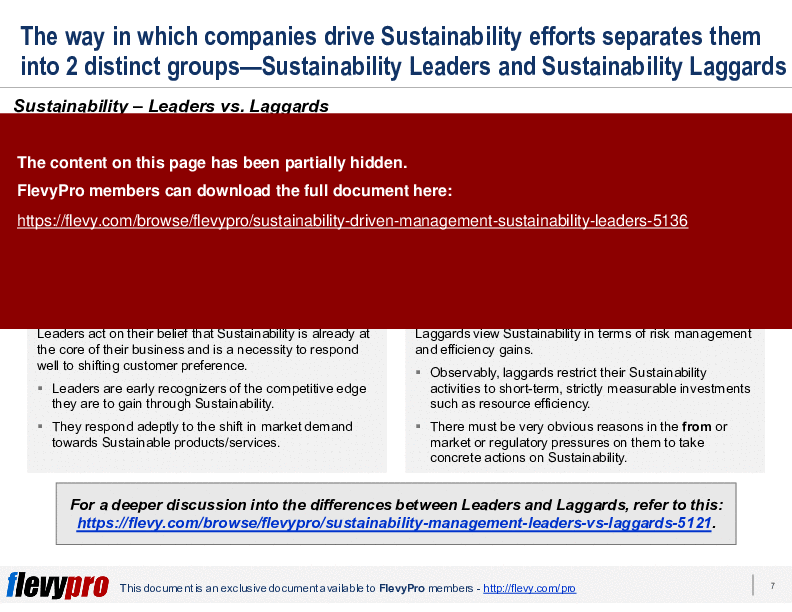
This PPT slide delineates 2 categories of companies based on sustainability approaches: Sustainability Leaders and Sustainability Laggards. Sustainability Leaders proactively integrate sustainability into their core business strategy, viewing it as essential for adapting to evolving customer preferences and gaining market advantage. They respond to increasing consumer demand for sustainable products and services. In contrast, Sustainability Laggards adopt a reactive approach, limiting their sustainability efforts to risk management and operational efficiency, often focusing on short-term initiatives. They require external pressures, such as regulatory mandates, to motivate meaningful action. This contrast highlights the leaders' foresight in sustainability as a long-term strategic vision, while laggards are driven primarily by immediate concerns.
Seven key practices adopted by Sustainability Leaders enhance organizational sustainability efforts. "Move early" emphasizes proactive sustainability initiatives despite incomplete information, encouraging decisive action amid uncertainty. "Balance long and short-term goals" aligns immediate actions with overarching sustainability visions, ensuring short-term efforts support long-term objectives. "Drive top-down and bottom-up" highlights the need for strategic direction from leadership alongside grassroots involvement for effective sustainability execution. "De-silo Sustainability" advocates for integrating sustainability into all business processes to enhance organizational effectiveness. "Measure and monitor" focuses on establishing metrics and baselines to track progress and assess initiative effectiveness. "Value intangible benefits" encourages recognizing non-quantifiable advantages of sustainability, enhancing brand reputation and stakeholder trust. "Be transparent and authentic" underscores realistic goal-setting and open communication about sustainability challenges and successes, fostering stakeholder trust. A significant majority of non-Sustainability Leaders view embracing sustainability as vital for future competitiveness.
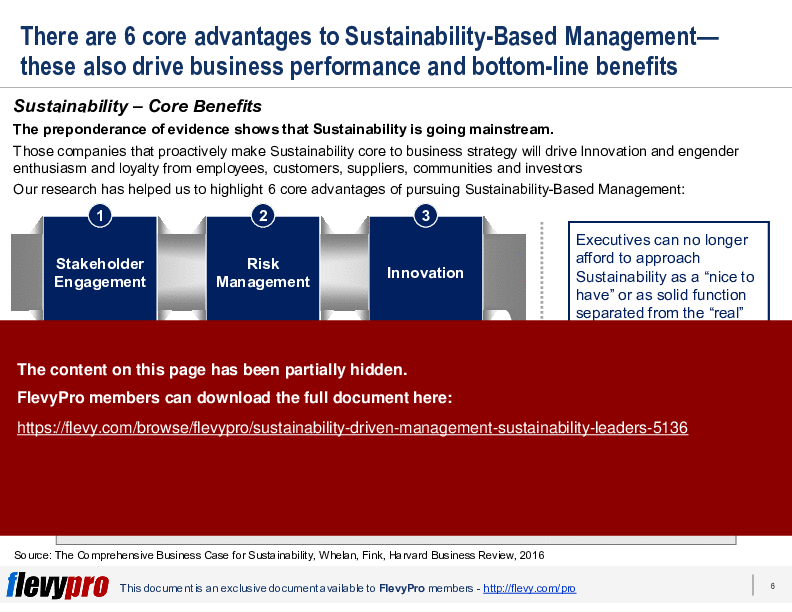
Companies integrating Sustainability-Based Management into core strategies can enhance innovation and stakeholder enthusiasm. The 6 advantages include:
1. Stakeholder Engagement: Actively involving stakeholders fosters loyalty and support.
2. Risk Management: Sustainability practices mitigate risks related to environmental and social issues.
3. Innovation: Commitment to sustainability spurs creative solutions and new business opportunities.
4. Financial Performance: Sustainable practices lead to improved financial outcomes.
5. Customer Loyalty: Consumers are increasingly drawn to brands prioritizing sustainability.
6. Employee Retention & Engagement: A strong sustainability focus enhances employee satisfaction and retention.
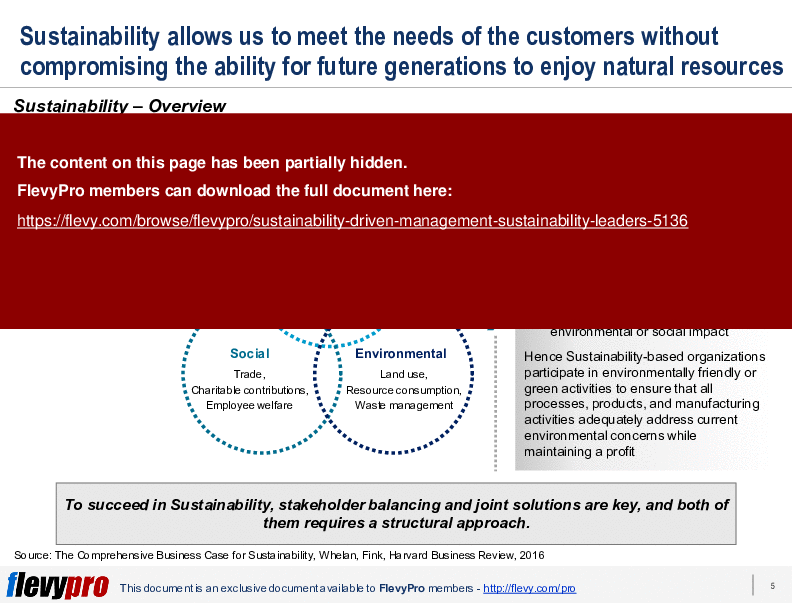
Sustainability is essential for corporate responsibility and transparency, urging companies to incorporate it into core operations for tangible business benefits.
Sustainability leaders integrate sustainability into business operations to attract new customers, enhancing engagement, market share, and profit margins. These organizations are typically large, global, or regional entities, indicating that scale is crucial for effective sustainability initiatives. Predominantly found in resource-intensive sectors, they face greater scrutiny regarding environmental impact. Sustainability leaders adopt broader definitions of sustainability, focusing on human rights, worker welfare, and community health, reflecting a holistic approach that resonates with ethically-minded consumers and stakeholders. They view sustainability as a core business strategy, proactively adapting to shifting customer preferences and driving sustainability agendas within their sectors.
This PPT slide introduces the "Move Early" practice in sustainability, encouraging leaders to take bold actions despite uncertainty. Early movers gain a competitive edge by viewing ambiguity as an opportunity for action, generating valuable data that informs future decisions. This iterative process helps organizations refine strategies over time. Industry executives, like Brian Walker from Herman Miller, emphasize that business decisions often transcend quantifiable metrics, advocating for a nuanced approach to sustainability. Roberta Bowman from Duke Energy notes that sustainability adoption is evolutionary, with companies at various implementation stages, reinforcing the need for early action to adapt to changing circumstances. Taking proactive steps is essential for reducing uncertainty and enhancing decision-making in sustainability initiatives.
Source: Best Practices in Leadership, Sustainability PowerPoint Slides: Sustainability-driven Management: Sustainability Leaders PowerPoint (PPTX) Presentation Slide Deck, LearnPPT Consulting
This framework is developed by a team of former McKinsey and Big 4 consultants. The presentation follows the headline-body-bumper slide format used by global consulting firms.
For $10.00 more, you can download this document plus 2 more FlevyPro documents. That's just $13 each.
ABOUT FLEVYPRO
This document is part of the FlevyPro Library, a curated knowledge base of documents for our FlevyPro subscribers.

FlevyPro is a subscription service for on-demand business frameworks and analysis tools. FlevyPro subscribers receive access to an exclusive library of curated business documents—business framework primers, presentation templates, Lean Six Sigma tools, and more—among other exclusive benefits.
The average daily rate of a McKinsey consultant is $6,625 (not including expenses). The average price of a Flevy document is $65.
Trusted by over 10,000+ Client Organizations
Since 2012, we have provided business templates to over 10,000 businesses and organizations of all sizes, from startups and small businesses to the Fortune 100, in over 130 countries.
"Flevy is our 'go to' resource for management material, at an affordable cost. The Flevy library is comprehensive and the content deep, and typically provides a great foundation for us to further develop and tailor our own service offer."
– Chris McCann, Founder at Resilient.World
"My FlevyPro subscription provides me with the most popular frameworks and decks in demand in today’s market. They not only augment my existing consulting and coaching offerings and delivery, but also keep me abreast of the latest trends, inspire new products and service offerings for my practice, and educate me
in a fraction of the time and money of other solutions. I strongly recommend FlevyPro to any consultant serious about success.
"
– Bill Branson, Founder at Strategic Business Architects
"One of the great discoveries that I have made for my business is the Flevy library of training materials.
As a Lean Transformation Expert, I am always making presentations to clients on a variety of topics: Training, Transformation, Total Productive Maintenance, Culture, Coaching, Tools, Leadership Behavior, etc. Flevy
It is well worth the money to purchase these presentations. Sure, I have the knowledge and information to make my point. It is another thing to create a presentation that captures what I want to say. Flevy has saved me countless hours of preparation time that is much better spent with implementation that will actually save money for my clients.
"
– Ed Kemmerling, Senior Lean Transformation Expert at PMG
"Flevy.com has proven to be an invaluable resource library to our Independent Management Consultancy, supporting and enabling us to better serve our enterprise clients.
The value derived from our [FlevyPro] subscription in terms of the business it has helped to gain far exceeds the investment made, making a subscription a no-brainer for any growing consultancy – or in-house strategy team."
– Dean Carlton, Chief Transformation Officer, Global Village Transformations Pty Ltd.
"The wide selection of frameworks is very useful to me as an independent consultant. In fact, it rivals what I had at my disposal at Big 4 Consulting firms in terms of efficacy and organization."
– Julia T., Consulting Firm Owner (Former Manager at Deloitte and Capgemini)
"I have found Flevy to be an amazing resource and library of useful presentations for lean sigma, change management and so many other topics. This has reduced the time I need to spend on preparing for my performance consultation. The library is easily accessible and updates are regularly provided. A wealth of great information."
– Cynthia Howard RN, PhD, Executive Coach at Ei Leadership
"As a consultant requiring up to date and professional material that will be of value and use to my clients, I find Flevy a very reliable resource.
The variety and quality of material available through Flevy offers a very useful and commanding source for information. Using Flevy saves me time, enhances my expertise and ends up being a good decision."
– Dennis Gershowitz, Principal at DG Associates
"As a niche strategic consulting firm, Flevy and FlevyPro frameworks and documents are an on-going reference to help us structure our findings and recommendations to our clients as well as improve their clarity, strength, and visual power. For us, it is an invaluable resource to increase our impact and value."
– David Coloma, Consulting Area Manager at Cynertia Consulting
Download our free compilation of 50+ slides and templates on Organizational Design, Change Management, and Corporate Culture. Methodologies include ADKAR, Burke-Litwin Change Model, McKinsey 7-S, Competing Values Framework, etc.