
This framework is developed by a team of former McKinsey and Big 4 consultants. The presentation follows the headline-body-bumper slide format used by global consulting firms.
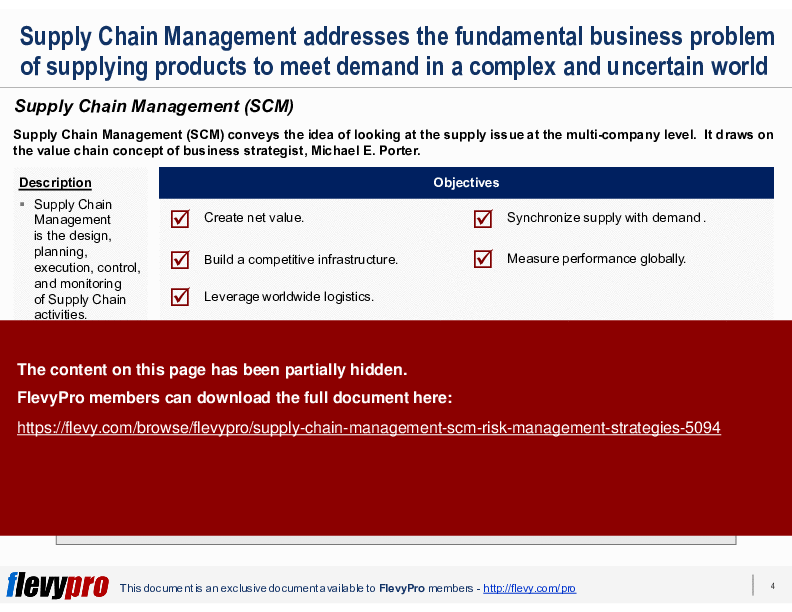
Supply chain risk management PPT: Learn key strategies to identify, assess & mitigate risks in global logistics and procurement. Download this expert SCM presentation now. SCM: Risk Management Strategies is a 25-slide PPT PowerPoint presentation slide deck (PPTX) available for immediate download upon purchase.
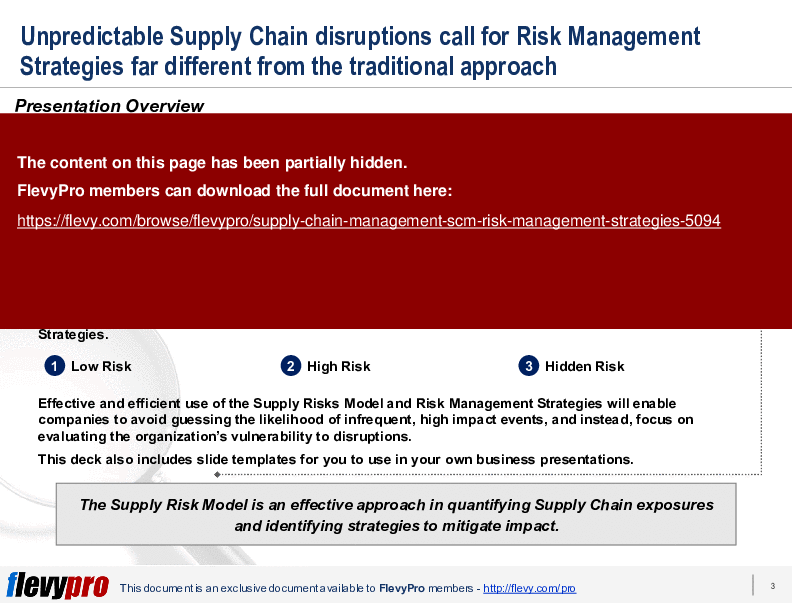
Traditional methods for managing Supply Chain Risk have ceased to be effective with the advent of low probability, high impact events, such as mega disasters, viral epidemics, or major outages. The risk is hard to quantify using traditional methods because of limited or non-existent historical data. This has resulted to companies having calamitous consequences and operational scrambling and failing.
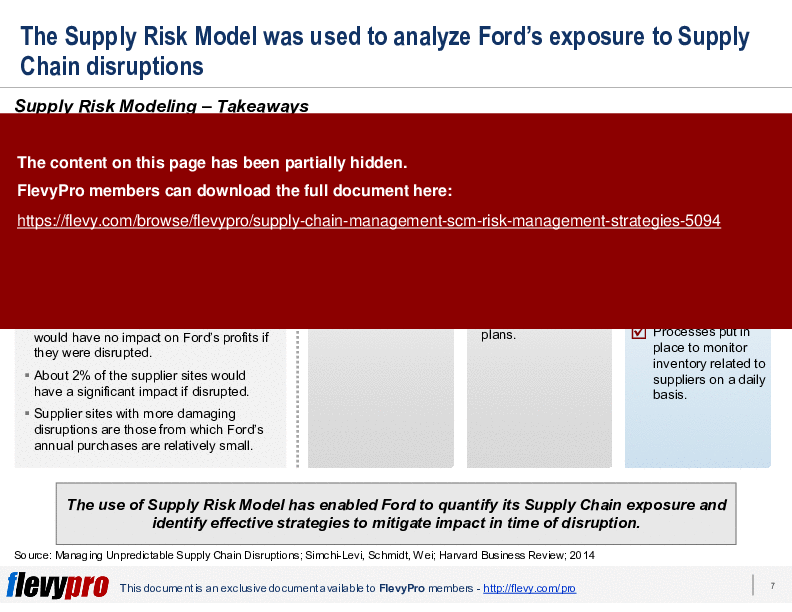
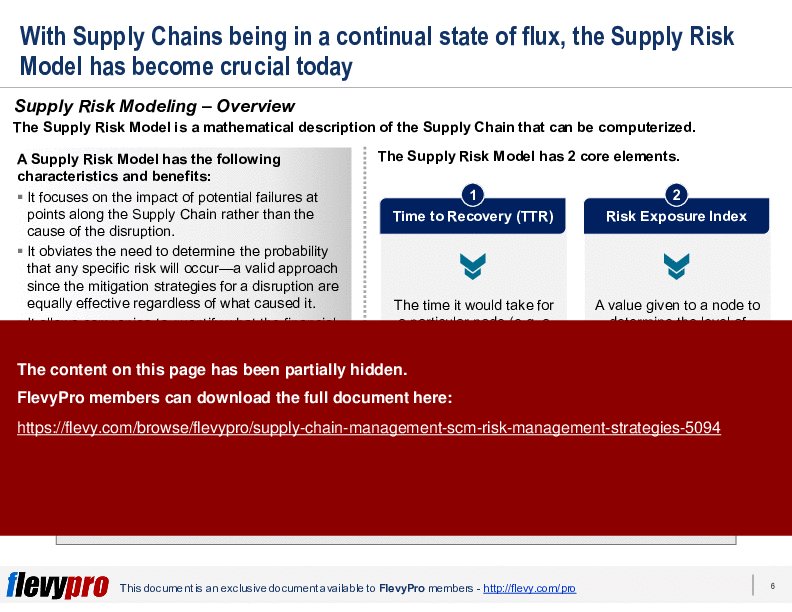
To address this predicament, a Supply Risk Model was developed that focuses on the impact of potential failures at points along the Supply Chain rather than the cause of disruptions. Using this model allows companies to quantify what the financial and operational impact would be if a critical supplier's facility were out of commission.
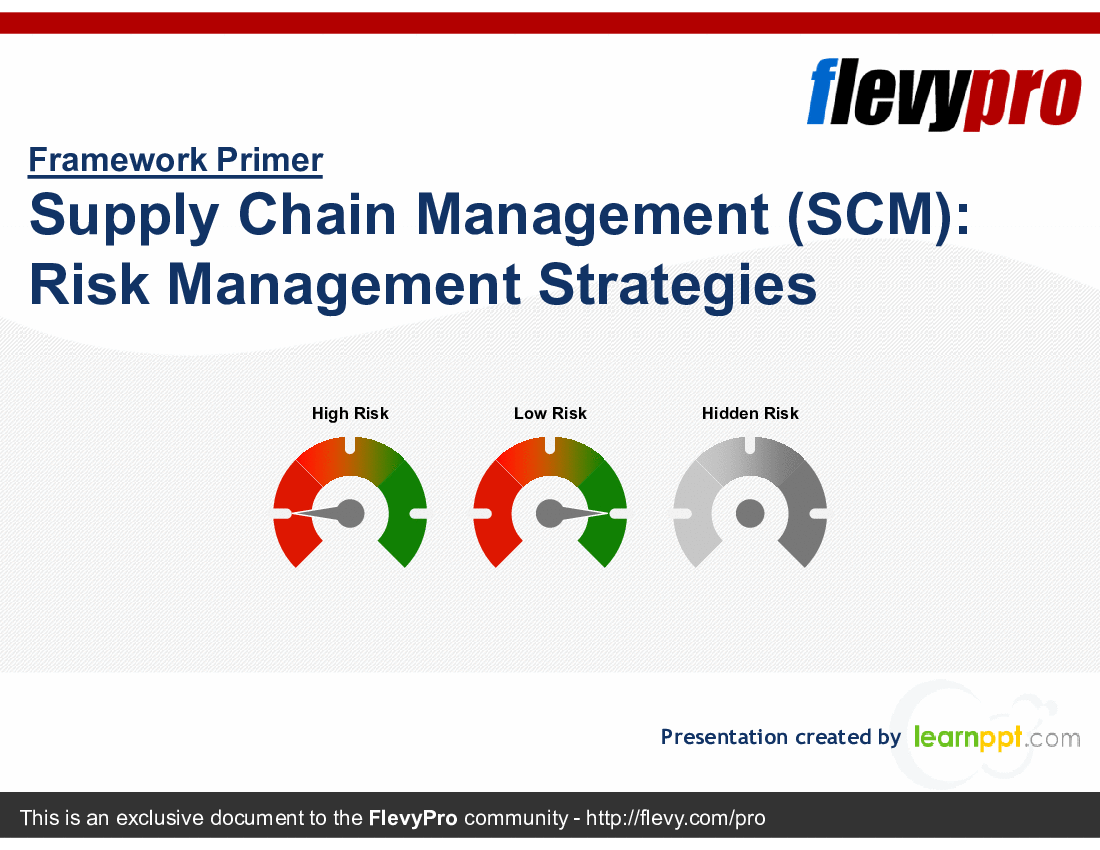
This presentation provides companies across industries to have a thorough understanding of the Supply Risk Model and the tactical advantage of using the appropriate Risk Management Strategies for a specific supplier. A company's supplier may be of 3 classification, each requiring the appropriate Risk Management Strategies.
1. Low Risk
2. High Risk
3. Hidden Risk
The Supply Risk Model is an effective approach in quantifying Supply Chain exposures and identifying strategies to mitigate impact. Effective and efficient use of the Supply Risks Model and Risk Management Strategies will enable companies to avoid guessing the likelihood of infrequent, high impact events, and instead, focus on evaluating the organization's vulnerability to disruptions.
This deck also includes slide templates for you to use in your own business presentations.
This comprehensive presentation also delves into the critical aspect of Time to Recovery (TTR), a pivotal metric in assessing supply chain resilience. By calculating TTR for each supplier site, organizations can pinpoint vulnerabilities and prioritize risk mitigation efforts. The deck outlines a systematic approach to data collection, ensuring that all pertinent information is captured for effective risk assessment. Additionally, the presentation highlights real-world applications of the Supply Risk Model, demonstrating its effectiveness in evaluating and managing supply chain disruptions. This resource equips executives with actionable insights and strategies to enhance supply chain robustness and continuity.
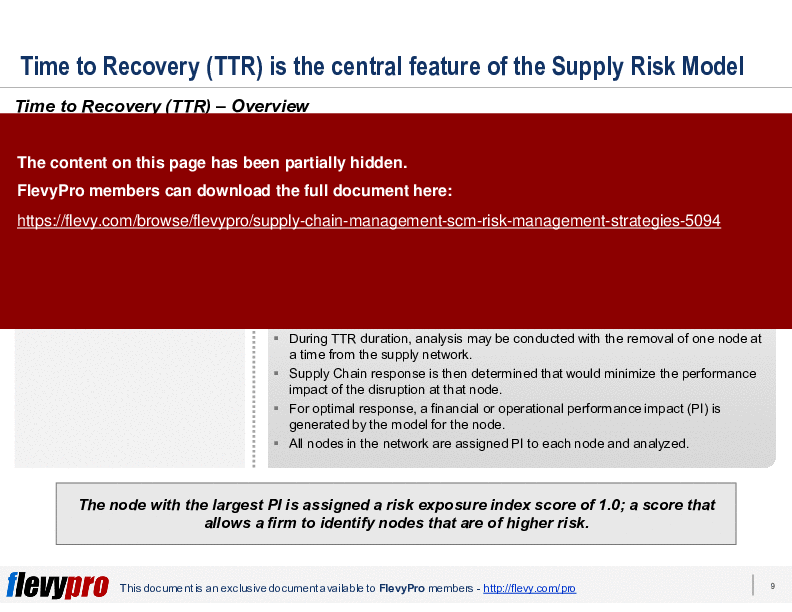
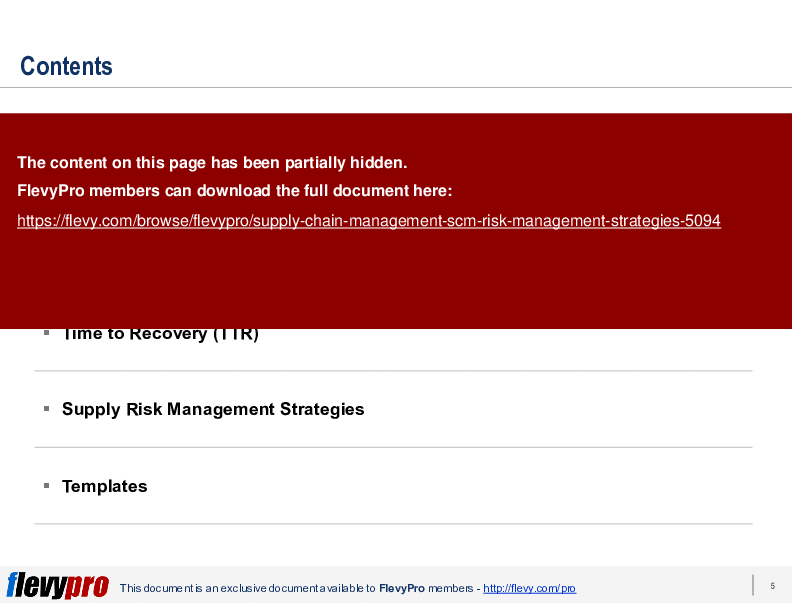
Time to Recovery (TTR) is the duration required for a supply chain node, such as a supplier facility or distribution center, to regain full operational capability after a disruption. Determining TTR values involves analyzing historical data and insights from buyers and suppliers to ensure accuracy. Integration of TTR data across supplier tiers combines operational and financial metrics, inventory levels, and demand forecasts. By modeling TTR across various durations, organizations can simulate disruptions' impacts. A performance impact index (PI) identifies higher-risk nodes, allowing firms to prioritize response strategies. The node with the highest PI receives a risk exposure index score, serving as a critical decision-making indicator. This structured approach enhances supply chain resilience against disruptions.
The Supply Risk Model quantifies financial and operational impacts of supply chain disruptions, focusing on potential failures rather than causes. Key components include Time to Recovery (TTR), which measures the duration for a node, like a supplier facility, to regain functionality post-disruption, and the Risk Exposure Index, which assigns a value to each node based on disruption impact. This index helps prioritize risk management efforts, directing attention to critical supply chain areas. The model's flexibility allows for analysis of various disruption scenarios by adjusting TTR durations, enhancing its applicability and supporting more resilient supply networks.
This PPT slide outlines a focused approach to managing supply chain risks associated with high-risk suppliers of strategic components that significantly influence manufacturing costs. The Target Segment section identifies suppliers that constitute 20% of the supplier base, but account for 80% of procurement expenditures, highlighting their critical role in the supply chain. In the Risk Mitigation Strategies section, it recommends establishing strategic partnerships to analyze and mitigate risk exposure, incentivizing suppliers to maintain multiple manufacturing sites to enhance resilience, implementing a tracking system for supplier performance, and developing Business Continuity Plans to ensure operational continuity during disruptions.
This PPT slide outlines critical components for effective data collection in risk assessment, focusing on the Time to Recovery (TTR) framework. Key categories include:
1. Supplier: Requires site location, part numbers, descriptions, costs, annual volumes, inventory levels, and total annual spend to understand operational context and financial implications.
2. Parts from this site: Demands detailed part information, including part numbers, descriptions, annual volume, and inventory data for assessing supply chain robustness.
3. End product: Links supplied parts to final products, emphasizing the OEM's end products and profit margins as metrics for evaluating economic impacts of disruptions.
4. Lead times: Highlights the importance of understanding delivery timelines from supplier sites to OEM sites to anticipate delays.
5. Time to Recovery (TTR): Defines TTR in scenarios of supplier site downtime and tooling loss, essential for developing contingency plans.
Collectively, these elements enhance risk assessment processes through comprehensive data collection.
This framework is developed by a team of former McKinsey and Big 4 consultants. The presentation follows the headline-body-bumper slide format used by global consulting firms.
For $10.00 more, you can download this document plus 2 more FlevyPro documents. That's just $13 each.
ABOUT FLEVYPRO
This document is part of the FlevyPro Library, a curated knowledge base of documents for our FlevyPro subscribers.

FlevyPro is a subscription service for on-demand business frameworks and analysis tools. FlevyPro subscribers receive access to an exclusive library of curated business documents—business framework primers, presentation templates, Lean Six Sigma tools, and more—among other exclusive benefits.
The average daily rate of a McKinsey consultant is $6,625 (not including expenses). The average price of a Flevy document is $65.
Trusted by over 10,000+ Client Organizations
Since 2012, we have provided business templates to over 10,000 businesses and organizations of all sizes, from startups and small businesses to the Fortune 100, in over 130 countries.
"As a small business owner, the resource material available from FlevyPro has proven to be invaluable. The ability to search for material on demand based our project events and client requirements was great for me and proved very beneficial to my clients. Importantly, being able to easily edit and tailor
the material for specific purposes helped us to make presentations, knowledge sharing, and toolkit development, which formed part of the overall program collateral. While FlevyPro contains resource material that any consultancy, project or delivery firm must have, it is an essential part of a small firm or independent consultant's toolbox.
"
– Michael Duff, Managing Director at Change Strategy (UK)
"FlevyPro provides business frameworks from many of the global giants in management consulting that allow you to provide best in class solutions for your clients."
– David Harris, Managing Director at Futures Strategy
"The wide selection of frameworks is very useful to me as an independent consultant. In fact, it rivals what I had at my disposal at Big 4 Consulting firms in terms of efficacy and organization."
– Julia T., Consulting Firm Owner (Former Manager at Deloitte and Capgemini)
"My FlevyPro subscription provides me with the most popular frameworks and decks in demand in today’s market. They not only augment my existing consulting and coaching offerings and delivery, but also keep me abreast of the latest trends, inspire new products and service offerings for my practice, and educate me
in a fraction of the time and money of other solutions. I strongly recommend FlevyPro to any consultant serious about success.
"
– Bill Branson, Founder at Strategic Business Architects
"Flevy.com has proven to be an invaluable resource library to our Independent Management Consultancy, supporting and enabling us to better serve our enterprise clients.
The value derived from our [FlevyPro] subscription in terms of the business it has helped to gain far exceeds the investment made, making a subscription a no-brainer for any growing consultancy – or in-house strategy team."
– Dean Carlton, Chief Transformation Officer, Global Village Transformations Pty Ltd.
"Flevy is our 'go to' resource for management material, at an affordable cost. The Flevy library is comprehensive and the content deep, and typically provides a great foundation for us to further develop and tailor our own service offer."
– Chris McCann, Founder at Resilient.World
"[Flevy] produces some great work that has been/continues to be of immense help not only to myself, but as I seek to provide professional services to my clients, it gives me a large "tool box" of resources that are critical to provide them with the quality of service and outcomes they are expecting."
– Royston Knowles, Executive with 50+ Years of Board Level Experience
"As a niche strategic consulting firm, Flevy and FlevyPro frameworks and documents are an on-going reference to help us structure our findings and recommendations to our clients as well as improve their clarity, strength, and visual power. For us, it is an invaluable resource to increase our impact and value."
– David Coloma, Consulting Area Manager at Cynertia Consulting
Receive our FREE presentation on Operational Excellence
This 50-slide presentation provides a high-level introduction to the 4 Building Blocks of Operational Excellence. Achieving OpEx requires the implementation of a Business Execution System that integrates these 4 building blocks.