
SOAR Analysis   28-slide PPT PowerPoint presentation slide deck (PPTX)
$29.00

SOAR Analysis (28-slide PPT PowerPoint presentation slide deck (PPTX)) Preview Image
Log in to unlock full preview.
SOAR Analysis (28-slide PPT PowerPoint presentation slide deck (PPTX)) Preview Image
Arrow   Click main image to view in full screen.

SOAR Analysis (PowerPoint PPTX Slide Deck)

PowerPoint (PPTX) 28 Slides FlevyPro Document

$29.00
FlevyPro price: FREE (included in subscription)
This framework is developed by a team of former McKinsey and Big 4 consultants. The presentation follows the headline-body-bumper slide format used by global consulting firms.
Add to Cart


Immediate download
Free lifetime updates

STRATEGIC ANALYSIS PPT DESCRIPTION

Editor Summary SOAR Analysis is a 28-slide PowerPoint presentation that teaches the SOAR strategic planning framework (Strengths, Opportunities, Aspirations, Results), developed by Jacqueline Stavros and Gina Hinrichs and authored for Flevy by LearnPPT Consulting. Read more

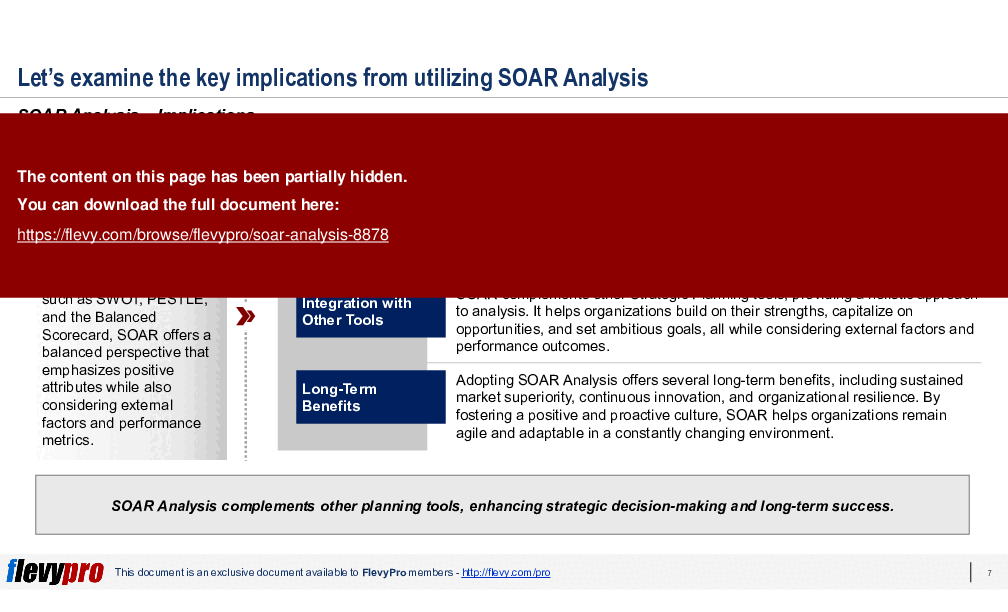
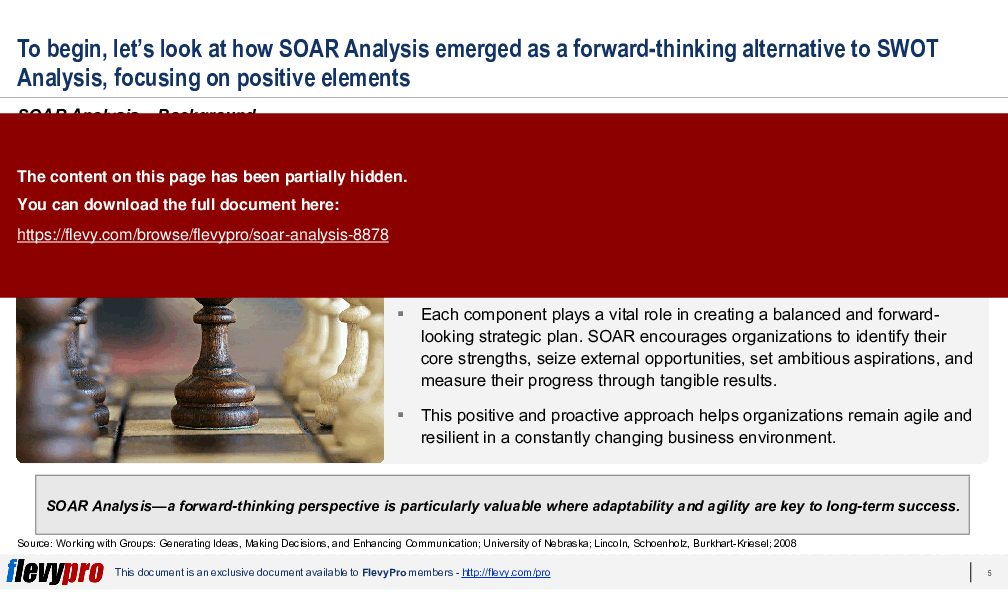
Strategic planning tools that focus on strengths and opportunities are essential for sustained growth and success. Developed by Jacqueline Stavros and Gina Hinrichs, SOAR Analysis shifts the focus from problem-solving to leveraging positive attributes, fostering a more optimistic and forward-thinking approach to strategic planning.

The SOAR Analysis—Strengths, Opportunities, Aspirations, and Results—emerges as a powerful alternative to traditional SWOT Analysis. Unlike SWOT, which emphasizes weaknesses and threats, SOAR emphasizes an organization's strengths and potential, encouraging aspirational goal-setting and measurable outcomes.

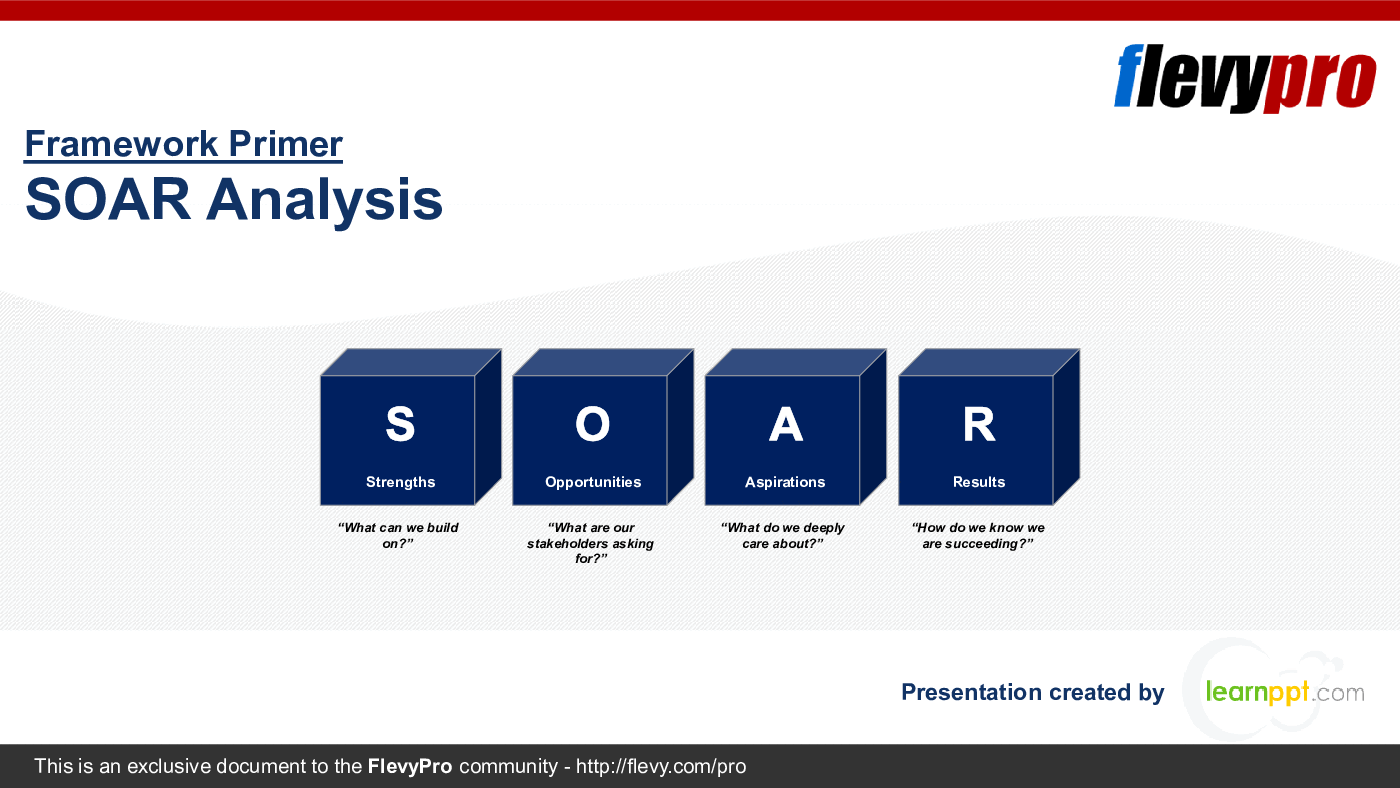
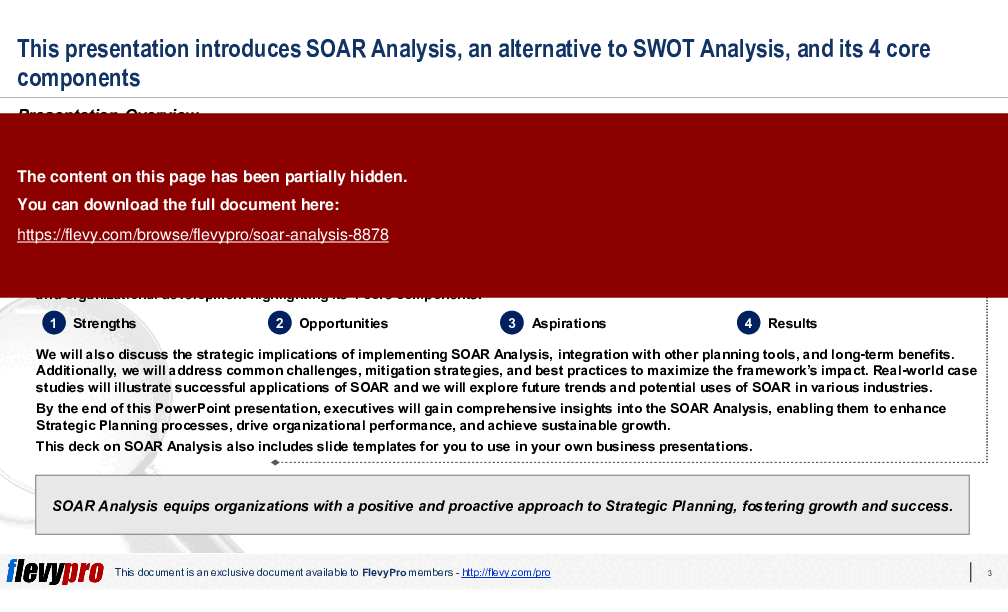
In this PowerPoint presentation, we will delve into the SOAR Analysis, exploring its background, core components, and practical applications. We will examine how each component plays a critical role in strategic decision-making and organizational development highlighting its 4 core components:

1. Strengths – This includes unique skills, resources, and assets the organization excels in. Recognizing these strengths is key for strategic development.

2. Opportunities – These may come from market trends, technological advancements, regulatory changes, or partnerships.

3. Aspirations – Aspirations provide direction and motivation, uniting stakeholders towards a common purpose. These goals should be challenging yet achievable.

4. Results – This involves setting performance indicators, tracking progress, and making adjustments as needed.

We will also discuss the strategic implications of implementing SOAR Analysis, integration with other planning tools, and long-term benefits. Additionally, we will address common challenges, mitigation strategies, and best practices to maximize the framework's impact. Real-world case studies will illustrate successful applications of SOAR and we will explore future trends and potential uses of SOAR in various industries.

By the end of this PowerPoint presentation, executives will gain comprehensive insights into the SOAR Analysis, enabling them to enhance strategic planning processes, drive organizational performance, and achieve sustainable growth.

This deck on SOAR Analysis also includes slide templates for you to use in your own business presentations.

Got a question about this document? Email us at flevypro@flevy.com.

MARCUS OVERVIEW

This synopsis was written by Marcus [?] based on the analysis of the full 28-slide presentation.


Executive Summary
The SOAR Analysis presentation offers a strategic planning framework designed to enhance organizational growth by focusing on strengths and opportunities. Developed by Jacqueline Stavros and Gina Hinrichs, this approach shifts the narrative from problem-solving to leveraging positive attributes, fostering a proactive mindset. The framework comprises 4 core components: Strengths, Opportunities, Aspirations, and Results, which collectively drive effective strategic decision-making. By utilizing this presentation, executives will gain insights into implementing SOAR Analysis to improve strategic planning processes, drive performance, and achieve sustainable growth.

Who This Is For and When to Use
•  Corporate executives seeking innovative strategic planning tools
•  Integration leaders aiming to align organizational goals with strengths
•  Consultants focused on enhancing client strategic frameworks
•  Project managers responsible for implementing strategic initiatives

Best-fit moments to use this deck:
•  During strategic planning sessions to redefine organizational goals
•  When assessing market opportunities and leveraging internal strengths
•  In workshops aimed at fostering a culture of positive change
•  For training sessions on effective strategic decision-making

Learning Objectives
•  Define the SOAR Analysis framework and its core components
•  Build actionable strategies based on organizational strengths and opportunities
•  Establish aspirational goals that align with stakeholder values
•  Measure results through defined performance indicators
•  Integrate SOAR Analysis with existing strategic planning tools
•  Identify common challenges in implementation and develop mitigation strategies

Table of Contents
•  Overview (page 3)
•  SOAR Analysis (page 3)
•  Core Components of SOAR (page 6)
•  SOAR Implementation (page 14)
•  Slide Design Structure & Templates (page 19)

Primary Topics Covered
•  Overview of SOAR Analysis - An introduction to SOAR Analysis as a strategic planning tool emphasizing strengths and opportunities.
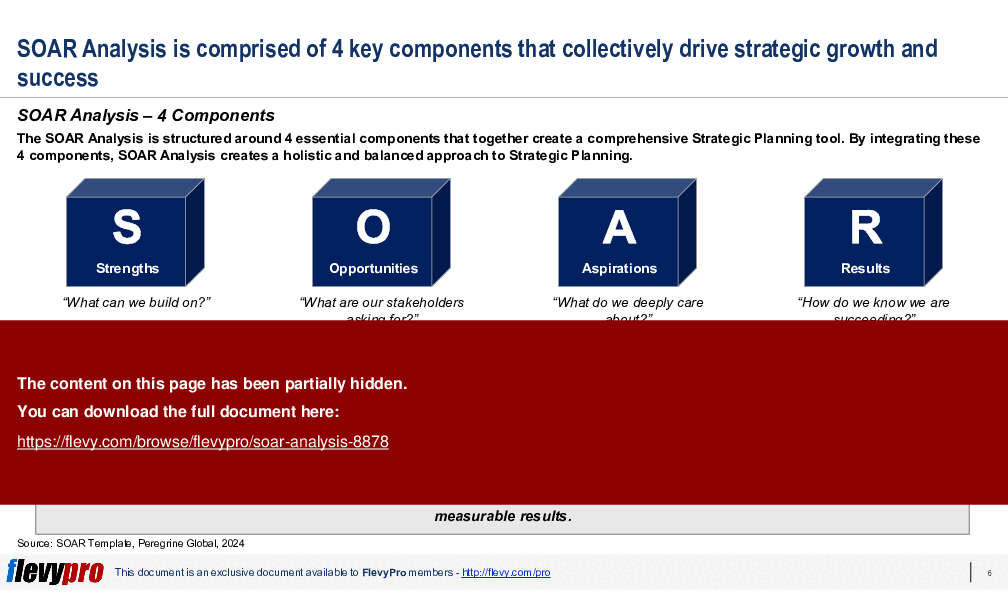
•  Core Components of SOAR - Detailed exploration of the 4 components: Strengths, Opportunities, Aspirations, and Results.
•  SOAR Implementation Challenges - Discussion of common challenges faced during implementation and strategies to overcome them.
•  Case Studies - Real-world examples demonstrating the successful application of SOAR Analysis in various organizations.
•  Future Trends and Applications - Insights into emerging trends and potential applications of SOAR Analysis across different sectors.

Deliverables, Templates, and Tools
•  SOAR Analysis framework template for strategic planning
•  Slide templates for presenting SOAR Analysis findings
•  Guidelines for conducting SOAR workshops and training sessions
•  Performance indicator tracking templates for measuring results
•  Case study summaries illustrating successful SOAR implementations

Slide Highlights
•  Introduction to SOAR Analysis and its advantages over traditional SWOT Analysis
•  Visual representation of the 4 components of SOAR
•  Case studies showcasing the successful application of SOAR in organizations like Google and Tesla
•  Challenges and best practices for implementing SOAR Analysis
•  Future trends in strategic planning and the role of SOAR Analysis

Potential Workshop Agenda
Introduction to SOAR Analysis (30 minutes)
•  Overview of the SOAR framework and its benefits
•  Discussion on the shift from SWOT to SOAR

Strengths and Opportunities Identification (60 minutes)
•  Group activity to identify organizational strengths
•  Brainstorming session on external opportunities

Setting Aspirations and Measuring Results (60 minutes)
•  Workshop on defining aspirational goals
•  Establishing performance indicators for tracking progress

Customization Guidance
•  Tailor the SOAR framework to align with specific organizational goals and culture
•  Adjust performance indicators to reflect industry-specific metrics
•  Incorporate relevant case studies that resonate with the audience's experience

Secondary Topics Covered
•  Integration of SOAR with other strategic planning tools
•  The role of Appreciative Inquiry in SOAR Analysis
•  Best practices for fostering a culture of positive change
•  Techniques for engaging stakeholders throughout the SOAR process

Topic FAQ

What are the core components of SOAR Analysis and how do they work together?

SOAR Analysis comprises 4 components: Strengths (internal capabilities), Opportunities (external possibilities), Aspirations (stakeholder-aligned long-term goals), and Results (performance indicators). The model guides teams to identify strengths, map external opportunities, set aspirational objectives informed by stakeholders, and measure progress using defined metrics tied to those aspirations and results.

How does SOAR differ from SWOT when planning strategy?

SOAR emphasizes positive leverage—focusing on Strengths and Opportunities and translating them into Aspirations and measurable Results—whereas SWOT balances internal Weaknesses and external Threats alongside strengths. In practice SOAR shifts workshop dialogue toward opportunity-driven goal-setting and performance indicators rather than problem diagnosis, using 4 components.

How can organizations measure results within a SOAR framework?

Measure Results by defining performance indicators that map to each Aspiration and tracking them over time. Typical steps include selecting metrics aligned with strategic goals, setting targets, assigning ownership, and monitoring progress in reporting cycles; the approach in SOAR emphasizes performance indicator tracking templates for measurable outcomes.

What implementation challenges are common with SOAR and how can they be mitigated?

Common challenges include resistance to change, inadequate data, and lack of stakeholder alignment. Mitigations involve structured stakeholder engagement, integrating SOAR with existing planning tools, and using workshop formats to surface evidence and commitments; these address resistance and alignment issues through facilitated activities and governance processes.

What should I look for when choosing a SOAR PowerPoint template for my team?

Choose a template that includes an explicit SOAR framework slide, facilitation-ready workshop agenda, customizable slide templates, guidance on linking aspirations to metrics, and performance indicator tracking tools. These elements help teams run sessions, capture outputs, and operationalize results using template-driven materials like workshop agendas and tracking sheets.

How should budget, timeline, and team size influence buying SOAR templates and tools?

Budget and timeline determine how much customization and facilitation support you need; smaller teams may prefer ready-to-run slide templates and a concise workshop agenda, while larger programs may require deeper integration guidance and tracking templates. Look for packages that include slide templates, workshop agenda, and performance indicator templates.

I need to run a strategic planning workshop to refocus goals—how can SOAR be used in a workshop format?

Use a structured agenda: introduce SOAR, run strengths and opportunities identification exercises, co-create aspirations with stakeholders, then define measurable results and next steps. Facilitation materials and group activities convert insights into commitments; many SOAR resources provide a sample workshop agenda and slide templates to support sessions.

After a merger, should we use SOAR or SWOT for integration planning and why?

For integration planning focused on aligning cultures and capabilities, SOAR can be preferable because it centers on leveraging combined strengths and external opportunities to define joint aspirations and measurable results. SOAR helps integration leaders convert strengths into unified goals and performance indicators using the four-component framework.

Document FAQ
These are questions addressed within this presentation.

What is SOAR Analysis?
SOAR Analysis is a strategic planning framework that focuses on leveraging strengths and opportunities to drive organizational growth and success.

How does SOAR differ from SWOT Analysis?
Unlike SWOT Analysis, which emphasizes weaknesses and threats, SOAR focuses on positive attributes, encouraging aspirational goal-setting and measurable outcomes.

What are the core components of SOAR?
The 4 core components of SOAR are Strengths, Opportunities, Aspirations, and Results, each playing a critical role in strategic decision-making.

How can organizations implement SOAR Analysis?
Organizations can implement SOAR Analysis by conducting workshops, engaging stakeholders, and integrating the framework with existing strategic planning processes.

What challenges might arise during SOAR implementation?
Common challenges include resistance to change, inadequate data, and lack of alignment among stakeholders.

How can organizations measure results in SOAR Analysis?
Results can be measured through specific performance indicators that are aligned with the organization's strategic goals and aspirations.

What are some real-world examples of SOAR Analysis?
Case studies include Google’s expansion into cloud computing and Tesla’s leadership in sustainable energy, both leveraging SOAR Analysis for strategic growth.

What future trends can SOAR Analysis address?
Emerging trends include digital transformation, sustainability initiatives, and enhancing employee engagement, all of which can be addressed through SOAR Analysis.

Glossary
•  SOAR Analysis - A strategic planning framework focusing on strengths and opportunities.
•  Strengths - Internal capabilities and assets that provide strategic leverage.
•  Opportunities - External factors that can be exploited for growth.
•  Aspirations - Long-term goals that guide organizational direction.
•  Results - Tangible outcomes that measure the success of strategic initiatives.
•  Appreciative Inquiry - A methodology that focuses on building on what works well.
•  Performance Indicators - Metrics used to assess progress and success.
•  Stakeholder Engagement - Involving stakeholders in the planning process to ensure alignment.
•  Strategic Planning - The process of defining an organization's direction and making decisions on allocating resources.
•  Implementation Challenges - Obstacles that may arise during the execution of strategic initiatives.
•  Case Studies - Real-world examples illustrating the application of SOAR Analysis.
•  Future Trends - Emerging patterns and directions in strategic planning and organizational development.

STRATEGIC ANALYSIS PPT SLIDES

Framework for Strategic Planning: SOAR Analysis

Real-World Applications of SOAR Analysis: Google and Tesla

Emerging Trends and Applications of SOAR Analysis

Defining Organizational Aspirations for Strategic Growth

Source: Best Practices in Strategic Planning PowerPoint Slides: SOAR Analysis PowerPoint (PPTX) Presentation Slide Deck, LearnPPT Consulting


$29.00
FlevyPro price: FREE (included in subscription)
This framework is developed by a team of former McKinsey and Big 4 consultants. The presentation follows the headline-body-bumper slide format used by global consulting firms.
Add to Cart
  

Did you need more documents?

Consider a FlevyPro subscription from $39/month. View plans here.

For $10.00 more, you can download this document plus 2 more FlevyPro documents. That's just $13 each.

ABOUT FLEVYPRO

This document is part of the FlevyPro Library, a curated knowledge base of documents for our FlevyPro subscribers.

FlevyPro is a subscription service for on-demand business frameworks and analysis tools. FlevyPro subscribers receive access to an exclusive library of curated business documents—business framework primers, presentation templates, Lean Six Sigma tools, and more—among other exclusive benefits.

Click here to learn more about FlevyPro and its benefits.

Did you know?
The average daily rate of a McKinsey consultant is $6,625 (not including expenses). The average price of a Flevy document is $65.


Trusted by over 10,000+ Client Organizations
Since 2012, we have provided business templates to over 10,000 businesses and organizations of all sizes, from startups and small businesses to the Fortune 100, in over 130 countries.
AT&T GE Cisco Intel IBM Coke Dell Toyota HP Nike Samsung Microsoft Astrazeneca JP Morgan KPMG Walgreens Walmart 3M Kaiser Oracle SAP Google E&Y Volvo Bosch Merck Fedex Shell Amgen Eli Lilly Roche AIG Abbott Amazon PwC T-Mobile Broadcom Bayer Pearson Titleist ConEd Pfizer NTT Data Schwab


Read Customer Testimonials

 
"As a consultant requiring up to date and professional material that will be of value and use to my clients, I find Flevy a very reliable resource.

The variety and quality of material available through Flevy offers a very useful and commanding source for information. Using Flevy saves me time, enhances my expertise and ends up being a good decision."

– Dennis Gershowitz, Principal at DG Associates
 
"As a small business owner, the resource material available from FlevyPro has proven to be invaluable. The ability to search for material on demand based our project events and client requirements was great for me and proved very beneficial to my clients. Importantly, being able to easily edit and tailor "

– Michael Duff, Managing Director at Change Strategy (UK)
 
"As a young consulting firm, requests for input from clients vary and it's sometimes impossible to provide expert solutions across a broad spectrum of requirements. That was before I discovered Flevy.com.

Through subscription to this invaluable site of a plethora of topics that are key and crucial to consulting, I "

– Nishi Singh, Strategist and MD at NSP Consultants
 
"As an Independent Management Consultant, I find Flevy to add great value as a source of best practices, templates and information on new trends. Flevy has matured and the quality and quantity of the library is excellent. Lastly the price charged is reasonable, creating a win-win value for "

– Jim Schoen, Principal at FRC Group
 
"As a niche strategic consulting firm, Flevy and FlevyPro frameworks and documents are an on-going reference to help us structure our findings and recommendations to our clients as well as improve their clarity, strength, and visual power. For us, it is an invaluable resource to increase our impact and value."

– David Coloma, Consulting Area Manager at Cynertia Consulting
 
"If you are looking for great resources to save time with your business presentations, Flevy is truly a value-added resource. Flevy has done all the work for you and we will continue to utilize Flevy as a source to extract up-to-date information and data for our virtual and onsite presentations!"

– Debbi Saffo, President at The NiKhar Group
 
"FlevyPro provides business frameworks from many of the global giants in management consulting that allow you to provide best in class solutions for your clients."

– David Harris, Managing Director at Futures Strategy
 
"I have used Flevy services for a number of years and have never, ever been disappointed. As a matter of fact, David and his team continue, time after time, to impress me with their willingness to assist and in the real sense of the word. I have concluded in fact "

– Roberto Pelliccia, Senior Executive in International Hospitality


Customers Also Like These Documents

Explore Templates on Related Management Topics


Your Recently Viewed Documents
Download our FREE Strategy & Transformation Framework Templates

Download our free compilation of 50+ Strategy & Transformation slides and templates. Frameworks include McKinsey 7-S, Balanced Scorecard, Disruptive Innovation, BCG Curve, and many more.