
 Click main image to view in full screen.
Scenario Planning in Crisis (PowerPoint PPTX Slide Deck)
PowerPoint (PPTX) 30 Slides FlevyPro Document


BCP PPT DESCRIPTION
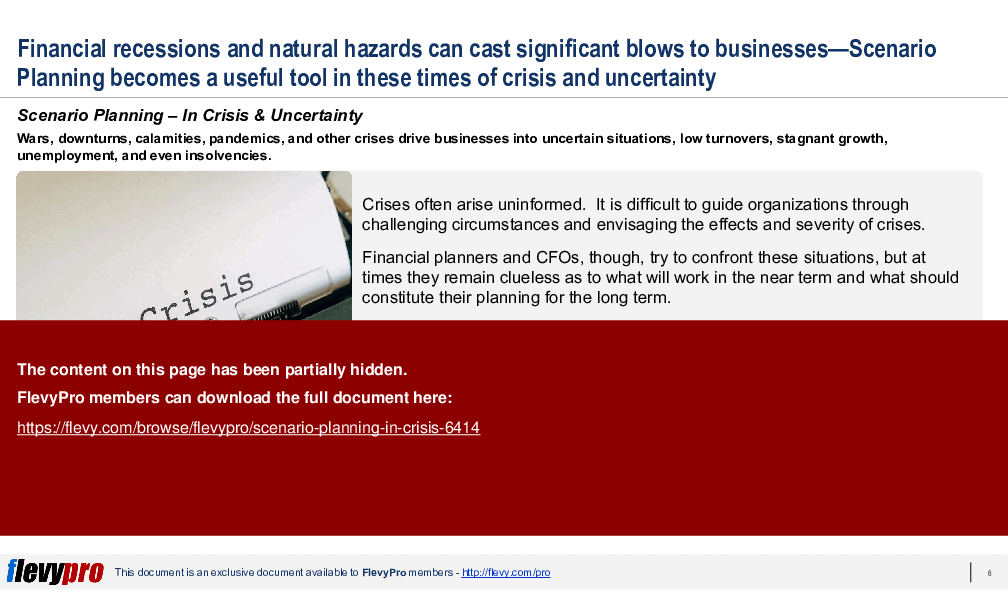
Wars, downturns, calamities, pandemics, and other crises drive businesses into uncertain situations, low turnovers, stagnant growth, unemployment, and even insolvencies.
Financial planners—especially CFOs—though, try to confront these situations, but at times they are clueless as to what will work in the near term and what should constitute their planning for the long term.
Uncertainties caused by downturns and calamities necessitate immediate actions and adjustments in Corporate Strategy. Financial planners should work on gauging the effect of the crisis and revisiting business objectives, but they usually lack the tools or data to strategically model a crisis, recommend strategies, and plan immediate interventions.
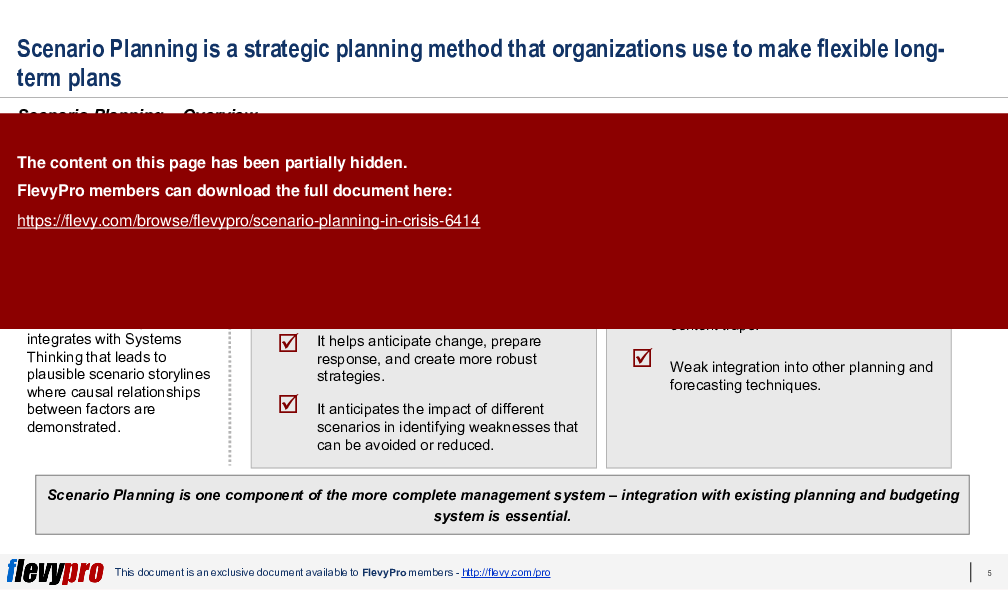
Scenario Planning is a strategic planning method that organizations use to make flexible long-term plans. It can prove be a useful tool in times of crisis and uncertainty. In fact, as part of Crisis Management, it is important to anticipate multiple crisis scenarios and develop action plans for each scenario that the current crisis may present.
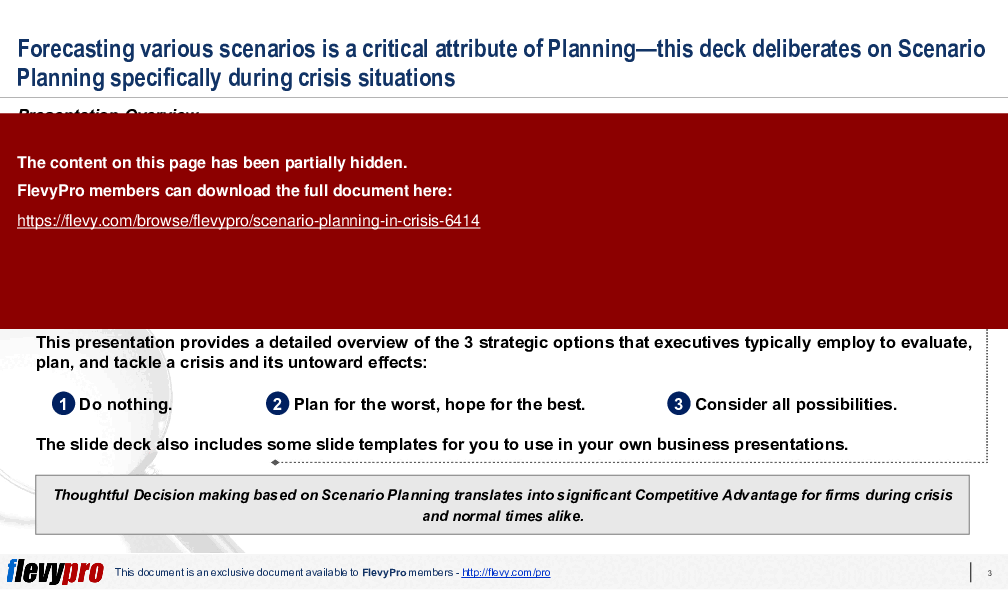
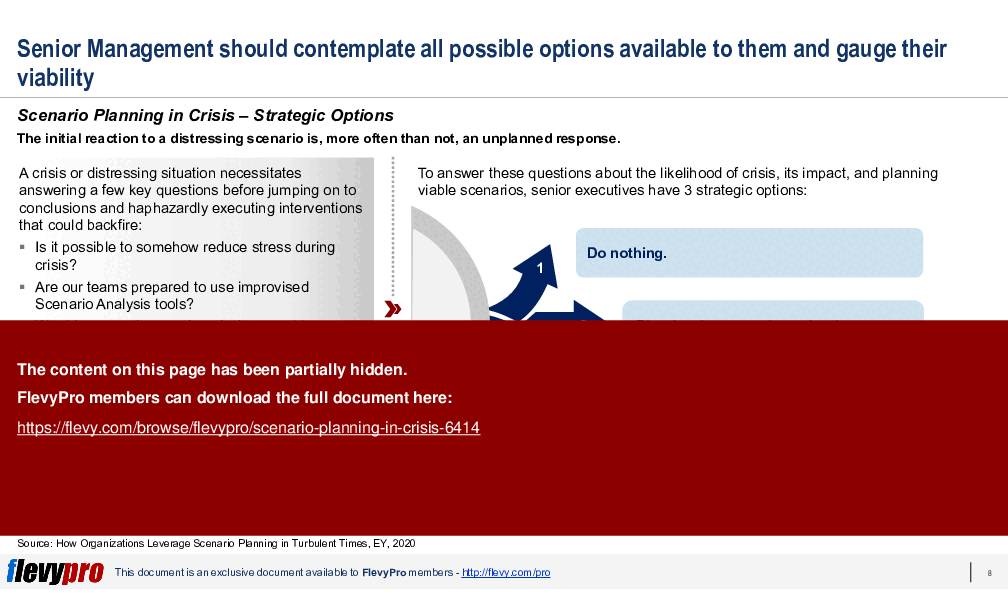
This Scenario Planning PowerPoint presentation provides a detailed overview of the 3 strategic options that executives typically employ to evaluate, plan, and tackle a crisis and its untoward effects:
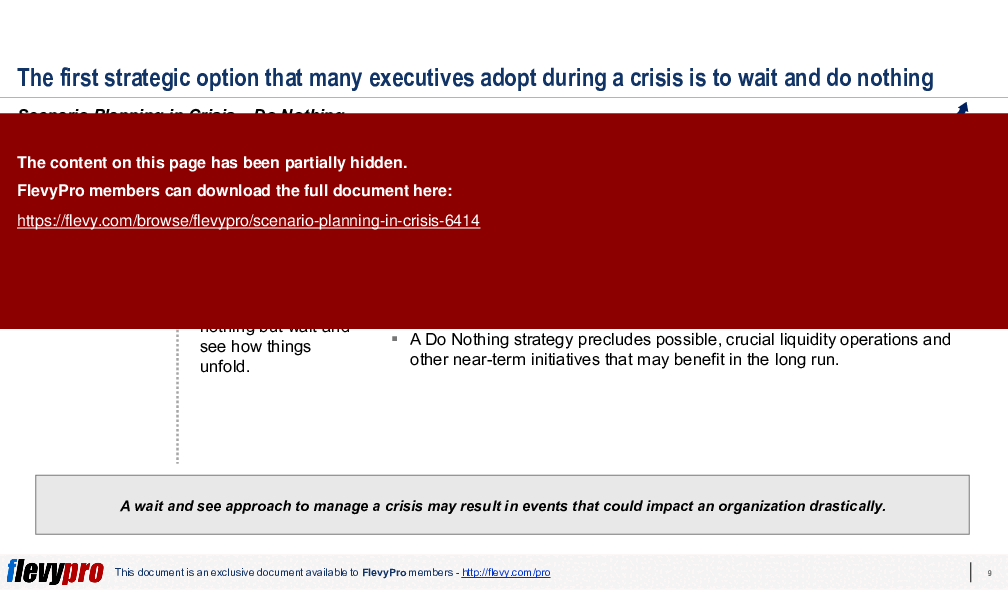
1. Do nothing – This is riskier approach that executives often employ during times of uncertainty, downturns, and calamities is to do nothing but wait and see how things unfold.
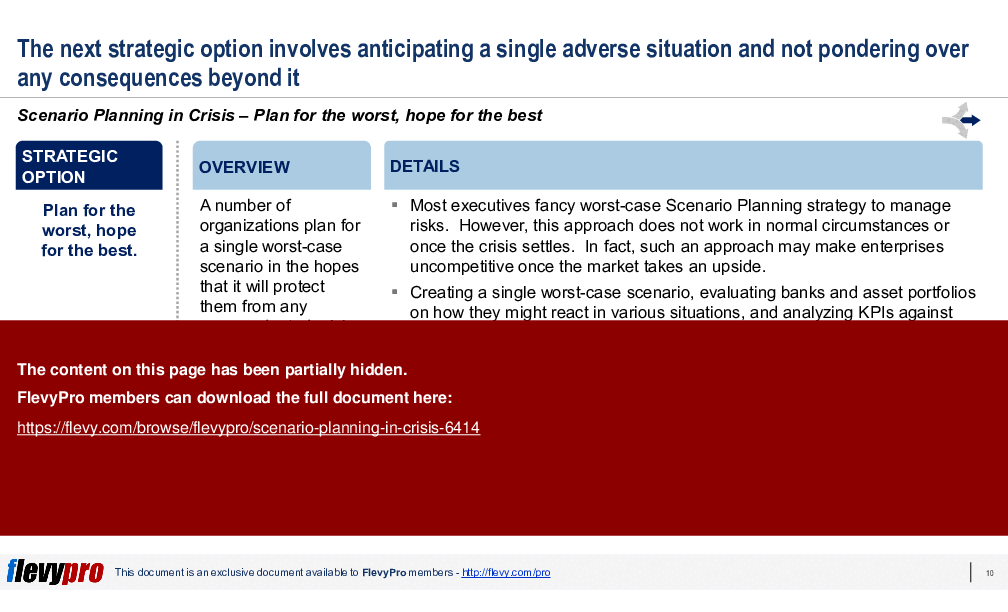
2. Plan for the worst, hope for the best – A number of organizations plan for a single worst-case scenario in the hopes that it will protect them from any unprecedented crisis situation. Such a strategy may lead to disasters.
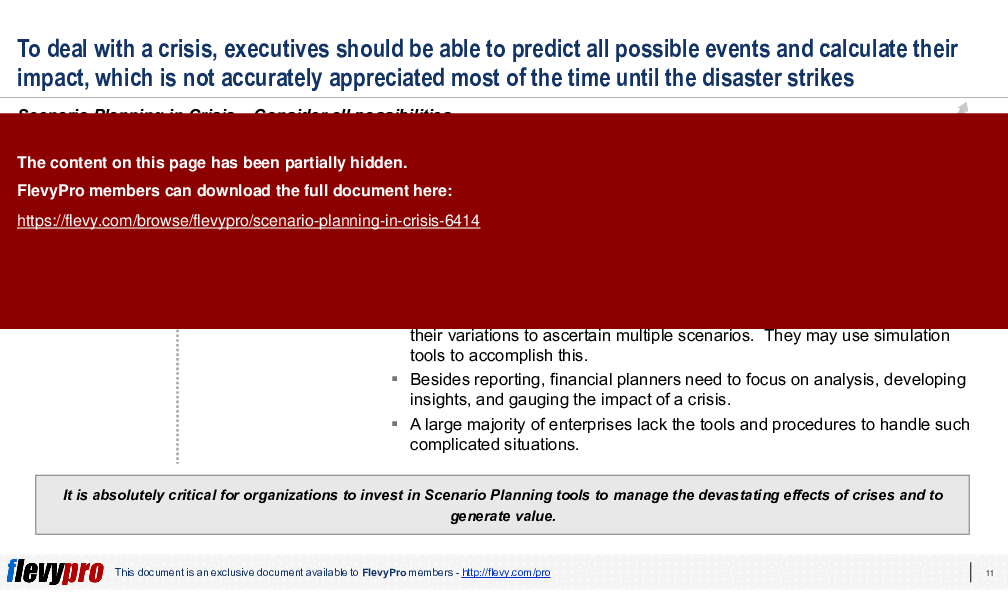
3. Consider all possibilities – Contemplating as much probabilities as possible is necessary to plan for and mitigate the adverse effects of a crisis.
Each of these strategic options is discussed in this presentation. Additional topics covered include Scenario Planning Implementation, Scenario Planning Pitfalls, Scenario Planning Modeling, among other topics.
The Scenario Planning in crisis PPT also includes some slide templates depicting the 3 Strategic Options of Scenario Planning in Crisis, guiding principles of Scenario Planning Implementation, and 6 pitfalls of Scenario Planning for you to use in your own business presentations.
This presentation emphasizes the importance of integrating scenario planning with existing planning and budgeting systems. It also highlights the need for organizations to be agile and involve stakeholders from all relevant departments.
Got a question about this document? Email us at flevypro@flevy.com.
MARCUS OVERVIEW
This synopsis was written by Marcus [?] based on the analysis of the full 30-slide presentation.
Executive Summary
The Scenario Planning in Crisis presentation is designed to equip CFOs and senior executives with essential tools for navigating crises through structured scenario planning. It emphasizes the necessity of immediate strategic adjustments in response to unforeseen events such as economic downturns, pandemics, and other crises. This presentation outlines 3 strategic options for crisis management: doing nothing, planning for the worst, and considering all possibilities. By leveraging these strategies, organizations can enhance their decision-making capabilities and foster a proactive approach to crisis management.
Who This Is For and When to Use
• CFOs and financial planners responsible for crisis management and strategic planning
• Senior executives involved in corporate strategy and decision-making
• Risk management teams tasked with assessing and mitigating crisis impacts
• Cross-functional teams needing to collaborate on crisis response strategies
Best-fit moments to use this deck:
• During the onset of a crisis requiring immediate strategic adjustments
• In preparation for potential future crises to establish proactive measures
• When conducting workshops on crisis management and scenario planning
Learning Objectives
• Define the role of scenario planning in crisis management
• Identify strategic options for responding to crises
• Develop actionable plans based on various crisis scenarios
• Assess the impact of crises on organizational objectives
• Engage stakeholders in scenario planning processes
• Foster an innovation culture to enhance crisis response capabilities
Table of Contents
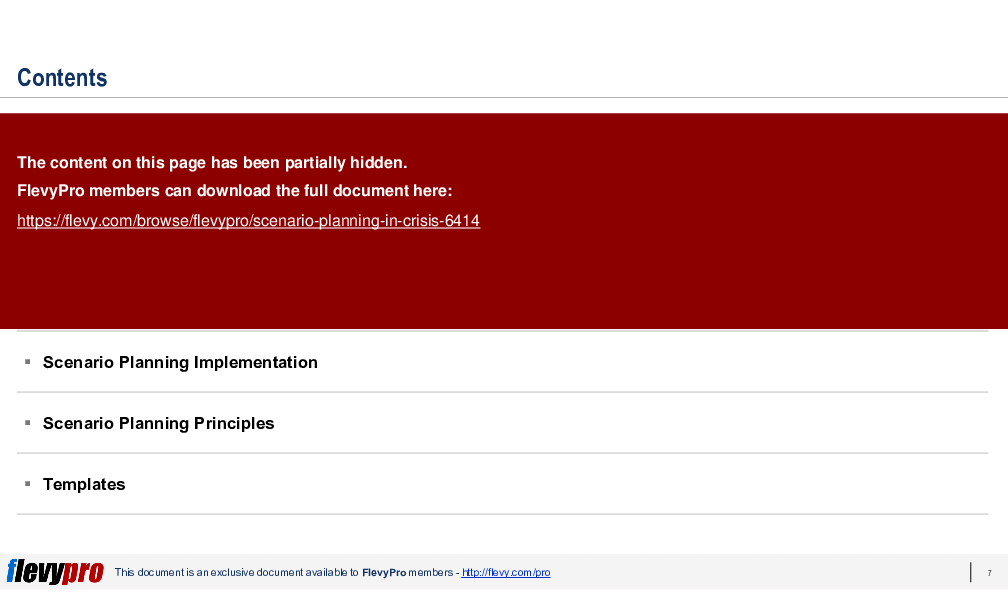
• Overview (page 3)
• Scenario Planning (page 5)
• Scenario Planning in Crisis (page 6)
• Scenario Planning Implementation (page 13)
• Scenario Planning Principles (page 17)
• Templates (page 21)
Primary Topics Covered
• Scenario Planning Overview - An introduction to scenario planning as a strategic method for flexible long-term planning, integrating various factors that influence organizational outcomes.
• Crisis Management Strategies - Exploration of 3 strategic options for executives during crises: doing nothing, planning for the worst, and considering all possibilities.
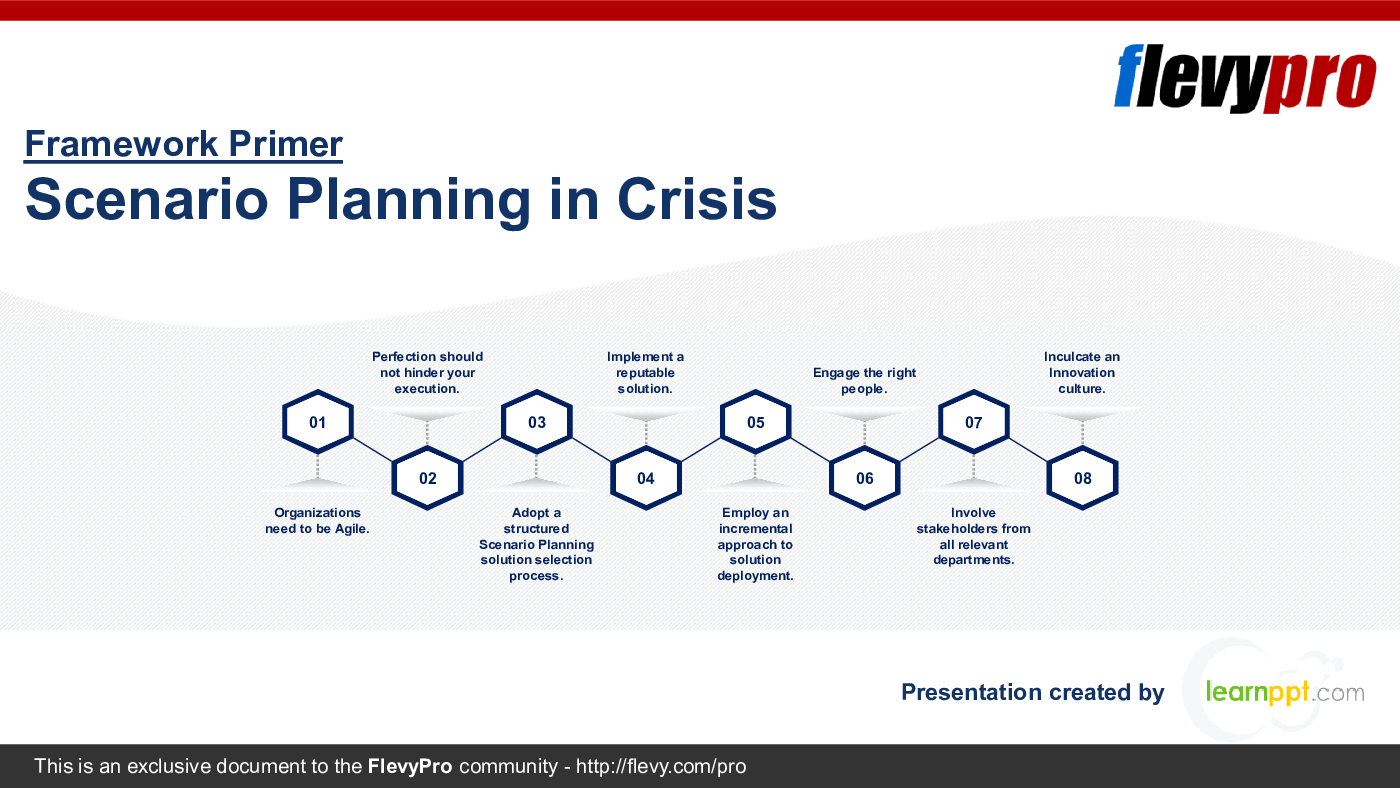
• Implementation Principles - Guidelines for effectively implementing scenario planning, emphasizing agility, stakeholder engagement, and innovation.
• Common Pitfalls - Identification of potential pitfalls in scenario planning, including analysis paralysis and lack of clear leadership vision.
• Modeling and Predictive Tools - Discussion on the use of predictive models to assess crisis impacts and inform decision-making.
Deliverables, Templates, and Tools
• Scenario planning templates for evaluating crisis options
• Frameworks for engaging stakeholders in scenario planning
• Guidelines for assessing the viability of strategic options
• Tools for modeling potential crisis impacts and outcomes
• Checklists for implementing scenario planning processes
Slide Highlights
• Overview of scenario planning and its importance in crisis management
• Detailed breakdown of the 3 strategic options for crisis response
• Guiding principles for effective scenario planning implementation
• Visual representation of common pitfalls in scenario planning
• Frameworks for modeling and predicting crisis impacts
Potential Workshop Agenda
Introduction to Scenario Planning (30 minutes)
• Overview of scenario planning concepts and importance
• Discussion of case studies illustrating successful scenario planning
Crisis Response Strategies (60 minutes)
• Exploration of the 3 strategic options
• Group activity to evaluate each option's viability
Implementation Principles (45 minutes)
• Review of guiding principles for effective scenario planning
• Interactive session on stakeholder engagement strategies
Customization Guidance
• Tailor scenario templates to reflect specific organizational contexts and crisis scenarios
• Adjust implementation principles to align with organizational culture and structure
• Incorporate relevant data and insights into modeling tools for accurate predictions
Secondary Topics Covered
• Importance of agility in crisis management
• Role of innovation in enhancing crisis response
• Integration of scenario planning with existing strategic frameworks
• Techniques for measuring uncertainty and risk in crisis scenarios
Topic FAQ
What is scenario planning and how is it used in crisis management?
Scenario planning is a strategic method for creating flexible long-term plans by considering multiple potential futures and their impacts. In crisis management it helps anticipate challenges, develop specific action plans for different outcomes, and align stakeholders around responses to multiple crisis scenarios and action plans.What are the main strategic options leaders consider in crisis scenario planning?
Leaders typically consider 3 strategic options when planning for crises: doing nothing (wait and see), planning for the worst (single worst-case focus), and considering all possibilities (multiple-probability planning). These 3 options are the core decision paths discussed in Scenario Planning in Crisis.How do organizations implement scenario planning effectively during a crisis?
Effective implementation involves a structured solution-selection process, engaging the right stakeholders, fostering an innovation culture, and integrating scenario outputs with existing planning and budgeting systems. The Scenario Planning in Crisis deck provides implementation principles and templates to guide these steps and stakeholder engagement.How can predictive models be used to measure uncertainty in crisis scenarios?
Predictive models and scenario-analysis tools quantify potential impacts by simulating outcomes based on historical data and assumptions, helping prioritize responses and resource allocation. Organizations use these models to translate uncertainty into measurable scenarios using modeling tools and scenario analysis techniques.What should I look for when buying a scenario planning template for crisis response?
Choose templates that include evaluation frameworks for crisis options, stakeholder-engagement guides, viability-assessment guidelines, modeling tool compatibility, and implementation checklists. Also check whether the templates support integration with existing planning and budgeting systems and workshop facilitation materials.Are pre-built scenario planning templates worth purchasing compared to building them in-house?
Building in-house can require a dedicated team and time; deployment to a minimum viable product can take at least 3 months. Pre-built templates provide ready frameworks—scenario templates, stakeholder frameworks, modeling tools, and checklists—that can shorten setup time compared with an in-house build requiring at least 3 months.I need to run a crisis workshop—what agenda and activities should I include?
A suggested agenda includes an introductory 30-minute overview of scenario concepts, a 60-minute session exploring the 3 strategic options with group evaluation activities, and a 45-minute session on implementation principles and stakeholder engagement. These timed sessions mirror the sample workshop agenda in the presentation.How do I avoid common pitfalls like analysis paralysis when doing scenario planning?
Prevent pitfalls by ensuring clear leadership vision, engaging diverse stakeholders, retaining extreme scenarios for consideration, setting decision criteria, and moving from analysis to action with implementation checklists. The presentation highlights common pitfalls and provides 6 identified pitfalls to watch for.Document FAQ
These are questions addressed within this presentation.
What is scenario planning?
Scenario planning is a strategic method used to create flexible long-term plans by considering various potential future scenarios and their impacts.
Why is scenario planning important during a crisis?
It enables organizations to anticipate potential challenges and develop actionable strategies, improving their ability to respond effectively to unforeseen events.
What are the 3 strategic options for crisis management?
1. Do nothing.
2. Plan for the worst, hope for the best.
3. Consider all possibilities.
How can organizations implement scenario planning effectively?
By adopting a structured solution selection process, engaging the right stakeholders, and fostering an innovation culture.
What are common pitfalls in scenario planning?
Common pitfalls include analysis paralysis, lack of clear leadership vision, and discarding extreme scenarios too quickly.
How long does it take to implement scenario planning tools?
Deployment can take at least 3 months for a minimum viable product and may require a dedicated team for effective implementation.
What role do stakeholders play in scenario planning?
Stakeholders from various departments contribute insights, expertise, and perspectives essential for developing comprehensive crisis response strategies.
How can organizations measure uncertainty in crisis scenarios?
By using predictive models and scenario analysis tools to quantify potential impacts and inform decision-making.
Glossary
• Scenario Planning - A strategic method for creating flexible long-term plans based on various potential future scenarios.
• Crisis Management - The process of preparing for, responding to, and recovering from crises.
• Agility - The ability to adapt quickly to changing circumstances.
• Stakeholders - Individuals or groups with an interest in the organization's performance and outcomes.
• Predictive Models - Tools used to forecast potential outcomes based on historical data and trends.
• Analysis Paralysis - A situation where overthinking prevents timely decision-making.
• Innovation Culture - An organizational environment that encourages creativity and experimentation.
• Implementation Principles - Guidelines for effectively executing scenario planning processes.
• Pitfalls - Common mistakes or challenges that can hinder effective scenario planning.
• Modeling Tools - Software or frameworks used to simulate potential scenarios and their impacts.
• Strategic Options - Different approaches organizations can take in response to crises.
• Uncertainty - The state of having limited knowledge about potential outcomes.
BCP PPT SLIDES
Source: Best Practices in Scenario Planning, Crisis Management PowerPoint Slides: Scenario Planning in Crisis PowerPoint (PPTX) Presentation Slide Deck, LearnPPT Consulting
Did you need more documents?
Consider a FlevyPro subscription from $39/month. View plans here.
For $10.00 more, you can download this document plus 2 more FlevyPro documents. That's just $13 each.