
This framework is developed by a team of former McKinsey and Big 4 consultants. The presentation follows the headline-body-bumper slide format used by global consulting firms.
Editor Summary
32-slide PowerPoint presentation of Rumelt's Strategy Evaluation Framework by LearnPPT Consulting, presenting a structured approach to assess strategy quality across 4 specific criteria: Consistency, Consonance, Feasibility, and Advantage.
Read moreThe deck explains how to review internal and external factors, measure performance, and identify corrective actions, and includes slide templates and a case study. Target users include strategy executives, management consultants, and business leaders conducting strategy reviews. Sold as a digital download on Flevy with immediate digital download.
Use this presentation when an organization needs to assess whether an existing strategy is aligned with objectives, responsive to external conditions, resourced for execution, or delivering competitive advantage.
Strategy executives auditing strategic alignment by testing objectives and actions for internal conflicts using the Consistency criterion.
Management consultants diagnosing strategy-market fit by mapping external trends to strategic choices via Consonance analysis.
Business unit leaders checking resource gaps against planned initiatives under Feasibility.
Corporate strategy teams validating sources of sustained edge using the Advantage assessment and related case study.
The 4-criterion approach — Consistency, Consonance, Feasibility, Advantage — provides a structured, criterion-based evaluation consistent with common strategic consulting practice.
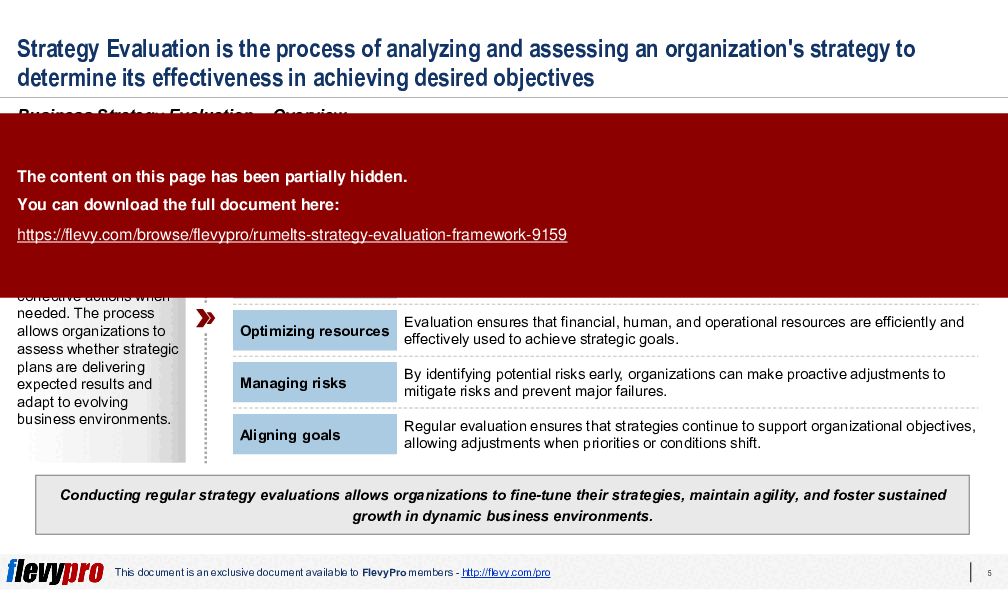
Strategy Evaluation involves assessing a strategy's performance against established goals, identifying deviations or gaps, and making necessary adjustments to enhance future outcomes. The process encompasses reviewing internal and external factors, measuring performance, and implementing corrective actions where needed.
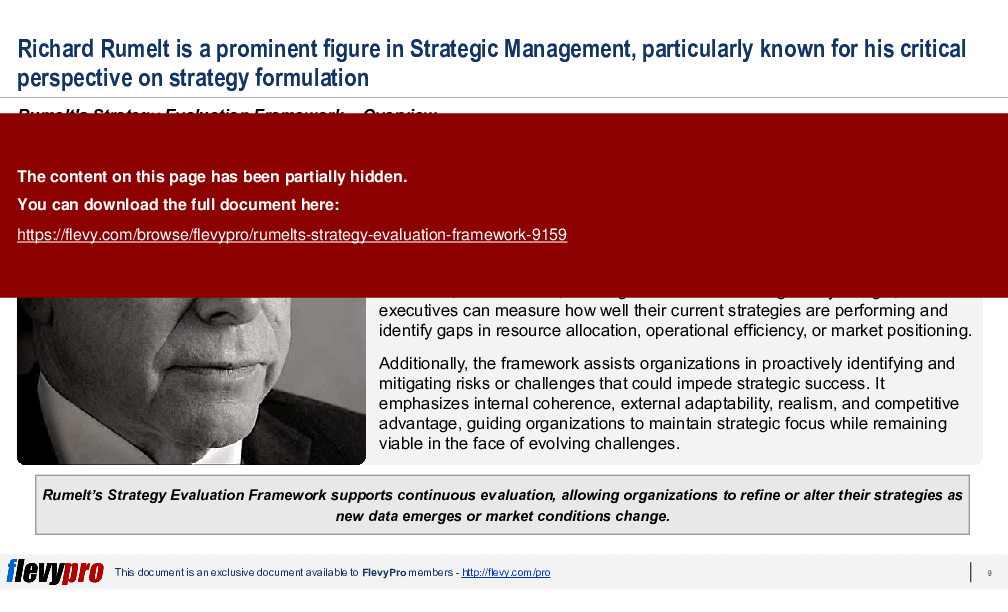
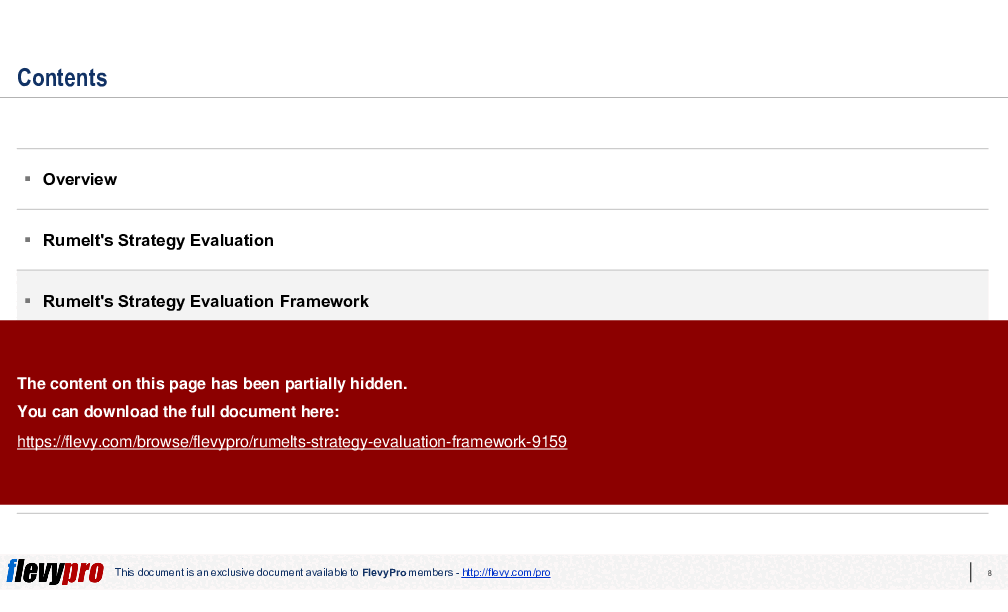
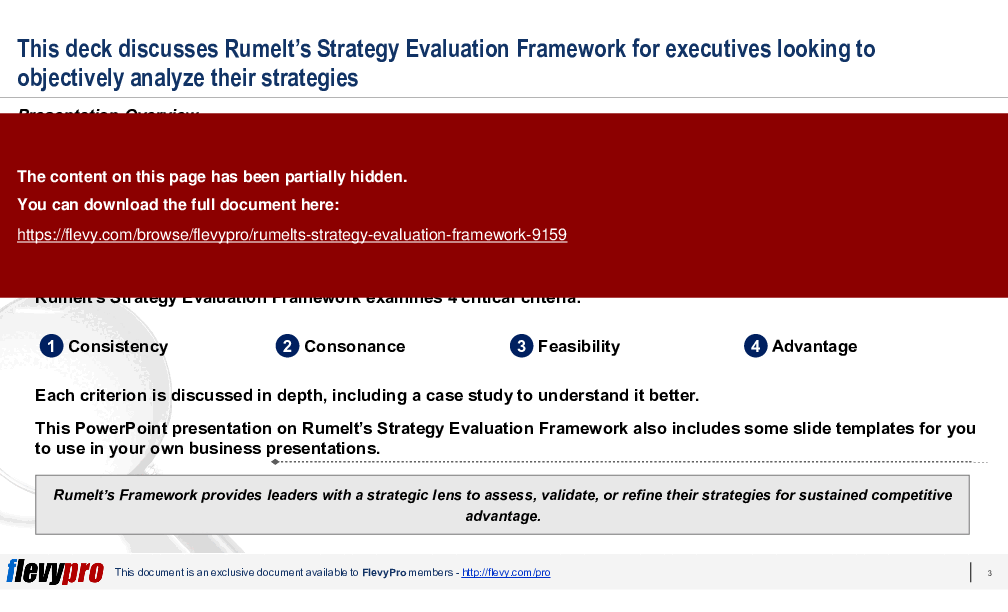
This presentation delves into Richard Rumelt's Strategy Evaluation Framework, a comprehensive tool for evaluating the effectiveness and quality of a strategy. The framework emphasizes aligning the strategy with the organization's goals and its competitive environment, offering a structured approach for enterprises to assess strategic efficacy. Rumelt's Framework provides leaders with a strategic lens to assess, validate, or refine their strategies for sustained competitive advantage.
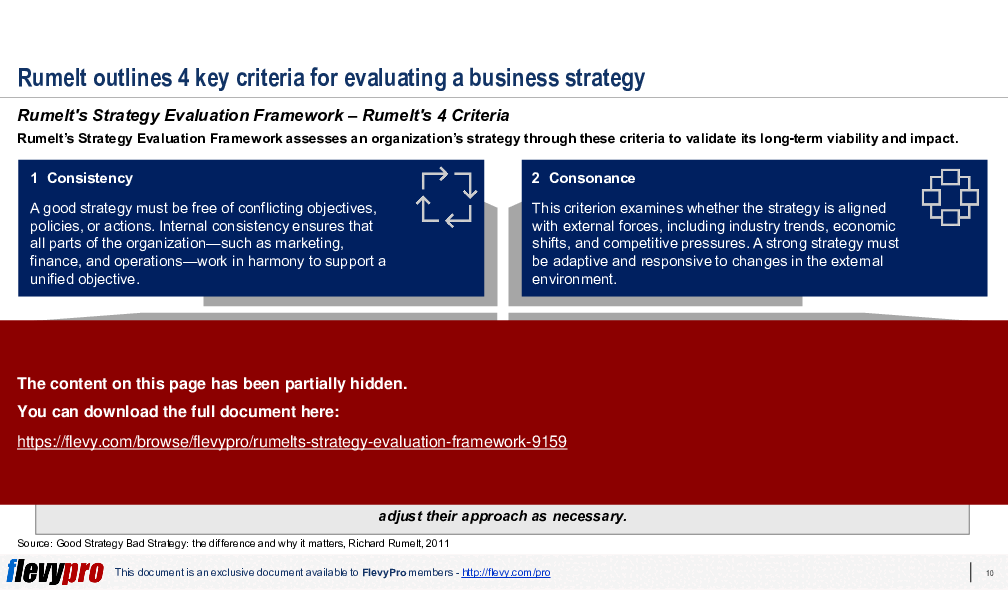
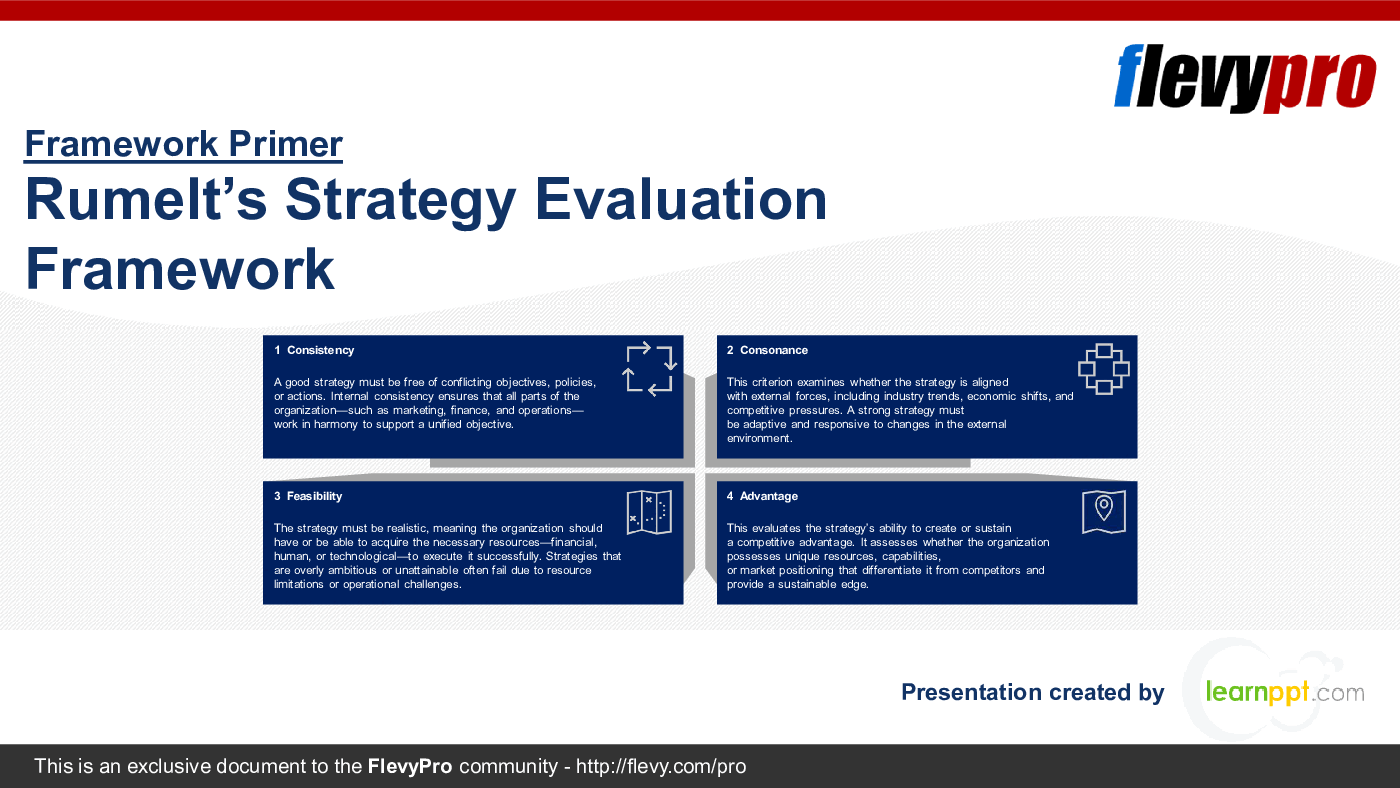
1. Consistency – A good strategy must be free of conflicting objectives, policies, or actions. Internal consistency ensures that all parts of the organization—such as marketing, finance, and operations—work in harmony to support a unified objective.
2. Consonance – This criterion examines whether the strategy is aligned with external forces, including industry trends, economic shifts, and competitive pressures. A strong strategy must be adaptive and responsive to changes in the external environment.
3. Feasibility – The strategy must be realistic, meaning the organization should have or be able to acquire the necessary resources—financial, human, or technological—to execute it successfully. Strategies that are overly ambitious or unattainable often fail due to resource limitations or operational challenges.
4. Advantage – This evaluates the strategy's ability to create or sustain a competitive advantage. It assesses whether the organization possesses unique resources, capabilities, or market positioning that differentiate it from competitors and provide a sustainable edge.
Each criterion is discussed in depth, including a case study to understand it better.
This PPT presentation on Rumelt's Strategy Evaluation Framework also includes some slide templates for you to use in your own business presentations.
What are the core components of Rumelt's Strategy Evaluation Framework?
Rumelt's framework evaluates strategy quality across 4 core components: Consistency (no internal conflicts), Consonance (alignment with external forces), Feasibility (availability or achievability of resources), and Advantage (ability to create or sustain competitive differentiation). These are presented and discussed as 4 distinct criteria.
How do I use the Consistency criterion to spot conflicting objectives?
Use Consistency to test whether objectives, policies, and actions across functions (marketing, finance, operations) support a single objective rather than contradicting each other. The criterion focuses on internal alignment and is addressed in the framework alongside a case study illustrating conflicting objectives and resolution.
What does Consonance assess when reviewing strategy against the market?
Consonance assesses whether a strategy is adaptive and aligned with external forces—industry trends, economic shifts, and competitive pressures—ensuring responsiveness to change. Rumelt’s framework treats Consonance as the external-alignment criterion within its four-part evaluation.
How should organizations evaluate Feasibility for a planned strategy?
Feasibility examines whether the organization has or can acquire necessary resources—financial, human, or technological—to execute the strategy. The framework highlights realistic assessment of resource constraints and acquisition capability under the Feasibility criterion.
What should I look for when selecting a strategy evaluation PowerPoint template?
Choose a template that helps review internal and external factors, measure performance, and document corrective actions; ideally it should map evaluation criteria to evidence and conclusions. Flevy's Rumelt's Strategy Evaluation Framework PPT offers slide templates and a case study covering the 4 criteria.
Are prebuilt strategy-evaluation slides worth buying for a leadership review?
Prebuilt slides can speed preparation and standardize discussion points during leadership reviews, especially if they map evaluation steps to evidence and corrective actions. Rumelt's Strategy Evaluation Framework presentation includes slide templates and examples within a 32-slide deck.
Which framework helps determine whether a strategy creates sustainable competitive advantage?
Use the Advantage criterion of Rumelt's framework, which evaluates whether unique resources, capabilities, or positioning differentiate the organization from competitors and can be sustained. Rumelt's Strategy Evaluation Framework addresses Advantage as one of its 4 evaluation criteria.
After a merger, how can I check for conflicting objectives across combined functions?
Apply the Consistency criterion to test whether combined objectives, policies, and actions across merged functions produce conflicts or support unified goals. The framework discusses Consistency with examples and includes a case study to illustrate post-merger alignment issues.
Rumelt's Strategy Evaluation Framework highlights "Consonance," which requires organizational strategies to align with external environmental factors such as market dynamics, economic conditions, competition, and technological advancements. A consonant strategy effectively anticipates and responds to these forces. Key components include "External Environment Fit," emphasizing the need for strategies to adapt to market trends and customer needs, and "Long-term Relevance," which stresses the importance of forward-looking strategies that capitalize on future changes. "Stakeholder Alignment" indicates that strategies must resonate with internal objectives and external stakeholder expectations. "Opportunity Exploitation" focuses on proactively seizing opportunities from shifts in technology or market preferences while avoiding conflicting actions. "Avoiding Strategic Myopia" warns against narrow internal focus that can create strategic blind spots. An example illustrates a retail company's transition to e-commerce, demonstrating how consonant strategies ensure long-term competitiveness.
This PPT slide presents a case study on Apple Inc. applying Rumelt’s Strategy Evaluation Framework, focusing on the consistency criterion. Apple differentiates itself through innovation and ecosystem integration, ensuring seamless product functionality that fosters customer loyalty. Regular updates and hardware-software integration reflect Apple’s commitment to high design standards. The analysis shows that Apple’s strategy aligns with its vision of delivering innovative products that enhance user experience, with no contradictions in policies or resources. This alignment supports Apple's long-term objectives of creating premium products and sustaining market leadership, illustrating how a structured framework can guide strategic evaluation and maintain focus on core goals.
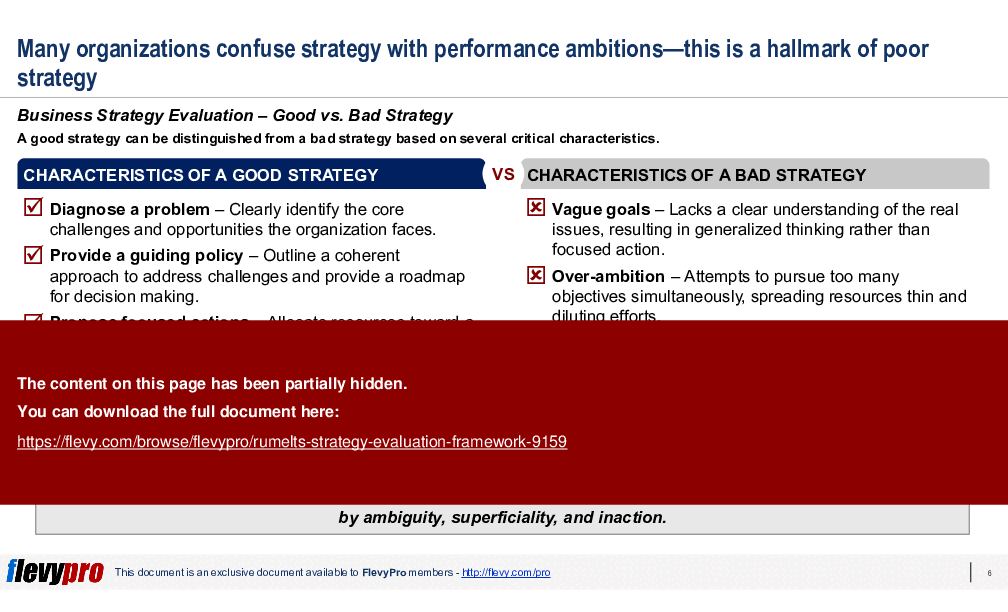
This PPT slide presents a comparative analysis of effective and ineffective strategic planning. Key characteristics of a good strategy include diagnosing core challenges and opportunities, providing a guiding policy for coherent decision-making, proposing focused actions to allocate resources effectively, and maintaining adaptability to respond to unforeseen changes. In contrast, a bad strategy is marked by vague goals that reflect a lack of understanding, over-ambition that dilutes efforts by tackling too many objectives, an absence of an actionable plan relying on buzzwords, and failure to address reality by underestimating challenges. These distinctions help organizations evaluate their strategic approaches for clarity and effectiveness.
This PPT slide analyzes the feasibility criterion of Rumelt's Strategy Evaluation Framework in relation to Apple. Feasibility requires Apple to evaluate its resources and capabilities for executing strategic initiatives. Key assets include Apple's financial strength, technological expertise, and large cash reserves, which provide the flexibility to invest in research and development, pursue acquisitions, and expand globally. Additionally, Apple's skilled workforce and advanced manufacturing capabilities are essential for scaling new products and services. The analysis confirms that Apple's strong financial, technological, and operational resources support its long-term objectives, while its disciplined approach to product launches and operational execution is critical for maintaining market position.
This PPT slide outlines the "Advantage" criterion in Rumelt's Strategy Evaluation Framework, focusing on how strategies establish durable market positions. Key components include Differentiation, which requires unique products or services to foster customer loyalty; Cost Leadership, where firms achieve advantages by producing at lower costs while maintaining quality; and Core Capabilities, unique assets or skills that are difficult for competitors to imitate. Barriers to Imitation, such as patents and brand equity, protect these advantages. Lastly, Growth Potential indicates that a strong advantage allows firms to capture market share and sustain growth, exemplified by a car manufacturer developing an electric vehicle with superior battery technology.
This framework is developed by a team of former McKinsey and Big 4 consultants. The presentation follows the headline-body-bumper slide format used by global consulting firms.
For $10.00 more, you can download this document plus 2 more FlevyPro documents. That's just $13 each.
ABOUT FLEVYPRO
This document is part of the FlevyPro Library, a curated knowledge base of documents for our FlevyPro subscribers.
FlevyPro is a subscription service for on-demand business frameworks and analysis tools. FlevyPro subscribers receive access to an exclusive library of curated business documents—business framework primers, presentation templates, Lean Six Sigma tools, and more—among other exclusive benefits.
The average daily rate of a McKinsey consultant is $6,625 (not including expenses). The average price of a Flevy document is $65.
Trusted by over 10,000+ Client Organizations
Since 2012, we have provided business templates to over 10,000 businesses and organizations of all sizes, from startups and small businesses to the Fortune 100, in over 130 countries.
"I like your product. I'm frequently designing PowerPoint presentations for my company and your product has given me so many great ideas on the use of charts, layouts, tools, and frameworks. I really think the templates are a valuable asset to the job."
– Roberto Fuentes Martinez, Senior Executive Director at Technology Transformation Advisory
"[Flevy] produces some great work that has been/continues to be of immense help not only to myself, but as I seek to provide professional services to my clients, it gives me a large "tool box" of resources that are critical to provide them with the quality of service and outcomes they are expecting."
– Royston Knowles, Executive with 50+ Years of Board Level Experience
"As a small business owner, the resource material available from FlevyPro has proven to be invaluable. The ability to search for material on demand based our project events and client requirements was great for me and proved very beneficial to my clients. Importantly, being able to easily edit and tailor
the material for specific purposes helped us to make presentations, knowledge sharing, and toolkit development, which formed part of the overall program collateral. While FlevyPro contains resource material that any consultancy, project or delivery firm must have, it is an essential part of a small firm or independent consultant's toolbox.
"
– Michael Duff, Managing Director at Change Strategy (UK)
"FlevyPro provides business frameworks from many of the global giants in management consulting that allow you to provide best in class solutions for your clients."
– David Harris, Managing Director at Futures Strategy
"I have used Flevy services for a number of years and have never, ever been disappointed. As a matter of fact, David and his team continue, time after time, to impress me with their willingness to assist and in the real sense of the word. I have concluded in fact
that it is not at all just a repository of documents/resources but, in the way that David and his team manage the firm, it is like dealing with consultants always ready to assist, advise and direct you to what you really need, and they always get it right.
I am an international hospitality accomplished senior executive who has worked and lived during the past 35 years in 23 countries in 5 continents and I can humbly say that I know what customer service is, trust me.
Aside from the great and professional service that Flevy's team provide, their wide variety of material is of utmost great quality, professionally put together and most current.
Well done Flevy, keep up the great work and I look forward to continue working with you in the future and to recommend you to a variety of colleagues around the world.
"
– Roberto Pelliccia, Senior Executive in International Hospitality
"Flevy is our 'go to' resource for management material, at an affordable cost. The Flevy library is comprehensive and the content deep, and typically provides a great foundation for us to further develop and tailor our own service offer."
– Chris McCann, Founder at Resilient.World
"As a young consulting firm, requests for input from clients vary and it's sometimes impossible to provide expert solutions across a broad spectrum of requirements. That was before I discovered Flevy.com.
Through subscription to this invaluable site of a plethora of topics that are key and crucial to consulting, I
have been able to exceed expectations and deliver quality advice and solutions to my clients. The quality and expertise of the authors are exemplary and gives me great confidence to use as part of my service offerings.
I highly recommend this company for any consultant wanting to apply international best practice standards in their service offerings.
"
– Nishi Singh, Strategist and MD at NSP Consultants
"Flevy is now a part of my business routine. I visit Flevy at least 3 times each month.
Flevy has become my preferred learning source, because what it provides is practical, current, and useful in this era where the business world is being rewritten.

many challenges and there is the need to make the right decisions in a short time, with so much scattered information, we are fortunate to have Flevy. Flevy investigates, selects, and puts at our disposal the best of the best to help us be successful in our work.
Download our free compilation of 50+ Strategy & Transformation slides and templates. Frameworks include McKinsey 7-S, Balanced Scorecard, Disruptive Innovation, BCG Curve, and many more.