
Retail Strategy: The Last-Mile Exchange   25-slide PPT PowerPoint presentation slide deck (PPT)
$29.00

Retail Strategy: The Last-Mile Exchange (25-slide PPT PowerPoint presentation slide deck (PPT)) Preview Image
Log in to unlock full preview.
Retail Strategy: The Last-Mile Exchange (25-slide PPT PowerPoint presentation slide deck (PPT)) Preview Image
Arrow   Click main image to view in full screen.

Retail Strategy: The Last-Mile Exchange (PowerPoint PPT Slide Deck)

PowerPoint (PPT) 25 Slides FlevyPro Document

$29.00
FlevyPro price: FREE (included in subscription)
This framework is developed by a team of former McKinsey and Big 4 consultants. The presentation follows the headline-body-bumper slide format used by global consulting firms.
Add to Cart


Immediate download
Free lifetime updates

RETAIL STRATEGY PPT DESCRIPTION

Editor Summary 25-slide PowerPoint presentation "Retail Strategy: The Last-Mile Exchange" by LearnPPT Consulting outlines a 5-stage Last-Mile Exchange model for integrating retailers, customers, and carriers to optimize e-commerce delivery. Read more

Keeping up with the growing volume of e-commerce will require delivery companies to disrupt their long-standing business model. All this growth can bring some peril.

Retailers and transportation companies are now faced with challenges in this fast-changing marketplace. With the boom in e-commerce, companies must prepare to retool their retail strategy. Failing to do so will leave companies fall behind in competition.

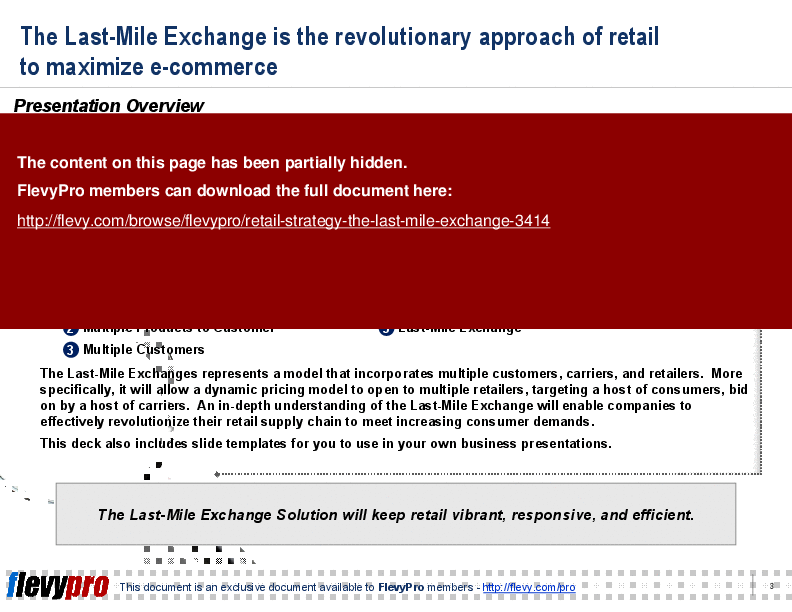
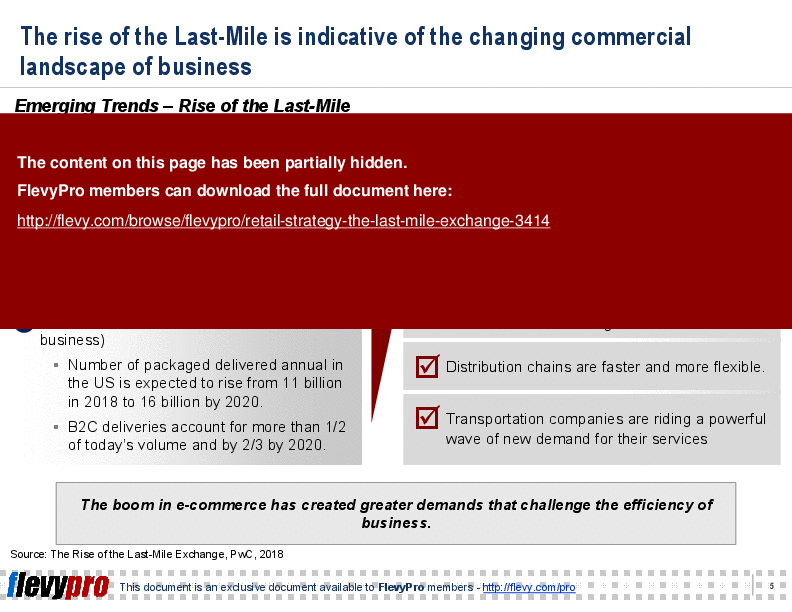
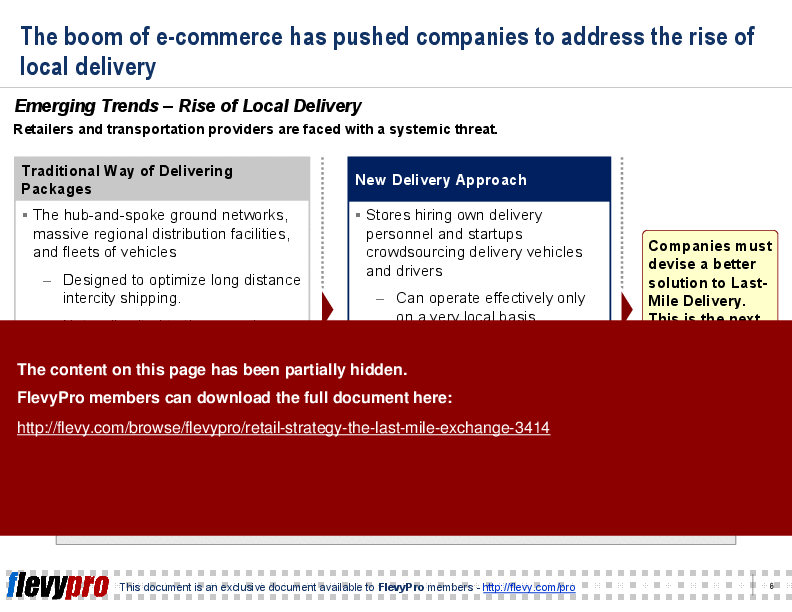
This presentation provides the fundamental framework in gaining momentum in today’s 21st century retail. We began by discussing emerging trends (e.g. rise of local delivery, rise of the “last-mile”) that leads us to evolving to the Last-Mile Exchange.

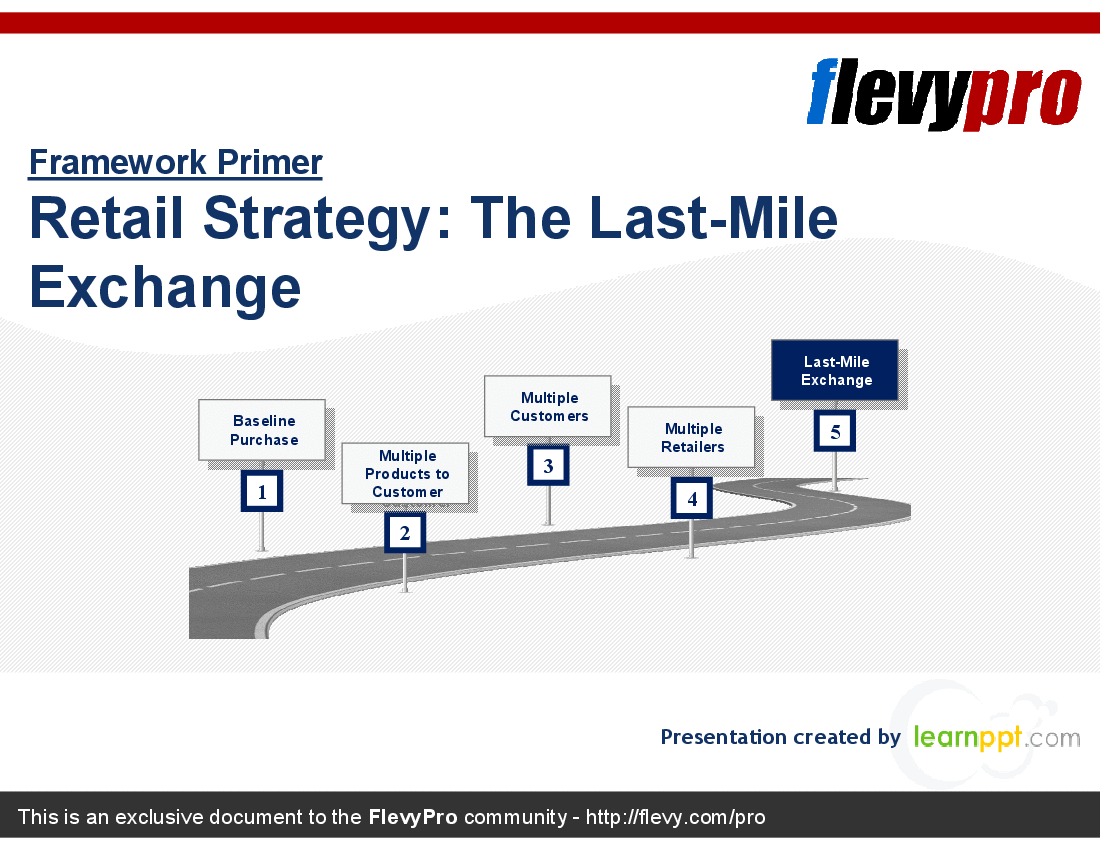
This evolution occurs across 5 stages:

1. Baseline Purchase
2. Multiple Products to Customer
3. Multiple Customers
4. Multiple Retailers
5. Last-Mile Exchange

The Last-Mile Exchanges represents a model that incorporates multiple customers, carriers, and retailers. More specifically, it will allow a dynamic pricing model to open to multiple retailers, targeting a host of consumers, bid on by a host of carriers.

An in-depth understanding of the Last-Mile Exchange will enable companies to effectively revolutionize their retail supply chain to meet increasing consumer demands. The Last-Mile Exchange Solution will keep retail vibrant, responsive, and efficient.

This deck also includes slide templates for you to use in your own business presentations.

This presentation delves into the intricacies of the Last-Mile Exchange, emphasizing the critical need for retailers and transportation providers to adapt to the evolving demands of e-commerce. It outlines a comprehensive approach to building a dynamic, multi-sided platform that seamlessly connects consumers, retailers, and carriers. The PPT highlights the importance of each stage in the Last-Mile Exchange, from the baseline purchase to the integration of multiple retailers. It also provides actionable insights into optimizing delivery processes and enhancing consumer engagement. This resource is essential for executives aiming to stay ahead in the competitive retail landscape.

Got a question about this document? Email us at flevypro@flevy.com.

MARCUS OVERVIEW

This synopsis was written by Marcus [?] based on the analysis of the full 25-slide presentation.


Executive Summary
The "Retail Strategy: The Last-Mile Exchange" presentation provides a strategic framework designed to help retailers and transportation providers navigate the evolving landscape of e-commerce. This document outlines the Last-Mile Exchange model, which integrates multiple retailers, customers, and carriers to optimize delivery processes. By leveraging this framework, organizations can enhance operational efficiency, meet rising consumer demands, and remain competitive in a rapidly changing market. The presentation also includes templates for practical application in business settings.

Who This Is For and When to Use
•  Retail executives seeking to refine their delivery strategies
•  Supply chain managers focused on last-mile logistics
•  Transportation providers aiming to enhance service offerings
•  Consultants advising clients on retail and logistics optimization

Best-fit moments to use this deck:
•  During strategic planning sessions for e-commerce initiatives
•  When evaluating last-mile delivery options and partnerships
•  In workshops aimed at improving operational efficiency in logistics
•  For presentations to stakeholders about evolving retail strategies

Learning Objectives
•  Define the Last-Mile Exchange and its significance in modern retail
•  Analyze emerging trends in e-commerce and local delivery
•  Build a framework for implementing the Last-Mile Exchange model
•  Identify key challenges in last-mile delivery and propose solutions
•  Develop strategies to optimize delivery processes and reduce costs
•  Create actionable templates for immediate application in retail operations

Table of Contents
•  Overview (page 3)
•  Emerging Trends (page 5)
•  The Last-Mile Dilemma (page 9)
•  Approach to Building the Last-Mile Exchange (page 12)
•  Templates (page 19)

Primary Topics Covered
•  Overview of the Last-Mile Exchange - This section introduces the Last-Mile Exchange as a transformative model for integrating multiple stakeholders in the delivery process.
•  Emerging Trends - Discusses the rise of e-commerce and local delivery, highlighting key statistics and market dynamics influencing retail strategies.
•  The Last-Mile Dilemma - Explores the challenges faced by transportation companies in delivering goods efficiently during the last mile of the supply chain.
•  Approach to Building the Last-Mile Exchange - Outlines a five-stage process for implementing the Last-Mile Exchange, detailing how to capture initial purchases and optimize delivery routes.
•  Templates - Provides practical templates for organizations to adapt and implement the Last-Mile Exchange framework in their operations.

Deliverables, Templates, and Tools
•  Baseline purchase capture template for initial delivery routes
•  Multi-product delivery pricing model template
•  Customer delivery optimization algorithm framework
•  Retailer collaboration model for shared delivery resources
•  Last-Mile Exchange operational efficiency checklist
•  Presentation templates for stakeholder engagement

Slide Highlights
•  Overview slide detailing the Last-Mile Exchange framework
•  Emerging trends slide showcasing e-commerce growth statistics
•  Last-Mile Dilemma slide illustrating key challenges in delivery logistics
•  Five-stage approach slide mapping the implementation process
•  Template slide providing practical tools for immediate use

Potential Workshop Agenda
Introduction to Last-Mile Exchange (30 minutes)
•  Overview of the Last-Mile Exchange model
•  Discussion on emerging trends in e-commerce

Building the Last-Mile Exchange Framework (60 minutes)
•  Step-by-step guide through the five-stage process
•  Group activity to identify challenges and solutions

Template Application Session (45 minutes)
•  Hands-on session to customize templates for specific business needs
•  Sharing of best practices and insights among participants

Customization Guidance
•  Adjust the baseline purchase capture template to reflect specific retailer needs
•  Tailor delivery pricing models based on regional market conditions
•  Incorporate local delivery options and partnerships into the framework
•  Modify the operational efficiency checklist to align with organizational goals

Secondary Topics Covered
•  Impact of e-commerce on traditional retail models
•  Strategies for enhancing customer experience through delivery
•  Technological advancements in last-mile logistics
•  Case studies of successful Last-Mile Exchange implementations

Topic FAQ

What are the 5 stages of the Last-Mile Exchange model?

The Last-Mile Exchange is described as a five-stage evolution: Baseline Purchase; Multiple Products to Customer; Multiple Customers; Multiple Retailers; and Last‑Mile Exchange. These stages map the progression from single-order delivery to a multi‑sided delivery platform across 5 stages.

What are the typical operational challenges in last-mile delivery?

Typical challenges include managing high delivery costs, optimizing delivery routes given route density, adapting to fluctuating consumer demand during peak shopping periods, and coordinating multiple carriers and retailers, with emphasis on route optimization and cost management during peak periods.

How does dynamic pricing work within a Last-Mile Exchange?

The model describes dynamic pricing as a multi‑sided mechanism where multiple retailers can target consumers and carriers bid to serve deliveries, enabling price signals across participants. In practice this becomes a multi‑party bidding marketplace among retailers and carriers.

What templates support implementing last-mile improvements?

Common templates for last‑mile implementation include a baseline purchase capture template, a multi‑product delivery pricing model, a customer delivery optimization algorithm framework, a retailer collaboration model for shared delivery resources, and an operational efficiency checklist, including the baseline purchase capture template.

What should I look for when choosing a last-mile strategy deck for workshops?

Buyers should seek a deck that presents market trends, articulates a staged implementation approach, includes practical templates for hands-on sessions, and offers customization guidance for regional markets. Look specifically for a slide set that includes a five‑stage approach and workshop-ready slide templates.

How do I evaluate the value of buying templates versus hiring custom consulting support?

Assess whether ready templates provide speed-to-action and sufficient customization guidance for your team versus the scope of bespoke work needed; check for editable templates, regional tailoring advice, and a workshop agenda. The referenced product includes template customization guidance and a 45‑minute template application session.

I must present last-mile options to stakeholders—what structure organizes the discussion?

A logical structure is: Overview of the Last‑Mile Exchange, Emerging Trends, The Last‑Mile Dilemma, Approach to Building the Exchange, and Templates for action. That sequence mirrors the Table of Contents used in the presentation to frame strategy discussions.

How can retailers collaborate with carriers and other retailers to lower delivery costs?

Collaboration can take the form of shared delivery resources and coordinated routing, supported by a retailer collaboration model and operational efficiency checklist to align incentives and scheduling. The approach includes a retailer collaboration model for shared delivery resources.

Document FAQ
These are questions addressed within this presentation.

What is the Last-Mile Exchange?
The Last-Mile Exchange is a framework that integrates multiple retailers, customers, and carriers to optimize delivery processes and enhance operational efficiency in e-commerce.

How can this framework help my organization?
By implementing the Last-Mile Exchange, organizations can improve delivery efficiency, reduce costs, and better meet consumer demands in a competitive market.

What are the key challenges in last-mile delivery?
Challenges include managing delivery costs, optimizing routes, and adapting to fluctuating consumer demands, particularly during peak shopping periods.

Can this framework be applied to any retail sector?
Yes, the Last-Mile Exchange framework is adaptable to various retail sectors, including grocery, apparel, and electronics, among others.

What templates are included in the presentation?
The presentation includes templates for baseline purchase capture, delivery pricing models, and operational efficiency checklists to facilitate implementation.

How do I customize the templates for my business?
Templates can be tailored by adjusting metrics, incorporating specific regional data, and aligning them with your organization's strategic goals.

What trends should I be aware of in e-commerce?
Key trends include the rise of local delivery services, increased consumer expectations for fast shipping, and the growing importance of sustainability in logistics.

How does the Last-Mile Exchange improve customer experience?
By optimizing delivery processes and providing more flexible options, the Last-Mile Exchange enhances the overall shopping experience for consumers.

Glossary
•  Last-Mile Exchange - A model integrating multiple retailers, customers, and carriers to optimize delivery.
•  E-commerce - Buying and selling of goods or services using the internet.
•  Delivery Optimization - Strategies to enhance the efficiency and cost-effectiveness of delivery processes.
•  Local Delivery - Delivery services focused on short-distance transportation, often within a specific geographic area.
•  Operational Efficiency - The ability to deliver products and services in the most cost-effective manner.
•  Consumer Demand - The desire of consumers to purchase goods and services.
•  Delivery Pricing Model - A framework for determining the cost of delivery services based on various factors.
•  Retailer Collaboration - Partnerships between retailers to share resources and enhance delivery capabilities.
•  Transportation Providers - Companies that offer logistics and delivery services.
•  Supply Chain - The entire system of production, processing, and distribution of goods.
•  Dynamic Pricing - A flexible pricing strategy that adjusts based on market demand and supply conditions.
•  Fulfillment - The process of receiving, processing, and delivering orders to customers.
•  Route Density - The concentration of delivery points within a specific area that affects delivery efficiency.

RETAIL STRATEGY PPT SLIDES

Key Factors in Last-Mile Delivery Profitability

Adapting Delivery Strategies for E-Commerce Growth

Understanding the Baseline Purchase Journey

Last-Mile Exchange: Transforming Retail Delivery Dynamics

Source: Best Practices in Maturity Model, Retail Strategy PowerPoint Slides: Retail Strategy: The Last-Mile Exchange PowerPoint (PPT) Presentation Slide Deck, LearnPPT Consulting


$29.00
FlevyPro price: FREE (included in subscription)
This framework is developed by a team of former McKinsey and Big 4 consultants. The presentation follows the headline-body-bumper slide format used by global consulting firms.
Add to Cart
  

Did you need more documents?

Consider a FlevyPro subscription from $39/month. View plans here.

For $10.00 more, you can download this document plus 2 more FlevyPro documents. That's just $13 each.

ABOUT FLEVYPRO

This document is part of the FlevyPro Library, a curated knowledge base of documents for our FlevyPro subscribers.

FlevyPro is a subscription service for on-demand business frameworks and analysis tools. FlevyPro subscribers receive access to an exclusive library of curated business documents—business framework primers, presentation templates, Lean Six Sigma tools, and more—among other exclusive benefits.

Click here to learn more about FlevyPro and its benefits.

Did you know?
The average daily rate of a McKinsey consultant is $6,625 (not including expenses). The average price of a Flevy document is $65.


Trusted by over 10,000+ Client Organizations
Since 2012, we have provided business templates to over 10,000 businesses and organizations of all sizes, from startups and small businesses to the Fortune 100, in over 130 countries.
AT&T GE Cisco Intel IBM Coke Dell Toyota HP Nike Samsung Microsoft Astrazeneca JP Morgan KPMG Walgreens Walmart 3M Kaiser Oracle SAP Google E&Y Volvo Bosch Merck Fedex Shell Amgen Eli Lilly Roche AIG Abbott Amazon PwC T-Mobile Broadcom Bayer Pearson Titleist ConEd Pfizer NTT Data Schwab


Read Customer Testimonials

 
"I am extremely grateful for the proactiveness and eagerness to help and I would gladly recommend the Flevy team if you are looking for data and toolkits to help you work through business solutions."

– Trevor Booth, Partner, Fast Forward Consulting
 
"Flevy.com has proven to be an invaluable resource library to our Independent Management Consultancy, supporting and enabling us to better serve our enterprise clients.

The value derived from our [FlevyPro] subscription in terms of the business it has helped to gain far exceeds the investment made, making a subscription a no-brainer for any growing consultancy – or in-house strategy team."

– Dean Carlton, Chief Transformation Officer, Global Village Transformations Pty Ltd.
 
"FlevyPro provides business frameworks from many of the global giants in management consulting that allow you to provide best in class solutions for your clients."

– David Harris, Managing Director at Futures Strategy
 
"As a niche strategic consulting firm, Flevy and FlevyPro frameworks and documents are an on-going reference to help us structure our findings and recommendations to our clients as well as improve their clarity, strength, and visual power. For us, it is an invaluable resource to increase our impact and value."

– David Coloma, Consulting Area Manager at Cynertia Consulting
 
"I have found Flevy to be an amazing resource and library of useful presentations for lean sigma, change management and so many other topics. This has reduced the time I need to spend on preparing for my performance consultation. The library is easily accessible and updates are regularly provided. A wealth of great information."

– Cynthia Howard RN, PhD, Executive Coach at Ei Leadership
 
"As a young consulting firm, requests for input from clients vary and it's sometimes impossible to provide expert solutions across a broad spectrum of requirements. That was before I discovered Flevy.com.

Through subscription to this invaluable site of a plethora of topics that are key and crucial to consulting, I "

– Nishi Singh, Strategist and MD at NSP Consultants
 
"As a small business owner, the resource material available from FlevyPro has proven to be invaluable. The ability to search for material on demand based our project events and client requirements was great for me and proved very beneficial to my clients. Importantly, being able to easily edit and tailor "

– Michael Duff, Managing Director at Change Strategy (UK)
 
"I like your product. I'm frequently designing PowerPoint presentations for my company and your product has given me so many great ideas on the use of charts, layouts, tools, and frameworks. I really think the templates are a valuable asset to the job."

– Roberto Fuentes Martinez, Senior Executive Director at Technology Transformation Advisory


Customers Also Bought These Documents


Customers Also Like These Documents

Explore Templates on Related Management Topics


Your Recently Viewed Documents
Download our FREE Strategy & Transformation Framework Templates

Download our free compilation of 50+ Strategy & Transformation slides and templates. Frameworks include McKinsey 7-S, Balanced Scorecard, Disruptive Innovation, BCG Curve, and many more.