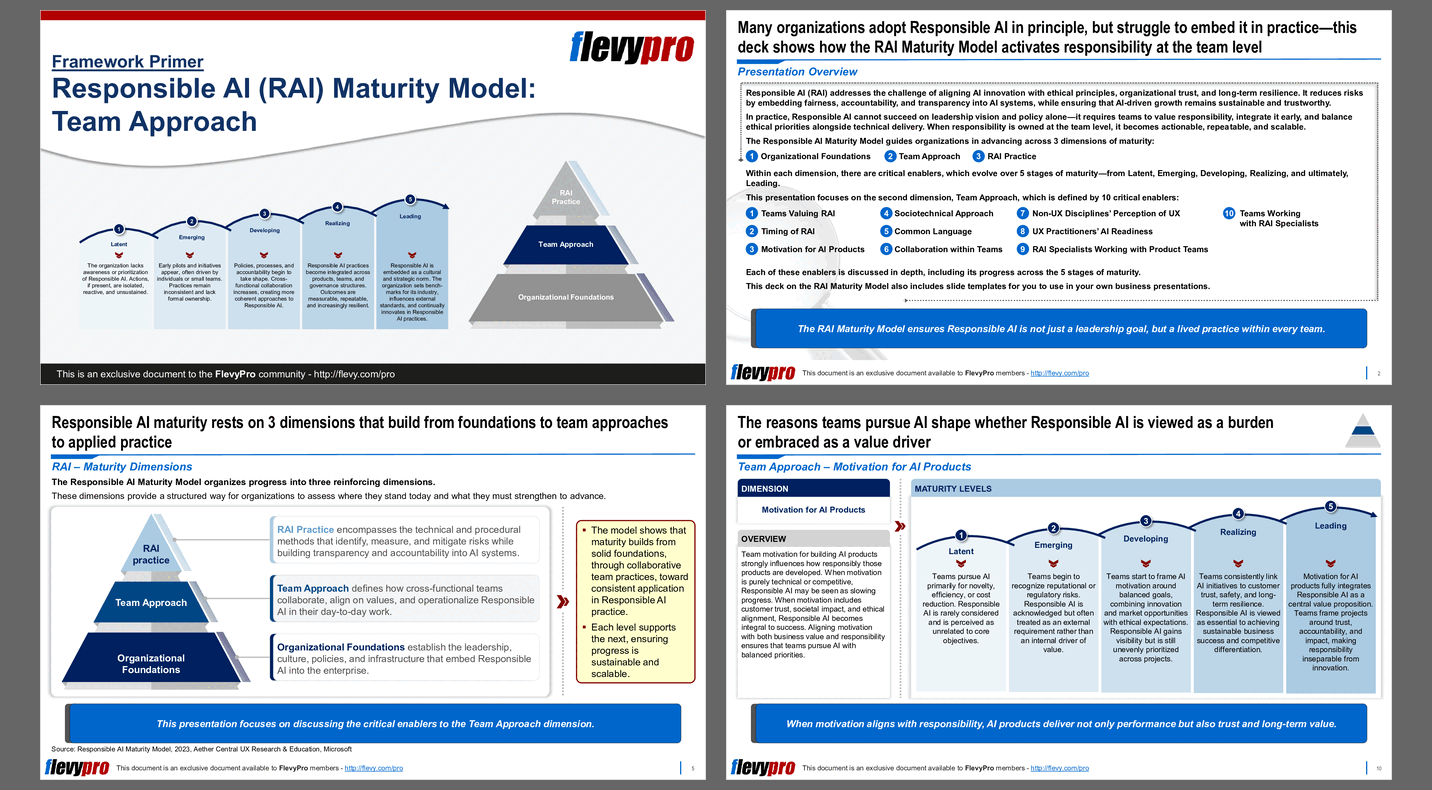
This framework is developed by a team of former McKinsey and Big 4 consultants. The presentation follows the headline-body-bumper slide format used by global consulting firms.
This product (Responsible AI [RAI] Maturity Model: Team Approach) is a 31-slide PPT PowerPoint presentation slide deck (PPTX), which you can download immediately upon purchase.
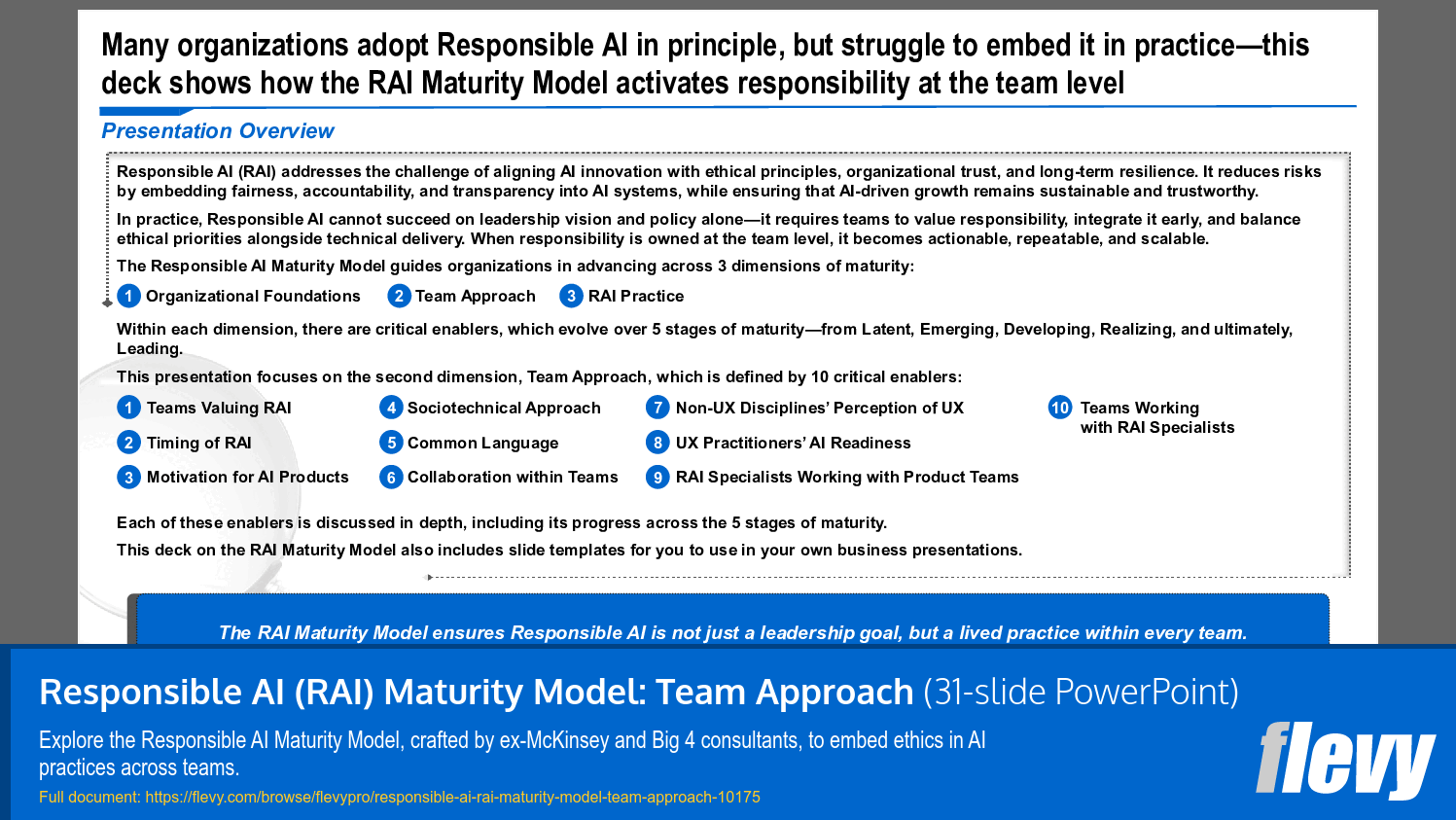
Responsible AI (RAI) addresses the challenge of aligning AI innovation with ethical principles, organizational trust, and long-term resilience. It reduces risks by embedding fairness, accountability, and transparency into AI systems, while ensuring that AI-driven growth remains sustainable and trustworthy.
In practice, Responsible AI depends not only on leadership vision or team priorities, but on how practices are executed across the AI lifecycle. Embedding responsibility into governance, risk management, development processes, and oversight ensures that responsibility is repeatable, auditable, and scalable.
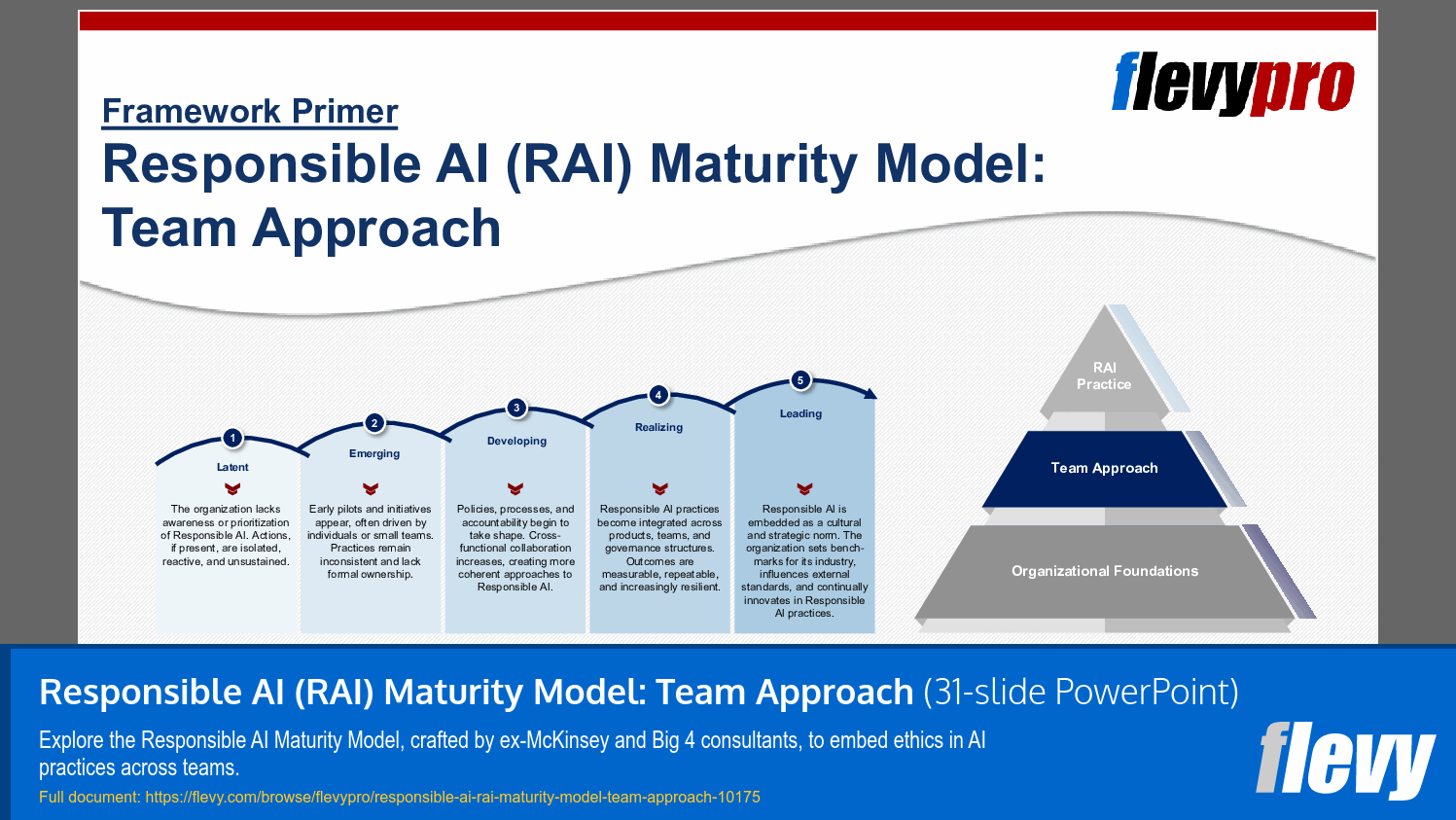
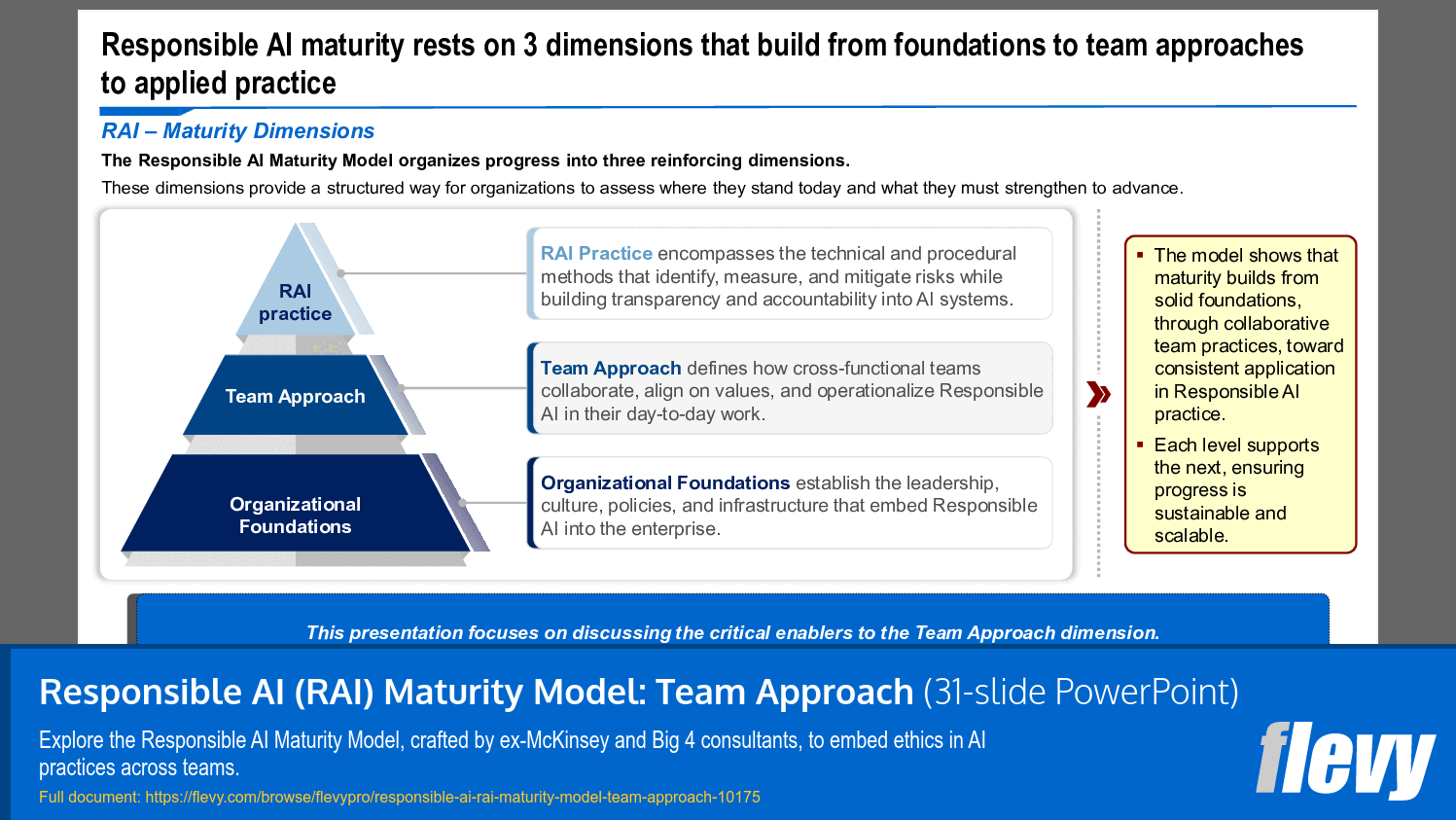
The Responsible AI Maturity Model guides organizations in advancing across 3 dimensions of maturity:
1. Organizational Foundations
2. Team Approach
3. RAI Practice
Within each dimension, there are critical enablers, which evolve over 5 stages of maturity—from Latent, Emerging, Developing, Realizing, and ultimately, Leading.
The RAI Maturity Model ensures Responsible AI is not just a leadership goal, but a lived practice within every team. This PPT presentation focuses on the second dimension, Team Approach, which is defined by 10 critical enablers:
1. Teams Valuing RAI
2. Timing of RAI
3. Motivation for RAI Products
4. Sociotechnical Approach
5. Common Language
6. Collaboration within Teams
7. Non-UX Disciplines' Perception of UX
8. UX Practitioners' AI Readiness
9. RAI Specialists Working with Product Teams
10. Teams Working with RAI Specialists
Each of these enablers is discussed in depth, including its progress across the 5 stages of maturity.
This deck on the RAI Maturity Model also includes slide templates for you to use in your own business presentations.
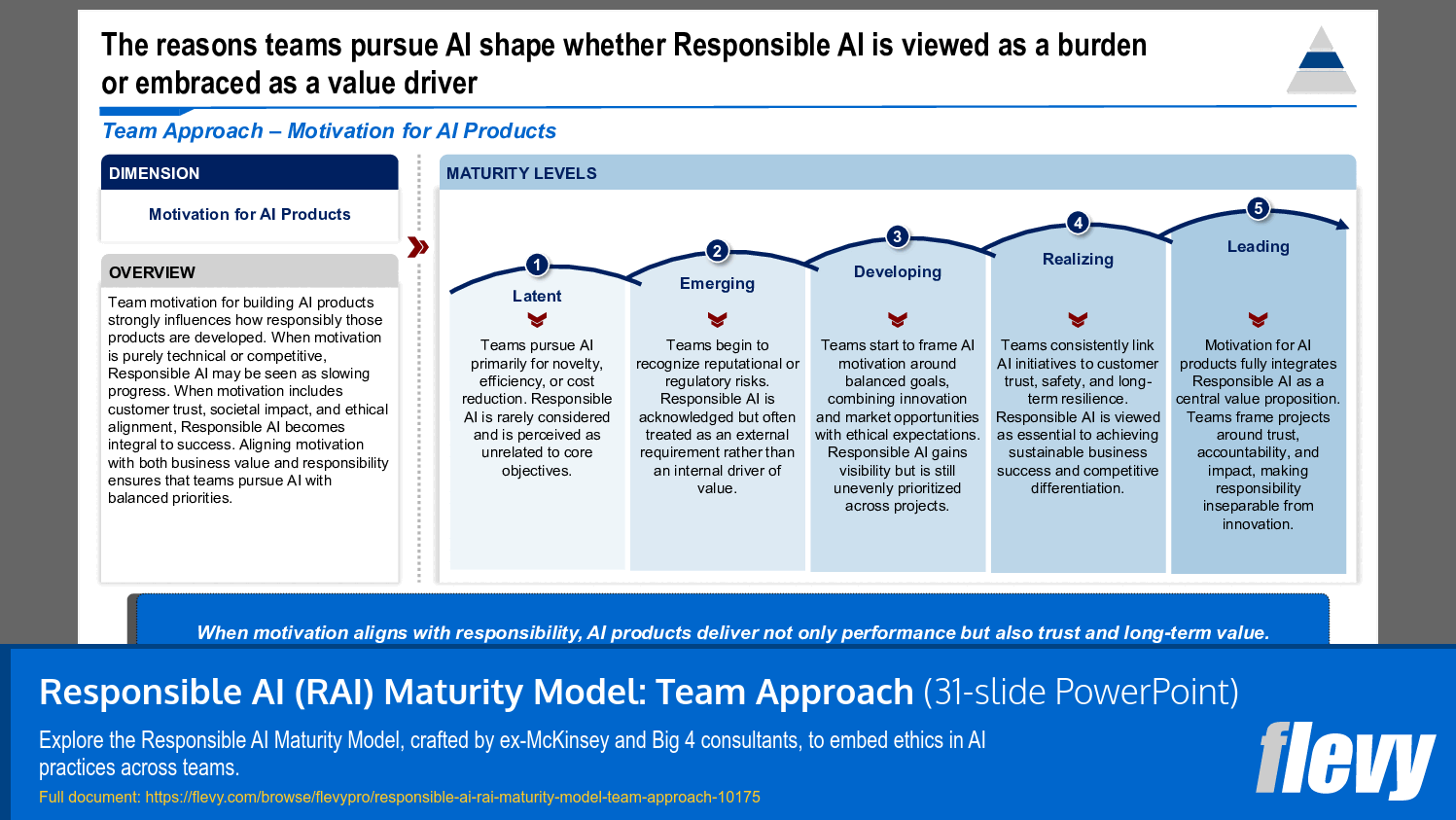
This PPT slide presents a framework for understanding why teams pursue AI development based on their perception of AI as either a burden or a value driver. It categorizes AI maturity into 5 levels—Latent, Emerging, Developing, Realizing, and Leading—each associated with different team motivations and behaviors. The focus is on how motivation shifts from technical or competitive reasons at early stages to strategic and responsible AI practices at advanced stages.
The left side highlights the importance of motivation in shaping AI projects. At the Latent stage, teams pursue AI mainly for novelty or efficiency, often without considering broader impacts. As teams progress to Emerging and Developing levels, they recognize regulatory risks and start aligning AI initiatives with market opportunities,, but still face internal challenges. At the higher levels—Realizing and Leading—teams are more consistent in linking AI to trust, safety, and long-term resilience, emphasizing responsible AI principles. These stages reflect a transition from external compliance to internalized responsibility, driven by a desire for sustainable business success.
The diagram underscores that responsible AI is not just a compliance issue, but a strategic imperative. Teams at the top of the maturity scale integrate ethical considerations into their core value propositions, project trustworthiness, accountability, and impact. The slide suggests that the motivation behind AI efforts influences the approach and outcomes, with responsible AI practices becoming central as teams mature. For executives, understanding this progression helps in designing strategies that accelerate responsible AI adoption, aligning team incentives with long-term value creation rather than short-term gains. This model offers a clear view of how AI maturity correlates with responsible behavior and strategic focus across teams.
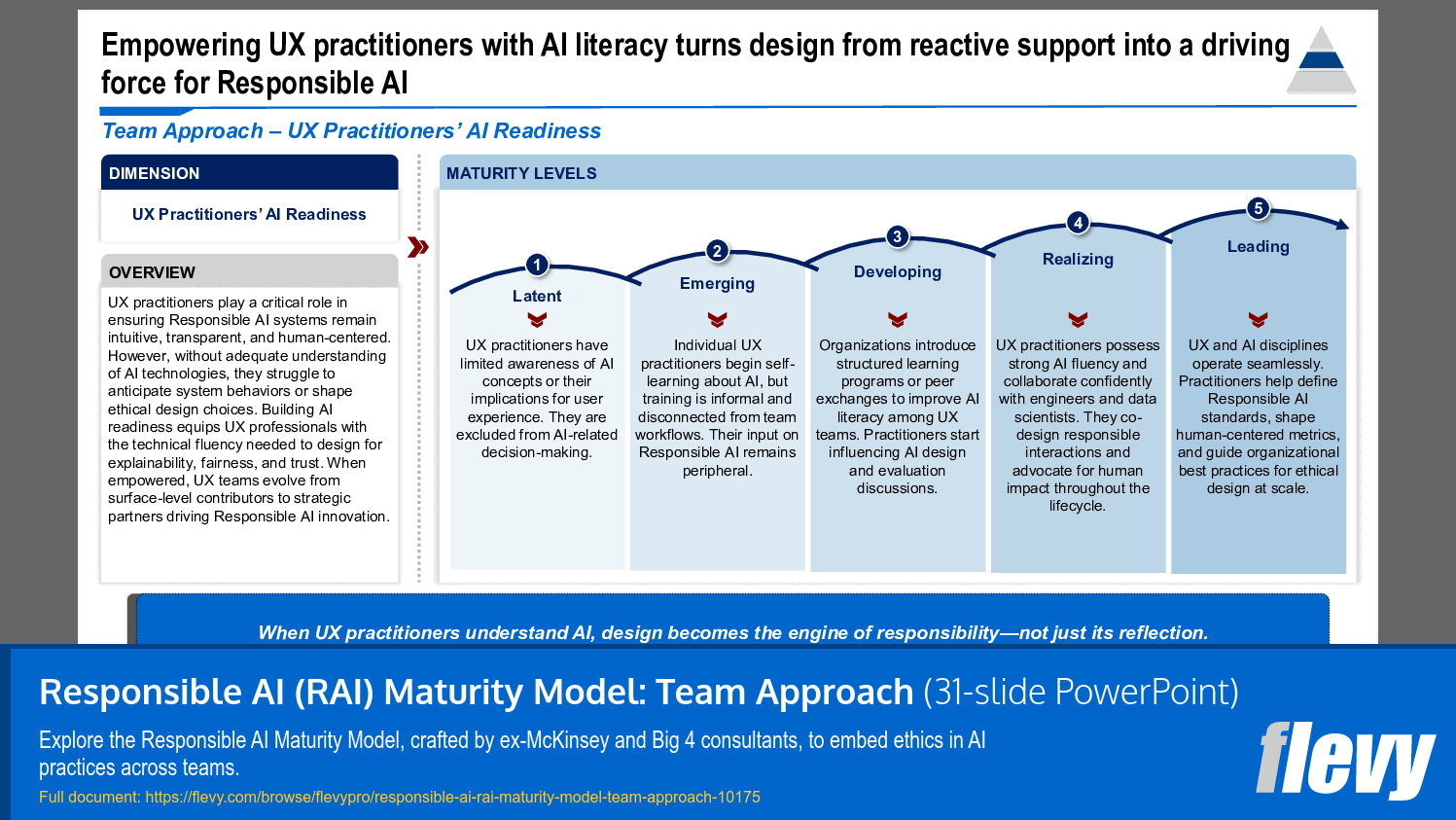
This PPT slide discusses how empowering UX practitioners with AI literacy can shift their role from reactive support to a proactive force for Responsible AI. It emphasizes a team approach, focusing on increasing AI readiness among UX teams. The content is structured around a maturity model with 5 levels, from Latent to Leading, illustrating the progression of AI understanding and integration within UX practices. Each level describes the current state of UX practitioners' awareness and involvement with AI, highlighting the need for self-learning, structured programs, and active collaboration with engineers and data scientists.
The first 2 levels, Latent and Emerging, depict a stage where UX practitioners have limited or informal awareness of AI concepts. They are disconnected from AI decision-making processes, which hampers their ability to contribute meaningfully to Responsible AI initiatives. As teams move into the Developing and Realizing stages, organizations introduce formal learning programs and start influencing AI design and evaluation discussions. This marks a shift toward more active engagement and shared responsibility for AI outcomes.
At the highest level, Leading, UX and AI disciplines operate seamlessly, with practitioners defining standards, metrics, and best practices for ethical design at scale. The slide underscores that as UX teams deepen their AI literacy, design becomes more responsible and aligned with ethical principles. The overall message is that AI literacy is a critical enabler for UX teams to drive Responsible AI, transforming their role from support to strategic partners in AI governance. The slide positions this evolution as essential for organizations committed to ethical AI deployment and responsible innovation.
This framework is developed by a team of former McKinsey and Big 4 consultants. The presentation follows the headline-body-bumper slide format used by global consulting firms.
For $10.00 more, you can download this document plus 2 more FlevyPro documents. That's just $13 each.
ABOUT FLEVYPRO
This document is part of the FlevyPro Library, a curated knowledge base of documents for our FlevyPro subscribers.

FlevyPro is a subscription service for on-demand business frameworks and analysis tools. FlevyPro subscribers receive access to an exclusive library of curated business documents—business framework primers, presentation templates, Lean Six Sigma tools, and more—among other exclusive benefits.
The average daily rate of a McKinsey consultant is $6,625 (not including expenses). The average price of a Flevy document is $65.
Trusted by over 10,000+ Client Organizations
Since 2012, we have provided best practices to over 10,000 businesses and organizations of all sizes, from startups and small businesses to the Fortune 100, in over 130 countries.
Read Customer Testimonials
"As a consultant requiring up to date and professional material that will be of value and use to my clients, I find Flevy a very reliable resource.
The variety and quality of material available through Flevy offers a very useful and commanding source for information. Using Flevy saves me time, enhances my expertise and ends up being a good decision."
– Dennis Gershowitz, Principal at DG Associates
"Flevy.com has proven to be an invaluable resource library to our Independent Management Consultancy, supporting and enabling us to better serve our enterprise clients.
The value derived from our [FlevyPro] subscription in terms of the business it has helped to gain far exceeds the investment made, making a subscription a no-brainer for any growing consultancy – or in-house strategy team."
– Dean Carlton, Chief Transformation Officer, Global Village Transformations Pty Ltd.
"I have found Flevy to be an amazing resource and library of useful presentations for lean sigma, change management and so many other topics. This has reduced the time I need to spend on preparing for my performance consultation. The library is easily accessible and updates are regularly provided. A wealth of great information."
– Cynthia Howard RN, PhD, Executive Coach at Ei Leadership
"As an Independent Management Consultant, I find Flevy to add great value as a source of best practices, templates and information on new trends. Flevy has matured and the quality and quantity of the library is excellent. Lastly the price charged is reasonable, creating a win-win value for
the customer, Flevy and the various authors. This is truly a service that benefits the consulting industry and associated clients. Thanks for providing this service.
"
– Jim Schoen, Principal at FRC Group
"FlevyPro provides business frameworks from many of the global giants in management consulting that allow you to provide best in class solutions for your clients."
– David Harris, Managing Director at Futures Strategy
"I have used FlevyPro for several business applications. It is a great complement to working with expensive consultants. The quality and effectiveness of the tools are of the highest standards."
– Moritz Bernhoerster, Global Sourcing Director at Fortune 500
"My FlevyPro subscription provides me with the most popular frameworks and decks in demand in today’s market. They not only augment my existing consulting and coaching offerings and delivery, but also keep me abreast of the latest trends, inspire new products and service offerings for my practice, and educate me
in a fraction of the time and money of other solutions. I strongly recommend FlevyPro to any consultant serious about success.
"
– Bill Branson, Founder at Strategic Business Architects
"Flevy is our 'go to' resource for management material, at an affordable cost. The Flevy library is comprehensive and the content deep, and typically provides a great foundation for us to further develop and tailor our own service offer."
Download our FREE Digital Transformation Templates
Download our free compilation of 50+ Digital Transformation slides and templates. DX concepts covered include Digital Leadership, Digital Maturity, Digital Value Chain, Customer Experience, Customer Journey, RPA, etc.









