
Ethical Organization: PLUS Decision Making Model   24-slide PPT PowerPoint presentation template (PPT)
$29.00

Ethical Organization: PLUS Decision Making Model (24-slide PPT PowerPoint presentation slide deck (PPT)) Preview Image
Log in to unlock full preview.
Ethical Organization: PLUS Decision Making Model (24-slide PPT PowerPoint presentation slide deck (PPT)) Preview Image
Arrow   Click main image to view in full screen.

Ethical Organization: PLUS Decision Making Model – PowerPoint PPT Template

PowerPoint (PPT) 24 Slides FlevyPro Document

#3 in Business Ethics $29.00
FlevyPro price: FREE (included in subscription)
This framework is developed by a team of former McKinsey and Big 4 consultants. The presentation follows the headline-body-bumper slide format used by global consulting firms.
Add to Cart


Immediate download
Free lifetime updates

BUSINESS ETHICS PPT TEMPLATE DESCRIPTION

Editor Summary The Ethical Organization: PLUS Decision Making Model is a 24-slide PowerPoint framework presenting a six-step ethical decision-making process and the PLUS Filters (Policies, Legal, Universal, Self). Read more

Organizations struggle to develop a simple set of guidelines that makes it easier for employees, regardless of position or level, to be confident of their decisions to meet competing standards of organizations for effective and Ethical Decision Making.

The traditional Decision Making Model taught in most ethics programs is often beyond the reading comprehension of the 25% of the employees population. An alternative model is necessary that takes into account 2 realities.

First, employees are called upon to make decisions in the normal course of their job. Organizations cannot function effectively if employees are not empowered to make decisions consistent with their positions and responsibilities.

Second, for the decision maker to be confident in the decision's soundness, every decision should be tested against the organization's policies and values, applicable laws and regulations, as well as the individual employee's definition of what is right, fair, good, and acceptable.

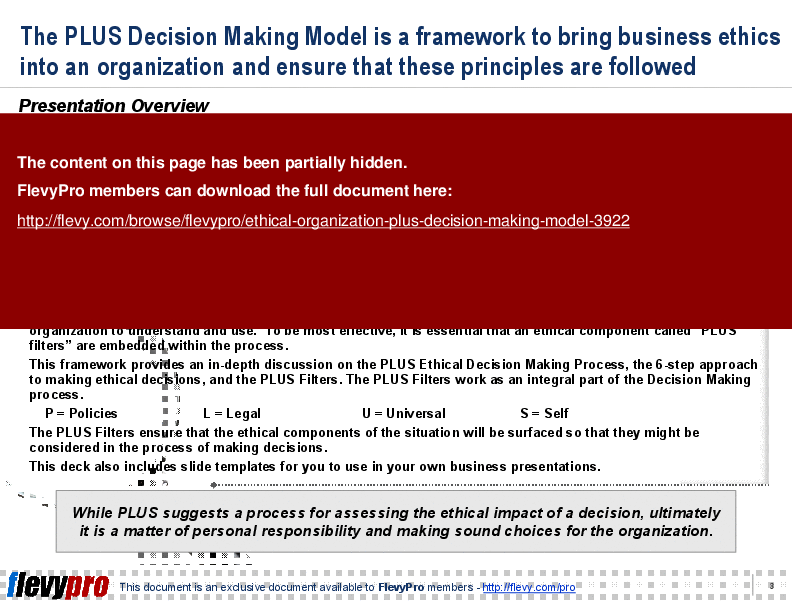
With these realities, the alternative Decision Making Model must be capable of ensuring that the ethical issues inherent in routine business situation could be effectively surfaced while making it easy for people in the organization to understand and use. To be most effective, it is essential that an ethical component called "PLUS filters" are embedded within the process.

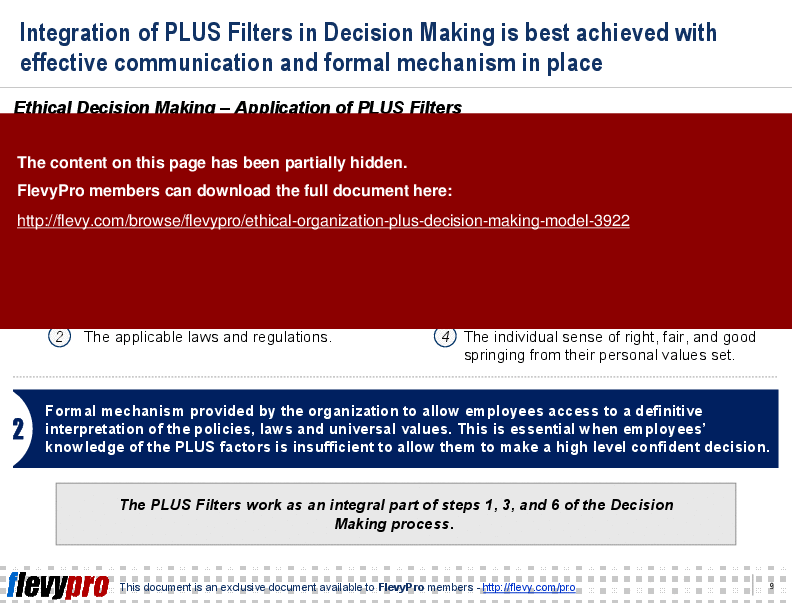
This framework provides an in-depth discussion on the PLUS Ethical Decision Making Process, the 6-step approach to making ethical decisions, and the PLUS Filters. The PLUS Filters work as an integral part of the Decision Making process.

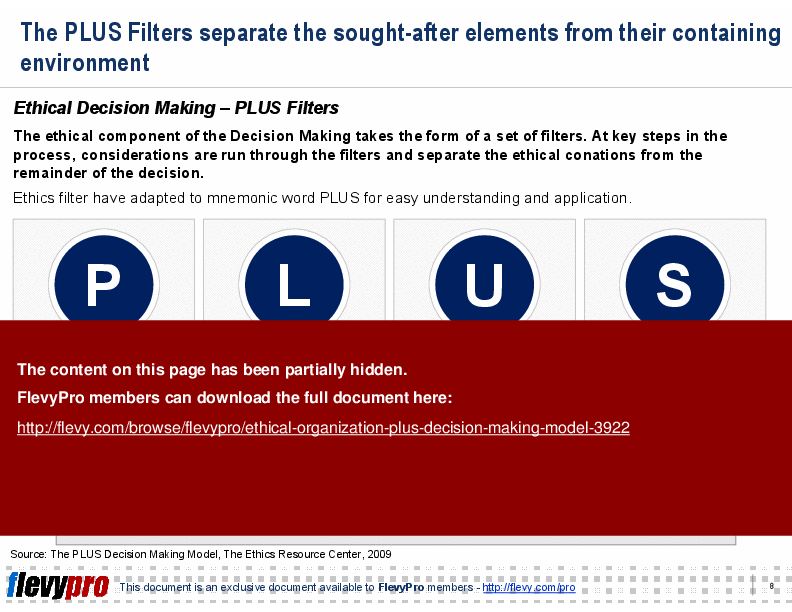
P = Policies
L = Legal
U = Universal
S = Self

The PLUS Filters ensure that the ethical components of the situation will be surfaced so that they might be considered in the process of making decisions.

This deck also includes slide templates for you to use in your own business presentations.

The PLUS Decision Making Model emphasizes a structured approach to ethical decision making, ensuring alignment with organizational values and legal standards. This deck also offers practical templates to streamline the implementation of the PLUS filters in your business processes.

Got a question about this document? Email us at flevypro@flevy.com.

MARCUS OVERVIEW

This synopsis was written by Marcus [?] based on the analysis of the full 24-slide presentation.


Executive Summary
The Ethical Organization: PLUS Decision Making Model presentation provides a structured framework for integrating ethical decision-making into organizational practices. This model emphasizes the importance of ethical considerations in business decisions and offers a clear, six-step process that empowers employees at all levels to make sound choices. By utilizing the PLUS Filters—Policies, Legal, Universal, and Self—organizations can ensure that ethical dimensions are consistently evaluated, fostering a culture of integrity and accountability. This presentation is designed for corporate leaders and consultants looking to enhance ethical practices within their organizations.

Who This Is For and When to Use
•  Corporate executives responsible for governance and ethical standards
•  HR leaders focused on employee training and ethical culture
•  Compliance officers ensuring adherence to laws and regulations
•  Consultants advising organizations on ethical frameworks and practices

Best-fit moments to use this deck:
•  During training sessions on ethical decision-making for employees
•  In workshops aimed at developing a culture of ethics within the organization
•  When reviewing or revising the organization’s code of ethics and compliance policies

Learning Objectives
•  Define the PLUS Decision Making Model and its relevance to ethical decision-making
•  Build a comprehensive understanding of the six-step ethical decision-making process
•  Establish the application of PLUS Filters in evaluating decisions
•  Identify alternative solutions to ethical dilemmas using structured methodologies
•  Evaluate the ethical implications of decisions based on organizational policies
•  Implement effective communication strategies for ethical decision-making across teams

Table of Contents
•  Overview (page 3)
•  Ethical Decision Making (page 6)
•  Ethical Decision Making Steps (page 11)
•  Templates (page 18)

Primary Topics Covered
•  Ethical Decision Making Overview - This section introduces the concept of ethical decision-making and its significance in organizations, emphasizing the need for a structured approach.
•  PLUS Decision Making Model - A detailed explanation of the PLUS framework that integrates ethical considerations into the decision-making process.
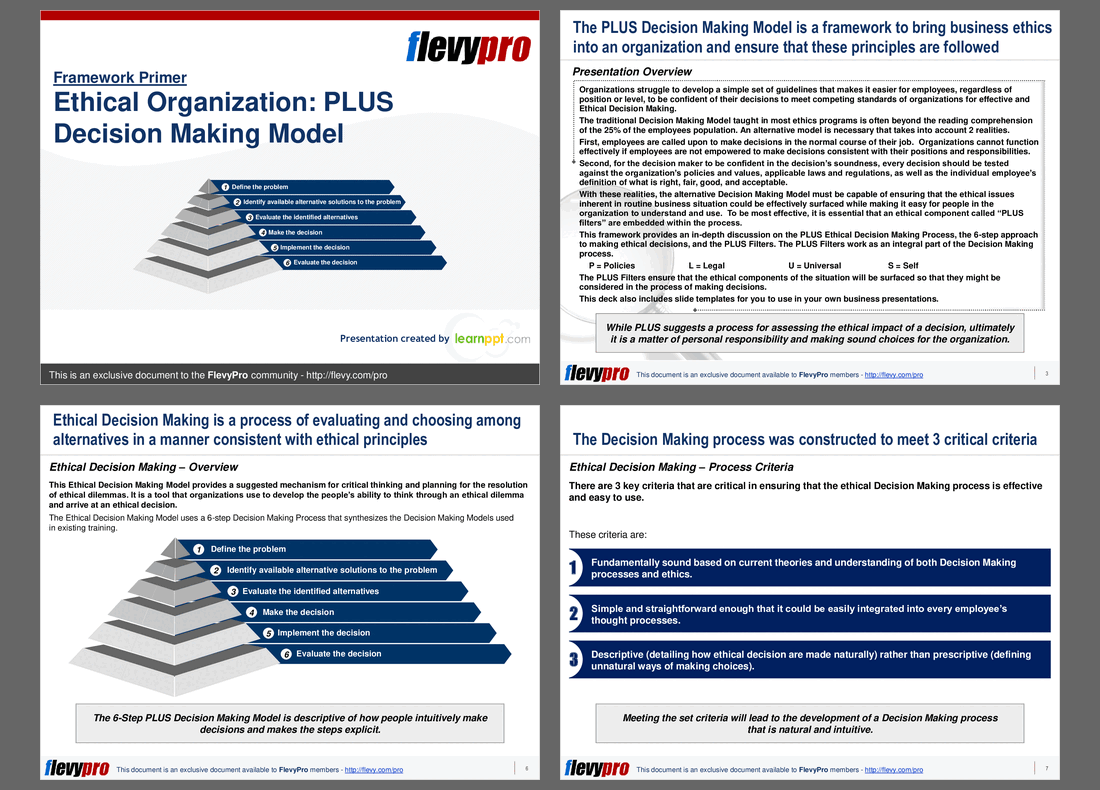
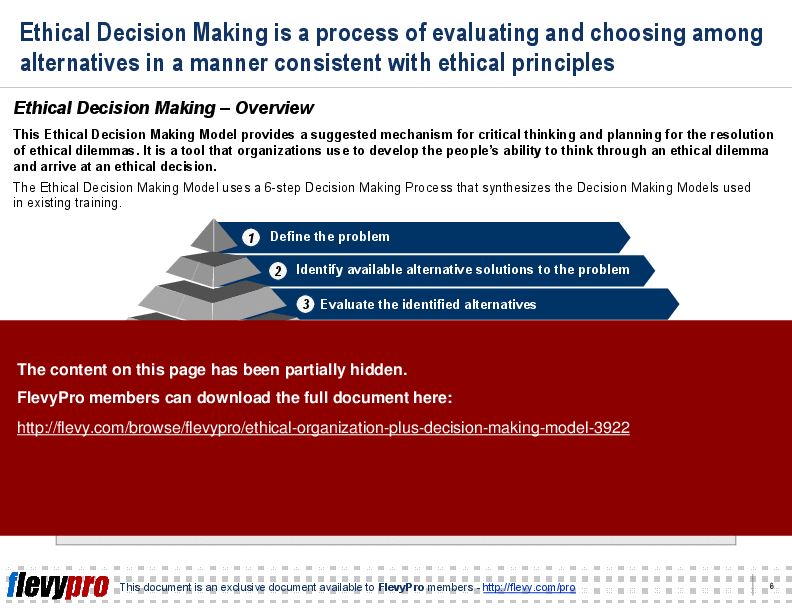
•  Six-Step Decision Making Process - A breakdown of the 6 steps: Define the problem, Identify alternatives, Evaluate alternatives, Make the decision, Implement the decision, and Evaluate the decision.
•  Application of PLUS Filters - Guidance on how to apply the PLUS Filters at key decision-making stages to ensure ethical considerations are addressed.
•  Templates for Ethical Decision Making - Practical templates that can be used to facilitate the ethical decision-making process within organizations.

Deliverables, Templates, and Tools
•  Ethical Decision Making Process template
•  PLUS Filters template for evaluating decisions
•  Step-by-step guide for implementing the PLUS Decision Making Model
•  Evaluation checklist for assessing ethical implications of decisions
•  Communication plan template for disseminating ethical guidelines

Slide Highlights
•  Overview of the PLUS Decision Making Model with a visual representation of the 6 steps
•  Detailed explanation of each step in the ethical decision-making process
•  Examples of how to apply PLUS Filters in real-world scenarios
•  Templates designed for practical application in organizational settings

Potential Workshop Agenda
Introduction to Ethical Decision Making (30 minutes)
•  Overview of the PLUS Decision Making Model
•  Discussion on the importance of ethics in business

Practical Application of the PLUS Model (60 minutes)
•  Group activity: Define a problem and identify alternatives
•  Evaluation of alternatives using PLUS Filters

Wrap-Up and Q&A Session (30 minutes)
•  Review key takeaways
•  Address participant questions and concerns

Customization Guidance
•  Tailor the templates to reflect your organization’s specific policies and ethical standards
•  Adjust the case studies used in workshops to align with industry-specific challenges
•  Incorporate organizational values into the PLUS Filters for a more personalized approach

Secondary Topics Covered
•  The role of corporate governance in ethical decision-making
•  Best practices for fostering an ethical workplace culture
•  The impact of legal regulations on ethical decision-making processes

Topic FAQ

What are the essential components of a structured ethical decision-making model?

A structured ethical decision model separates the process into defined stages and evaluation criteria. The deck describes a six-step process—Define the problem, Identify alternatives, Evaluate alternatives, Make the decision, Implement, and Evaluate—and embeds PLUS Filters (Policies, Legal, Universal, Self) as the evaluation criteria, comprising the six-step process and PLUS Filters.

How should the PLUS Filters (Policies, Legal, Universal, Self) be used when evaluating alternatives?

The PLUS Filters are applied at key decision stages to surface ethical implications by testing alternatives against organizational policies, applicable laws, universal values, and the decision-maker’s personal ethics. The guidance positions the Filters as a checklist applied during the alternatives-evaluation step and throughout decision implementation using the PLUS Filters.

What common challenges do organizations encounter when implementing an ethical decision-making model?

The materials identify typical implementation barriers: resistance to change among staff, limited understanding of ethical principles, and insufficient training on the decision-making process. These obstacles are noted as recurrent issues to address through targeted training, customization of tools, and communication, listing 3 common challenges.

What features matter when choosing an ethics decision-making toolkit for corporate training?

Look for a clear stepwise process, explicit evaluation criteria (like PLUS Filters), editable templates for decision capture, a sample workshop agenda, and communication guidance for roll-out. The product overview highlights these needs and the recommended deliverables include templates, a workshop agenda, and a communication plan.

Are slide-based ethics toolkits and templates suitable for small compliance teams with limited time?

Slide-based toolkits provide ready-to-use templates and a step-by-step implementation guide that can be customized to organizational policies and case studies, enabling faster preparation for training and audits. The Flevy product includes templates and a step-by-step guide across 24 slides.

How can a decision-making model help when updating a company's code of ethics?

A model ensures proposed code changes and illustrative scenarios are tested against organizational policies, legal requirements, universal values, and individual judgment to reveal gaps. The deck provides templates and a process to apply PLUS Filters during revision and review using the Ethical Decision Making Process template.

What is an effective workshop structure for teaching a simple ethical decision model to employees?

The suggested agenda in the materials divides a session into an introduction (30 minutes), practical application with group activities and PLUS Filter evaluations (60 minutes), and wrap-up with Q&A (30 minutes). This sample structure pairs concept overview with hands-on practice using the provided templates and a 30/60/30 minute agenda.

What types of templates and tools should an organization expect in an ethical decision-making slide deck?

The deck lists practical artifacts: an Ethical Decision Making Process template, a PLUS Filters evaluation template, a step-by-step implementation guide, an evaluation checklist for ethical implications, and a communication plan template, totaling 5 named templates.

Document FAQ
These are questions addressed within this presentation.

What is the PLUS Decision Making Model?
The PLUS Decision Making Model is a framework that integrates ethical considerations into the decision-making process, ensuring that decisions align with organizational policies, legal standards, universal values, and personal ethics.

How can the PLUS Filters be applied in decision-making?
The PLUS Filters—Policies, Legal, Universal, and Self—are applied at key stages of the decision-making process to evaluate the ethical implications of each alternative considered.

What are the 6 steps in the ethical decision-making process?
The 6 steps are: Define the problem, Identify available alternative solutions, Evaluate the identified alternatives, Make the decision, Implement the decision, and Evaluate the decision.

Who can benefit from using this framework?
Corporate executives, HR leaders, compliance officers, and consultants can all benefit from using the PLUS Decision Making Model to enhance ethical practices within their organizations.

How does this model improve decision-making?
By providing a structured approach that emphasizes ethical considerations, the model helps employees make informed decisions that align with organizational values and legal requirements.

What types of templates are included in the presentation?
The presentation includes templates for the ethical decision-making process and PLUS Filters, which can be customized for organizational use.

How can organizations ensure effective communication of ethical guidelines?
Organizations should implement formal mechanisms for communicating policies and values, ensuring that all employees understand the ethical standards expected of them.

What challenges might organizations face when implementing this model?
Common challenges include resistance to change, lack of understanding of ethical principles, and insufficient training on the decision-making process.

Glossary
•  Ethical Decision Making - The process of evaluating and choosing among alternatives in a manner consistent with ethical principles.
•  PLUS Filters - A set of criteria (Policies, Legal, Universal, Self) used to evaluate the ethical implications of decisions.
•  Decision Making Process - A structured approach to making choices that involve identifying problems, evaluating alternatives, and implementing solutions.
•  Corporate Governance - The system of rules, practices, and processes by which a company is directed and controlled, emphasizing ethical behavior.
•  Compliance - Adherence to laws, regulations, and organizational policies that govern business practices.
•  Organizational Values - The core principles and standards that guide the behavior and decision-making of an organization.
•  Ethical Culture - The shared values, beliefs, and norms that influence the behavior of individuals within an organization regarding ethical practices.
•  Stakeholders - Individuals or groups that have an interest in the decisions and actions of an organization, including employees, customers, and investors.
•  Dilemma - A situation in which a difficult choice must be made between 2 or more alternatives, often involving ethical considerations.
•  Integrity - The quality of being honest and having strong moral principles.
•  Accountability - The obligation of individuals or organizations to account for their activities, accept responsibility, and disclose results in a transparent manner.
•  Transparency - The practice of being open and honest about organizational processes, decisions, and actions.
•  Sustainability - The ability to maintain ethical practices over time, considering social, economic, and environmental impacts.
•  Training and Development - Programs designed to enhance the skills and knowledge of employees, particularly in ethical decision-making.
•  Ethics Management - The process of overseeing and guiding the ethical behavior of individuals and organizations.
•  Risk Assessment - The identification and evaluation of potential risks that could impact the ethical decision-making process.
•  Moral Philosophy - The study of what is right and wrong in human conduct, which informs ethical decision-making.
•  Values-Based Decision Making - An approach that prioritizes organizational values in the decision-making process.
•  Stakeholder Engagement - The process of involving individuals or groups who have an interest in the organization's decisions and actions.
•  Conflict of Interest - A situation where an individual's personal interests may conflict with their professional responsibilities, impacting ethical decision-making.
•  Whistleblower Protection - Legal safeguards for individuals who report unethical or illegal activities within an organization.

BUSINESS ETHICS PPT TEMPLATES

Framework for Ethical Decision-Making: PLUS Filters

Framework for Ethical Decision-Making Process

Criteria for Effective Ethical Decision-Making Process

Essential Steps for Defining Decision-Making Problems

Evaluating Alternatives: A Structured Decision-Making Approach

Source: Best Practices in Decision Making, Business Ethics PowerPoint Slides: Ethical Organization: PLUS Decision Making Model PowerPoint (PPT) Presentation Slide Deck, LearnPPT Consulting


$29.00
FlevyPro price: FREE (included in subscription)
This framework is developed by a team of former McKinsey and Big 4 consultants. The presentation follows the headline-body-bumper slide format used by global consulting firms.
Add to Cart
  

Did you need more documents?

Consider a FlevyPro subscription from $39/month. View plans here.

For $10.00 more, you can download this document plus 2 more FlevyPro documents. That's just $13 each.

ABOUT FLEVYPRO

This document is part of the FlevyPro Library, a curated knowledge base of documents for our FlevyPro subscribers.

FlevyPro is a subscription service for on-demand business frameworks and analysis tools. FlevyPro subscribers receive access to an exclusive library of curated business documents—business framework primers, presentation templates, Lean Six Sigma tools, and more—among other exclusive benefits.

Click here to learn more about FlevyPro and its benefits.

Did you know?
The average daily rate of a McKinsey consultant is $6,625 (not including expenses). The average price of a Flevy document is $65.


Trusted by over 10,000+ Client Organizations
Since 2012, we have provided business templates to over 10,000 businesses and organizations of all sizes, from startups and small businesses to the Fortune 100, in over 130 countries.
AT&T GE Cisco Intel IBM Coke Dell Toyota HP Nike Samsung Microsoft Astrazeneca JP Morgan KPMG Walgreens Walmart 3M Kaiser Oracle SAP Google E&Y Volvo Bosch Merck Fedex Shell Amgen Eli Lilly Roche AIG Abbott Amazon PwC T-Mobile Broadcom Bayer Pearson Titleist ConEd Pfizer NTT Data Schwab


Read Customer Testimonials

 
"The wide selection of frameworks is very useful to me as an independent consultant. In fact, it rivals what I had at my disposal at Big 4 Consulting firms in terms of efficacy and organization."

– Julia T., Consulting Firm Owner (Former Manager at Deloitte and Capgemini)
 
"If you are looking for great resources to save time with your business presentations, Flevy is truly a value-added resource. Flevy has done all the work for you and we will continue to utilize Flevy as a source to extract up-to-date information and data for our virtual and onsite presentations!"

– Debbi Saffo, President at The NiKhar Group
 
"I have found Flevy to be an amazing resource and library of useful presentations for lean sigma, change management and so many other topics. This has reduced the time I need to spend on preparing for my performance consultation. The library is easily accessible and updates are regularly provided. A wealth of great information."

– Cynthia Howard RN, PhD, Executive Coach at Ei Leadership
 
"FlevyPro has been a brilliant resource for me, as an independent growth consultant, to access a vast knowledge bank of presentations to support my work with clients. In terms of RoI, the value I received from the very first presentation I downloaded paid for my subscription many times over! The "

– Roderick Cameron, Founding Partner at SGFE Ltd
 
"My FlevyPro subscription provides me with the most popular frameworks and decks in demand in today’s market. They not only augment my existing consulting and coaching offerings and delivery, but also keep me abreast of the latest trends, inspire new products and service offerings for my practice, and educate me "

– Bill Branson, Founder at Strategic Business Architects
 
"As an Independent Management Consultant, I find Flevy to add great value as a source of best practices, templates and information on new trends. Flevy has matured and the quality and quantity of the library is excellent. Lastly the price charged is reasonable, creating a win-win value for "

– Jim Schoen, Principal at FRC Group
 
"As a niche strategic consulting firm, Flevy and FlevyPro frameworks and documents are an on-going reference to help us structure our findings and recommendations to our clients as well as improve their clarity, strength, and visual power. For us, it is an invaluable resource to increase our impact and value."

– David Coloma, Consulting Area Manager at Cynertia Consulting
 
"Flevy is our 'go to' resource for management material, at an affordable cost. The Flevy library is comprehensive and the content deep, and typically provides a great foundation for us to further develop and tailor our own service offer."

– Chris McCann, Founder at Resilient.World


Customers Also Bought These Documents


Customers Also Like These Documents

Explore Templates on Related Management Topics


Your Recently Viewed Documents
Download our FREE Organization, Change, & Culture, Templates

Download our free compilation of 50+ slides and templates on Organizational Design, Change Management, and Corporate Culture. Methodologies include ADKAR, Burke-Litwin Change Model, McKinsey 7-S, Competing Values Framework, etc.