
In today's rapidly changing world, management faces a multitude of challenges. From navigating economic uncertainties to ensuring long-term sustainability, the complexities of modern markets can often feel overwhelming.
Ray Dalio's 5 Forces Framework emerged as a structured model to framing these pressing issues. Designed specifically for management professionals, this framework equips you with the tools to tackle critical issues, such as risk management, strategic insights, and crisis preparedness.
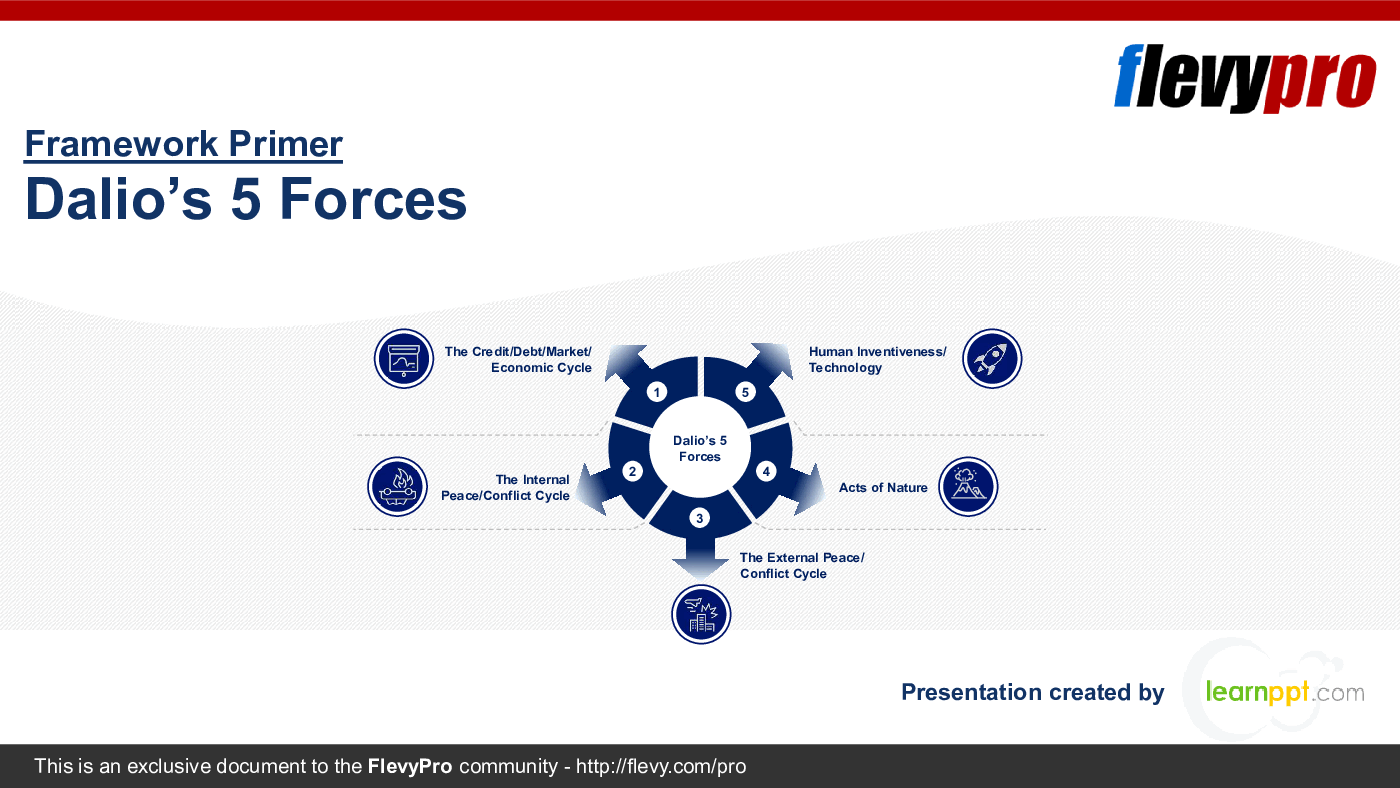
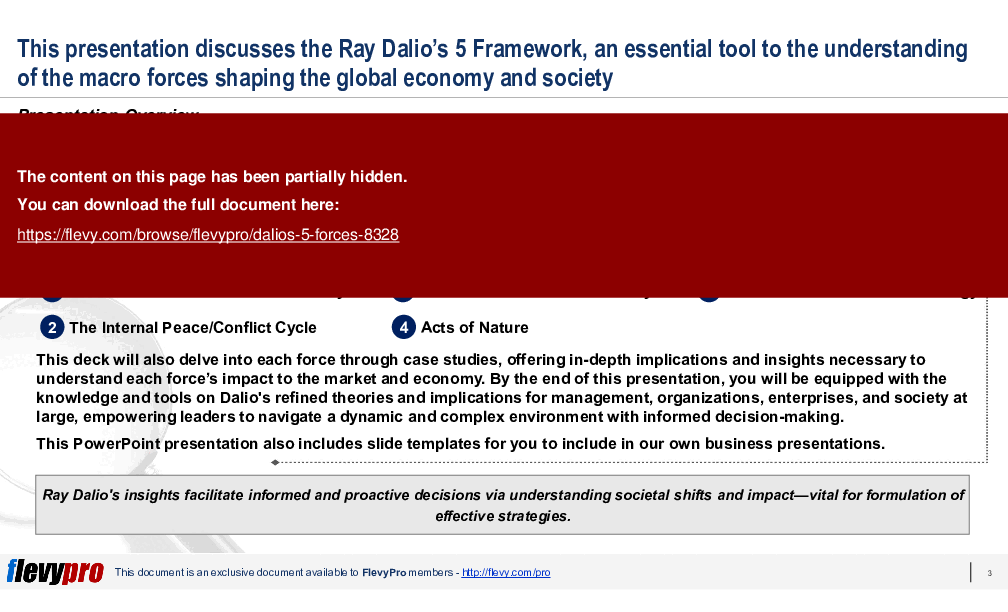
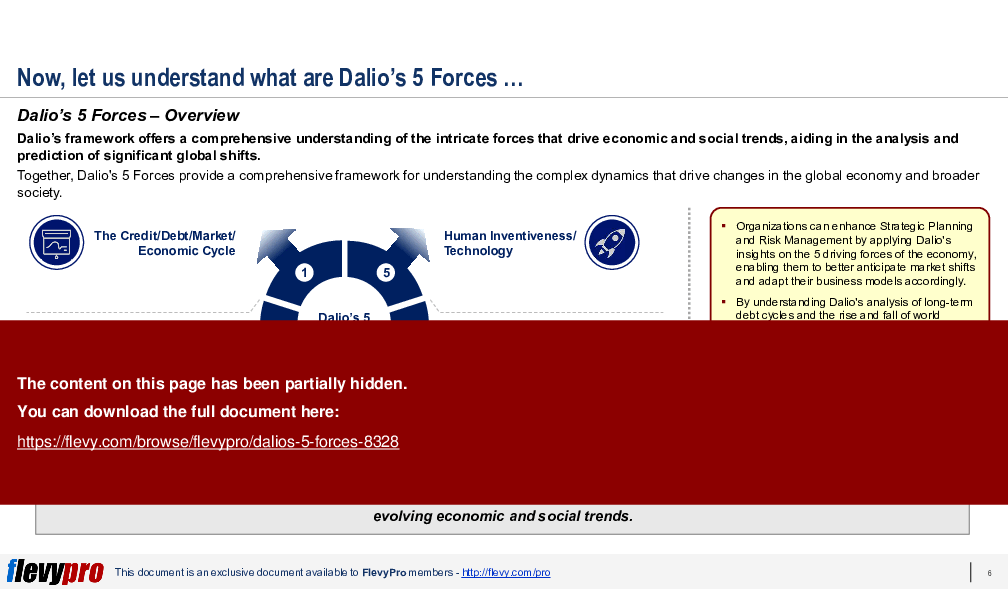
In this PowerPoint presentation, we will focus our discussion into the 5 Forces of Dalio's Framework:
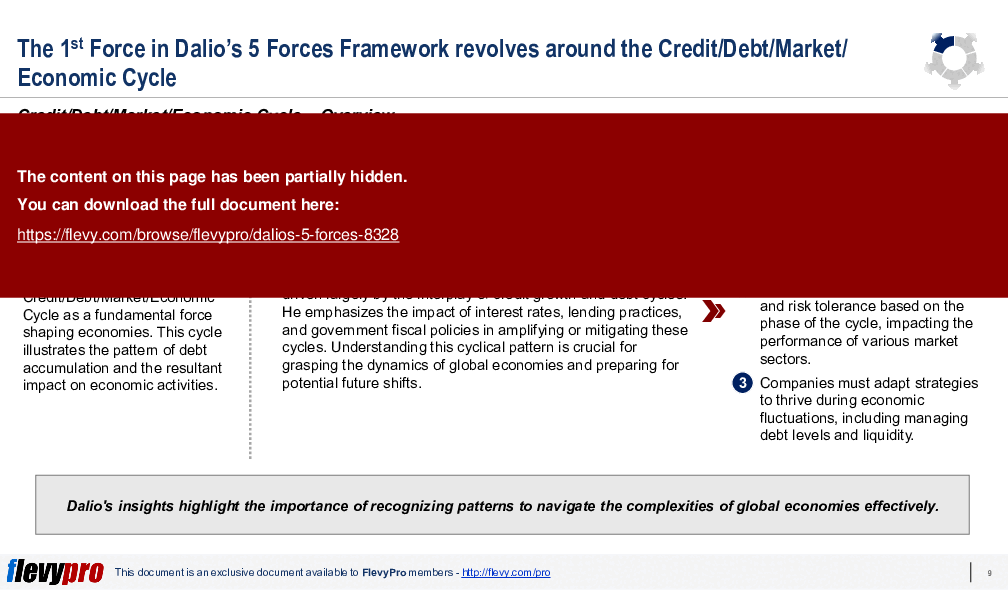
1. The Credit/Debt/Market/Economic Cycle – This force examines how credit growth and debt accumulation drive economic cycles. According to Dalio, the cycle moves through phases of expansion and recession based on credit availability and debt levels. High debt can lead to financial crises, particularly when it coincides with the need for higher interest rates to combat inflation.
2. The Internal Peace/Conflict Cycle – This force looks at the stability within a country, focusing on wealth and power disparities. Dalio suggests that increasing internal divisions and inequality can lead to social and political unrest, particularly during economic downturns. This cycle affects national decision-making, economic policies, and overall stability.
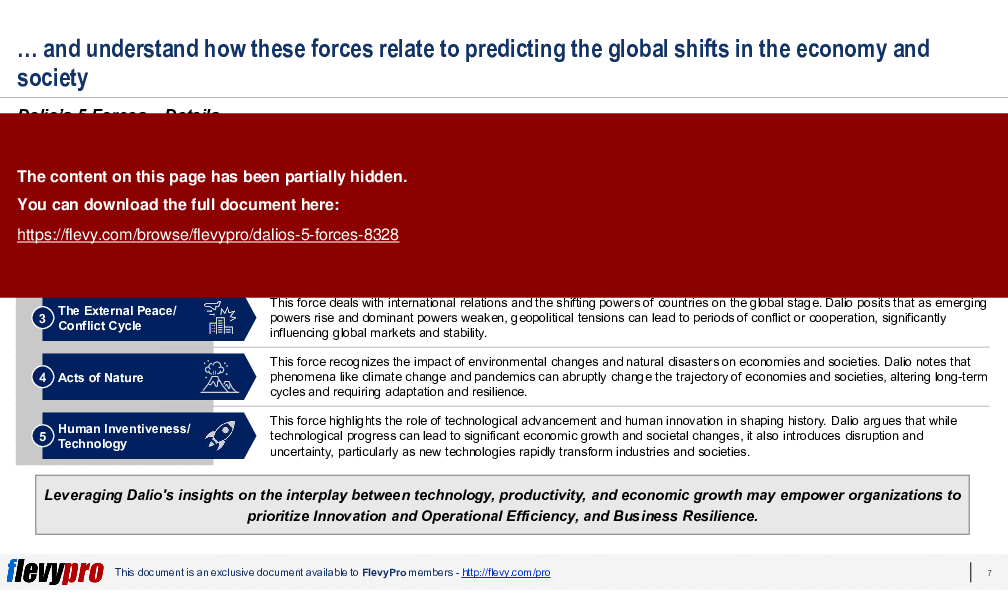
3. The External Peace/Conflict Cycle – This force deals with international relations and the shifting powers of countries on the global stage. Dalio posits that as emerging powers rise and dominant powers weaken, geopolitical tensions can lead to periods of conflict or cooperation, significantly influencing global markets and stability.
4. Acts of Nature – This force recognizes the impact of environmental changes and natural disasters on economies and societies. Dalio notes that phenomena like climate change and pandemics can abruptly change the trajectory of economies and societies, altering long-term cycles and requiring adaptation and resilience.
5. Human Inventiveness/Technology – This force highlights the role of technological advancement and human innovation in shaping history. Dalio argues that while technological progress can lead to significant economic growth and societal changes, it also introduces disruption and uncertainty, particularly as new technologies rapidly transform industries and societies.
This deck will also delve into each force through case studies, offering in-depth implications and insights necessary to understand each force's impact to the market and economy. By the end of this presentation, you will be equipped with the knowledge and tools on Dalio's refined theories and implications for management, organizations, enterprises, and society at large, empowering leaders to navigate a dynamic and complex environment with informed decision-making.
This PowerPoint presentation also includes slide templates for you to include in our own business presentations.
Ray Dalio's insights facilitate informed and proactive decisions via understanding societal shifts and impact—vital for the formulation of effective strategies.
Got a question about this document? Email us at flevypro@flevy.com.
Executive Summary
The "Dalio's 5 Forces" presentation provides a comprehensive framework for understanding the macroeconomic forces that shape global economies and societies. Developed by Ray Dalio, this framework equips corporate executives and management professionals with insights into critical issues such as risk management, strategic planning, and crisis preparedness. By exploring the 5 forces—Credit/Debt/Market/Economic Cycle, Internal Peace/Conflict Cycle, External Peace/Conflict Cycle, Acts of Nature, and Human Inventiveness/Technology—this presentation enables leaders to make informed decisions and adapt strategies to navigate complex market dynamics effectively.
Who This Is For and When to Use
• Corporate executives seeking to enhance strategic planning and risk management.
• Management professionals focused on understanding macroeconomic trends.
• Consultants advising organizations on navigating economic uncertainties.
• Risk management teams assessing geopolitical and environmental risks.
Best-fit moments to use this deck:
• During strategic planning sessions to incorporate macroeconomic insights.
• In crisis management discussions to evaluate potential impacts on operations.
• When assessing investment opportunities in changing global markets.
• For training sessions aimed at enhancing organizational preparedness.
Learning Objectives
• Define the 5 forces in Dalio’s framework and their implications for the economy.
• Analyze the cyclical nature of economic cycles and their impact on market dynamics.
• Assess the influence of internal and external conflicts on organizational stability.
• Evaluate the effects of natural disasters on economic performance and recovery.
• Identify technological advancements that can drive innovation and market leadership.
• Develop strategies to mitigate risks associated with geopolitical tensions and environmental changes.
Table of Contents
• Overview (page 3)
• Dalio’s 5 Forces (page 4)
• The Credit/Debt/Market/Economic Cycle (page 9)
• The Internal Peace/Conflict Cycle (page 12)
• The External Peace/Conflict Cycle (page 15)
• Acts of Nature (page 18)
• Human Inventiveness/Technology (page 21)
• Slide Design Structure & Templates (page 24)
Primary Topics Covered
• Credit/Debt/Market/Economic Cycle - This force examines how credit growth and debt accumulation drive economic cycles, impacting market performance and investment strategies.
• Internal Peace/Conflict Cycle - This force focuses on the stability within nations, emphasizing how wealth disparities can lead to internal conflicts and affect global markets.
• External Peace/Conflict Cycle - This force addresses international relations and the shifting powers of countries, highlighting the impact of geopolitical tensions on market stability.
• Acts of Nature - This force recognizes the significant impact of natural disasters on economies and societies, necessitating robust disaster recovery plans.
• Human Inventiveness/Technology - This force highlights the role of technological advancements in driving economic growth and creating new market leaders.
Deliverables, Templates, and Tools
• Framework overview slides that summarize Dalio's 5 Forces.
• Case study templates illustrating real-world applications of each force.
• Risk assessment tools for evaluating the impact of economic cycles.
• Strategic planning templates for incorporating macroeconomic insights.
• Presentation slides designed for consulting-grade delivery.
Slide Highlights
• Overview of Dalio's 5 Forces with visual representation of the framework.
• In-depth analysis of the Credit/Debt/Market/Economic Cycle with historical case studies.
• Insights into the Internal Peace/Conflict Cycle, featuring organizational transformation examples.
• Examination of the External Peace/Conflict Cycle, showcasing the US-China trade war.
• Discussion on Acts of Nature, highlighting the economic impact of the 2011 Japanese tsunami.
Potential Workshop Agenda
Understanding Dalio's Framework (60 minutes)
• Introduction to Dalio's 5 Forces and their relevance to modern management.
• Group discussion on the implications of each force for strategic planning.
Case Study Analysis (90 minutes)
• Review of the Global Financial Crisis and its lessons for risk management.
• Breakout sessions to analyze the Internal Peace/Conflict Cycle through organizational case studies.
Technology and Innovation Session (60 minutes)
• Exploration of Human Inventiveness and its role in shaping market dynamics.
• Discussion on how organizations can leverage technology for competitive advantage.
Customization Guidance
• Tailor the presentation to reflect specific organizational contexts and challenges.
• Update case studies to include recent economic events relevant to the audience.
• Modify templates to align with corporate branding and presentation standards.
Secondary Topics Covered
• The role of government policies in shaping economic cycles.
• Strategies for managing geopolitical risks in international operations.
• The impact of technological disruptions on traditional industries.
• Approaches to fostering resilience in the face of natural disasters.Document FAQ
These are questions addressed within this presentation.
What are Dalio's 5 Forces?
Dalio's 5 Forces are a framework for understanding the macroeconomic factors that shape economies and societies, including economic cycles, internal and external conflicts, natural disasters, and technological advancements.
How can this framework assist in strategic planning?
By applying Dalio's insights, organizations can anticipate market shifts, assess risks, and adapt their business models to navigate complex economic environments.
What is the significance of the Credit/Debt/Market/Economic Cycle?
This cycle illustrates how credit availability and debt levels influence economic expansions and contractions, impacting investment strategies and market performance.
How does the Internal Peace/Conflict Cycle affect organizations?
Internal conflicts within nations can disrupt trade and supply chains, influencing investor sentiment and organizational stability.
What are the implications of Acts of Nature on economies?
Natural disasters can lead to significant economic disruptions, necessitating effective disaster recovery and continuity plans to mitigate financial losses.
How does Human Inventiveness/Technology drive economic growth?
Technological advancements create new market opportunities and can disrupt traditional industries, influencing overall economic performance.
Can this presentation be customized for specific industries?
Yes, the presentation can be tailored to reflect industry-specific challenges and case studies relevant to the audience.
What tools are included in this presentation?
The presentation includes templates for strategic planning, risk assessment, and case study analysis, designed for consulting-grade delivery.
Glossary
• Dalio's 5 Forces - A framework for understanding macroeconomic factors influencing economies and societies.
• Credit/Debt Cycle - The pattern of credit growth and debt accumulation impacting economic activities.
• Internal Peace/Conflict Cycle - The sequence of stages nations undergo regarding internal stability and conflict.
• External Peace/Conflict Cycle - The dynamics of international relations and the shifting powers of countries.
• Acts of Nature - Natural disasters and their significant effects on economies and societies.
• Human Inventiveness/Technology - The role of technological advancements in driving economic growth and market dynamics.
• Risk Management - The process of identifying, assessing, and mitigating risks to ensure organizational stability.
• Strategic Planning - The process of defining an organization's direction and making decisions on resource allocation.
• Geopolitical Risks - Risks arising from political and economic instability in different regions affecting business operations.
• Disaster Recovery - Strategies and processes for recovering from disruptive events to maintain business continuity.
• Market Dynamics - The forces that impact the supply and demand of goods and services in the market.
• Investor Sentiment - The overall attitude of investors toward a particular market or asset, influencing investment decisions.
Source: Best Practices in Innovation, Market Analysis, Globalization PowerPoint Slides: Dalio's 5 Forces PowerPoint (PPTX) Presentation Slide Deck, LearnPPT Consulting
Did you need more documents?
Consider a FlevyPro subscription from $39/month. View plans here.
For $10.00 more, you can download this document plus 2 more FlevyPro documents. That's just $13 each.
|
Download our FREE Strategy & Transformation Framework Templates
Download our free compilation of 50+ Strategy & Transformation slides and templates. Frameworks include McKinsey 7-S, Balanced Scorecard, Disruptive Innovation, BCG Curve, and many more. |