
This framework is developed by a team of former McKinsey and Big 4 consultants. The presentation follows the headline-body-bumper slide format used by global consulting firms.
Editor Summary
A 22-slide PowerPoint (PPT) Business Transformation Framework for New CEOs by PPT Lab, presenting a 4-phase approach: Define the Ambition (up to 100 days before start), Energize the Organization (first few weeks), Prepare and Launch (first 100 days), and Drive the Transformation (first 18 months).
Read moreCovers topics such as No Regret Initiatives, Medium Term Initiatives, Types of Transformations, Common Pitfalls, Transformation Levers, Case for Change, and Transformation Goals. Built on BCG experience and sold as a digital download on Flevy.
Use this framework when a new CEO or leadership team must deliver visible organizational change quickly—typically during CEO transitions, post-acquisition resets, or when market shifts demand a new strategic direction.
New CEOs defining the Ambition and stakeholder narrative in the run-up to Day 1 and the first 100 days.
Chief Transformation Officers identifying no-regret initiatives and sequencing medium-term programs to secure early wins.
HR and OD leaders designing team, organization, and culture changes to support the transformation.
Strategy leaders mapping funding needs, capital-efficiency measures, and transformation levers to win the medium term.
The 4-phase sequencing and emphasis on early stakeholder engagement reflect BCG-style practice for complex transformations.
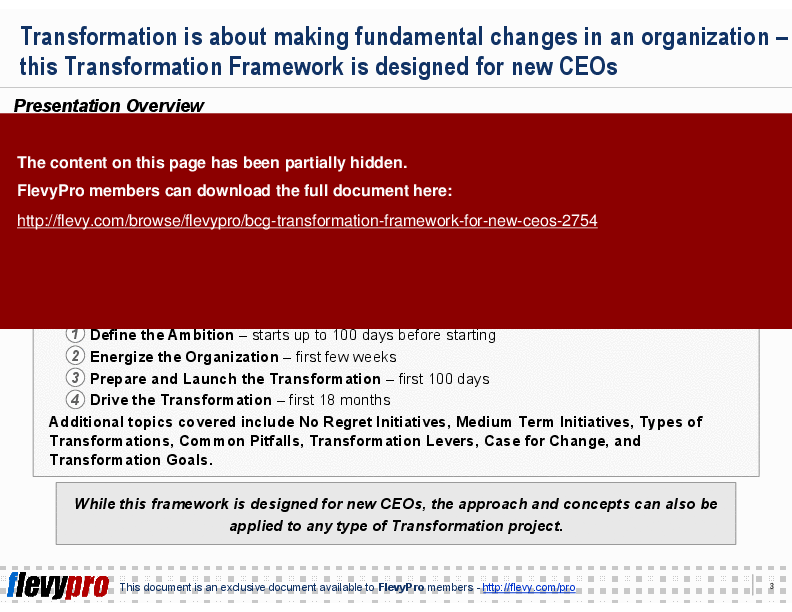
Transformation is about making fundamental changes in how business is conducted in order to help cope with a shift in market environment and achieve a sustainable, quantum improvement in performance. Specifically, this fundamental change can be in the company's corporate strategy, business model, organization, culture, people, or processes.
This presentation explains a Business Transformation framework geared towards the specific situation of a new CEO taking charge of the organization. When a new CEO is hired, stakeholders expect significant changes, including Transformation. For this Transformation to be effective, the CEO needs to take action immediately. While this framework is designed for new CEOs, the approach and concepts can also be applied to any type of Transformation project.
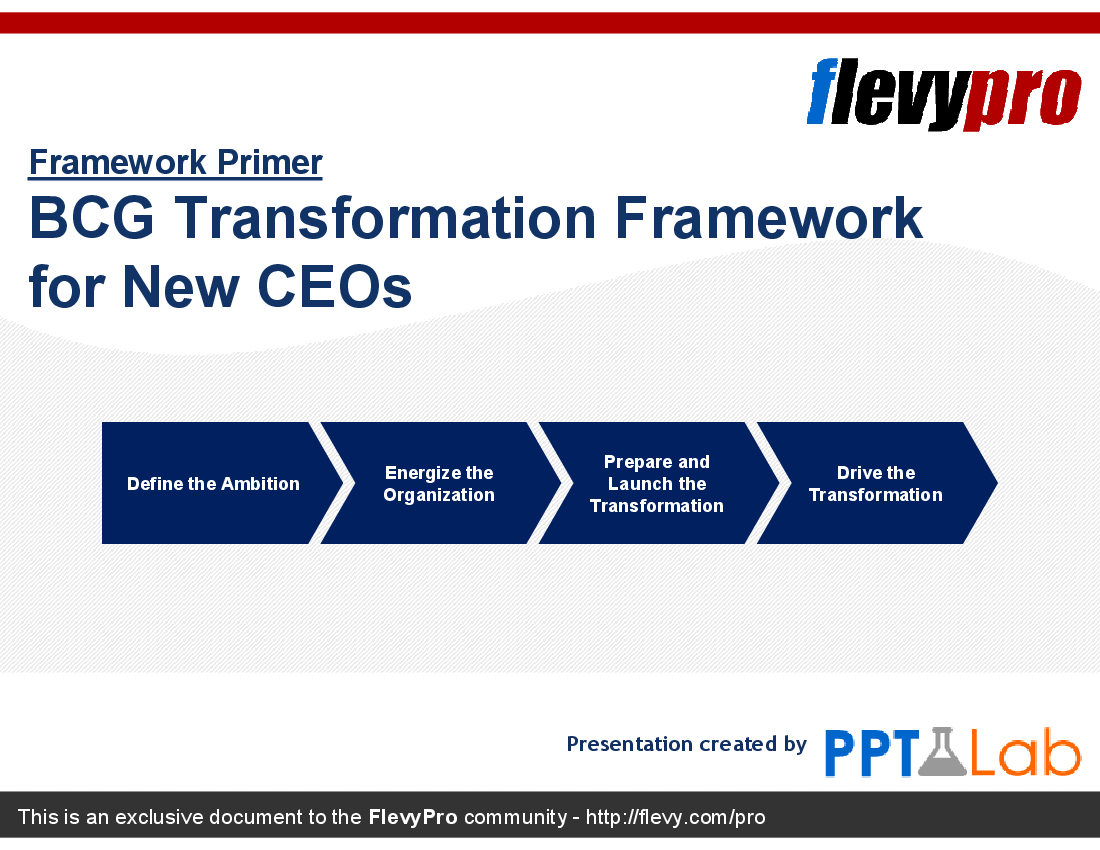
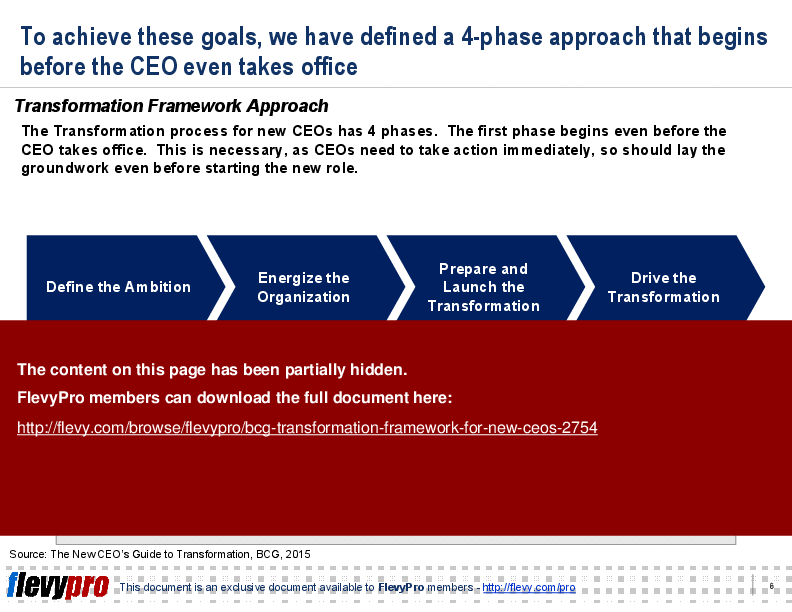
This Transformation Framework follows a 4-phase approach:
1. Define the Ambition – starts up to 100 days before starting
2. Energize the Organization – first few weeks
3. Prepare and Launch the Transformation – first 100 days
4. Drive the Transformation – first 18 months
Additional topics covered include No Regret Initiatives, Medium Term Initiatives, Types of Transformations, Common Pitfalls, Transformation Levers, Case for Change, and Transformation Goals.
The framework is built on BCG's extensive experience in guiding organizations through complex transformations. It emphasizes the importance of early stakeholder engagement and the identification of "no regret" initiatives that can deliver quick wins and build momentum. By focusing on these early actions, new CEOs can lay a solid foundation for more extensive changes.
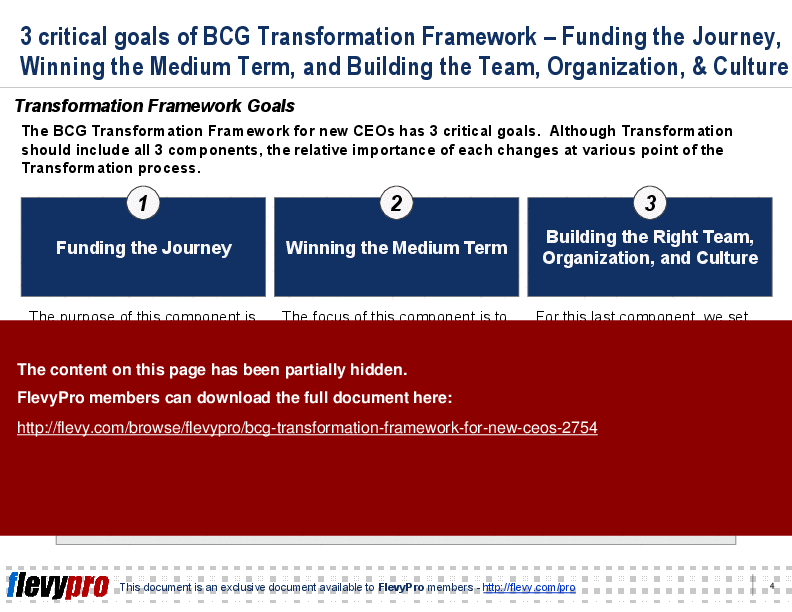
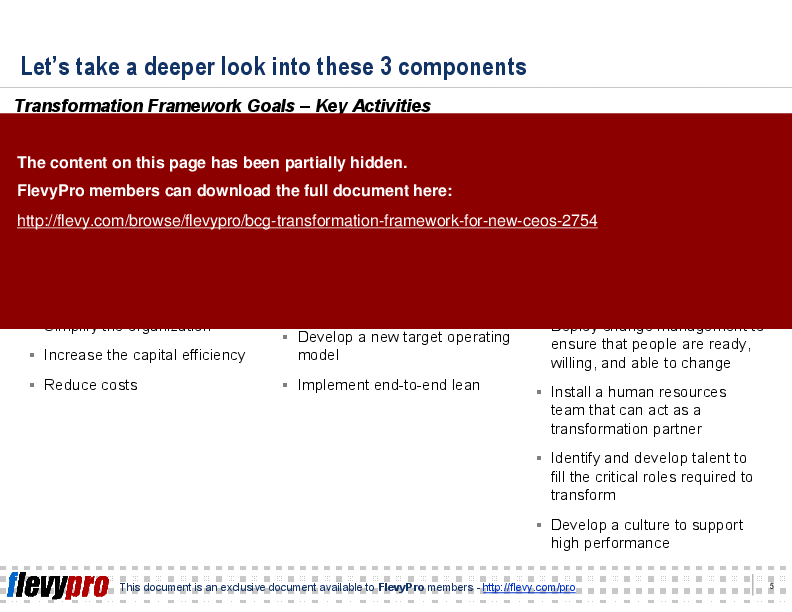
The PPT also delves into the critical goals of funding the journey, winning the medium term, and building the right team, organization, and culture. It provides actionable insights into key activities such as simplifying the organization, increasing capital efficiency, and deploying change management. This comprehensive guide ensures that new CEOs can navigate the complexities of transformation with confidence and achieve sustainable results.
What are the typical phases of a CEO-led transformation?
A CEO-led transformation is often structured into sequential phases: pre-start ambition-setting, early engagement to energize the organization, a Prepare-and-Launch phase for the first 100 days, and a longer Drive phase to embed change across 18 months. This model follows a 4-phase approach.
How do I identify "no-regret" initiatives early in a transformation?
No-regret initiatives are actions that yield quick wins and build momentum with low implementation risk; they are identified through early stakeholder engagement and prioritization against clarity of the case for change and funding availability. The framework highlights selecting no-regret initiatives for immediate impact.
What should new CEOs prioritize in their first 100 days?
Priorities typically include defining the ambition and strategic narrative, engaging key stakeholders to energize the organization, launching quick no-regret initiatives, and setting up funding and governance for medium-term initiatives. These activities align with the Prepare and Launch phase.
How can I measure whether a transformation is on track over 18 months?
Track progress against a clear case for change and defined transformation goals, monitor delivery of no-regret and medium-term initiatives, and assess funding, capital-efficiency improvements, and organizational/cultural changes. The Drive phase focuses on sustaining results across the first 18 months.
What should I look for when buying a CEO transformation PPT or toolkit?
Seek a toolkit that maps timebound phases (pre-start, 100-day, 18-month), prescribes early stakeholder engagement, identifies no-regret initiatives, outlines transformation levers and common pitfalls, and supports funding and organizational design decisions; the Business Transformation Framework for New CEOs follows a 4-phase structure.
How much value do slide templates provide versus bespoke consulting support?
Slide templates can supply a structured planning approach and executive-ready sequencing derived from consulting practice,, but they do not replace implementation support. The Business Transformation Framework for New CEOs captures a BCG-informed approach in a 22-slide PPT to support planning and communication.
I need to simplify my organization and improve capital efficiency — which levers should I consider first?
Early levers include simplifying the organization structure, increasing capital efficiency, and deploying change management to secure quick wins while protecting delivery capacity; those actions are identified as priorities to fund the journey and win the medium term.
After a takeover, how can boards set expectations for a new CEO's transformation plan?
Boards should expect a defined ambition before start, immediate stakeholder engagement, early no-regret initiatives to demonstrate progress, a clear funding plan, and an 18-month roadmap focusing on medium-term wins and building the right team, organization, and culture over 18 months.
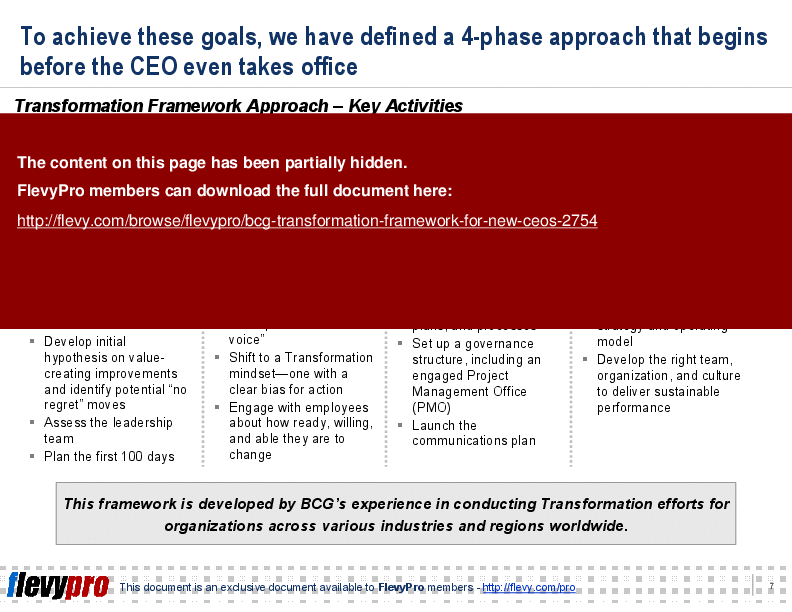
This PPT slide outlines a four-phase transformation framework for new CEOs. The first phase, "Define the Ambition," involves assessing the organization's current state through stakeholder interviews, evaluating the mindset for change, and developing hypotheses for improvement while planning the first 100 days. The second phase, "Energize the Organization," focuses on creating a compelling "Case for Change" by discussing internal and external factors, ensuring alignment among leadership, and fostering a transformation mindset. In the third phase, "Prepare and Launch the Transformation," a roadmap with clear milestones is developed, establishing initiative teams and a Project Management Office (PMO) to oversee efforts. The final phase, "Drive the Transformation," emphasizes executing initiatives, achieving short-term results, and setting a new strategy and operating model to cultivate a sustainable organizational culture.
This PPT slide outlines the critical second phase of a new CEO's tenure, focusing on energizing the organization through effective communication. It highlights the challenges of leadership transitions and the need for clear messaging to mitigate organizational stress. The "Case for Change" must resonate with employees by acknowledging the organization's history and addressing external pressures like market dynamics and performance metrics, fostering a shared sense of urgency. Gaining alignment with the Board of Directors and senior management is crucial for consistent messaging, as mixed signals can lead to confusion. Once aligned, the CEO should communicate the Case for Change through workshops and town hall meetings, facilitating Q&A sessions to address concerns and clarify the vision. Prioritizing this proactive approach from day one is essential for the success of the transformation initiative.
This PPT slide outlines the first 100 days of a CEO's transformation journey, focusing on "no regret" initiatives that create momentum and build credibility for new leadership. These initiatives should deliver tangible results within 3 to 12 months, balancing long-term vision with immediate operational realities. To fund transformation, 4 primary levers are identified: revenue, organizational simplicity, capital efficiency, and cost reduction. Organizations often prioritize cost reduction and simplicity as straightforward solutions. The slide emphasizes maintaining focus and avoiding premature declarations of victory, recommending regular review sessions and the establishment of a Program Management Office (PMO) to monitor progress and sustain transformation efforts.
Phase 4 of the business transformation framework focuses on establishing a new strategy and operating model. Organizations must reassess their strategic direction while managing short-term and medium-term initiatives through targeted workshops with senior leadership. This efficient approach fosters buy-in and alignment with the new strategy, ensuring leadership remains focused on ongoing transformation efforts. Engaging the management team can lead to immediate operational improvements, demonstrating that strategic alignment enhances performance. This PPT slide presents core aspects of the new strategy clearly, essential for C-level executives to quickly grasp complex concepts, while emphasizing collaboration to foster innovation and commitment. This phase is critical for defining and implementing the organization’s strategic vision, leading to tangible results.
The final phase of a transformation framework focuses on medium-term objectives for CEOs, emphasizing 3 key goals: winning in the medium term, establishing a new strategy and operating model, and building sustainable performance. Medium-term initiatives aim to create a significantly different market position, enhancing overall performance. These initiatives may include driving growth, launching new business models, and enhancing digital capabilities, impacting internal support functions like R&D, Human Resources, and IT/MIS. Medium-term initiatives are generally more complex, requiring innovative thinking and careful management of interdependencies across functions and business units, highlighting the need for strategic foresight and effective leadership in navigating transformation.
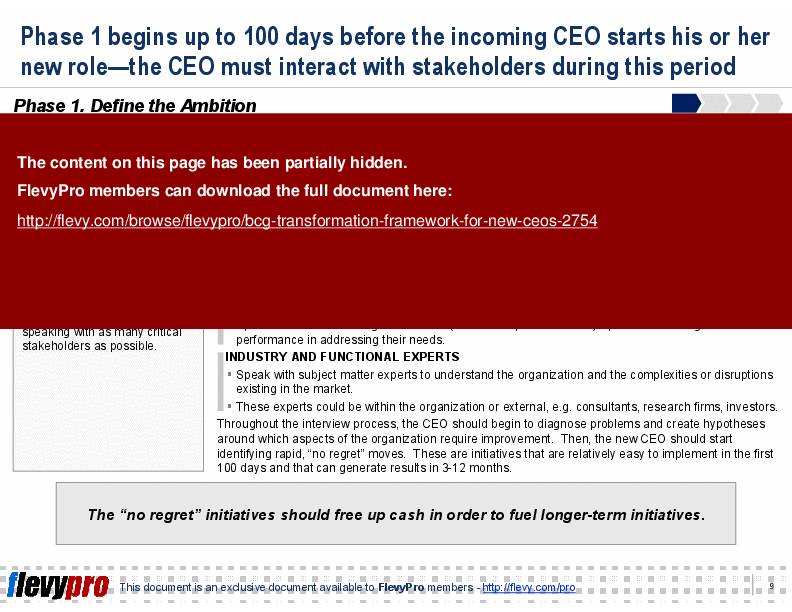
This PPT slide outlines the initial phase for incoming CEOs, focusing on stakeholder engagement before assuming the role. It highlights a critical 100-day window for establishing a transformation vision. Key stakeholders include employees, customers, and industry experts. CEOs should engage 30 to 50 employees across various levels to gauge consensus on necessary changes and insights into organizational culture. Customer engagement is vital for unbiased feedback on performance, free from internal politics. Consulting industry and functional experts helps CEOs understand market complexities and disruptions. Identifying "no regret" initiatives—quick wins within the first 100 days—can generate immediate results and support longer-term strategies, setting the stage for effective leadership and organizational transformation.
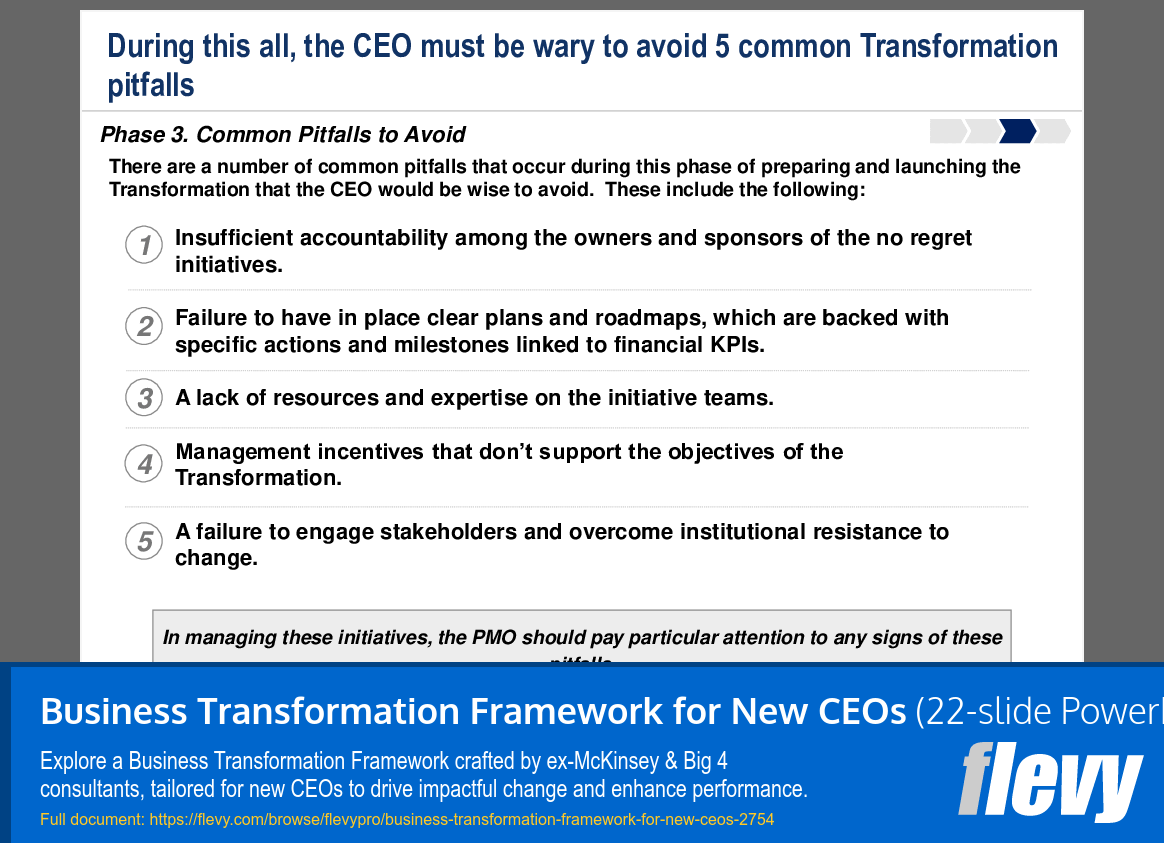
This PPT slide outlines 5 critical pitfalls for CEOs during organizational transformation. Clear accountability among initiative owners and sponsors is essential; without it, initiatives may falter, leading to diminished trust in leadership. Well-defined plans and roadmaps must include specific actions and milestones linked to financial Key Performance Indicators (KPIs) to ensure measurable transformation efforts. Resource allocation is vital; insufficient resources and expertise can hinder progress, necessitating an assessment of team capabilities. Management incentives must align with transformation objectives to prevent misalignment and resistance. Finally, engaging stakeholders early is crucial to overcoming institutional resistance and fostering collaboration.
Source: Best Practices in Business Transformation, CEO PowerPoint Slides: Business Transformation Framework for New CEOs PowerPoint (PPT) Presentation Slide Deck, PPT Lab
This framework is developed by a team of former McKinsey and Big 4 consultants. The presentation follows the headline-body-bumper slide format used by global consulting firms.
For $10.00 more, you can download this document plus 2 more FlevyPro documents. That's just $13 each.
ABOUT FLEVYPRO
This document is part of the FlevyPro Library, a curated knowledge base of documents for our FlevyPro subscribers.

FlevyPro is a subscription service for on-demand business frameworks and analysis tools. FlevyPro subscribers receive access to an exclusive library of curated business documents—business framework primers, presentation templates, Lean Six Sigma tools, and more—among other exclusive benefits.
The average daily rate of a McKinsey consultant is $6,625 (not including expenses). The average price of a Flevy document is $65.
Trusted by over 10,000+ Client Organizations
Since 2012, we have provided business templates to over 10,000 businesses and organizations of all sizes, from startups and small businesses to the Fortune 100, in over 130 countries.
"I have used FlevyPro for several business applications. It is a great complement to working with expensive consultants. The quality and effectiveness of the tools are of the highest standards."
– Moritz Bernhoerster, Global Sourcing Director at Fortune 500
"As a young consulting firm, requests for input from clients vary and it's sometimes impossible to provide expert solutions across a broad spectrum of requirements. That was before I discovered Flevy.com.
Through subscription to this invaluable site of a plethora of topics that are key and crucial to consulting, I
have been able to exceed expectations and deliver quality advice and solutions to my clients. The quality and expertise of the authors are exemplary and gives me great confidence to use as part of my service offerings.
I highly recommend this company for any consultant wanting to apply international best practice standards in their service offerings.
"
– Nishi Singh, Strategist and MD at NSP Consultants
"I have found Flevy to be an amazing resource and library of useful presentations for lean sigma, change management and so many other topics. This has reduced the time I need to spend on preparing for my performance consultation. The library is easily accessible and updates are regularly provided. A wealth of great information."
– Cynthia Howard RN, PhD, Executive Coach at Ei Leadership
"The wide selection of frameworks is very useful to me as an independent consultant. In fact, it rivals what I had at my disposal at Big 4 Consulting firms in terms of efficacy and organization."
– Julia T., Consulting Firm Owner (Former Manager at Deloitte and Capgemini)
"I am extremely grateful for the proactiveness and eagerness to help and I would gladly recommend the Flevy team if you are looking for data and toolkits to help you work through business solutions."
– Trevor Booth, Partner, Fast Forward Consulting
"As a small business owner, the resource material available from FlevyPro has proven to be invaluable. The ability to search for material on demand based our project events and client requirements was great for me and proved very beneficial to my clients. Importantly, being able to easily edit and tailor
the material for specific purposes helped us to make presentations, knowledge sharing, and toolkit development, which formed part of the overall program collateral. While FlevyPro contains resource material that any consultancy, project or delivery firm must have, it is an essential part of a small firm or independent consultant's toolbox.
"
– Michael Duff, Managing Director at Change Strategy (UK)
"As a consultant requiring up to date and professional material that will be of value and use to my clients, I find Flevy a very reliable resource.
The variety and quality of material available through Flevy offers a very useful and commanding source for information. Using Flevy saves me time, enhances my expertise and ends up being a good decision."
– Dennis Gershowitz, Principal at DG Associates
"As an Independent Management Consultant, I find Flevy to add great value as a source of best practices, templates and information on new trends. Flevy has matured and the quality and quantity of the library is excellent. Lastly the price charged is reasonable, creating a win-win value for
the customer, Flevy and the various authors. This is truly a service that benefits the consulting industry and associated clients. Thanks for providing this service.
Download our free compilation of 50+ Strategy & Transformation slides and templates. Frameworks include McKinsey 7-S, Balanced Scorecard, Disruptive Innovation, BCG Curve, and many more.