
This framework is developed by a team of former McKinsey and Big 4 consultants. The presentation follows the headline-body-bumper slide format used by global consulting firms.
Explore the APICS Supply Chain Manager Competency Model, crafted by ex-McKinsey and Big 4 consultants, to enhance SCM talent and operational efficiency. APICS Supply Chain Manager Competency Model is a 30-slide PPT PowerPoint presentation slide deck (PPTX) available for immediate download upon purchase.
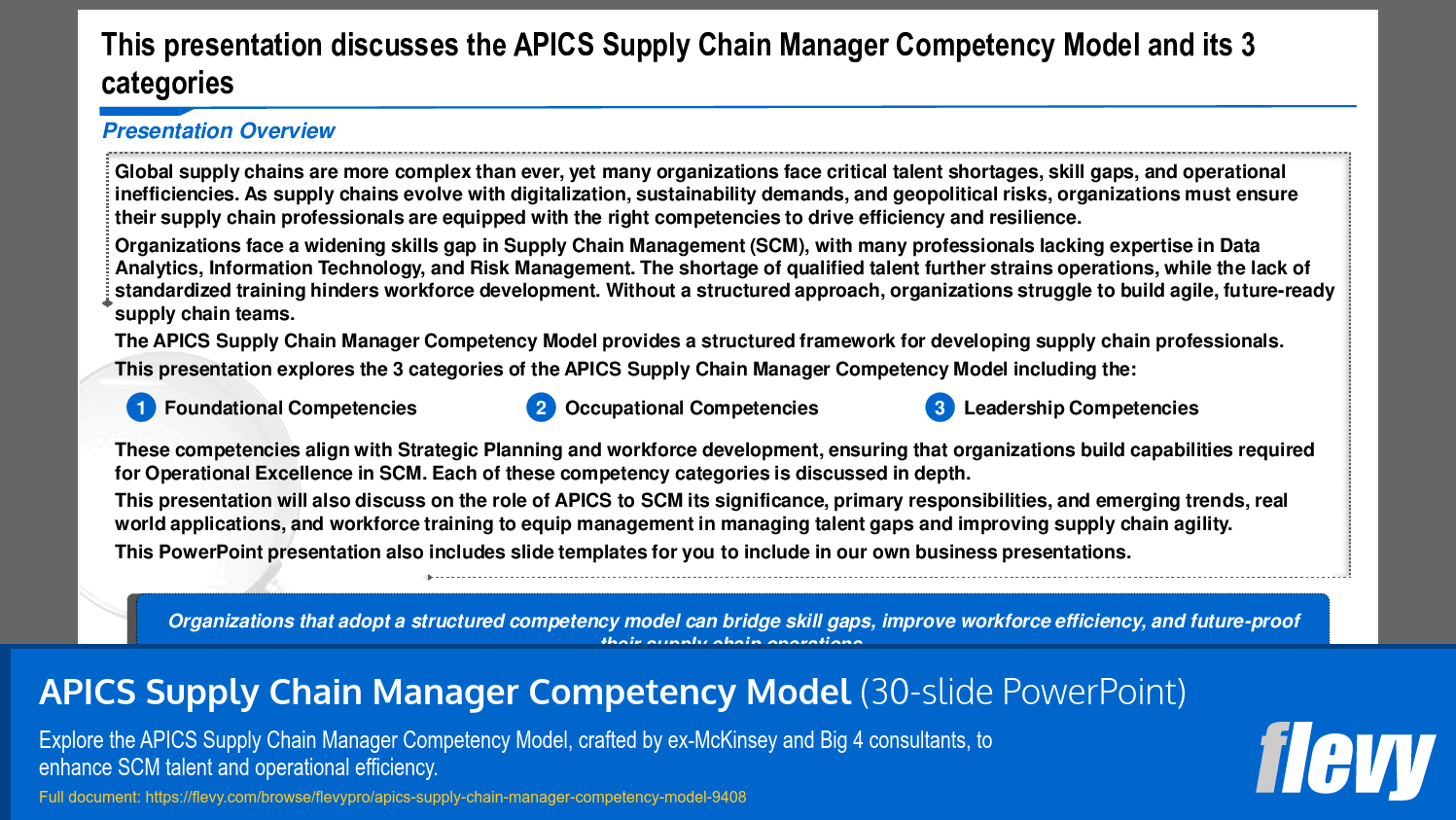
Global supply chains are more complex than ever, yet many organizations face critical talent shortages, skill gaps, and operational inefficiencies. As supply chains evolve with digitalization, sustainability demands, and geopolitical risks, organizations must ensure their supply chain professionals are equipped with the right competencies to drive efficiency and resilience.
Organizations face a widening skills gap in Supply Chain Management (SCM), with many professionals lacking expertise in Data Analytics, Information Technology, and Risk Management. The shortage of qualified talent further strains operations, while the lack of standardized training hinders workforce development. Without a structured approach, organizations struggle to build agile, future-ready supply chain teams.
The APICS Supply Chain Manager Competency Model provides a structured framework for developing supply chain professionals.
This presentation explores the 3 categories of the APICS Supply Chain Manager Competency Model including the:
1. Foundational Competencies – These competencies establish the core skills that professionals need to excel in SCM and advance in leadership roles. These competencies form the basis for technical expertise, decision-making, and operational efficiency.
2. Occupational Competencies – These competencies focus on technical expertise and functional knowledge areas that supply chain managers need to drive Operational Excellence, Efficiency, and Continuous Improvement.
3. Leadership Competencies – These competencies focus on the specific expertise and leadership capabilities required for high-performing supply chain managers. These competencies go beyond operational knowledge and enable professionals to manage global supply chains, lead cross-functional teams, and drive strategic innovation.
These competencies align with Strategic Planning and workforce development, ensuring that organizations build capabilities required for Operational Excellence in SCM. Each of these competency categories is discussed in depth.
This presentation will also discuss on the role of APICS to SCM, its significance, primary responsibilities, and emerging trends, real world applications, and workforce training to equip management in managing talent gaps and improving supply chain agility.
This PowerPoint presentation also includes slide templates for you to include in our own business presentations.
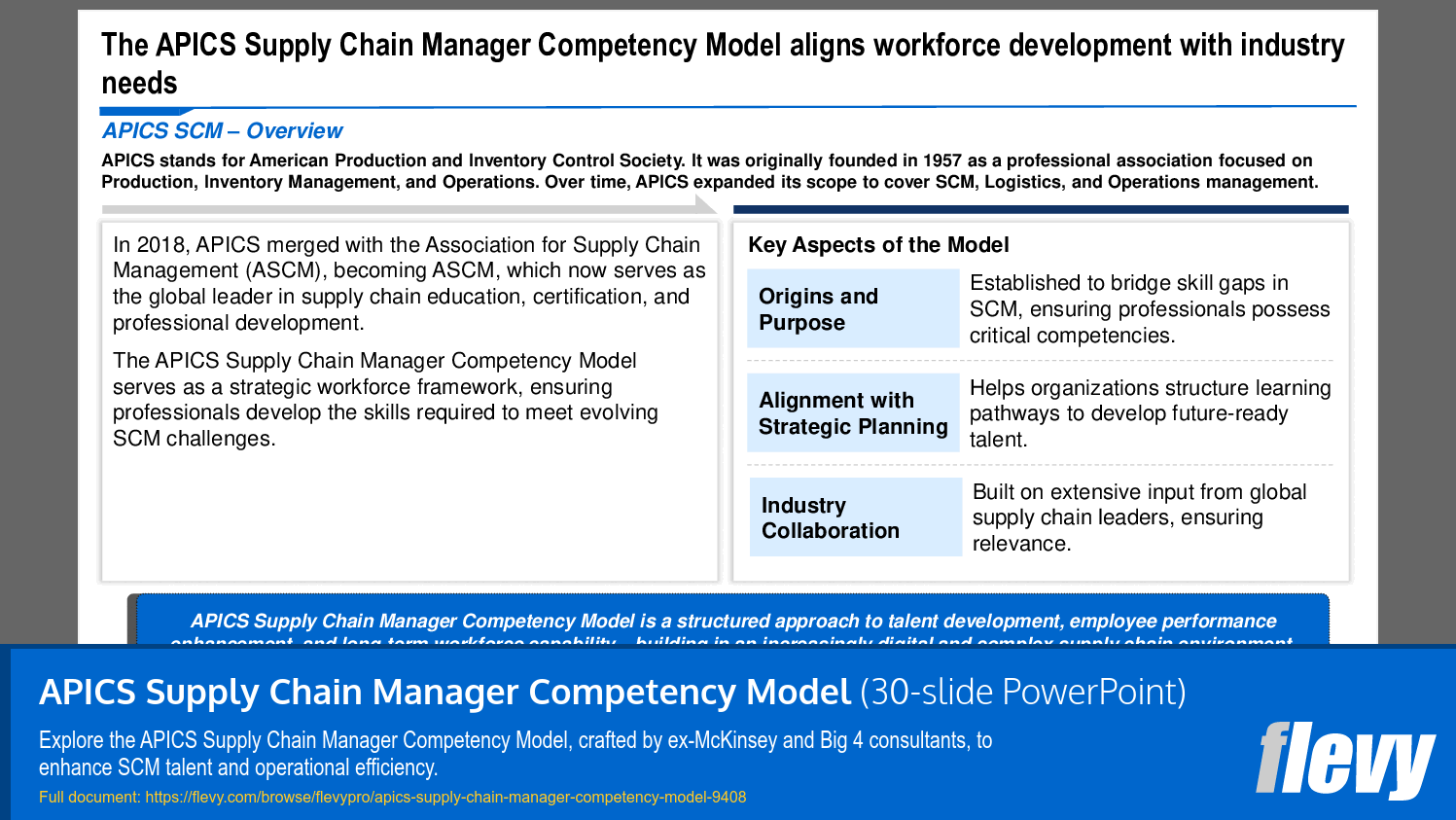
The APICS Supply Chain Manager Competency Model is a strategic framework designed to address skill gaps in supply chain management. Established following the merger with the Association for Supply Chain Management in 2018, it ensures professionals acquire essential competencies for contemporary challenges. The model aligns with strategic planning, facilitating the design of learning pathways that prepare talent for future demands in the supply chain sector. Additionally, it emphasizes industry collaboration, incorporating insights from global supply chain leaders to ensure the competencies are relevant and applicable. The APICS model serves as a vital tool for organizations aiming to enhance supply chain capabilities and workforce readiness.
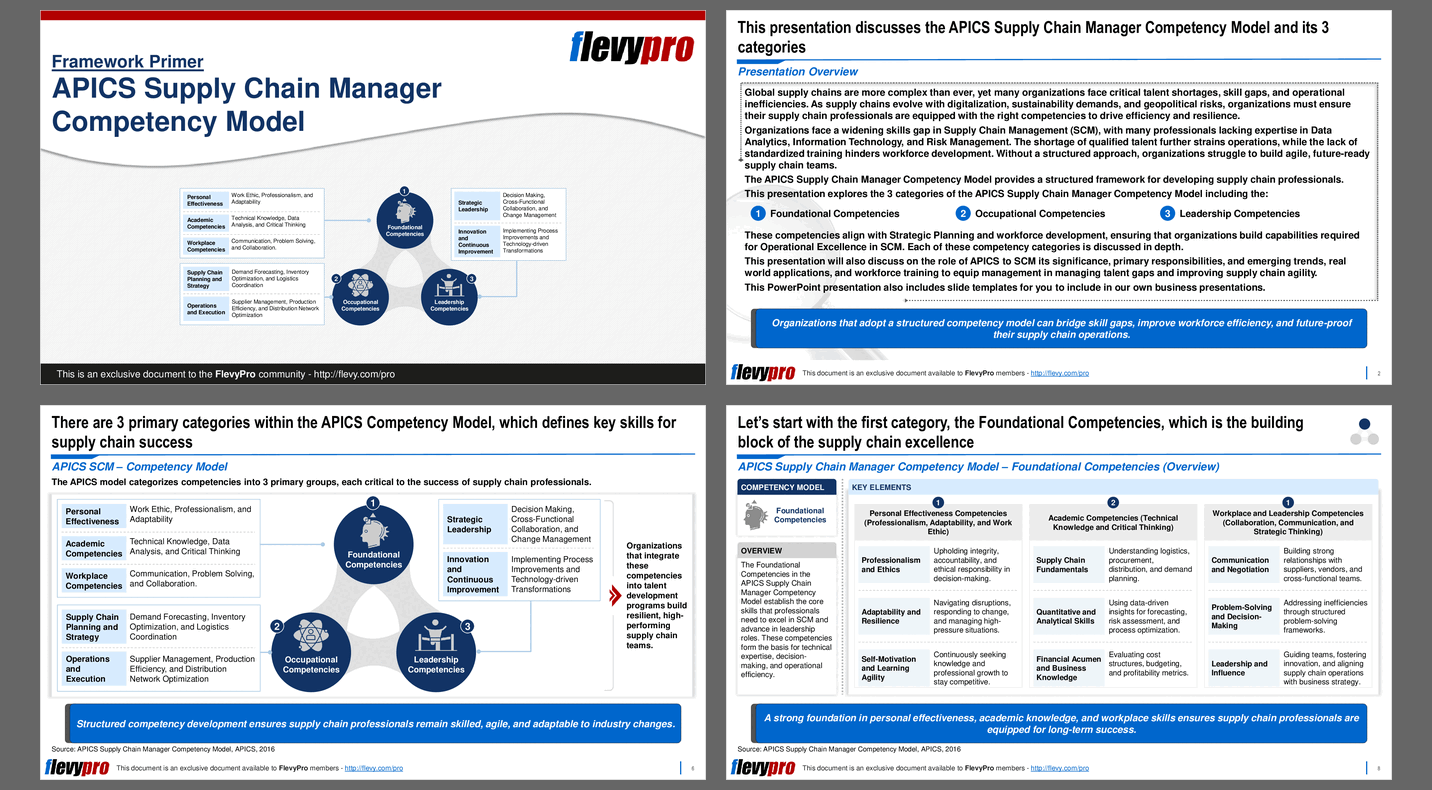
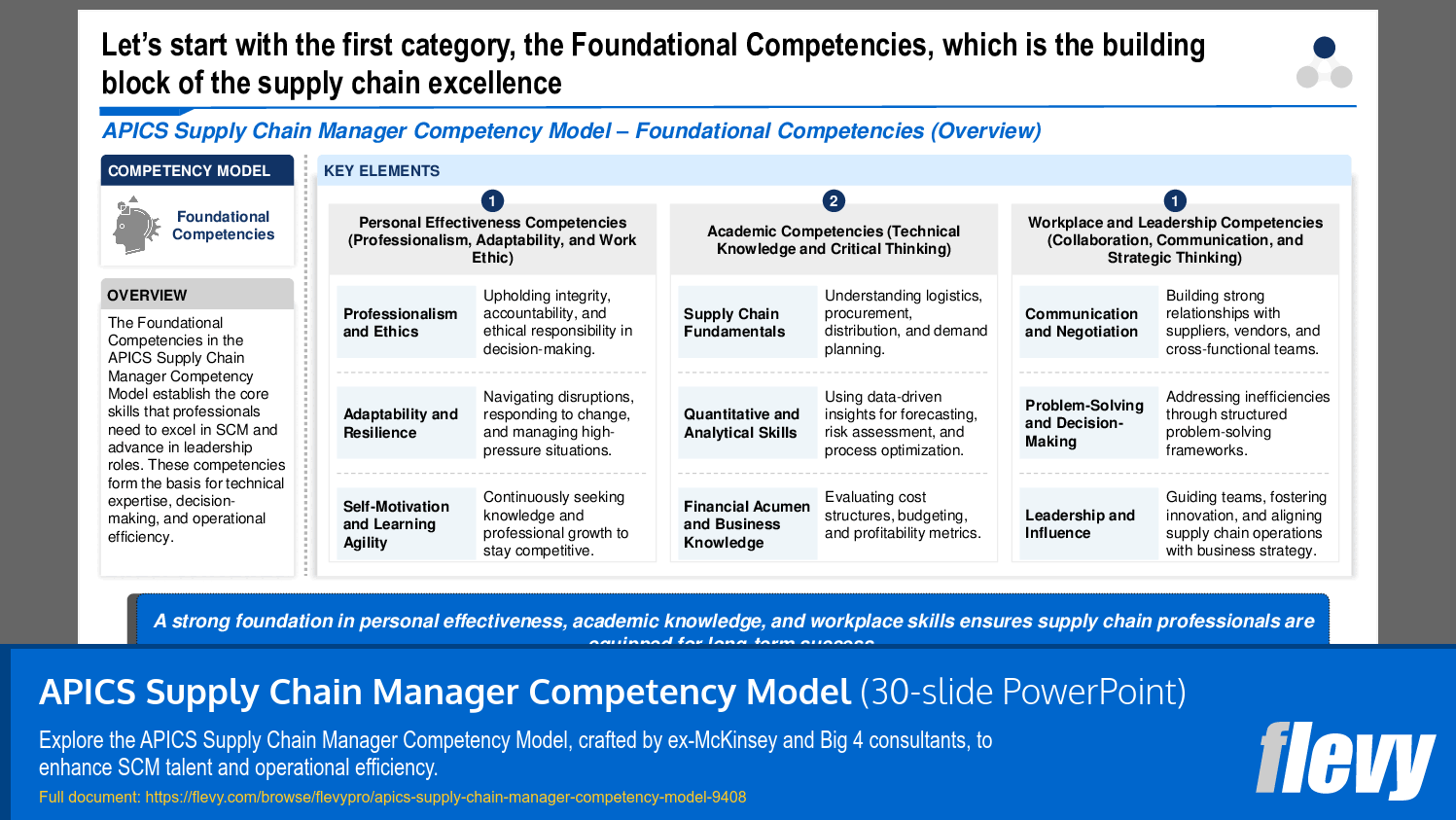
This PPT slide outlines the Foundational Competencies within the APICS Supply Chain Manager Competency Model, essential for professionals in supply chain management (SCM) seeking leadership roles. The model categorizes competencies into Personal Effectiveness, Academic, and Workplace and Leadership. Personal Effectiveness emphasizes professionalism, ethics, adaptability, resilience, self-motivation, and learning agility. Academic Competencies focus on technical knowledge, critical thinking, supply chain fundamentals, logistics, procurement, demand planning, quantitative skills, data-driven insights, and financial acumen for cost evaluation and budgeting. Workplace and Leadership Competencies highlight collaboration, strategic thinking, effective communication, negotiation skills, problem-solving frameworks, and leadership for aligning supply chain operations with business strategies.
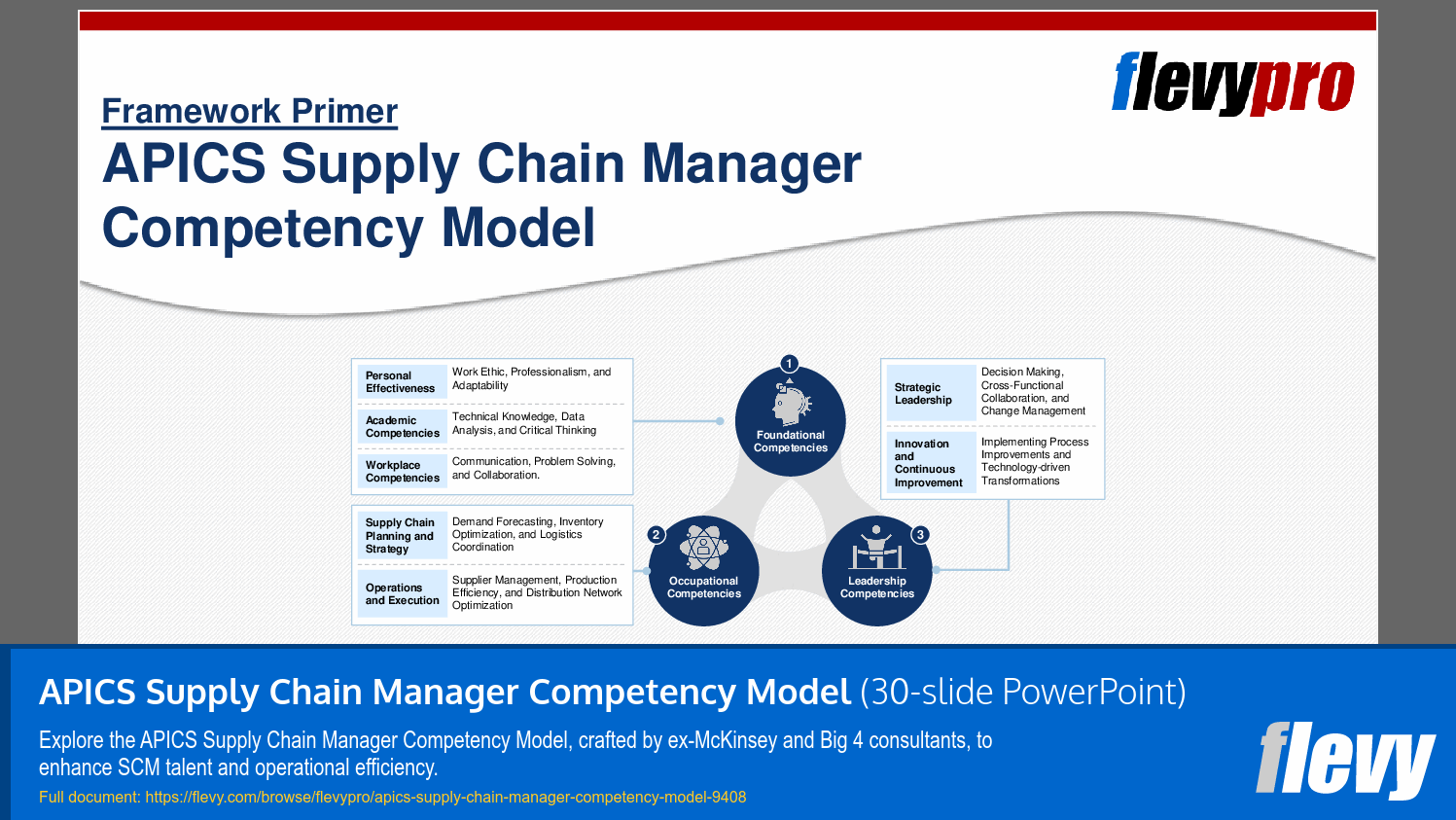
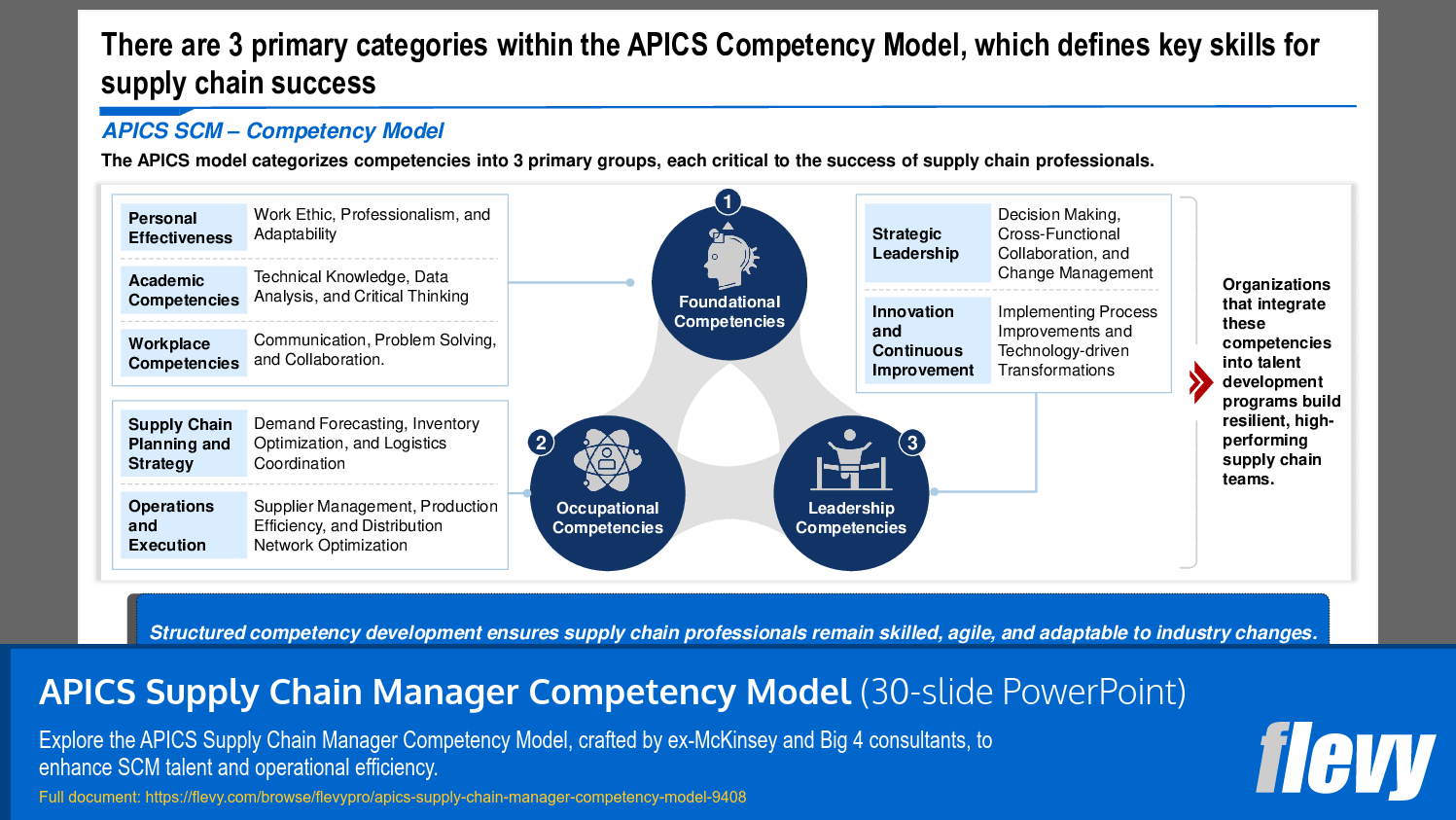
The APICS Supply Chain Management Competency Model outlines essential skills for supply chain professionals, categorizing them into Personal Effectiveness, Academic Competencies, and Workplace Competencies. Personal Effectiveness includes work ethic, professionalism, and adaptability. Academic Competencies focus on technical knowledge, data analysis, and critical thinking for informed decision-making. Workplace Competencies emphasize communication, problem-solving, and collaboration for operational efficiency. The model further divides competencies into Supply Chain Planning and Strategy, including demand forecasting and inventory optimization, and Operations, encompassing supplier management and production efficiency. Additionally, it introduces Foundational Competencies, Occupational Competencies, and Leadership Competencies, with a focus on strategic leadership and continuous improvement. Organizations adopting this model can enhance talent development, fostering resilient, high-performing supply chain teams.
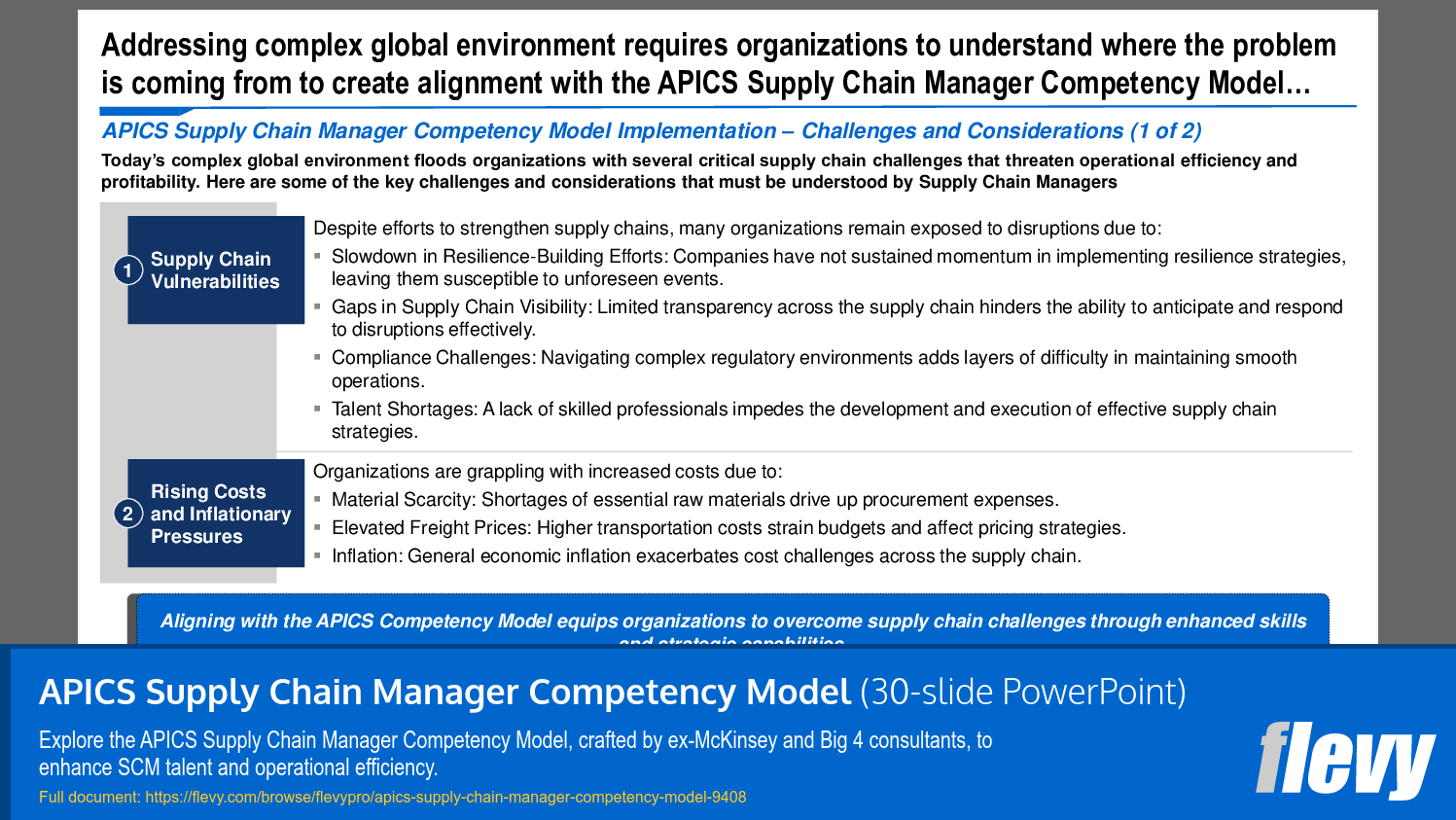
Organizations face significant challenges in supply chain management, particularly regarding supply chain vulnerabilities and rising costs due to inflation. Key vulnerabilities include a slowdown in resilience-building efforts, gaps in supply chain visibility, compliance challenges, and talent shortages, which hinder effective strategy execution. Rising costs stem from material scarcity, elevated freight prices, and general inflation, all of which increase procurement expenses and strain budgets. Addressing these multifaceted challenges is essential for organizations aiming to align with the APICS Supply Chain Manager Competency Model and enhance operational efficiency and profitability.
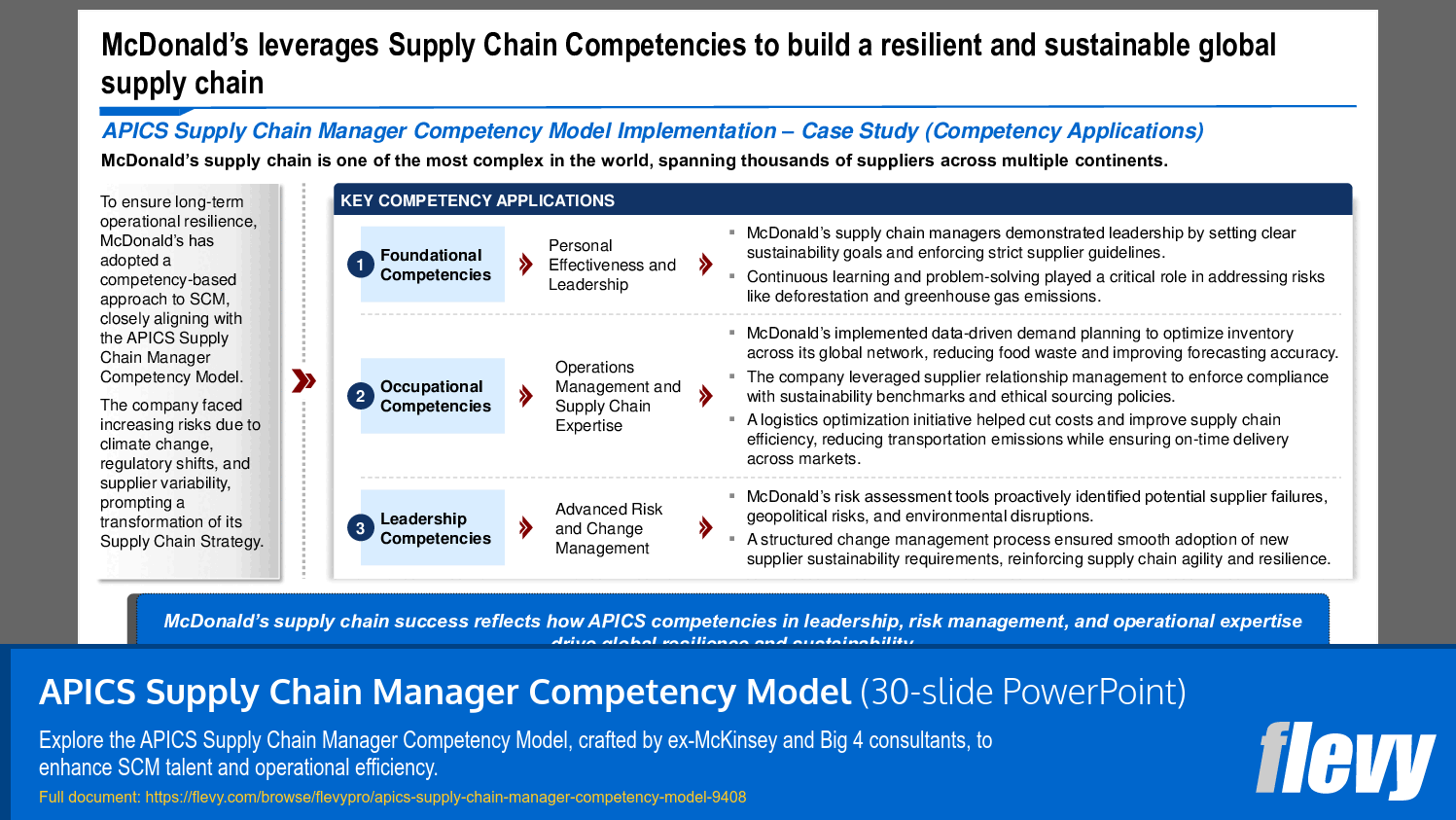
McDonald's utilizes the APICS Supply Chain Manager Competency Model to enhance supply chain resilience and sustainability. This competency-based approach addresses complexities in McDonald's global supply chain involving thousands of suppliers. Foundational competencies focus on leadership and personal effectiveness, enabling supply chain managers to meet sustainability goals and enforce supplier guidelines. Continuous learning and problem-solving are vital for mitigating risks related to environmental issues like deforestation and greenhouse gas emissions. Occupational competencies emphasize operations management and supply chain expertise, including data-driven demand planning for optimized inventory management, reduced food waste, and improved forecasting accuracy. Strategic supplier relationship management ensures compliance with sustainability benchmarks and ethical sourcing policies. Leadership competencies in risk and change management employ risk assessment tools and structured change management processes to integrate new supplier sustainability requirements, reinforcing supply chain agility and resilience.
Source: Best Practices in Supply Chain Management PowerPoint Slides: APICS Supply Chain Manager Competency Model PowerPoint (PPTX) Presentation Slide Deck, LearnPPT Consulting
This framework is developed by a team of former McKinsey and Big 4 consultants. The presentation follows the headline-body-bumper slide format used by global consulting firms.
For $10.00 more, you can download this document plus 2 more FlevyPro documents. That's just $13 each.
ABOUT FLEVYPRO
This document is part of the FlevyPro Library, a curated knowledge base of documents for our FlevyPro subscribers.

FlevyPro is a subscription service for on-demand business frameworks and analysis tools. FlevyPro subscribers receive access to an exclusive library of curated business documents—business framework primers, presentation templates, Lean Six Sigma tools, and more—among other exclusive benefits.
The average daily rate of a McKinsey consultant is $6,625 (not including expenses). The average price of a Flevy document is $65.
Trusted by over 10,000+ Client Organizations
Since 2012, we have provided business templates to over 10,000 businesses and organizations of all sizes, from startups and small businesses to the Fortune 100, in over 130 countries.
"Last Sunday morning, I was diligently working on an important presentation for a client and found myself in need of additional content and suitable templates for various types of graphics. Flevy.com proved to be a treasure trove for both content and design at a reasonable price, considering the time I
saved. I encountered a download issue during the ordering process. However, a quick email to Flevy's support team, even on a Sunday (!!!), resulted in assistance within less than an hour, allowing me to download the content I needed. Fantastic job, Flevy! I give 5 stars for both content/price and customer service. Thank you!
"
– M. E., Chief Commercial Officer, International Logistics Service Provider
"As a small business owner, the resource material available from FlevyPro has proven to be invaluable. The ability to search for material on demand based our project events and client requirements was great for me and proved very beneficial to my clients. Importantly, being able to easily edit and tailor
the material for specific purposes helped us to make presentations, knowledge sharing, and toolkit development, which formed part of the overall program collateral. While FlevyPro contains resource material that any consultancy, project or delivery firm must have, it is an essential part of a small firm or independent consultant's toolbox.
"
– Michael Duff, Managing Director at Change Strategy (UK)
"As a niche strategic consulting firm, Flevy and FlevyPro frameworks and documents are an on-going reference to help us structure our findings and recommendations to our clients as well as improve their clarity, strength, and visual power. For us, it is an invaluable resource to increase our impact and value."
– David Coloma, Consulting Area Manager at Cynertia Consulting
"As an Independent Management Consultant, I find Flevy to add great value as a source of best practices, templates and information on new trends. Flevy has matured and the quality and quantity of the library is excellent. Lastly the price charged is reasonable, creating a win-win value for
the customer, Flevy and the various authors. This is truly a service that benefits the consulting industry and associated clients. Thanks for providing this service.
"
– Jim Schoen, Principal at FRC Group
"If you are looking for great resources to save time with your business presentations, Flevy is truly a value-added resource. Flevy has done all the work for you and we will continue to utilize Flevy as a source to extract up-to-date information and data for our virtual and onsite presentations!"
– Debbi Saffo, President at The NiKhar Group
"I am extremely grateful for the proactiveness and eagerness to help and I would gladly recommend the Flevy team if you are looking for data and toolkits to help you work through business solutions."
– Trevor Booth, Partner, Fast Forward Consulting
"As a consultant requiring up to date and professional material that will be of value and use to my clients, I find Flevy a very reliable resource.
The variety and quality of material available through Flevy offers a very useful and commanding source for information. Using Flevy saves me time, enhances my expertise and ends up being a good decision."
– Dennis Gershowitz, Principal at DG Associates
"[Flevy] produces some great work that has been/continues to be of immense help not only to myself, but as I seek to provide professional services to my clients, it gives me a large "tool box" of resources that are critical to provide them with the quality of service and outcomes they are expecting."
– Royston Knowles, Executive with 50+ Years of Board Level Experience
Receive our FREE presentation on Operational Excellence
This 50-slide presentation provides a high-level introduction to the 4 Building Blocks of Operational Excellence. Achieving OpEx requires the implementation of a Business Execution System that integrates these 4 building blocks.
Receive our FREE presentation on Operational Excellence
Get Our FREE Product.
This 50-slide presentation provides a high-level introduction to the 4 Building Blocks of Operational Excellence. Achieving OpEx requires the implementation of a Business Execution System that integrates these 4 building blocks.