
This framework is developed by a team of former McKinsey and Big 4 consultants. The presentation follows the headline-body-bumper slide format used by global consulting firms.
This product (Agentic AI Strategy) is a 34-slide PPT PowerPoint presentation slide deck (PPTX), which you can download immediately upon purchase.
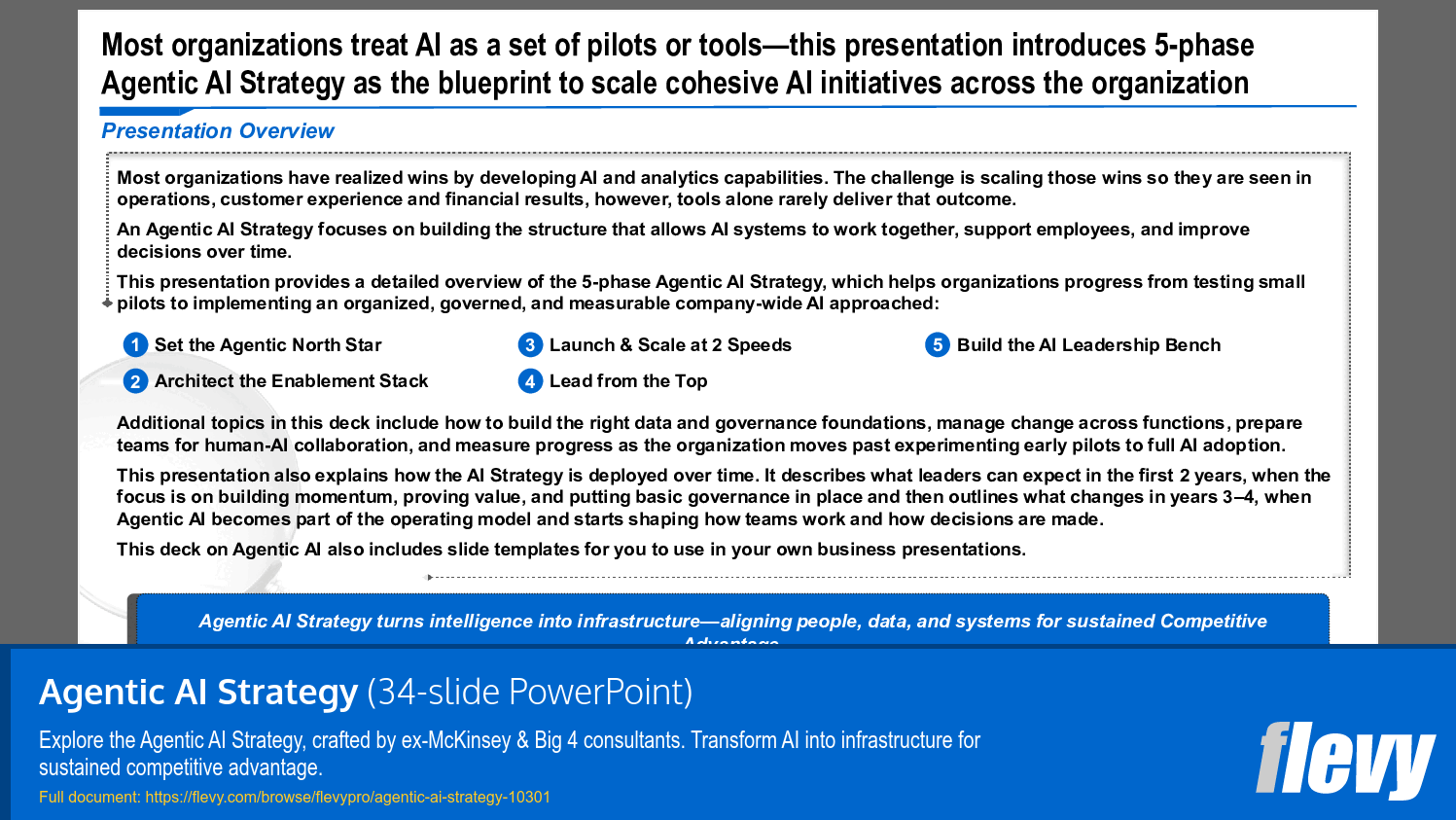
Most organizations have realized wins by developing AI and analytics capabilities. The challenge is scaling those wins so they are seen in operations, customer experience and financial results, however, tools alone rarely deliver that outcome.
An Agentic AI Strategy focuses on building the structure that allows AI systems to work together, support employees, and improve decisions over time. Agentic AI Strategy turns intelligence into infrastructure—aligning people, data, and systems for sustained Competitive Advantage.
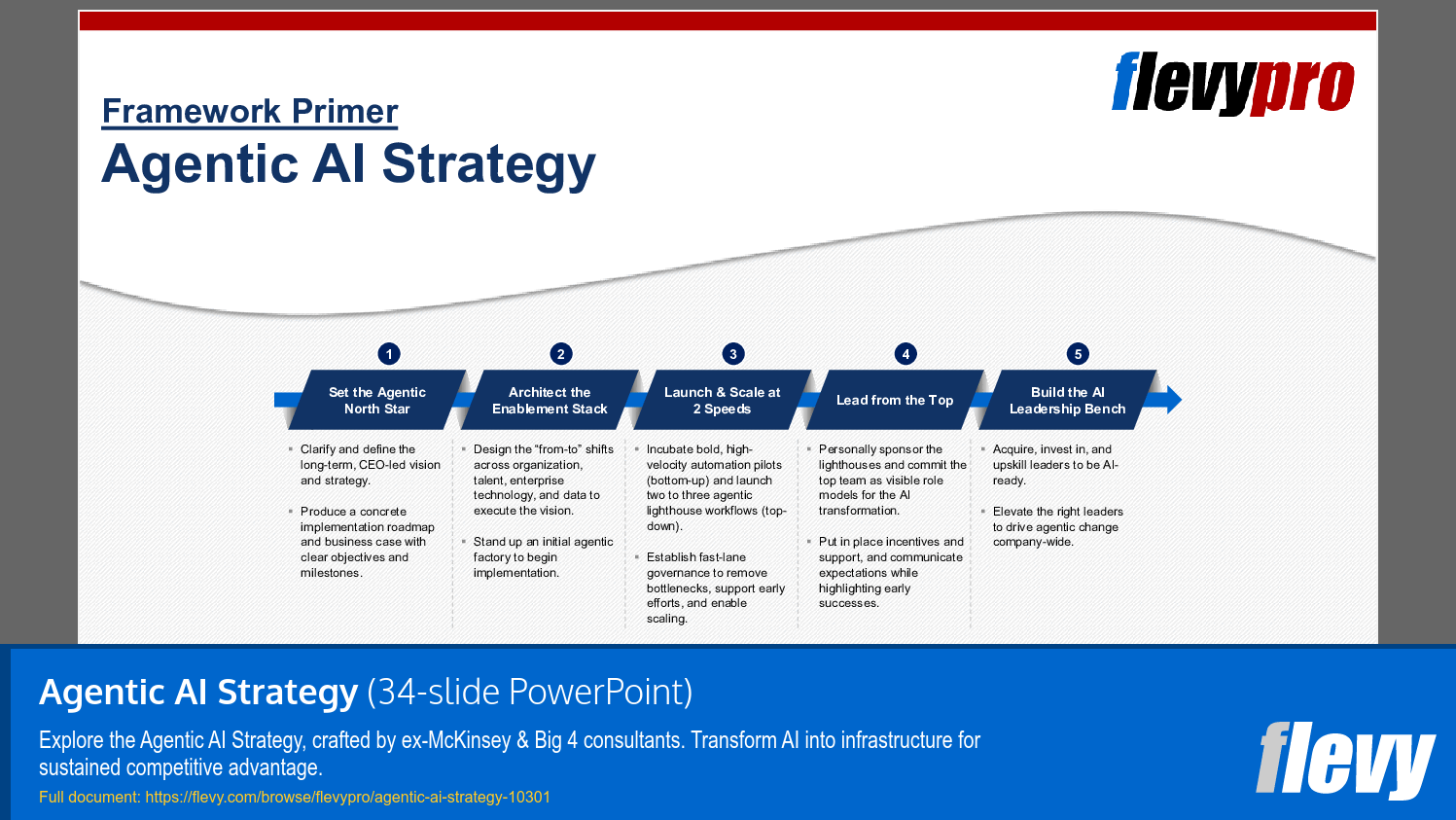
This PowerPoint presentation provides a detailed overview of the 5-phase Agentic AI Strategy, which helps organizations progress from testing small pilots to implementing an organized, governed, and measurable company-wide AI approached:
1. Set the Agentic North Star
2. Architect the Enablement Stack
3. Launch & Scale at 2 Speeds
4. Lead from the Top
5. Build the AI Leadership Bench
Additional topics in this deck include how to build the right data and governance foundations, manage change across functions, prepare teams for human-AI collaboration, and measure progress as the organization moves past experimenting early pilots to full AI adoption.
This PPT presentation also explains how the AI Strategy is deployed over time. It describes what leaders can expect in the first 2 years, when the focus is on building momentum, proving value, and putting basic governance in place and then outlines what changes in years 3–4, when Agentic AI becomes part of the operating model and starts shaping how teams work and how decisions are made.
This deck on Agentic AI also includes slide templates for you to use in your own business presentations.
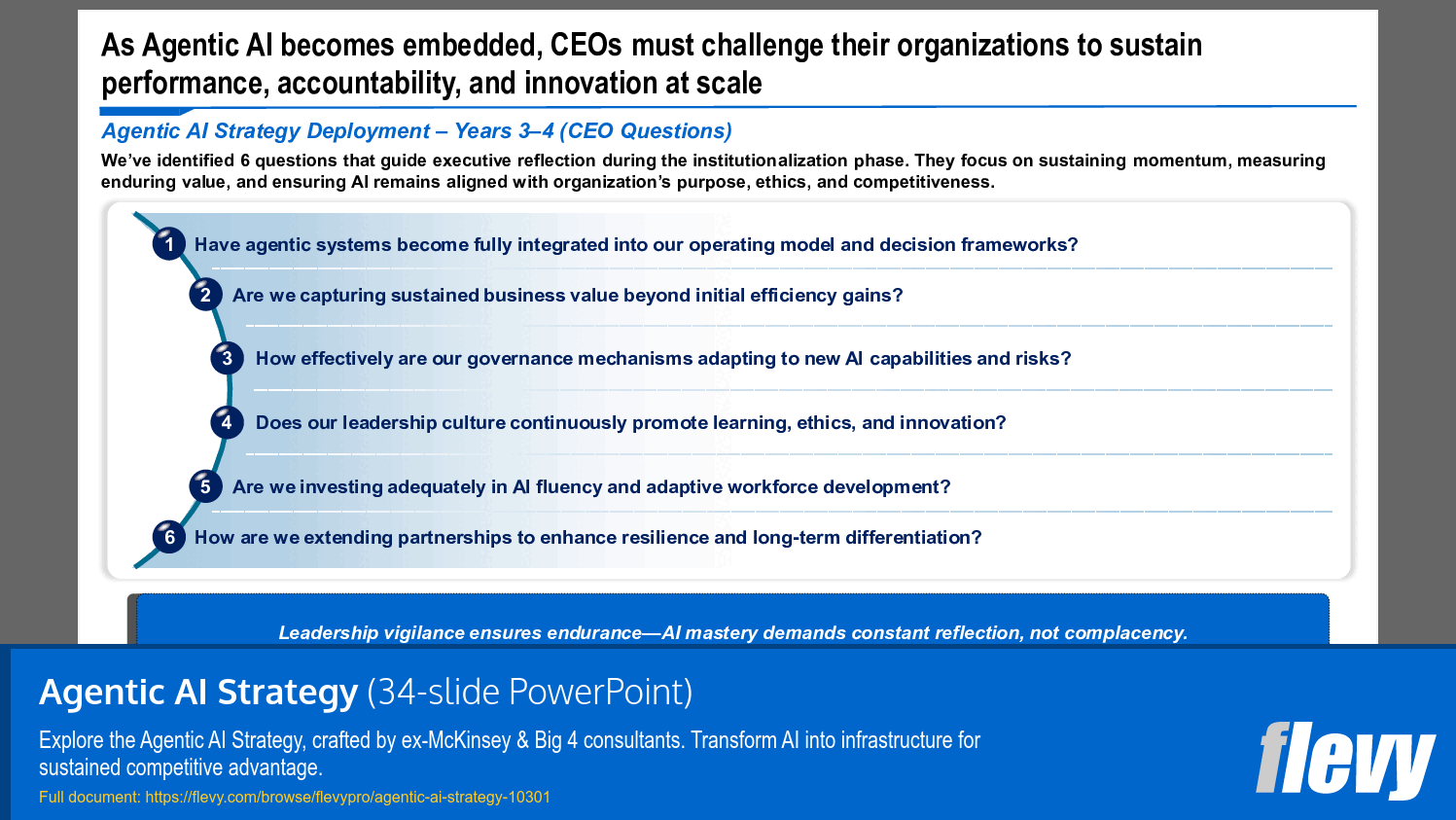
This PPT slide discusses the challenges CEOs face as artificial intelligence becomes more embedded within organizations. It emphasizes the importance of maintaining performance, accountability, and innovation at scale during this transition. The core focus is on 6 key questions that guide executive reflection during the critical years 3 and 4 of AI strategy deployment, which are aimed at ensuring AI initiatives stay aligned with organizational purpose and ethics.
These questions cover a broad range of strategic concerns. They include the integration of AI systems into existing operating models, the ongoing measurement of business value beyond initial gains, and the adaptation of governance mechanisms to new AI capabilities and risks. The questions also probe leadership culture, workforce development, and the extension of partnerships to build resilience and long-term differentiation. Each question appears designed to challenge leadership to think deeply about the operational, ethical, and strategic implications of AI.
The slide underscores that leadership vigilance is essential for sustained AI success. It suggests that continuous reflection and adaptation are necessary to keep pace with AI’s evolving landscape. The closing statement emphasizes that AI mastery requires ongoing effort, not complacency. The overall message is that CEOs must actively manage these dimensions to realize AI’s full potential without compromising organizational integrity or long-term competitiveness. This slide offers a structured approach for executive teams to evaluate their progress and identify gaps in their AI deployment strategies.
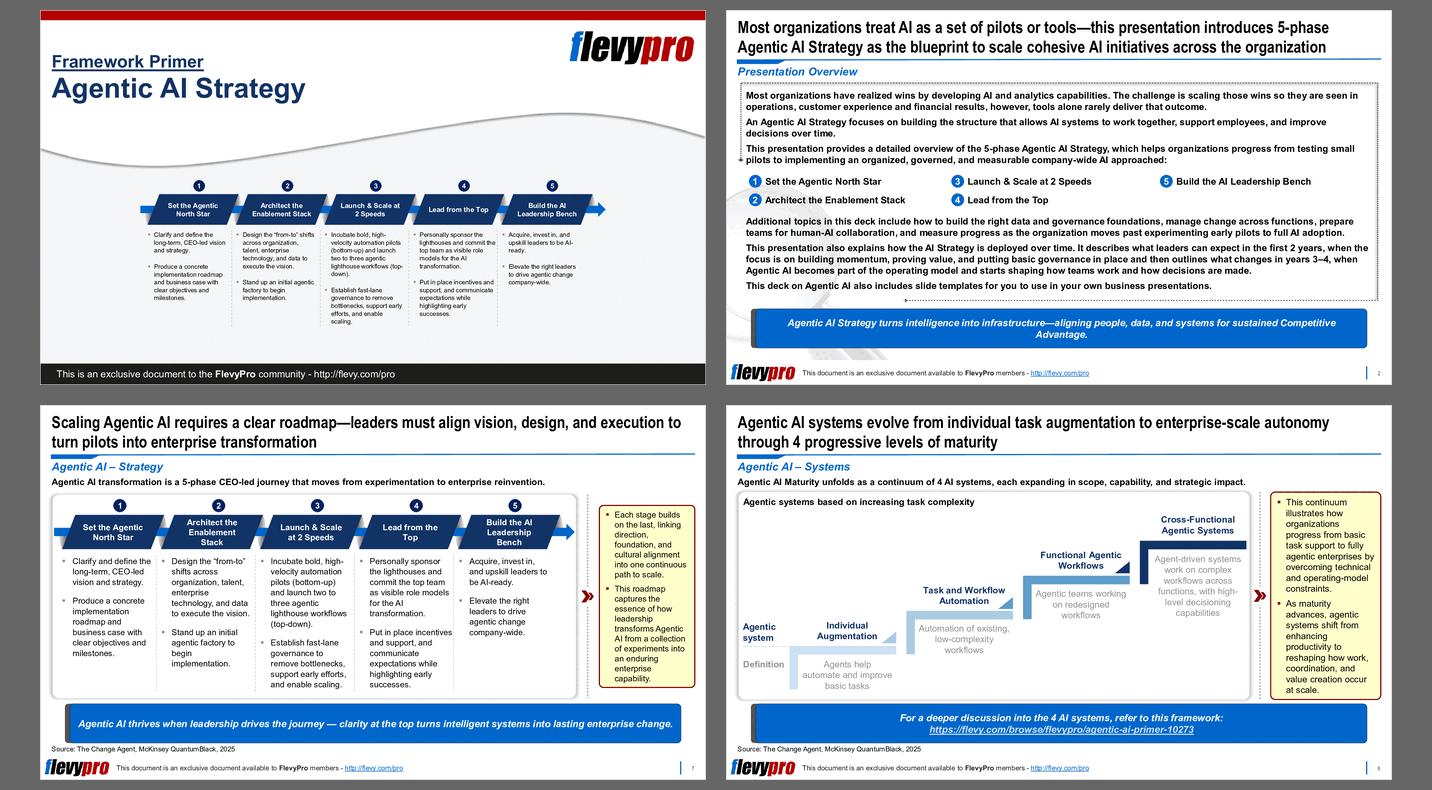
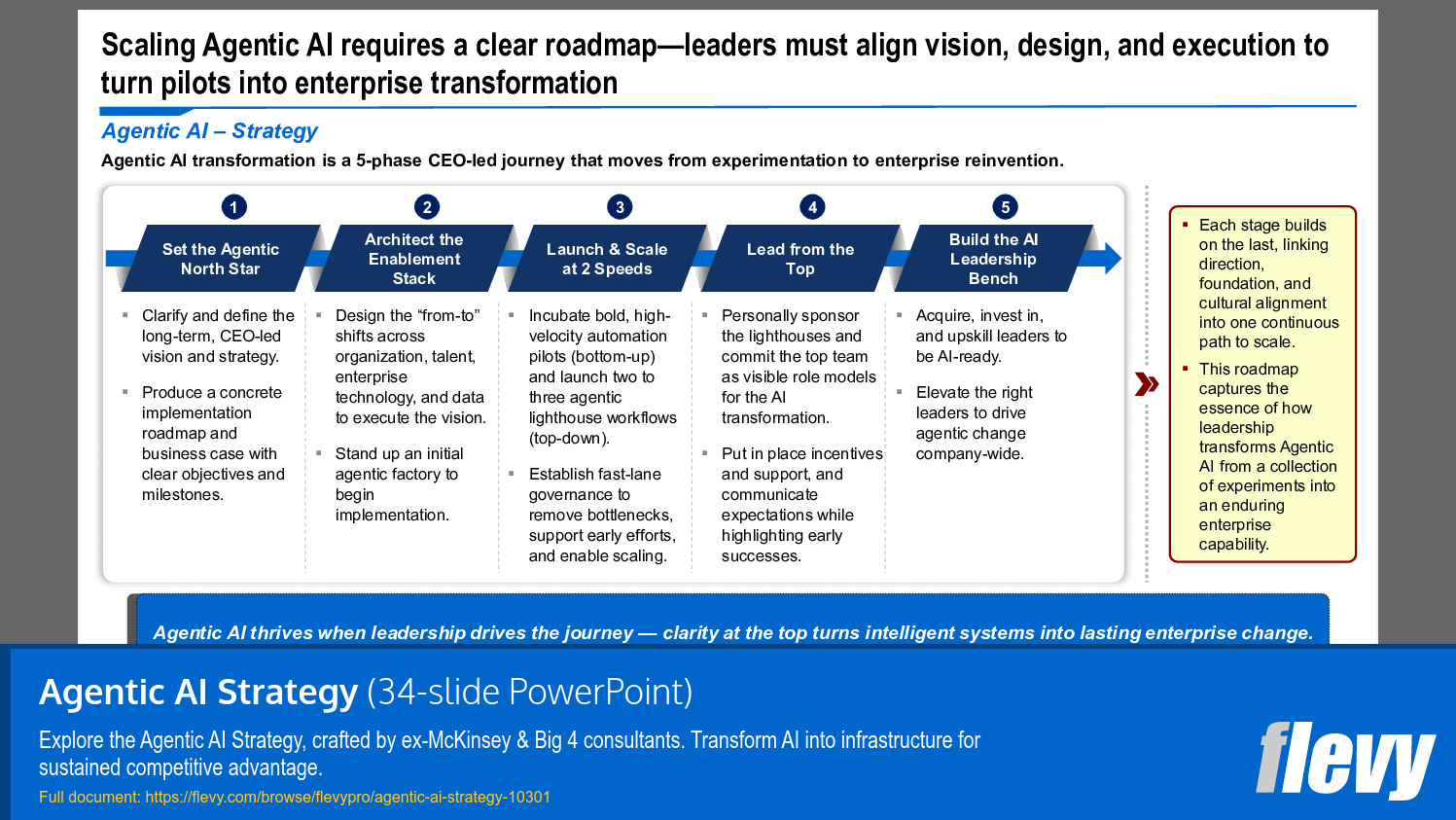
This PPT slide outlines a structured approach to scaling an AI initiative, emphasizing the importance of a clear roadmap. It starts by stressing that leadership must align vision, design, and execution to turn pilots into enterprise-wide transformations. The process is broken into 5 phases, each with specific actions, from defining the North Star to building AI leadership capacity.
The first phase involves setting a long-term vision, clarifying objectives, and establishing milestones. The second focuses on designing the enablement stack, which includes the architecture, talent, and data infrastructure needed to support AI. The third phase is about launching and scaling pilots at 2 speeds—bottom-up and top-down—aiming to accelerate learning and reduce bottlenecks.
In the fourth phase, leaders are expected to personally sponsor lighthouse projects and commit top team resources, making visible role models for AI transformation. The final phase involves building a dedicated AI leadership bench, investing in talent, and upskilling executives to sustain momentum. Each stage builds on the last, linking direction, foundation, and cultural alignment into a continuous scaling process.
A sidebar note highlights that each stage is interconnected, with a focus on maintaining alignment, foundation, and cultural consistency. It underscores that the roadmap captures the essence of how leadership transforms AI from a collection of experiments into a core enterprise capability. The overall message stresses that successful scaling requires disciplined planning, active sponsorship, and leadership development, all aligned with a shared vision. This slide offers a practical, phased framework for executives to follow when pursuing large-scale AI adoption.
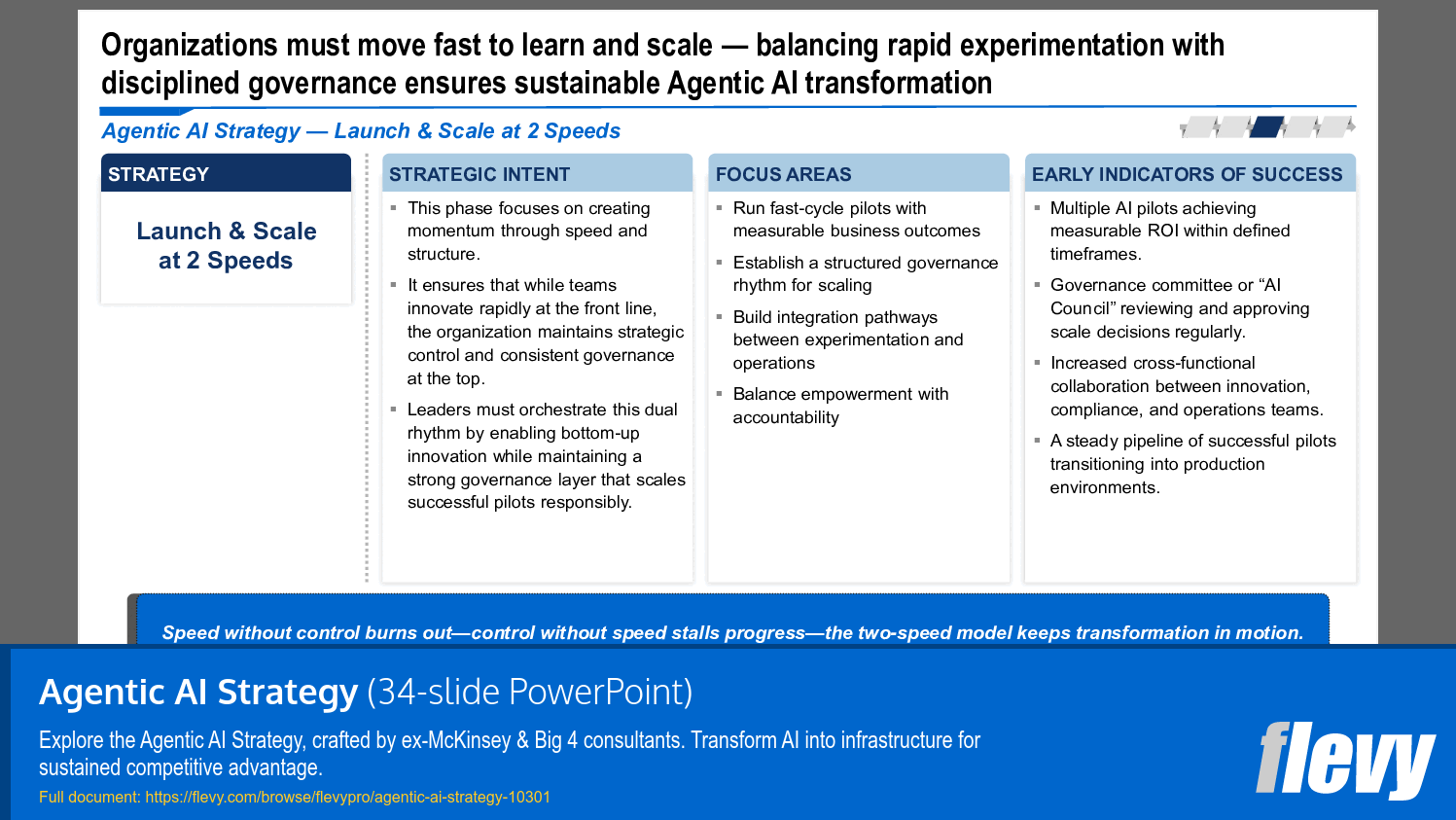
This PPT slide outlines a strategic approach for organizations to accelerate AI adoption while maintaining disciplined governance. The core message emphasizes the need for a dual-speed model—rapid experimentation coupled with structured oversight—to ensure sustainable AI transformation. The title "Organizations must move fast to learn and scale — balancing rapid experimentation with disciplined governance ensures sustainable Agentic AI transformation" captures this dual focus clearly.
The slide is divided into 4 main sections. The first, "Strategy," states the overarching goal: launching and scaling AI at 2 speeds. The second, "Strategic Intent," highlights the importance of creating momentum through speed and structure, ensuring teams innovate quickly without losing strategic control. It stresses that leadership must orchestrate this dual rhythm, enabling bottom-up innovation while maintaining governance.
The third section, "Focus Areas," provides specific actions to implement this strategy. These include running fast-cycle pilots with measurable outcomes, establishing governance rhythms for scaling, building pathways for integration between experimentation and operations, and balancing empowerment with accountability. These points suggest a pragmatic approach to managing AI projects at scale, emphasizing both agility and control.
Finally, "Early Indicators of Success" lists tangible metrics and governance signals. Achieving measurable ROI through multiple pilots, regular review by governance bodies, increased cross-functional collaboration, and a steady pipeline of successful pilots transitioning into production are all indicators that the organization is effectively managing this dual-speed AI transformation.
Overall, the slide offers a clear framework for organizations aiming to accelerate AI deployment without sacrificing governance. It underscores that speed and discipline are not mutually exclusive, but must be managed together to sustain AI-driven growth.
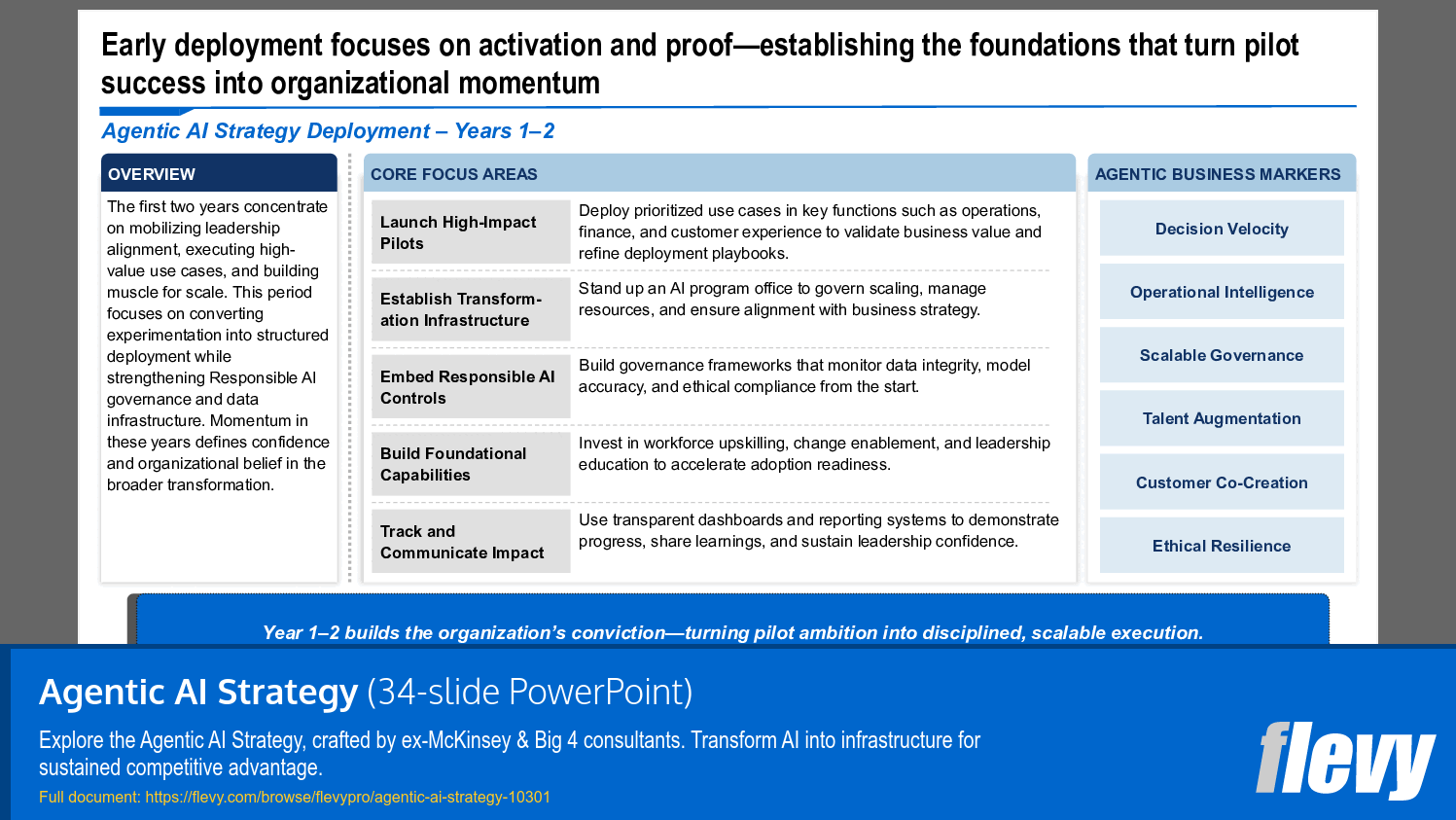
This PPT slide outlines the initial phase of deploying an AI strategy, emphasizing activation and proof of concept as critical steps to establish organizational momentum. It highlights that the first 2 years focus on leadership alignment, high-value use cases, and building internal capabilities. This period is about converting experimentation into structured deployment, while strengthening governance and data infrastructure to support scaling efforts.
The core focus areas are divided into specific actions. Launching high-impact pilots involves validating business value through targeted use cases in key functions like operations, finance, and customer experience. Establishing transformation infrastructure includes creating an AI program office to oversee scaling efforts and managing resources effectively. Building responsible AI controls ensures data integrity and ethical compliance from the outset. Investing in foundational capabilities involves workforce upskilling and leadership development to prepare the organization for broader AI adoption. Tracking and communicating impact is about using dashboards and reporting systems to demonstrate progress, share learnings, and build confidence among stakeholders.
On the right, the slide lists key business markers that indicate progress, such as decision velocity, operational intelligence, scalable governance, talent augmentation, customer co-creation, and ethical resilience. These markers serve as benchmarks for assessing whether the deployment is on track and delivering value. The overall message stresses that year 1-2 is about turning pilot success into organizational conviction, setting the stage for sustained AI adoption. The focus remains on disciplined execution, clear governance, and building internal confidence to ensure long-term impact. This slide offers a practical framework for leaders to guide early AI deployment efforts with clarity and purpose.
This framework is developed by a team of former McKinsey and Big 4 consultants. The presentation follows the headline-body-bumper slide format used by global consulting firms.
For $10.00 more, you can download this document plus 2 more FlevyPro documents. That's just $13 each.
ABOUT FLEVYPRO
This document is part of the FlevyPro Library, a curated knowledge base of documents for our FlevyPro subscribers.

FlevyPro is a subscription service for on-demand business frameworks and analysis tools. FlevyPro subscribers receive access to an exclusive library of curated business documents—business framework primers, presentation templates, Lean Six Sigma tools, and more—among other exclusive benefits.
The average daily rate of a McKinsey consultant is $6,625 (not including expenses). The average price of a Flevy document is $65.
Trusted by over 10,000+ Client Organizations
Since 2012, we have provided best practices to over 10,000 businesses and organizations of all sizes, from startups and small businesses to the Fortune 100, in over 130 countries.
Read Customer Testimonials
"I have used FlevyPro for several business applications. It is a great complement to working with expensive consultants. The quality and effectiveness of the tools are of the highest standards."
– Moritz Bernhoerster, Global Sourcing Director at Fortune 500
"If you are looking for great resources to save time with your business presentations, Flevy is truly a value-added resource. Flevy has done all the work for you and we will continue to utilize Flevy as a source to extract up-to-date information and data for our virtual and onsite presentations!"
– Debbi Saffo, President at The NiKhar Group
"FlevyPro has been a brilliant resource for me, as an independent growth consultant, to access a vast knowledge bank of presentations to support my work with clients. In terms of RoI, the value I received from the very first presentation I downloaded paid for my subscription many times over! The
quality of the decks available allows me to punch way above my weight – it's like having the resources of a Big 4 consultancy at your fingertips at a microscopic fraction of the overhead.
"
– Roderick Cameron, Founding Partner at SGFE Ltd
"[Flevy] produces some great work that has been/continues to be of immense help not only to myself, but as I seek to provide professional services to my clients, it gives me a large "tool box" of resources that are critical to provide them with the quality of service and outcomes they are expecting."
– Royston Knowles, Executive with 50+ Years of Board Level Experience
"The wide selection of frameworks is very useful to me as an independent consultant. In fact, it rivals what I had at my disposal at Big 4 Consulting firms in terms of efficacy and organization."
– Julia T., Consulting Firm Owner (Former Manager at Deloitte and Capgemini)
"Last Sunday morning, I was diligently working on an important presentation for a client and found myself in need of additional content and suitable templates for various types of graphics. Flevy.com proved to be a treasure trove for both content and design at a reasonable price, considering the time I
saved. I encountered a download issue during the ordering process. However, a quick email to Flevy's support team, even on a Sunday (!!!), resulted in assistance within less than an hour, allowing me to download the content I needed. Fantastic job, Flevy! I give 5 stars for both content/price and customer service. Thank you!
"
– M. E., Chief Commercial Officer, International Logistics Service Provider
"FlevyPro provides business frameworks from many of the global giants in management consulting that allow you to provide best in class solutions for your clients."
– David Harris, Managing Director at Futures Strategy
"One of the great discoveries that I have made for my business is the Flevy library of training materials.
As a Lean Transformation Expert, I am always making presentations to clients on a variety of topics: Training, Transformation, Total Productive Maintenance, Culture, Coaching, Tools, Leadership Behavior, etc. Flevy
It is well worth the money to purchase these presentations. Sure, I have the knowledge and information to make my point. It is another thing to create a presentation that captures what I want to say. Flevy has saved me countless hours of preparation time that is much better spent with implementation that will actually save money for my clients.
"
– Ed Kemmerling, Senior Lean Transformation Expert at PMG
Download our FREE Digital Transformation Templates
Download our free compilation of 50+ Digital Transformation slides and templates. DX concepts covered include Digital Leadership, Digital Maturity, Digital Value Chain, Customer Experience, Customer Journey, RPA, etc.