
Explore strategic cost reduction insights from a leading consulting firm. Created by industry experts, this PPT covers best practices, tools, and implementation strategies. Strategic Cost Reduction Training is a 97-slide PPT PowerPoint presentation slide deck (PPT) available for immediate download upon purchase.
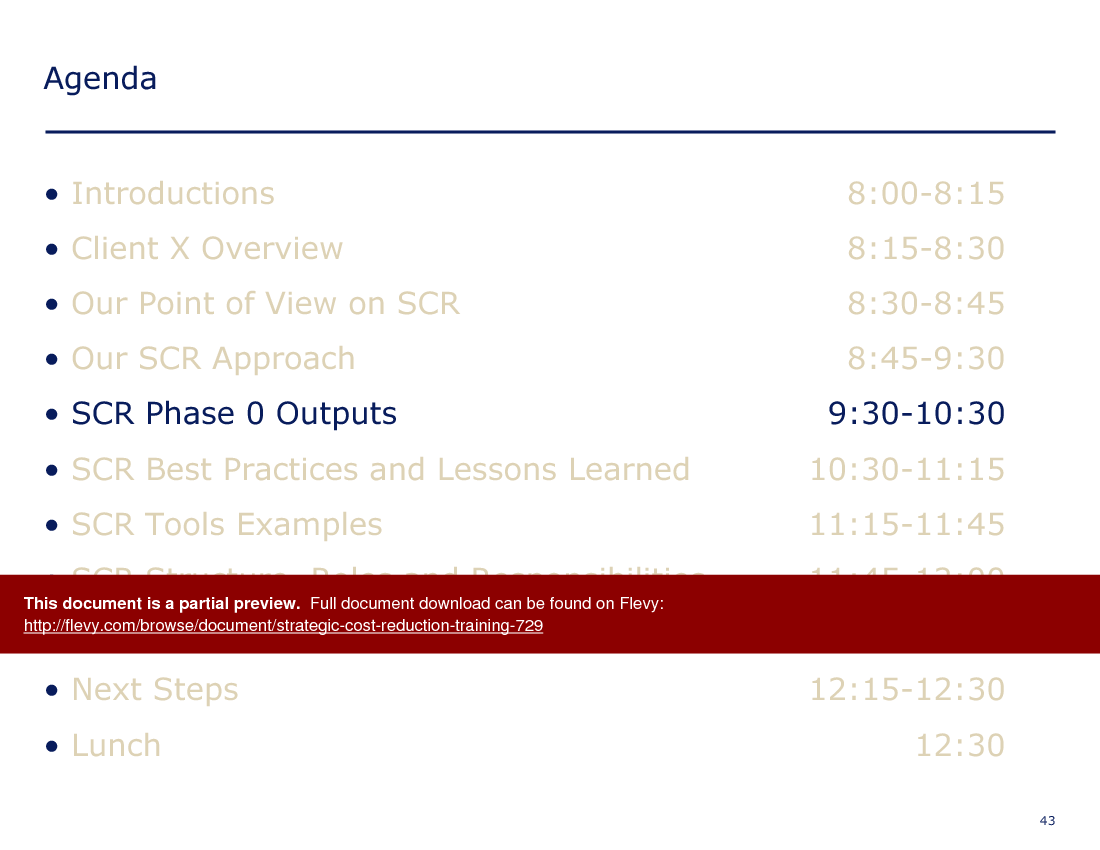
This presentation is a training document about strategic cost reduction (SCR) used by a major consulting firm in a cost reduction project. The main objectives of the presentation is
• Provide context on our relationship with Client X
• Share our point of view on SCR
• Review our SCR approach
• Describe SCR best practices and lessons learned
• Provide examples of SCR tools
• Review SCR Phase 0 outputs
• Review SCR structure, roles and responsibilities
• Agree how we are going to work a a team
This training document delves into the intricacies of strategic cost reduction with a focus on actionable insights and real-world applications. The presentation outlines a comprehensive approach to cost management, starting with Phase 0, which involves scoping and planning. This phase sets the foundation by identifying key hypotheses and establishing executive alignment. The subsequent phases build on this groundwork, progressing through detailed assessments, planning, and implementation.
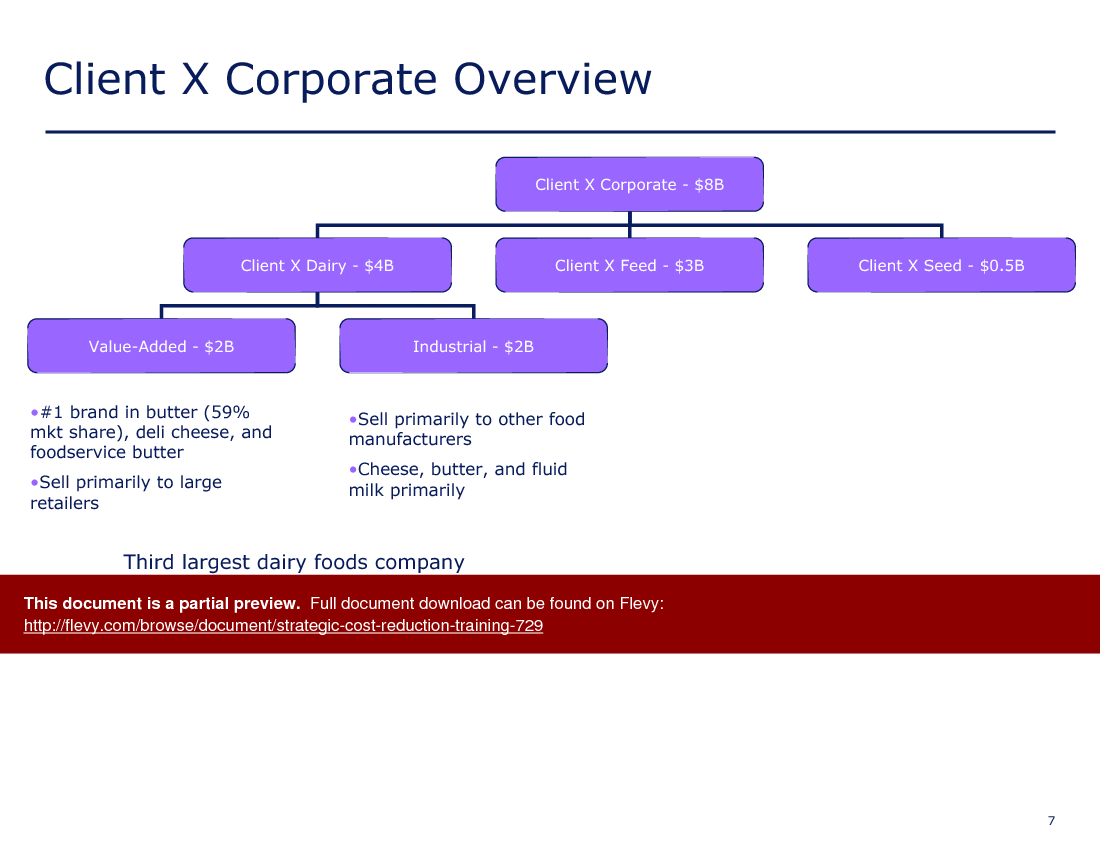
The document provides a detailed corporate overview of Client X, illustrating their market position and business segments. This context is crucial for understanding the specific cost reduction strategies tailored to their unique operational structure. The proposed implementation timeline spans multiple years, emphasizing a phased approach to ensure sustainable results. Each phase is meticulously planned, with clear milestones and deliverables to track progress and ensure accountability.
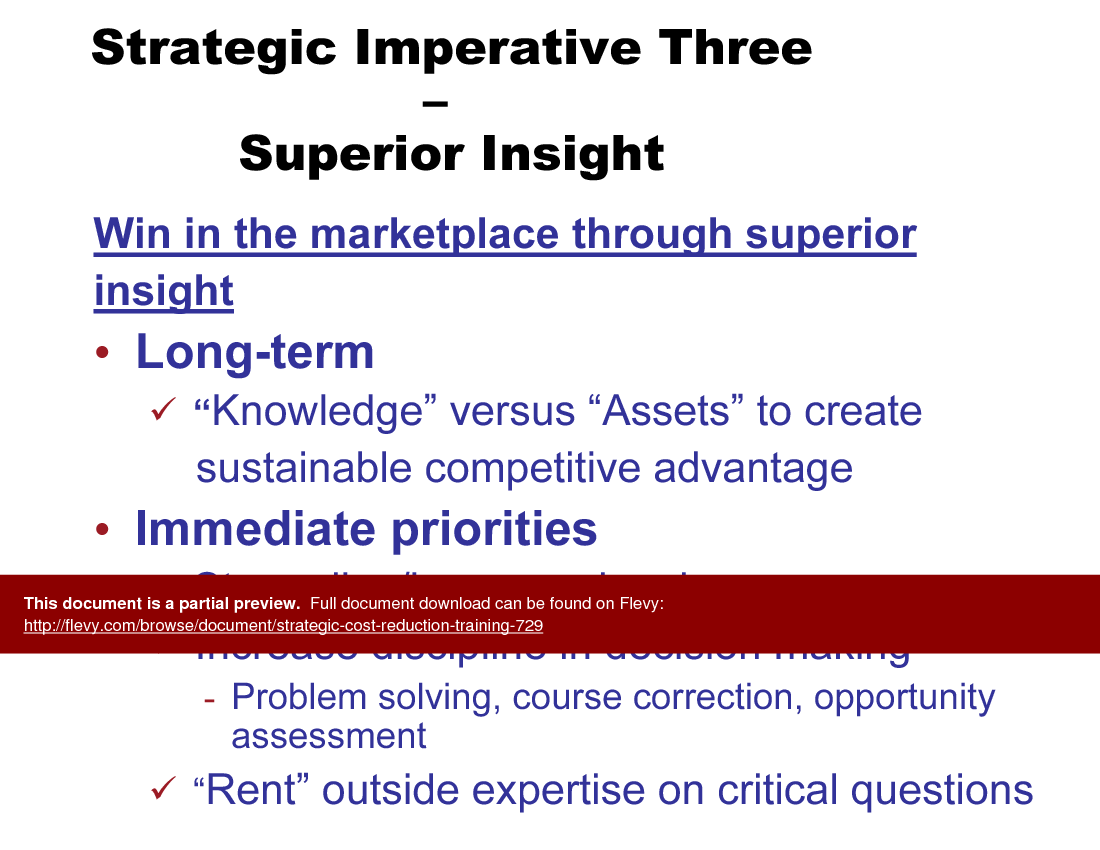
Strategic imperatives are highlighted, focusing on leveraging superior insight to win in the marketplace. The training emphasizes the importance of knowledge over assets, immediate priorities, and long-term strategies to create a sustainable competitive advantage. The document also includes critical success factors and lessons learned from previous cost reduction initiatives, providing a rich repository of best practices and tools. This ensures that the strategies are not just theoretical, but grounded in practical, proven methodologies.
Got a question about the product? Email us at support@flevy.com or ask the author directly by using the "Ask the Author a Question" form. If you cannot view the preview above this document description, go here to view the large preview instead.
MARCUS OVERVIEW
This synopsis was written by Marcus [?] based on the analysis of the full 97-slide presentation.
Executive Summary
The Strategic Cost Reduction (SCR) training materials provide a structured approach to achieving significant cost savings while enhancing operational efficiency. This consulting-grade presentation, akin to McKinsey, Bain, or BCG-quality, equips corporate executives and consultants with the insights needed to implement effective cost management strategies. Participants will gain a comprehensive understanding of SCR best practices, tools, and methodologies, enabling them to drive sustainable cost reductions and improve overall business performance.
Who This Is For and When to Use
• Corporate executives overseeing cost management initiatives
• Integration leaders responsible for implementing SCR strategies
• Consultants advising clients on cost reduction practices
• Financial analysts tasked with evaluating cost structures
• Project managers coordinating SCR implementation teams
Best-fit moments to use this deck:
• During initial project planning for SCR initiatives
• In workshops focused on team alignment and SCR strategy development
• When presenting to stakeholders on SCR approaches and expected outcomes
• As a reference for ongoing SCR training and development sessions
Learning Objectives
• Define the key principles of Strategic Cost Reduction and its importance in business strategy
• Develop actionable recommendations based on detailed cost analysis
• Identify and prioritize cost reduction opportunities across functions
• Establish a structured approach to implementing SCR initiatives
• Evaluate the effectiveness of SCR strategies through performance metrics
• Foster a culture of continuous improvement in cost management practices
Table of Contents
• Introduction to Strategic Cost Reduction (page 2)
• Client Overview (page 6)
• SCR Approach Overview (page 27)
• Phase 0: Scoping and Planning (page 27)
• Phase 1: Assessment (page 33)
• Phase 2: Plan and Roadmap (page 40)
• Best Practices and Lessons Learned (page 58)
• Tools and Templates for SCR (page 61)
• Team Structure and Responsibilities (page 82)
Primary Topics Covered
• SCR Overview - An introduction to the principles and importance of Strategic Cost Reduction in enhancing business efficiency and profitability.
• Client X Overview - A detailed profile of Client X, a leading cooperative in the agricultural sector, highlighting their mission and market position.
• SCR Approach - A structured methodology for implementing SCR initiatives, including phases of scoping, assessment, and planning.
• Phase 0 Outputs - Initial findings and hypotheses developed during the scoping phase, establishing a baseline for further analysis.
• Best Practices - Proven strategies and lessons learned from previous SCR initiatives that guide effective implementation.
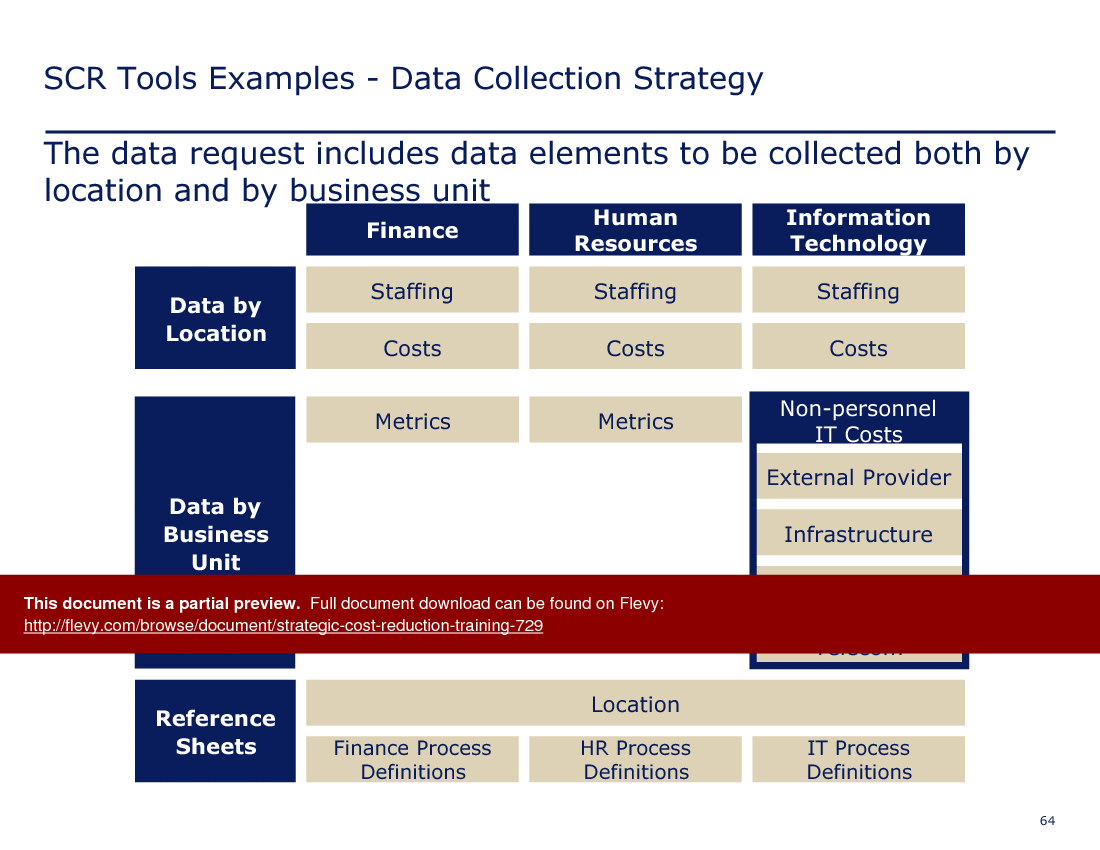
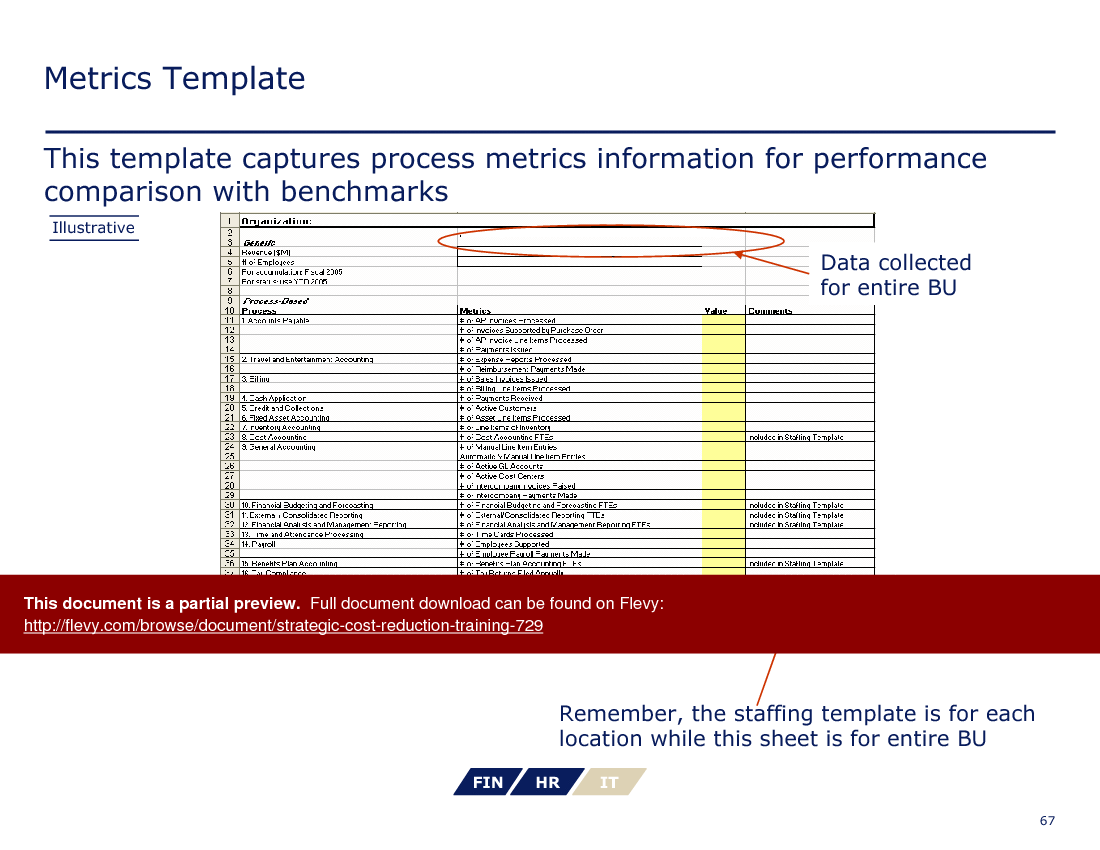
• Tools and Templates - Practical resources to facilitate data collection, analysis, and reporting throughout the SCR process.
Deliverables, Templates, and Tools
• SCR project plan template for tracking milestones and deliverables
• Cost structure analysis template for identifying savings opportunities
• Activity analysis tool for assessing functional performance
• Recommendations report template for documenting actionable insights
• Communication plan template for stakeholder engagement
• Risk management framework for identifying and mitigating project risks
Slide Highlights
• Overview of SCR phases and their respective timelines
• Visual representation of Client X’s market position and operational structure
• Key performance metrics for evaluating SCR success
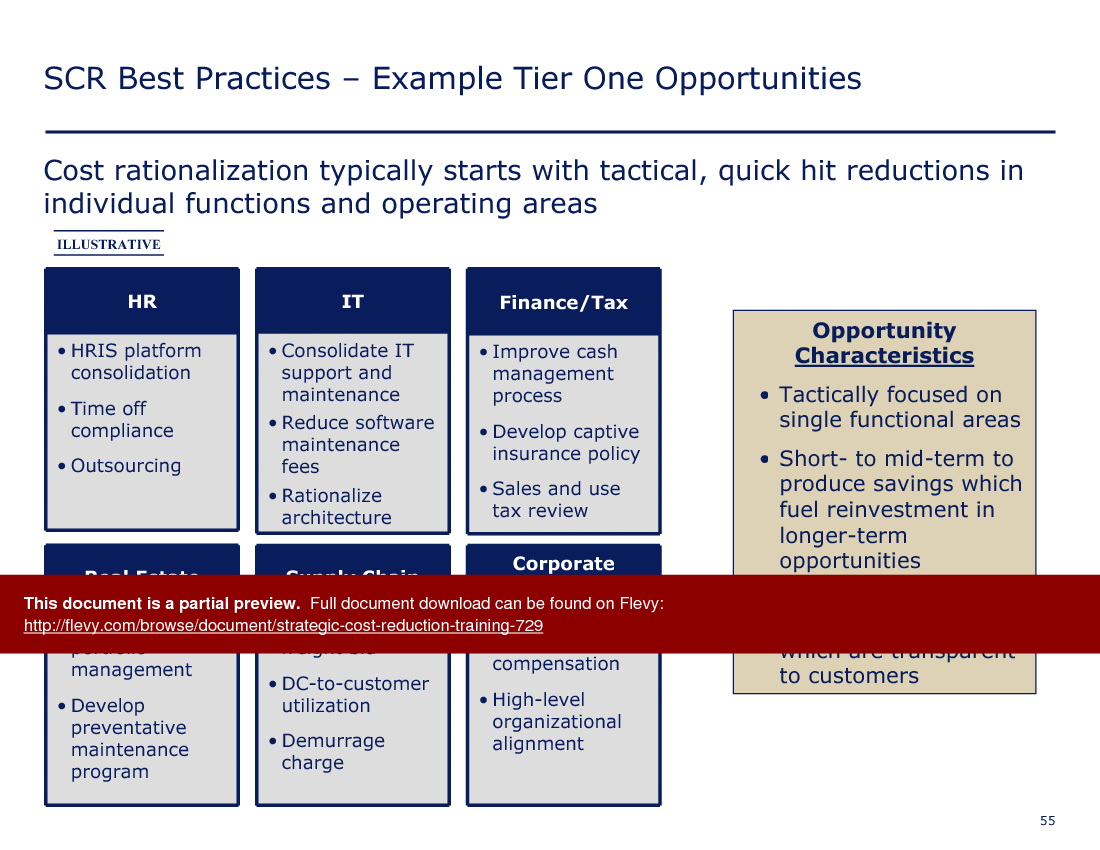
• Examples of cost-saving opportunities categorized by complexity and impact
• Framework for team roles and responsibilities in SCR implementation
Potential Workshop Agenda
SCR Introduction Session (90 minutes)
• Overview of SCR principles and objectives
• Discussion on Client X’s strategic goals and alignment with SCR
• Interactive session on identifying cost reduction opportunities
SCR Implementation Planning (120 minutes)
• Review of Phase 0 outputs and hypotheses
• Group activity to prioritize SCR initiatives based on impact and feasibility
• Development of a preliminary implementation roadmap
Customization Guidance
• Tailor the SCR approach to align with specific organizational goals and culture
• Adjust the project timeline to reflect the unique pace of Client X’s operations
• Modify templates to incorporate Client X’s branding and specific metrics
• Adapt communication strategies to suit the preferences of key stakeholders
Secondary Topics Covered
• Change management strategies for successful SCR implementation
• Financial impact assessment of proposed cost reduction initiatives
• Cross-functional collaboration techniques to enhance SCR outcomes
• Governance structures for overseeing SCR projects
FAQ What is Strategic Cost Reduction?
Strategic Cost Reduction refers to a systematic approach to identifying and implementing cost-saving opportunities across an organization to enhance profitability and operational efficiency.
How can SCR benefit my organization?
SCR can lead to significant cost savings, improved resource allocation, and a more streamlined operational structure, ultimately enhancing overall business performance.
What are the phases of the SCR approach?
The SCR approach consists of 4 phases: Scoping and Planning, Assessment, Plan and Roadmap, and Implementation.
How do I prioritize cost reduction opportunities?
Opportunities can be prioritized based on their potential financial impact, implementation complexity, and alignment with strategic goals.
What tools are available to support SCR initiatives?
Tools include project plans, cost analysis templates, activity assessment tools, and communication frameworks designed to facilitate effective SCR implementation.
How can I ensure stakeholder engagement during the SCR process?
Establish a clear communication plan that outlines objectives, progress updates, and opportunities for feedback to maintain stakeholder involvement and support.
What are common challenges in implementing SCR?
Challenges may include resistance to change, lack of executive buy-in, insufficient data for analysis, and difficulty in measuring success.
How do I measure the success of SCR initiatives?
Success can be measured through key performance indicators (KPIs) that track cost savings, operational efficiency, and alignment with strategic objectives.
Glossary
• SCR - Strategic Cost Reduction, a systematic approach to identifying and implementing cost-saving opportunities.
• Baseline Data - Initial data collected to establish a reference point for measuring improvements.
• Change Management - The process of guiding individuals and teams through organizational change.
• Cost Structure - The various costs associated with running a business, including fixed and variable costs.
• Implementation Roadmap - A detailed plan outlining the steps and timelines for executing SCR initiatives.
• Performance Metrics - Quantitative measures used to assess the effectiveness of SCR strategies.
• Stakeholder Engagement - The process of involving all relevant parties in decision-making and project execution.
• Team Structure - The organization of roles and responsibilities within the SCR project team.
• Value Proposition - The unique benefits and value that SCR initiatives offer to the organization.
• Workstream - A specific area of focus within the SCR initiative, such as finance or operations.
• Hypothesis Testing - The process of validating or disproving assumptions made during the SCR analysis.
• Executive Alignment - Ensuring that senior leadership supports and is committed to the SCR initiatives.
• Operational Efficiency - The ability to deliver products or services in the most cost-effective manner.
• Cross-Functional Collaboration - Working together across different departments or teams to achieve common goals.
• Risk Management - The identification, assessment, and prioritization of risks associated with SCR initiatives.
• Quick Wins - Immediate, low-effort opportunities for cost savings that can be implemented quickly.
• Long-Term Sustainability - The ability to maintain cost reductions and operational improvements over time.
• Financial Impact - The effect of SCR initiatives on the organization’s financial performance.
• Organizational Culture - The shared values, beliefs, and behaviors that shape how work gets done within the organization.
• Continuous Improvement - Ongoing efforts to enhance products, services, or processes over time.
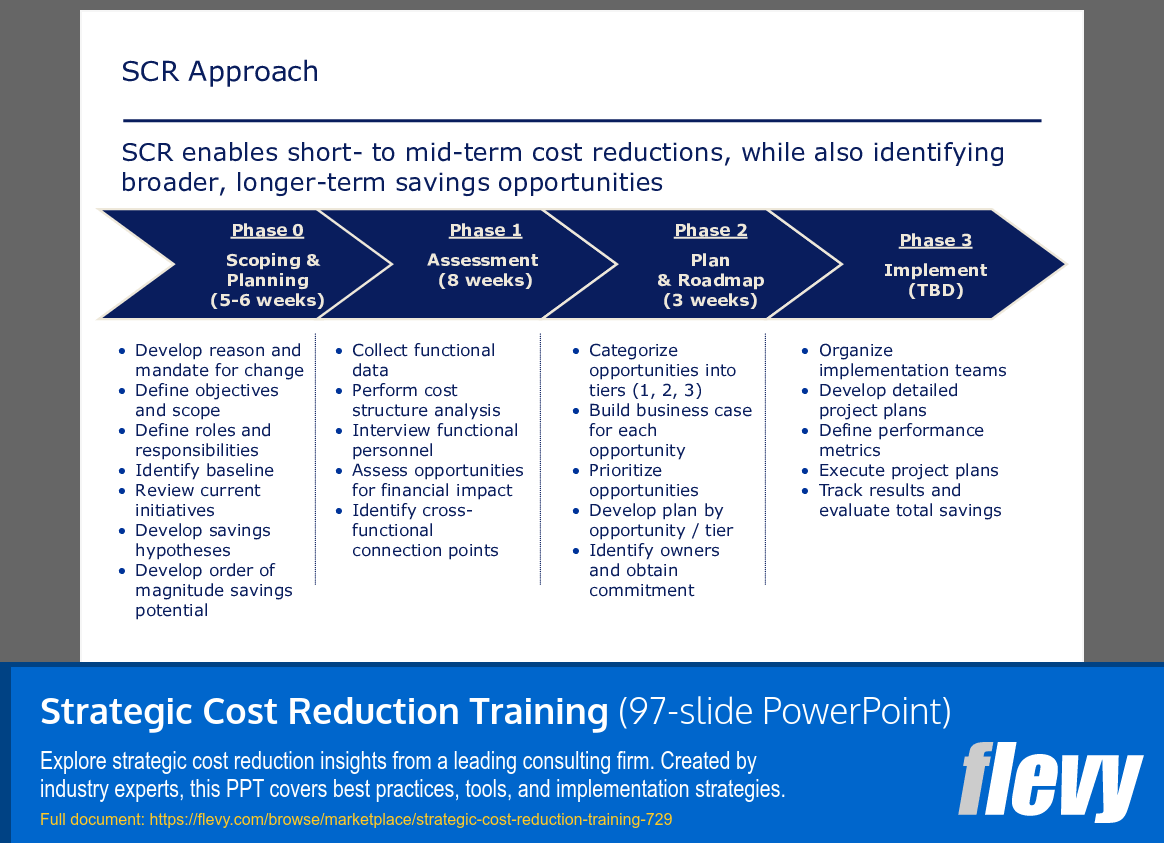
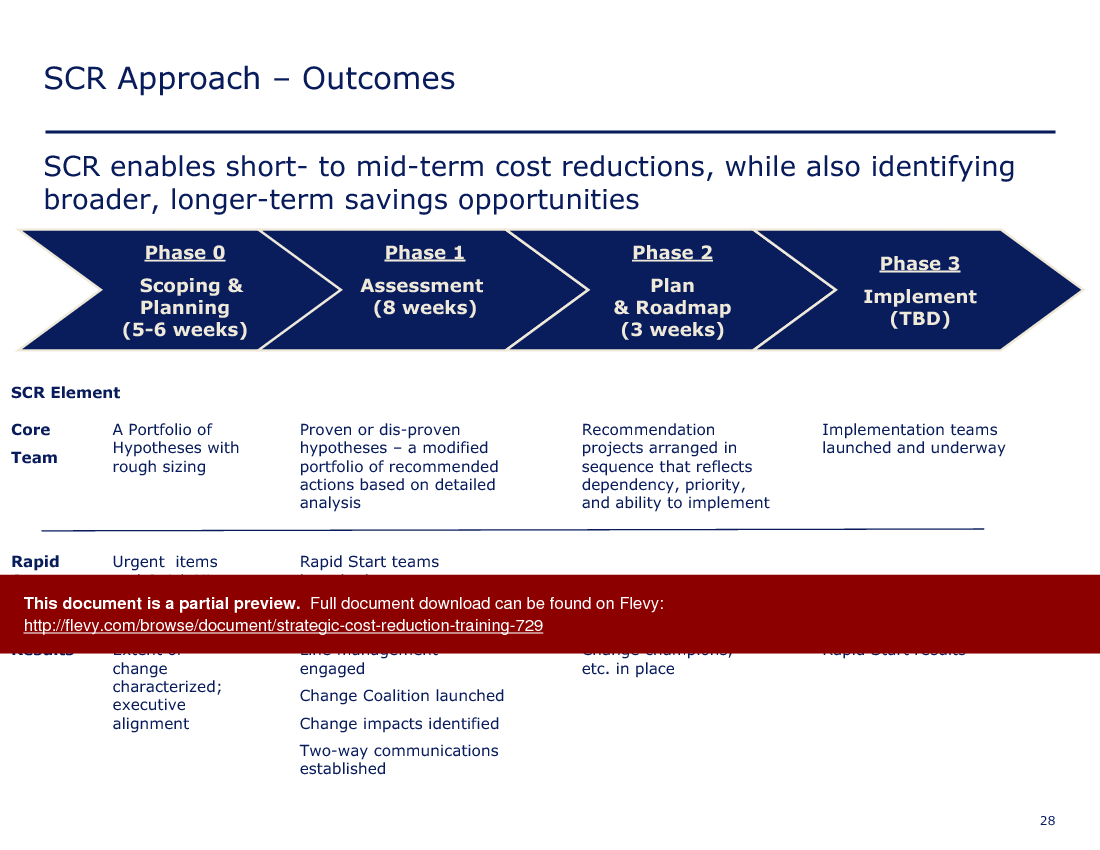
This PPT slide outlines a structured approach to Strategic Cost Reduction (SCR) through 4 distinct phases.
Phase 0, "Scoping & Planning," lasts 5-6 weeks and focuses on establishing a rationale for change, defining objectives, and identifying a baseline for current costs.
Phase 1, "Assessment," spans 8 weeks and involves data collection, cost structure analysis, and assessing financial impacts, emphasizing cross-functional connections to uncover interdependencies affecting cost-saving initiatives.
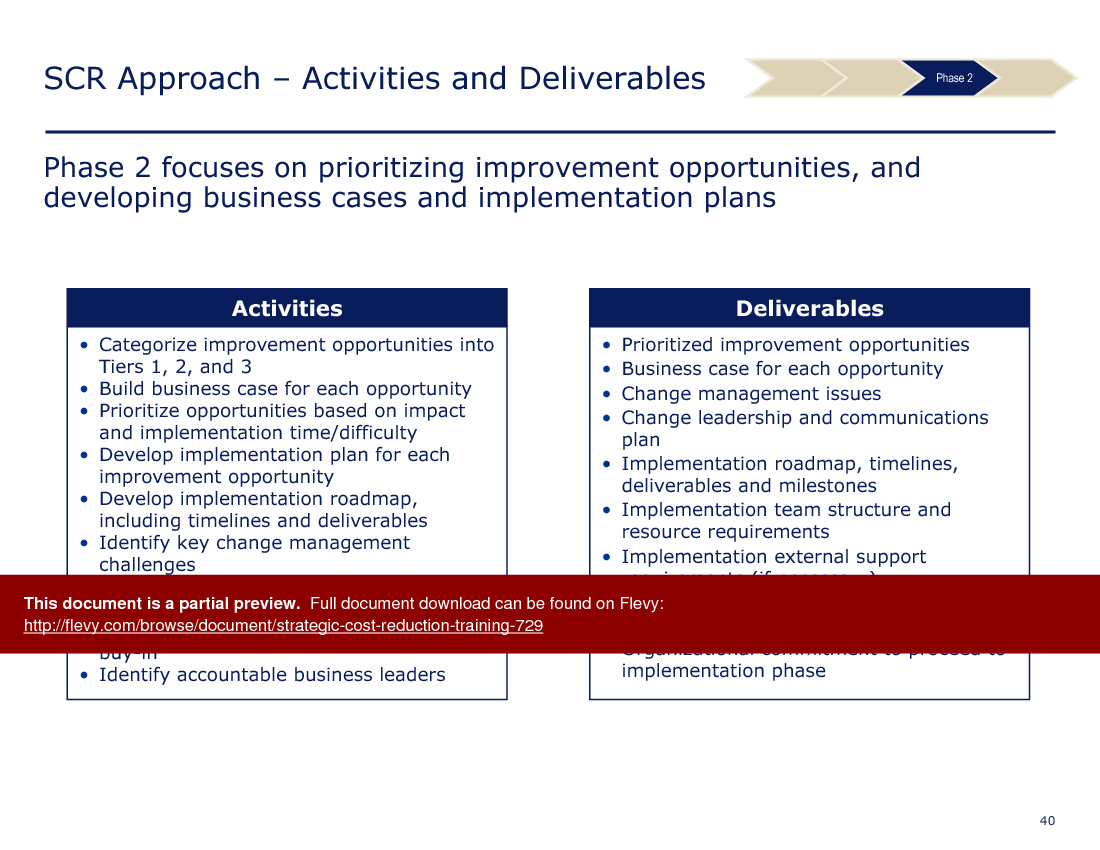
Phase 2, "Plan & Roadmap," takes 3 weeks to categorize opportunities, build business cases, and prioritize based on potential impact, ensuring effective resource allocation and accountability.
Phase 3, "Implement," timeline is TBD, focusing on organizing teams, creating project plans, and establishing performance metrics to evaluate total savings and track results.
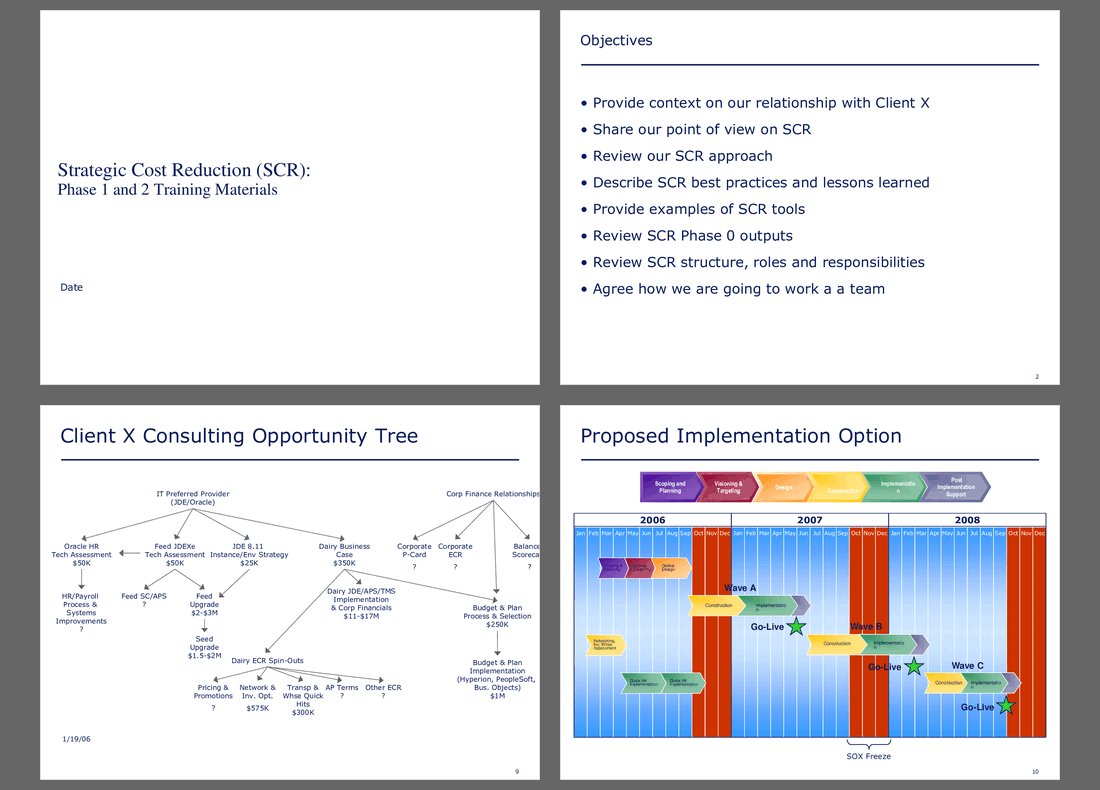
This PPT slide outlines a structured timeline for a multi-phase implementation strategy from 2006 to 2008, segmented into 3 waves: A, B, and C. The initial phase in 2006 includes "Scoping and Planning," "Visioning & Targeting," and "Global Design," establishing foundational objectives and frameworks. In 2007, "Wave A" focuses on construction and implementation, marked by "Go-Live" points indicating operational readiness. The second half of 2007 introduces "Wave B," continuing these activities and allowing for adjustments based on prior learnings. By 2008, "Wave C" follows a similar pattern, with "Quick Hit Implementation" activities aimed at achieving early wins and validating the overall strategy. This timeline emphasizes structured progression and iterative learning in achieving strategic objectives.
This PPT slide presents a framework for assessing organizational opportunities based on 2 dimensions: Business Implementation Risk and Implementation Complexity. The scatter plot format displays initiatives as circles, with size indicating potential impact. The horizontal axis measures Business Implementation Risk (low to high), while the vertical axis assesses Implementation Complexity (low to high). This dual-axis approach helps decision-makers identify feasible, low-risk opportunities, particularly those in the lower-left quadrant. Conversely, initiatives in the upper-right quadrant may involve higher risks and complexities. Understanding Business Implementation Risk involves factors like stakeholder engagement and financial implications, emphasizing the need for comprehensive evaluation before proceeding. This tool aids in prioritizing initiatives and effective resource allocation across the organization.
This PPT slide presents a framework for Strategic Cost Reduction (SCR) focused on a long-term perspective rather than immediate cost-cutting. The two-step approach aims for an aspirational cost structure over a five-year horizon. The first step is defining a vision for the cost structure 3 to 5 years into the future. The second step involves working backward from this vision to identify necessary adjustments in the current cost structure. Solutions are complex, requiring a long-term commitment with a payback period extending beyond the first year. Achieving the aspirational cost structure may necessitate a shift in business strategy, indicating that cost reduction is both a financial and strategic exercise. This requires executive engagement and organization-wide alignment to support long-term initiatives for sustainable growth and efficiency.
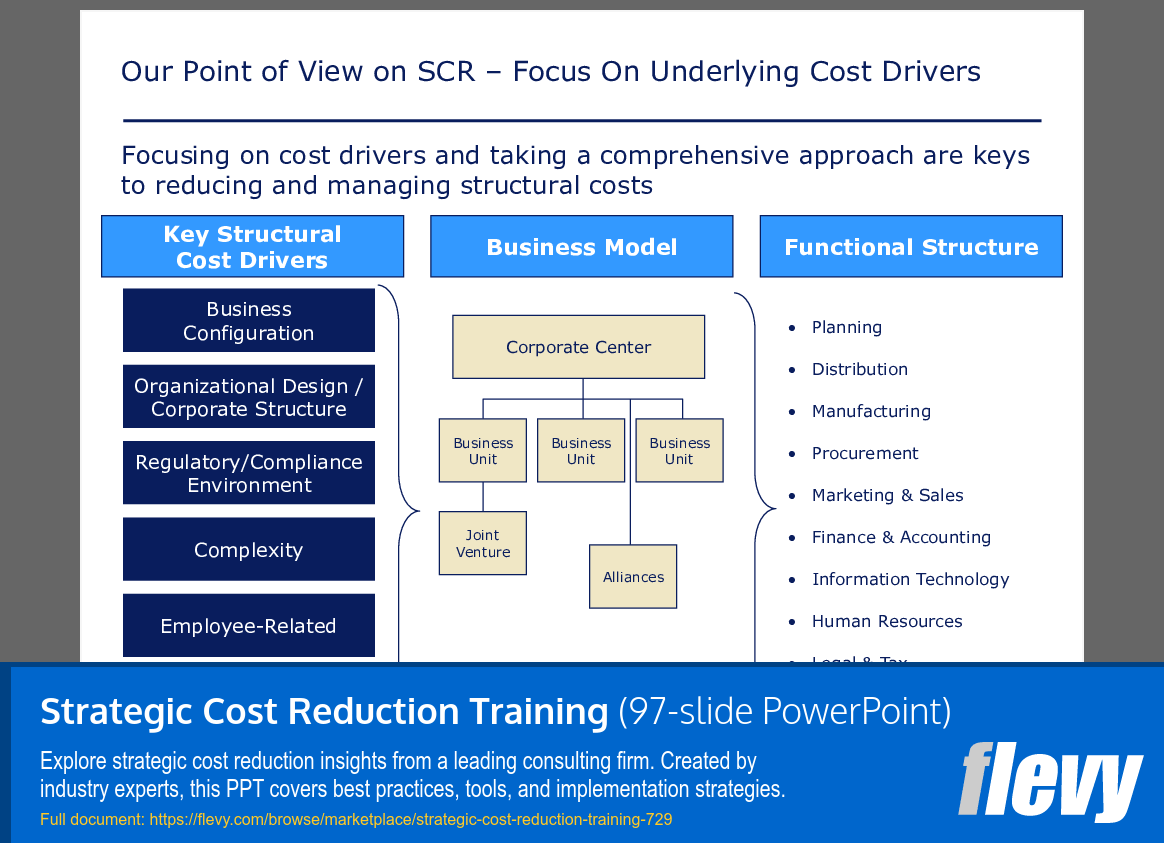
This PPT slide presents a structured approach to strategic cost reduction (SCR) by identifying key structural cost drivers, including Business Configuration, Organizational Design, and Regulatory Environment. These factors influence operational costs and highlight the importance of understanding underlying cost elements. The "Business Model" section illustrates a hierarchical arrangement of business units and joint ventures, emphasizing how organizational design impacts resource allocation and operational efficiency. The "Functional Structure" section lists critical functions such as Planning, Distribution, and Manufacturing, which are essential for operational effectiveness and targeted cost-saving initiatives. This framework aids organizations in analyzing and optimizing their cost structures for improved financial performance.
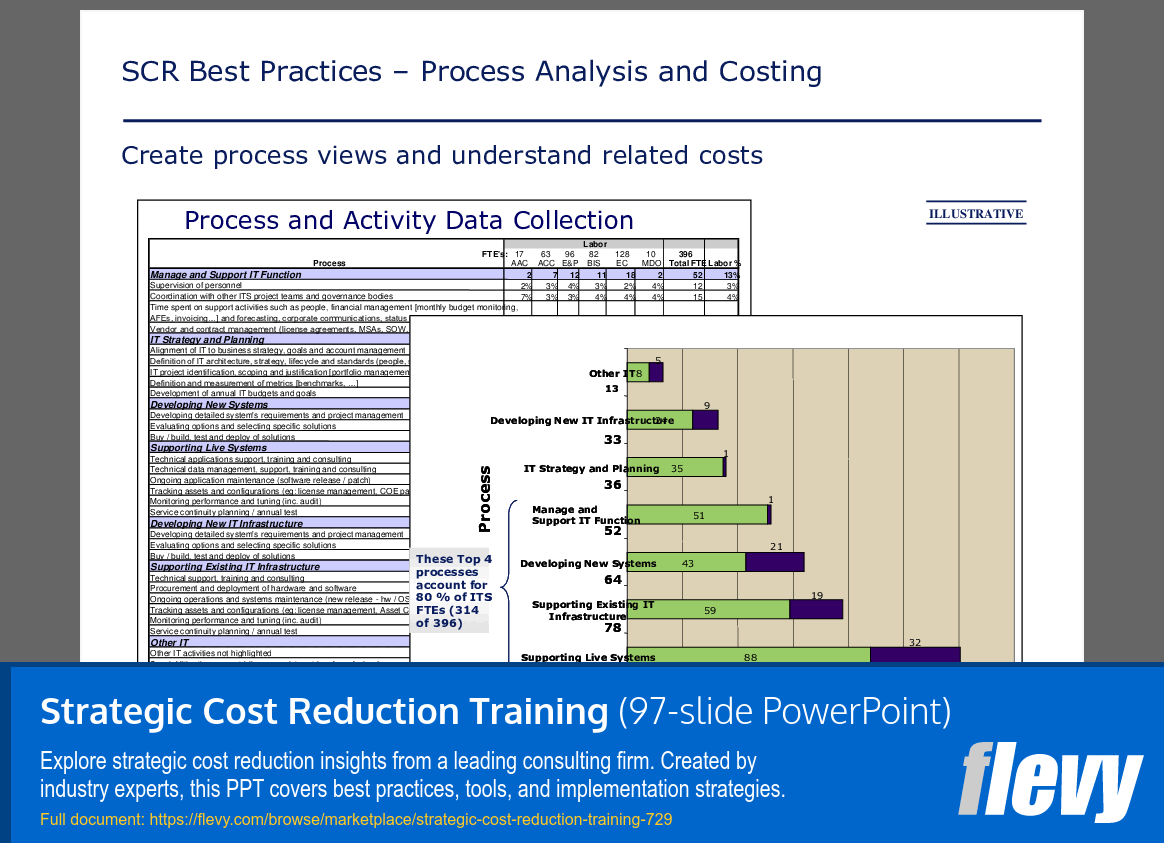
This PPT slide outlines best practices in process analysis and costing for strategic cost reduction. It emphasizes creating process views and understanding associated costs. Key IT functions include managing and supporting IT, developing new systems, and supporting existing infrastructure, with a breakdown of Full-Time Equivalents (FTEs) and labor costs for resource allocation. The top 4 processes account for 80% of 396 total FTEs, indicating areas for efficiency improvements. Specific metrics, such as the 52 FTEs dedicated to the "Manage and Support IT Function," guide decision-makers in evaluating operational efficiency. Analyzing these figures helps executives allocate resources effectively and implement cost-saving measures, optimizing costs within IT functions.
This PPT slide analyzes 2 approaches to strategic cost reduction (SCR): Incremental and Transformational. The Incremental Approach focuses on bottom-up cost-saving initiatives, yielding limited savings and often resulting in siloed operations without executive mandates. In contrast, the Transformational Approach requires corporate leadership and emphasizes cross-functional strategies, addressing fundamental structural cost drivers for long-term sustainability. It promotes a program or portfolio perspective, enhancing project management integration. Change leadership differs significantly; the Incremental Approach may struggle with cultural obstacles due to a lack of overarching mandates, while the Transformational Approach fosters a culture of continuous improvement and integrated cost management.
This PPT slide presents a framework for analyzing organizational structure to identify opportunities for streamlining operations and enhancing management efficiency. It categorizes functions—General Accounting, Accounts Payable, Accounts Receivable, Payroll, and Credit—into distinct layers based on reporting relationships, detailing employee distribution across these layers. For example, General Accounting has a significant number of employees at Layer 4, indicating a cumbersome structure, while Accounts Payable and Payroll show a more streamlined approach. The "Span of Control" section compares actual management structures against benchmark averages, revealing that General Accounting's span of control is lower than the benchmark, suggesting potential efficiency gains through flattening the hierarchy. Overall, the analysis highlights areas for restructuring to optimize organizational design and improve operational performance.
This PPT slide outlines the roles of a Project Management Office (PMO) in risk management and change management. PMO Risk Management includes interviewing project team members to identify risks, developing a Preliminary Risk Matrix, and refining it through workshops. Key activities involve validating risks and ensuring risk owners prepare contingency and mitigation plans, with regular updates to the project team. PMO Change Management focuses on a customer-centric value framework, effective external communication to explain changes, and fostering a "Burn The Ships" mindset among stakeholders. Internal communications reinforce the end state vision and maintain team alignment, emphasizing tailored strategies for specific audiences and generating quick wins for sustainability. Additionally, decision rights, escalation procedures, and dispute resolution processes indicate a structured approach to change management, aligning individual and team incentives with program objectives to achieve desired outcomes.
This PPT slide outlines best practices for business and operating models, categorizing them into 4 types: Holding Company, Strategic Guidance, Strategic Control, and Integrated Operating Company.
The Holding Company model features executive leadership setting financial targets while delegating operating decisions, characterized by stand-alone business units and independent central services.
In the Strategic Guidance model, leadership coordinates objectives and provides input for operating decisions, indicating a collaborative approach.
The Strategic Control model involves leadership in developing and implementing strategies, suggesting significant oversight and integration among business units.
The Integrated Operating Company model represents a centralized approach where leadership makes major operating decisions, focusing on cohesive execution across the organization.
These models impact decision-making and operational efficiency, aiding organizations in assessing their structure and improving centralized and shared services.
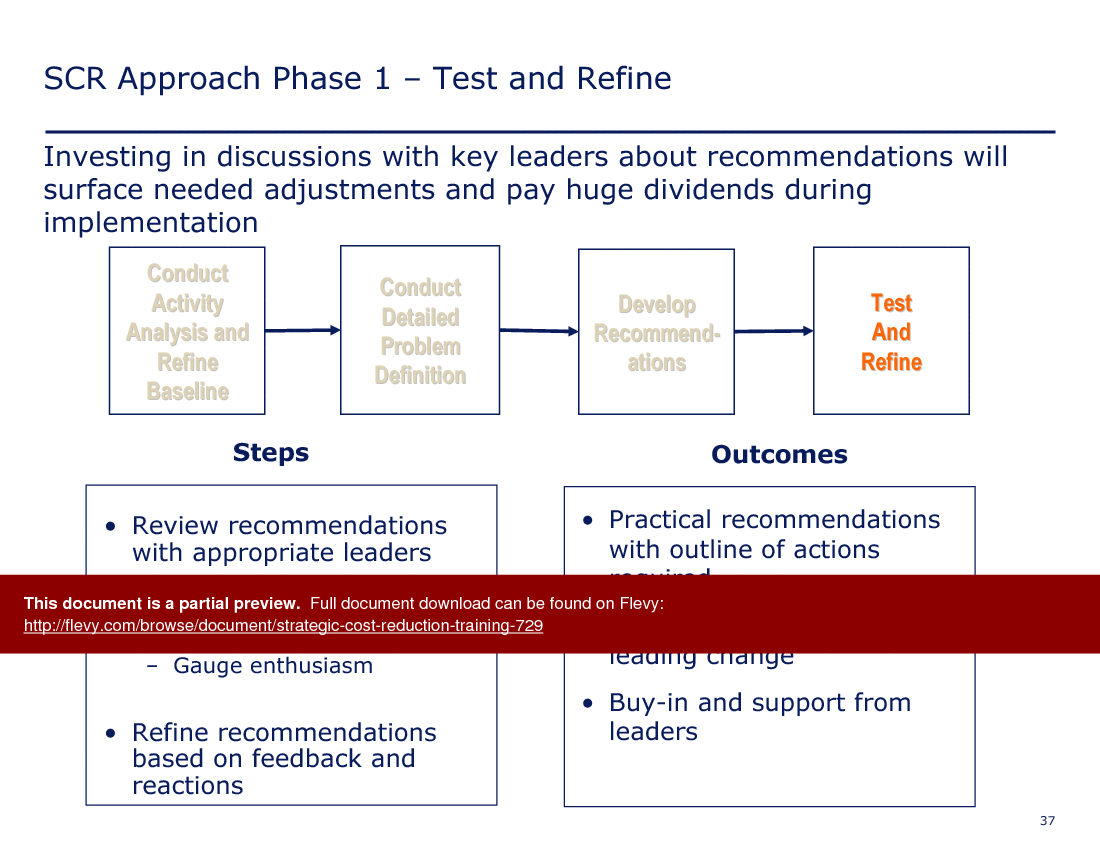
This PPT slide outlines the first phase of a Strategic Cost Reduction (SCR) approach, focusing on validating cost reduction hypotheses and formulating actionable recommendations. The process includes 4 components: Activity Analysis and Baseline Refinement, Detailed Problem Definition, Development of Recommendations, and Testing and Refinement.
Activity Analysis involves assessing resource allocation and personnel time usage to identify inefficiencies. The Detailed Problem Definition phase utilizes factual data to clarify issues and identify root causes. In the Development of Recommendations phase, potential improvements are identified across organizational structure, costs, processes, and staffing, including estimating potential savings and implementation costs. Finally, the Testing and Refinement phase secures stakeholder buy-in and outlines adjustments and initial implementation requirements, ensuring recommendations align with organizational goals.
This PPT slide outlines a structured approach to developing an integrated long-term structural cost reduction plan, categorizing initiatives into short-term (0-6 months), medium-term (6-12 months), and long-term (12-18+ months) timeframes. Short-term actions focus on 'quick wins' like implementing spending policy changes, reviewing indirect sourcing, and freezing hiring to quickly lower the cost base. The medium-term phase emphasizes optimizing the cost base through strategic initiatives such as streamlining organizational structures, expanding strategic sourcing, and rationalizing IT and telecom spending for enhanced operational efficiency. Long-term strategies aim to create a low-cost operating model by optimizing the manufacturing network, rationalizing products and channels, and pursuing acquisitions to leverage scale, embedding cost efficiency into the organization's core operational strategy.
This PPT slide outlines a structured approach to identifying and categorizing savings opportunities within a strategic cost reduction framework. It features a three-tier model based on complexity and potential savings. The vertical axis represents "Savings Opportunity," while the horizontal axis indicates initiative complexity.
Tier 1, "Tactical," focuses on short to mid-term opportunities with lower complexity and investment, targeting quick wins. Tier 2, "Evolutionary," involves mid to long-term initiatives with increased complexity and investment, suggesting significant process changes. Tier 3, "Business Transformation," encompasses long-term, customer-facing initiatives requiring higher investment and cross-functional collaboration, emphasizing core competencies for substantial savings.
This tiered approach helps organizations prioritize initiatives based on strategic goals and resource availability, balancing immediate and transformative savings opportunities.
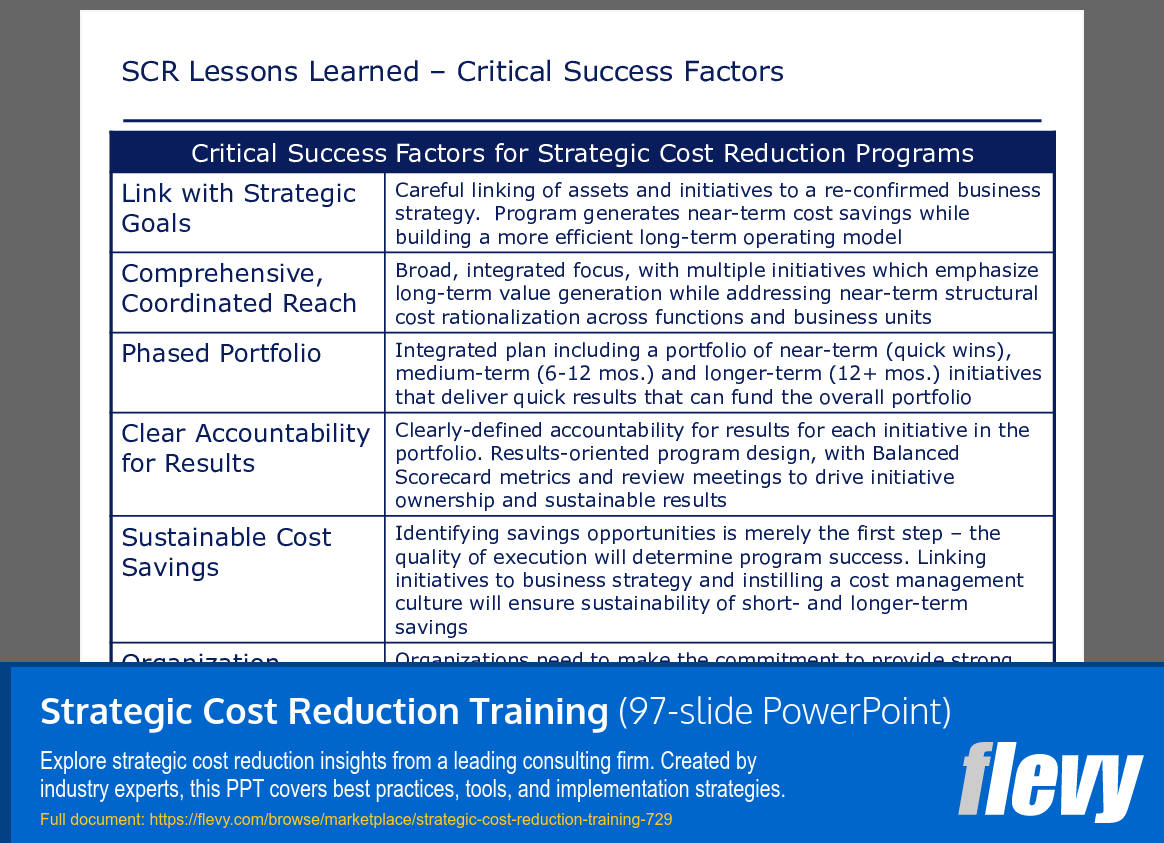
This PPT slide outlines critical success factors for strategic cost reduction programs. Key factors include aligning initiatives with business goals and establishing a connection between assets and strategic objectives to achieve immediate cost savings and long-term operational efficiency. A comprehensive approach is necessary, addressing structural costs across functions and business units while balancing near-term quick wins with longer-term initiatives through a phased portfolio. Clear accountability for results is essential, with defined ownership and metrics for success, supported by regular review meetings. Sustainable cost savings depend on execution quality, linking initiatives to business strategy, and fostering a culture of cost management. Strong leadership commitment is vital for the success of these initiatives.
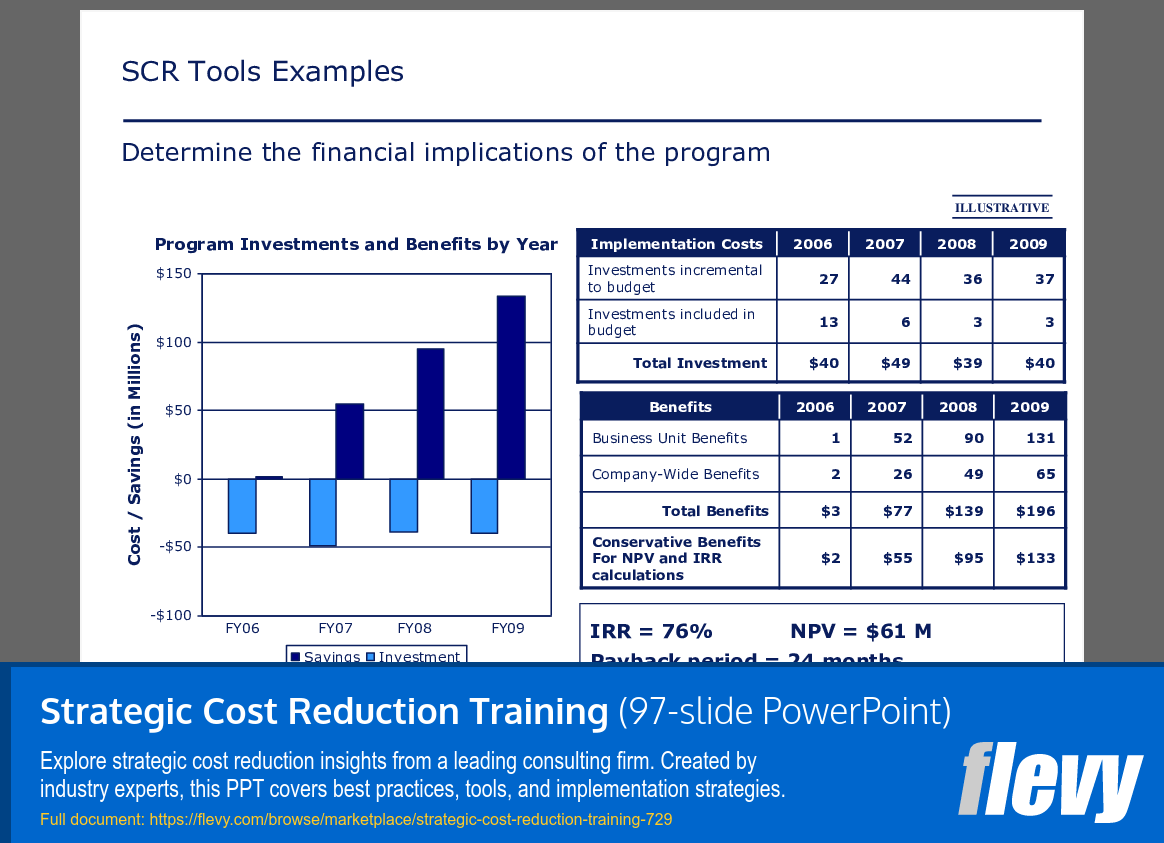
This PPT slide analyzes the financial implications of a program from 2006 to 2009, featuring a bar graph that illustrates investments and benefits in millions. The graph shows an upward trend in benefits, particularly in 2009, indicating increasing program effectiveness. The table details year-by-year implementation costs and benefits, with total investment peaking at $49 million in 2007 and benefits rising from $3 million to $196 million by 2009, highlighting substantial returns on investment. Key metrics include a Net Present Value (NPV) of $61 million and an Internal Rate of Return (IRR) of 76%, with a payback period of 24 months, demonstrating the program's financial viability and guiding strategic planning for stakeholders.
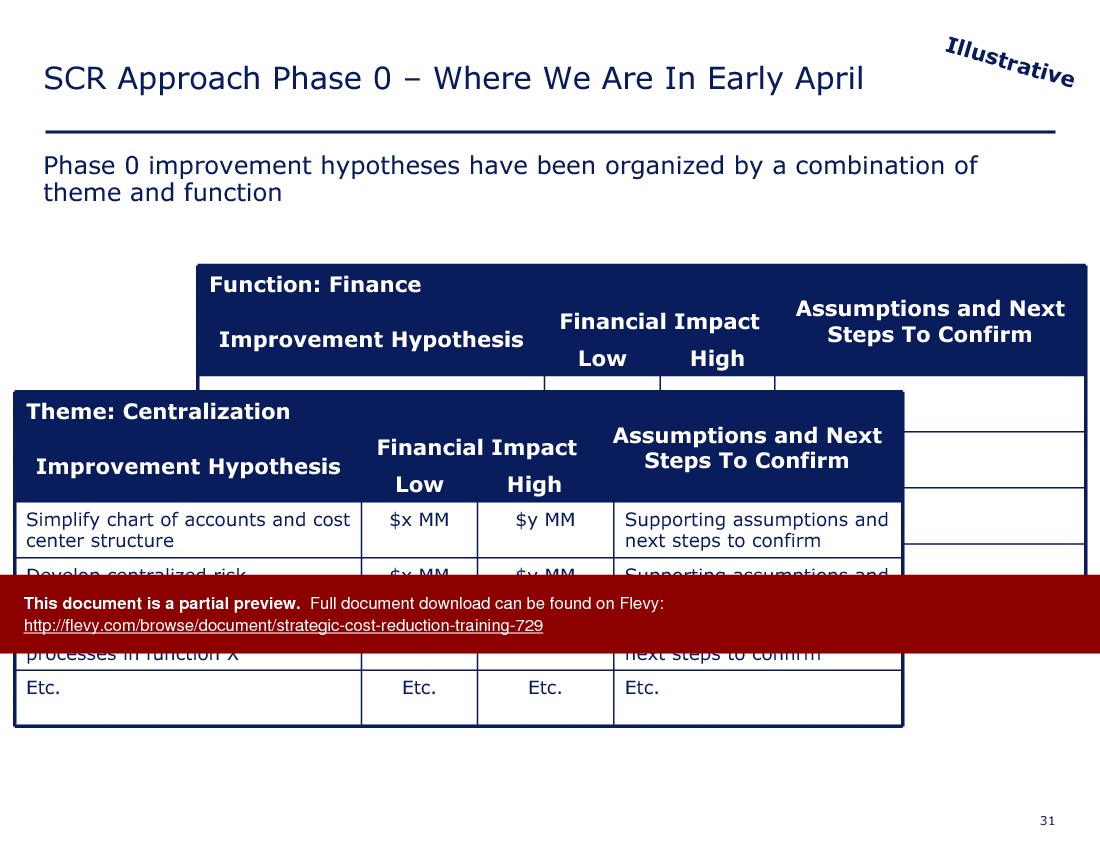
The Phase 0 approach of a Strategic Cost Reduction (SCR) initiative focuses on a structured methodology for hypothesis development. It begins with executive interviews to gather qualitative data from key stakeholders, providing insights into the organization's context and challenges. Following this, hypotheses from prior experiences are collected to leverage existing knowledge, ensuring new hypotheses are grounded in historical context. The development of company-wide and functional hypotheses establishes overarching themes and specific areas for analysis. Scheduled core team meetings on March 23, 27, and 30 will facilitate collaborative review and refinement of these hypotheses. Functional interviews will further enhance understanding of specific organizational challenges and opportunities. Finally, developing an order of magnitude savings estimate and assessing implementation time and complexity are critical for prioritizing initiatives and effective resource allocation, creating a robust foundation for strategic decision-making.
This PPT slide outlines a structured approach to strategic cost reduction (SCR) by identifying key structural cost drivers: Business Configuration, Organizational Design, Regulatory Environment, Complexity, and Employee-Related Issues. Business Configuration affects operational efficiency and overall costs. The Business Model section illustrates the hierarchical structure from the Corporate Center to Business Units and Joint Ventures, emphasizing the interconnectedness of units in corporate strategy and cost efficiency. The Functional Structure details operational areas like Planning, Distribution, and Manufacturing, highlighting their roles in cost management. This comprehensive approach integrates insights from various organizational dimensions to optimize cost structures and enhance operational effectiveness.
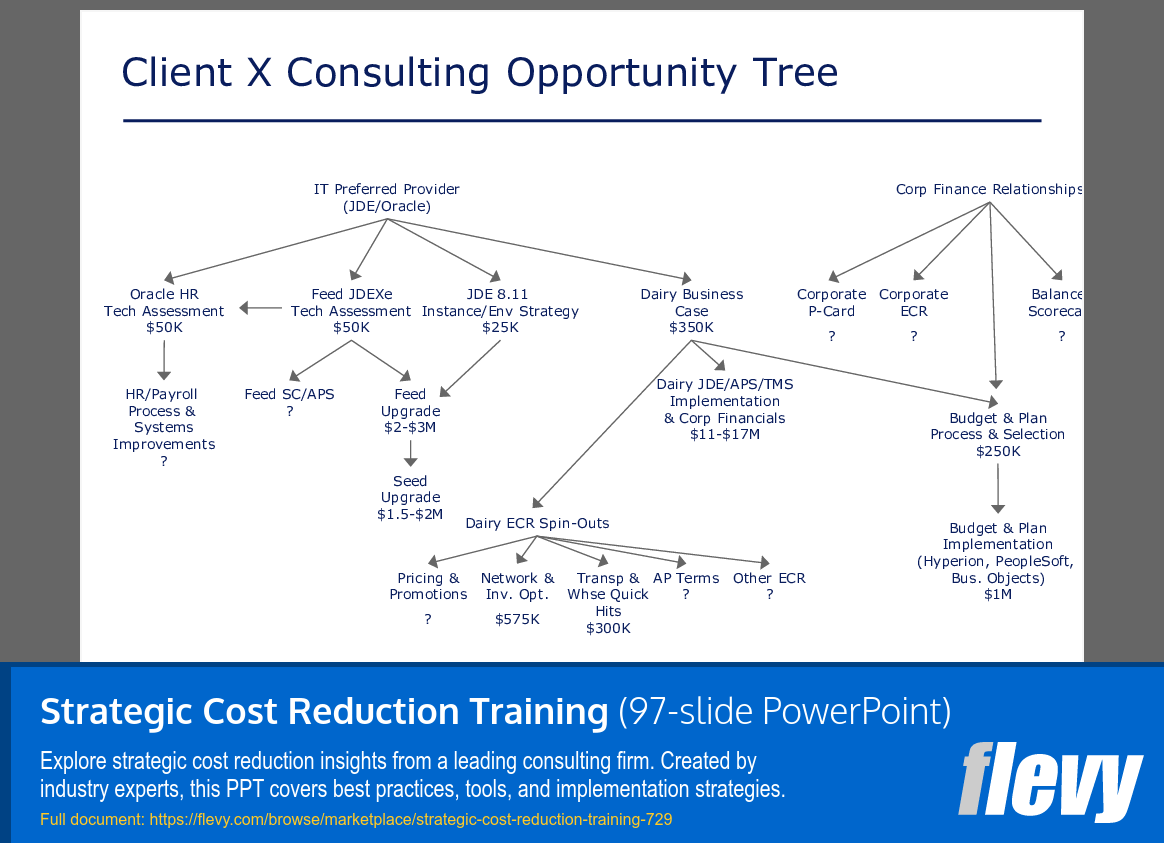
The "Client X Consulting Opportunity Tree" outlines consulting opportunities in IT and financial services, emphasizing a preference for JDE/Oracle providers. Key branches include 2 tech assessments for Oracle HR and JDEEx, each costing $50K, aimed at improving HR/payroll processes. Upgrade options range from $1.5M to $3M, focusing on system enhancements for efficiency. A significant branch details the Dairy Business Case, valued at $350K, targeting optimization of dairy operations through JDE/APS/TMS implementation, with financial implications of $11M to $17M. Corporate finance relationships are also highlighted, covering budget processes and implementation strategies, providing a comprehensive view of financial planning and execution.
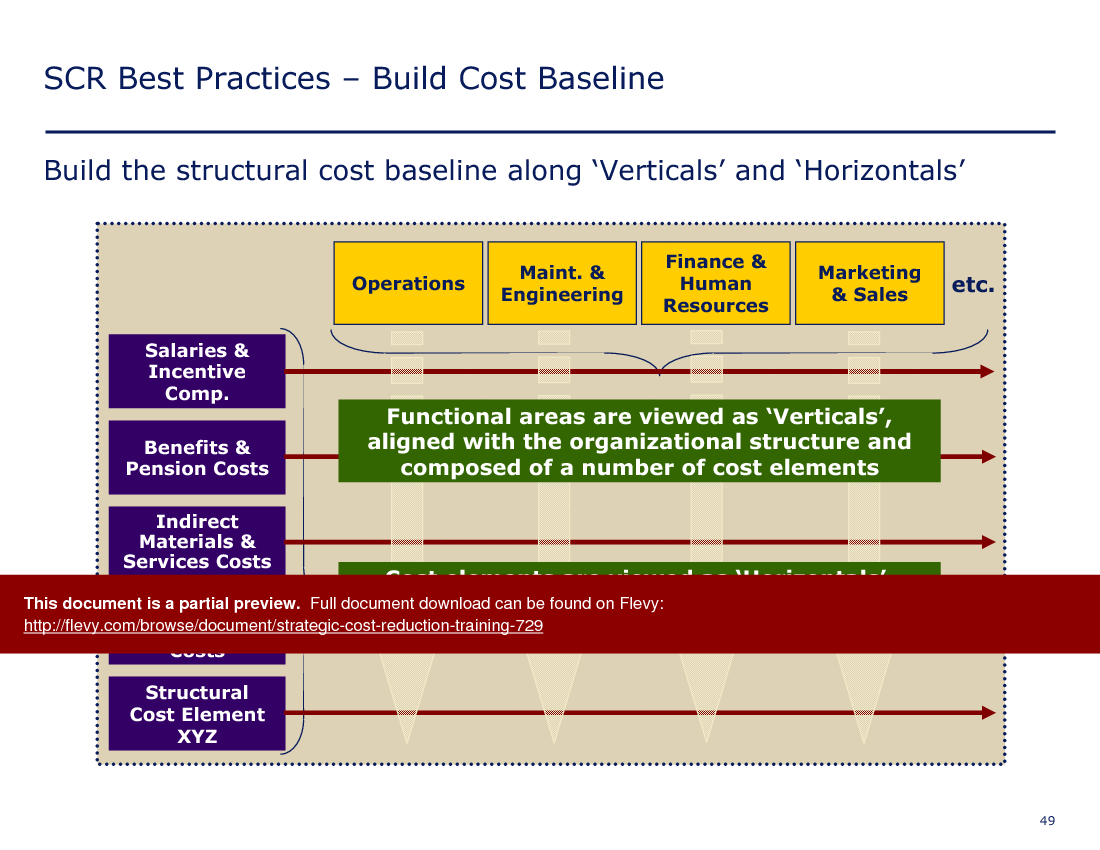
This PPT slide outlines a structured approach to strategic cost reduction (SCR) assessment, emphasizing the establishment of a solid cost baseline. It includes 5 components:
1. Baseline Data: Gathering essential financial and organizational information, including headcount and relevant metrics, to understand the current state.
2. Functional Data: Collecting qualitative insights through surveys and interviews to map workflows and identify improvement areas.
3. Analysis: Conducting primary and secondary analyses to synthesize data and uncover insights for subsequent steps.
4. Opportunities and Hypotheses: Generating potential cost-saving opportunities and developing hypotheses for testing.
5. Validation and Finalization: Confirming findings and preparing for implementation to ensure identified opportunities are viable and actionable.
This roadmap aids organizations in streamlining operations and achieving cost efficiencies through a methodical, data-driven approach.
Source: Best Practices in Cost Reduction Assessment PowerPoint Slides: Strategic Cost Reduction Training PowerPoint (PPT) Presentation Slide Deck, Documents & Files
Since 2012, we have provided business templates to over 10,000 businesses and organizations of all sizes, from startups and small businesses to the Fortune 100, in over 130 countries.
"I have used Flevy services for a number of years and have never, ever been disappointed. As a matter of fact, David and his team continue, time after time, to impress me with their willingness to assist and in the real sense of the word. I have concluded in fact
that it is not at all just a repository of documents/resources but, in the way that David and his team manage the firm, it is like dealing with consultants always ready to assist, advise and direct you to what you really need, and they always get it right.
I am an international hospitality accomplished senior executive who has worked and lived during the past 35 years in 23 countries in 5 continents and I can humbly say that I know what customer service is, trust me.
Aside from the great and professional service that Flevy's team provide, their wide variety of material is of utmost great quality, professionally put together and most current.
Well done Flevy, keep up the great work and I look forward to continue working with you in the future and to recommend you to a variety of colleagues around the world.
"
– Roberto Pelliccia, Senior Executive in International Hospitality
"As a niche strategic consulting firm, Flevy and FlevyPro frameworks and documents are an on-going reference to help us structure our findings and recommendations to our clients as well as improve their clarity, strength, and visual power. For us, it is an invaluable resource to increase our impact and value."
– David Coloma, Consulting Area Manager at Cynertia Consulting
"I have found Flevy to be an amazing resource and library of useful presentations for lean sigma, change management and so many other topics. This has reduced the time I need to spend on preparing for my performance consultation. The library is easily accessible and updates are regularly provided. A wealth of great information."
– Cynthia Howard RN, PhD, Executive Coach at Ei Leadership
"FlevyPro has been a brilliant resource for me, as an independent growth consultant, to access a vast knowledge bank of presentations to support my work with clients. In terms of RoI, the value I received from the very first presentation I downloaded paid for my subscription many times over! The
quality of the decks available allows me to punch way above my weight – it's like having the resources of a Big 4 consultancy at your fingertips at a microscopic fraction of the overhead.
"
– Roderick Cameron, Founding Partner at SGFE Ltd
"As a consulting firm, we had been creating subject matter training materials for our people and found the excellent materials on Flevy, which saved us 100's of hours of re-creating what already exists on the Flevy materials we purchased."
– Michael Evans, Managing Director at Newport LLC
"[Flevy] produces some great work that has been/continues to be of immense help not only to myself, but as I seek to provide professional services to my clients, it gives me a large "tool box" of resources that are critical to provide them with the quality of service and outcomes they are expecting."
– Royston Knowles, Executive with 50+ Years of Board Level Experience
"My FlevyPro subscription provides me with the most popular frameworks and decks in demand in today’s market. They not only augment my existing consulting and coaching offerings and delivery, but also keep me abreast of the latest trends, inspire new products and service offerings for my practice, and educate me
in a fraction of the time and money of other solutions. I strongly recommend FlevyPro to any consultant serious about success.
"
– Bill Branson, Founder at Strategic Business Architects
"Flevy is now a part of my business routine. I visit Flevy at least 3 times each month.
Flevy has become my preferred learning source, because what it provides is practical, current, and useful in this era where the business world is being rewritten.
many challenges and there is the need to make the right decisions in a short time, with so much scattered information, we are fortunate to have Flevy. Flevy investigates, selects, and puts at our disposal the best of the best to help us be successful in our work.
"
– Omar Hernán Montes Parra, CEO at Quantum SFE
Save with Bundles

This document is available as part of the following discounted bundle(s):
Receive our FREE presentation on Operational Excellence
This 50-slide presentation provides a high-level introduction to the 4 Building Blocks of Operational Excellence. Achieving OpEx requires the implementation of a Business Execution System that integrates these 4 building blocks.

Receive our FREE presentation on Operational Excellence
Get Our FREE Product.
This 50-slide presentation provides a high-level introduction to the 4 Building Blocks of Operational Excellence. Achieving OpEx requires the implementation of a Business Execution System that integrates these 4 building blocks.