
 Click main image to view in full screen.
Post Acquisition Integration Strategy (Post Merger Integration - PMI) (PDF)
PDF document 79 Pages


POST-MERGER INTEGRATION PDF DESCRIPTION
XYZ is pleased to have assisted Client X's leadership in developing the following Company A Integration Strategy. The strategy represents an intense, four-week collaboration between Client X and XYZ to define the integrated end state, integration approach, synergy opportunities and Day One priorities for each function. The strategy also addresses cross-functional merger integration topics such ascustomer retention, legal entity consolidation, organization design, workforce stability and communications.
Together, we developed the strategy through a series of workshops and meetings with Client X the way, XYZ shared with Client X many merger integration best (and worst) practices and experiences from other large, complex, global mergers. As a result, many of those experiences and best practices are included in this strategy.
This integration strategy is the result of approximately 50-70 interviews and group workshops designed facilitated by members of the XYZ team. The meetings were designed to work with the Client Xexecutives and senior leaders in most functions.
Keyword: M&A, mergers, acquisitions, post-merger integration, strategy, consulting, report, toolkit
This comprehensive document covers critical aspects of post-merger integration, including transaction rationale, organization structure, and legal entity consolidation. It provides a detailed go-to-market strategy and customer retention plan, ensuring a seamless transition for all stakeholders. The integration plan is high-level yet thorough, addressing sales, product marketing, customer support, and IT infrastructure.
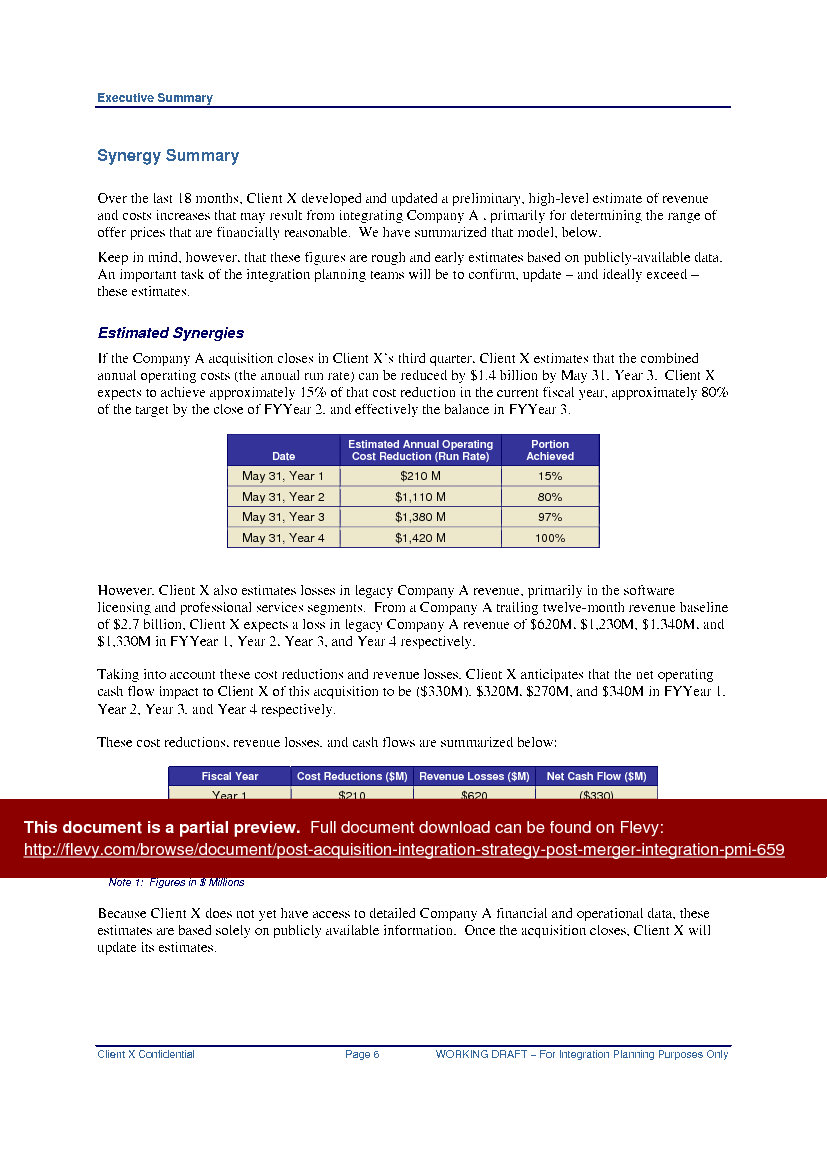
The document also includes a synergy summary with estimated cost reductions and revenue projections, offering a clear financial outlook. Workforce planning and transition are meticulously detailed, ensuring employee engagement and retention. The communications plan outlines a 360-degree approach, ensuring effective internal and external communication throughout the integration process. This strategy is essential for any organization aiming for a successful post-merger integration.
Got a question about the product? Email us at support@flevy.com or ask the author directly by using the "Ask the Author a Question" form. If you cannot view the preview above this document description, go here to view the large preview instead.
MARCUS OVERVIEW
This synopsis was written by Marcus [?] based on the analysis of the full 79-slide presentation.
Executive Summary
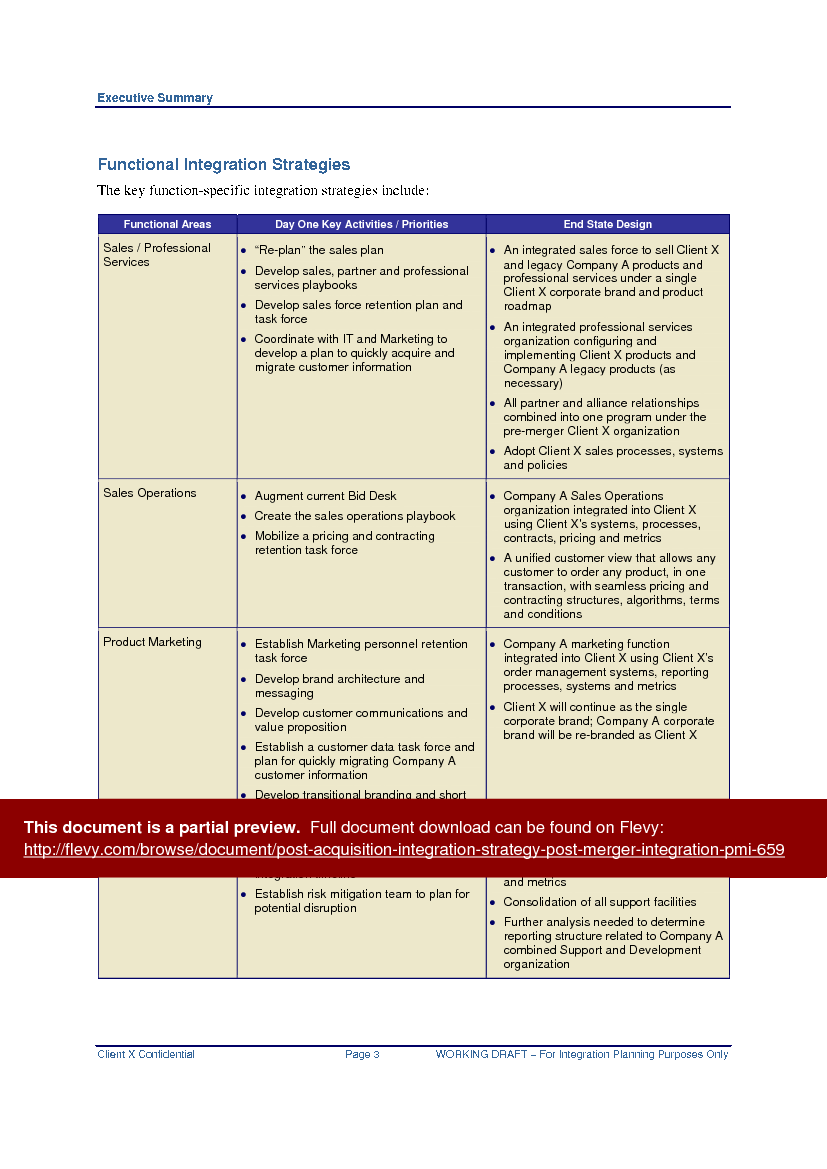
The Post Acquisition Integration Strategy for Client X’s acquisition of Company A outlines a comprehensive framework to ensure a seamless integration process. This strategy is designed to enhance long-term growth, improve competitive positioning, and facilitate access to a broader customer base. Key guiding principles include simplicity, speed, non-linear integration, and a focus on top opportunities. The document details cross-functional integration strategies, emphasizing organization design, legal entity consolidation, customer retention, and workforce stability. It serves as a roadmap for integration teams, providing a structured approach to achieve synergy and maximize shareholder value.
Who This Is For and When to Use
• Integration leaders responsible for merger execution
• Corporate executives overseeing strategic initiatives
• HR teams managing workforce transitions
• Finance professionals tracking synergy and cost savings
• IT leaders integrating systems and processes
Best-fit moments to use this deck:
• During pre-acquisition planning to establish integration frameworks
• On Day One of the merger to guide immediate actions and priorities
• Throughout the first 90 days post-acquisition to monitor progress and adjust strategies
Learning Objectives
• Define the integration approach and its guiding principles
• Establish a clear organizational structure for the merged entity
• Identify and prioritize synergy opportunities across functions
• Develop a comprehensive customer retention strategy
• Implement effective communication plans for stakeholders
• Create a detailed roadmap for integration execution
Table of Contents
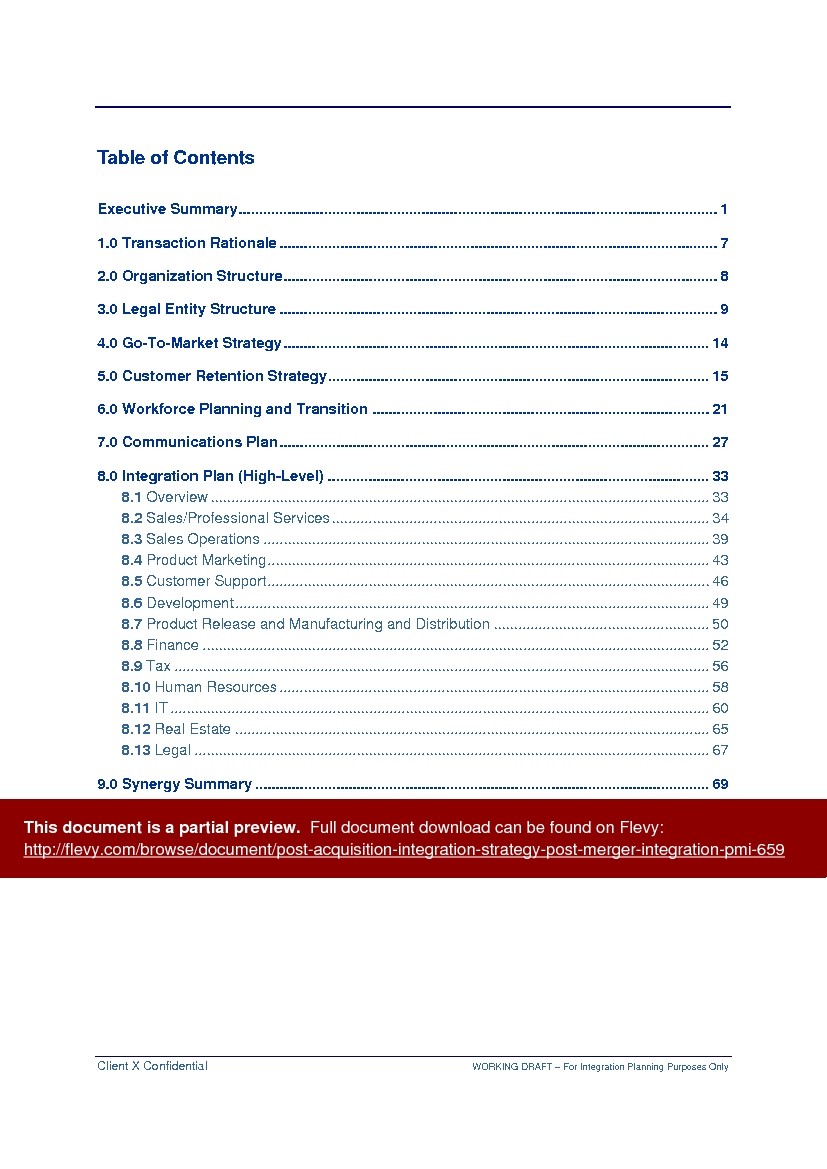
• Executive Summary (page 1)
• Transaction Rationale (page 7)
• Organization Structure (page 8)
• Legal Entity Structure (page 9)
• Go-To-Market Strategy (page 14)
• Customer Retention Strategy (page 15)
• Workforce Planning and Transition (page 21)
• Communications Plan (page 27)
• Integration Plan (High-Level) (page 33)
• Synergy Summary (page 69)
• Success Metrics (page 72)
• Implementation Roadmap and Governance (page 73)
Primary Topics Covered
• Transaction Rationale - The acquisition supports Client X’s growth strategy by enhancing competitive positioning and expanding the customer base.
• Organization Structure - The structure will remain largely unchanged, with Company A functions reporting to corresponding Client X functions.
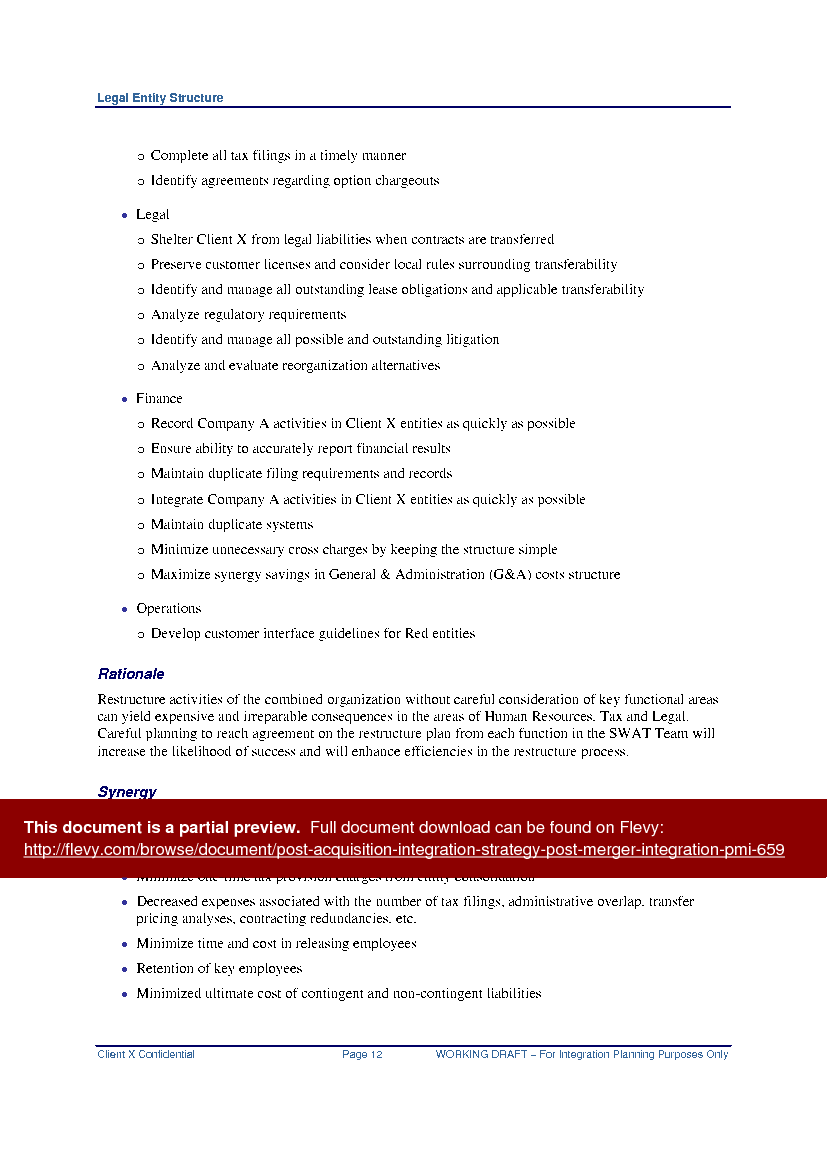
• Legal Entity Structure - Strategies will be implemented to consolidate legal entities, maximizing tax benefits while minimizing costs.
• Go-To-Market Strategy - A unified brand and product vision will be established, focusing on cross-selling opportunities.
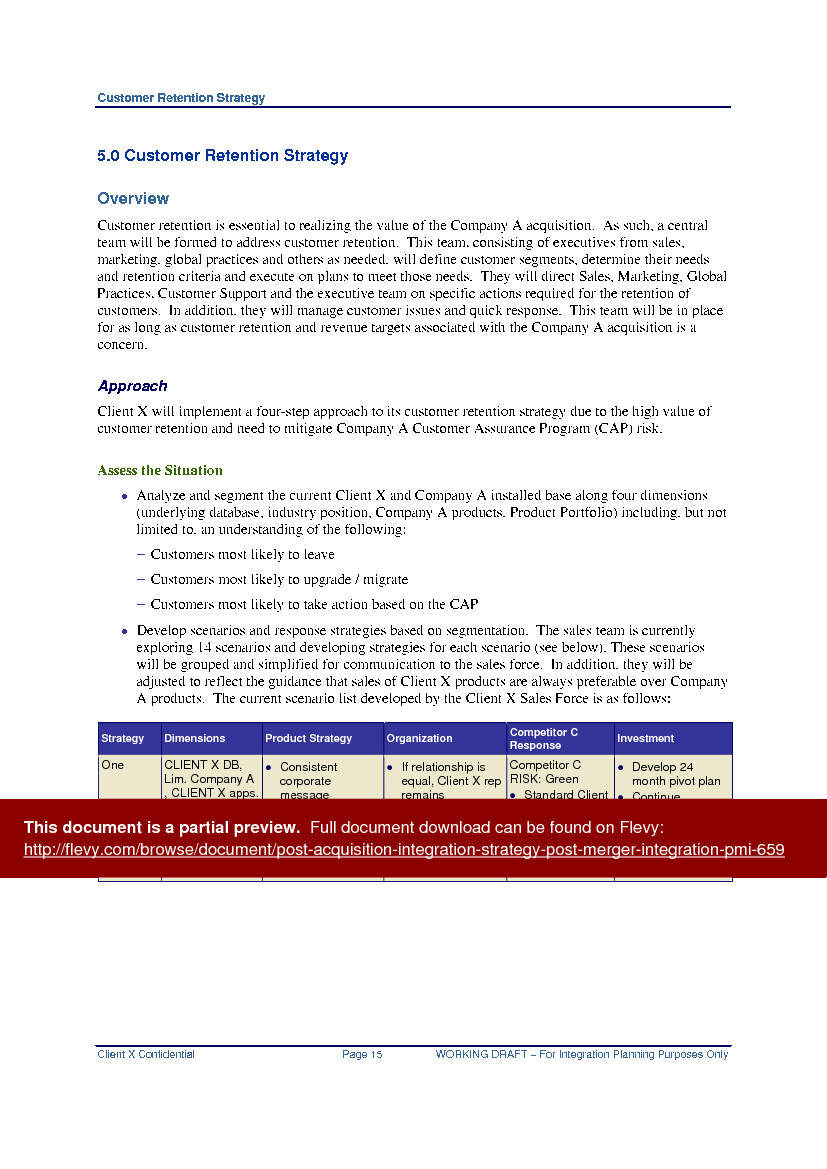
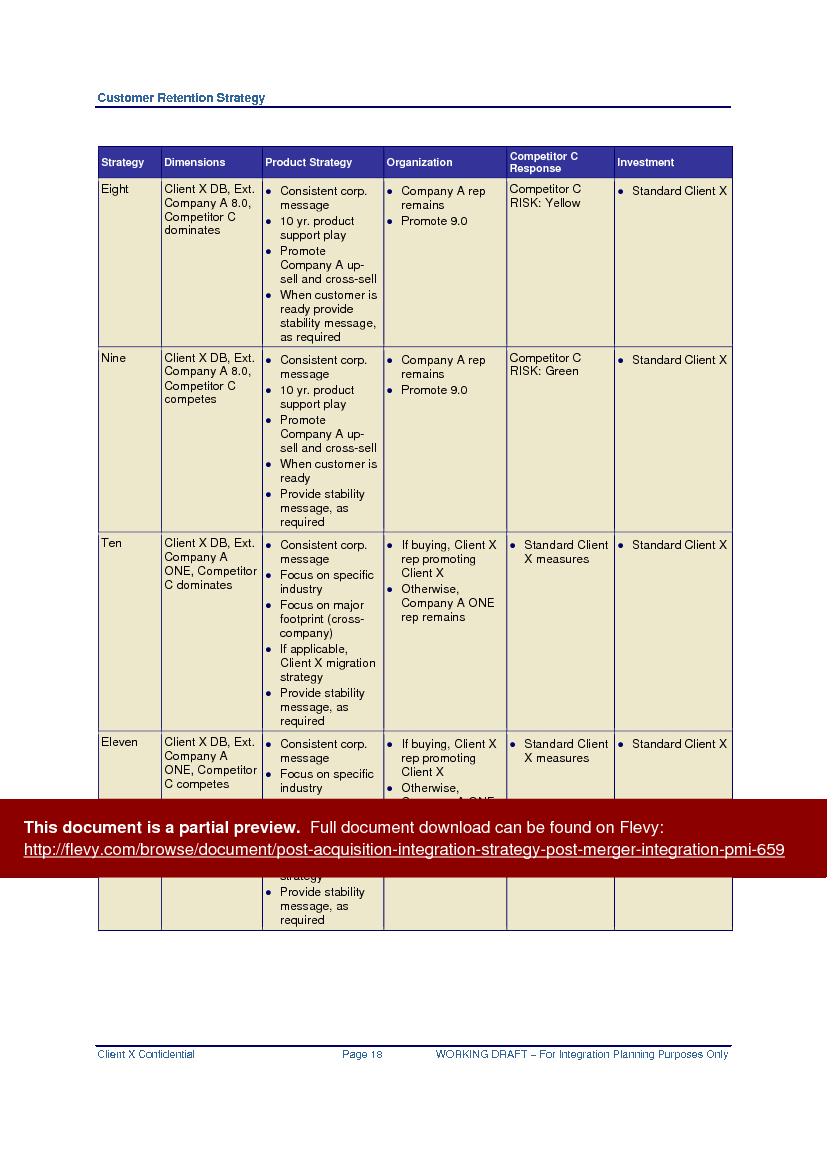
• Customer Retention Strategy - A dedicated team will address customer needs and execute retention plans to mitigate risks.
• Workforce Planning and Transition - A structured approach will be taken to manage workforce changes and retain key talent.
Deliverables, Templates, and Tools
• Integration strategy document outlining key principles and actions
• Customer retention playbooks detailing strategies for various customer segments
• Communication templates for internal and external messaging
• Organizational charts reflecting the new structure post-acquisition
• Risk management frameworks to identify and mitigate potential issues
• Financial models to track synergy realization and cost savings
Slide Highlights
• Overview of integration principles and guiding strategies
• Detailed organizational structure post-acquisition
• Synergy capture estimates and financial projections
• Customer retention strategies and targeted communication plans
• Roadmap for implementation and governance structure
Potential Workshop Agenda
Integration Kickoff Session (90 minutes)
• Review integration principles and objectives
• Discuss roles and responsibilities of integration teams
• Outline immediate actions for Day One readiness
Customer Retention Strategy Workshop (60 minutes)
• Analyze customer segments and retention criteria
• Develop tailored communication plans for key accounts
• Assign responsibilities for executing retention strategies
Workforce Transition Planning (90 minutes)
• Identify key talent and retention strategies
• Discuss workforce integration timelines and processes
• Establish metrics for tracking workforce stability
Customization Guidance
• Modify the integration strategy to align with specific organizational goals and culture
• Tailor communication templates to reflect company branding and messaging
• Adjust workforce planning processes based on regional legal requirements and operational needs
• Incorporate unique customer retention strategies based on market analysis
Secondary Topics Covered
• Governance structures for integration oversight
• Financial implications of the acquisition
• Risk management strategies for potential disruptions
• Best practices from previous mergers and acquisitions
Topic FAQ
What are the typical phases or timeline for a post-merger integration project?
Post-merger integration commonly spans pre-acquisition planning, a focused planning sprint, Day One readiness, and initial execution through the first 90 days, followed by governance and measurement. The described strategy was developed in a four-week planning collaboration and explicitly targets Day One and the first 90 days.How should customer retention be approached immediately after an acquisition?
Customer retention should be managed by a dedicated team that segments customers, designs tailored retention strategies, and executes targeted communications. Playbooks should map account responsibilities and critical messaging; Flevy's Post Acquisition Integration Strategy (Post Merger Integration - PMI) includes customer retention playbooks and targeted communication plans as deliverables.How is legal entity consolidation typically handled during integration?
Legal entity consolidation is generally addressed on a country-by-country basis to balance tax benefits with operational costs and complexity. The integration strategy outlines consolidation approaches designed to minimize costs and administrative burden while preserving compliance on a per-country basis.What templates and tools are useful to include in a PMI toolkit?
A practical PMI toolkit contains an integration strategy document, customer retention playbooks, internal/external communication templates, organizational charts, risk management frameworks, and financial models to track synergies. Flevy's Post Acquisition Integration Strategy (Post Merger Integration - PMI) lists these specific deliverables as included tools.What metrics should be used to measure integration success?
Integration success is measured by tracking synergy realization, customer retention rates, and overall operational performance against targets. The document contains a Synergy Summary with estimates and a Success Metrics section to monitor these outcomes and financial projections.When should an acquirer keep the target’s organizational structure largely unchanged?
One stated approach is to keep Company A’s structure largely unchanged where functional alignment exists, mapping Company A functions to corresponding acquirer functions to maintain continuity. The strategy specifically documents an organizational approach where Company A functions report into corresponding Client X functions.What role should a PMO play in a merger integration?
The Program Management Office (PMO) oversees execution, ensures alignment with strategic objectives, facilitates cross-functional communication, and tracks progress against the integration roadmap and governance structure. The strategy assigns PMO responsibility for coordination and governance during implementation.How should I evaluate the cost versus value of purchasing PMI templates and playbooks?
Buyers should assess whether templates support pre-acquisition planning, Day One readiness, first-90-day execution, and include financial models and retention playbooks that can be customized for regional legal requirements. Flevy's Post Acquisition Integration Strategy (Post Merger Integration - PMI) provides those artifacts, including financial models and retention playbooks, to support customization and execution.Document FAQ
These are questions addressed within this presentation.
What are the key principles of the integration strategy?
The integration strategy emphasizes simplicity, speed, non-linear integration, and a focus on top opportunities to ensure effective execution.
How will customer retention be managed post-acquisition?
A dedicated team will be formed to analyze customer segments, develop tailored retention strategies, and execute plans to address customer needs.
What is the timeline for workforce transition?
The workforce transition will begin immediately upon transaction close, with a structured approach to identify and retain key talent while managing redundancies.
How will success be measured post-integration?
Success will be tracked through metrics related to synergy realization, customer retention rates, and overall operational performance.
What tools will be provided to support integration efforts?
Integration teams will receive playbooks, communication templates, and financial models to guide their efforts and track progress.
What is the role of the PMO in the integration process?
The PMO will oversee the execution of integration activities, ensuring alignment with strategic objectives and facilitating communication across teams.
How will legal entity consolidation be managed?
Legal entity consolidation will be approached on a country-by-country basis, with strategies developed to minimize operational costs and complexities.
What are the expected synergies from the acquisition?
Client X estimates significant cost reductions and revenue enhancements through streamlined operations, workforce optimization, and enhanced market positioning.
Glossary
• Integration Strategy - A structured approach to merging 2 organizations effectively.
• Synergy - The potential financial benefit gained from combining 2 companies.
• Customer Assurance Program (CAP) - A program designed to retain customers during a merger.
• Workforce Transition - The process of managing employee changes during an acquisition.
• Program Management Office (PMO) - A team responsible for overseeing project execution and governance.
• Legal Entity Consolidation - The process of merging legal entities to streamline operations and reduce costs.
• Go-To-Market Strategy - A plan for how a company will sell its products and services to customers.
• Retention Playbook - A guide outlining strategies for retaining key customers or employees.
• Operational Efficiency - The ability to deliver products or services in the most cost-effective manner.
• Stakeholder Communication - The process of informing and engaging individuals or groups affected by the acquisition.
• Change Management - A systematic approach to dealing with transformation within an organization.
• Financial Reporting - The process of producing statements that disclose an organization's financial status.
• Human Resources (HR) - The department responsible for managing employee relations and organizational culture.
• Customer Segmentation - The practice of dividing customers into groups based on shared characteristics.
• Risk Mitigation - Strategies to reduce potential negative impacts on a project or organization.
• Brand Architecture - The structure of a brand and its relationship to other brands within the organization.
• Operational Integration - The process of combining different operational processes and systems post-acquisition.
• Market Positioning - The strategy of positioning a brand or product in the market to attract customers.
• Financial Synergies - Cost savings or revenue enhancements achieved through the merger of 2 companies.
• Employee Engagement - The emotional commitment an employee has to their organization and its goals.
Source: Best Practices in Post-merger Integration PDF: Post Acquisition Integration Strategy (Post Merger Integration - PMI) PDF (PDF) Document, Documents & Files