
LEAN PPT DESCRIPTION
Editor Summary
69-slide PowerPoint presentation "Lean MBA Introduction" by OpEx Academy NZ and Vishnu Rayapeddi (certified LSS Master Black Belt who has trained 5,000+ students) introduces Lean Management and an integrated Lean-MBA approach combining Lean, Six Sigma, Theory of Constraints, TQM, and Balanced Scorecard.

Read more
Includes a supplemental ZIP of 41 Lean documents (templates, case studies, posters, charts), tools such as 5S, Kaizen, Value Stream Mapping, DMAIC and PDCA, and is aimed at senior executives, operations and supply chain leaders, quality professionals, and change consultants; sold as a digital download on Flevy with immediate digital download.
Use this deck when an organization is preparing to introduce Lean management or align leadership on an operational improvement program—typical triggers include strategic planning, leadership briefings, training rollouts, or process assessment exercises.
Senior Executives and Directors running strategic planning workshops to align on Lean initiatives and governance.
Operations Managers conducting process mapping and waste identification using Value Stream Mapping and 5S.
Supply Chain Leaders benchmarking inventory and applying JIT principles to reduce lead times.
Quality Assurance Professionals setting up data-driven defect reduction using DMAIC and metrics.
The deck’s integrated, metric-driven approach combines Lean, Six Sigma, TOC, TQM and Balanced Scorecard and reflects standard operational improvement practice using tools like DMAIC and value stream mapping.
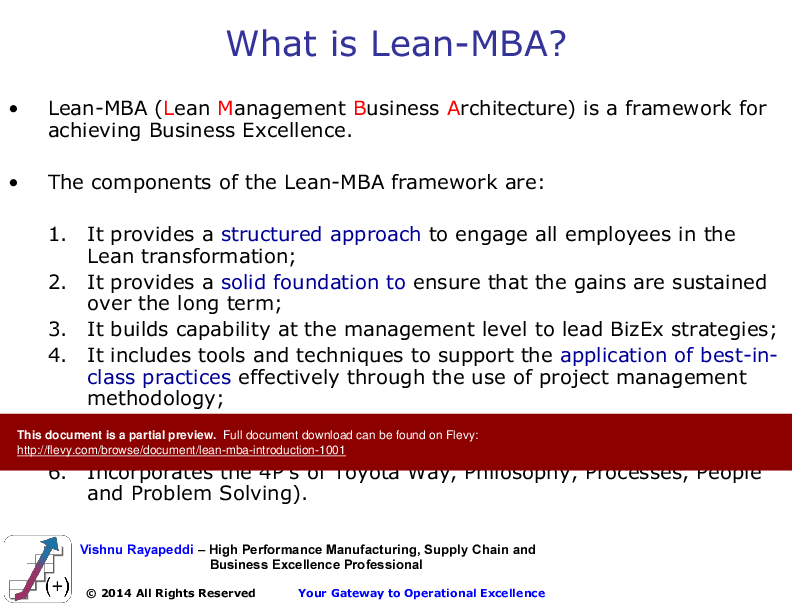
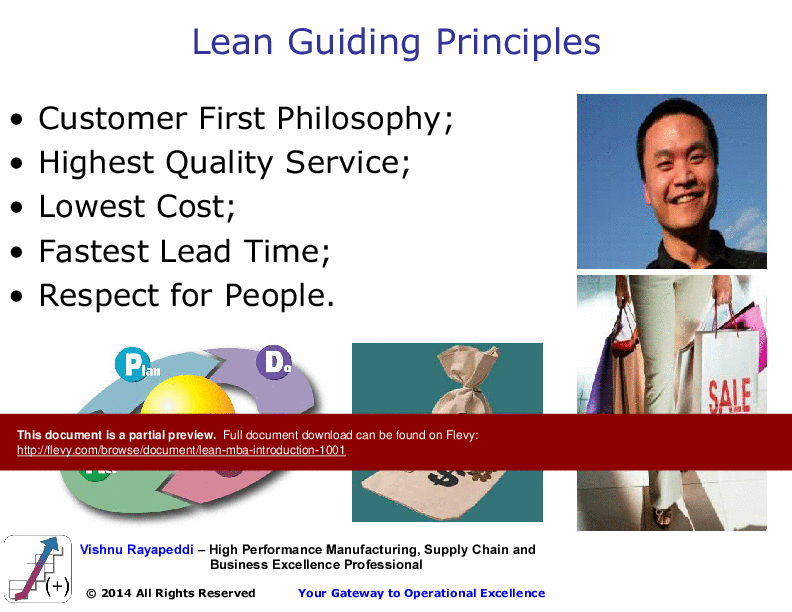
Lean MBA (Lean Management Business Architecture) combines the various best class practices such as Lean, Six Sigma, TOC (Theory of Constraints), TQM (Total Quality Management), TWI (Training Within the Industry) and Balanced Scorecard for a break through performance.
This is an introductory presentation for the senior management.
Also included with this document is a bonus zip of 41 Lean documents (includes templates, case studies, articles, posters, charts, and more).
Got a question about the product? Email us at support@flevy.com or ask the author directly by using the "Ask the Author a Question" form. If you cannot view the preview above this document description, go here to view the large preview instead.
MARCUS OVERVIEW
This synopsis was written by Marcus
[?] based on the analysis of the full 69-slide presentation.
Executive Summary
The Lean MBA Introduction presentation serves as a foundational resource for understanding Lean Management principles and their application in achieving Business Excellence. Developed by Vishnu Rayapeddi, a seasoned professional with over 22 years of experience, this presentation outlines a comprehensive approach to streamline operations, enhance customer satisfaction, and minimize waste. By integrating methodologies such as Lean, Six Sigma, Theory of Constraints (TOC), Total Quality Management (TQM), and Balanced Scorecard, this deck equips executives and teams with the tools necessary to drive organizational transformation and operational efficiency.
Who This Is For and When to Use
• Senior Executives and Directors seeking to implement Lean strategies
• Operations Managers focused on improving process efficiency
• Supply Chain Leaders aiming to optimize logistics and inventory management
• Quality Assurance Professionals committed to enhancing product quality
• Change Management Consultants facilitating organizational transformation
Best-fit moments to use this deck:
• During strategic planning sessions to align on Lean initiatives
• In training workshops aimed at fostering a culture of continuous improvement
• When assessing current operational processes and identifying areas for enhancement
• For executive briefings on the benefits of Lean methodologies
Learning Objectives
• Define Lean Management principles and their importance in operational excellence
• Identify and eliminate non-value-added activities in business processes
• Develop a comprehensive Lean transformation strategy tailored to organizational needs
• Implement tools and techniques for continuous improvement across teams
• Measure and analyze performance metrics to track progress and outcomes
• Foster employee engagement and ownership in Lean initiatives
Table of Contents
• Introduction to Lean Management (page 3)
• Understanding Business Excellence (page 5)
• Lean-MBA Framework Overview (page 10)
• Key Lean Tools and Techniques (page 15)
• Case Studies and Real-World Applications (page 20)
• Metrics for Measuring Success (page 25)
• Implementation Roadmap for Lean Transformation (page 30)
Primary Topics Covered
• Lean Management Principles - Focuses on reducing waste and enhancing value delivery to customers by streamlining processes.
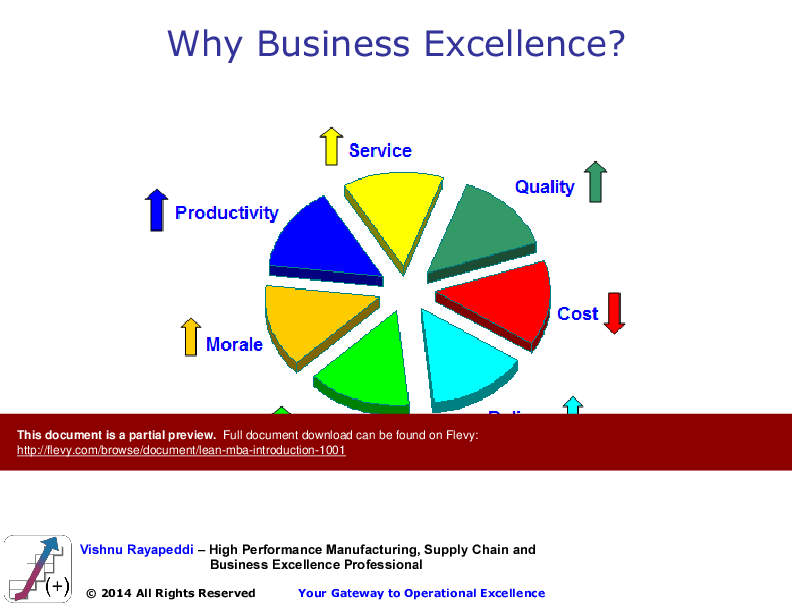
• Business Excellence - Defines the competitive advantage gained through superior operational performance across various dimensions.
• Lean-MBA Framework - Integrates Lean, Six Sigma, TQM, and other methodologies to create a structured approach for achieving excellence.
• Continuous Improvement Culture - Encourages ongoing engagement and participation from all employees in the Lean transformation journey.
• Performance Metrics - Establishes key indicators for measuring operational success and customer satisfaction.
• Case Studies - Provides real-world examples demonstrating the successful application of Lean principles in various industries.
Deliverables, Templates, and Tools
• Lean transformation strategy template for organizational assessment
• Performance metrics dashboard for tracking Lean initiatives
• Case study examples illustrating successful Lean implementations
• Training materials for employee engagement in Lean practices
• Process mapping tools for identifying waste and inefficiencies
• Continuous improvement action plan template
Slide Highlights
• Overview of Lean Value Streams emphasizing waste elimination
• Visual representation of the Lean-MBA framework and its components
• Case study results showcasing significant improvements in operational efficiency
• Metrics dashboard illustrating key performance indicators for Lean success
• Engaging visuals that depict the transformation journey from traditional to Lean operations
Potential Workshop Agenda
Lean Management Overview Session (90 minutes)
• Introduction to Lean principles and methodologies
• Group discussion on current challenges and opportunities
• Interactive exercise on identifying waste in processes
Lean Transformation Strategy Workshop (120 minutes)
• Develop a tailored Lean strategy for the organization
• Identify key performance metrics and success factors
• Create an action plan for implementation and engagement
Continuous Improvement Culture Session (60 minutes)
• Strategies for fostering employee involvement in Lean initiatives
• Best practices for sustaining momentum and engagement
• Sharing success stories and lessons learned
Customization Guidance
• Tailor the Lean transformation strategy to align with specific organizational goals and objectives
• Adjust performance metrics to reflect industry standards and benchmarks
• Incorporate company-specific case studies to enhance relevance and engagement
• Modify training materials to suit the audience's experience level and familiarity with Lean concepts
Secondary Topics Covered
• The role of leadership in driving Lean initiatives
• Techniques for effective change management during Lean implementation
• Strategies for integrating Lean practices into daily operations
• Importance of employee training and development in Lean success
• Overview of Lean tools such as 5S, Kaizen, and Value Stream Mapping
Topic FAQ
What core methodologies make up a modern Lean transformation?
A modern Lean transformation typically integrates Lean Management with complementary methods to remove waste and improve flow. Commonly combined approaches include Six Sigma for defect reduction, Theory of Constraints for bottleneck focus, Total Quality Management for organization-wide quality, Training Within Industry for skills, and Balanced Scorecard for strategic metrics, as in Lean-MBA frameworks.
How does Value Stream Mapping help identify non-value-added activities?
Value Stream Mapping (VSM) provides a visual analysis of material and information flow to reveal delays, handoffs, inventory build-up, and process steps that do not add customer value. VSM highlights waste and opportunities for flow improvement and is listed among primary tools like Value Stream Mapping in the Lean-MBA content.
When is DMAIC more appropriate than PDCA for process improvement?
DMAIC is a structured, data-driven improvement cycle suited to defect reduction and process stabilization where measurement and statistical analysis are needed, while PDCA is a four-step iterative management method for incremental improvements. Both are listed as continuous improvement cycles in the Lean-MBA approach.
What features should I prioritize when buying an executive Lean training deck on a tight timeline?
Prioritize content tailored for senior management, ready-to-run training materials, workshop agendas, case studies, and measurable metrics dashboards to enable rapid briefing and buy-in. The Lean MBA Introduction explicitly includes executive-focused slides, training materials, case studies, and suggested workshop agendas such as a 90-minute overview session.
How much initial time should I expect to run introductory Lean workshops for leadership?
The materials suggest short-format sessions to introduce Lean concepts and start alignment: example agendas include a 90-minute Lean Management Overview Session, a 120-minute Lean Transformation Strategy Workshop, and a 60-minute Continuous Improvement Culture session as initial activities.
Which Lean tools are effective first steps to reduce defects on a production line?
Common starting tools include workplace organization and standardization (5S), small improvement cycles (Kaizen), data-driven problem solving (DMAIC), proactive maintenance to maximize equipment effectiveness (TPM), and Root Cause Analysis; these tools are listed among the Lean toolkit in the overview.
Can Lean principles be applied outside manufacturing, for example in healthcare or finance?
Yes. The overview notes Lean principles and tools have applicability across sectors to improve processes and value delivery, with explicit mention of non-manufacturing settings such as healthcare, finance, and service industries where Lean methods can be applied.
Are pre-built Lean templates and toolkits useful for a small operations team considering a Lean pilot?
Pre-built templates can accelerate planning, training, and measurement for small teams by providing ready process mapping tools, performance dashboards, and action-plan templates. The Lean MBA Introduction bundle includes a 69-slide deck plus a bonus ZIP of 41 Lean documents to support pilot design and rollout.
Document FAQ
These are questions addressed within this presentation.
What is Lean Management?
Lean Management focuses on maximizing customer value while minimizing waste, thereby creating more efficient processes.
How can Lean principles benefit my organization?
Implementing Lean principles can lead to improved operational efficiency, reduced costs, enhanced product quality, and increased customer satisfaction.
What tools are included in the Lean-MBA framework?
The Lean-MBA framework incorporates tools such as Six Sigma, TQM, Theory of Constraints, and Balanced Scorecard to drive performance improvement.
How do I measure success in Lean initiatives?
Success can be measured using key performance indicators such as cycle time, first-pass yield, and customer satisfaction scores.
What is the importance of a continuous improvement culture?
A continuous improvement culture encourages all employees to engage in identifying and eliminating waste, fostering a proactive approach to operational excellence.
Can Lean principles be applied in non-manufacturing sectors?
Yes, Lean principles can be effectively applied in various sectors, including healthcare, finance, and service industries, to improve processes and enhance value delivery.
What are common challenges in implementing Lean?
Common challenges include resistance to change, lack of leadership support, and insufficient training for employees on Lean methodologies.
How can I ensure employee engagement in Lean initiatives?
Engagement can be fostered through regular training, recognition of contributions, and involving employees in decision-making processes related to Lean improvements.
Glossary
•
Lean Management - A methodology focused on reducing waste and enhancing customer value.
•
Business Excellence - Achieving superior performance across key operational dimensions.
•
Lean-MBA Framework - An integrated approach combining various methodologies for operational improvement.
•
Continuous Improvement - Ongoing efforts to enhance products, services, or processes.
•
Performance Metrics - Quantitative measures used to assess the success of Lean initiatives.
•
Value Stream Mapping - A visual tool for analyzing and optimizing the flow of materials and information.
•
5S - A Lean tool for organizing and standardizing the workplace.
•
Kaizen - A philosophy of continuous improvement involving all employees.
•
Theory of Constraints - A management philosophy focused on identifying and managing system constraints.
•
Total Quality Management (TQM) - An organization-wide approach to continuous improvement in quality.
•
Six Sigma - A data-driven methodology for eliminating defects and improving processes.
•
Balanced Scorecard - A strategic planning and management system used to align business activities to the vision and strategy of the organization.
•
Just-In-Time (JIT) - An inventory strategy that aligns production with demand to reduce waste.
•
Total Productive Maintenance (TPM) - A proactive approach to maintenance that aims to maximize equipment effectiveness.
•
Employee Engagement - The emotional commitment of employees to the organization and its goals.
•
Change Management - A structured approach to transitioning individuals, teams, and organizations to a desired future state.
•
Root Cause Analysis (RCA) - A method for identifying the underlying causes of problems.
•
DMAIC - A data-driven improvement cycle used for optimizing and stabilizing business processes.
•
PDCA - A four-step management method used for continuous improvement of processes and products.
•
Value Adding - Activities that add value to the product or service from the customer's perspective.
•
Non-Value Adding - Activities that do not add value and can be eliminated to improve efficiency.
•
Muda - A Japanese term for waste; any activity that does not add value.
Source: Best Practices in Lean PowerPoint Slides: Lean MBA Introduction PowerPoint (PPTX) Presentation Slide Deck, OpEx Academy NZ