
Implementing a Continuous Improvement System   71-slide PPT PowerPoint presentation slide deck (PPTX)
$39.00

Implementing a Continuous Improvement System (71-slide PPT PowerPoint presentation slide deck (PPTX)) Preview Image
Log in to unlock full preview.
Implementing a Continuous Improvement System (71-slide PPT PowerPoint presentation slide deck (PPTX)) Preview Image
Arrow   Click main image to view in full screen.

Implementing a Continuous Improvement System (PowerPoint PPTX Slide Deck)

PowerPoint (PPTX) + Zip archive file (ZIP) 71 Slides

Top 1,000 Best Practice $39.00
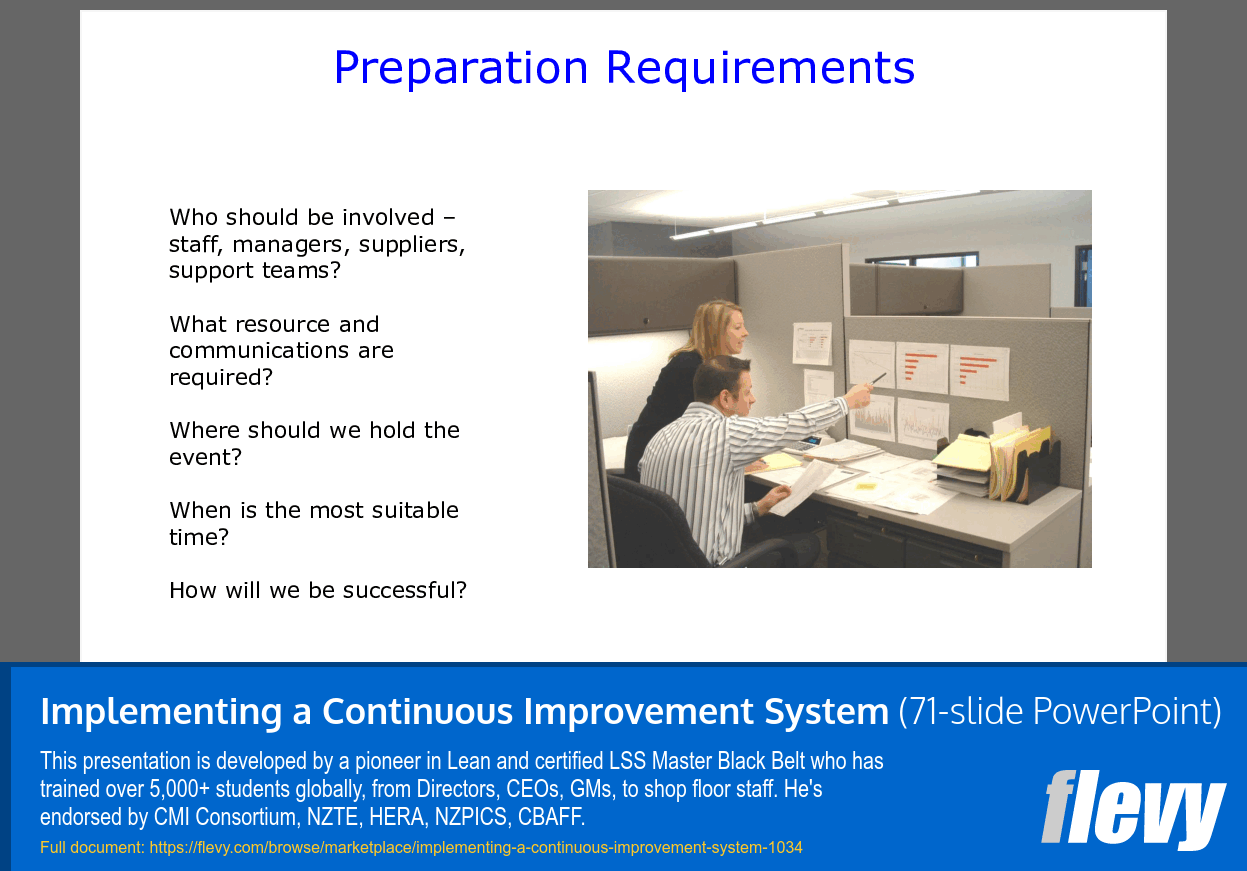
This presentation is developed by a pioneer in Lean and certified LSS Master Black Belt who has trained over 5,000+ students globally, from Directors, CEOs, GMs, to shop floor staff. He's endorsed by CMI Consortium, NZTE, HERA, NZPICS, CBAFF.
Add to Cart


Immediate download
Fully editable PowerPoint
Free lifetime updates

CONTINUOUS IMPROVEMENT PPT DESCRIPTION

Editor Summary Implementing a Continuous Improvement System is a 71-slide PowerPoint presentation (PPTX) with a supplemental ZIP containing 41 Lean documents, developed by a Lean pioneer and certified LSS Master Black Belt who has trained over 5,000 students and is endorsed by CMI Consortium, NZTE, HERA, NZPICS, and CBAFF. Read more

This presentation has a total of 71 slides and is divided in to 2 parts, session 1 and 2.

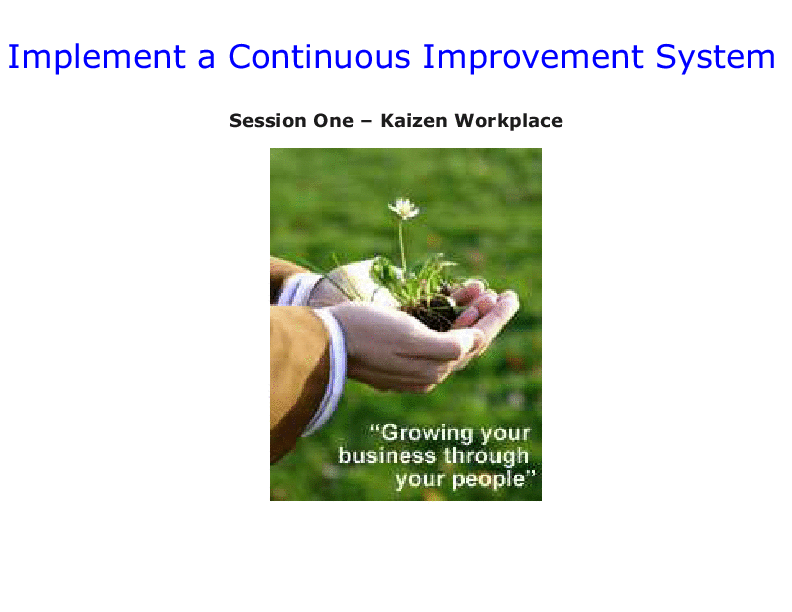
Session 1 covers Kaizen at Workplace:
•  Introduction to Continuous Improvement activities
•  Identification of areas/processes for improvement
•  Methods associated with facilitating continuous improvement
•  Workplace projects

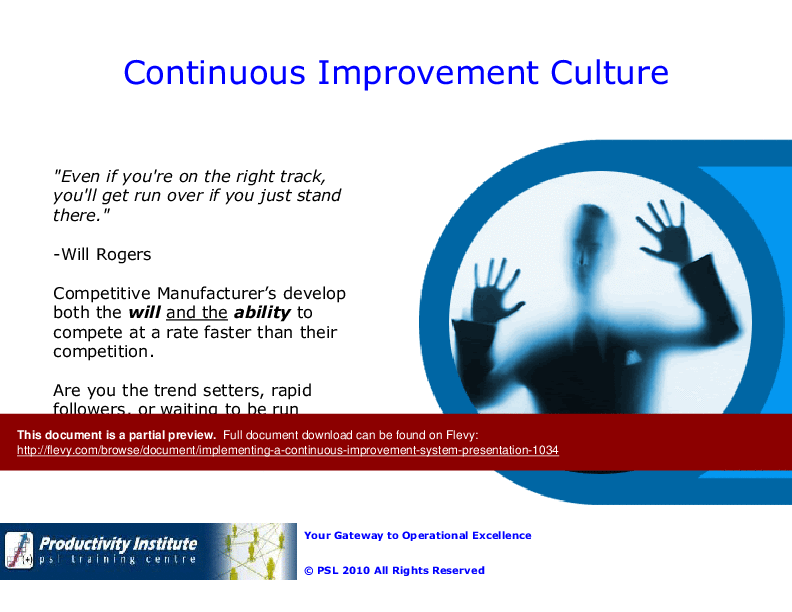
Session 2 – Institutionalizing Continuous Improvement
•  Introduction to Continuous Improvement culture
•  Methods associated with institutionalizing continuous improvement
•  Workplace projects

Also included with this document is a bonus zip of 41 Lean documents (includes templates, case studies, articles, posters, charts, and more).

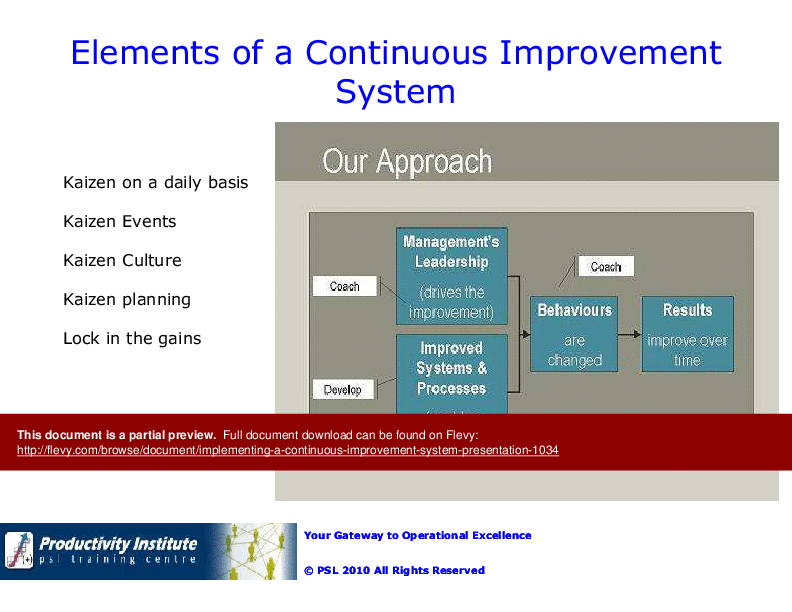
This document provides a comprehensive guide to implementing a continuous improvement system, focusing on the practical application of Kaizen principles. It delves into the core elements necessary for fostering a culture of continuous improvement, including daily Kaizen activities, Kaizen events, and strategic planning to lock in gains. The approach emphasizes the critical role of management's leadership in driving improvements and the importance of coaching to change behaviors and achieve sustainable results.

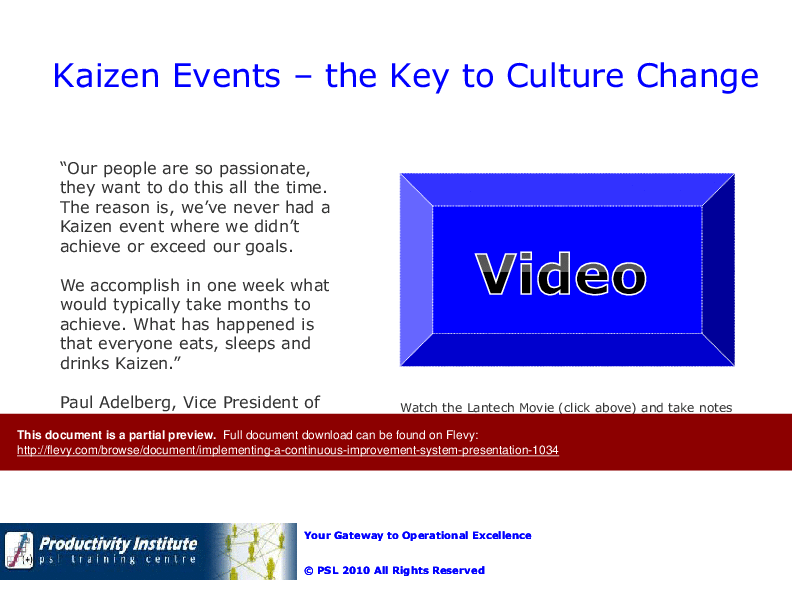
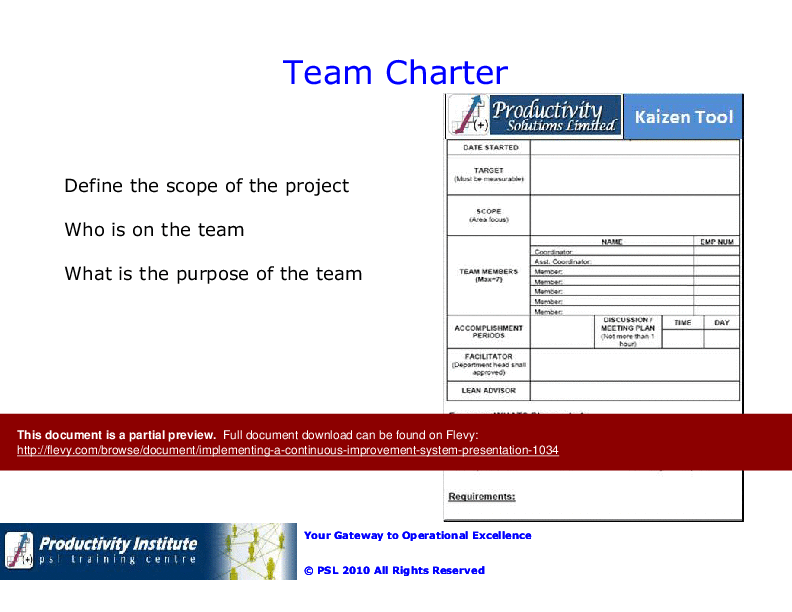
The presentation also highlights the significance of Kaizen events as a key driver for cultural change. Real-world examples illustrate how passionate teams can achieve in one week what typically takes months, underscoring the transformative power of Kaizen. The document includes practical tools and templates, such as the Kaizen Team Charter and Improvement Opportunity Sheet, to facilitate the planning and execution of continuous improvement initiatives.

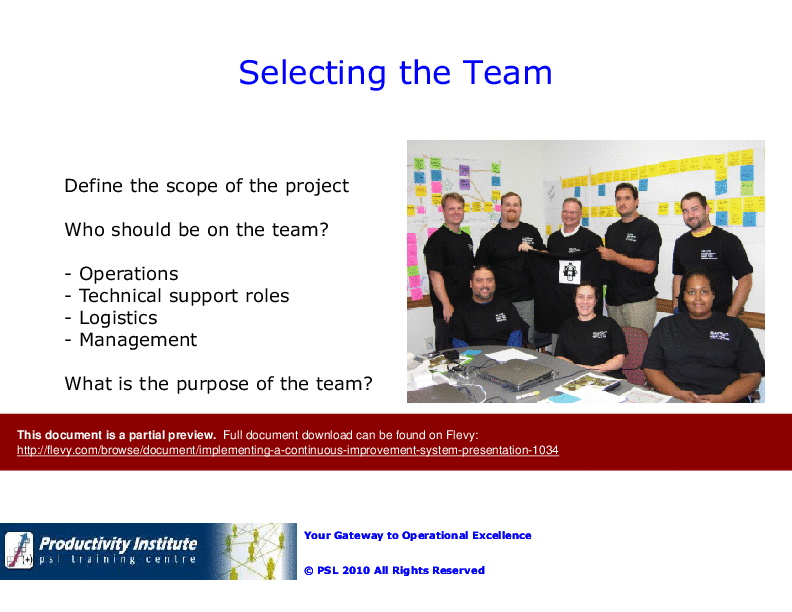
Selecting the right team is crucial for the success of any Kaizen event. The document outlines the criteria for team selection, emphasizing the need for a diverse group that includes operations, technical support, logistics, and management. It also provides guidance on defining the scope of the project and setting achievable stretch targets that align with business needs. The inclusion of a Kaizen newspaper and control room ensures that progress is visually tracked and communicated effectively, reinforcing the continuous improvement culture.

Got a question about the product? Email us at support@flevy.com or ask the author directly by using the "Ask the Author a Question" form. If you cannot view the preview above this document description, go here to view the large preview instead.

MARCUS OVERVIEW

This synopsis was written by Marcus [?] based on the analysis of the full 71-slide presentation.


Executive Summary
This presentation on implementing a Continuous Improvement System is designed to equip organizations with the necessary tools and methodologies to foster a culture of continuous improvement through Kaizen principles. Developed by a Lean pioneer and certified LSS Master Black Belt, this session emphasizes the importance of identifying areas for improvement, engaging teams in Kaizen events, and institutionalizing continuous improvement as a core operational practice. Participants will learn how to effectively plan and execute workplace projects that drive efficiency and enhance productivity.

Who This Is For and When to Use
•  Operations Managers focused on enhancing workplace efficiency
•  Quality Assurance Teams aiming to reduce defects and improve processes
•  Project Managers overseeing continuous improvement initiatives
•  Executive Leaders seeking to embed a culture of improvement within their organizations

Best-fit moments to use this deck:
•  During strategic planning sessions to align improvement initiatives with business goals
•  When launching new projects that require a structured approach to process improvement
•  In team workshops aimed at building a continuous improvement culture

Learning Objectives
•  Define the principles of a Continuous Improvement System and its significance in operational excellence
•  Identify key areas and processes suitable for Kaizen events
•  Develop a structured approach to planning and executing Kaizen events
•  Establish a culture of continuous improvement within the organization
•  Measure and communicate the impact of improvement initiatives

Table of Contents
•  Introduction to Continuous Improvement Activities (page 3)
•  Identifying Areas for Improvement (page 5)
•  Methods for Facilitating Continuous Improvement (page 7)
•  Workplace Projects and Kaizen Events (page 9)
•  Developing a Continuous Improvement Culture (page 12)
•  Measuring Improvements and Communicating Success (page 15)

Primary Topics Covered
•  Continuous Improvement Culture - Understanding the significance of fostering a culture that embraces change and improvement as a core value.
•  Kaizen Events - Structured, focused activities designed to achieve significant improvements in a short timeframe.
•  Value Stream Mapping - A tool for identifying waste and opportunities for improvement within processes.
•  Team Selection and Roles - Guidelines for assembling effective teams to drive Kaizen initiatives.
•  Implementation Planning - Steps to ensure successful execution of improvement projects, including resource allocation and timeline management.
•  Measuring Improvements - Techniques for quantifying the impact of changes and ensuring ongoing monitoring.

Deliverables, Templates, and Tools
•  Improvement Opportunity Sheet for identifying potential areas for Kaizen
•  Kaizen Team Charter template to define project scope and team roles
•  Action Plan template for tracking tasks and responsibilities during improvement initiatives
•  Kaizen Newspaper for communicating findings and progress updates
•  Status Boards for visual management of ongoing improvement activities

Slide Highlights
•  Overview of Continuous Improvement principles and their application in various workplace scenarios
•  Visual representation of Value Stream Mapping to illustrate current vs. future states
•  Examples of successful Kaizen events and their measurable outcomes
•  Guidelines for effective team protocols during Kaizen activities
•  Framework for ongoing communication and engagement in continuous improvement efforts

Potential Workshop Agenda
Kaizen Introduction Session (90 minutes)
•  Overview of Continuous Improvement principles and culture
•  Discussion on identifying areas for improvement
•  Group activity: brainstorming potential Kaizen events

Kaizen Event Planning Session (120 minutes)
•  Team selection and role definition
•  Developing project scope and objectives
•  Action planning and resource allocation

Kaizen Implementation Review (60 minutes)
•  Presenting outcomes of Kaizen events
•  Measuring improvements and discussing next steps
•  Communicating successes to stakeholders

Customization Guidance
•  Tailor the scope of Kaizen events to align with specific organizational goals and challenges
•  Adjust team roles and responsibilities based on the unique dynamics of your organization
•  Incorporate company-specific metrics and KPIs for measuring improvement outcomes

Secondary Topics Covered
•  Barriers to implementing a Continuous Improvement culture
•  Techniques for sustaining improvements over time
•  Best practices for engaging staff in continuous improvement initiatives
•  Tools for visual management and communication in Kaizen activities

Topic FAQ

What is a Kaizen event and how is it typically run?

A Kaizen event is a focused, short-term project aimed at improving a specific process, typically involving cross-functional teams. The materials describe structuring and facilitating Kaizen events, include examples of successful one-week events, and provide planning templates such as the Kaizen Team Charter and Action Plan, a Kaizen event.

How do I select the right area or process for a Kaizen event?

Select areas where obvious waste has been identified, the scope is clear, and immediate results are needed. The guidance highlights prioritizing opportunities such as capacity constraints or recurring quality problems where rapid, measurable improvements can be achieved, like capacity constraints or quality issues.

Which metrics should I use to measure the success of a Kaizen event?

Measure success using operational KPIs referenced in the materials: throughput, quality defects, and cycle time reductions. The presentation also lists manufacturing-specific metrics and delivery reliability measures such as OEE and DIFOTIS, and recommends quantifying changes and ongoing monitoring of results, OEE and DIFOTIS.

What should I look for when buying a continuous improvement toolkit or slide deck?

Look for practical templates and implementation guidance: Improvement Opportunity Sheet, Kaizen Team Charter, Action Plan, Kaizen Newspaper, and Status Boards, plus coverage of Value Stream Mapping, team selection, implementation planning, and measurement approaches like those in Flevy's Implementing a Continuous Improvement System. Kaizen Team Charter.

How can I assess the value of purchasing CI templates versus building them internally?

Consider available time, internal CI expertise, and need for ready-made materials. Bundled resources can accelerate workshop preparation and provide reusable communication and measurement tools; the presented product pairs a 71-slide deck with a bonus ZIP of 41 Lean documents (templates, case studies, posters) to support facilitation, 41 Lean documents.

I need to run a Kaizen-intro session for shop-floor staff—what core elements should the agenda include?

Base the agenda on the Kaizen Introduction Session: an overview of continuous improvement principles and culture, guidance on identifying areas for improvement, and a group activity to brainstorm potential Kaizen events. The materials present this as the Kaizen Introduction Session (90 minutes), Kaizen Introduction Session (90 minutes).

What practices help sustain improvements after a Kaizen event?

Sustaining improvements requires regular monitoring, ongoing training, and embedding successful practices into Standard Operating Procedures. The materials recommend visual management and communication tools—control room, Kaizen Newspaper, and Status Boards—plus management leadership and coaching to reinforce change, Standard Operating Procedures (SOPs).

What is Value Stream Mapping and when should I use it in CI projects?

Value Stream Mapping is a visual tool for analyzing the flow of materials and information to identify waste and improvement opportunities. The presentation includes visual representations of current versus future states and uses VSM to pinpoint targets for Kaizen events and workplace projects, Value Stream Mapping.

Document FAQ
These are questions addressed within this presentation.

What is a Kaizen event?
A Kaizen event is a focused, short-term project aimed at improving a specific process or area within an organization, typically involving cross-functional teams.

How do I select the right area for a Kaizen event?
Choose areas where obvious waste has been identified, the scope is clear, and immediate results are needed, such as capacity constraints or quality issues.

What resources are required for a successful Kaizen event?
Key resources include team members from relevant departments, access to current performance data, and tools for measuring and communicating results.

How can I measure the success of a Kaizen event?
Success can be measured through improvements in key performance indicators such as throughput, quality defects, and reduction in cycle times.

What are the key components of a Continuous Improvement culture?
A Continuous Improvement culture emphasizes employee engagement, open communication, a willingness to change, and ongoing training and development.

How often should we conduct Kaizen events?
Regularly scheduled Kaizen events, such as monthly or quarterly, can help maintain momentum and continuously identify improvement opportunities.

What is Value Stream Mapping?
Value Stream Mapping is a visual tool used to analyze the flow of materials and information in a process, identifying areas of waste and opportunities for improvement.

How do I sustain improvements after a Kaizen event?
Sustaining improvements involves regular monitoring, ongoing training, and embedding successful practices into standard operating procedures.

Glossary
•  Kaizen - A Japanese term meaning "continuous improvement," referring to activities that continuously improve all functions and involve all employees.
•  Value Stream Mapping - A visual tool for analyzing and improving the flow of materials and information in a process.
•  Continuous Improvement - An ongoing effort to improve products, services, or processes through incremental improvements over time.
•  Kaizen Event - A focused, short-term project aimed at achieving significant improvements in a specific area.
•  Team Charter - A document that outlines the purpose, scope, and roles of team members involved in a project.
•  Action Plan - A detailed plan outlining tasks, responsibilities, and timelines for achieving specific objectives.
•  Status Board - A visual management tool used to track the progress of ongoing improvement activities.
•  Kaizen Newspaper - A communication tool used to document and share findings from Kaizen events.
•  Lean Thinking - A methodology that focuses on minimizing waste while maximizing productivity.
•  OEE (Overall Equipment Effectiveness) - A measure of how effectively a manufacturing operation is utilized compared to its full potential.
•  DIFOTIS (Delivery In Full On Time In Spec) - A metric used to measure the reliability of delivery performance.
•  Waste - Any activity that consumes resources without adding value to the product or service.
•  Team Protocols - Guidelines established by a team to govern how they will operate and communicate during a project.
•  Improvement Opportunity Sheet - A tool for identifying and documenting potential areas for improvement within an organization.
•  Change Management - The process of managing the transition or transformation of an organization’s goals, processes, or technologies.
•  Stakeholders - Individuals or groups with an interest in the outcome of a project or initiative.
•  Performance Data - Metrics used to assess the effectiveness and efficiency of processes or operations.
•  Action Items - Specific tasks assigned to team members to ensure progress toward project goals.
•  Feedback Loop - A mechanism for providing information back to the team about the effectiveness of their actions and decisions.
•  Standard Operating Procedures (SOPs) - Established procedures to be followed in carrying out operations or processes.

Source: Best Practices in Continuous Improvement PowerPoint Slides: Implementing a Continuous Improvement System PowerPoint (PPTX) Presentation Slide Deck, OpEx Academy NZ


$39.00
This presentation is developed by a pioneer in Lean and certified LSS Master Black Belt who has trained over 5,000+ students globally, from Directors, CEOs, GMs, to shop floor staff. He's endorsed by CMI Consortium, NZTE, HERA, NZPICS, CBAFF.
Add to Cart
  

ABOUT THE AUTHOR

Author image
Additional documents from author: 88

Vishnu Rayapeddi is an experienced management consultant and trainer specializing in implementing continuous process improvements. Vishnu is a pioneer in Lean Management which combines the power of Lean Thinking, TOC, Six Sigma, TQM, TWI, Balanced Scorecard, cGMP and other best-class methodologies such as, DMAIC, Value Stream Mapping, Root Cause Analysis, 5S, Quick Changeovers, Quality and ... [read more]

Ask the Author a Question

You must be logged in to contact the author.

Click here to log in Click here register

Did you know?
The average daily rate of a McKinsey consultant is $6,625 (not including expenses). The average price of a Flevy document is $65.


Trusted by over 10,000+ Client Organizations
Since 2012, we have provided business templates to over 10,000 businesses and organizations of all sizes, from startups and small businesses to the Fortune 100, in over 130 countries.
AT&T GE Cisco Intel IBM Coke Dell Toyota HP Nike Samsung Microsoft Astrazeneca JP Morgan KPMG Walgreens Walmart 3M Kaiser Oracle SAP Google E&Y Volvo Bosch Merck Fedex Shell Amgen Eli Lilly Roche AIG Abbott Amazon PwC T-Mobile Broadcom Bayer Pearson Titleist ConEd Pfizer NTT Data Schwab


Read Customer Testimonials

 
"As a consultant requiring up to date and professional material that will be of value and use to my clients, I find Flevy a very reliable resource.

The variety and quality of material available through Flevy offers a very useful and commanding source for information. Using Flevy saves me time, enhances my expertise and ends up being a good decision."

– Dennis Gershowitz, Principal at DG Associates
 
"Flevy is our 'go to' resource for management material, at an affordable cost. The Flevy library is comprehensive and the content deep, and typically provides a great foundation for us to further develop and tailor our own service offer."

– Chris McCann, Founder at Resilient.World
 
"My FlevyPro subscription provides me with the most popular frameworks and decks in demand in today’s market. They not only augment my existing consulting and coaching offerings and delivery, but also keep me abreast of the latest trends, inspire new products and service offerings for my practice, and educate me "

– Bill Branson, Founder at Strategic Business Architects
 
"As a niche strategic consulting firm, Flevy and FlevyPro frameworks and documents are an on-going reference to help us structure our findings and recommendations to our clients as well as improve their clarity, strength, and visual power. For us, it is an invaluable resource to increase our impact and value."

– David Coloma, Consulting Area Manager at Cynertia Consulting
 
"FlevyPro has been a brilliant resource for me, as an independent growth consultant, to access a vast knowledge bank of presentations to support my work with clients. In terms of RoI, the value I received from the very first presentation I downloaded paid for my subscription many times over! The "

– Roderick Cameron, Founding Partner at SGFE Ltd
 
"One of the great discoveries that I have made for my business is the Flevy library of training materials.

As a Lean Transformation Expert, I am always making presentations to clients on a variety of topics: Training, Transformation, Total Productive Maintenance, Culture, Coaching, Tools, Leadership Behavior, etc. Flevy "

– Ed Kemmerling, Senior Lean Transformation Expert at PMG
 
"If you are looking for great resources to save time with your business presentations, Flevy is truly a value-added resource. Flevy has done all the work for you and we will continue to utilize Flevy as a source to extract up-to-date information and data for our virtual and onsite presentations!"

– Debbi Saffo, President at The NiKhar Group
 
"As a young consulting firm, requests for input from clients vary and it's sometimes impossible to provide expert solutions across a broad spectrum of requirements. That was before I discovered Flevy.com.

Through subscription to this invaluable site of a plethora of topics that are key and crucial to consulting, I "

– Nishi Singh, Strategist and MD at NSP Consultants


Customers Also Bought These Documents


Customers Also Like These Documents

Explore Templates on Related Management Topics


Your Recently Viewed Documents
Receive our FREE presentation on Operational Excellence

This 50-slide presentation provides a high-level introduction to the 4 Building Blocks of Operational Excellence. Achieving OpEx requires the implementation of a Business Execution System that integrates these 4 building blocks.