
Capital Investment Analysis
Also called Capital Budgeting – a complex topic simplified in an easy to understand presentation which is completely self-explanatory. Explains the framework for financial analysis with examples and provides practical insights. Can be used for reference, training & self paced learning. The presentation includes examples worked in an Excel sheet.
Covers:
• The nature & characteristics of long term investments made by corporations
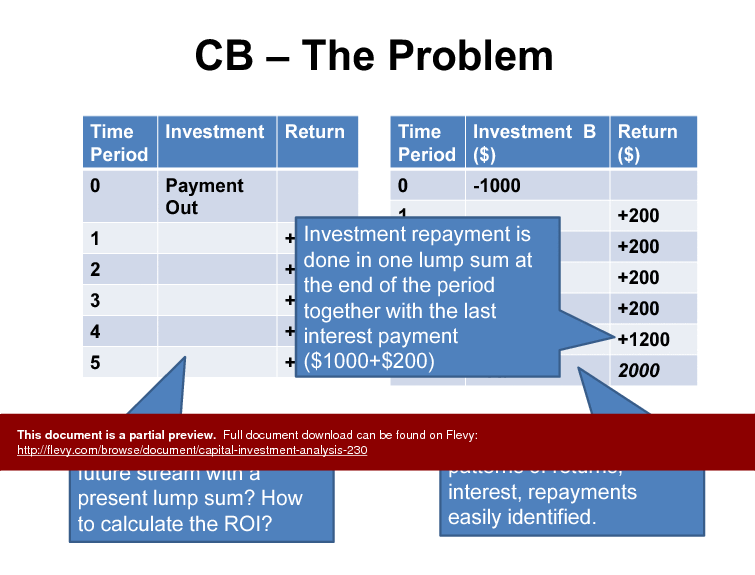
• The problem associated with measuring the rate of return with long term investments
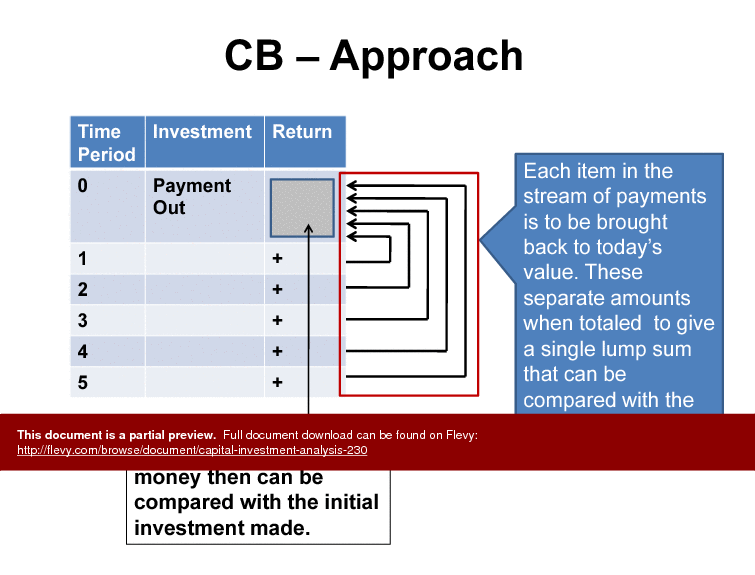
• The approach to solving this problem
• The key methods used in calculating the rate of return and evaluating alternatives
• The practical aspects of the various inputs required to calculate the return on investment
• The basics of the risks associated with long term investments & how to factor ?in such risks
• The strategic considerations involved in long term investment decisions
• The processes involved in long term investment decisions & its implementation
This presentation delves into the intricacies of capital budgeting, emphasizing the importance of evaluating long-term investments. It outlines the necessity for businesses to grow through strategic decisions in new products, markets, and technologies. The document provides a detailed explanation of the investment of funds in R&D, capacity increases, and acquisitions, highlighting the need for thorough evaluation due to significant initial outlays and future cash flow returns.
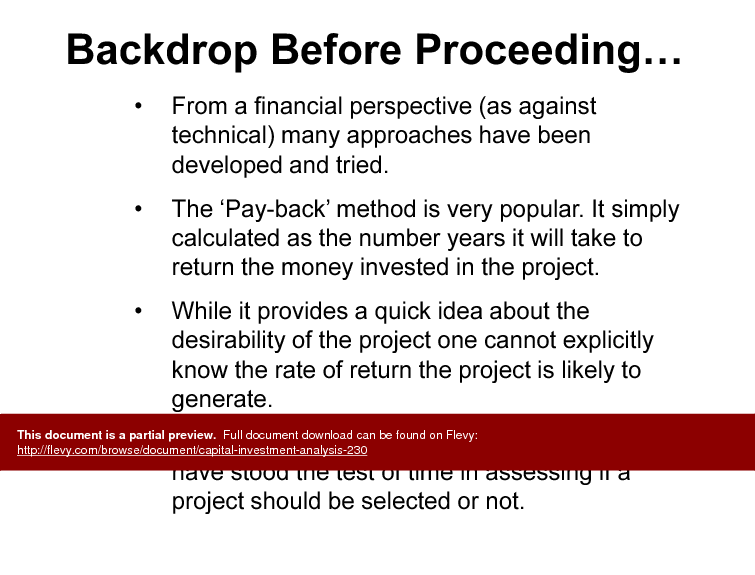
The presentation also addresses the importance of capital expenditure (Capex) in maintaining competitiveness and driving future profits. It discusses various financial approaches, including the popular 'Pay-back' method, and the challenges in determining the rate of return. The document includes practical examples and calculations, such as Net Present Value (NPV) and Internal Rate of Return (IRR), to illustrate the financial analysis framework. This resource is essential for executives looking to make informed investment decisions and manage associated risks effectively.
Got a question about the product? Email us at support@flevy.com or ask the author directly by using the "Ask the Author a Question" form. If you cannot view the preview above this document description, go here to view the large preview instead.
Executive Summary
The Capital Investment Analysis PPT provides a structured approach to capital budgeting, essential for corporate executives and financial analysts. This presentation simplifies complex concepts surrounding capital investments, including the evaluation of long-term investments, the calculation of return on investment (ROI), and risk assessment. It serves as a valuable resource for reference, training, and self-paced learning, featuring practical examples and Excel-based calculations to enhance understanding and application.
Who This Is For and When to Use
• Corporate finance executives responsible for investment decisions
• Financial analysts conducting capital budgeting evaluations
• Project managers overseeing capital expenditure initiatives
• Business development teams exploring new investment opportunities
Best-fit moments to use this deck:
• During strategic planning sessions for capital investments
• In training programs for finance and project management teams
• When assessing potential investment proposals and their financial viability
• For workshops focused on risk assessment and ROI calculations
Learning Objectives
• Define capital budgeting and its significance in corporate finance
• Identify the key characteristics of long-term investments
• Calculate ROI using various financial techniques
• Evaluate investment alternatives using Net Present Value (NPV) and Internal Rate of Return (IRR)
• Assess risks associated with capital investments and incorporate them into decision-making
• Develop a structured approach to capital budgeting processes
Table of Contents
• Introduction to Capital Budgeting (page 1)
• Importance of Capital Budgeting (page 5)
• Capital Budgeting Problems (page 9)
• Approaches to Capital Budgeting (page 18)
• Practical Aspects of Inputs (page 37)
• Risk Analysis in Capital Budgeting (page 67)
• Strategic Considerations (page 84)
• Capital Budgeting Process (page 93)
Primary Topics Covered
• Capital Budgeting Definition - Capital budgeting is the process of evaluating long-term investment proposals to determine their potential returns and risks.
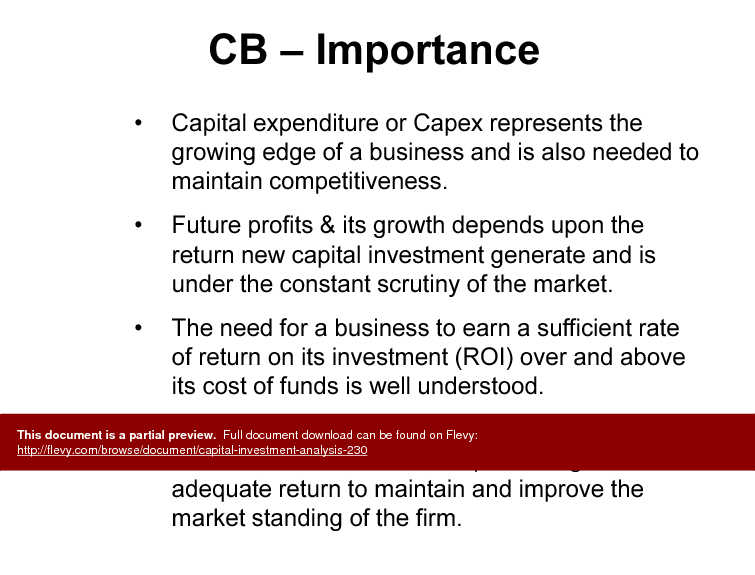
• Importance of Capital Budgeting - Capital expenditures are crucial for maintaining competitiveness and driving future growth, requiring careful evaluation to ensure adequate returns.
• Investment Evaluation Techniques - Key methods such as NPV and IRR are used to assess the financial viability of investment projects.
• Risk Assessment - Understanding business, financial, and market risks is essential for making informed investment decisions.
• Strategic Alignment - Capital investment decisions should align with the overall business strategy and market conditions.
• Capital Budgeting Process - A structured approach involving identification, evaluation, approval, and implementation of investment opportunities.
Deliverables, Templates, and Tools
• Capital budgeting framework template for evaluating investment proposals
• Excel models for calculating NPV and IRR
• Risk assessment checklist for capital investments
• Project evaluation report template
• Guidelines for strategic alignment of capital investments
• Capital budgeting process flowchart
Slide Highlights
• Overview of capital budgeting and its importance in corporate finance
• Detailed explanation of ROI calculation methods
• Visual representation of the capital budgeting process
• Examples of investment evaluation using NPV and IRR
• Risk analysis framework highlighting key risks associated with capital investments
Potential Workshop Agenda
Introduction to Capital Budgeting (30 minutes)
• Overview of capital budgeting concepts
• Importance and implications for business strategy
Investment Evaluation Techniques (60 minutes)
• Hands-on calculation of NPV and IRR
• Group exercises on evaluating investment proposals
Risk Assessment in Capital Budgeting (45 minutes)
• Discussion on identifying and mitigating risks
• Case studies on real-world capital investment decisions
Capital Budgeting Process Overview (30 minutes)
• Step-by-step guide to implementing a capital budgeting process
• Q&A session to address specific challenges faced by participants
Customization Guidance
• Tailor the financial models to reflect specific organizational metrics and benchmarks
• Update case studies with relevant industry examples for contextual learning
• Adjust the risk assessment framework to align with organizational risk tolerance levels
• Incorporate company-specific strategic goals into the capital budgeting process
Secondary Topics Covered
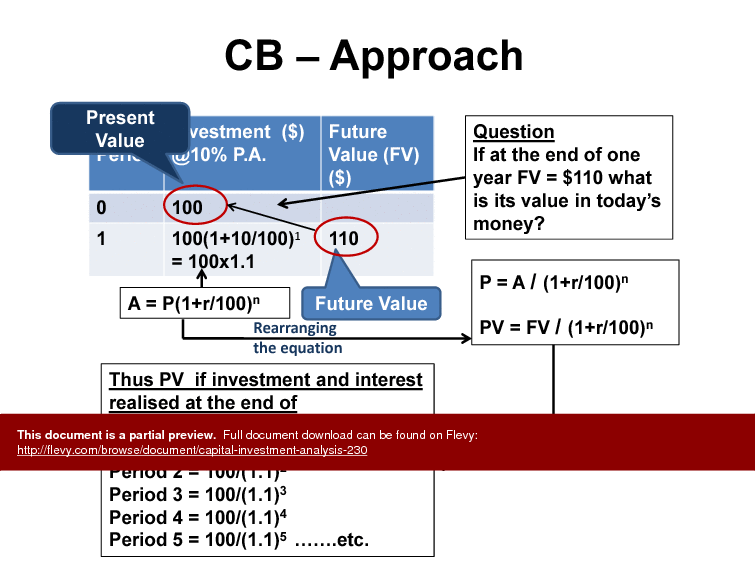
• Time Value of Money principles
• Sensitivity analysis for investment projections
• Scenario planning for capital investments
• Regulatory considerations in capital budgeting
• Stakeholder engagement in investment decision-making
Topic FAQ
Source: Best Practices in Business Case Development PowerPoint Slides: Capital Investment Analysis PowerPoint (PPTX) Presentation Slide Deck, Ganesh Rajagopalan
|
Download our FREE Strategy & Transformation Framework Templates

Download our free compilation of 50+ Strategy & Transformation slides and templates. Frameworks include McKinsey 7-S Strategy Model, Balanced Scorecard, Disruptive Innovation, BCG Experience Curve, and many more. |









