
Lean Shop Floor YB Series - 2. Apply 5S Principles   80-slide PPT PowerPoint presentation slide deck (PPT)
$30.00

Lean Shop Floor YB Series - 2. Apply 5S Principles (80-slide PPT PowerPoint presentation slide deck (PPT)) Preview Image
Log in to unlock full preview.
Lean Shop Floor YB Series - 2. Apply 5S Principles (80-slide PPT PowerPoint presentation slide deck (PPT)) Preview Image
Arrow   Click main image to view in full screen.

Lean Shop Floor YB Series - 2. Apply 5S Principles (PowerPoint PPT Slide Deck)

PowerPoint (PPT) 80 Slides

#2 in Shop Floor $30.00
This presentation is developed by a pioneer in Lean and certified LSS Master Black Belt who has trained over 5,000+ students globally, from Directors, CEOs, GMs, to shop floor staff. He's endorsed by CMI Consortium, NZTE, HERA, NZPICS, CBAFF.
Add to Cart


Immediate download
Fully editable PowerPoint
Free lifetime updates

BENEFITS OF THIS POWERPOINT DOCUMENT

  1. Present 5S principles to your staff in a very simple language

VISUAL WORKPLACE PPT DESCRIPTION

Editor Summary Lean Shop Floor YB Series - 2. Read more

The Lean Shop Floor Yellow Belt Series are designed and developed in a very simple way so that the shop floor staff with little or no formal education can understand.
There are 8 modules namely:
1. Apply Lean Practices
2. Apply 5S Pinnciples
3. Undertake Root Cause Analysis
4. Apply Cost Factors
5. Apply Quick Changeovers
6. Apply JIT Principles
7. Apply TPM Principles
8. Sustain Process Improvements

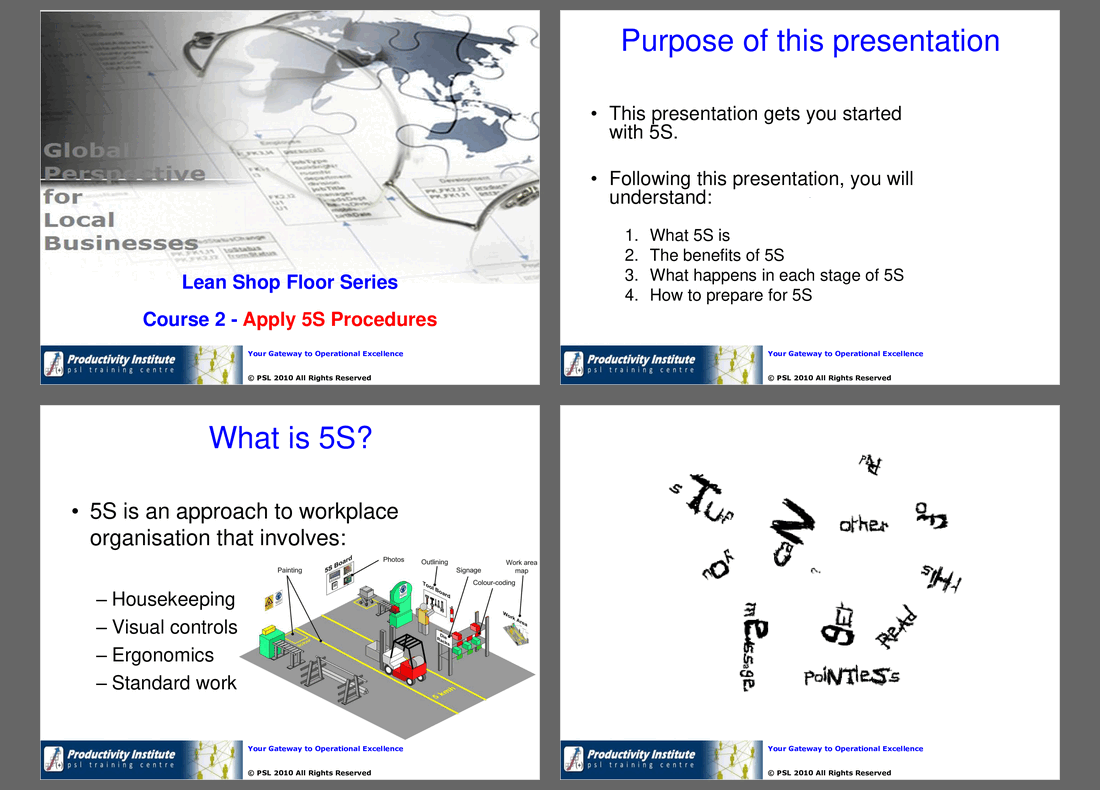
This module Apply 5S Principles covers the following:
What 5S is
The benefits of 5S
What happens in each stage of 5S
How to prepare for 5S
Understand the benefits of ?Sorting?
Identify ?essential? and ?non-essential? items
Set up a ?red tag? area
Conduct a ?red tag? activity
Monitor your progress
Understand the benefits of ?Setting in Order?
Understand workflow and ergonomics
Understand ?visual controls?
Improve your work area by ?Setting it in Order?
Understand what ?Shining? is
Understand the benefits of ?Shining?
Be able to undertake initial cleaning
Be able to undertake regular cleaning and inspection
Be able to keep records and monitor your progress
Understand what ?Standardising? is
Understand the benefits of ?Standardising?
Take responsibility for 5S
Make 5S part of standard procedures
Audit 5S
Understand the benefits of ?Sustaining?
Identify methods for Sustaining
Monitor your 5S progress

•  Group activities included.
•  Total number of slides = 80

You can also buy all the 8 modules at a discounted price. Pl look for "Shop Floor Series – All in 1"

This presentation also includes practical exercises to reinforce learning and ensure participants can apply 5S principles effectively. Real-world examples and visual aids are used to illustrate key concepts, making it easier for your team to grasp and implement 5S in their daily routines. The module emphasizes continuous improvement and accountability, ensuring that 5S becomes an integral part of your operational culture. This hands-on approach will drive efficiency and productivity on your shop floor, leading to tangible business results.

Got a question about the product? Email us at support@flevy.com or ask the author directly by using the "Ask the Author a Question" form. If you cannot view the preview above this document description, go here to view the large preview instead.

MARCUS OVERVIEW

This synopsis was written by Marcus [?] based on the analysis of the full 80-slide presentation.


Executive Summary
The "Lean Shop Floor YB Series - 2. Apply 5S Principles" presentation is a comprehensive guide designed to introduce and implement the 5S methodology in workplace environments. Developed by a Lean expert and certified LSS Master Black Belt, this presentation equips corporate executives, integration leaders, and consultants with the knowledge to enhance workplace organization through Sort, Set in Order, Shine, Standardize, and Sustain. Participants will learn the benefits and practical applications of 5S, enabling them to foster a culture of continuous improvement and operational excellence.

Who This Is For and When to Use
•  Corporate executives looking to improve operational efficiency
•  Integration leaders managing workplace transformations
•  Consultants advising on Lean methodologies
•  Shop floor staff involved in daily operations

Best-fit moments to use this deck:
•  During Lean training sessions for new employees
•  As part of a workplace organization initiative
•  When implementing continuous improvement programs
•  For workshops focused on enhancing safety and productivity

Learning Objectives
•  Define the 5S methodology and its significance in workplace organization
•  Build a structured approach to implementing each stage of 5S
•  Establish visual controls and ergonomic improvements in the workplace
•  Identify essential versus non-essential items in the work area
•  Develop a plan for sustaining 5S practices over time
•  Monitor progress and continuously improve workplace organization

Table of Contents
•  Introduction to 5S (page 3)
•  Benefits of 5S (page 5)
•  Stages of 5S (page 7)
•  Preparing for 5S (page 10)
•  Implementing Sort (page 12)
•  Implementing Set in Order (page 15)
•  Implementing Shine (page 18)
•  Implementing Standardize (page 21)
•  Implementing Sustain (page 24)
•  Management’s Role in 5S (page 27)
•  Continuous Improvement (page 30)

Primary Topics Covered
•  5S Definition - 5S is a systematic approach to workplace organization that enhances efficiency and safety through 5 key stages: Sort, Set in Order, Shine, Standardize, and Sustain.
•  Benefits of 5S - Implementing 5S leads to improved visual communication, enhanced safety, increased productivity, and better morale among employees.
•  Sort - The first stage involves removing unnecessary items from the workspace to create a clutter-free environment.
•  Set in Order - This stage focuses on organizing tools and materials for easy access and efficient workflow.
•  Shine - Regular cleaning and inspection of the workspace ensure that it remains safe and productive.
•  Standardize - Establishing standard operating procedures locks in the gains made from the first 3 stages, ensuring consistency in practices.
•  Sustain - This final stage emphasizes the importance of maintaining 5S practices through discipline and continuous improvement efforts.

Deliverables, Templates, and Tools
•  5S project board template for tracking implementation
•  Red tag area setup guide for sorting non-essential items
•  Cleaning schedule template for regular maintenance
•  Visual control methods checklist for effective organization
•  Standard operating procedures (SOPs) for each 5S stage
•  Progress monitoring tools to evaluate 5S effectiveness

Slide Highlights
•  Overview of the 5S methodology with visual aids illustrating each stage
•  Before-and-after comparisons showcasing the impact of 5S on workspace organization
•  Examples of visual controls and ergonomic improvements
•  Step-by-step guides for implementing each stage of 5S
•  Discussion prompts to engage participants in applying 5S principles

Potential Workshop Agenda
Introduction to 5S (30 minutes)
•  Overview of 5S principles and benefits
•  Discussion on the importance of workplace organization

Implementing Sort and Set in Order (60 minutes)
•  Hands-on sorting activity with red tagging
•  Group exercise on organizing tools and materials

Shine and Standardize (45 minutes)
•  Initial cleaning demonstration and regular inspection practices
•  Development of standard operating procedures

Sustain and Continuous Improvement (30 minutes)
•  Strategies for maintaining 5S practices
•  Setting up a continuous improvement plan

Customization Guidance
•  Tailor the presentation to specific industry needs (manufacturing, healthcare, etc.)
•  Adjust examples and case studies to reflect the organization’s context
•  Incorporate company-specific terminology and metrics for relevance
•  Modify the workshop agenda based on participant experience levels

Secondary Topics Covered
•  Visual controls and their role in workplace organization
•  Ergonomics and its impact on employee productivity
•  The importance of management commitment in sustaining 5S practices
•  Techniques for fostering a culture of continuous improvement

Topic FAQ

What does “5S” mean in Lean, and what does it actually change in a workplace?

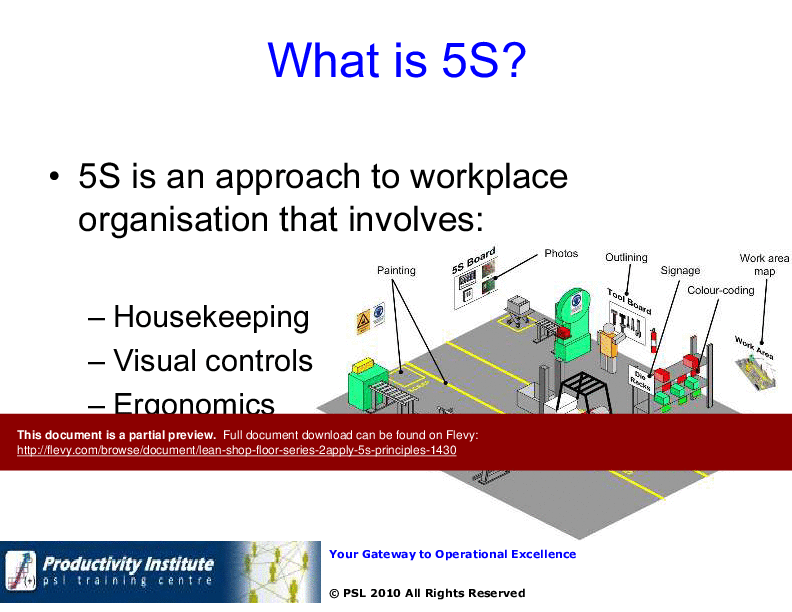
5S is an approach to workplace organization that combines housekeeping, visual controls, ergonomics, and standard work to make work areas easier to manage and improve how work is performed. It is commonly taught as five stages—Sort, Set in Order, Shine, Standardize, and Sustain.

What are the five stages of 5S, and how do they build on each other?

The five stages are Sort, Set in Order, Shine, Standardize, and Sustain. Sort removes unnecessary items; Set in Order creates a place for everything; Shine focuses on cleaning and inspection; Standardize makes the new practices routine; and Sustain prevents slipping back into non-5S behaviors across all five stages.

How do teams run the “Sort” step without creating confusion about what to keep?

Sorting removes unnecessary items, repairs or recycles faulty items, and leaves only essential items in the work area. A practical method is setting up a nearby “red tag” area where items are stored while being evaluated, then tagging items and recording how often each is used.

What does “Set in Order” mean in practice, and how do visual controls fit in?

Set in Order means finding the best place for everything and ensuring everything is in its place. Workflow and ergonomics help determine the best placement, while visual controls make status immediately visible using methods such as job boards, shadow boards, and floor lines.

What does “Shine” cover beyond basic cleaning, and how is it maintained over time?

Shining has two parts: an initial “blitz” clean and then regular cleaning and inspection. After the area is clean, teams identify what needs routine cleaning, assign responsibilities, define methods, record activity, and correct equipment problems, because a clean area is easier to troubleshoot and less likely to cause defects.

What should I look for when choosing a 5S training deck or template set for my team?

Look for materials that explain what 5S is, the benefits, what happens in each stage, and how to prepare before starting. In this category, Lean Shop Floor Series: Course 2 – Apply 5S Procedures covers preparation steps like setting up a 5S project board, doing an initial 5S audit, and developing a plan.

How do I think about the cost and value of using 5S templates instead of starting from scratch?

The value comes from reducing rework in implementation by using standard elements that support consistency—such as SOPs, rosters, schedules, checklists, and visible cleaning schedules that specify what to clean, who cleans it, how, and how often. Lean Shop Floor Series: Course 2 – Apply 5S Procedures emphasizes those standardizing and scheduling components.

I’m trying to roll out 5S in a cluttered area—what prep steps help it stick after the first cleanup?

Preparation includes setting up a 5S project board, defining the boundaries of the 5S area, identifying users, gathering resources, taking “before” photos, conducting an initial 5S audit, and developing a plan. Sustaining also requires discipline, continual improvement, and posting and reviewing KPIs to avoid backsliding.

Document FAQ
These are questions addressed within this presentation.

What is 5S?
5S is a Lean methodology focused on workplace organization and efficiency through 5 stages: Sort, Set in Order, Shine, Standardize, and Sustain.

What are the benefits of implementing 5S?
The benefits include improved safety, enhanced productivity, better morale, and more efficient use of space, leading to overall operational excellence.

How do I prepare for a 5S implementation?
Preparation involves setting up a project board, defining the 5S area boundaries, gathering resources, and conducting an initial audit.

What is a red tag area?
A red tag area is a designated space for storing non-essential items while they are evaluated for necessity in the workspace.

How can I ensure 5S practices are sustained?
Sustaining 5S requires discipline, regular audits, management support, and continuous improvement initiatives to prevent reverting to old habits.

What role does management play in 5S?
Management must support the 5S program by providing resources, encouraging participation, and recognizing efforts to maintain standards.

How often should cleaning and inspection occur?
Cleaning and inspection schedules should be established based on the specific needs of the workspace and should be displayed prominently.

What tools can help monitor 5S progress?
Tools such as progress tracking sheets, audit forms, and visual control boards can help monitor and report on 5S implementation effectiveness.

Glossary
•  5S - A Lean methodology for workplace organization consisting of Sort, Set in Order, Shine, Standardize, and Sustain.
•  Red Tag - A label used to identify non-essential items during the sorting process.
•  Visual Controls - Tools that provide immediate visibility of the status of work and organization.
•  Ergonomics - The study of designing equipment and procedures to improve safety and efficiency in the workplace.
•  Standard Operating Procedures (SOPs) - Established guidelines that dictate how tasks should be performed consistently.
•  Continuous Improvement - Ongoing efforts to enhance products, services, or processes through incremental improvements.
•  Workspace Audit - An assessment of the current state of the workspace to identify areas for improvement.
•  Cleaning Schedule - A plan that outlines what needs to be cleaned, who is responsible, and how often cleaning should occur.
•  Management Commitment - The active support and involvement of leadership in implementing and sustaining 5S practices.
•  Clutter - Unnecessary items that occupy space and hinder efficiency in the workplace.
•  Workflow - The sequence of processes through which a piece of work passes from initiation to completion.
•  Shadow Board - A visual control tool that outlines the location of tools and equipment to improve organization.
•  Initial Cleaning - The first thorough cleaning of a workspace to establish a baseline for maintenance.
•  Regular Inspection - Ongoing checks to ensure cleanliness and functionality of the workspace.
•  KPI - Key Performance Indicator, a measurable value that demonstrates how effectively a company is achieving key business objectives.
•  Participative Work Teams - Groups of employees who collaborate to implement and sustain 5S practices.
•  Top-Level Management - Senior executives responsible for providing direction and resources for 5S initiatives.
•  Work Area Boundaries - Defined limits of the area subject to 5S implementation.
•  Blitz Cleaning - An intensive cleaning effort aimed at achieving a high standard of cleanliness in a short period.
•  Sustaining - The ongoing effort to maintain the improvements achieved through the 5S process.

Source: Best Practices in Visual Workplace, Shop Floor PowerPoint Slides: Lean Shop Floor YB Series - 2. Apply 5S Principles PowerPoint (PPT) Presentation Slide Deck, OpEx Academy NZ


$30.00
This presentation is developed by a pioneer in Lean and certified LSS Master Black Belt who has trained over 5,000+ students globally, from Directors, CEOs, GMs, to shop floor staff. He's endorsed by CMI Consortium, NZTE, HERA, NZPICS, CBAFF.
Add to Cart
  

ABOUT THE AUTHOR

Author image
Additional documents from author: 88

Vishnu Rayapeddi is an experienced management consultant and trainer specializing in implementing continuous process improvements. Vishnu is a pioneer in Lean Management which combines the power of Lean Thinking, TOC, Six Sigma, TQM, TWI, Balanced Scorecard, cGMP and other best-class methodologies such as, DMAIC, Value Stream Mapping, Root Cause Analysis, 5S, Quick Changeovers, Quality and ... [read more]

Ask the Author a Question

You must be logged in to contact the author.

Click here to log in Click here register

Did you know?
The average daily rate of a McKinsey consultant is $6,625 (not including expenses). The average price of a Flevy document is $65.

Bundle and save! You can save up to % with bundles!

View bundle(s)


Trusted by over 10,000+ Client Organizations
Since 2012, we have provided business templates to over 10,000 businesses and organizations of all sizes, from startups and small businesses to the Fortune 100, in over 130 countries.
AT&T GE Cisco Intel IBM Coke Dell Toyota HP Nike Samsung Microsoft Astrazeneca JP Morgan KPMG Walgreens Walmart 3M Kaiser Oracle SAP Google E&Y Volvo Bosch Merck Fedex Shell Amgen Eli Lilly Roche AIG Abbott Amazon PwC T-Mobile Broadcom Bayer Pearson Titleist ConEd Pfizer NTT Data Schwab


Read Customer Testimonials

 
"Flevy.com has proven to be an invaluable resource library to our Independent Management Consultancy, supporting and enabling us to better serve our enterprise clients.

The value derived from our [FlevyPro] subscription in terms of the business it has helped to gain far exceeds the investment made, making a subscription a no-brainer for any growing consultancy – or in-house strategy team."

– Dean Carlton, Chief Transformation Officer, Global Village Transformations Pty Ltd.
 
"I am extremely grateful for the proactiveness and eagerness to help and I would gladly recommend the Flevy team if you are looking for data and toolkits to help you work through business solutions."

– Trevor Booth, Partner, Fast Forward Consulting
 
"Last Sunday morning, I was diligently working on an important presentation for a client and found myself in need of additional content and suitable templates for various types of graphics. Flevy.com proved to be a treasure trove for both content and design at a reasonable price, considering the time I "

– M. E., Chief Commercial Officer, International Logistics Service Provider
 
"As a small business owner, the resource material available from FlevyPro has proven to be invaluable. The ability to search for material on demand based our project events and client requirements was great for me and proved very beneficial to my clients. Importantly, being able to easily edit and tailor "

– Michael Duff, Managing Director at Change Strategy (UK)
 
"I have used Flevy services for a number of years and have never, ever been disappointed. As a matter of fact, David and his team continue, time after time, to impress me with their willingness to assist and in the real sense of the word. I have concluded in fact "

– Roberto Pelliccia, Senior Executive in International Hospitality
 
"FlevyPro provides business frameworks from many of the global giants in management consulting that allow you to provide best in class solutions for your clients."

– David Harris, Managing Director at Futures Strategy
 
"The wide selection of frameworks is very useful to me as an independent consultant. In fact, it rivals what I had at my disposal at Big 4 Consulting firms in terms of efficacy and organization."

– Julia T., Consulting Firm Owner (Former Manager at Deloitte and Capgemini)
 
"As an Independent Management Consultant, I find Flevy to add great value as a source of best practices, templates and information on new trends. Flevy has matured and the quality and quantity of the library is excellent. Lastly the price charged is reasonable, creating a win-win value for "

– Jim Schoen, Principal at FRC Group


Save with Bundles

This document is available as part of the following discounted bundle(s):


Customers Also Bought These Documents


Customers Also Like These Documents

Explore Templates on Related Management Topics


Your Recently Viewed Documents
Receive our FREE presentation on Operational Excellence

This 50-slide presentation provides a high-level introduction to the 4 Building Blocks of Operational Excellence. Achieving OpEx requires the implementation of a Business Execution System that integrates these 4 building blocks.