
 Click main image to view in full screen.
Business Impact Analysis (BIA) Procedures – Word DOC
Word (DOC) 8 Pages


BCP WORD DESCRIPTION
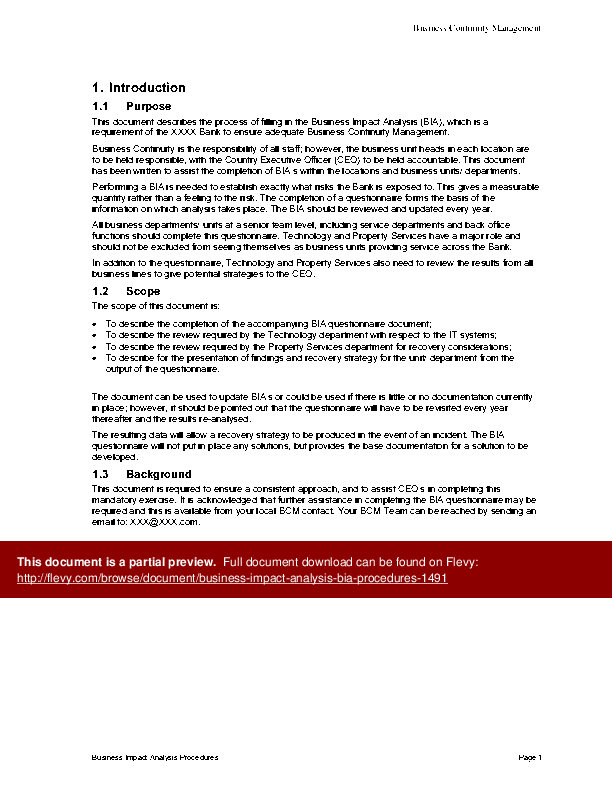
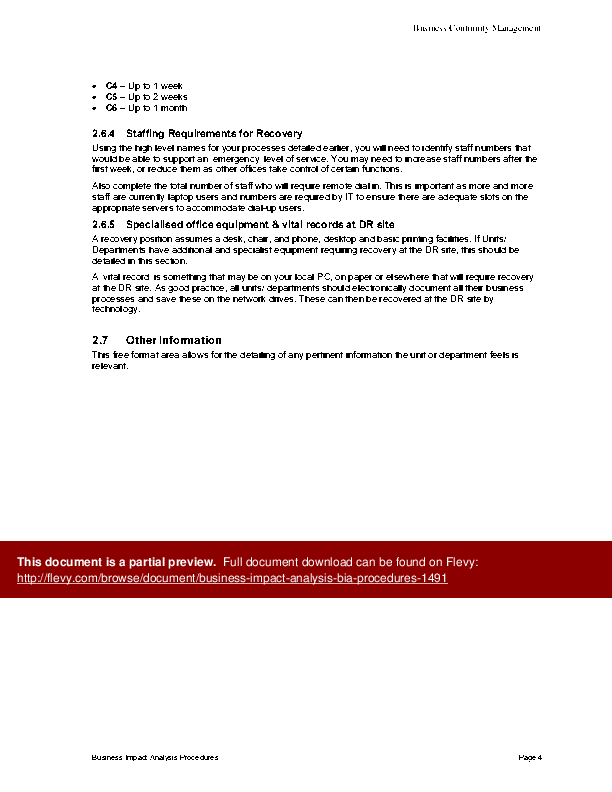
This is an 8-page template for a Business Analysis (BIA) Procedures document to be used in an organization's Business Continuity Management (BCM) initiative. It describes the process for completing the BIA.
The actual BIA questionnaire template is sold separately. It is listed under my Flevy account as "Business Impact Analysis (BIA) Questionnaire Templates."
The scope of this document is:
• To describe the completion of the accompanying BIA questionnaire document;
• To describe the review required by the Technology department with respect to the IT systems;
• To describe the review required by the Property Services department for recovery considerations;
• To describe for the presentation of findings and recovery strategy for the unit/ department from the output of the questionnaire.
This Word document also provides a comprehensive framework for identifying critical business functions and assessing the potential impact of disruptions. It includes detailed steps for data collection, analysis, and reporting, ensuring that all relevant information is captured and evaluated. The procedures outlined are designed to be scalable and adaptable to various organizational sizes and complexities.
Included within the document are guidelines for conducting interviews and workshops with key stakeholders to gather essential insights. These interactions are crucial for understanding the nuances of each business unit's operations and dependencies. The document emphasizes the importance of a collaborative approach, ensuring that all perspectives are considered in the analysis.
The BIA Procedures document also addresses the integration of findings into the broader Business Continuity Plan (BCP). It outlines the process for aligning recovery strategies with organizational priorities and resources. This ensures that the BCP is both practical and effective, providing a clear roadmap for maintaining business operations during and after a disruption.
Got a question about the product? Email us at support@flevy.com or ask the author directly by using the "Ask the Author a Question" form. If you cannot view the preview above this document description, go here to view the large preview instead.
TOPIC FAQ
What are the main steps in a Business Impact Analysis process?
A BIA process typically includes structured data collection, stakeholder interviews or workshops, analysis of critical functions and dependencies, reporting of impacts, and presentation of findings to define recovery priorities and strategies. The documented workflow ends with presentation of findings and recovery strategy for the unit/department.How do you integrate BIA findings into a Business Continuity Plan?
Integration involves translating impact assessments into prioritized recovery objectives, aligning recovery strategies with organizational priorities and available resources, and updating the BCP to reflect those strategies. The procedures document maps the path from questionnaire outputs to recovery strategy alignment with organizational priorities and resources.What should be covered in interviews and workshops during a BIA?
Interviews and workshops should gather insights on critical business functions, operational dependencies, recovery time objectives, and informal workarounds. They are used to validate questionnaire responses and capture nuances of unit operations and interdependencies, supported by guidelines for conducting interviews and workshops with key stakeholders.What should I look for in a BIA procedures template when buying one?
Look for a template that describes how to complete the BIA questionnaire, specifies Technology and Property Services review requirements, provides interview/workshop guidance, and explains how to present findings and define recovery strategy. Clear coverage of IT systems review and Property Services review requirements is essential.How much time and team resources are typically needed to execute a BIA using a standard procedures document?
Resource needs vary by organization size and complexity; the right procedures document should be scalable and adaptable to those variables. Flevy's Business Impact Analysis (BIA) Procedures is an 8-page Word template designed to be scalable and adaptable to various organizational sizes and complexities and is useful for planning resource estimates for a BIA.I need to assess IT system dependencies as part of a BIA — what process steps should I follow?
Follow the procedures that require a Technology department review of IT systems: collect system-level data via the questionnaire, validate dependencies in interviews/workshops, analyze impacts on business functions, and include findings in the recovery strategy presented to stakeholders. The document specifies a Technology department review requirement.After a site disruption, how does a Property Services review contribute to recovery planning?
A Property Services review identifies physical recovery constraints and recovery site considerations, informs realistic recovery options, and feeds those constraints into the prioritized recovery strategy. The BIA Procedures document explicitly describes the review required by Property Services for recovery considerations.Are standalone BIA questionnaires separate from procedures documents, and why would I buy both?
Yes; the procedures document describes how to complete and use questionnaire outputs, while the actual BIA questionnaire is sold separately. Purchasing both provides the process guidance plus the data-collection instrument; the BIA questionnaire template is listed separately under the author's Flevy account.Source: Best Practices in BCP, Business Impact Analysis Word: Business Impact Analysis (BIA) Procedures Word (DOC) Document, Boris Agranovich




























