
This framework is developed by a team of former McKinsey and Big 4 consultants. The presentation follows the headline-body-bumper slide format used by global consulting firms.
Editor Summary
23-slide PowerPoint presentation "Best Practices in Strategic Planning" by PPT Lab provides a framework and 4 best practices for linking strategic planning to execution.
Read moreCovers Explore Strategy at 3 Time Horizons, Constantly Reinvent and Stimulate the Strategic Dialogue, Engage the Broader Organization, and Invest in Execution and Monitoring. Includes topics such as 3 Strategy Time Horizons, Strategic Dialogue, Art of Questioning, Strategic Initiatives, and Strategy Dashboard. Concepts reference BCG research. Sold as a digital download on Flevy.
Use this deck when an organization needs to tighten the link between strategy formulation and execution amid rapid market change, or when leaders must refresh planning processes for short-, mid-, and long-term horizons.
CEOs and executive teams aligning corporate vision to prioritized initiatives and allocating resources across short, mid, and long horizons.
Strategy or corporate planning leads building a strategy dashboard and monitoring approach to track progress against initiatives.
Management consultants facilitating strategic workshops that stimulate dialogue and structured questioning across stakeholders.
Business-unit leaders translating strategic initiatives into execution plans and monitoring metrics.
The emphasis on multi-horizon planning, continuous strategic dialogue, engagement, and monitoring reflects practices highlighted in BCG research.
Strategic Planning is an essential tool for organizations aiming to thrive in today's dynamic business environment. It's not just about setting goals—it's also about crafting a roadmap for sustainable success. For executives, understanding and effectively implementing Strategic Planning is crucial for steering the organization towards its long-term objectives while adapting to the ever-evolving market conditions.
The importance of Strategic Planning cannot be overstated. It serves as a compass for an organization, guiding decision-making and resource allocation. A well-formulated Corporate Strategy aligns the company's vision with actionable steps, ensuring that every effort contributes to overarching goals. However, the challenge lies in execution. Many organizations struggle to bridge the gap between Strategic Planning and Execution, which can result in missed opportunities and suboptimal performance.
In the contemporary business landscape, characterized by rapid technological advancements and shifting consumer behaviors, agility in Strategic Planning is vital. Traditional models often fail to keep pace with the speed of market changes, rendering some Strategies obsolete before they are fully implemented. This calls for a more dynamic approach to Strategic Planning—one that not only sets the direction but also allows for flexibility and quick adaptation to new information and circumstances.
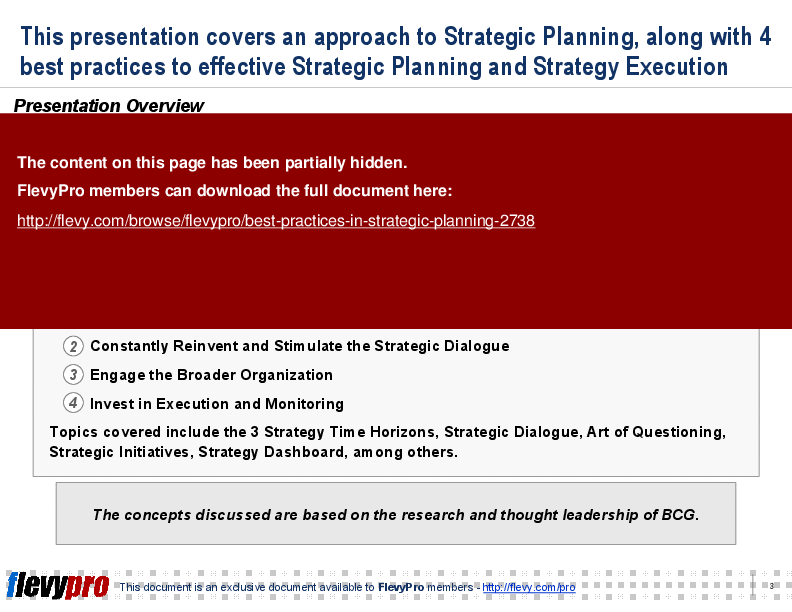
This PowerPoint presentation is designed to address these challenges. It provides a framework/approach to Strategic Planning, along with 4 best practices to ensure effective Strategic Planning that leads to successful Strategy Execution:
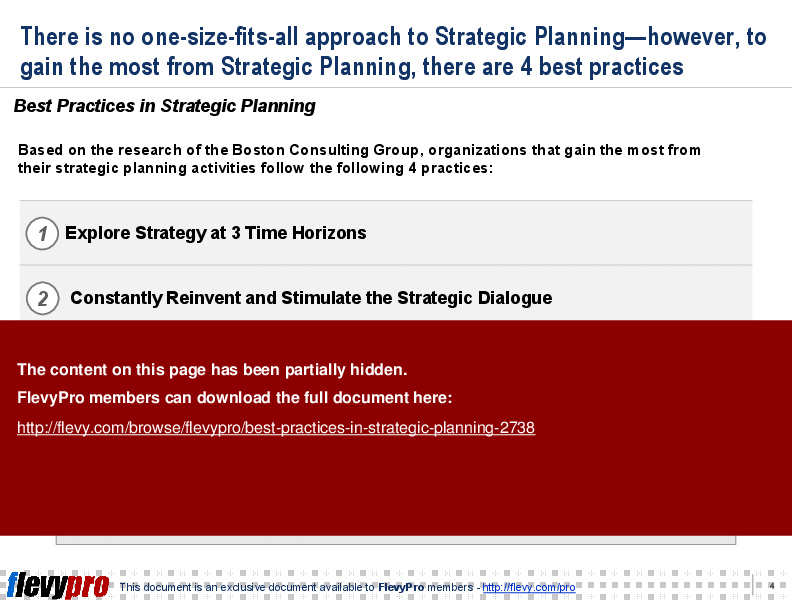
1. Explore Strategy at 3 Time Horizons – This emphasizes the importance of planning for short-, mid-, and long-term futures, recognizing that different challenges and opportunities may arise at each stage.
2. Constantly Reinvent and Stimulate the Strategic Dialogue – Encourages continuous reassessment of Strategies in light of new data and changing market conditions.
3. Engage the Broader Organization – Involves various stakeholders in the strategic planning process, ensuring alignment and buy-in across the organization.
4. Invest in Execution and Monitoring – Stresses the need for robust mechanisms to track progress and adjust course as needed.
By embracing these best practices, organizations can develop strategies that are not only visionary but also pragmatic and responsive to the realities of today's business world.
Specific topics covered include the 3 Strategy Time Horizons, Strategic Dialogue, Art of Questioning, Strategic Initiatives, Strategy Dashboard, among others. The concepts discussed are based on the research and thought leadership of BCG.
This deck also includes slide templates for you to use in your own business presentations.
The presentation also delves into the critical role of strategic questioning and stakeholder engagement. It emphasizes the need for continuous monitoring and adaptation to ensure alignment with evolving market dynamics.
What are the 3 strategy time horizons and why should I use them?
The 3 time horizons separate planning into short-, mid-, and long-term perspectives so organizations can handle immediate priorities while investing in future options. Treating challenges and opportunities by horizon helps prioritize resources and design initiatives appropriate to each timeframe; the deck explicitly covers 3 Strategy Time Horizons.
How can organizations keep strategic planning agile in fast-changing markets?
Agility is sustained by continuously reinventing the strategic dialogue, reassessing assumptions, and linking planning to execution and monitoring. Establish recurring reviews, prioritize initiatives that can be adjusted, and use a straightforward monitoring tool such as a strategy dashboard to update course based on new information and metrics.
What is strategic dialogue and how does it improve planning?
Strategic dialogue is an ongoing, organization-wide conversation that reassesses strategy against new data and market shifts. It combines structured questioning with stakeholder input to surface assumptions, align priorities, and maintain buy-in across teams; the presentation treats Strategic Dialogue as one of its core best practices.
How does the "Art of Questioning" support better strategy decisions?
The Art of Questioning structures inquiry to test assumptions, reveal hidden risks, and open alternative options during strategy formulation. Well-crafted strategic questions stimulate cross-functional debate and help prioritize initiatives, a capability specifically discussed in the presentation under the Art of Questioning.
What should I look for when buying a strategic planning template or deck?
Prioritize decks that provide multi-horizon frameworks, guidance on stakeholder engagement and strategic dialogue, and tools for execution monitoring such as a strategy dashboard. Also check whether the resource includes ready-to-use slide templates to present findings; these elements are highlighted in the Best Practices in Strategic Planning deck.
Are slide templates and frameworks worth purchasing for internal strategy work?
Organizations that struggle to bridge planning and execution can benefit from structured templates that accelerate workshop design, stakeholder alignment, and reporting. A compact deck that combines frameworks and presentation-ready slides can save preparation time; Flevy's Best Practices in Strategic Planning includes slide templates within its 23-slide PowerPoint.
How should I approach strategic planning after a major market disruption?
Reassess priorities across short, mid, and long horizons, restart strategic dialogue with key stakeholders, reprioritize or reframe strategic initiatives, and tighten execution monitoring to respond quickly. The approach centers on continuous reassessment and prioritization, consistent with the 4 best practices outlined in the presentation.
What are practical ways to track strategy execution and course-correct?
Implement a focused strategy dashboard that links strategic initiatives to metrics, schedule regular review forums to update assumptions, and allocate resources to high-priority initiatives while pausing lower-value efforts. The presentation explicitly treats investing in execution and a Strategy Dashboard as key components of monitoring.
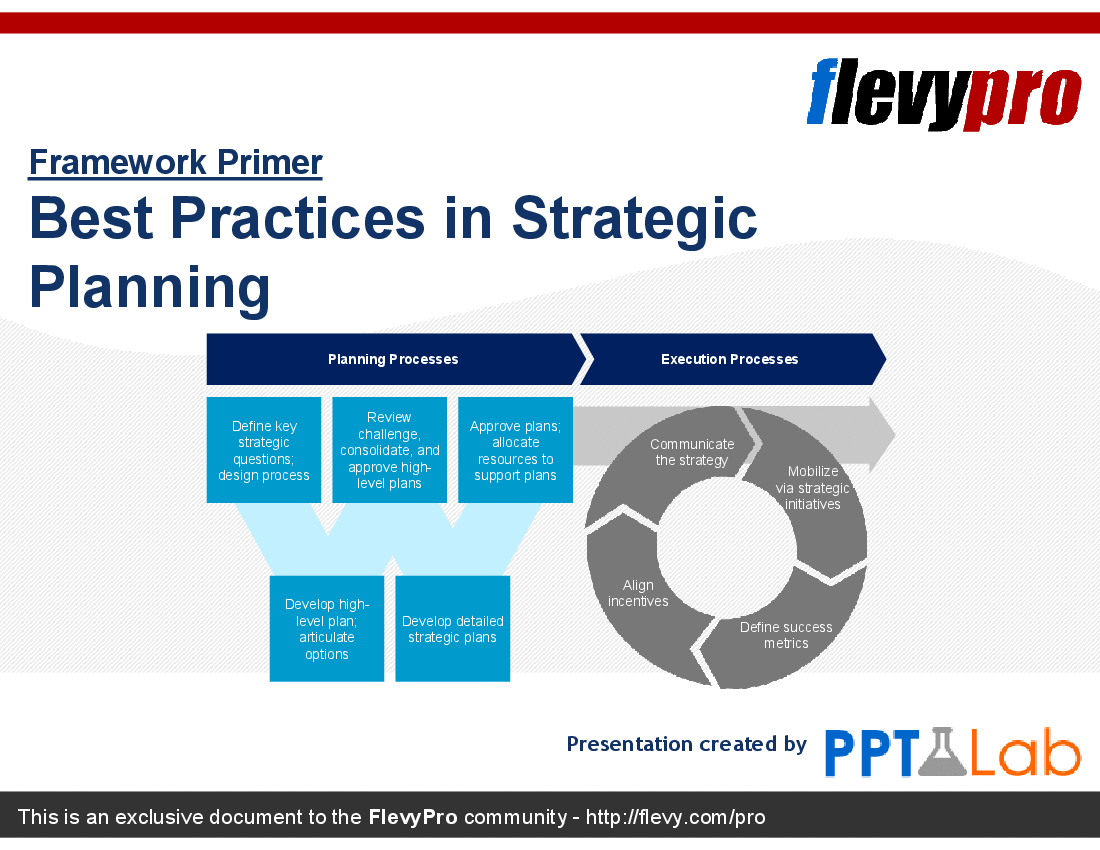
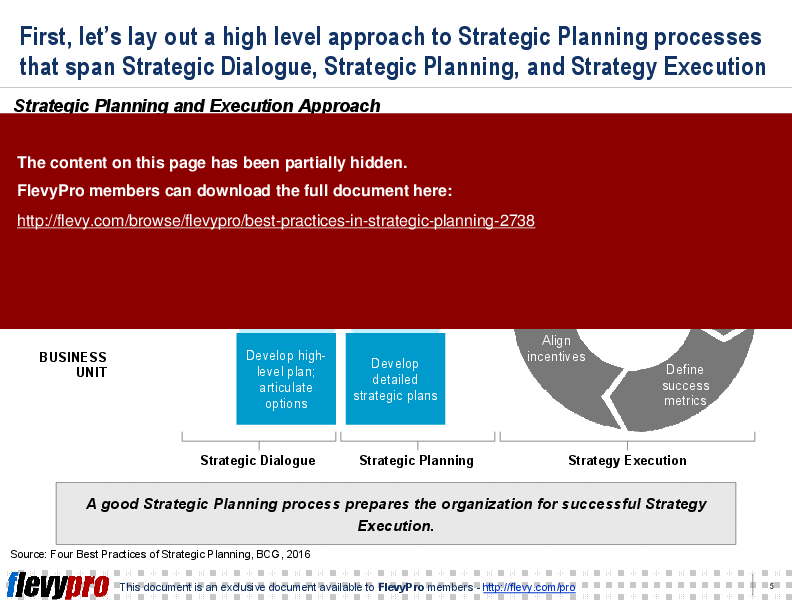
This PPT slide outlines the strategic planning process, divided into Planning Processes and Execution Processes. The Planning Processes begin with defining key strategic questions and designing the process, followed by a review phase to consolidate challenges and approve high-level plans, which is essential for resource allocation. The development of detailed strategic plans ensures clear articulation of options. The Execution Processes focus on effective strategy communication, mobilizing through strategic initiatives, and aligning incentives. Defining success metrics is critical for tracking progress against strategic goals. Managers are expected to answer strategic questions and provide updates, facilitating an iterative dialogue for refining the strategy. The leadership team selects options from managers' responses, leading to detailed plans that are discussed and approved in follow-up meetings, reinforcing collaboration.
This PPT slide outlines a structured approach for organizations to achieve their strategic vision over a 3 to 5-year horizon. It emphasizes a multi-year development plan that aligns resources at the business unit level, focusing on customer segment and geographic priorities to target promising markets. The development of an innovation roadmap is essential for maintaining competitiveness, while exploring adjacencies and cross-business-unit opportunities leverages existing capabilities. Additionally, the slide highlights the importance of partnerships and M&A opportunities to accelerate growth and enhance market positioning. Key questions prompt executives to prioritize customer segments and geographic markets, reinforcing data-driven decision-making. This approach ensures the development of clear, actionable business plans that translate strategic visions into tangible outcomes.
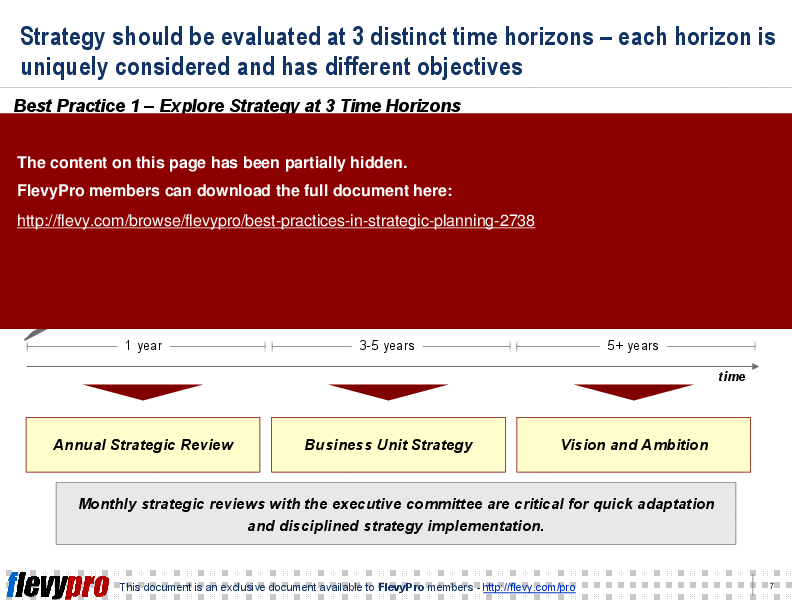
This PPT slide outlines the evaluation of strategy across 3 time horizons: short-term (1 year), medium-term (3 to 5 years), and long-term (beyond 5 years). The short-term focuses on immediate operational goals and requires an annual strategic review to assess performance and make adjustments. The medium-term centers on business unit strategy, involving detailed planning and resource allocation to align departmental initiatives with corporate goals. The long-term horizon emphasizes vision and ambition, setting transformative goals for sustainability and growth. Monthly strategic reviews with the executive committee are critical for maintaining agility and disciplined strategy implementation, enabling quick adaptations to market changes. This structured approach fosters cohesive growth and informed decision-making in a dynamic business environment.
This PPT slide outlines a framework for evaluating and enhancing short-term strategic execution. Key activities include monitoring strategy execution and assessing environmental changes, promoting a proactive approach to strategy management. Critical questions guide the evaluation process, focusing on execution status, validity of strategic assumptions, and adaptability to changes. The analysis encompasses products, regions, and functions, providing a comprehensive view that identifies interdependencies and synergy opportunities. This framework encourages continuous improvement and adaptability, essential for navigating today’s dynamic business landscape.
Source: Best Practices in Strategy Development, Strategic Planning, Strategy Execution, Strategic Dialogue PowerPoint Slides: Best Practices in Strategic Planning PowerPoint (PPT) Presentation Slide Deck, PPT Lab
This framework is developed by a team of former McKinsey and Big 4 consultants. The presentation follows the headline-body-bumper slide format used by global consulting firms.
For $10.00 more, you can download this document plus 2 more FlevyPro documents. That's just $13 each.
ABOUT FLEVYPRO
This document is part of the FlevyPro Library, a curated knowledge base of documents for our FlevyPro subscribers.

FlevyPro is a subscription service for on-demand business frameworks and analysis tools. FlevyPro subscribers receive access to an exclusive library of curated business documents—business framework primers, presentation templates, Lean Six Sigma tools, and more—among other exclusive benefits.
The average daily rate of a McKinsey consultant is $6,625 (not including expenses). The average price of a Flevy document is $65.
Trusted by over 10,000+ Client Organizations
Since 2012, we have provided business templates to over 10,000 businesses and organizations of all sizes, from startups and small businesses to the Fortune 100, in over 130 countries.
Read Customer Testimonials
"I am extremely grateful for the proactiveness and eagerness to help and I would gladly recommend the Flevy team if you are looking for data and toolkits to help you work through business solutions."
– Trevor Booth, Partner, Fast Forward Consulting
"As a small business owner, the resource material available from FlevyPro has proven to be invaluable. The ability to search for material on demand based our project events and client requirements was great for me and proved very beneficial to my clients. Importantly, being able to easily edit and tailor
the material for specific purposes helped us to make presentations, knowledge sharing, and toolkit development, which formed part of the overall program collateral. While FlevyPro contains resource material that any consultancy, project or delivery firm must have, it is an essential part of a small firm or independent consultant's toolbox.
"
– Michael Duff, Managing Director at Change Strategy (UK)
"As a young consulting firm, requests for input from clients vary and it's sometimes impossible to provide expert solutions across a broad spectrum of requirements. That was before I discovered Flevy.com.
Through subscription to this invaluable site of a plethora of topics that are key and crucial to consulting, I
have been able to exceed expectations and deliver quality advice and solutions to my clients. The quality and expertise of the authors are exemplary and gives me great confidence to use as part of my service offerings.
I highly recommend this company for any consultant wanting to apply international best practice standards in their service offerings.
"
– Nishi Singh, Strategist and MD at NSP Consultants
"[Flevy] produces some great work that has been/continues to be of immense help not only to myself, but as I seek to provide professional services to my clients, it gives me a large "tool box" of resources that are critical to provide them with the quality of service and outcomes they are expecting."
– Royston Knowles, Executive with 50+ Years of Board Level Experience
"As an Independent Management Consultant, I find Flevy to add great value as a source of best practices, templates and information on new trends. Flevy has matured and the quality and quantity of the library is excellent. Lastly the price charged is reasonable, creating a win-win value for
the customer, Flevy and the various authors. This is truly a service that benefits the consulting industry and associated clients. Thanks for providing this service.
"
– Jim Schoen, Principal at FRC Group
"My FlevyPro subscription provides me with the most popular frameworks and decks in demand in today’s market. They not only augment my existing consulting and coaching offerings and delivery, but also keep me abreast of the latest trends, inspire new products and service offerings for my practice, and educate me
in a fraction of the time and money of other solutions. I strongly recommend FlevyPro to any consultant serious about success.
"
– Bill Branson, Founder at Strategic Business Architects
"FlevyPro provides business frameworks from many of the global giants in management consulting that allow you to provide best in class solutions for your clients."
– David Harris, Managing Director at Futures Strategy
"As a consulting firm, we had been creating subject matter training materials for our people and found the excellent materials on Flevy, which saved us 100's of hours of re-creating what already exists on the Flevy materials we purchased."
Download our free compilation of 50+ Strategy & Transformation slides and templates. Frameworks include McKinsey 7-S, Balanced Scorecard, Disruptive Innovation, BCG Curve, and many more.