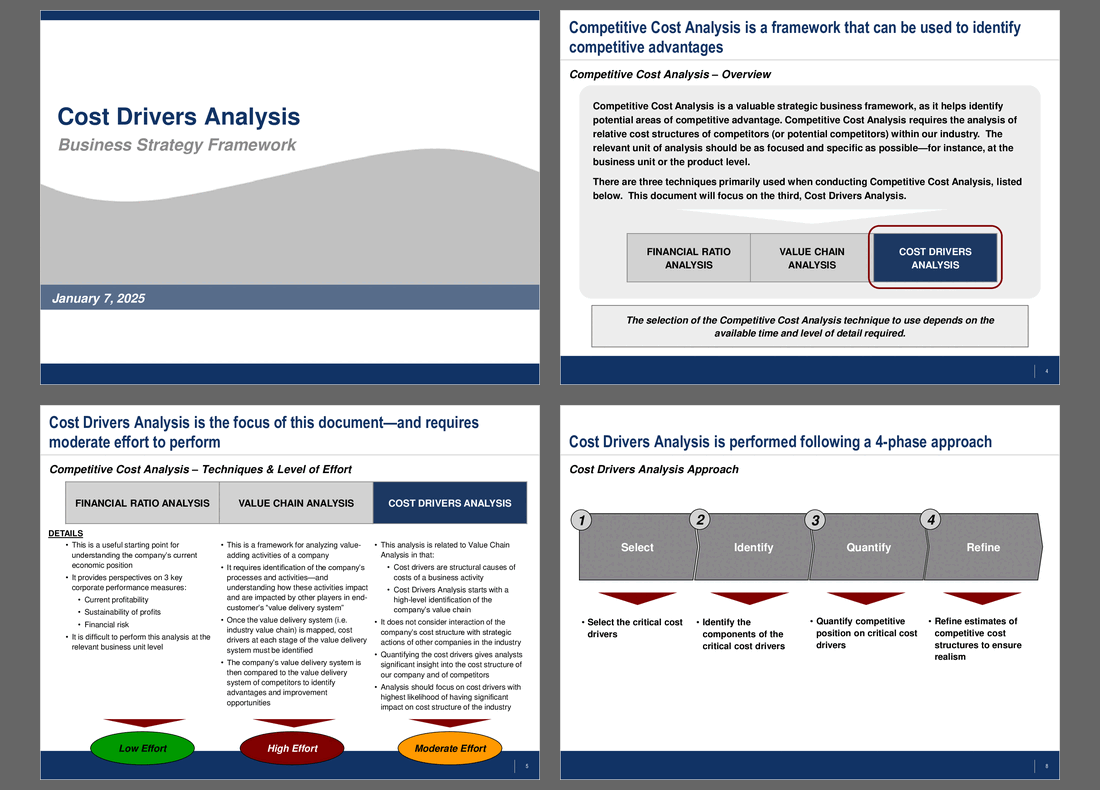
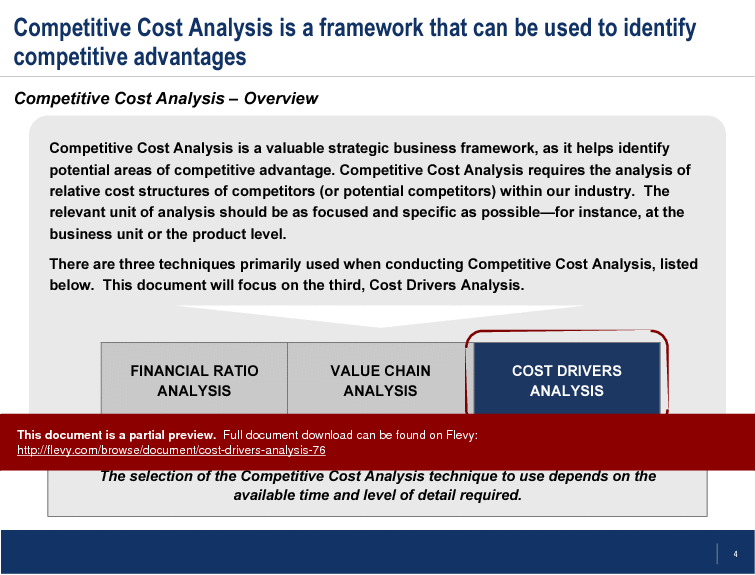
Competitive Cost Analysis is a valuable strategic business framework, as it helps identify potential areas of competitive advantage. Competitive Cost Analysis requires the analysis of relative cost structures of competitors (or potential competitors) within our industry. The relevant unit of analysis should be as focused and specific as possible—for instance, at the business unit or the product level.
There are three techniques primarily used when conducting Competitive Cost Analysis: Financial Ratios Analysis, Value Chain Analysis, and Cost Drivers Analysis. This document will focus on Cost Drivers Analysis.
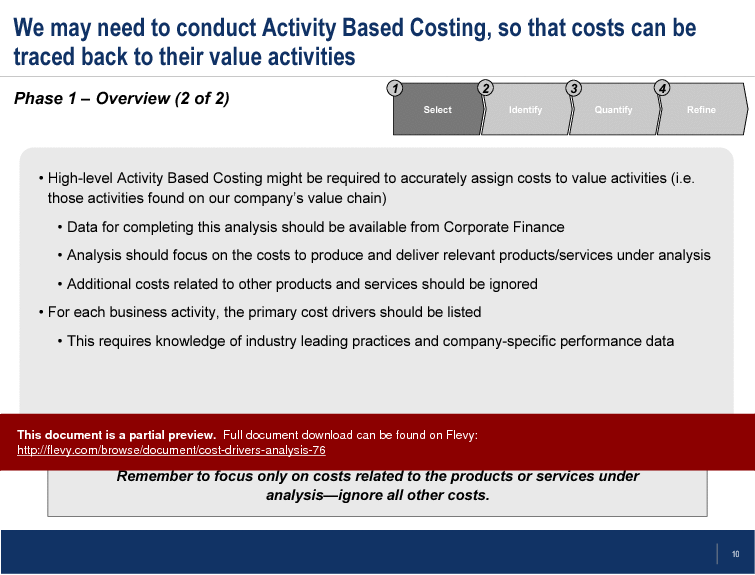
This document delves into the intricacies of Cost Drivers Analysis, offering a structured approach divided into distinct phases. Phase 1 emphasizes the necessity of Activity Based Costing to accurately allocate costs to value activities within the company's value chain. This phase underscores the importance of focusing solely on costs related to the products or services under analysis, ensuring that extraneous costs are excluded. The document highlights the need for data from Corporate Finance and knowledge of industry-leading practices to list primary cost drivers for each business activity.
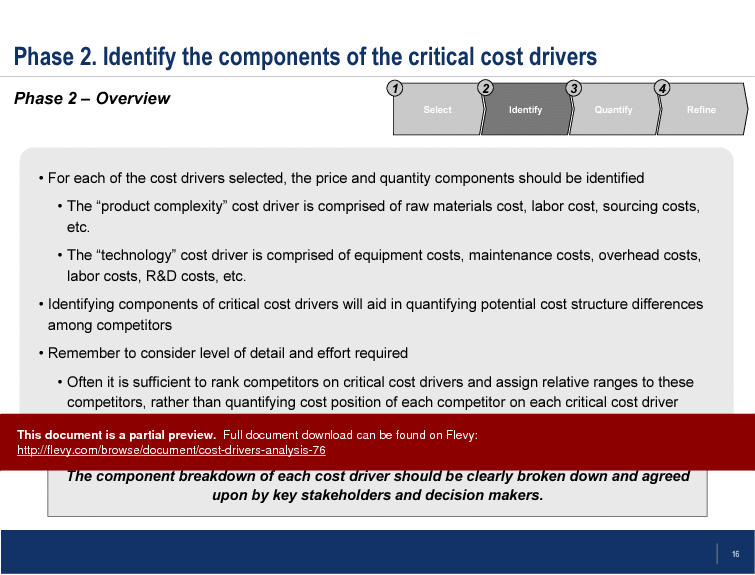
Phase 2 focuses on identifying the components of critical cost drivers, breaking them down into price and quantity elements. For instance, the "product complexity" cost driver includes raw materials, labor costs, and sourcing costs, while the "technology" cost driver encompasses equipment costs, maintenance costs, and R&D costs. This phase stresses the importance of considering the level of detail and effort required, advocating for ranking competitors on critical cost drivers rather than quantifying each competitor's cost position exhaustively.
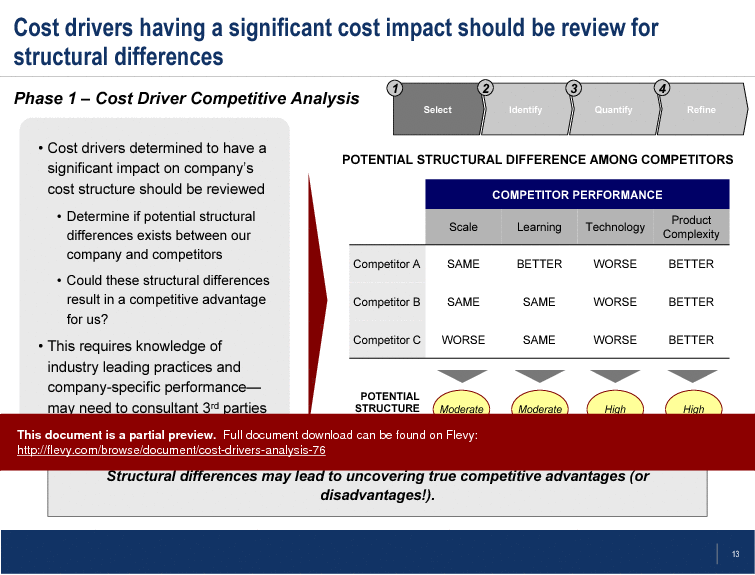
The document also covers the review of cost drivers with a significant impact on the company's cost structure for potential structural differences among competitors. This involves determining if these differences could result in a competitive advantage and may require consultation with third-party experts. The analysis aims to uncover true competitive advantages or disadvantages by examining potential structural differences in scale, learning, technology, and product complexity among competitors.
Got a question about the product? Email us at support@flevy.com or ask the author directly by using the "Ask the Author a Question" form. If you cannot view the preview above this document description, go here to view the large preview instead.
Executive Summary
This Cost Drivers Analysis presentation is crafted by former consultants from McKinsey, Bain, BCG, Deloitte, EY, and Capgemini, embodying a consulting-grade quality (not affiliated). It serves as a strategic framework for identifying competitive advantages through a detailed examination of cost structures within an industry. Buyers will learn to analyze critical cost drivers, quantify their impact, and refine their competitive positioning, ultimately enabling informed strategic decisions regarding pricing and operational efficiency.
Who This Is For and When to Use
• Corporate strategists focused on competitive positioning and cost efficiency
• Financial analysts tasked with cost structure evaluation and optimization
• Operations leaders looking to enhance productivity and reduce costs
• Business unit managers aiming to identify improvement opportunities
Best-fit moments to use this deck:
• During strategic planning sessions to assess competitive cost structures
• When evaluating operational efficiencies and identifying cost reduction opportunities
• In preparation for market entry or product launch to understand cost dynamics
Learning Objectives
• Define the framework of Competitive Cost Analysis and its relevance to strategic decision-making
• Identify critical cost drivers that significantly impact competitive positioning
• Quantify the competitive position on selected cost drivers using detailed cost data
• Refine estimates of competitive cost structures to ensure accuracy and realism
• Analyze structural differences among competitors to uncover potential advantages
• Develop actionable insights for product strategy and pricing decisions
Table of Contents
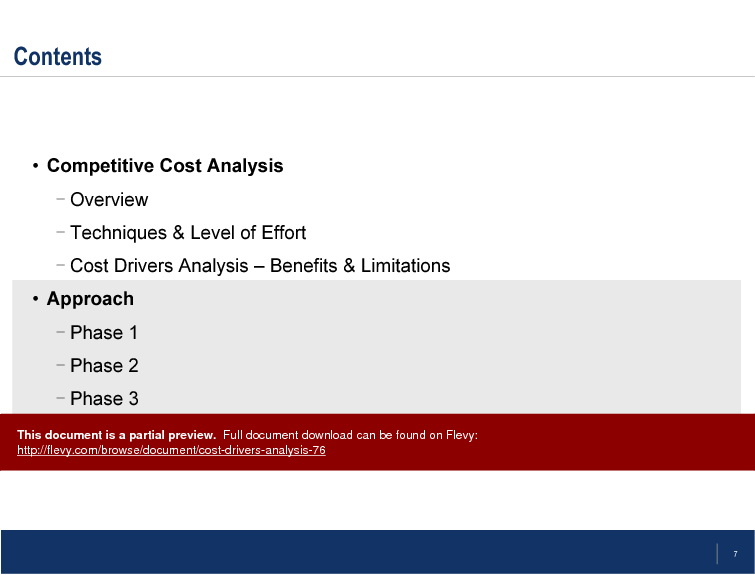
• Competitive Cost Analysis Overview (page 4)
• Techniques & Level of Effort (page 5)
• Cost Drivers Analysis – Benefits & Limitations (page 6)
• Approach (page 7)
• Phase 1: Select the Critical Cost Drivers (page 9)
• Phase 2: Identify Components of Critical Cost Drivers (page 16)
• Phase 3: Quantify Competitive Position (page 17)
• Phase 4: Refine Estimates of Competitive Cost Structures (page 18)
Primary Topics Covered
• Competitive Cost Analysis Overview - This section introduces the framework for identifying competitive advantages through cost structure analysis, emphasizing the need for focused analysis at the business unit or product level.
• Techniques & Level of Effort - Discusses 3 primary techniques for Competitive Cost Analysis, highlighting Cost Drivers Analysis as a moderate-effort approach that provides significant insights.
• Benefits and Limitations of Cost Drivers Analysis - Outlines the advantages of identifying improvement opportunities while addressing the time-consuming nature of isolating cost drivers.
• Four-Phase Approach - Details a structured methodology for conducting Cost Drivers Analysis, including selecting, identifying, quantifying, and refining cost drivers.
• Cost Driver Identification - Focuses on the selection of critical cost drivers and the importance of mapping them to value activities for broader impact assessment.
• Quantification of Cost Drivers - Describes methods for estimating competitive positions based on detailed cost data and production differences among competitors.
Deliverables, Templates, and Tools
• Framework for Competitive Cost Analysis to guide strategic evaluations
• Cost Driver Prioritization Matrix template for visualizing critical cost drivers
• Activity-Based Costing model to trace costs back to value activities
• Component breakdown templates for critical cost drivers
• Sanity check guidelines for validating cost estimates against competitor data
Slide Highlights
• Overview of Competitive Cost Analysis framework emphasizing its strategic importance
• Techniques and effort levels comparison chart illustrating the focus on Cost Drivers Analysis
• Benefits and limitations slide detailing the practical implications of the analysis
• Four-phase approach diagram outlining the structured methodology for conducting the analysis
• Cost Driver Prioritization Matrix showcasing the impact and likelihood of structural differences
Potential Workshop Agenda
Introduction to Cost Drivers Analysis (30 minutes)
• Overview of Competitive Cost Analysis and its relevance
• Discussion on the importance of cost structures in strategic planning
Phase 1: Selecting Critical Cost Drivers (60 minutes)
• Identify and map cost drivers to value activities
• Group exercise to prioritize critical cost drivers
Phase 2: Identifying Components of Cost Drivers (45 minutes)
• Break down selected cost drivers into their components
• Collaborate on identifying industry-specific factors
Phase 3: Quantifying Competitive Positions (60 minutes)
• Develop cost driver models using detailed cost data
• Analyze production differences among competitors
Phase 4: Refining Cost Structure Estimates (30 minutes)
• Review and validate cost estimates against competitor data
• Discuss implications for strategic decision-making
Customization Guidance
• Tailor the Cost Driver Prioritization Matrix to reflect specific industry dynamics and competitive landscape
• Adjust the component breakdown of critical cost drivers based on company-specific performance data
• Incorporate company terminology and metrics to ensure alignment with internal processes
Secondary Topics Covered
• Activity-Based Costing as a method for tracing costs to specific activities
• Structural differences in cost drivers among competitors and their implications
• The role of strategic actions in influencing cost structures
• Industry-specific factors affecting cost dynamics and competitive positioning
FAQ
What is Competitive Cost Analysis?
Competitive Cost Analysis is a strategic framework used to identify competitive advantages by analyzing the cost structures of competitors within an industry.
What are the main techniques used in Competitive Cost Analysis?
The primary techniques include Financial Ratio Analysis, Value Chain Analysis, and Cost Drivers Analysis, with a focus on the latter for detailed insights.
What are the benefits of Cost Drivers Analysis?
Cost Drivers Analysis helps identify improvement opportunities, anticipate competitor reactions, and enhance product strategy decisions such as pricing.
What are the limitations of Cost Drivers Analysis?
Identifying cost drivers can be time-consuming, and without a well-developed value chain, the analysis may overlook critical opportunities.
How is Cost Drivers Analysis structured?
The analysis follows a four-phase approach: selecting critical cost drivers, identifying their components, quantifying competitive positions, and refining estimates for realism.
What is the significance of the Cost Driver Prioritization Matrix?
The matrix helps visualize the impact and likelihood of structural differences among competitors, aiding in the selection of critical cost drivers.
How do I validate cost estimates in Cost Drivers Analysis?
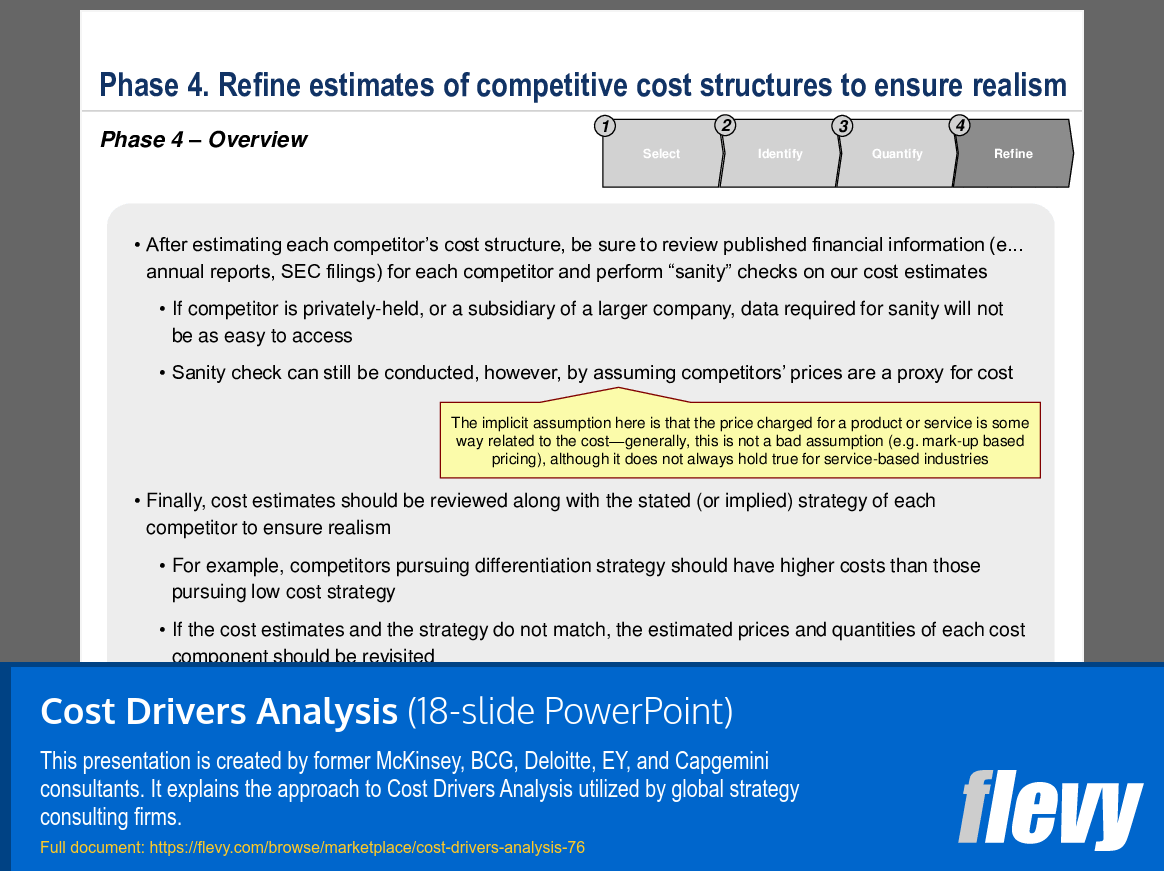
Review published financial information and perform sanity checks against competitor pricing to ensure the realism of cost estimates.
What role does Activity-Based Costing play in this analysis?
Activity-Based Costing helps trace costs back to specific value activities, providing a clearer understanding of cost drivers and their impact.
Glossary
• Competitive Cost Analysis - A framework for identifying competitive advantages through cost structure evaluation.
• Cost Drivers Analysis - A method for analyzing the structural causes of costs within a business activity.
• Activity-Based Costing - A costing method that assigns costs to activities based on their use of resources.
• Value Chain - A model that describes the full range of activities required to create a product or service.
• Cost Driver - A factor that causes a change in the cost of an activity.
• Prioritization Matrix - A tool used to rank cost drivers based on their impact and likelihood of structural differences.
• Sanity Check - A method for validating estimates against known data or benchmarks.
• Production Differences - Variations in production processes that can affect cost structures among competitors.
• Component Breakdown - The detailed disaggregation of cost drivers into their constituent parts.
• Strategic Decision-Making - The process of making choices that will shape the direction of an organization.
• Operational Efficiency - The ability to deliver products or services in the most cost-effective manner.
• Competitive Positioning - The strategy of establishing a brand or product in relation to competitors.

Source: Best Practices in Cost Optimization PowerPoint Slides: Cost Drivers Analysis PowerPoint (PPT) Presentation Slide Deck, LearnPPT Consulting
This document is available as part of the following discounted bundle(s):
Save %!
Competitive and Company Cost Analysis
This bundle contains 5 total documents. See all the documents to the right.
|
Receive our FREE presentation on Operational Excellence
This 50-slide presentation provides a high-level introduction to the 4 Building Blocks of Operational Excellence. Achieving OpEx requires the implementation of a Business Execution System that integrates these 4 building blocks. |