Your AI assistant becomes a Flevy-powered consultant, with direct access to our full library of frameworks, templates, and case studies. Free to connect. No account, sign-in, or API key required.
STEP 1 · CHOOSE YOUR ASSISTANT
STEP 2 · CONNECT
1
Copy the Flevy MCP URL below.
2
Open the Claude connector settings and choose Add Custom Connector. Paste the URL and name it Flevy.
This presentation is created by former McKinsey, BCG, Deloitte, EY, and Capgemini consultants. It provides a comprehensive 600+ question Strategic Sourcing Assessment across 18 spend categories.
Provides a comprehensive 600+ question Strategic Sourcing Assessment to holistically evaluate your organization's sourcing and procurement practices across 18 spend categories.
Helps evaluate whether every purchasing decision not only brings the best possible value in terms of price and quality, but also aligns with the organization's broader strategic goals.
Enables you to make informed Procurement and Sourcing decisions that reduce costs, enhance efficiency, and foster long-term supplier relationships.
STRATEGIC SOURCING PPT TEMPLATE DESCRIPTION
Editor Summary
Strategic Sourcing Assessment is a 108-slide PowerPoint presentation providing a 600+ question sourcing and procurement diagnostic mapped across 18 spend categories and 9 assessment areas (Spend Analysis; Supplier Analysis; Market Analysis; Sourcing Strategy; Procurement Levers; Contract Management; Risk Management; Technology & Innovation; Sustainability & Social Responsibility).
Read moreDeveloped by former McKinsey, BCG, Deloitte, EY, and Capgemini consultants, it targets procurement leaders, category managers, CFOs, and management consultants evaluating sourcing practices. Sold as a digital download on Flevy with immediate digital download.
Use this assessment when an organization needs a structured diagnostic of procurement practices—such as before a sourcing transformation, post-merger integration, or to prioritize savings and risk actions across spend categories.
Procurement Director running a baseline spend analysis to identify concentration and savings opportunities across direct and indirect spend categories.
Category Manager evaluating supplier risk, contract terms, and sourcing levers for a specific category like IT or Logistics.
CFO prioritizing procurement initiatives by risk and value to inform capital allocation.
Management consultant conducting a cross-functional procurement diagnostic with finance and operations.
The multi-area, category-mapped diagnostic approach mirrors consulting-style procurement diagnostics used at firms such as McKinsey and BCG.
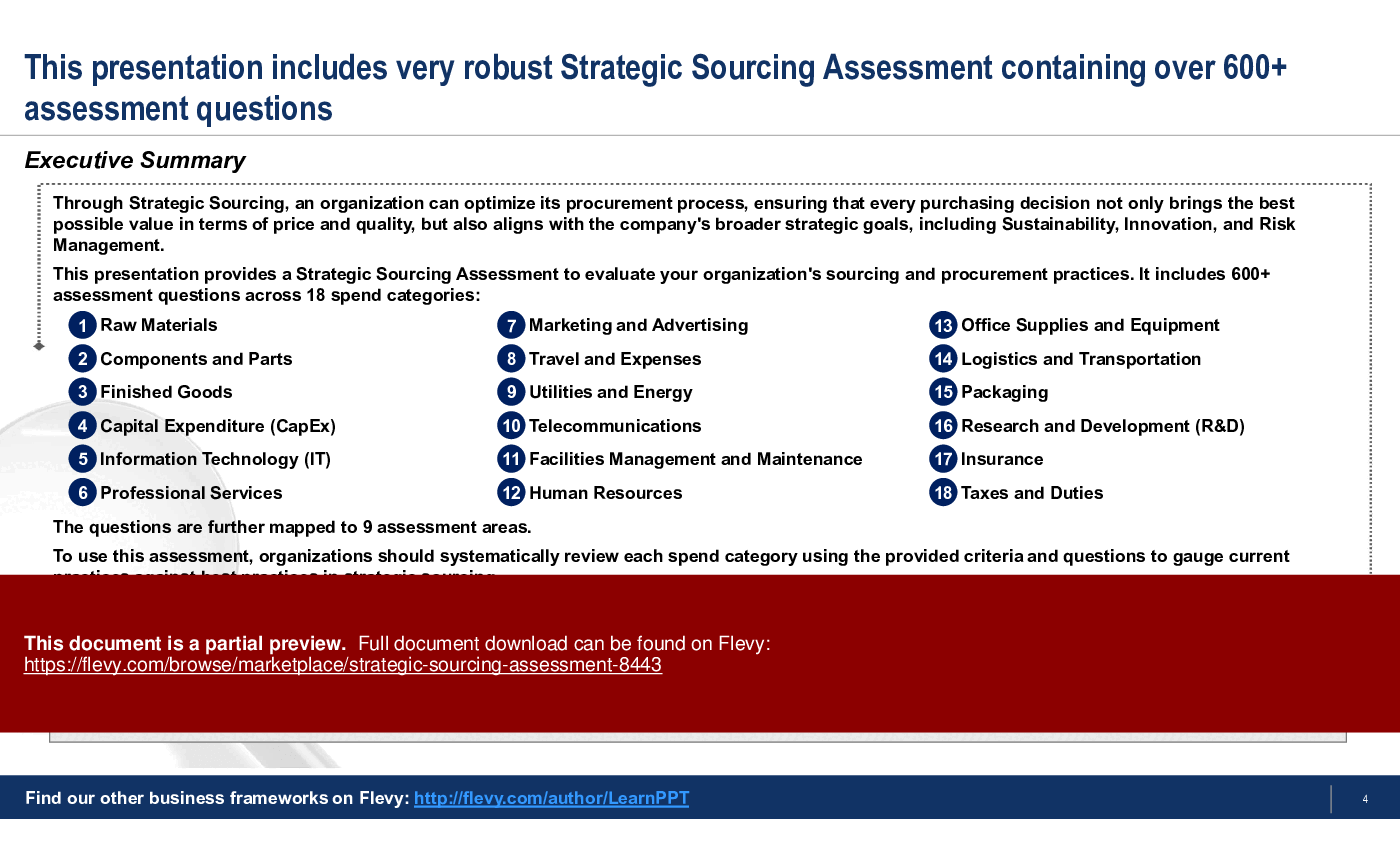
Through Strategic Sourcing, an organization can optimize its procurement process, ensuring that every purchasing decision not only brings the best possible value in terms of price and quality, but also aligns with the company's broader strategic goals, including Sustainability, Innovation, and Risk Management.
This presentation provides a Strategic Sourcing Assessment to evaluate your organization's sourcing and procurement practices. It includes 600+ assessment questions across 18 spend categories:
1. Raw Materials: This includes raw inputs required for manufacturing processes, such as metals, chemicals, textiles, and plastics.
2. Components and Parts: Procurement of specific parts or components needed for the production of finished goods.
3. Finished Goods: For businesses involved in retail or resale, the purchase of finished goods for sale to customers.
4. Capital Expenditure (CapEx): Investments in physical assets such as machinery, equipment, and real estate.
5. Information Technology (IT): Expenses related to hardware (computers, servers), software licenses, cloud services, and IT support services.
6. Professional Services: Fees paid for external expertise, consulting, legal services, auditing, and accounting.
7. Marketing and Advertising: Costs associated with promoting the business, including advertising, market research, public relations, and digital marketing.
8. Travel and Expenses: Expenses related to business travel, accommodations, meals, and entertainment.
9. Utilities and Energy: Spend on electricity, gas, water, and other utilities critical for operations.
10. Telecommunications: Costs for communication services such as telephone, internet, and data services.
11. Facilities Management and Maintenance: Expenses for maintaining and operating physical facilities, including cleaning, security, and repairs.
12. Human Resources: Costs related to employee benefits, recruitment, training, and development.
13. Office Supplies and Equipment: Purchases of office supplies, furniture, and equipment needed for business operations.
14. Logistics and Transportation: Expenses related to the storage, distribution, and transportation of goods.
15. Packaging: Costs of packaging materials and supplies used to prepare goods for shipment or sale.
16. Research and Development (R&D): Investments in innovation, product development, and market research.
17. Insurance: Premiums paid for various types of insurance coverage, including property, liability, and health insurance.
18. Taxes and Duties: Spend on taxes, duties, and other government levies related to business operations.
The questions are further mapped to 9 assessment areas:
To use this assessment, organizations should systematically review each spend category using the provided criteria and questions to gauge current practices against best practices in strategic sourcing.
The assessment should be conducted by cross-functional teams, including procurement, finance, and other relevant departments, to ensure a comprehensive understanding of the organization's procurement landscape.
Insights gained from the assessment can inform Procurement/Sourcing Strategies, as well as the identification and prioritization of action items.
This comprehensive assessment not only identifies key areas for improvement in your sourcing strategy, but also provides actionable insights tailored to your organization's unique procurement landscape. By leveraging this assessment, executives can drive significant operational efficiencies and enhance overall procurement effectiveness across all spend categories.
Got a question about the product? Email us at support@flevy.com or ask the author directly by using the "Ask the Author a Question" form. If you cannot view the preview above this document description, go here to view the large preview instead.
TOPIC FAQ
What are the main assessment areas in a strategic sourcing diagnostic?
A comprehensive strategic sourcing diagnostic typically covers multiple dimensions of procurement; the referenced assessment maps questions to nine areas: Spend Analysis, Supplier Analysis, Market Analysis, Sourcing Strategy, Procurement Levers, Contract Management, Risk Management, Technology & Innovation, and Sustainability & Social Responsibility, totaling 9 assessment areas.
How should I organize teams to run a sourcing assessment?
The assessment should be run by cross-functional teams to capture procurement, financial, and operational perspectives; the document recommends involving procurement, finance, and other relevant departments and reviewing each category systematically across the 18 spend categories.
Which spend categories should a sourcing diagnostic include?
A thorough diagnostic reviews both direct and indirect categories; the provided assessment explicitly covers 18 categories including Raw Materials, Components, Finished Goods, CapEx, IT, Professional Services, Marketing, Travel, Utilities, and others, totaling 18 spend categories.
How extensive should the question set be to benchmark sourcing practices?
A robust benchmark uses a broad and detailed question set to cover all relevant areas; the Strategic Sourcing Assessment example offers more than 600 questions mapped across its 18 spend categories and 9 assessment areas, providing 600+ assessment questions.
What should buyers look for when choosing a sourcing assessment template?
Buyers should look for category coverage, mapping to core procurement dimensions (e.g., Spend Analysis, Contract Management), and applicability for cross-functional teams; the Flevy Strategic Sourcing Assessment supplies mapping to 9 assessment areas and coverage across 18 spend categories as useful selection criteria.
Will buying a pre-built sourcing assessment save time versus building one internally?
Purchasing a pre-built assessment can accelerate diagnostics by providing a ready question set and category mapping rather than designing questions from scratch; the Flevy Strategic Sourcing Assessment offers 600+ pre-mapped questions across 18 spend categories to reduce setup time.
How can I evaluate supplier sustainability and social responsibility during sourcing?
Incorporate specific criteria and questions mapped to the Sustainability & Social Responsibility assessment area and apply them across relevant spend categories; the assessment includes a dedicated Sustainability & Social Responsibility area to guide cross-category evaluation.
What diagnostic areas matter most for post-merger procurement integration?
For integration, focus on Spend Analysis, Supplier Analysis, Contract Management, Risk Management, and Technology & Innovation to harmonize suppliers, terms, systems, and exposures across entities; these areas are all covered within the assessment's mapped framework.
This PPT slide template provides an overview of Strategic Sourcing, focusing on its role in optimizing procurement processes to maximize value while aligning with organizational goals like sustainability, innovation, and risk management. A systematic analysis of spending patterns, supplier performance, and market trends leads to informed decisions that lower costs and improve efficiency. Benefits include reduced procurement costs, enhanced supplier performance, improved quality, compliance with regulatory standards, and increased supply chain agility. The Strategic Sourcing Assessment, comprising over 600 questions across 18 spend categories, offers a structured framework for evaluating procurement practices. Involving cross-functional teams, particularly procurement and finance, is essential for a holistic view. Insights from the assessment inform procurement strategies and prioritize action items, with regular reassessment necessary for adapting to changing market conditions.
This PPT slide template outlines a structured approach to assessing IT spending, focusing on Spend Analysis and Supplier Analysis. Spend Analysis includes evaluating IT expenditures through questions on conducting thorough reviews, benchmarking against industry standards, tracking software licensing costs for compliance, and adjusting IT budgets to align with business needs. Supplier Analysis emphasizes vendor management by assessing supplier performance against technology standards, managing relationships with key IT vendors for long-term benefits, and evaluating IT vendors' cybersecurity practices to ensure compliance with data protection regulations. This framework enables organizations to critically assess IT investments for effectiveness and security.
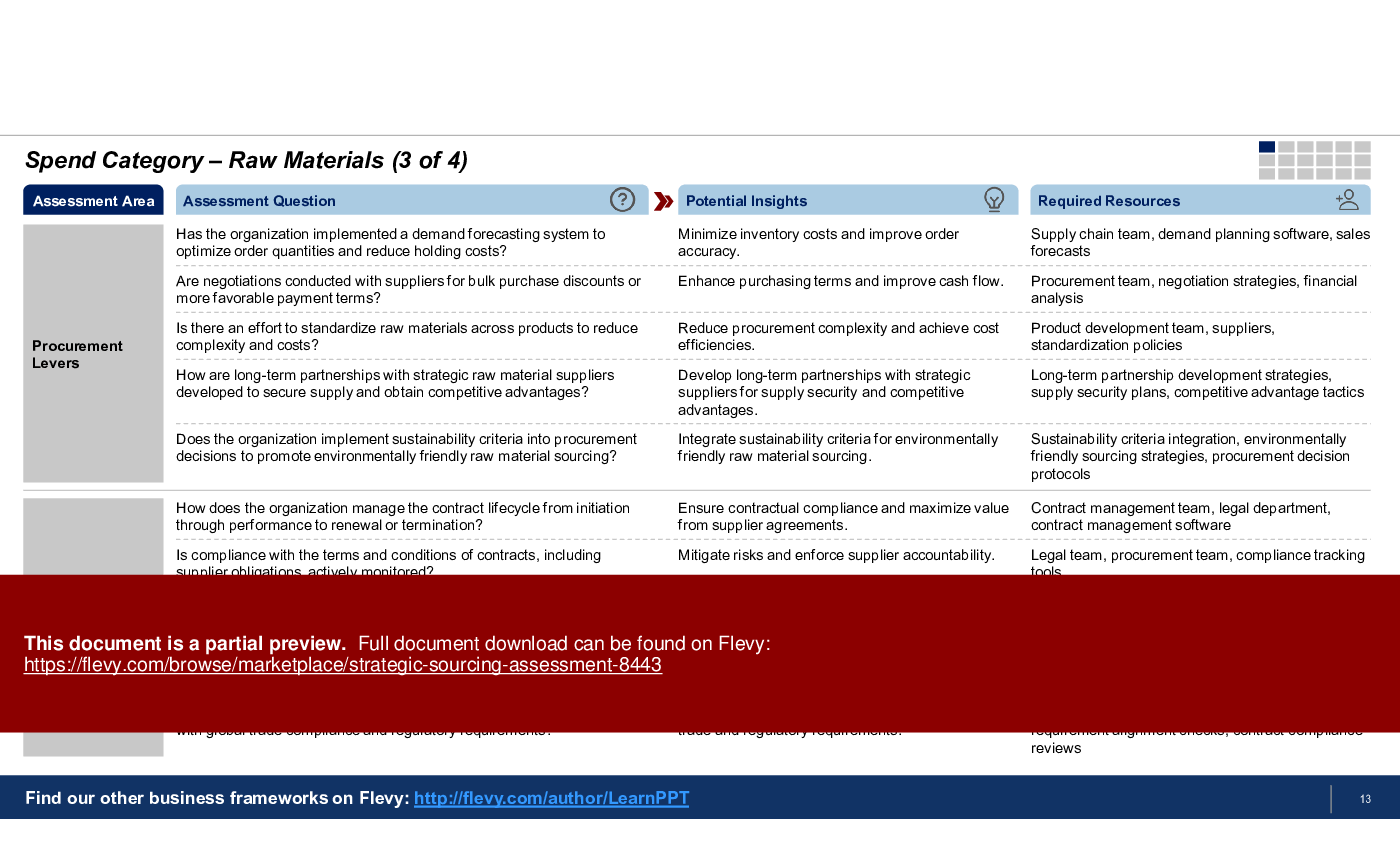
This PPT slide template outlines a framework for assessing raw materials spend, focusing on Spend Analysis and Sourcing Strategy. The Spend Analysis section includes questions on past spending trends, supplier distribution, and cost-saving opportunities, encouraging organizations to identify major cost drivers and forecast future spending. The Sourcing Strategy emphasizes supplier management and risk assessment, prompting organizations to evaluate onboarding processes, compliance, and supplier performance, particularly in delivery timeliness and responsiveness. Additionally, a comprehensive risk assessment for each supplier should consider financial and geopolitical factors to identify potential supply chain disruptions and develop mitigation strategies. This analysis enhances supply chain resilience, optimizes costs, and ensures sustainable sourcing practices.
This PPT slide template presents a structured assessment framework for evaluating expenditures on professional services in legal, consulting, and accounting sectors. It consists of 2 main sections: Spend Analysis and Supplier Analysis. The Spend Analysis section includes questions on conducting comprehensive spending reviews, tracking expenditures, ensuring competitive pricing, and preventing scope creep, all aimed at identifying cost optimization opportunities. The Supplier Analysis section focuses on evaluating service provider performance and adherence to ethical standards, emphasizing the need for a formal onboarding process and risk assessments. Insights and resources, such as finance teams and spend analysis software, provide a roadmap for enhancing professional services procurement and aligning spending with strategic objectives.
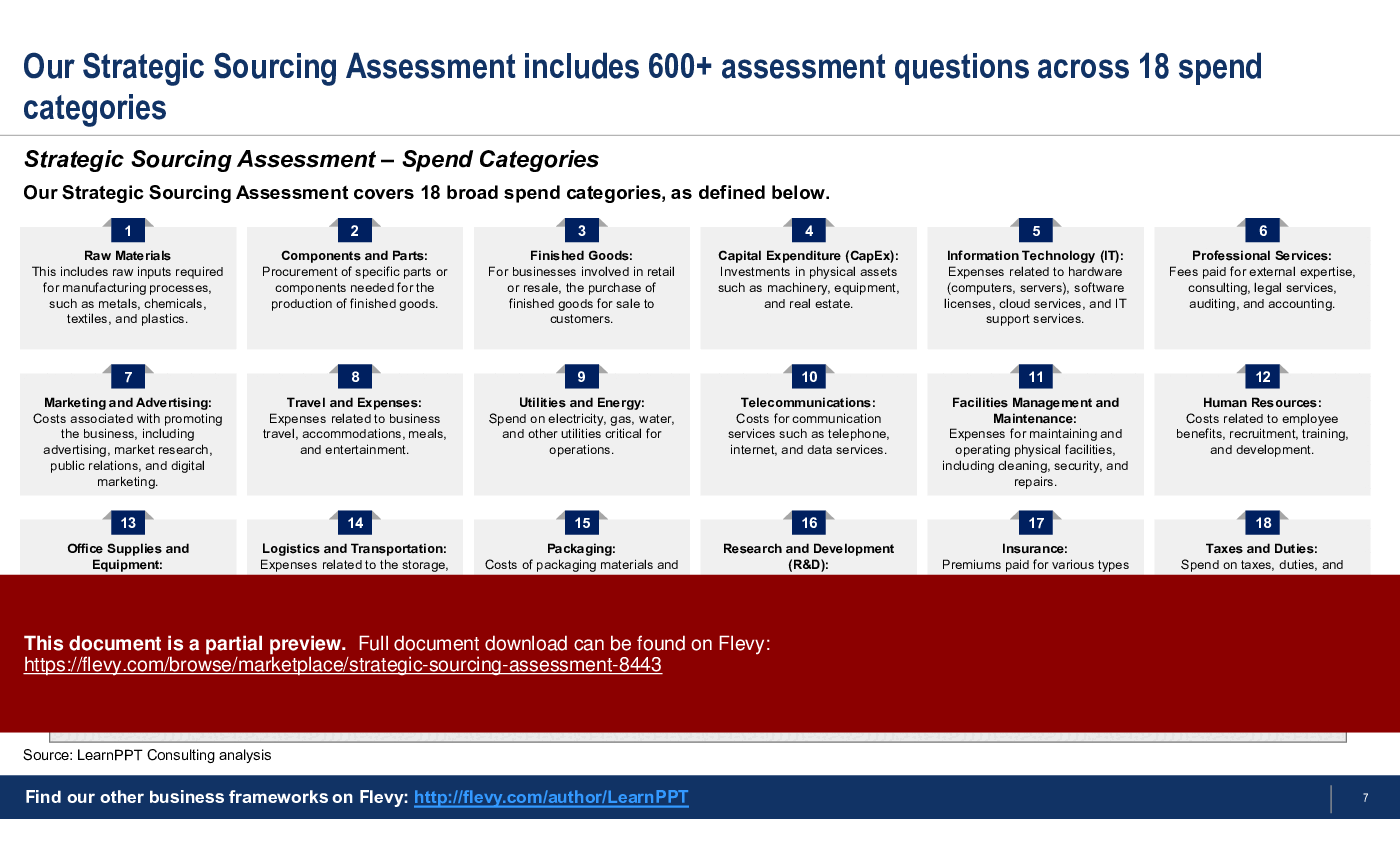
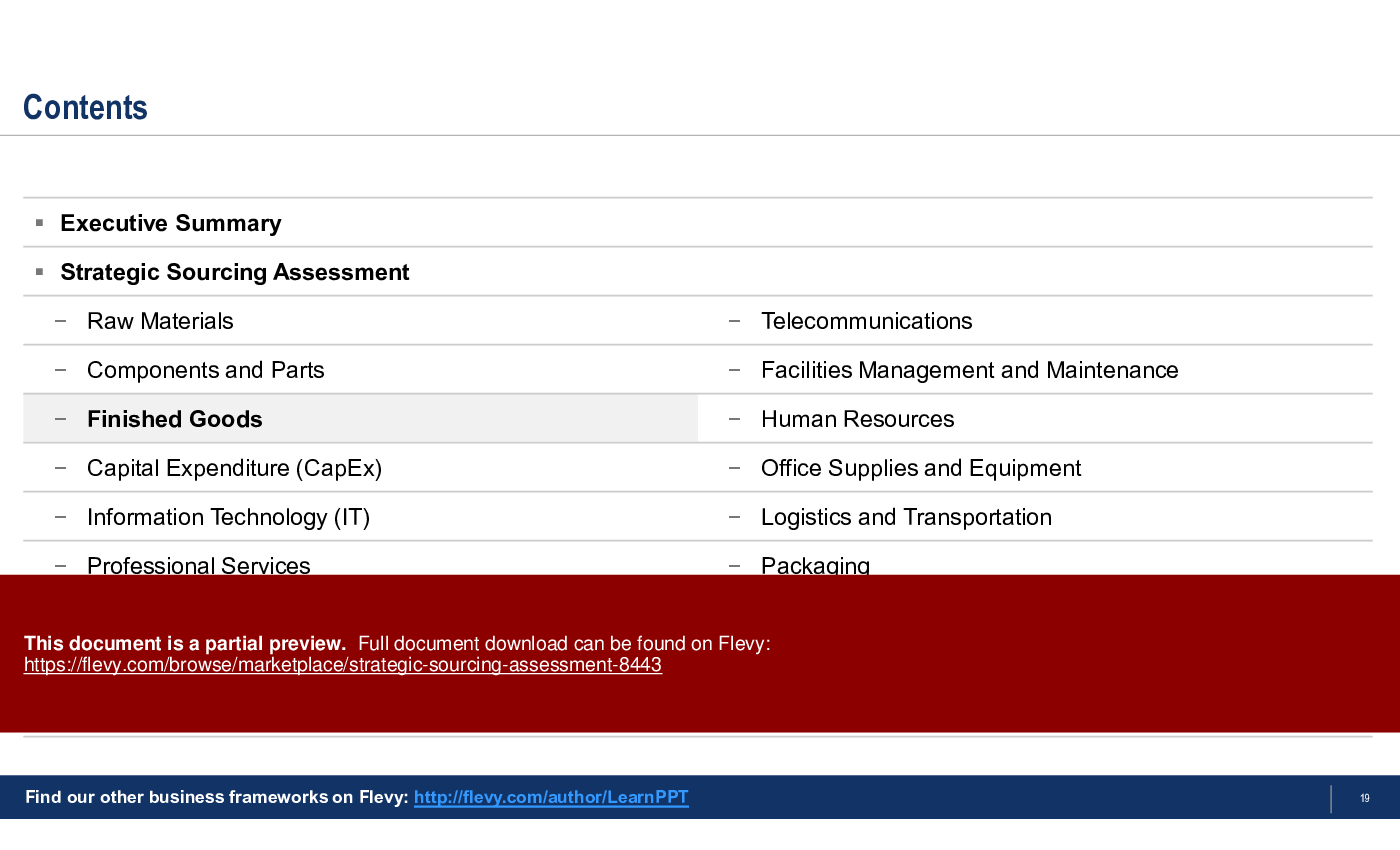
This PPT slide template provides an overview of a Strategic Sourcing Assessment, detailing 18 distinct spend categories relevant to various industries. Key categories include "Raw Materials," which covers essential inputs like metals and chemicals for manufacturing; "Components and Parts," necessary for producing finished goods; and "Finished Goods," items purchased for resale. Other categories are "Capital Expenditure," encompassing investments in machinery and real estate, and "Information Technology (IT)," detailing hardware and software expenses. Operational costs include "Utilities and Energy," while marketing and advertising costs are emphasized for business promotion. Additional categories like "Research and Development (R&D)" and "Human Resources" highlight strategic investments in innovation and workforce development. These categories are adaptable, allowing organizations to tailor assessments based on specific operational needs, crucial for optimizing sourcing strategies.
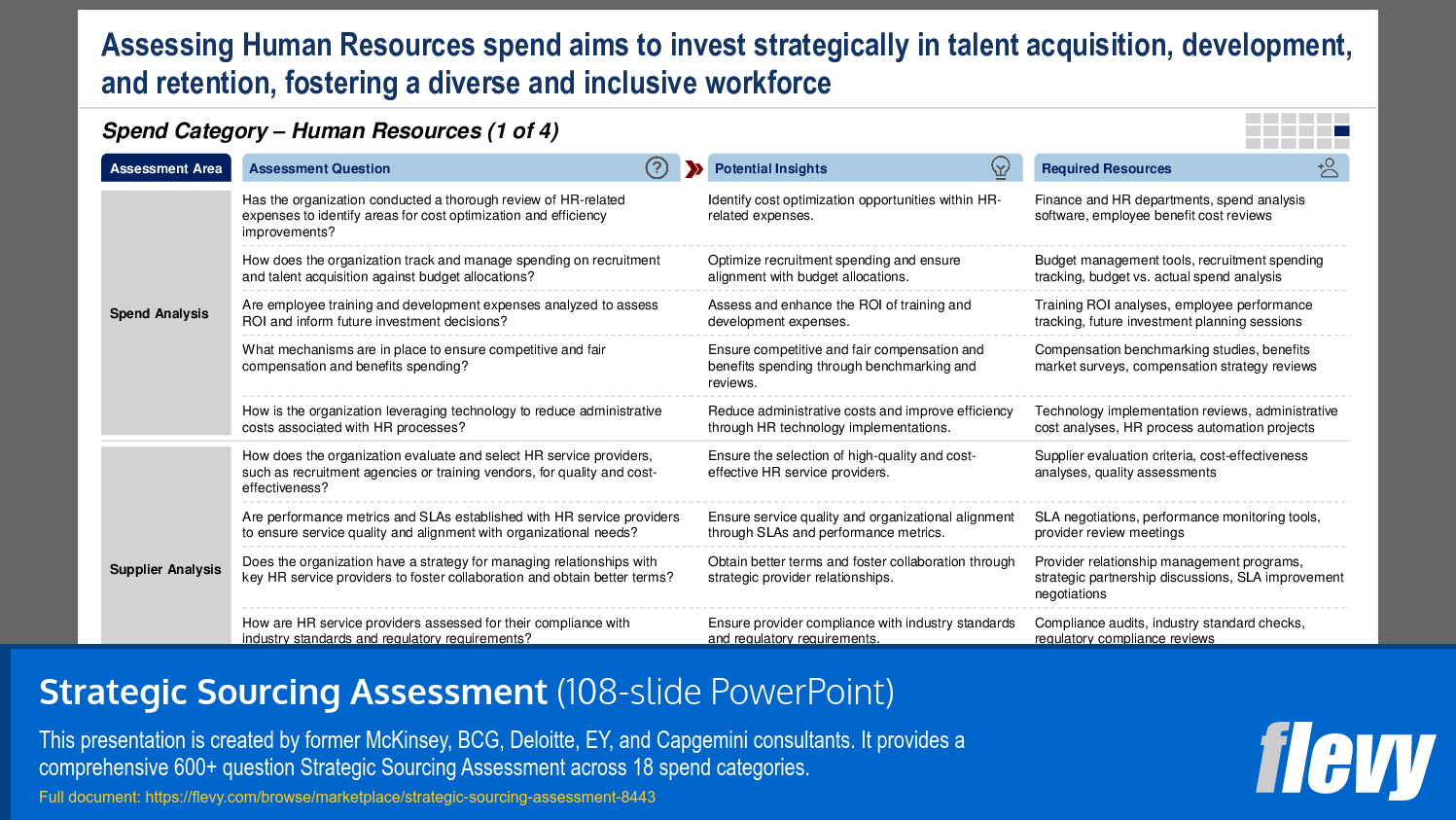
This PPT slide template assesses human resources spending to enhance talent acquisition, development, and retention while promoting a diverse workforce. It features 2 sections: Spend Analysis and Supplier Analysis.
The Spend Analysis section poses critical questions regarding HR-related expenses, emphasizing cost optimization, tracking recruitment spending against budgets, and analyzing training ROI. It highlights the importance of fair compensation through benchmarking and leveraging technology to reduce administrative costs.
The Supplier Analysis section evaluates HR service providers, focusing on recruitment agencies and training vendors. It discusses performance metrics and Service Level Agreements (SLAs) to ensure alignment with organizational needs.
Actionable insights suggest optimizing recruitment spending and enhancing training ROI, alongside required resources for effective implementation. This framework aids organizations in refining HR strategies and maximizing investments in human capital.
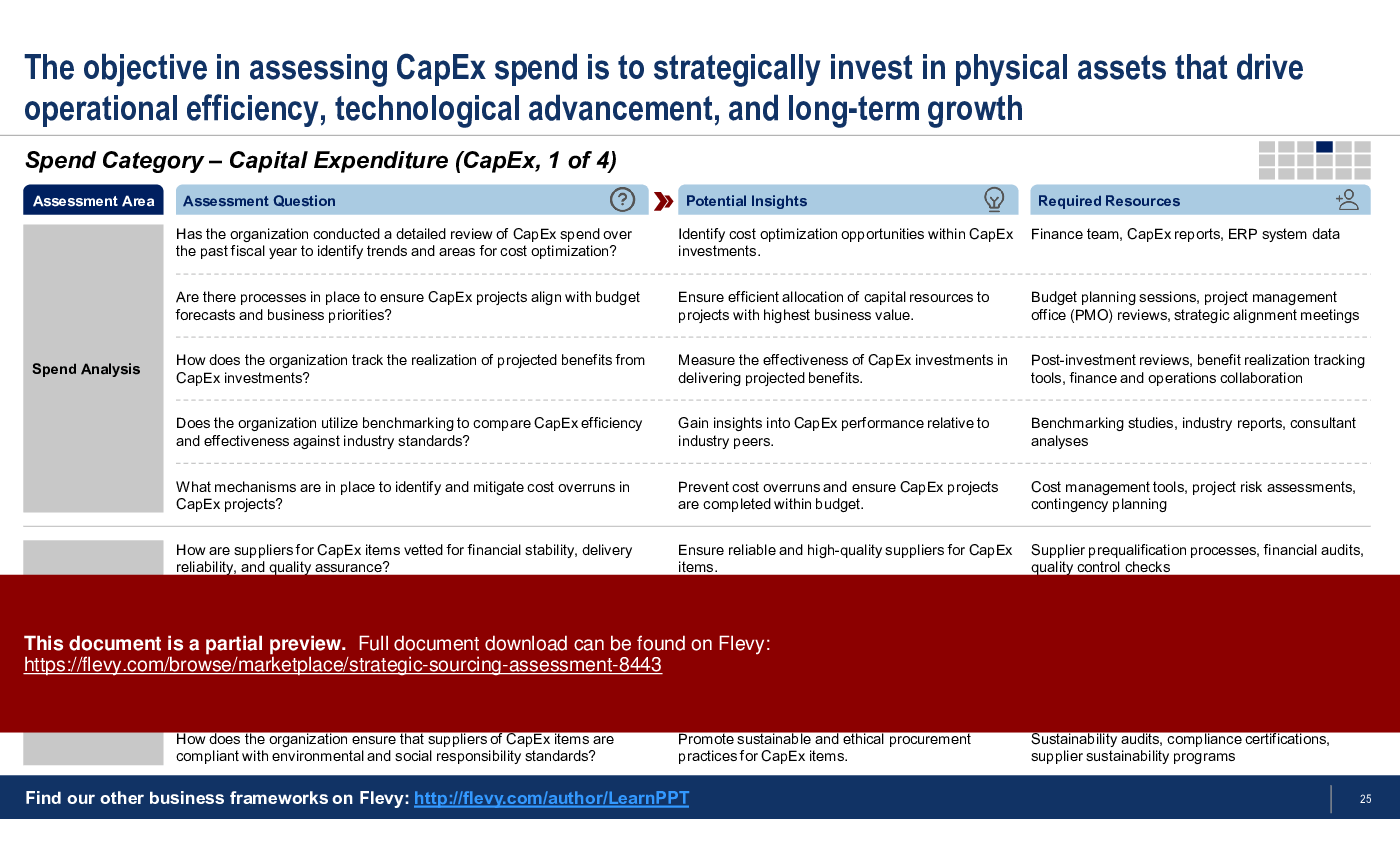
This PPT slide template focuses on Capital Expenditure (CapEx) assessment, emphasizing investment optimization in physical assets. The Spend Analysis section poses key questions: Has the organization reviewed its CapEx spending for cost optimization? Are CapEx projects aligned with budget forecasts and business priorities? How are benefits from CapEx investments tracked for effectiveness? Benchmarking against industry standards provides performance insights, while mechanisms for identifying and mitigating cost overruns ensure projects remain within budget. The Supplier Analysis section addresses financial vetting processes and quality assurance for CapEx items. It explores negotiation strategies for favorable terms and warranties, regular supplier performance reviews for cost optimization, and the promotion of sustainable and ethical procurement practices. This guide aids organizations in refining CapEx strategies to align investments with business objectives.
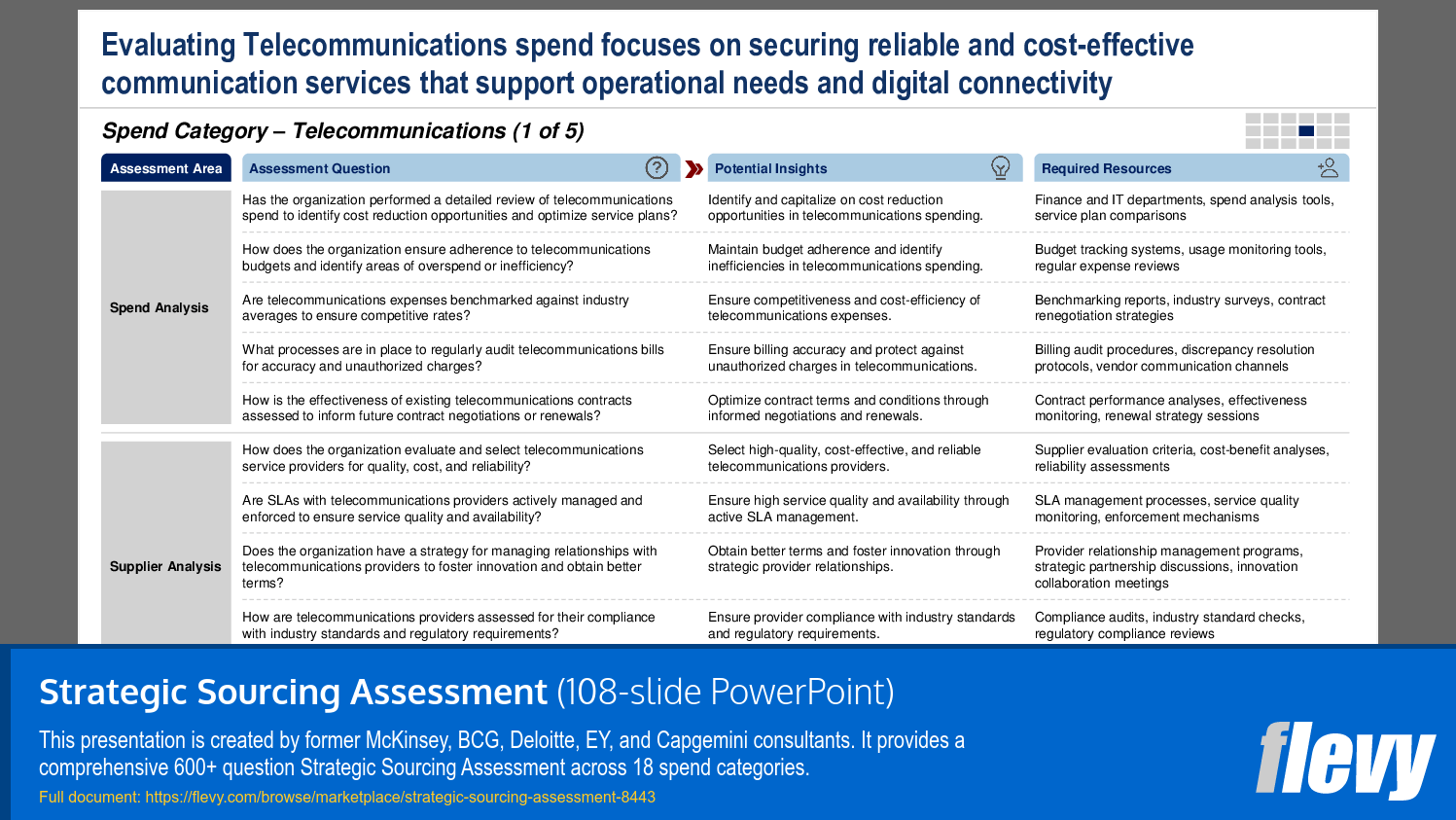
This PPT slide template analyzes telecommunications spending through Spend Analysis and Supplier Analysis. The Spend Analysis section prompts organizations to evaluate their telecommunications expenditures for cost reduction opportunities and benchmark against industry averages to secure competitive rates. Regular audits of telecommunications bills are essential for accuracy and preventing unauthorized charges, while assessing existing contracts aids informed negotiations during renewals. The Supplier Analysis section emphasizes a robust evaluation process for selecting telecommunications providers based on quality, cost, and reliability. Active management of Service Level Agreements (SLAs) is vital for service quality, and fostering innovation through strong provider relationships can lead to better terms and enhanced services. Compliance with industry standards and regulatory requirements mitigates risks associated with telecommunications services.
Source: Best Practices in Strategic Sourcing PowerPoint Slides: Strategic Sourcing Assessment PowerPoint (PPTX) Presentation Slide Deck, LearnPPT Consulting
This presentation is created by former McKinsey, BCG, Deloitte, EY, and Capgemini consultants. It provides a comprehensive 600+ question Strategic Sourcing Assessment across 18 spend categories.
We are a team of management consultants trained by top tier global consulting firms (including McKinsey, BCG, Deloitte, EY, Capgemini) with a collective experience of several decades. We specialize in business frameworks based on real-life consulting engagements.
We have served 100s of clients that range from Fortune 500 companies to tech startups to
... [read more] $1B+ private companies.
Utilize our consulting frameworks to apply structured thinking & analysis to address your business challenges, uncover strategic insights, and implement workable solutions. Our PowerPoint presentations follow traditional consulting slide design formats, starting with a clear slide headline. Easily customize and repurpose our slides for your own business presentations.
Beyond business frameworks & methodologies, we also offer PowerPoint templates and other business templates. Our templates are professionally designed and have been used in thousands of deliverables & work products across hundreds of clients.
Since 2012, we have provided business templates to over 10,000 businesses and organizations of all sizes, from startups and small businesses to the Fortune 100, in over 130 countries.
"I am extremely grateful for the proactiveness and eagerness to help and I would gladly recommend the Flevy team if you are looking for data and toolkits to help you work through business solutions."
– Trevor Booth, Partner, Fast Forward Consulting
"As an Independent Management Consultant, I find Flevy to add great value as a source of best practices, templates and information on new trends. Flevy has matured and the quality and quantity of the library is excellent. Lastly the price charged is reasonable, creating a win-win value for
the customer, Flevy and the various authors. This is truly a service that benefits the consulting industry and associated clients. Thanks for providing this service.
"
– Jim Schoen, Principal at FRC Group
"My FlevyPro subscription provides me with the most popular frameworks and decks in demand in today’s market. They not only augment my existing consulting and coaching offerings and delivery, but also keep me abreast of the latest trends, inspire new products and service offerings for my practice, and educate me
in a fraction of the time and money of other solutions. I strongly recommend FlevyPro to any consultant serious about success.
"
– Bill Branson, Founder at Strategic Business Architects
"[Flevy] produces some great work that has been/continues to be of immense help not only to myself, but as I seek to provide professional services to my clients, it gives me a large "tool box" of resources that are critical to provide them with the quality of service and outcomes they are expecting."
– Royston Knowles, Executive with 50+ Years of Board Level Experience
"FlevyPro provides business frameworks from many of the global giants in management consulting that allow you to provide best in class solutions for your clients."
– David Harris, Managing Director at Futures Strategy
"As a small business owner, the resource material available from FlevyPro has proven to be invaluable. The ability to search for material on demand based our project events and client requirements was great for me and proved very beneficial to my clients. Importantly, being able to easily edit and tailor
the material for specific purposes helped us to make presentations, knowledge sharing, and toolkit development, which formed part of the overall program collateral. While FlevyPro contains resource material that any consultancy, project or delivery firm must have, it is an essential part of a small firm or independent consultant's toolbox.
"
– Michael Duff, Managing Director at Change Strategy (UK)
"As a consultant requiring up to date and professional material that will be of value and use to my clients, I find Flevy a very reliable resource.
The variety and quality of material available through Flevy offers a very useful and commanding source for information. Using Flevy saves me time, enhances my expertise and ends up being a good decision."
– Dennis Gershowitz, Principal at DG Associates
"As a consulting firm, we had been creating subject matter training materials for our people and found the excellent materials on Flevy, which saved us 100's of hours of re-creating what already exists on the Flevy materials we purchased."
– Michael Evans, Managing Director at Newport LLC
Save with Bundles
This document is available as part of the following discounted bundle(s):
Download our free compilation of 50+ Strategy & Transformation slides and templates. Frameworks include McKinsey 7-S, Balanced Scorecard, Disruptive Innovation, BCG Curve, and many more.
Download our free compilation of 50+ Strategy & Transformation slides and templates. Frameworks include McKinsey 7-S, Balanced Scorecard, Disruptive Innovation, BCG Curve, and many more.

 Click main image to view in full screen. Unlock all 11 preview images: