
 Click main image to view in full screen. Unlock all 32 preview images:
SMED (Single-Minute Exchange of Die) Implementation Toolkit – PowerPoint PPTX Template
PowerPoint (PPTX) 107 Slides


BENEFITS OF THIS DOWNLOADABLE POWERPOINT DOCUMENT
- Maximize machine uptime by converting stopped time into productive output.
- Strengthen market competitiveness with flexible, small-lot production.
- Enhance product quality and safety by eliminating setup guesswork.
SETUP REDUCTION PPT TEMPLATE DESCRIPTION
SMED & QUICK CHANGEOVER TRAINING PRESENTATION & IMPLEMENTATION TOOLKIT
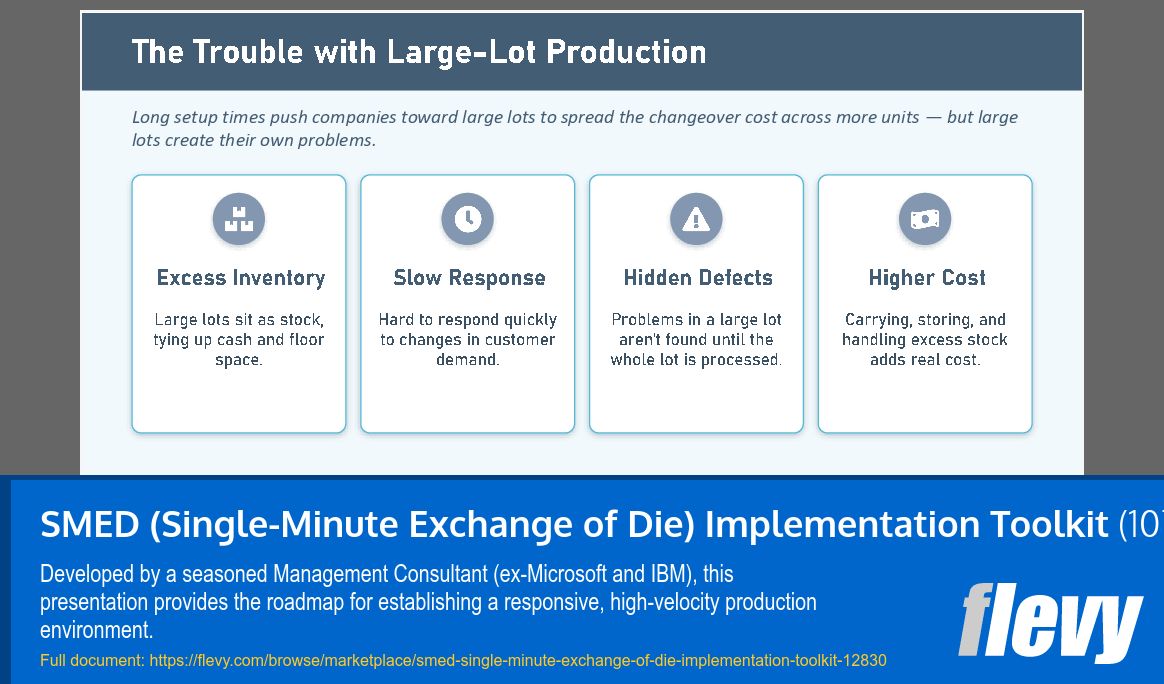
By transforming equipment adjustments from a major source of downtime into a streamlined, predictable routine, SMED eliminates the hidden barriers to manufacturing agility. Long setup times typically trap factories into high-inventory, large-lot production cycles. This comprehensive master toolkit delivers the technical blueprint required to cut equipment changeover times from hours down to fewer than 10 minutes through a systematic, three-stage approach that optimizes both internal and external setup tasks.
EXECUTIVE SUMMARY
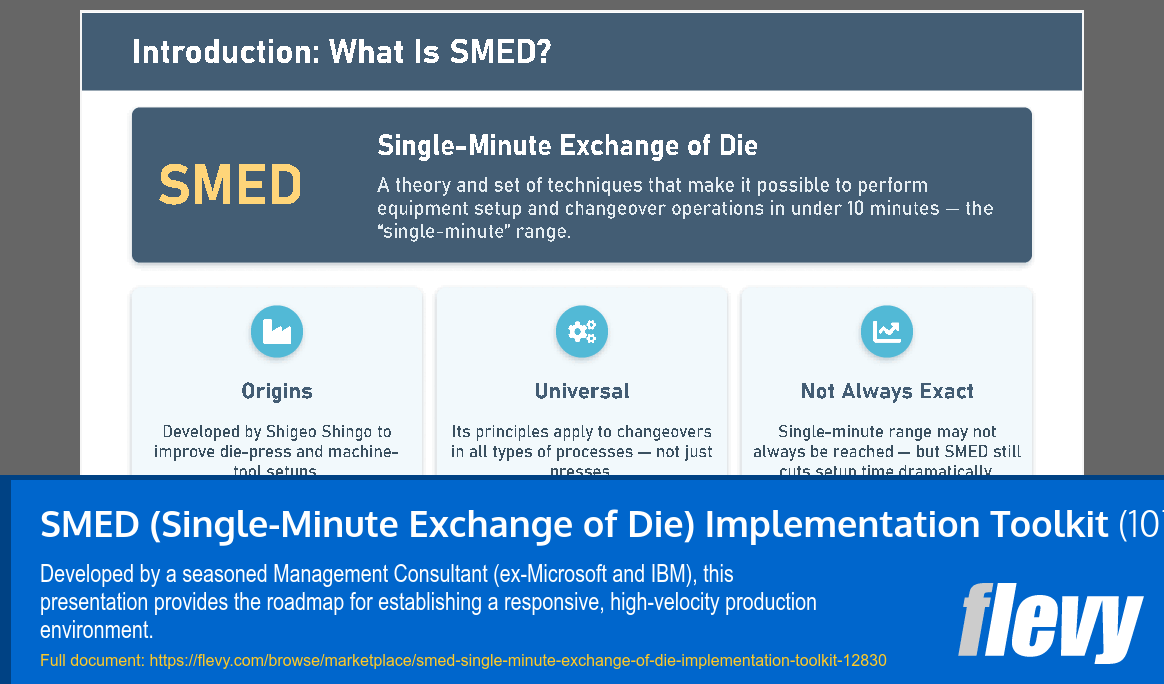
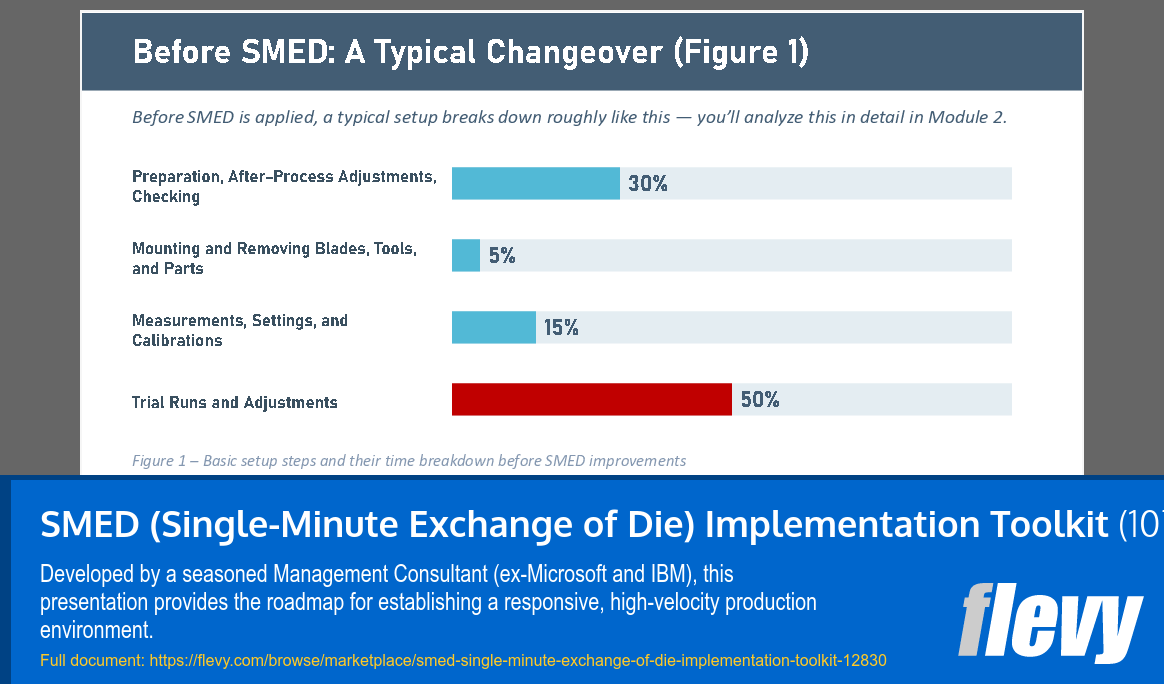
Single-Minute Exchange of Die (SMED) is a foundational Lean framework pioneered by Shigeo Shingo to shrink equipment setup durations to under 10 minutes. This expert-guided toolkit outlines a clear, three-phase implementation methodology: separating internal and external changeover steps, converting internal operations to external ones, and streamlining all residual processes. Tailored for operational excellence on the shop floor, the package specifically targets trial runs and adjustments—which traditionally occupy half of total setup time—to cultivate a responsive, high-speed manufacturing environment.
KEY BENEFITS
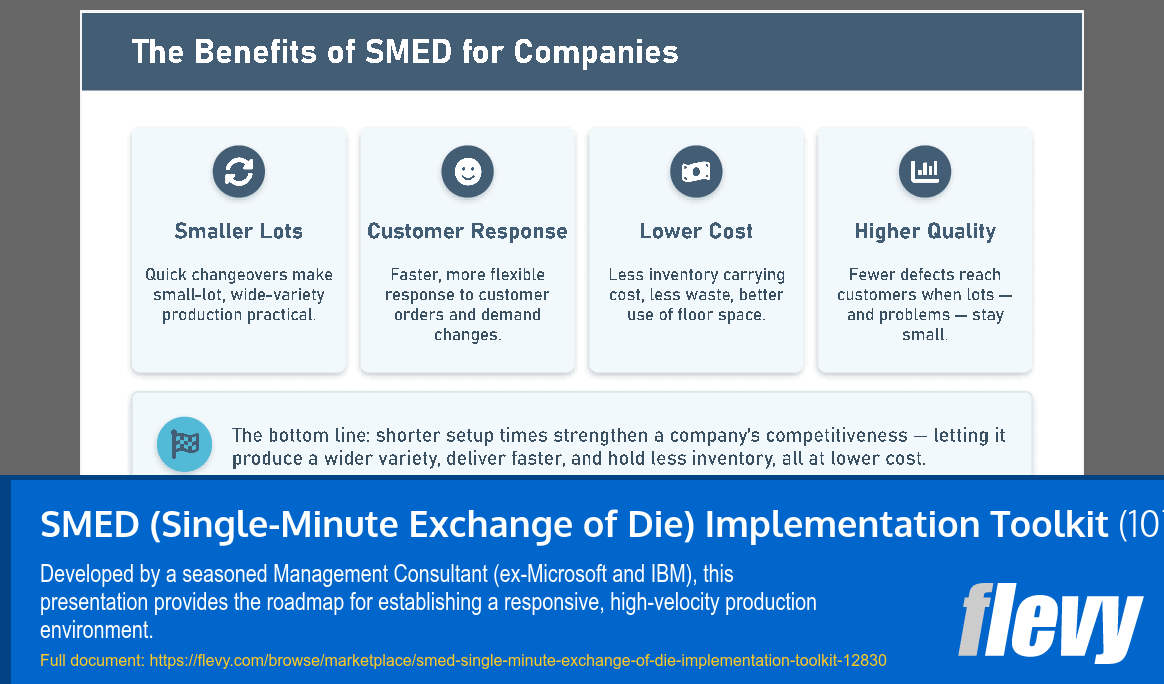
★ Strengthen Competitiveness: Support high-variety, small-lot manufacturing, empowering your enterprise to fulfill customer orders faster with reduced inventory and lower operational costs.
★ Maximize Machine Uptime: Transform equipment-stopped hours into productive runtime, ensuring every saved internal setup minute goes straight back into value-adding output.
★ Eliminate Setup Guesswork: Swap subjective, intuition-driven alterations for exact numerical coordinates and clear alignment marks to achieve first-time quality.
★ Institutionalize Safety: Simplify complex, rushed changeover steps to minimize workplace injury risks while maintaining a cleaner, orderly workspace.
★ Enhance Product Quality: Detect and resolve defects more rapidly by transitioning to smaller production batches, reducing the volume of non-compliant items delivered to clients.
TARGET AUDIENCE
• Operations & Plant Managers: Guiding the strategic transition away from large-lot restrictions toward agile, high-velocity manufacturing.
• Lean & Continuous Improvement Professionals: Utilizing a rigorous three-phase methodology to spearhead technical setup reduction initiatives.
• Maintenance & Setup Technicians: Mastering the mechanical execution of parallel procedures, intermediary jigs, and functional clamping systems.
• Manufacturing Engineers: Formulating machine-specific verification lists and standardizing centering alignment mechanisms across different product lines.
WHAT'S INCLUDED IN THE BOX?
★ The SMED Masterclass (PPTX): A professional training deck featuring over 100 slides built for authoritative presentations, saving countless hours of material development.
★ Setup Analysis Video & Motion Tools: Systematic procedures for evaluating current changeovers using video recordings, interviews, and time-and-motion studies.
★ Standardization & Jig Templates: Architectural blueprints for die cassettes, function standardization, and intermediary jig-swap configurations.
★ Five Interactive Team Activities: Facilitation-ready exercises including changeover step conversion, internal/external sorting, and concise time-and-motion evaluations.
★ Functional Clamping Library: Technical references detailing one-turn, interlocking, and single-motion fastening alternatives to conventional bolts.
LEARNING OBJECTIVES
By completing this masterclass, participants will acquire the skills to:
• Define SMED and articulate its vital function in mitigating the hidden expenses associated with large-lot manufacturing.
• Differentiate between internal and external setup tasks, pinpointing operations that can proceed while machinery runs.
• Implement the three stages of SMED—separation, conversion, and streamlining—on any industrial equipment changeover.
• Construct machine-specific verification lists and run functional checks to guarantee components are prepared prior to machine shutdown.
• Deploy advanced optimization techniques, such as parallel operations, exact numerical settings, and the Least Common Multiple (LCM) methodology.
DETAILED TRAINING CONTENTS
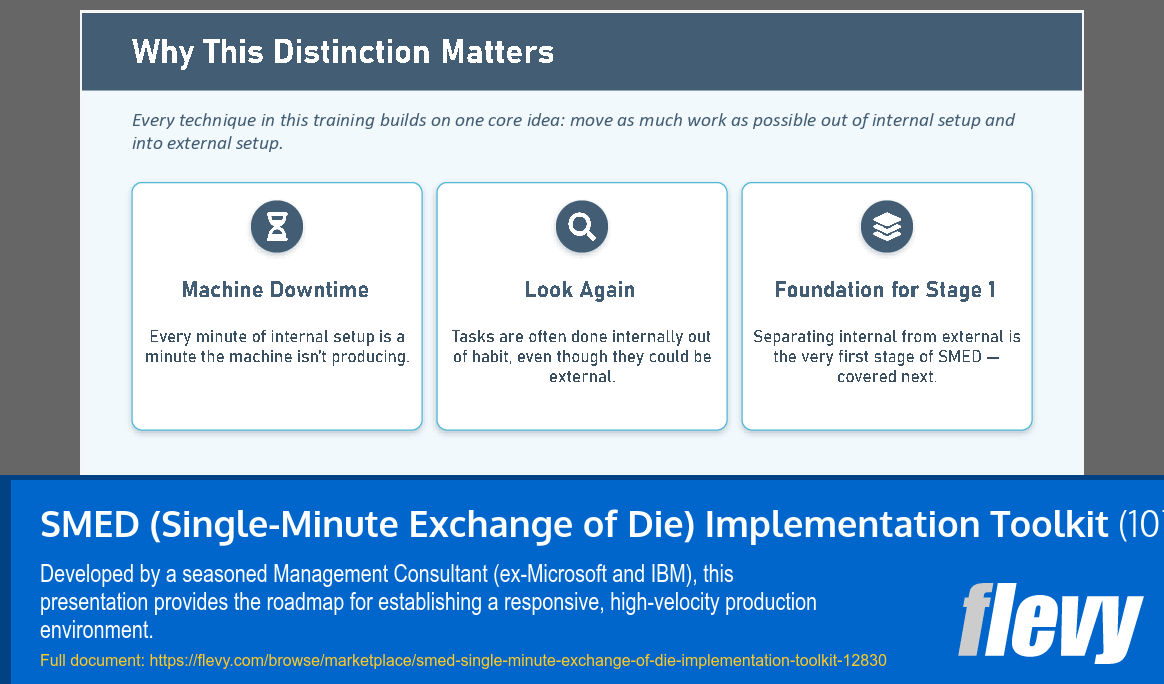
• Module 1: Important Terms and Concepts: Historical roots of SMED, the drawbacks of large-lot production, and the core differences between internal and external setups.
• Module 2: Getting Ready for SMED: The four foundational setup phases, duration distribution breakdowns, and an overview of the three SMED stages.
• Module 3: Stage 1: Separating Internal and External Setup: Utilizing verification lists, pre-run function checks, and upgraded material handling to reduce downtime by 30 to 50 percent.
• Module 4: Stage 2: Converting Internal Setup to External Setup: Pre-staging operational parameters, standardizing tool functions, and deploying intermediary jigs.
• Module 5: Stage 3: Streamlining All Aspects of the Setup Operation: Enforcing parallel execution, introducing functional clamps, and eradicating trial-and-error adjustments.
PROPOSED 1-DAY WORKSHOP AGENDA
• 09:00 – 10:30: The SMED Foundation: Core philosophy, recognizing the four setup stages, and analyzing the financial impact of machine downtime.
• 10:45 – 12:30: Analyzing the Gap: Changeover evaluation methodologies (interviews and video recording) alongside Stage 1 internal/external separation.
• 13:30 – 15:00: The Conversion Phase: Stage 2 mechanics—preheating, alignment jigs, and shifting work away from active machinery.
• 15:15 – 16:30: Technical Streamlining: Stage 3 execution—deploying functional clamping, parallel workflows, and eliminating test runs.
• 16:30 – 17:00: Sustaining the Gains: Standardizing updated changeover procedures and mapping out subsequent setup reduction projects.
GLOSSARY OF KEY TERMS
• SMED: Single-Minute Exchange of Die—executing complete equipment changeovers in less than 10 minutes.
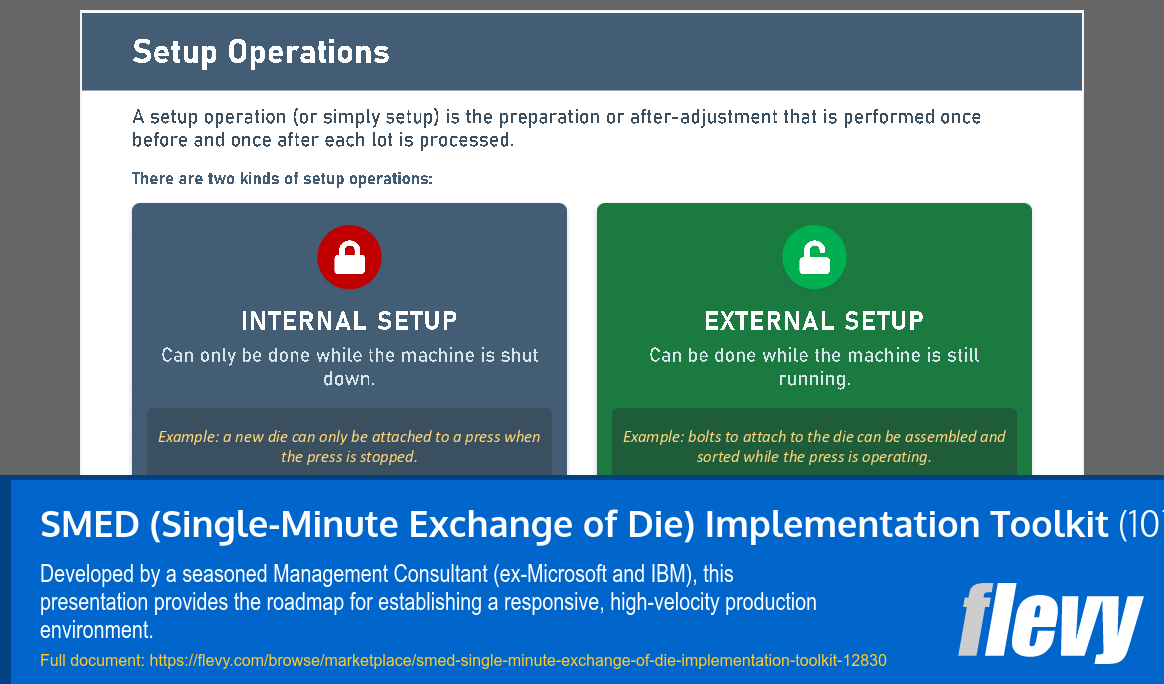
• Internal Setup: Operations that can exclusively take place while equipment is completely powered down.
• External Setup: Operations that can be executed while machinery remains fully operational.
• Functional Clamp: A fastening mechanism that locks an item securely while releasing it instantaneously, such as pear-shaped holes or cams.
• Intermediary Jig: A system leveraging dual matching plates to prepare subsequent workpieces while current production runs.
• Parallel Operations: Allocating changeover duties between multiple personnel to eliminate transit and movement waste.
FREQUENTLY ASKED QUESTIONS (FAQ)
Is SMED restricted solely to metal-stamping equipment? No, while it originated in press facilities, these principles apply universally to packaging lines, CNC machining centers, and injection molding.
Does SMED mandate costly automation investments? No, SMED prioritizes low-cost, high-impact mechanical and organizational adjustments; automation should only follow once all streamlining options are exhausted.
What scale of time savings can Stage 1 achieve independently? Merely separating internal tasks from external ones and applying checklists frequently cuts downtime by 30% to 50% on its own.
Can a single technician execute parallel operations? No, parallel workflows require dividing work among at least two individuals, making safety communication signals like buzzers or lights vital.
Is the training deck fully customizable? Yes, it is provided as an editable PowerPoint (PPTX) document tailored for professional presentation delivery.
Got a question about the product? Email us at support@flevy.com or ask the author directly by using the "Ask the Author a Question" form. If you cannot view the preview above this document description, go here to view the large preview instead.
Source: Best Practices in Setup Reduction PowerPoint Slides: SMED (Single-Minute Exchange of Die) Implementation Toolkit PowerPoint (PPTX) Presentation Slide Deck, Operational Excellence Consulting
ABOUT THE AUTHOR

Operational Excellence Consulting, founded in 2009 by Allan Ung, draws from extensive experience at Microsoft, IBM, and Underwriters Laboratories (UL). We specialize in strategy deployment, customer experience design, and operational excellence, applying Design Thinking, Lean, and Systems Thinking to maximize customer value and minimize waste.
Our
... [read more]
Ask the Author a Question
You must be logged in to contact the author.




























