

Six Sigma Basics   31-slide PPT PowerPoint presentation slide deck (PPT)
$40.00

Six Sigma Basics (31-slide PPT PowerPoint presentation slide deck (PPT)) Preview Image
Log in to unlock full preview.
Six Sigma Basics (31-slide PPT PowerPoint presentation slide deck (PPT)) Preview Image
Arrow   Click main image to view in full screen.

Six Sigma Basics (PowerPoint PPT Slide Deck)

PowerPoint (PPT) 31 Slides

$40.00

Add to Cart


Immediate download
Free lifetime updates

SIX SIGMA PROJECT PPT DESCRIPTION

Editor Summary Six Sigma Basics is a 31-slide PowerPoint training deck that explains Six Sigma methodologies and tools, including the DMAIC (Define, Measure, Analyze, Improve, Control) framework, control charts, and the Green Belt certification pathway. Read more

This is detailed document explaining Six Sigma, include the tools and methodologies used in Six Sigma analysis. This training presentation has been adopted from the ones used at global consulting firms.

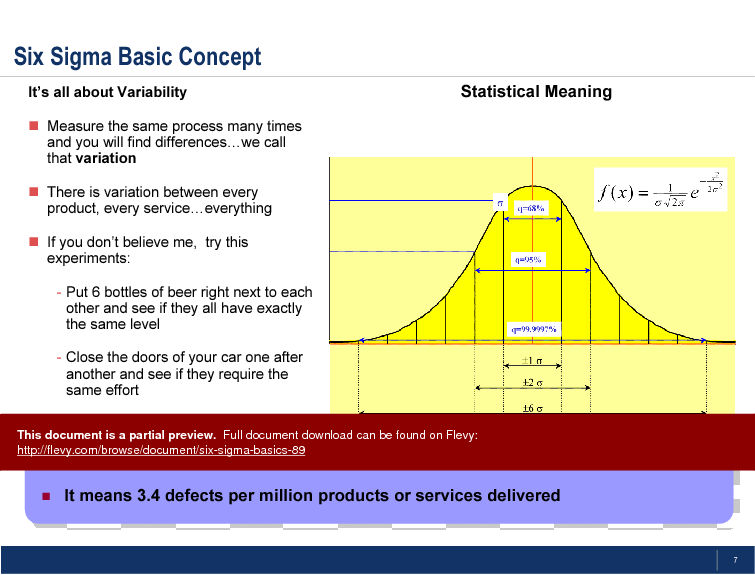
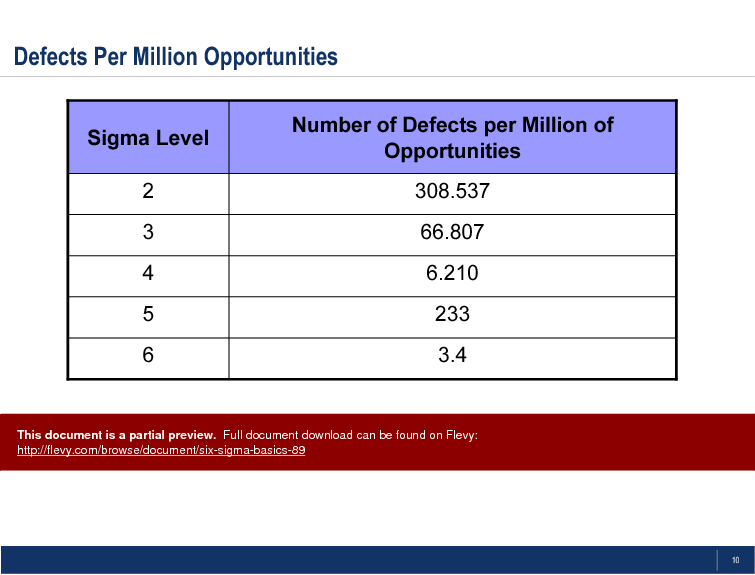
Six Sigma Basics delves into the core principles of variability and statistical meaning, emphasizing the importance of measuring processes multiple times to identify variations. This PPT provides practical examples to illustrate these concepts, such as comparing the levels of beer bottles or the effort required to close car doors. It underscores that achieving Six Sigma means limiting defects to just 3.4 per million opportunities, a benchmark of operational excellence.

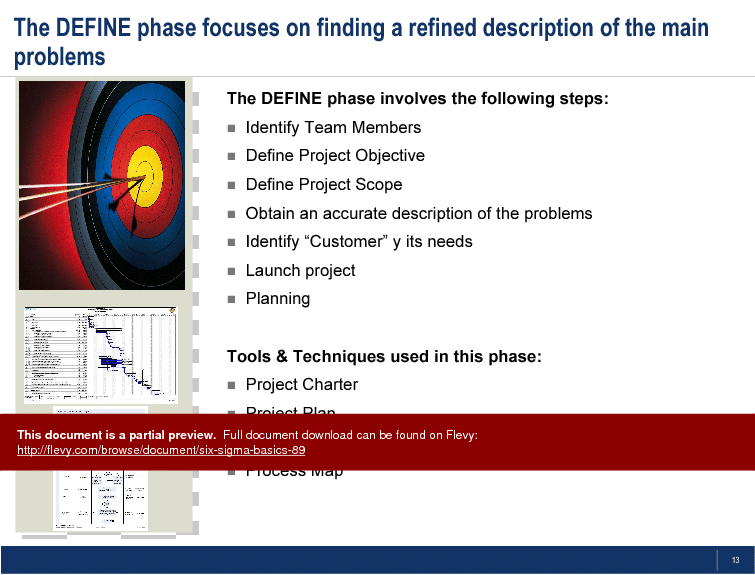
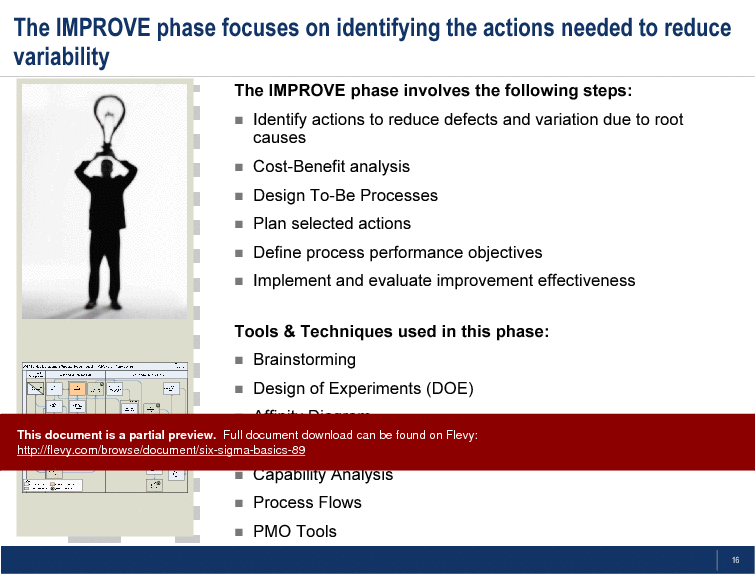
The presentation outlines the structured phases of Six Sigma, starting with the DEFINE phase, which focuses on identifying team members, defining project objectives and scope, and understanding customer needs. The IMPROVE phase is dedicated to identifying actions to reduce defects and variability, utilizing tools like cost-benefit analysis, design of experiments, and capability analysis. Each phase is meticulously detailed, providing a clear roadmap for implementation.

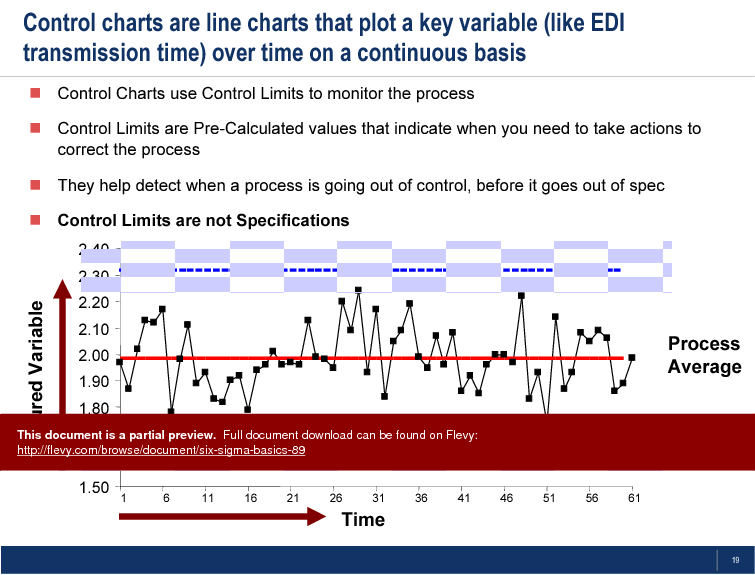
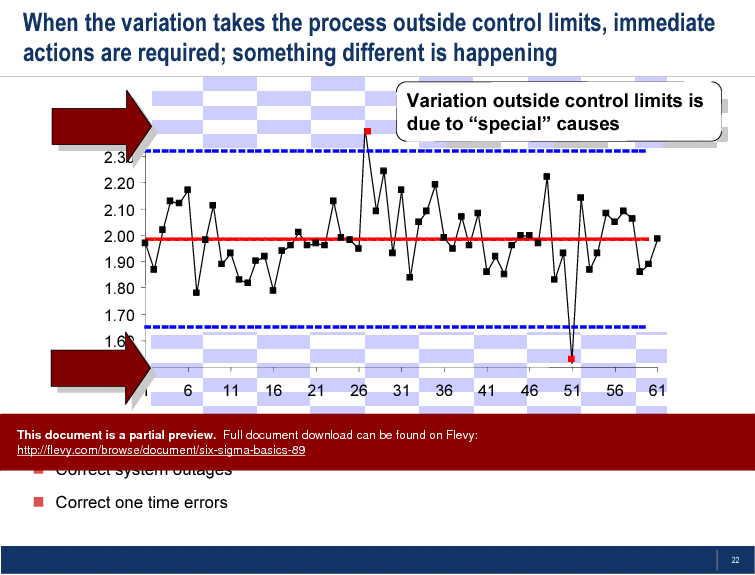
Control charts are highlighted as essential tools for monitoring process performance over time. These charts help detect when a process is deviating from control limits, prompting immediate corrective actions. The document also emphasizes the role of consulting in accelerating results and ensuring sustainable knowledge transfer, offering a comprehensive approach to Six Sigma training and certification.

Got a question about the product? Email us at support@flevy.com or ask the author directly by using the "Ask the Author a Question" form. If you cannot view the preview above this document description, go here to view the large preview instead.

MARCUS OVERVIEW

This synopsis was written by Marcus [?] based on the analysis of the full 31-slide presentation.


Executive Summary
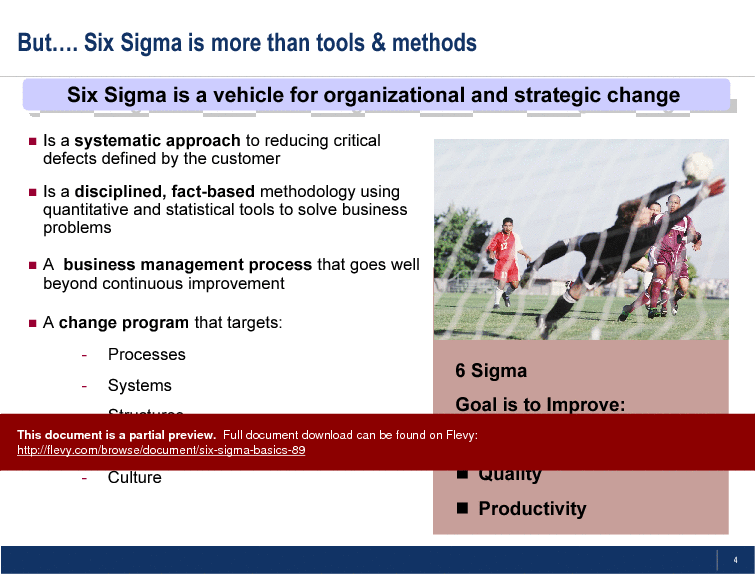
The Six Sigma Basics PowerPoint presentation serves as a foundational guide for understanding Six Sigma methodologies, tools, and certification processes. This comprehensive deck is designed to enhance organizational efficiency by improving process performance and reducing defects. Users will gain insights into the Six Sigma framework, including the DMAIC (Define, Measure, Analyze, Improve, Control) methodology, control charts, and the pathway to obtaining Green Belt certification. By leveraging this presentation, organizations can foster a culture of continuous improvement and strategic change.

Who This Is For and When to Use
•  Quality Managers and Improvement Leaders focused on process optimization
•  Operations Managers seeking to enhance productivity and quality
•  Project Managers leading Six Sigma initiatives
•  Executives aiming for strategic change through data-driven decision-making

Best-fit moments to use this deck:
•  During Six Sigma training sessions for new team members
•  As a reference for project teams implementing Six Sigma methodologies
•  In strategic planning meetings to align organizational goals with Six Sigma principles

Learning Objectives
•  Define Six Sigma and its importance in process improvement
•  Identify the key components of the DMAIC methodology
•  Analyze the significance of control charts in monitoring process performance
•  Implement Six Sigma tools to enhance operational efficiency
•  Prepare for Six Sigma Green Belt certification requirements
•  Evaluate the impact of Six Sigma initiatives on organizational performance

Table of Contents
•  What is Six Sigma (page 2)
•  A Closer Look at the Methodology (page 11)
•  A Few Words About Control Charts (page 18)
•  The Six Sigma Green Belt Training (page 23)
•  How to Get Certified (page 30)

Primary Topics Covered
•  Six Sigma Definition - A methodology that improves process efficiency by reducing defects and enhancing quality through specific tools and techniques.
•  DMAIC Methodology - A structured approach consisting of 5 phases: Define, Measure, Analyze, Improve, and Control, aimed at solving business problems.
•  Control Charts - Tools used to monitor process stability and performance over time, helping to identify when corrective actions are needed.
•  Green Belt Training - A program designed to equip participants with the skills necessary to lead Six Sigma projects and drive process improvements.
•  Certification Pathway - Steps and requirements for obtaining Six Sigma Green Belt certification, including project participation and application of Six Sigma tools.
•  Continuous Improvement - The integration of Six Sigma principles into daily operations to foster a culture of ongoing enhancement and efficiency.

Deliverables, Templates, and Tools
•  Project Charter template for defining Six Sigma projects
•  SIPOC diagram for mapping processes and identifying stakeholders
•  Control Chart templates for monitoring key performance indicators
•  Process Flow diagrams for visualizing workflow and identifying improvement areas
•  Root Cause Analysis tools for identifying and addressing defects
•  Cost-Benefit Analysis template for evaluating improvement initiatives

Slide Highlights
•  Overview of Six Sigma and its impact on organizational performance
•  Detailed explanation of the DMAIC phases with visual aids
•  Examples of control charts demonstrating process stability
•  Training pathways and benefits of Six Sigma certification
•  Case studies showcasing successful Six Sigma implementations

Potential Workshop Agenda
Introduction to Six Sigma (30 minutes)
•  Overview of Six Sigma principles and methodologies
•  Discussion on the importance of process improvement

DMAIC Methodology Deep Dive (60 minutes)
•  Detailed exploration of each DMAIC phase
•  Group activities to apply DMAIC to real-world scenarios

Control Charts and Their Applications (45 minutes)
•  Explanation of control charts and their significance
•  Hands-on practice in creating and interpreting control charts

Green Belt Certification Overview (30 minutes)
•  Requirements and benefits of obtaining Green Belt certification
•  Q&A session on certification pathways and project expectations

Customization Guidance
•  Tailor the Project Charter template to reflect specific organizational goals and metrics.
•  Adjust the SIPOC diagram to include relevant stakeholders and processes unique to your organization.
•  Incorporate company-specific examples in training sessions to enhance relatability and engagement.
•  Modify control chart templates to align with key performance indicators relevant to your industry.

Secondary Topics Covered
•  Statistical Process Control (SPC) techniques
•  Tools for root cause analysis and problem-solving
•  Integration of Lean principles with Six Sigma methodologies
•  Change management strategies in Six Sigma projects
•  The role of leadership in fostering a Six Sigma culture

Topic FAQ

What are the DMAIC phases and what does each phase focus on?

DMAIC comprises 5 phases: Define (project scope, team, customer needs), Measure (collect baseline data and capability), Analyze (identify root causes), Improve (implement solutions to reduce defects), and Control (sustain gains with monitoring). The methodology’s structure is presented as 5 distinct phases in the material.

How do control charts indicate when a process needs corrective action?

Control charts plot key process variables over time with upper and lower control limits; points outside limits or non-random patterns signal loss of control and need for corrective action. The deck explains interpretation and gives example charts to demonstrate detection of deviations on page 18.

What tools should I include in a Six Sigma project toolkit to run DMAIC effectively?

Essential tools include a Project Charter, SIPOC diagram, process flow diagrams, control charts, root cause analysis techniques, cost-benefit analysis, and Design of Experiments for improvement testing. Flevy’s Six Sigma Basics lists these deliverables and templates as core toolkit items including a Project Charter template.

How should I prepare team members for Six Sigma Green Belt certification?

Preparation typically combines classroom or deck-based training, hands-on project leadership, and application of Six Sigma tools (control charts, DOE, root cause analysis). The presentation outlines Green Belt training content and the certification pathway, including project participation and applied tool usage, in its Green Belt section.

I need to streamline processes after a merger — how can Six Sigma help prioritize work?

Six Sigma helps by mapping processes (SIPOC, process flows), measuring baseline performance, and using DMAIC to target high-variation areas for improvement. Tools like Pareto analysis and cost-benefit assessments help prioritize interventions and focus projects on the most impactful process steps.

What should I look for when buying a Six Sigma training deck for my organization?

Look for clear DMAIC coverage, examples of control charts, templates (Project Charter, SIPOC, process flows), Green Belt training and certification guidance, and practical case studies. The presence of editable templates and example charts across a complete slide set—such as a 31-slide deck—is a useful indicator.

How does Six Sigma define acceptable defect rates and the goal of Six Sigma performance?

Six Sigma targets reducing defects to a statistical benchmark of 3.4 defects per million opportunities, reflecting an emphasis on variability reduction and high process capability. The presentation explains this benchmark and the statistical meaning of variability and repeat measurements.

Can Lean methods be combined with Six Sigma, and which Lean tools pair well with Six Sigma analysis?

Yes; Lean focuses on eliminating waste and improving flow while Six Sigma targets variation and defects. Integration often pairs Lean mapping and Kaizen events with Six Sigma statistical tools such as Statistical Process Control and DOE to both streamline and reduce defects using SPC techniques.

Document FAQ
These are questions addressed within this presentation.

What is Six Sigma?
Six Sigma is a data-driven methodology aimed at improving process efficiency and quality by reducing defects to a statistically acceptable level.

What is the DMAIC methodology?
DMAIC stands for Define, Measure, Analyze, Improve, and Control, which are the 5 phases used to guide Six Sigma projects and problem-solving efforts.

How do control charts work?
Control charts are graphical tools that plot key process variables over time, allowing teams to monitor stability and identify when corrective actions are needed.

What is the significance of Green Belt certification?
Green Belt certification signifies that an individual has the knowledge and skills to lead Six Sigma projects and apply its methodologies effectively within their organization.

How can Six Sigma improve organizational performance?
By systematically identifying and eliminating defects, Six Sigma enhances process efficiency, reduces costs, and improves customer satisfaction.

What tools are essential for Six Sigma projects?
Key tools include process flow diagrams, control charts, root cause analysis techniques, and statistical analysis methods.

How can I prepare for Green Belt certification?
Preparation involves participating in Six Sigma training, leading projects, and applying tools and techniques learned during the training.

What are the benefits of implementing Six Sigma?
Implementing Six Sigma can lead to improved quality, increased productivity, reduced costs, and enhanced customer satisfaction.

Glossary
•  Six Sigma - A methodology focused on process improvement and defect reduction.
•  DMAIC - A structured problem-solving process: Define, Measure, Analyze, Improve, Control.
•  Control Chart - A tool for monitoring process performance over time.
•  Green Belt - A certification level for individuals trained in Six Sigma methodologies.
•  Root Cause Analysis - A method for identifying the underlying causes of defects.
•  SIPOC - A tool for mapping processes and identifying Suppliers, Inputs, Processes, Outputs, and Customers.
•  Continuous Improvement - An ongoing effort to enhance products, services, or processes.
•  Statistical Process Control (SPC) - Techniques for monitoring and controlling processes using statistical methods.
•  Cost-Benefit Analysis - A financial assessment tool for evaluating the feasibility of improvement initiatives.
•  Project Charter - A document that outlines the objectives, scope, and stakeholders of a Six Sigma project.
•  Process Flow Diagram - A visual representation of the steps in a process.
•  Defect - Any instance where a product or service fails to meet quality standards.
•  Critical-To-Quality (CTQ) - Attributes that are essential for meeting customer requirements.
•  Lean - A methodology focused on eliminating waste and improving flow in processes.
•  Kaizen - A Japanese term meaning "continuous improvement," often used in Lean practices.
•  FMEA - Failure Mode and Effects Analysis, a tool for identifying potential failures in a process.
•  Pareto Analysis - A technique used to identify the most significant factors in a dataset.
•  Regression Analysis - A statistical method for examining the relationship between variables.
•  Affinity Diagram - A tool for organizing ideas and data into meaningful categories.
•  Design of Experiments (DOE) - A structured approach to testing and analyzing the effects of multiple variables.

Source: Best Practices in Six Sigma Project PowerPoint Slides: Six Sigma Basics PowerPoint (PPT) Presentation Slide Deck, alex


$40.00

Add to Cart
  

ABOUT THE AUTHOR

Author: alex
Additional documents from author: 3

Ask the Author a Question

You must be logged in to contact the author.

Click here to log in Click here register

Did you know?
The average daily rate of a McKinsey consultant is $6,625 (not including expenses). The average price of a Flevy document is $65.


Trusted by over 10,000+ Client Organizations
Since 2012, we have provided business templates to over 10,000 businesses and organizations of all sizes, from startups and small businesses to the Fortune 100, in over 130 countries.
AT&T GE Cisco Intel IBM Coke Dell Toyota HP Nike Samsung Microsoft Astrazeneca JP Morgan KPMG Walgreens Walmart 3M Kaiser Oracle SAP Google E&Y Volvo Bosch Merck Fedex Shell Amgen Eli Lilly Roche AIG Abbott Amazon PwC T-Mobile Broadcom Bayer Pearson Titleist ConEd Pfizer NTT Data Schwab


Read Customer Testimonials

 
"As a consultant requiring up to date and professional material that will be of value and use to my clients, I find Flevy a very reliable resource.

The variety and quality of material available through Flevy offers a very useful and commanding source for information. Using Flevy saves me time, enhances my expertise and ends up being a good decision."

– Dennis Gershowitz, Principal at DG Associates
 
"If you are looking for great resources to save time with your business presentations, Flevy is truly a value-added resource. Flevy has done all the work for you and we will continue to utilize Flevy as a source to extract up-to-date information and data for our virtual and onsite presentations!"

– Debbi Saffo, President at The NiKhar Group
 
"I am extremely grateful for the proactiveness and eagerness to help and I would gladly recommend the Flevy team if you are looking for data and toolkits to help you work through business solutions."

– Trevor Booth, Partner, Fast Forward Consulting
 
"As a small business owner, the resource material available from FlevyPro has proven to be invaluable. The ability to search for material on demand based our project events and client requirements was great for me and proved very beneficial to my clients. Importantly, being able to easily edit and tailor "

– Michael Duff, Managing Director at Change Strategy (UK)
 
"Flevy is our 'go to' resource for management material, at an affordable cost. The Flevy library is comprehensive and the content deep, and typically provides a great foundation for us to further develop and tailor our own service offer."

– Chris McCann, Founder at Resilient.World
 
"Flevy.com has proven to be an invaluable resource library to our Independent Management Consultancy, supporting and enabling us to better serve our enterprise clients.

The value derived from our [FlevyPro] subscription in terms of the business it has helped to gain far exceeds the investment made, making a subscription a no-brainer for any growing consultancy – or in-house strategy team."

– Dean Carlton, Chief Transformation Officer, Global Village Transformations Pty Ltd.
 
"My FlevyPro subscription provides me with the most popular frameworks and decks in demand in today’s market. They not only augment my existing consulting and coaching offerings and delivery, but also keep me abreast of the latest trends, inspire new products and service offerings for my practice, and educate me "

– Bill Branson, Founder at Strategic Business Architects
 
"FlevyPro provides business frameworks from many of the global giants in management consulting that allow you to provide best in class solutions for your clients."

– David Harris, Managing Director at Futures Strategy


Customers Also Bought These Documents


Customers Also Like These Documents

Explore Templates on Related Management Topics


Your Recently Viewed Documents
Receive our FREE presentation on Operational Excellence

This 50-slide presentation provides a high-level introduction to the 4 Building Blocks of Operational Excellence. Achieving OpEx requires the implementation of a Business Execution System that integrates these 4 building blocks.










