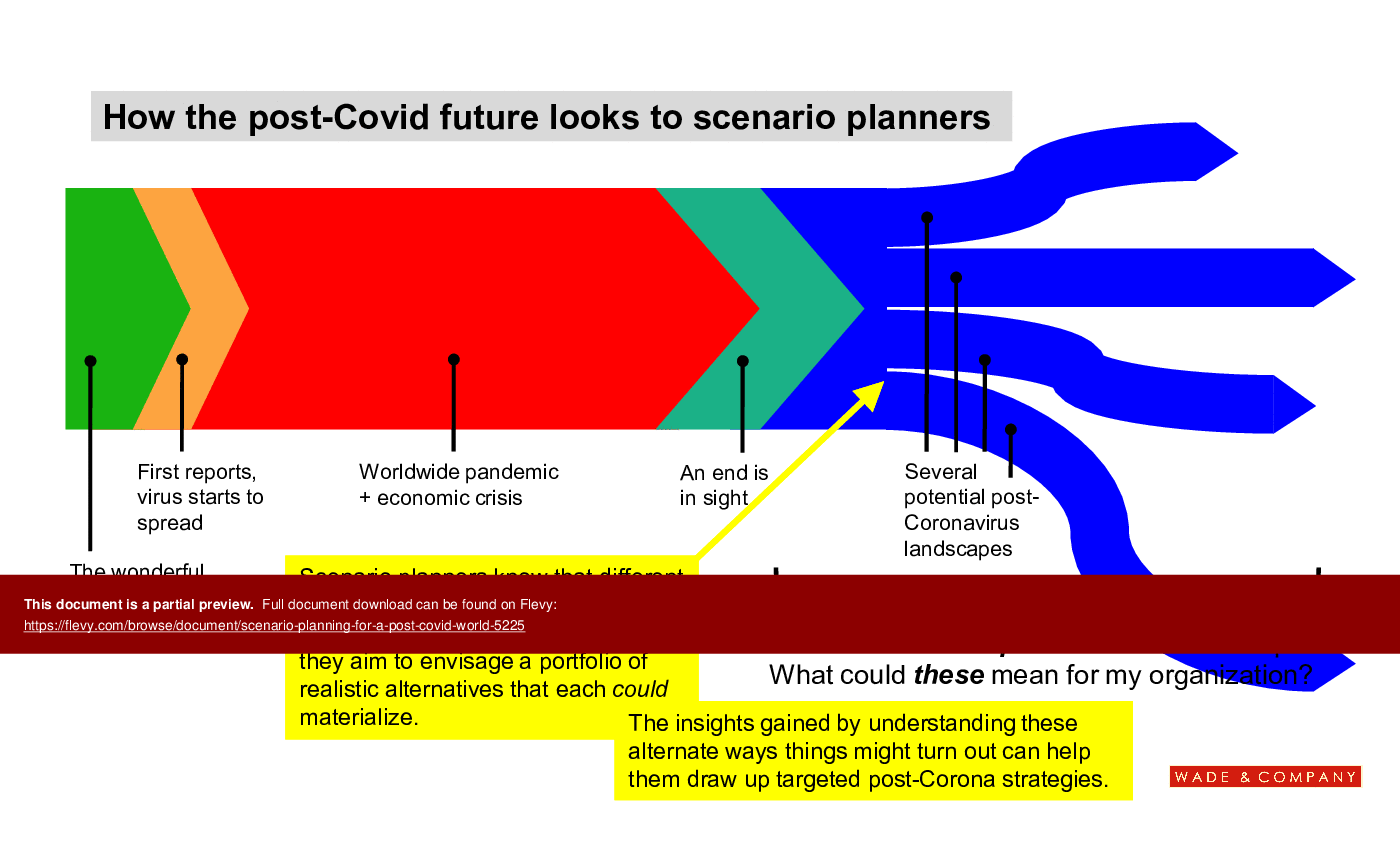

This document shows you step-by-step how to apply the technique of scenario planning to the challenge of foreseeing the specific business terrain that may become your new operating environment when the virus has finally been beaten and we emerge into a new post-Coronavirus world.
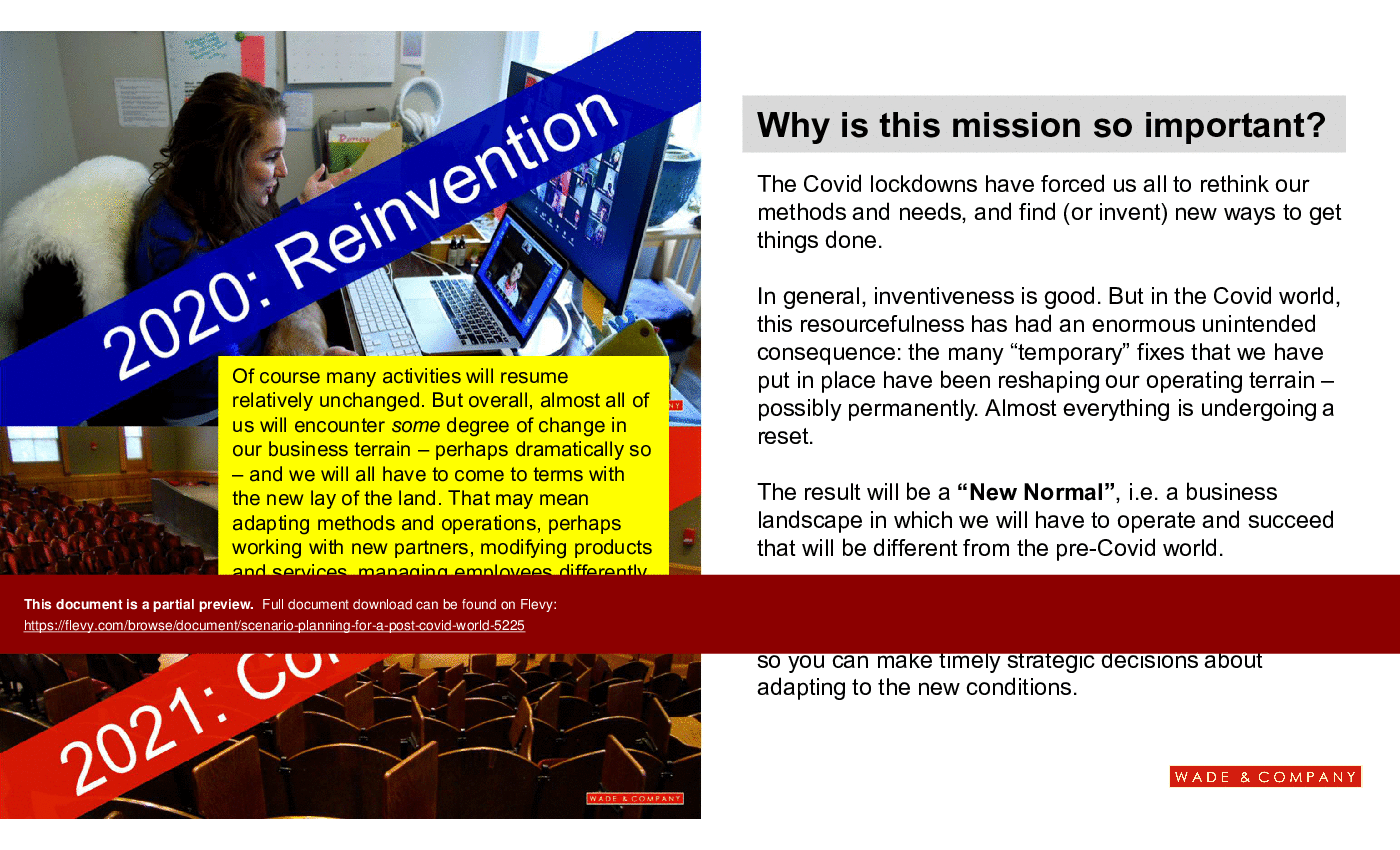
Since early 2020, the Covid lockdowns and their resulting limitations on how business could be conducted have forced us all to rethink methods and processes, reexamine our true needs, and find (or invent) new ways to get things done. In general, inventiveness is a good thing. But in the Covid world, this resourcefulness has had an enormous, (mostly) unintended consequence: namely, the many "temporary fixes" that we have put in place have been reshaping our operating terrain ? possibly permanently. Almost everything has undergone a reset, and it's doubtful that, once reset, things will return to the way they were in 2019.
The result is being called a "New Normal", i.e. an uncharted business landscape in which we will now have to operate and succeed that will be different from the pre-Covid world. But HOW will it be different? There is no one-size-fits-all New Normal. For every industry, every market, every organization, it will be different.
It is critically important to try and understand how this new terrain could look for you, so you can make timely strategic decisions about adapting to the new conditions.
Scenario planning is an excellent method for foreseeing how different your future landscape might be (realistically). This document shows you how it works.
This PPT also delves into the critical uncertainties and driving forces shaping the post-Covid landscape, offering a robust framework for scenario planning. Gain actionable insights to navigate the complexities of the new business environment and stay ahead of the curve.
Got a question about the product? Email us at support@flevy.com or ask the author directly by using the "Ask the Author a Question" form. If you cannot view the preview above this document description, go here to view the large preview instead.
Executive Summary
The "Scenario Planning for a Post-Covid World" presentation provides a structured approach for businesses to navigate the uncertainties of the post-pandemic landscape. This framework equips corporate executives and consultants with the tools to visualize multiple future scenarios, enabling informed strategic decision-making. By identifying driving forces and critical uncertainties, organizations can prepare for various potential outcomes and adapt their strategies accordingly. This document serves as a comprehensive guide to understanding and applying scenario planning methodologies tailored to the evolving business environment.
Who This Is For and When to Use
• Corporate executives responsible for strategic planning and risk management
• Business consultants aiding clients in navigating post-Covid challenges
• Strategy teams focused on long-term business resilience and adaptability
• Risk management professionals assessing potential impacts of external changes
Best-fit moments to use this deck:
• During strategic planning sessions to assess future business landscapes
• When evaluating risks and opportunities in light of emerging trends
• In workshops aimed at fostering innovative thinking around business continuity
Learning Objectives
• Define the concept of scenario planning and its relevance in a post-Covid context
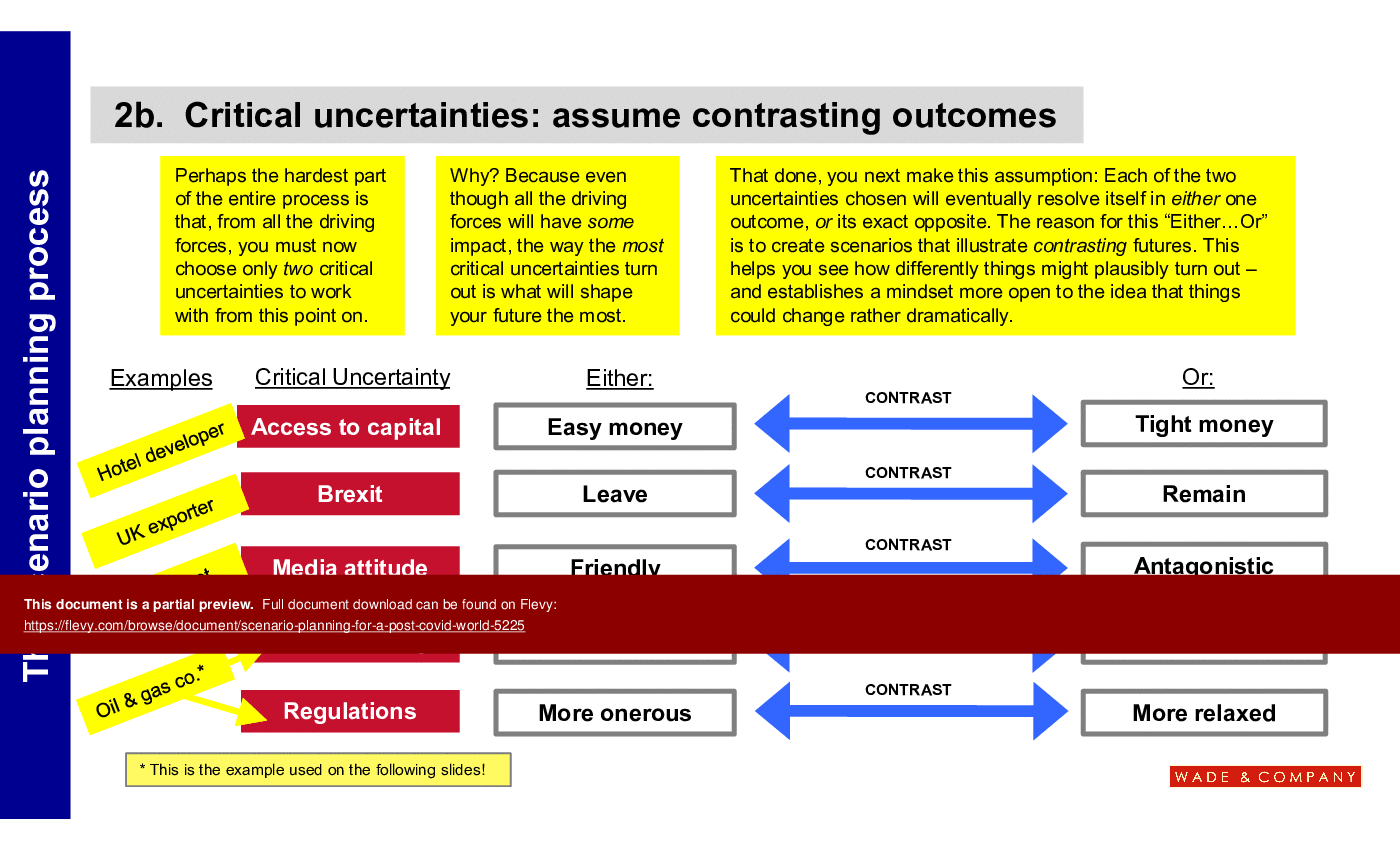
• Identify driving forces and critical uncertainties that impact business strategy
• Construct a scenario cross to visualize potential future landscapes
• Develop strategic responses and action plans for each identified scenario
• Recognize signposts that indicate which scenarios may be materializing
• Apply scenario planning methodologies to specific organizational contexts
Table of Contents
• Introduction to Scenario Planning (page 1)
• The Scenario Planning Process (page 2)
• Identifying Driving Forces (page 14)
• Selecting Critical Uncertainties (page 15)
• Forming a Scenario Cross (page 17)
• Describing Scenarios in Detail (page 18)
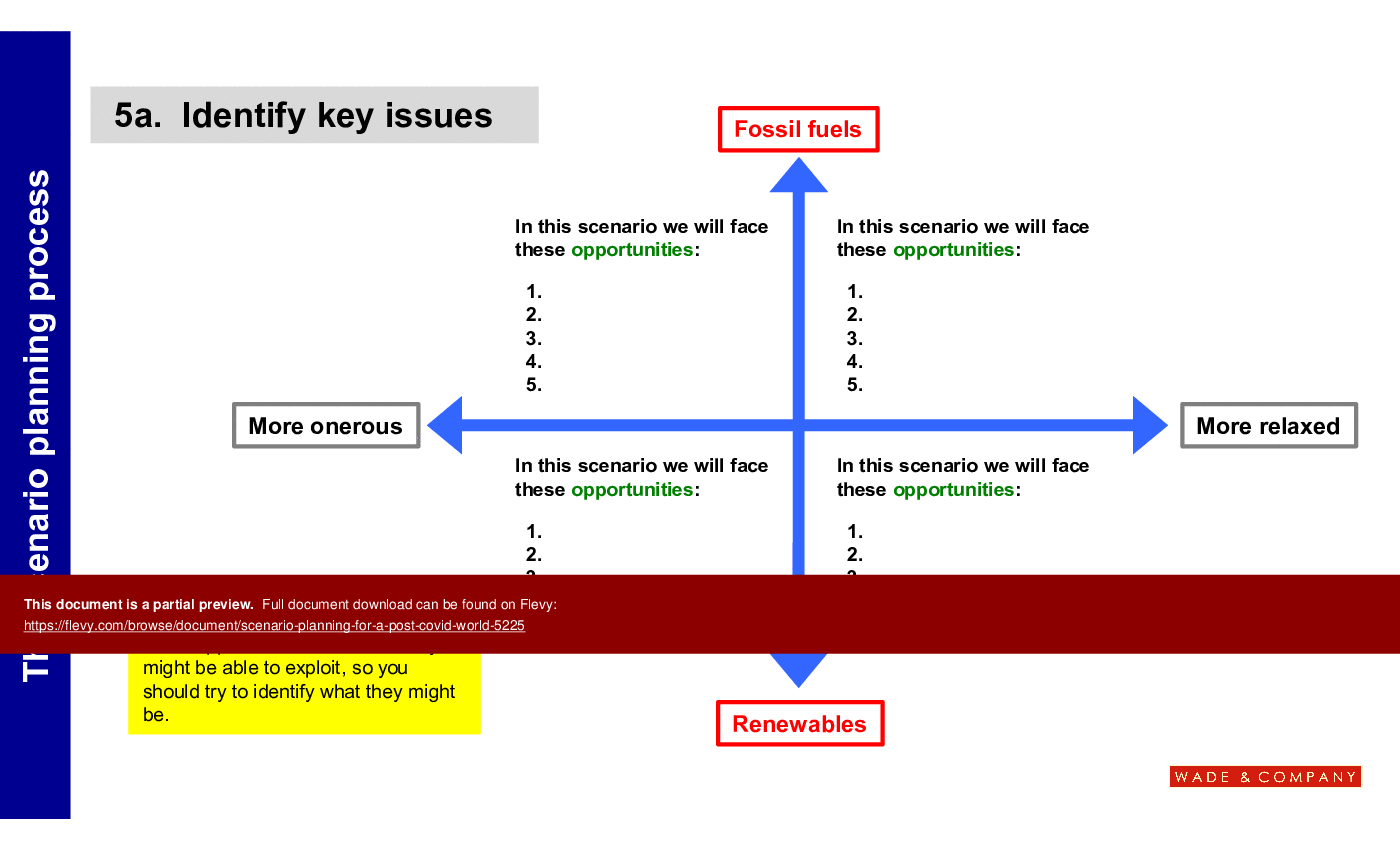
• Identifying Key Issues (page 19)
• Developing a Strategic "To Do" List (page 21)
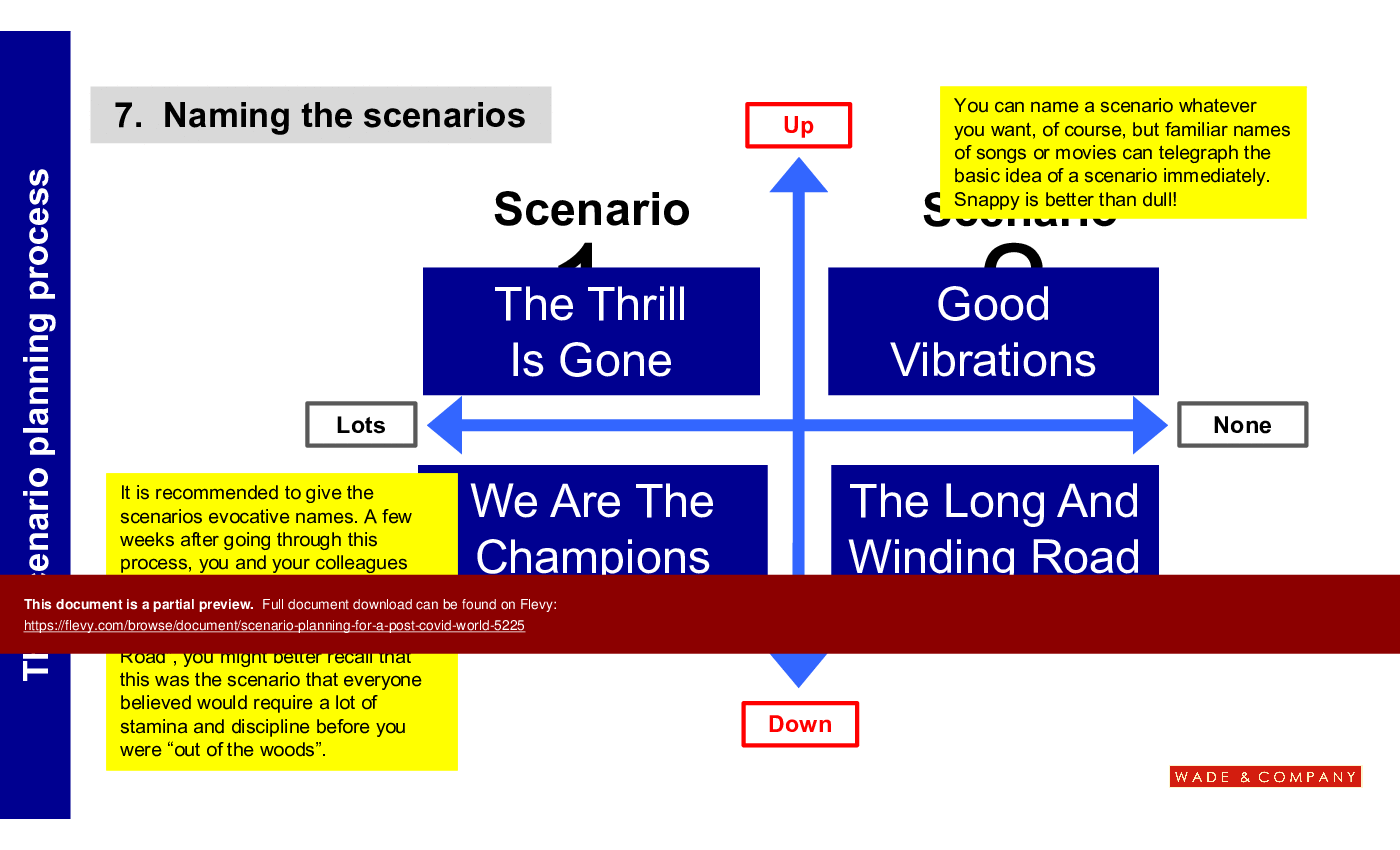
• Naming the Scenarios (page 22)
• Observing Signposts (page 23)
• Applying the Methodology (page 24)
Primary Topics Covered
• Driving Forces - Trends and events that can impact future business success, categorized using the PEST model (Political, Economic, Societal, Technological).
• Critical Uncertainties - Key uncertainties that could significantly influence the future landscape, chosen for their potential impact and uncertainty.
• Scenario Cross - A matrix formed by 2 critical uncertainties, representing 4 plausible future scenarios.
• Scenario Characteristics - Detailed descriptions of each scenario, outlining potential opportunities and challenges.
• Strategic Responses - Action plans tailored to each scenario, including timelines and resource allocation.
• Signposts - Indicators to monitor that suggest which scenario may be unfolding in reality.
Deliverables, Templates, and Tools
• Scenario planning framework template for identifying driving forces and uncertainties
• Scenario cross matrix template for visualizing potential future landscapes
• Strategic response action plan template for each scenario
• Signpost monitoring checklist to track indicators of scenario emergence
• Workshop facilitation guide for implementing scenario planning sessions
• Scenario naming convention guide for clarity and recall
Slide Highlights
• Overview of the scenario planning process, emphasizing its structured yet creative nature
• Visual representation of the scenario cross and its quadrants
• Examples of driving forces and critical uncertainties relevant to post-Covid planning
• Detailed scenario descriptions, including opportunities and challenges for each
• Strategic "To Do" lists tailored to different scenarios
Potential Workshop Agenda
Introduction to Scenario Planning (30 minutes)
• Overview of scenario planning and its importance in the post-Covid context
• Discussion of driving forces and critical uncertainties
Scenario Development Session (60 minutes)
• Identify driving forces specific to participants' industries
• Select critical uncertainties and form a scenario cross
Strategic Response Planning (45 minutes)
• Develop strategic responses for each scenario
• Create actionable "To Do" lists with assigned responsibilities
Signpost Monitoring Discussion (30 minutes)
• Identify potential signposts for tracking scenario emergence
• Establish a follow-up plan for monitoring and adapting strategies
Customization Guidance
• Tailor the driving forces and uncertainties to reflect specific industry contexts
• Adjust the scenario characteristics based on organizational goals and market conditions
• Modify the strategic "To Do" lists to align with internal resources and timelines
• Incorporate company-specific terminology and metrics into the framework
Secondary Topics Covered
• The role of external events in shaping business landscapes
• Techniques for fostering innovative thinking in strategic planning
• The importance of adaptability in a rapidly changing environment
• Case studies of successful scenario planning applications
Topic FAQ
Document FAQ
These are questions addressed within this presentation.
What is scenario planning?
Scenario planning is a strategic method used to visualize and prepare for multiple future outcomes based on identified uncertainties and driving forces.
Why is scenario planning important in a post-Covid world?
The pandemic has introduced significant uncertainties, making it crucial for organizations to anticipate various potential futures and adapt their strategies accordingly.
How do I identify driving forces?
Driving forces are trends or events that could impact your business. Use the PEST model to categorize these forces into Political, Economic, Societal, and Technological factors.
What are critical uncertainties?
Critical uncertainties are key factors that have the potential to significantly influence your future landscape, but are highly uncertain in terms of their evolution.
How do I create a scenario cross?
Select 2 critical uncertainties and use them to form a matrix with 4 quadrants, each representing a different plausible future scenario.
What should I include in my strategic "To Do" list?
Your "To Do" list should outline specific actions needed to succeed in each scenario, including timelines, responsible parties, and resource allocations.
How can I monitor signposts?
Identify indicators in your business environment that suggest which scenario may be unfolding, and establish a monitoring system to track these signposts.
Can scenario planning be customized for my organization?
Yes, the framework can be tailored to reflect your specific industry, organizational goals, and market conditions.
What are some examples of scenarios I might develop?
Examples include scenarios based on different political outcomes, economic recovery rates, or technological advancements related to the pandemic.
How often should I revisit my scenarios?
Regularly revisit and update your scenarios as new information and trends emerge to ensure your strategic planning remains relevant.
Glossary
• Driving Forces - Trends or events that impact future business success.
• Critical Uncertainties - Key factors with significant potential impact and high uncertainty.
• Scenario Cross - A matrix representing different future landscapes based on critical uncertainties.
• Strategic Response - Action plans tailored to each scenario.
• Signposts - Indicators that suggest which scenario may be materializing.
• PEST Model - Framework categorizing driving forces into Political, Economic, Societal, and Technological factors.
• Scenario Characteristics - Descriptions of potential opportunities and challenges within each scenario.
• To Do List - Actionable items needed to succeed in each scenario.
• Scenario Planning - A method for visualizing multiple future outcomes to inform strategic decision-making.
• Workshop Facilitation - Techniques for guiding scenario planning sessions.
• Monitoring System - A framework for tracking signposts and indicators.
• Adaptability - The ability to adjust strategies in response to changing circumstances.
• Case Studies - Examples of successful scenario planning applications in various industries.
• Innovative Thinking - Creative approaches to problem-solving and strategy development.
• Business Landscape - The overall environment in which a business operates, including competitors, customers, and market conditions.
• Future Scenarios - Plausible outcomes that could result from current trends and uncertainties.
• Strategic Planning - The process of defining an organization's direction and making decisions on allocating resources.
• Risk Management - The identification and assessment of risks followed by coordinated efforts to minimize, monitor, and control the probability of unfortunate events.
• Market Conditions - The economic factors that influence the supply and demand of goods and services in a market.
• Organizational Goals - The objectives that an organization aims to achieve in its operations.
Source: Best Practices in COVID-19, Scenario Planning PowerPoint Slides: Scenario Planning for a Post-Covid World PowerPoint (PPTX) Presentation Slide Deck, Woody Wade
|
Download our FREE Strategy & Transformation Framework Templates
Download our free compilation of 50+ Strategy & Transformation slides and templates. Frameworks include McKinsey 7-S Strategy Model, Balanced Scorecard, Disruptive Innovation, BCG Experience Curve, and many more. |










