 Click main image to view in full screen.
SAFe / Agile / Waterfall → AI-DLC Transition Playbook – PDF
PDF document 11 Pages


BENEFITS OF THIS DOWNLOADABLE PDF DOCUMENT
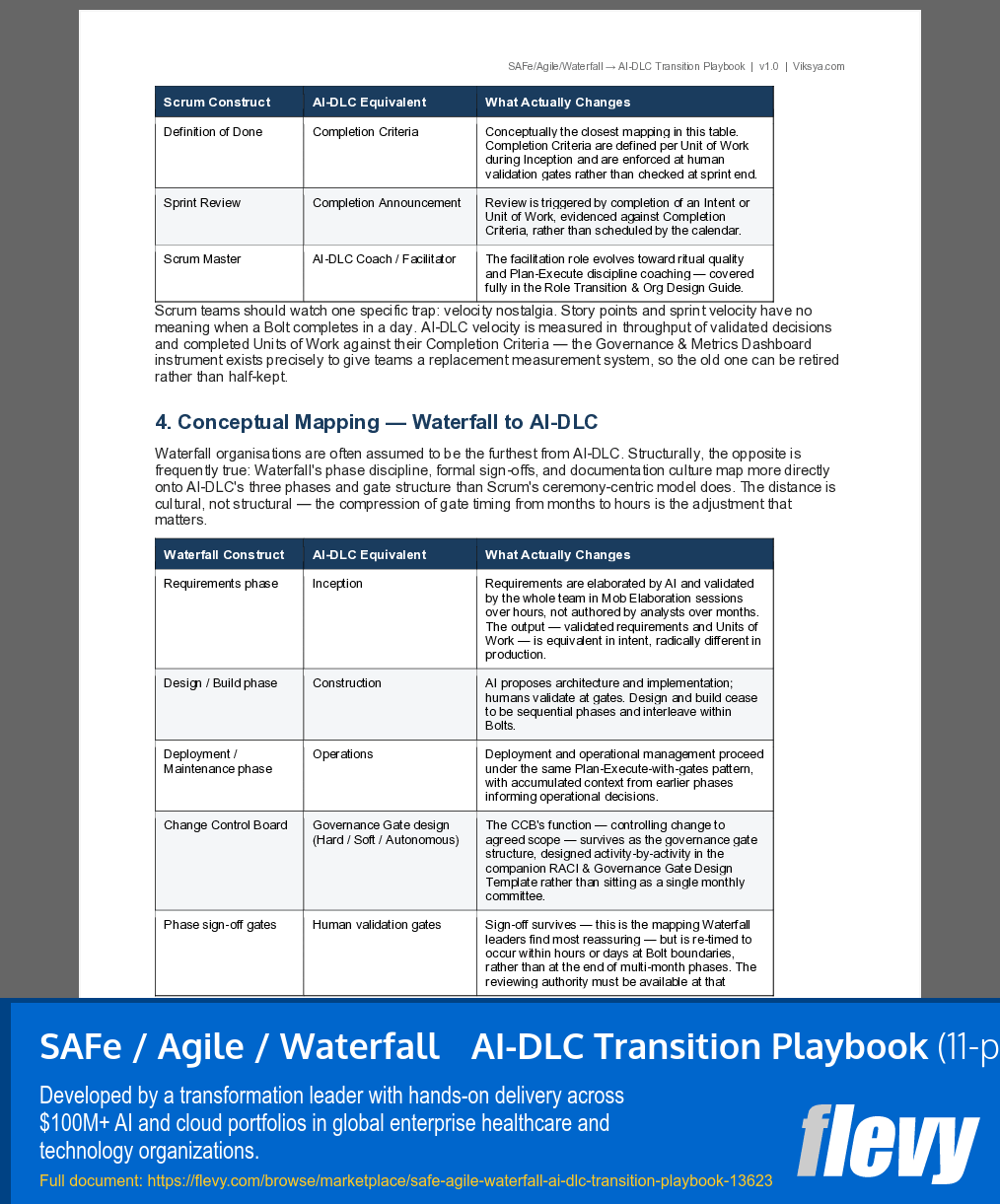
- Three mapping tables instead of one improvised judgment call SAFe, Agile/Scrum, and Waterfall are each mapped construct by construct -- PI Planning, Sprint Review, Change Control Board, and the rest -- with the reasoning for each substitution stated in fu
- A phase-gated roadmap that stops premature scaling The four-phase roadmap -- Readiness, Pilot, Scale, Optimise -- pairs each phase with a named supporting instrument and an explicit exit condition, so a team can't move to Scale before the Pilot phase
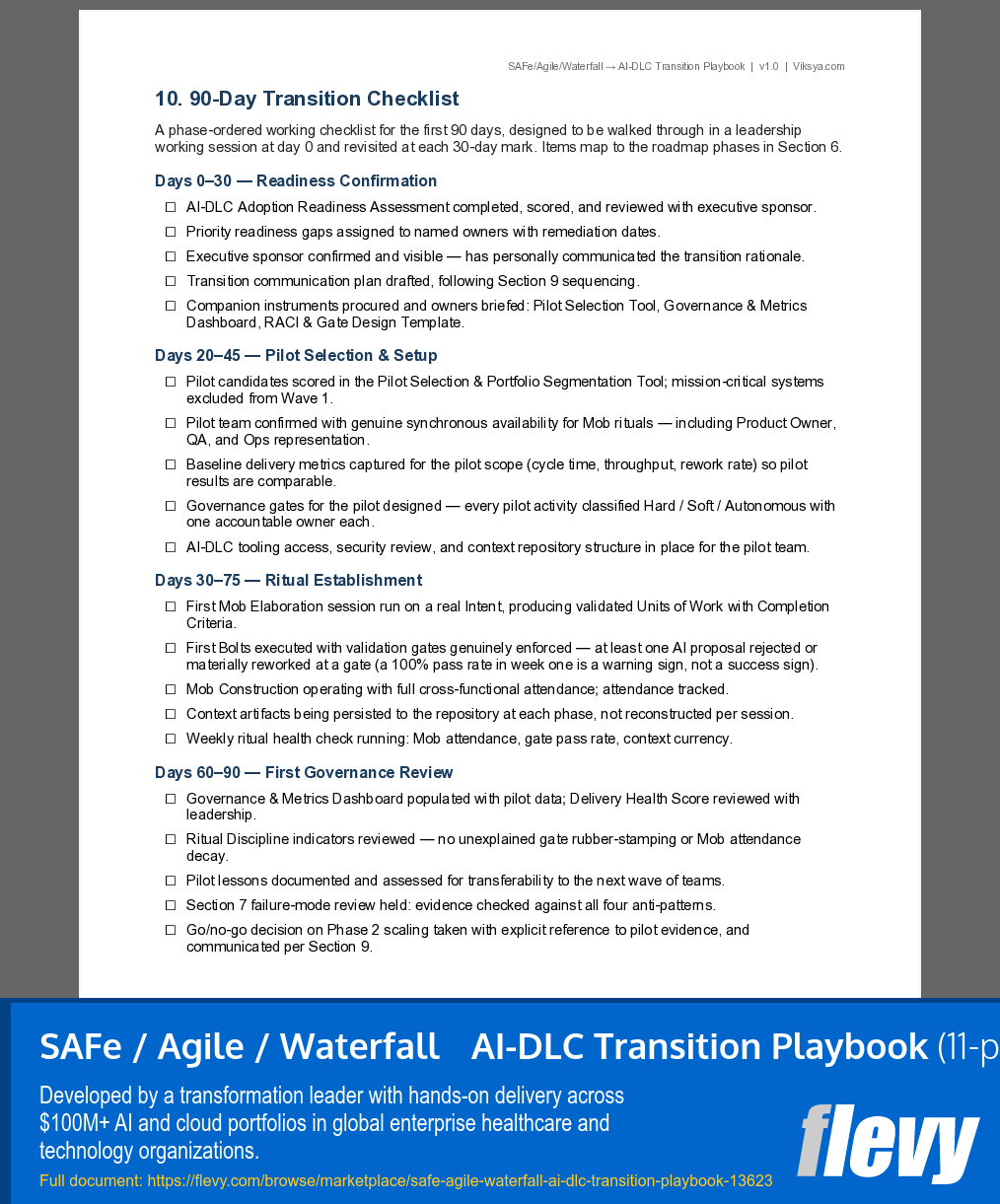
- A working 90-day checklist, not a slogan deck The first quarter is broken into four concrete windows -- readiness confirmation, pilot selection and setup, ritual establishment, and the first governance review -- each with its own checklist items, giving a
ARTIFICIAL INTELLIGENCE PDF DESCRIPTION
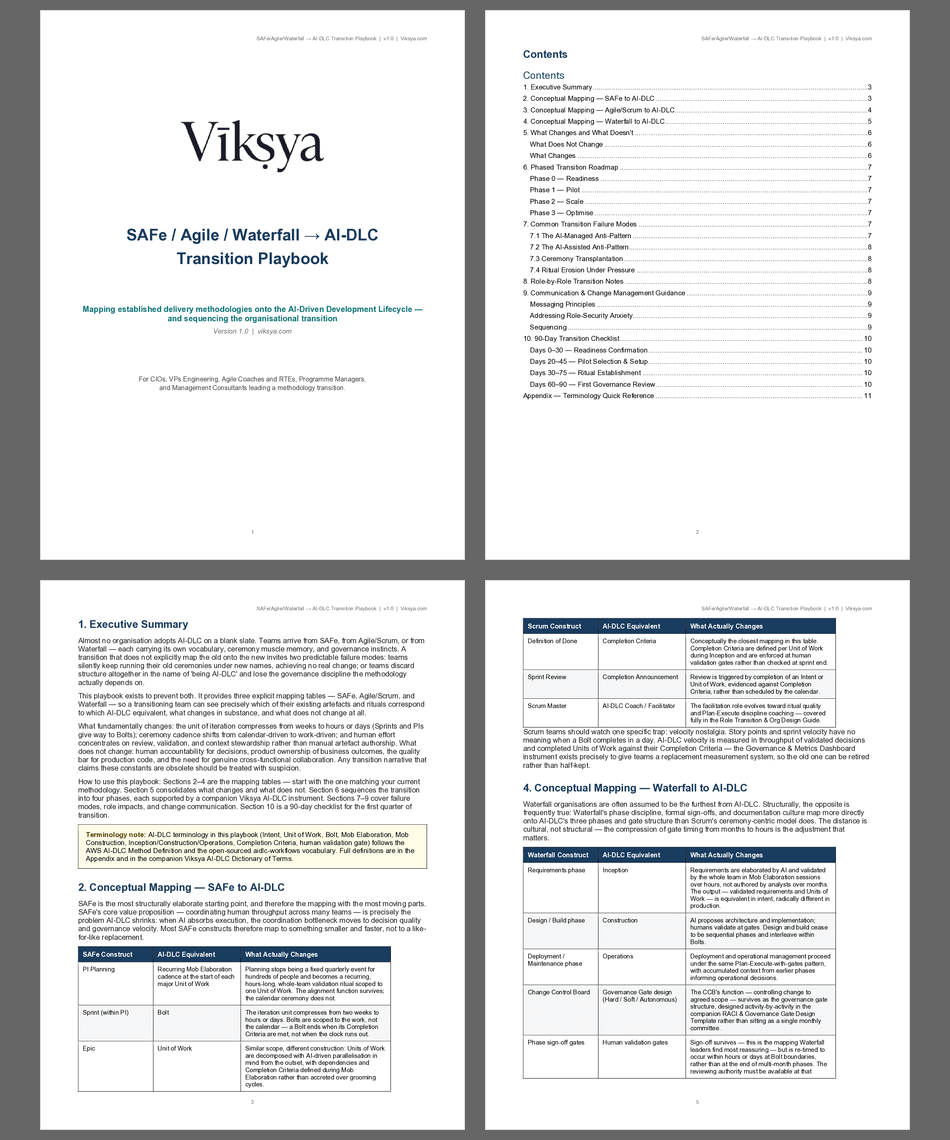
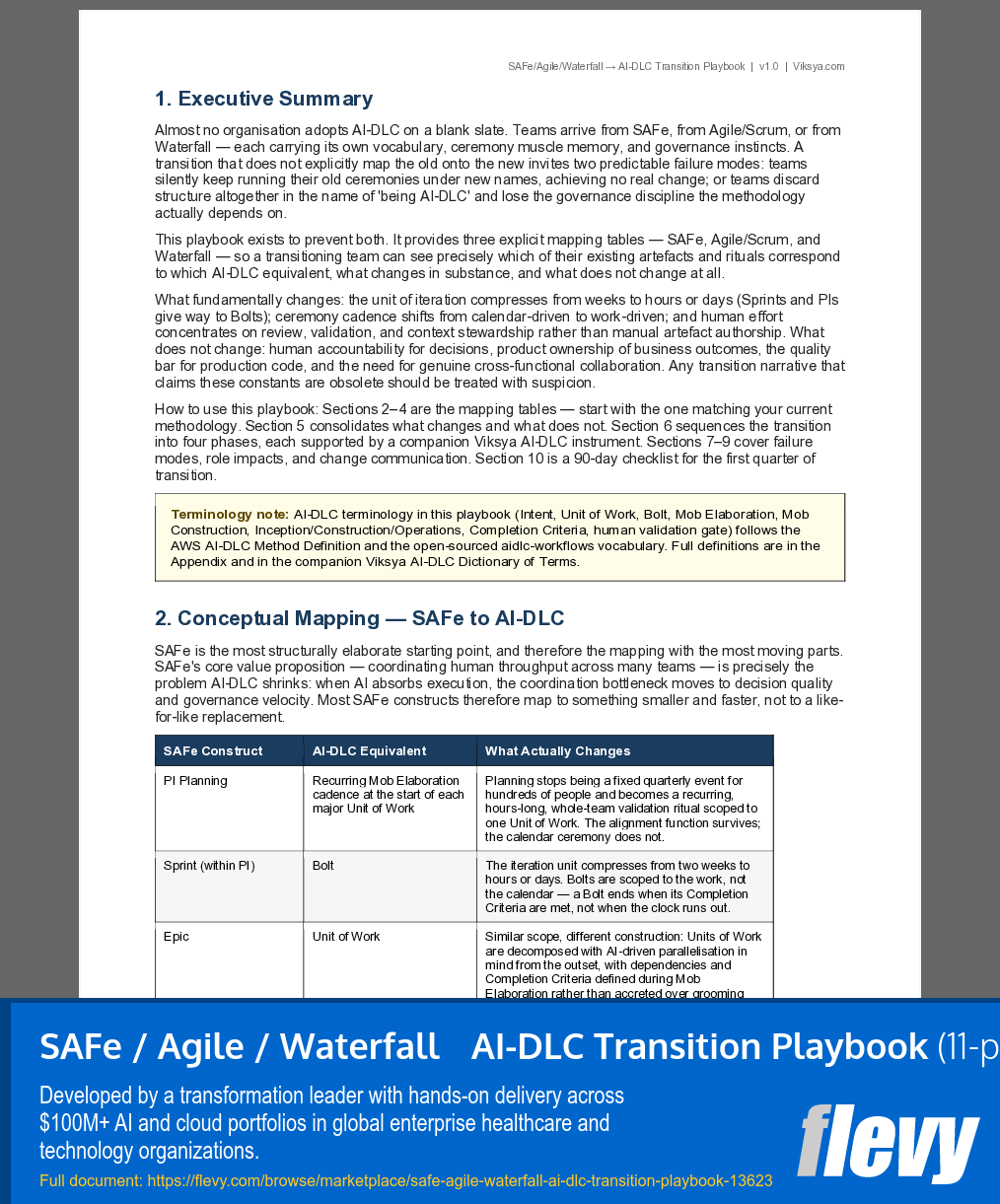
Almost no organisation adopts AI-DLC on a blank slate. Teams arrive carrying SAFe, Agile/Scrum, or Waterfall habits with them, and a transition that doesn't explicitly map the old onto the new tends to fail in one of two ways: ceremonies get renamed and run unchanged, or structure gets discarded in the name of going AI-native and the governance discipline AI-DLC depends on goes with it. Two further failure patterns surface once the transition is already underway, and by the time they show up in output quality, they're expensive to unwind.
This PDF playbook works through all four. It opens with three construct-by-construct mapping tables – SAFe, Agile/Scrum, and Waterfall – each row naming what actually changes rather than leaving it to inference: PI Planning, Sprint, and Epic map to a recurring Mob Elaboration cadence, the Bolt, and the Unit of Work respectively, with the reasoning spelled out for why each substitution isn't a like-for-like swap. A dedicated section then states, once, what survives the transition unchanged – human accountability for decisions, product ownership of outcomes, the production quality bar, cross-functional collaboration – against what genuinely changes: ceremony cadence, where human effort concentrates, the direction proposals flow, and the measurement system. It's framed as a single message meant to be used verbatim across every stakeholder briefing.
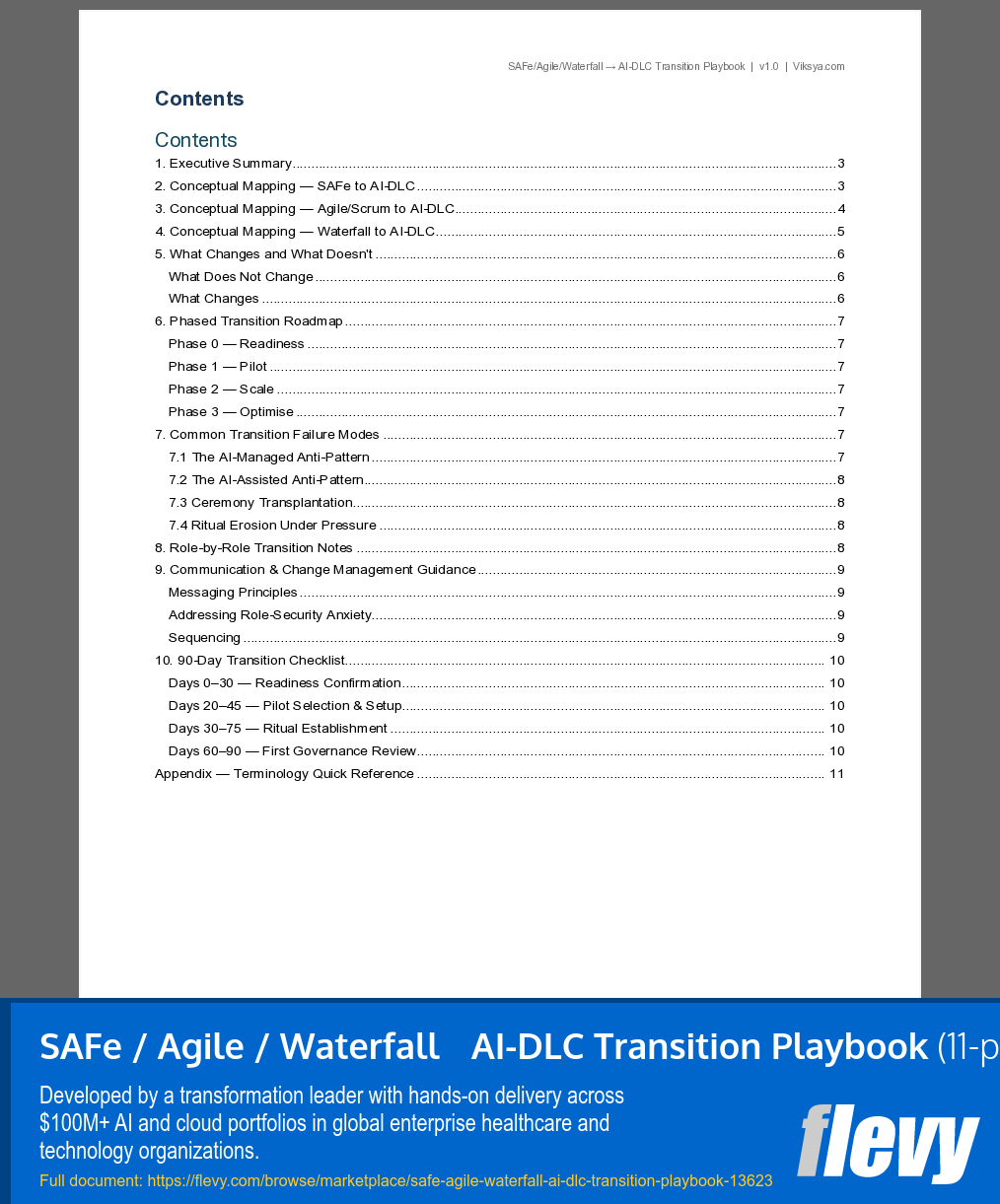
From there it sequences the transition into four phases – Readiness, Pilot, Scale, Optimise – each paired with a named supporting instrument and an explicit entry and exit condition, so scaling can't jump ahead of a pilot that hasn't produced validated lessons. Four common failure modes are named and diagnosed with their early warning signals, six traditional roles get a brief before/after orientation, and a dedicated section covers change-communication sequencing, including how to address role-security anxiety honestly. The playbook closes with a 90-day checklist broken into four working windows – readiness confirmation, pilot selection and setup, ritual establishment, and the first governance review – plus a terminology appendix. Ten sections in total.
It's built for CIOs and VPs of Engineering sequencing a transition for an executive committee, agile coaches and RTEs retiring SAFe or Scrum ceremonies deliberately rather than by improvisation, programme managers running the 90-day checklist as a working-session structure, and management consultants who need a standardised, defensible transition sequence across client engagements starting from different methodologies.
Format: PDF playbook, no software required beyond a PDF reader. Works on desktop or mobile.
Published by Viksya. Seller licence terms are included within the document and take precedence over platform defaults.
Got a question about the product? Email us at support@flevy.com or ask the author directly by using the "Ask the Author a Question" form. If you cannot view the preview above this document description, go here to view the large preview instead.
Source: Best Practices in Artificial Intelligence, Agile PDF: SAFe / Agile / Waterfall → AI-DLC Transition Playbook PDF (PDF) Document, Viksya
ABOUT THE AUTHOR

Viksya builds decision frameworks for leaders who answer to a board, not a hunch. Our Excel workbooks and playbooks are developed by a transformation leader with hands-on experience directing $100M+ AI and cloud portfolios inside large enterprises -- the same instruments used to justify, select, estimate, and govern real programmes, productized. The catalog spans three tracks: AI Transformation ... [read more]
Ask the Author a Question
You must be logged in to contact the author.




























