
Robotics Value Chain   32-slide PPT PowerPoint presentation slide deck (PPTX)
$39.00

Robotics Value Chain (32-slide PPT PowerPoint presentation slide deck (PPTX)) Preview Image
Log in to unlock full preview.
Robotics Value Chain (32-slide PPT PowerPoint presentation slide deck (PPTX)) Preview Image
Arrow   Click main image to view in full screen.

Robotics Value Chain (PowerPoint PPTX Slide Deck)

PowerPoint (PPTX) 32 Slides

Top 1,000 Best Practice $39.00
This framework is created by former McKinsey, BCG, Deloitte, EY, and Capgemini consultants and provides actionable insights for Robotics Industry Value Chain Analysis.
Add to Cart


Immediate download
Free lifetime updates

BENEFITS OF THIS POWERPOINT DOCUMENT

  1. Provides a framework for examining the Robotics Industry.
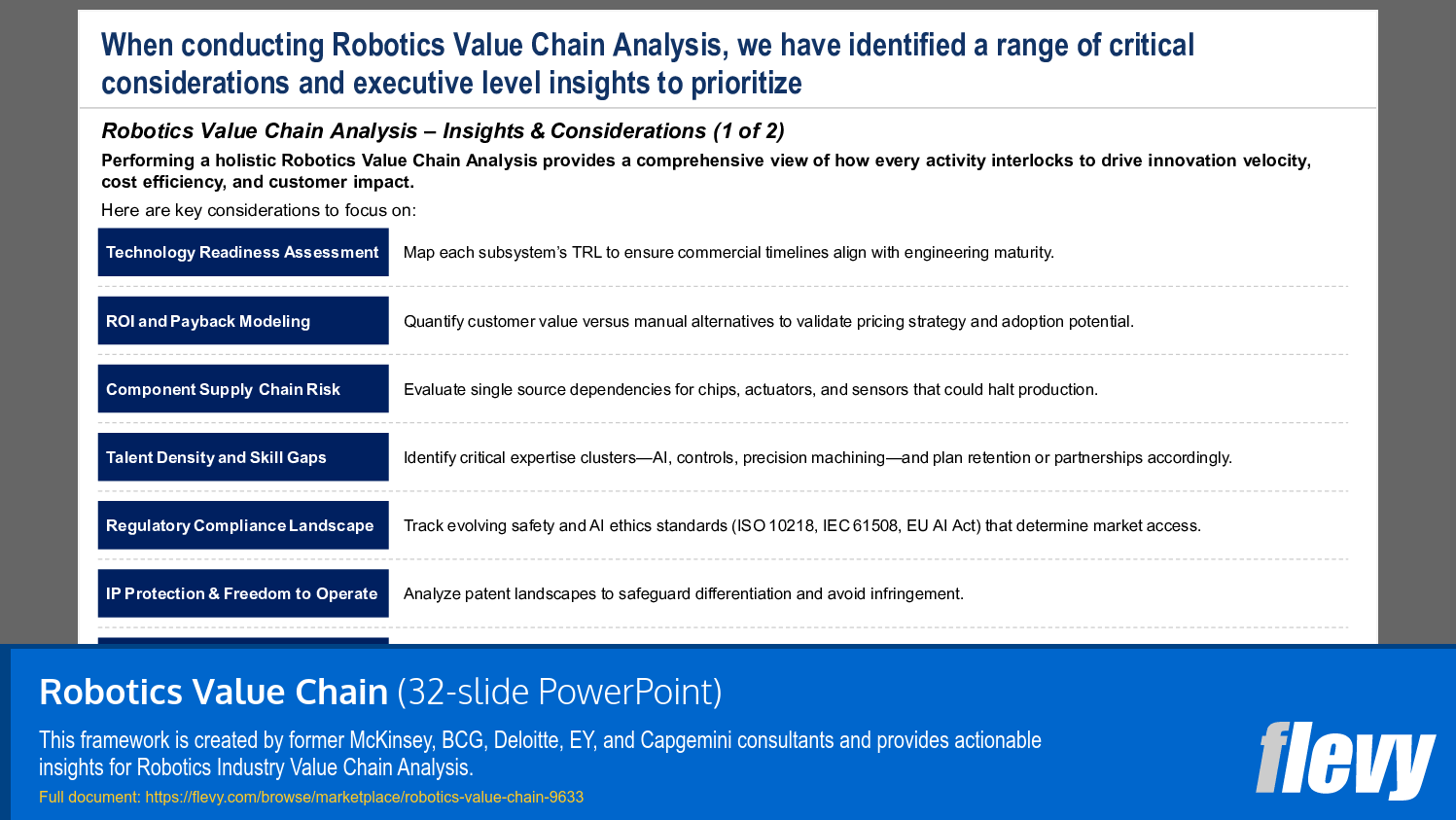
  2. Identifies 13 important insights and considerations for Robotics Value Chain Analysis.
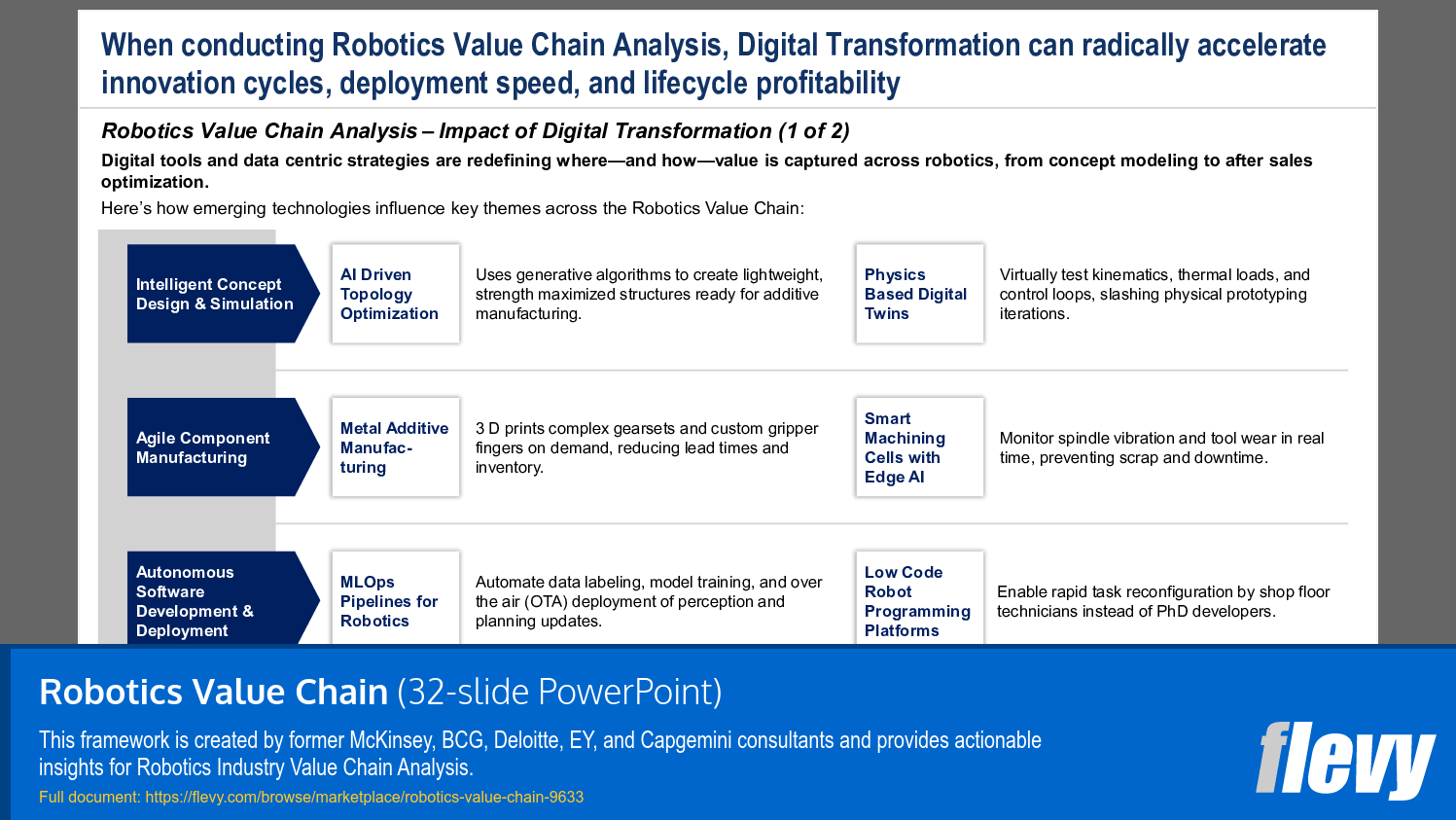
  3. Provides a detailed breakdown of the impact of Digital Transformation across the Robotics Industry Value Chain.

MANUFACTURING PPT DESCRIPTION

Editor Summary Robotics Value Chain is a 32-slide PowerPoint framework created by former McKinsey, BCG, Deloitte, EY, and Capgemini consultants, mapping the end-to-end steps for delivering robotic products and services. Read more

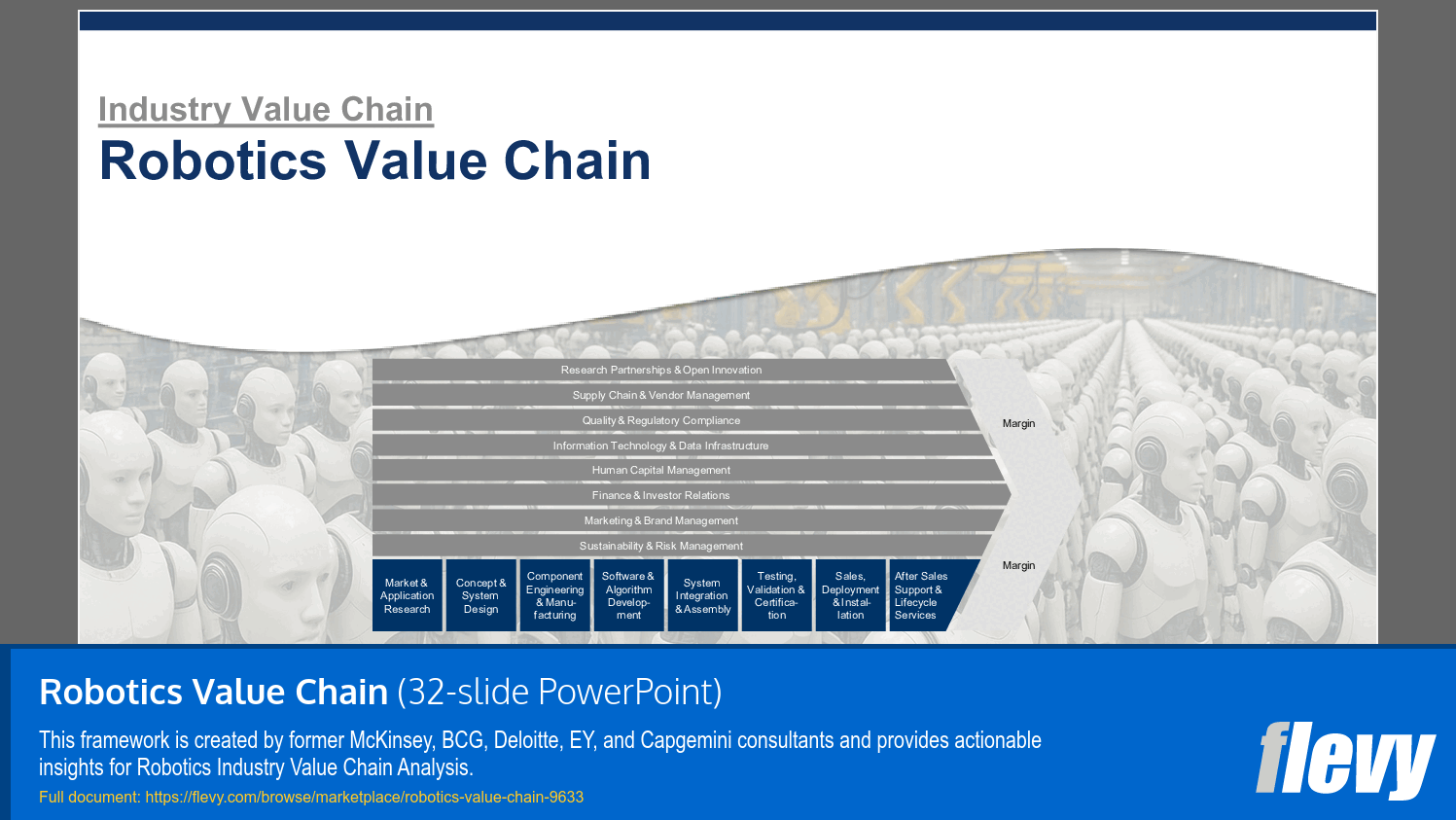
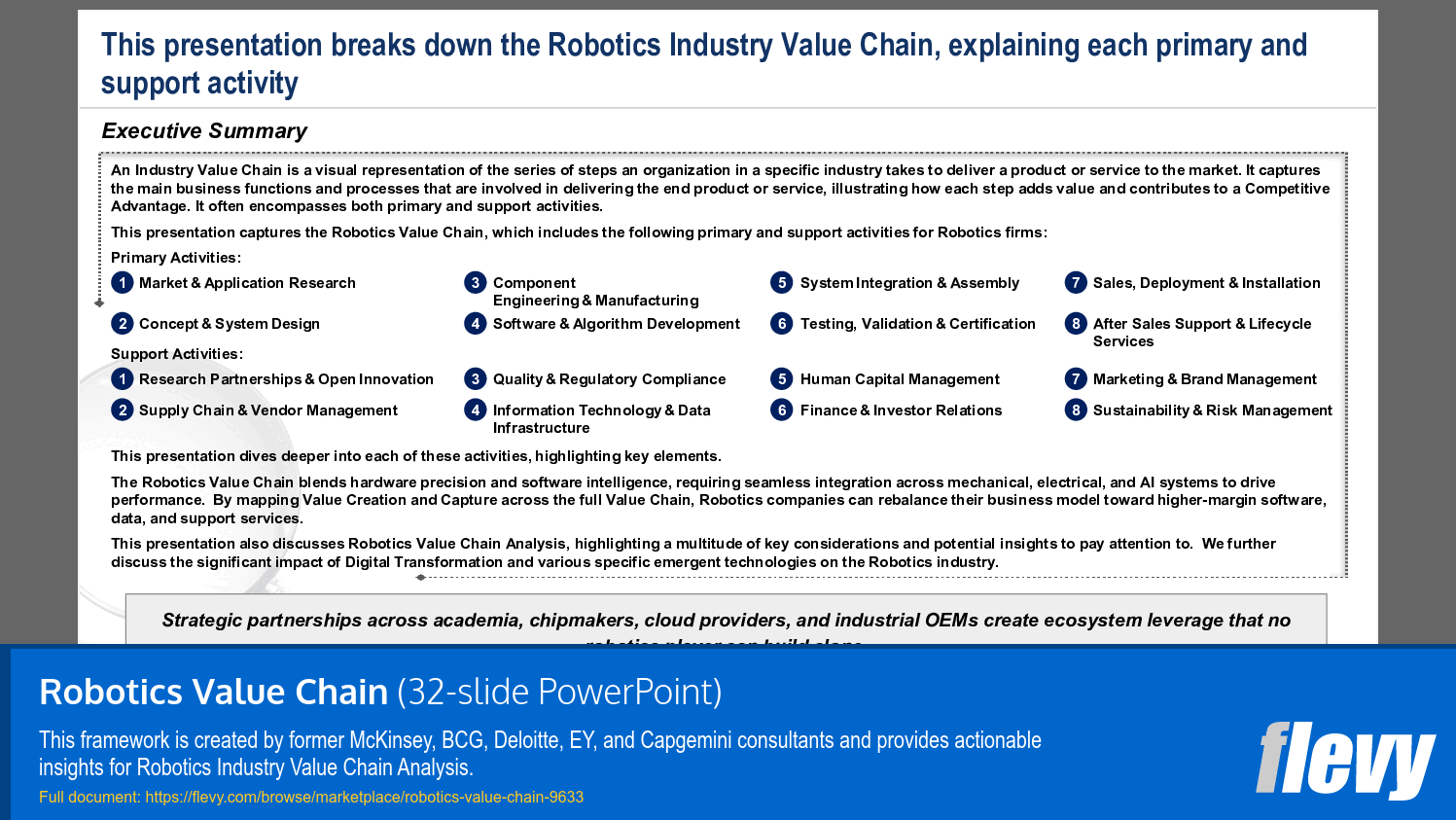
An Industry Value Chain is a visual representation of the series of steps an organization in a specific industry takes to deliver a product or service to the market. It captures the main business functions and processes that are involved in delivering the end product or service, illustrating how each step adds value and contributes to a Competitive Advantage. It often encompasses both primary and support activities.

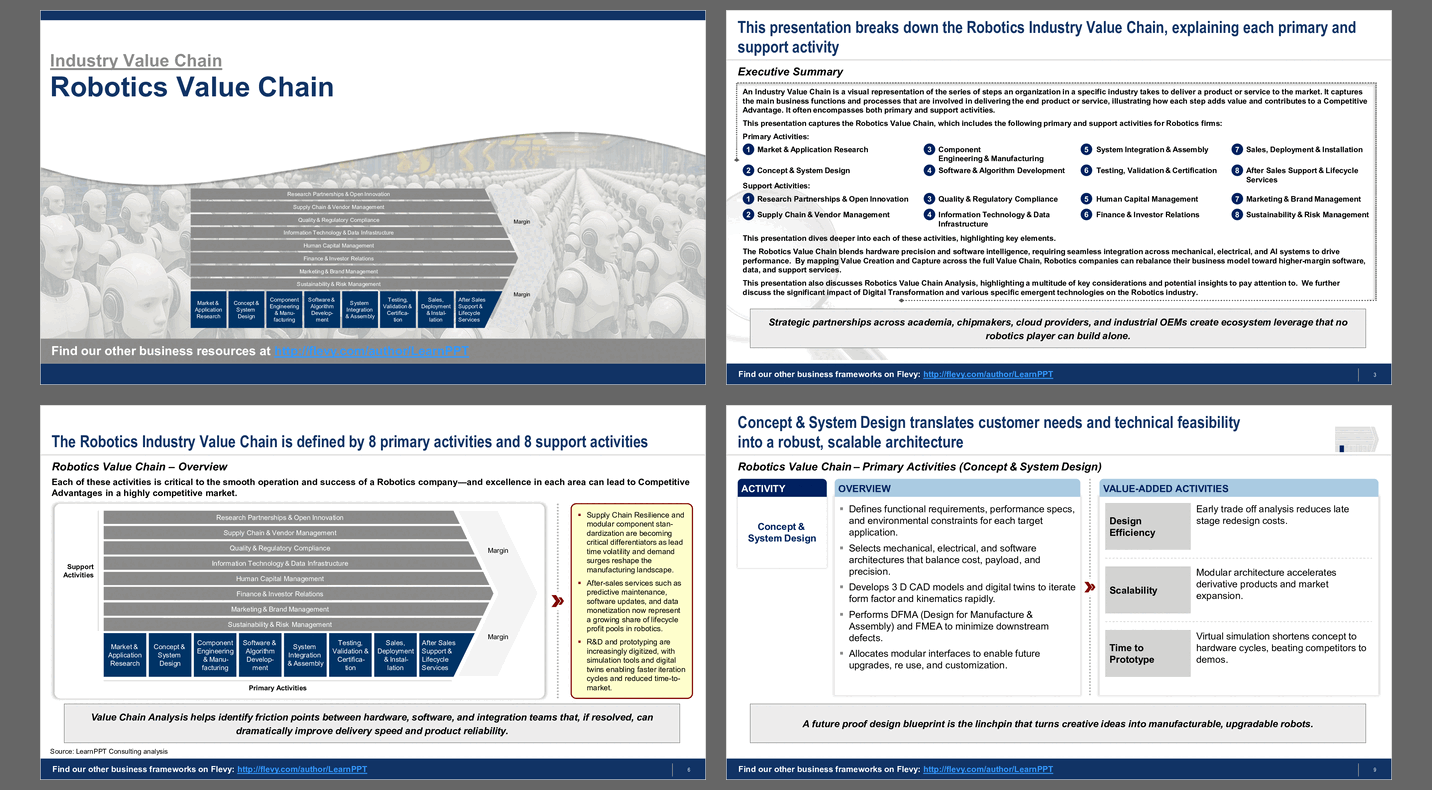
This presentation captures the Robotics Value Chain, which includes the following primary and support activities for Robotics firms:

Primary Activities
1. Market & Application Research
2. Concept & System Design
3. Component Engineering & Manufacturing
4. Software & Algorithm Development
5. System Integration & Assembly
6. Testing, Validation & Certification
7. Sales, Deployment & Installation
8. After Sales Support & Lifecycle Services

Support Activities
1. Research Partnerships & Open Innovation
2. Supply Chain & Vendor Management
3. Quality & Regulatory Compliance
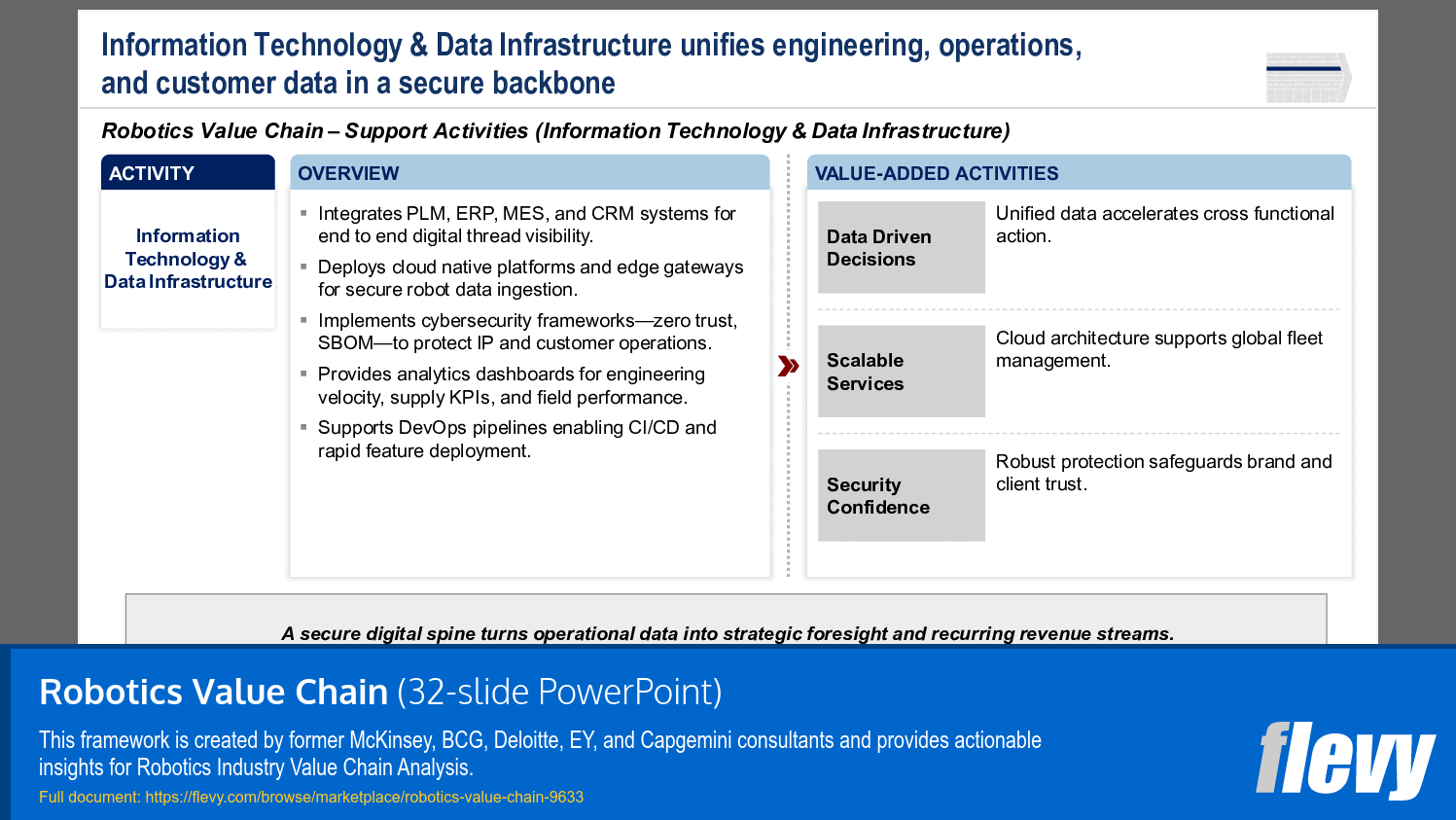
4. Information Technology & Data Infrastructure
5. Human Capital Management
6. Finance & Investor Relations
7. Marketing & Brand Management
8. Sustainability & Risk Management

This presentation dives deeper into each of these activities, highlighting key elements.

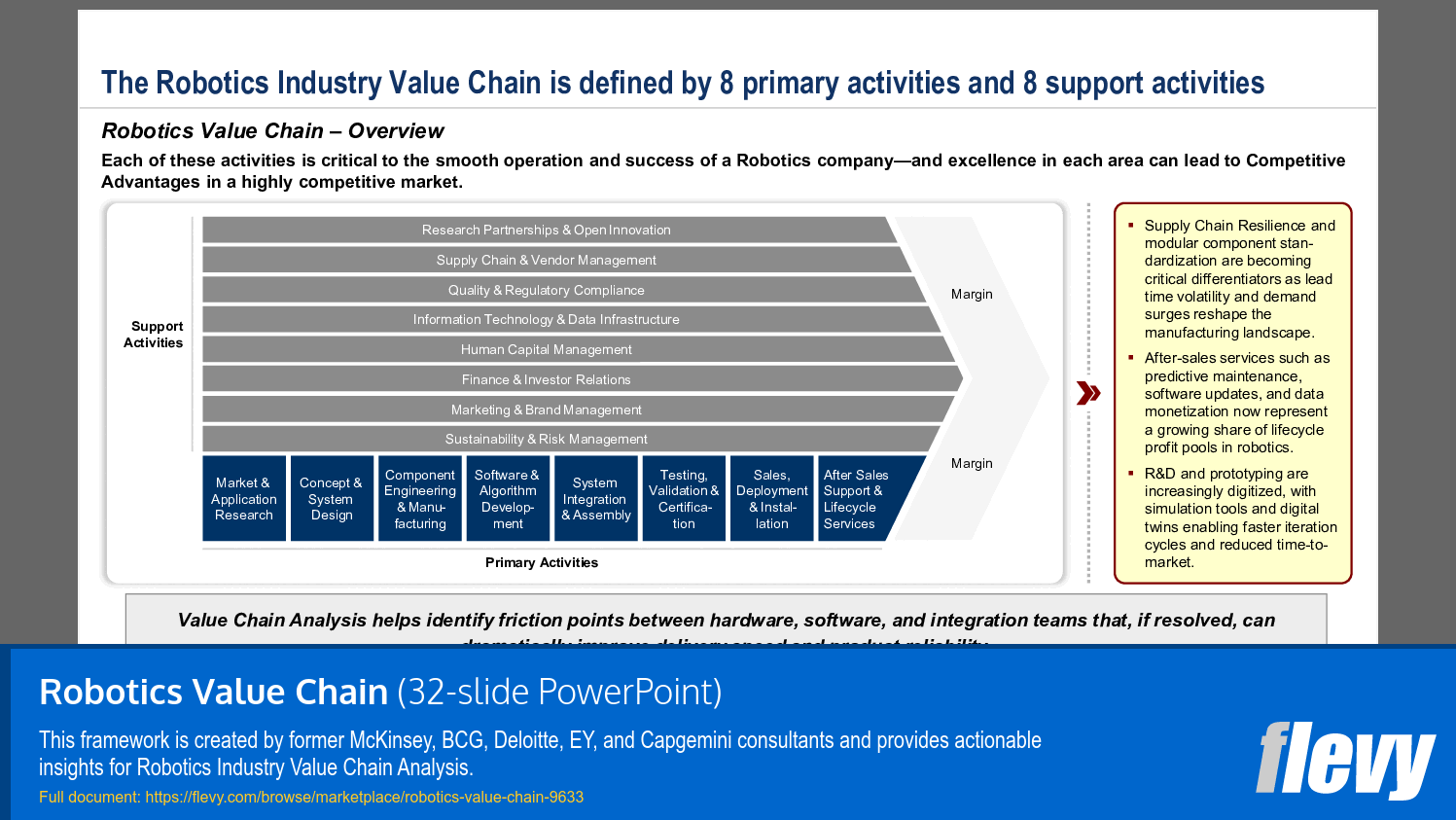
Value Chain Analysis helps identify friction points between hardware, software, and integration teams that, if resolved, can dramatically improve delivery speed and product reliability. Supply Chain Resilience and modular component standardization are becoming critical differentiators as lead time volatility and demand surges reshape the manufacturing landscape. After-sales services such as predictive maintenance, software updates, and data monetization now represent a growing share of lifecycle profit pools in robotics. R&D and prototyping are increasingly digitized, with simulation tools and digital twins enabling faster iteration cycles and reduced time-to-market.

The Robotics Value Chain blends hardware precision and software intelligence, requiring seamless integration across mechanical, electrical, and AI systems to drive performance. By mapping Value Creation and Capture across the full Value Chain, Robotics companies can rebalance their business model toward higher-margin software, data, and support services.

This presentation also discusses Robotics Value Chain Analysis, highlighting a multitude of key considerations and potential insights to pay attention to. We further discuss the significant impact of Digital Transformation and various specific emergent technologies on the Robotics industry.

Got a question about the product? Email us at support@flevy.com or ask the author directly by using the "Ask the Author a Question" form. If you cannot view the preview above this document description, go here to view the large preview instead.

MARCUS OVERVIEW

This synopsis was written by Marcus [?] based on the analysis of the full 32-slide presentation.


Executive Summary
The Robotics Value Chain presentation provides a comprehensive framework for understanding the series of steps involved in delivering robotic products and services to the market. It captures the essential business functions and processes that contribute to value creation and competitive advantage in the robotics industry. This framework highlights both primary and support activities, enabling organizations to identify opportunities for efficiency and innovation. By mapping the value creation and capture processes, companies can enhance their business models towards higher-margin software, data, and support services. Additionally, the presentation discusses the impact of digital transformation and emergent technologies on the robotics sector.

Who This Is For and When to Use
•  Robotics industry executives seeking to optimize operational efficiency
•  Product managers focused on integrating hardware and software solutions
•  Business strategists analyzing market opportunities and competitive positioning
•  Consultants advising robotics firms on value chain enhancements

Best-fit moments to use this deck:
•  During strategic planning sessions to identify key value chain improvements
•  In workshops aimed at aligning product development with market needs
•  For training sessions on integrating digital transformation into robotics operations

Learning Objectives
•  Define the Robotics Value Chain and its significance in the industry
•  Analyze primary and support activities that contribute to value creation
•  Identify friction points between hardware, software, and integration teams
•  Evaluate the impact of digital transformation on innovation cycles
•  Develop strategies for enhancing customer satisfaction through lifecycle services
•  Assess the role of strategic partnerships in driving competitive advantage

Table of Contents
•  Executive Summary (page 3)
•  Robotics Value Chain Overview (page 6)
•  Primary Activities (page 8)
•  Support Activities (page 17)
•  Robotics Value Chain Analysis (page 26)

Primary Topics Covered
•  Market & Application Research - Profiles industry pain points and analyzes technology readiness to validate commercial potential.
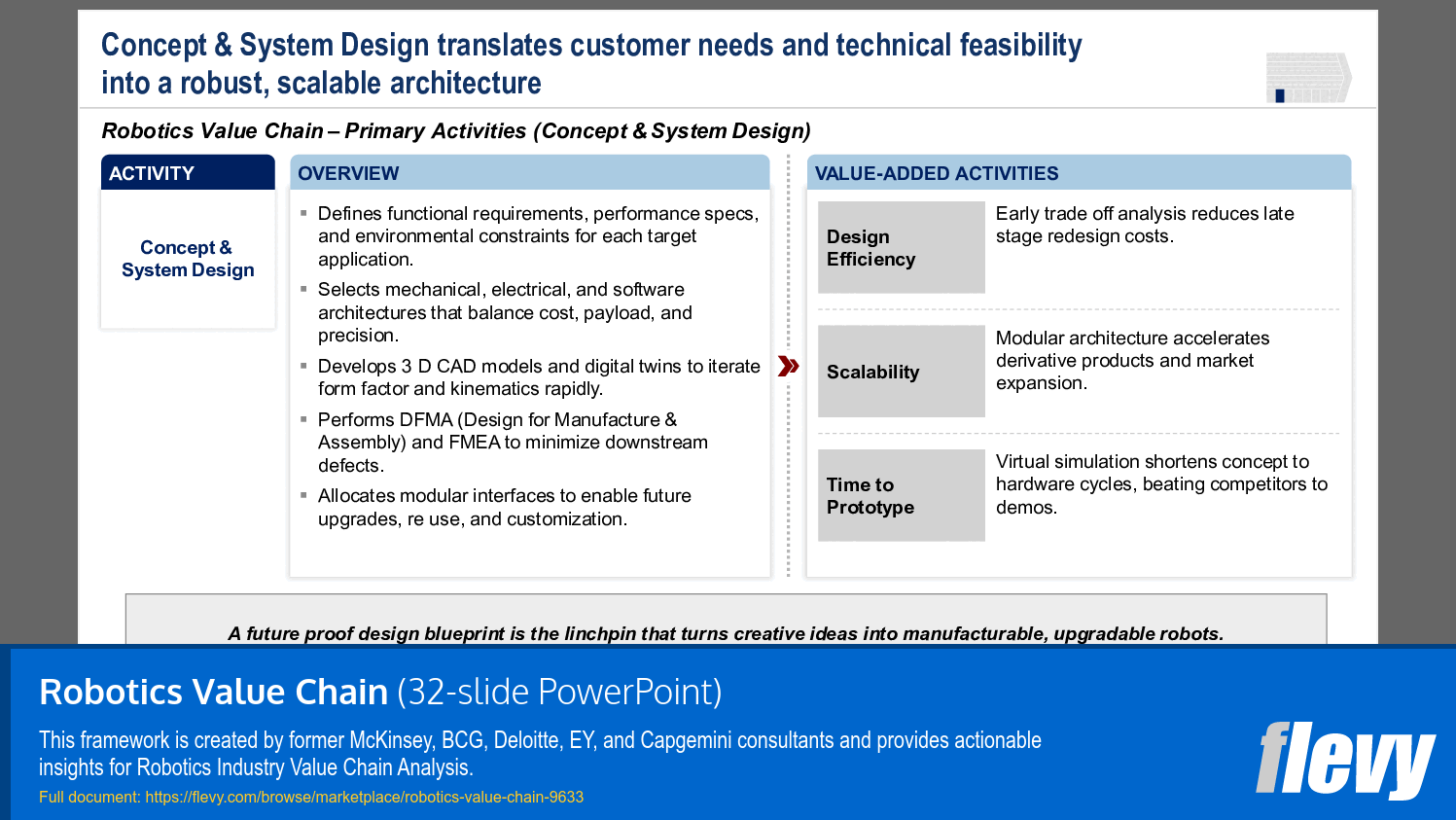
•  Concept & System Design - Defines functional requirements and selects architectures to balance cost and precision.
•  Component Engineering & Manufacturing - Engineers critical components to meet performance and reliability targets.
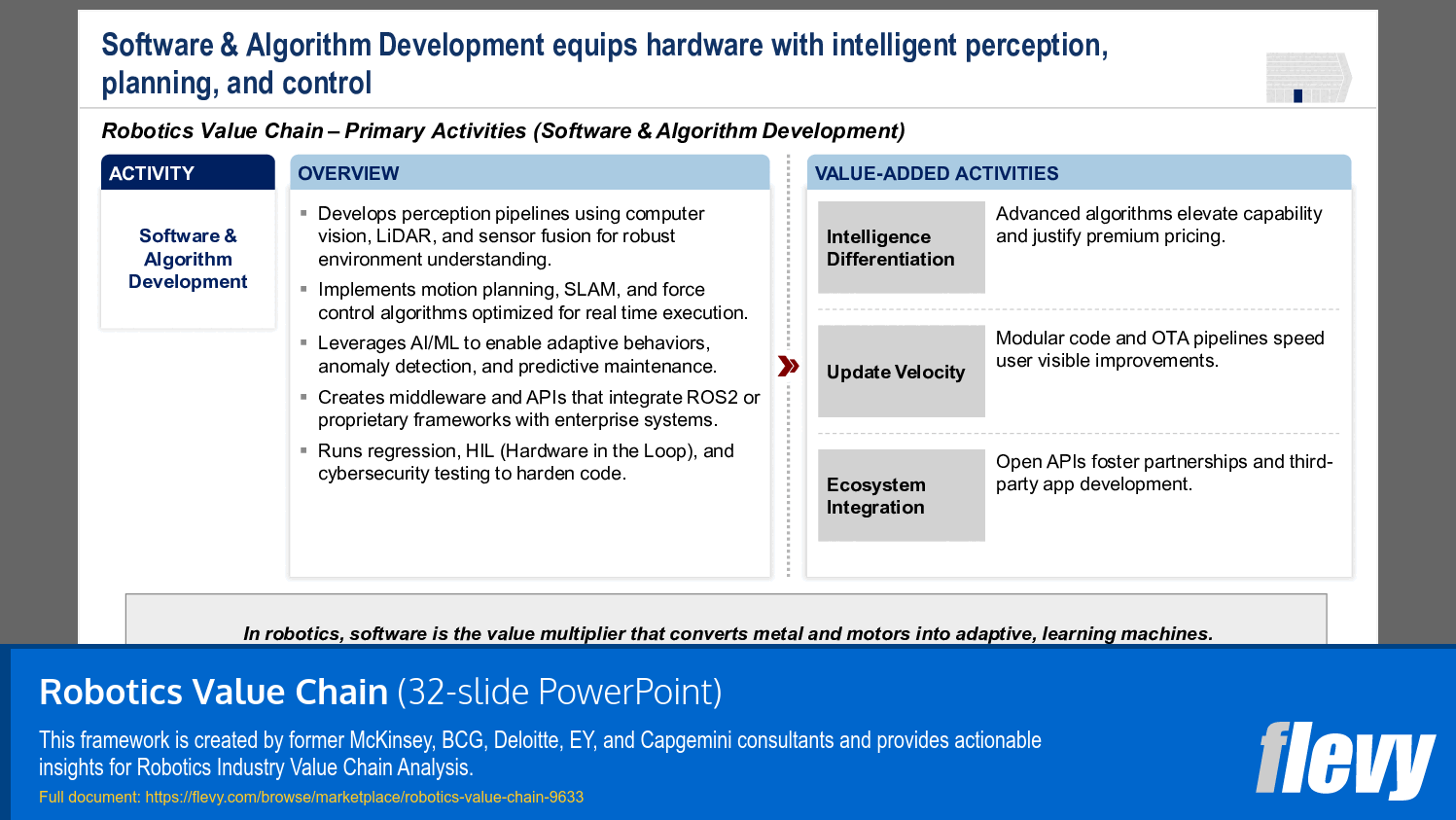
•  Software & Algorithm Development - Develops intelligent algorithms that enhance robotic capabilities.
•  System Integration & Assembly - Combines hardware and software into operational solutions ready for deployment.
•  Testing, Validation & Certification - Confirms safety and compliance through rigorous testing protocols.
•  Sales, Deployment & Installation - Translates engineered systems into operational value on customer sites.
•  After Sales Support & Lifecycle Services - Provides ongoing support to enhance product performance and customer loyalty.

Deliverables, Templates, and Tools
•  Value chain analysis framework for identifying operational efficiencies
•  Market research templates for assessing application opportunities
•  System design specifications for aligning customer needs with technical feasibility
•  Testing protocols for validating product safety and compliance
•  Sales enablement tools for mapping ROI and integration pathways
•  After-sales support models for enhancing customer engagement

Slide Highlights
•  Overview of the Robotics Value Chain, illustrating primary and support activities
•  Detailed breakdown of Market & Application Research, emphasizing opportunity identification
•  Insights into Component Engineering & Manufacturing, focusing on performance reliability
•  Framework for Software & Algorithm Development, highlighting intelligence differentiation
•  Visual representation of System Integration & Assembly processes and quality assurance measures

Potential Workshop Agenda
Robotics Value Chain Overview (60 minutes)
•  Introduction to the Robotics Value Chain
•  Discussion on primary and support activities
•  Group analysis of current operational efficiencies

Market & Application Research Session (90 minutes)
•  Identify industry pain points and attractive use cases
•  Evaluate technology readiness and market potential
•  Develop action plans for targeted R&D initiatives

Digital Transformation Impact Workshop (90 minutes)
•  Explore emerging technologies influencing the value chain
•  Discuss strategies for integrating digital tools into operations
•  Create a roadmap for enhancing innovation cycles and lifecycle profitability

Customization Guidance
•  Tailor the value chain framework to specific organizational contexts and operational needs
•  Adjust market research templates to reflect unique industry challenges and opportunities
•  Modify testing protocols to align with regulatory requirements in different markets
•  Incorporate company-specific metrics and KPIs into after-sales support models

Secondary Topics Covered
•  Supply Chain & Vendor Management strategies for securing high-tech inputs
•  Quality & Regulatory Compliance measures to ensure safety and standards adherence
•  Information Technology & Data Infrastructure for unified data management
•  Human Capital Management practices for developing multidisciplinary talent
•  Finance & Investor Relations strategies for funding innovation and growth

Topic FAQ

What are the main stages in a robotics value chain I should map for strategy work?

A typical robotics value chain maps eight primary stages from Market & Application Research through After Sales Support & Lifecycle Services, plus multiple support activities (e.g., supply chain, IT, regulatory). Mapping these eight primary activities helps clarify where value is created and captured across the business.

How does a value-chain analysis reveal friction between hardware and software teams?

Value-chain analysis highlights handoffs and dependencies—e.g., mismatched system requirements, incompatible component specs, or delayed software integration—that slow delivery and reduce reliability. Identifying these friction points enables targeted fixes to improve delivery speed and product reliability by addressing hardware/software/integration misalignments.

What impact does digital transformation have on robotics product development cycles?

Digital transformation accelerates innovation cycles by introducing simulation tools, digital twins, and data-driven processes, enabling faster prototyping and reduced time-to-market. It also supports lifecycle monetization strategies such as remote updates and predictive maintenance enabled by unified data infrastructure and analytics.

How should teams structure testing and certification for robotics products?

Teams should implement rigorous testing protocols that cover safety, performance, and regulatory compliance, and adapt those protocols to market-specific certification requirements. Formalized testing and validation processes reduce deployment risk and support faster customer acceptance through consistent safety and compliance checks.

What should I look for when buying robotics value-chain templates or toolkits?

Look for templates that cover core activities you need: market & application research, system design specifications, component engineering guidance, testing protocols, sales enablement, and after-sales models. Flevy’s Robotics Value Chain lists these deliverables, including market research templates and testing protocols for practical use.

How can after-sales services become a meaningful revenue stream for a robotics company?

After-sales services such as predictive maintenance, subscription software updates, and data monetization convert lifecycle interactions into recurring revenue, improve customer retention, and stabilize cash flow through service contracts. Designing service models and KPIs around these elements captures growing lifecycle profit pools like predictive maintenance and software updates.

What role do supply chain resilience and component standardization play in robotics manufacturing?

Supply chain resilience mitigates lead-time volatility and supplier risk, while modular component standardization reduces complexity and shortens assembly cycles. Together these approaches improve manufacturability and responsiveness during demand surges, making modular component standardization a critical differentiator.

Can the robotics value-chain framework be adapted for different company sizes or target markets?

Yes; the framework can be tailored by adjusting market research templates, modifying testing protocols to meet regional regulations, and incorporating company-specific metrics and KPIs to reflect scale and market focus, enabling contextualized value-chain analysis and implementation planning.

Document FAQ
These are questions addressed within this presentation.

What is the Robotics Value Chain?
The Robotics Value Chain is a framework that outlines the series of steps organizations take to deliver robotic products and services, highlighting both primary and support activities that add value.

How can this presentation help my organization?
This presentation provides insights into optimizing operational efficiencies, enhancing customer satisfaction, and leveraging digital transformation within the robotics industry.

What are the primary activities in the Robotics Value Chain?
The primary activities include Market & Application Research, Concept & System Design, Component Engineering & Manufacturing, Software & Algorithm Development, System Integration & Assembly, Testing, Validation & Certification, Sales, Deployment & Installation, and After Sales Support & Lifecycle Services.

What role does digital transformation play in the Robotics Value Chain?
Digital transformation accelerates innovation cycles, enhances deployment speed, and improves lifecycle profitability by integrating advanced technologies and data-driven strategies.

How can I customize the frameworks presented?
Frameworks can be tailored by adjusting metrics, aligning them with specific operational contexts, and incorporating unique organizational needs and goals.

What are the benefits of after-sales support in the Robotics Value Chain?
After-sales support enhances customer loyalty, provides ongoing performance upgrades, and stabilizes cash flow through service contracts and subscriptions.

How does market research influence R&D in robotics?
Market research identifies high-value problems and attractive use cases, guiding R&D efforts toward profitable niches and aligning product portfolios with market demands.

What are the key considerations for Robotics Value Chain Analysis?
Key considerations include technology readiness, ROI modeling, supply chain risks, talent density, regulatory compliance, and intellectual property protection.

Glossary
•  Robotics Value Chain - A framework outlining the steps in delivering robotic products and services.
•  Market Research - The process of analyzing market needs and opportunities.
•  System Integration - The process of combining hardware and software into a cohesive solution.
•  Lifecycle Services - Ongoing support and upgrades provided after the initial sale.
•  Digital Transformation - The integration of digital technology into all areas of business operations.
•  Quality Compliance - Adherence to safety and regulatory standards in product development.
•  Human Capital Management - Strategies for recruiting, developing, and retaining talent.
•  Supply Chain Management - The oversight of materials and components from suppliers to production.
•  After Sales Support - Services provided to customers after the purchase of a product.
•  Testing & Validation - Processes to ensure products meet safety and performance standards.
•  Software Development - The creation of programs and algorithms that enhance robotic functionality.
•  Component Engineering - The design and manufacturing of parts essential for robotic systems.
•  Investor Relations - The management of communication between a company and its investors.
•  Sustainability - Practices aimed at reducing environmental impact and ensuring long-term viability.
•  Risk Management - Strategies to identify and mitigate potential risks in operations.
•  Data Infrastructure - The systems and processes that manage data flow and analysis.
•  Innovation Velocity - The speed at which new ideas and technologies are developed and implemented.
•  Strategic Partnerships - Collaborations with external organizations to enhance capabilities and market reach.
•  Customer Satisfaction - The measure of how products and services meet or exceed customer expectations.
•  Competitive Advantage - The attributes that allow an organization to outperform its competitors.

MANUFACTURING PPT SLIDES

Framework for Robotics Industry Value Chain Activities

Key Considerations for Robotics Value Chain Analysis

Unifying IT and Data Infrastructure in Robotics

Optimizing Robotics Design for Market Readiness

Enhancing Robotics through Software and Algorithms

Transforming Robotics: Digital Strategies for Value Creation

Source: Best Practices in Manufacturing, Value Chain Analysis, Robotics Industry PowerPoint Slides: Robotics Value Chain PowerPoint (PPTX) Presentation Slide Deck, LearnPPT Consulting


$39.00
This framework is created by former McKinsey, BCG, Deloitte, EY, and Capgemini consultants and provides actionable insights for Robotics Industry Value Chain Analysis.
Add to Cart
  

ABOUT THE AUTHOR

Author image
Additional documents from author: 141

We are a team of management consultants trained by top tier global consulting firms (including McKinsey, BCG, Deloitte, EY, Capgemini) with a collective experience of several decades. We specialize in business frameworks based on real-life consulting engagements.

We have served 100s of clients that range from Fortune 500 companies to tech startups to ... [read more]

Ask the Author a Question

You must be logged in to contact the author.

Click here to log in Click here register

Did you know?
The average daily rate of a McKinsey consultant is $6,625 (not including expenses). The average price of a Flevy document is $65.


Trusted by over 10,000+ Client Organizations
Since 2012, we have provided business templates to over 10,000 businesses and organizations of all sizes, from startups and small businesses to the Fortune 100, in over 130 countries.
AT&T GE Cisco Intel IBM Coke Dell Toyota HP Nike Samsung Microsoft Astrazeneca JP Morgan KPMG Walgreens Walmart 3M Kaiser Oracle SAP Google E&Y Volvo Bosch Merck Fedex Shell Amgen Eli Lilly Roche AIG Abbott Amazon PwC T-Mobile Broadcom Bayer Pearson Titleist ConEd Pfizer NTT Data Schwab


Read Customer Testimonials

 
"As an Independent Management Consultant, I find Flevy to add great value as a source of best practices, templates and information on new trends. Flevy has matured and the quality and quantity of the library is excellent. Lastly the price charged is reasonable, creating a win-win value for "

– Jim Schoen, Principal at FRC Group
 
"Flevy is now a part of my business routine. I visit Flevy at least 3 times each month.

Flevy has become my preferred learning source, because what it provides is practical, current, and useful in this era where the business world is being rewritten.

In today's environment where there are so "

– Omar Hernán Montes Parra, CEO at Quantum SFE
 
"FlevyPro has been a brilliant resource for me, as an independent growth consultant, to access a vast knowledge bank of presentations to support my work with clients. In terms of RoI, the value I received from the very first presentation I downloaded paid for my subscription many times over! The "

– Roderick Cameron, Founding Partner at SGFE Ltd
 
"I have found Flevy to be an amazing resource and library of useful presentations for lean sigma, change management and so many other topics. This has reduced the time I need to spend on preparing for my performance consultation. The library is easily accessible and updates are regularly provided. A wealth of great information."

– Cynthia Howard RN, PhD, Executive Coach at Ei Leadership
 
"As a consultant requiring up to date and professional material that will be of value and use to my clients, I find Flevy a very reliable resource.

The variety and quality of material available through Flevy offers a very useful and commanding source for information. Using Flevy saves me time, enhances my expertise and ends up being a good decision."

– Dennis Gershowitz, Principal at DG Associates
 
"My FlevyPro subscription provides me with the most popular frameworks and decks in demand in today’s market. They not only augment my existing consulting and coaching offerings and delivery, but also keep me abreast of the latest trends, inspire new products and service offerings for my practice, and educate me "

– Bill Branson, Founder at Strategic Business Architects
 
"As a niche strategic consulting firm, Flevy and FlevyPro frameworks and documents are an on-going reference to help us structure our findings and recommendations to our clients as well as improve their clarity, strength, and visual power. For us, it is an invaluable resource to increase our impact and value."

– David Coloma, Consulting Area Manager at Cynertia Consulting
 
"As a small business owner, the resource material available from FlevyPro has proven to be invaluable. The ability to search for material on demand based our project events and client requirements was great for me and proved very beneficial to my clients. Importantly, being able to easily edit and tailor "

– Michael Duff, Managing Director at Change Strategy (UK)


Customers Also Bought These Documents


Customers Also Like These Documents

Explore Related Management Topics


Your Recently Viewed Documents
Receive our FREE presentation on Operational Excellence

This 50-slide presentation provides a high-level introduction to the 4 Building Blocks of Operational Excellence. Achieving OpEx requires the implementation of a Business Execution System that integrates these 4 building blocks.