Robotic Process Automation (RPA) Opportunities (across Value Chain)   44-slide PPT PowerPoint presentation slide deck (PPTX)
$49.00

Robotic Process Automation (RPA) Opportunities (across Value Chain) (44-slide PPT PowerPoint presentation slide deck (PPTX)) Preview Image
Flevy is the marketplace for business best practices.
Robotic Process Automation (RPA) Opportunities (across Value Chain) (44-slide PPT PowerPoint presentation slide deck (PPTX)) Preview Image
Arrow   Click main image to view in full screen.

Robotic Process Automation (RPA) Opportunities (across Value Chain) (PowerPoint PPTX Slide Deck)

PowerPoint (PPTX) 44 Slides

$49.00
This framework is created by former McKinsey, BCG, Deloitte, EY, and Capgemini consultants. It identifies over 100+ RPA opportunities mapped across the Value Chain.
Add to Cart


Immediate download
Free lifetime updates

BENEFITS OF THIS POWERPOINT DOCUMENT

  1. Provides over 100+ RPA opportunities across the Value Chain, which can lead to significant cost savings and productivity gains.
  2. Allows you to prioritize your RPA projects by corporate function or formulate a cross-functional RPA Strategy.
  3. Lay the foundation to your Digital Transformation Program with targeted RPA initiatives.

VALUE CHAIN ANALYSIS PPT DESCRIPTION

This product (Robotic Process Automation [RPA] Opportunities [across Value Chain]) is a 44-slide PPT PowerPoint presentation slide deck (PPTX), which you can download immediately upon purchase.

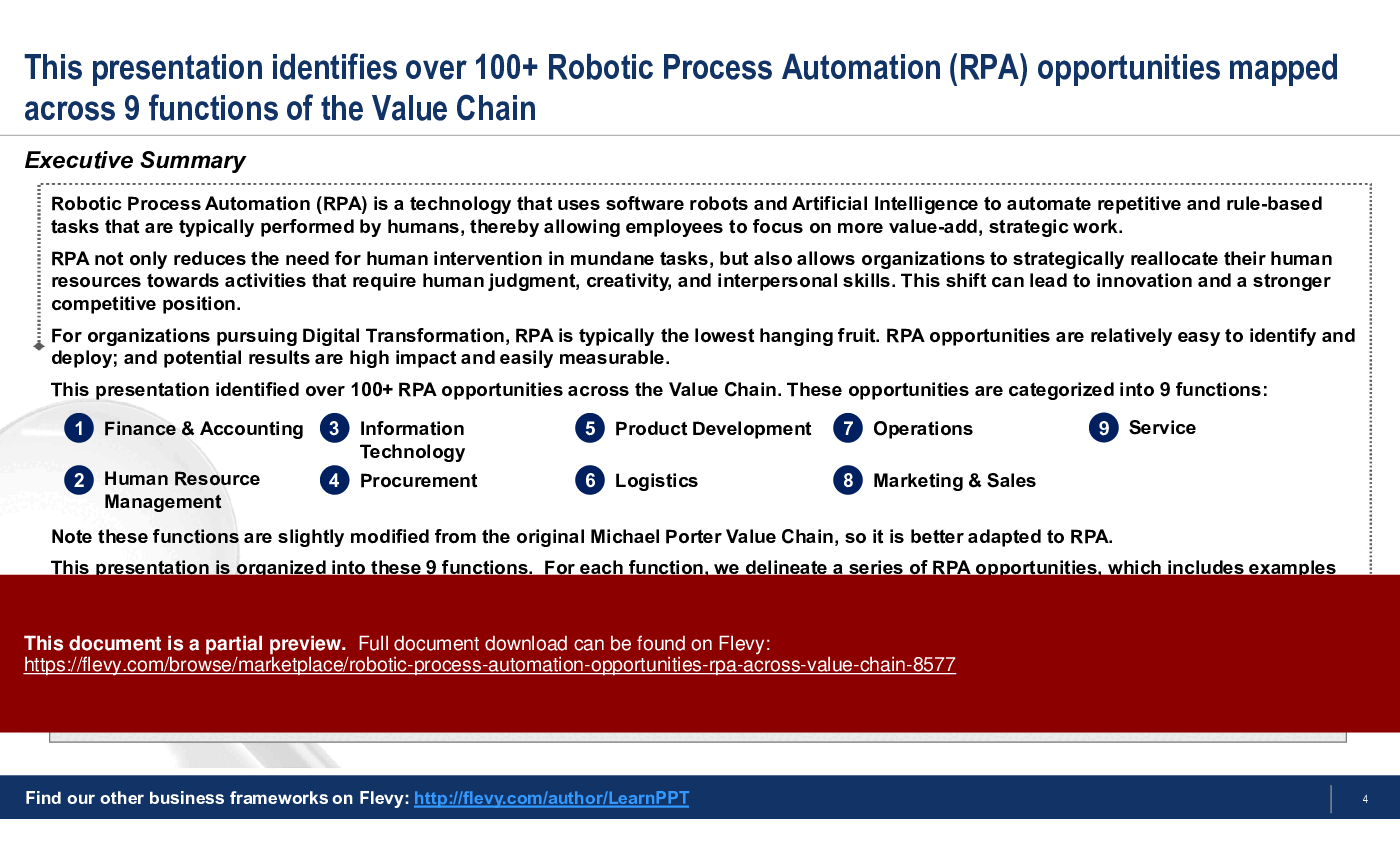
Robotic Process Automation (RPA) is a technology that uses software robots and Artificial Intelligence to automate repetitive and rule-based tasks that are typically performed by humans, thereby allowing employees to focus on more value-add, strategic work.

RPA not only reduces the need for human intervention in mundane tasks, but also allows organizations to strategically reallocate their human resources towards activities that require human judgment, creativity, and interpersonal skills. This shift can lead to innovation and a stronger competitive position. Furthermore, for employees, it improves job satisfaction and productivity.

For organizations pursuing Digital Transformation, RPA is typically the lowest hanging fruit. RPA opportunities are relatively easy to identify and deploy; and potential results are high impact and easily measurable. RPA allows organizations to digitize and automate processes at a foundational level, setting the stage for more advanced technologies like AI and machine learning, which can further enhance decision-making and operational efficiencies.

Specific RPA benefit areas include:

Cost Reduction – Significantly lowers operational costs by automating routine tasks.
Productivity & Efficiency Gains – Increases workflow speed and productivity by eliminating human error and delays.
Scalability – Facilitates the easy scaling of operations to handle increased workload without additional investment.
Improved Accuracy – Ensures high precision and consistency in task execution, reducing the risk of errors.
Employee Satisfaction – Frees up employees from monotonous tasks, allowing them to engage in more meaningful and strategic activities.
Compliance & Control – Enhances compliance with regulations by providing a clear, consistent, and auditable trail of actions.

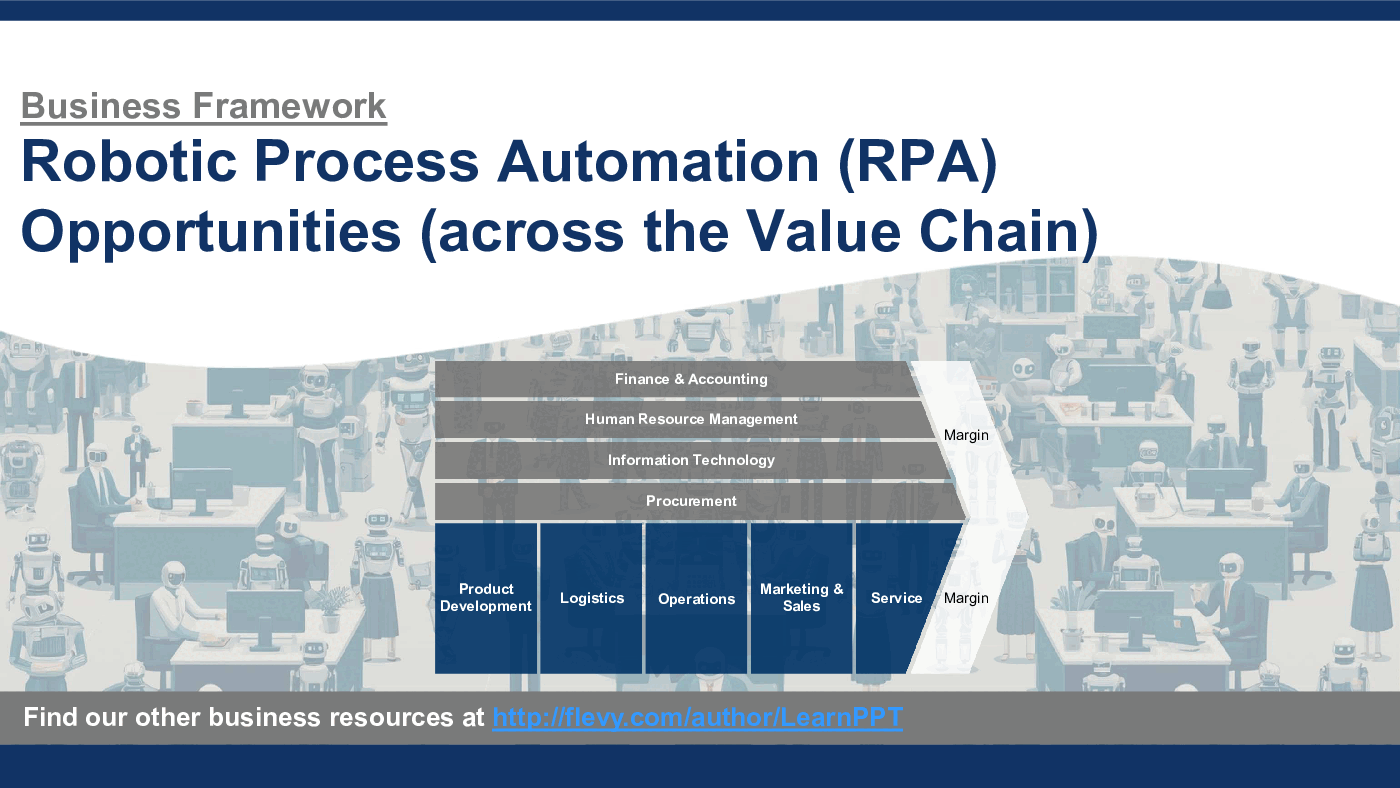
This presentation identified over 100+ RPA opportunities across the Value Chain. These opportunities are categorized into 9 functions:

1. Finance & Accounting
2. Human Resource Management
3. Information Technology
4. Procurement
5. Product Development
6. Logistics
7. Operations
8. Marketing & Sales
9. Service

Note these functions are slightly modified from the original Michael Porter Value Chain, so it is better adapted to RPA.

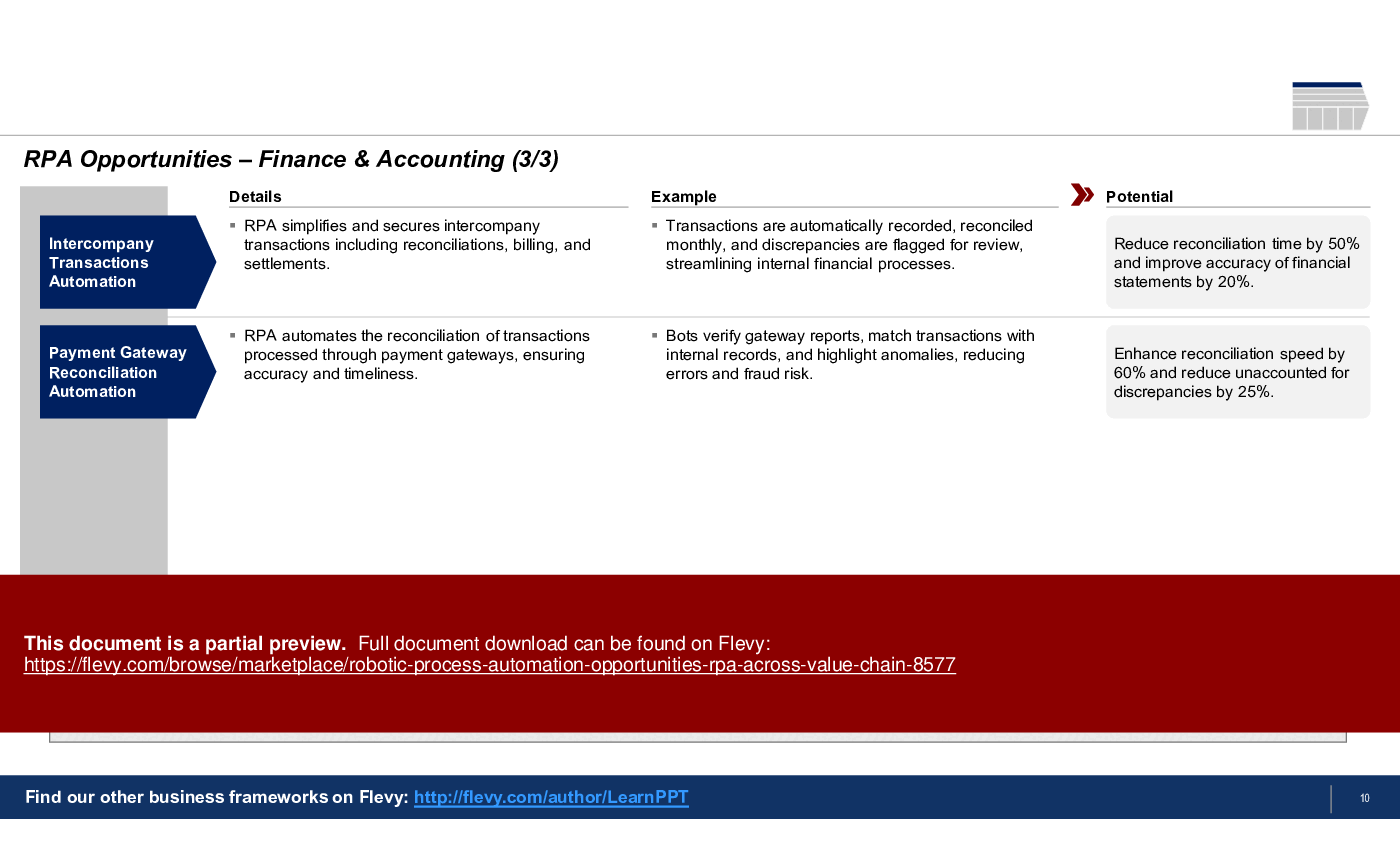
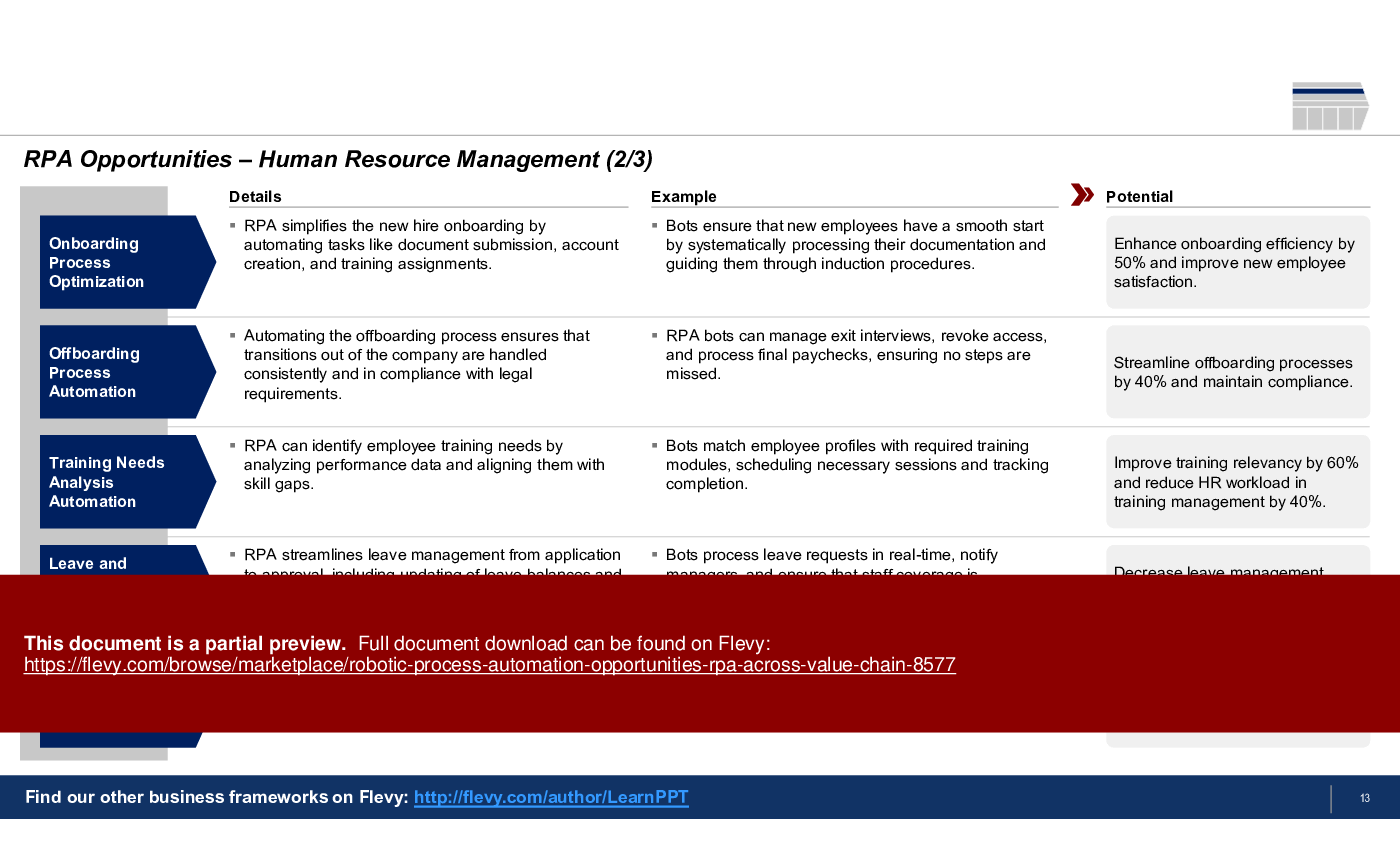
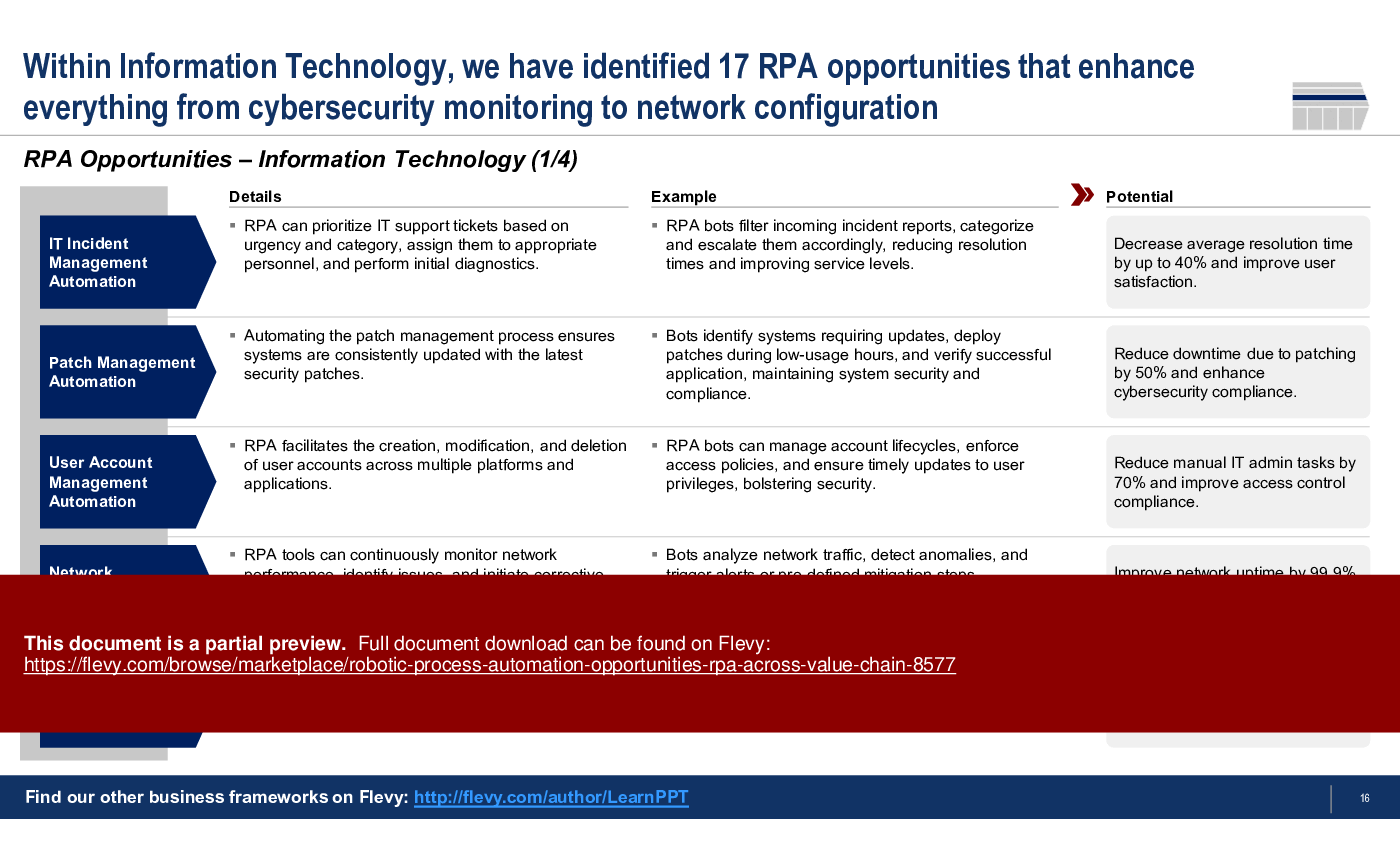
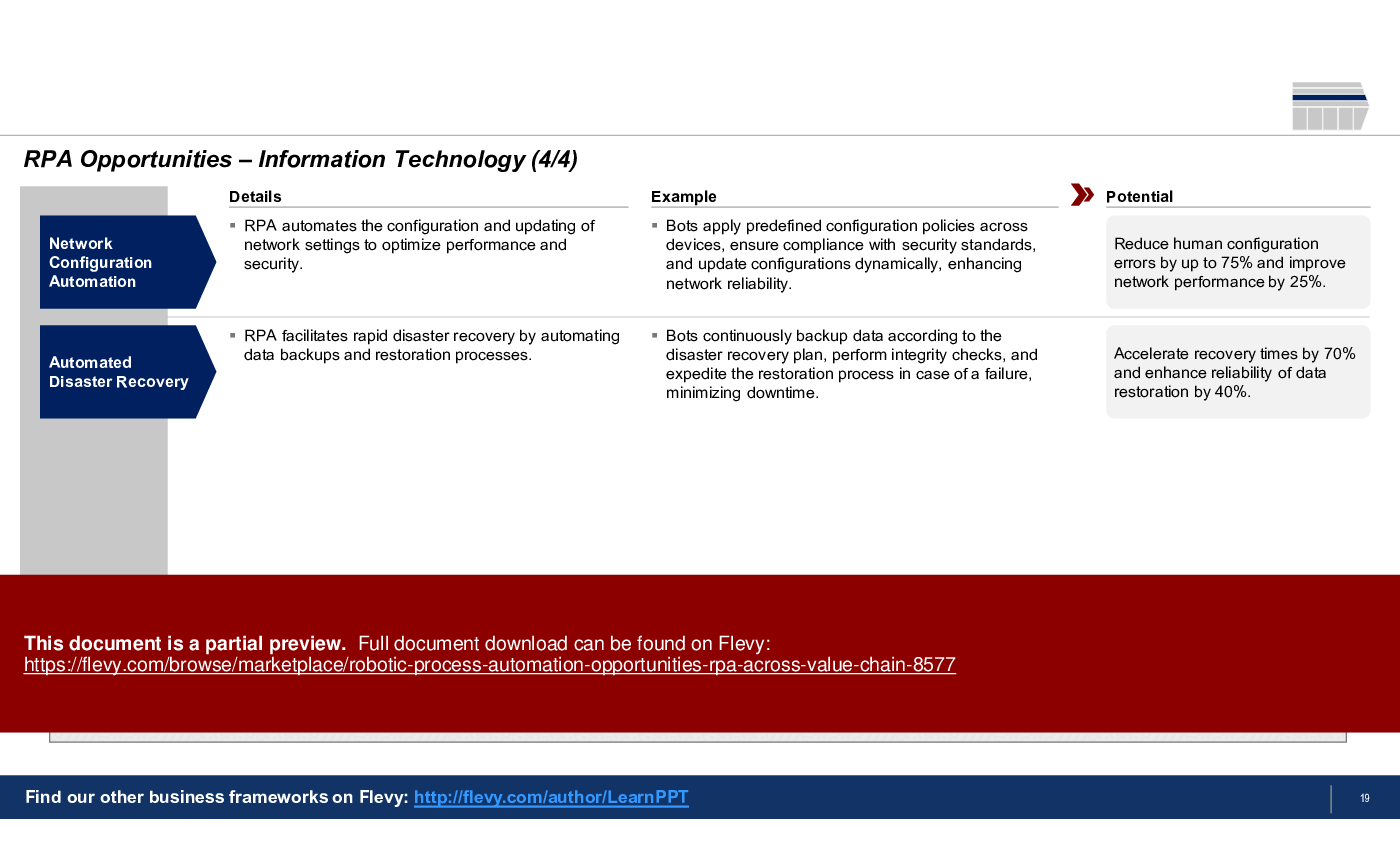
This PowerPoint presentation is organized into these 9 functions. For each function, we delineate a series of RPA opportunities, which includes examples and a quantification of potential impact for each opportunity.

Got a question about the product? Email us at support@flevy.com or ask the author directly by using the "Ask the Author a Question" form. If you cannot view the preview above this document description, go here to view the large preview instead.

MARCUS OVERVIEW

This synopsis was written by Marcus [?] based on the analysis of the full 44-slide presentation.


Executive Summary
This presentation outlines over 100+ Robotic Process Automation (RPA) opportunities mapped across the value chain, specifically tailored for sectors such as Finance, Human Resources, IT, Procurement, Product Development, Logistics, Operations, Marketing, Sales, and Service. Created by former consultants from top firms like McKinsey and BCG, this consulting-grade framework enables organizations to identify and implement RPA solutions effectively. By automating repetitive tasks, RPA allows employees to focus on higher-value work, enhancing productivity and job satisfaction. This framework serves as a critical resource for organizations pursuing digital transformation, providing measurable impacts and strategic reallocations of human resources.

Who This Is For and When to Use
•  Corporate executives looking to enhance operational efficiency through automation
•  Integration leaders responsible for implementing RPA solutions across various functions
•  Consultants advising organizations on digital transformation strategies
•  HR leaders aiming to streamline administrative processes and improve employee experience
•  IT managers focused on optimizing service delivery and cybersecurity

Best-fit moments to use this deck:
•  During strategic planning sessions for digital transformation initiatives
•  When assessing current operational inefficiencies and identifying automation opportunities
•  In workshops aimed at training teams on RPA implementation and best practices
•  For presentations to stakeholders on the benefits and impacts of RPA across functions

Learning Objectives
•  Define the concept of RPA and its relevance across various business functions
•  Identify and quantify RPA opportunities within the value chain
•  Build a strategic plan for implementing RPA solutions tailored to organizational needs
•  Establish metrics for measuring the impact of RPA on operational efficiency and employee satisfaction
•  Create a roadmap for integrating RPA into existing processes and systems
•  Develop a governance framework for managing RPA initiatives and ensuring compliance

Table of Contents
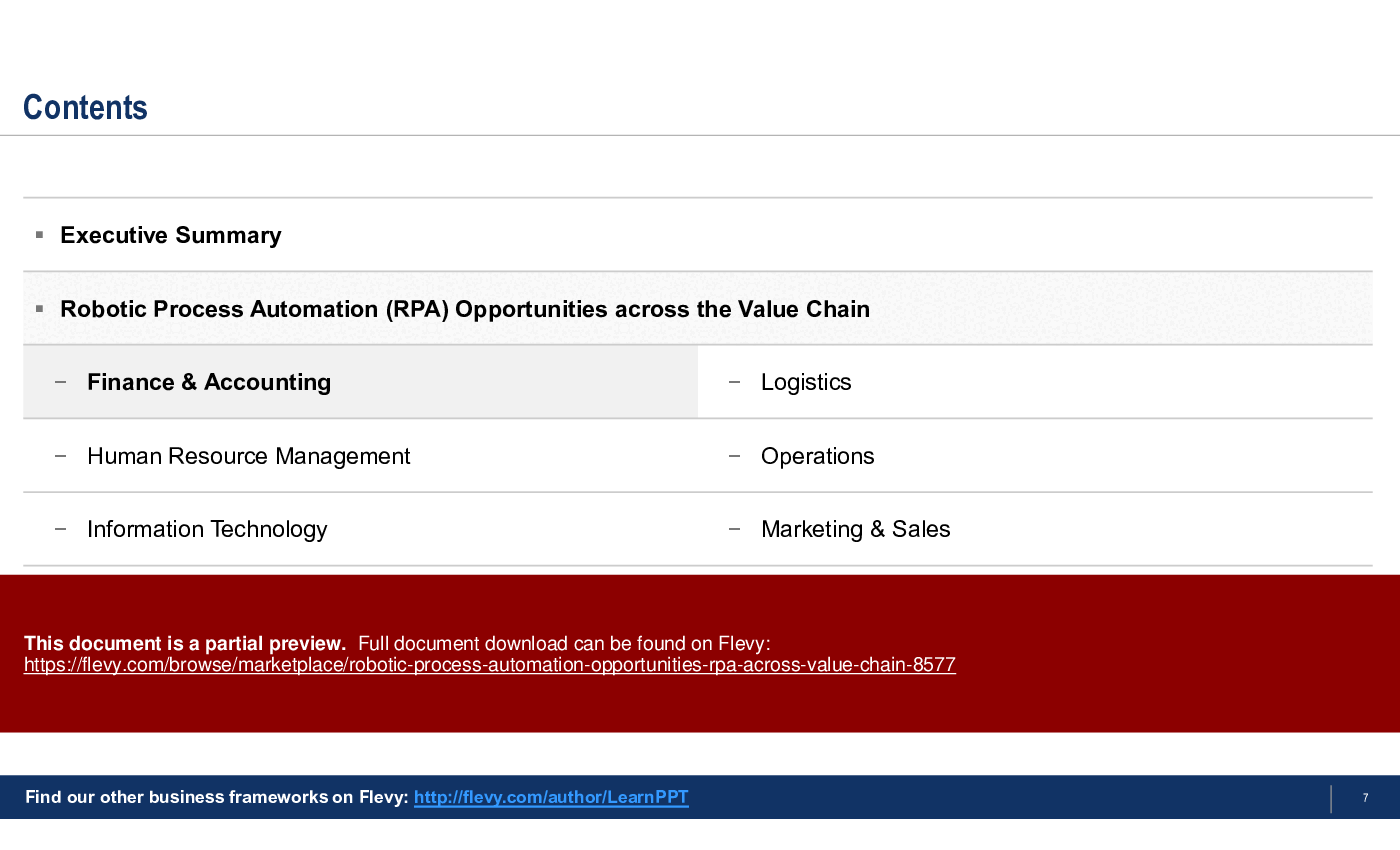
•  Executive Summary (page 3)
•  RPA Opportunities across the Value Chain
•  Finance & Accounting (page 7)
•  Human Resource Management (page 11)
•  Information Technology (page 15)
•  Procurement (page 20)
•  Product Development (page 25)
•  Logistics (page 28)
•  Operations (page 31)
•  Marketing & Sales (page 35)
•  Service (page 39)

Primary Topics Covered
•  RPA Overview - An introduction to RPA technology and its role in automating repetitive tasks across various functions.
•  Value Chain Analysis - Mapping RPA opportunities across the modified Porter Value Chain to enhance operational efficiency.
•  Function-Specific Opportunities - Detailed exploration of RPA applications in Finance, HR, IT, Procurement, Product Development, Logistics, Operations, Marketing, Sales, and Service.
•  Impact Quantification - Metrics and potential benefits associated with each identified RPA opportunity.
•  Implementation Strategies - Best practices for deploying RPA solutions effectively within organizations.

Deliverables, Templates, and Tools
•  RPA opportunity assessment templates for each function
•  Implementation roadmap for RPA initiatives
•  Metrics dashboard for tracking RPA impact
•  Governance framework for RPA management
•  Case studies illustrating successful RPA deployments

Slide Highlights
•  Overview of RPA technology and its benefits
•  Detailed breakdown of RPA opportunities in Finance, including accounts receivable and tax compliance automation
•  Insights into HR automation, focusing on recruitment and onboarding processes
•  IT RPA applications, highlighting incident management and cybersecurity monitoring
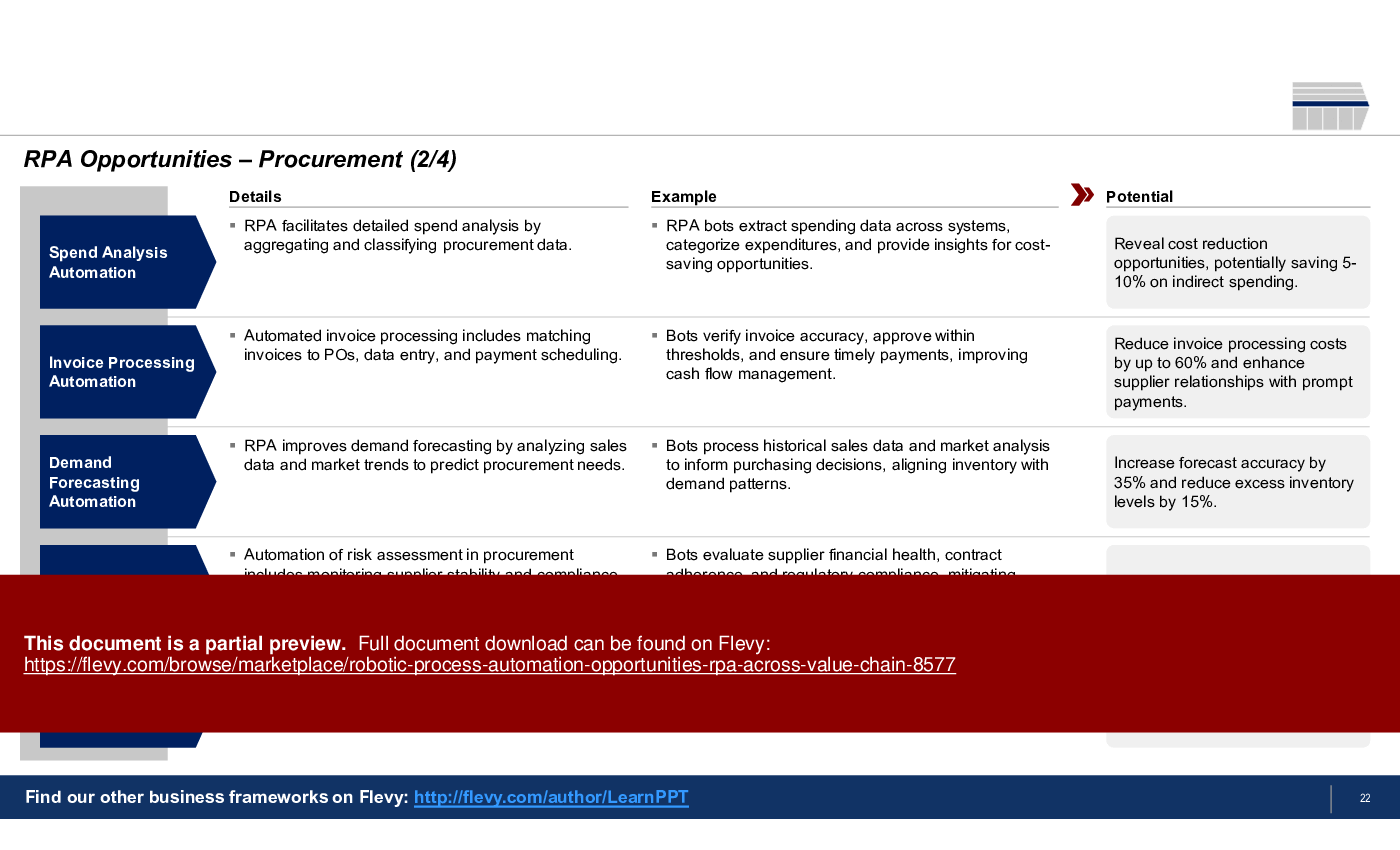
•  Procurement efficiencies through automated spend analysis and supplier onboarding
•  Logistics improvements via demand forecasting and warehouse management automation

Potential Workshop Agenda
RPA Strategy Development Session (90 minutes)
•  Discuss current operational challenges and identify potential RPA opportunities
•  Review case studies of successful RPA implementations
•  Develop a preliminary RPA implementation roadmap

RPA Impact Measurement Workshop (60 minutes)
•  Establish key performance indicators for RPA initiatives
•  Create a metrics dashboard for tracking RPA effectiveness

RPA Governance Framework Session (60 minutes)
•  Define roles and responsibilities for RPA management
•  Develop compliance and oversight mechanisms for RPA initiatives

Customization Guidance
•  Tailor the RPA opportunity assessment templates to reflect organizational priorities and specific functions
•  Adjust the implementation roadmap to align with existing digital transformation strategies
•  Incorporate industry-specific metrics for measuring RPA impact

Secondary Topics Covered
•  Change management strategies for RPA adoption
•  Risk management considerations in RPA implementation
•  Integration of RPA with existing IT systems and processes
•  Best practices for training employees on RPA tools and technologies

FAQ
What is Robotic Process Automation (RPA)?
RPA is a technology that uses software robots to automate repetitive and rule-based tasks, allowing employees to focus on higher-value work.

How can RPA benefit my organization?
RPA can significantly lower operational costs, increase productivity, enhance accuracy, and improve employee satisfaction by freeing them from mundane tasks.

What functions can RPA be applied to?
RPA can be applied across various functions, including Finance, HR, IT, Procurement, Product Development, Logistics, Operations, Marketing, Sales, and Service.

How do I identify RPA opportunities within my organization?
Conduct a thorough assessment of current processes to identify repetitive tasks that can be automated, focusing on areas with high volume and low complexity.

What metrics should I use to measure RPA impact?
Key metrics include cost savings, time reduction, error rates, employee satisfaction, and overall process efficiency.

How do I ensure compliance when implementing RPA?
Establish a governance framework that includes oversight mechanisms, compliance checks, and regular audits of RPA processes.

What are the common challenges in RPA implementation?
Challenges may include resistance to change, integration with legacy systems, and ensuring data security and compliance.

How can I train my team on RPA tools?
Provide training sessions, workshops, and resources that focus on the specific RPA tools being implemented, along with best practices for usage.

Glossary
•  Robotic Process Automation (RPA) - Technology that automates repetitive tasks using software robots.
•  Value Chain - A model that describes the full range of activities needed to create a product or service.
•  Digital Transformation - The integration of digital technology into all areas of a business, fundamentally changing how it operates and delivers value.
•  Governance Framework - A structure that outlines roles, responsibilities, and processes for managing RPA initiatives.
•  Key Performance Indicators (KPIs) - Metrics used to evaluate the success of an organization or of a particular activity in which it engages.
•  Change Management - The approach to transitioning individuals, teams, and organizations to a desired future state.
•  Compliance - The act of conforming to laws, regulations, and guidelines relevant to the business.
•  Process Efficiency - A measure of how well a process converts inputs into outputs with minimal waste.
•  Employee Satisfaction - A measure of how happy and content employees are with their jobs and work environment.
•  Integration - The process of combining different systems and processes to work together effectively.
•  Automation - The use of technology to perform tasks without human intervention.
•  Operational Costs - The expenses associated with the day-to-day functioning of a business.
•  Customer Experience - The overall perception of a customer regarding their interactions with a company.
•  Data Security - The practice of protecting digital information from unauthorized access, corruption, or theft.
•  Supplier Onboarding - The process of integrating a new supplier into a company's supply chain.
•  Demand Forecasting - The process of estimating future customer demand for a product or service.
•  Inventory Management - The supervision of non-capitalized assets (inventory) and stock items.
•  Service Level Agreement (SLA) - A contract that defines the level of service expected from a service provider.
•  Customer Relationship Management (CRM) - A technology for managing a company's relationships and interactions with potential customers and clients.
•  Feedback Loop - A system where the outputs of a process are circled back and used as inputs.

VALUE CHAIN ANALYSIS PPT SLIDES

Enhancing Procurement Efficiency through RPA Solutions

Enhancing IT Operations through RPA Implementation

RPA Applications Transforming Human Resource Management

Key RPA Opportunities for Operational Efficiency

Identifying RPA Opportunities across the Value Chain

Source: Best Practices in Value Chain Analysis, RPA PowerPoint Slides: Robotic Process Automation (RPA) Opportunities (across Value Chain) PowerPoint (PPTX) Presentation Slide Deck, LearnPPT Consulting


$49.00
This framework is created by former McKinsey, BCG, Deloitte, EY, and Capgemini consultants. It identifies over 100+ RPA opportunities mapped across the Value Chain.
Add to Cart
  

ABOUT THE AUTHOR

Author image
Additional documents from author: 141

We are a team of management consultants trained by top tier global consulting firms (including McKinsey, BCG, Deloitte, EY, Capgemini) with a collective experience of several decades. We specialize in business frameworks based on real-life consulting engagements.

We have served 100s of clients that range from Fortune 500 companies to tech startups to ... [read more]

Ask the Author a Question

You must be logged in to contact the author.

Click here to log in Click here register

Did you know?
The average daily rate of a McKinsey consultant is $6,625 (not including expenses). The average price of a Flevy document is $65.



Trusted by over 10,000+ Client Organizations
Since 2012, we have provided best practices to over 10,000 businesses and organizations of all sizes, from startups and small businesses to the Fortune 100, in over 130 countries.
AT&T GE Cisco Intel IBM Coke Dell Toyota HP Nike Samsung Microsoft Astrazeneca JP Morgan KPMG Walgreens Walmart 3M Kaiser Oracle SAP Google E&Y Volvo Bosch Merck Fedex Shell Amgen Eli Lilly Roche AIG Abbott Amazon PwC T-Mobile Broadcom Bayer Pearson Titleist ConEd Pfizer NTT Data Schwab


Read Customer Testimonials

 
"Flevy is our 'go to' resource for management material, at an affordable cost. The Flevy library is comprehensive and the content deep, and typically provides a great foundation for us to further develop and tailor our own service offer."

– Chris McCann, Founder at Resilient.World
 
"As a young consulting firm, requests for input from clients vary and it's sometimes impossible to provide expert solutions across a broad spectrum of requirements. That was before I discovered Flevy.com.

Through subscription to this invaluable site of a plethora of topics that are key and crucial to consulting, I "

– Nishi Singh, Strategist and MD at NSP Consultants
 
"Flevy is now a part of my business routine. I visit Flevy at least 3 times each month.

Flevy has become my preferred learning source, because what it provides is practical, current, and useful in this era where the business world is being rewritten.

In today's environment where there are so "

– Omar Hernán Montes Parra, CEO at Quantum SFE
 
"As an Independent Management Consultant, I find Flevy to add great value as a source of best practices, templates and information on new trends. Flevy has matured and the quality and quantity of the library is excellent. Lastly the price charged is reasonable, creating a win-win value for "

– Jim Schoen, Principal at FRC Group
 
"My FlevyPro subscription provides me with the most popular frameworks and decks in demand in today’s market. They not only augment my existing consulting and coaching offerings and delivery, but also keep me abreast of the latest trends, inspire new products and service offerings for my practice, and educate me "

– Bill Branson, Founder at Strategic Business Architects
 
"The wide selection of frameworks is very useful to me as an independent consultant. In fact, it rivals what I had at my disposal at Big 4 Consulting firms in terms of efficacy and organization."

– Julia T., Consulting Firm Owner (Former Manager at Deloitte and Capgemini)
 
"As a consultant requiring up to date and professional material that will be of value and use to my clients, I find Flevy a very reliable resource.

The variety and quality of material available through Flevy offers a very useful and commanding source for information. Using Flevy saves me time, enhances my expertise and ends up being a good decision."

– Dennis Gershowitz, Principal at DG Associates
 
"I have found Flevy to be an amazing resource and library of useful presentations for lean sigma, change management and so many other topics. This has reduced the time I need to spend on preparing for my performance consultation. The library is easily accessible and updates are regularly provided. A wealth of great information."

– Cynthia Howard RN, PhD, Executive Coach at Ei Leadership


Customers Also Bought These Documents


Customers Also Like These Documents

Explore Related Management Topics


Your Recently Viewed Documents
Download our FREE Strategy & Transformation Framework Templates

Download our free compilation of 50+ Strategy & Transformation slides and templates. Frameworks include McKinsey 7-S, Balanced Scorecard, Disruptive Innovation, BCG Curve, and many more.