


A REIT (real estate investment trust) is a company that makes investments in income-producing real estate and earns at least 75% of its income from rental or from property owned or investment income from indirect property ownership.
REITs own and/or manage income-producing commercial real estate, whether it's the properties themselves or the mortgages on those properties. They are intended to offer ordinary investors an affordable way to afford to invest in diversified portfolios of income-producing real estate. REIT investing allows investors to tap into the potential of the real estate industry without actually buying any physical assets.
The purpose of this guide is to outline:
1. The types of real estate entities
2. The four-quadrant model for understanding the real estate investment market
3. Real estate investment options
4. Types of Real Estate Private Equity (PERE) Funds
5. Types of Real Estate Investment Trusts (REITs)
6. Financial risks associated with real estate
7. Performance measurement of a REIT
Got a question about the product? Email us at support@flevy.com or ask the author directly by using the "Ask the Author a Question" form. If you cannot view the preview above this document description, go here to view the large preview instead.
Executive Summary
The Real Estate Investment Trust (REIT) Guide is a meticulously crafted presentation designed to provide a thorough understanding of REITs, their structure, investment strategies, and performance metrics. This guide is built with the rigor and clarity expected from a McKinsey, Bain, or BCG-quality resource (consulting-grade; not affiliated). It equips real estate professionals with the knowledge to navigate the complexities of REITs, assess investment opportunities, and evaluate financial risks effectively.
Who This Is For and When to Use
• Real estate investors and operators seeking to enhance their investment strategies
• Financial analysts focusing on real estate investment opportunities
• Corporate executives involved in real estate portfolio management
• Consultants advising clients on real estate investment strategies
Best-fit moments to use this deck:
• During investment strategy sessions to evaluate REIT opportunities
• In training sessions for new team members on REIT structures and performance metrics
• When assessing the financial viability of real estate investments
Learning Objectives
• Define the structure and function of various real estate entities, including REITs
• Identify different types of REITs and their respective investment strategies
• Analyze the financial risks associated with real estate investments
• Measure the performance of a REIT using Funds from Operations (FFO)
• Differentiate between open-end and closed-end funds in real estate investment
• Understand the four-quadrant model of real estate investment
Table of Contents
• Overview of Real Estate Entities (page 2)
• Four-Quadrant Model of Investment (page 3)
• Real Estate Investment Options (page 4)
• Types of Private Equity Real Estate (PERE) Funds (page 6)
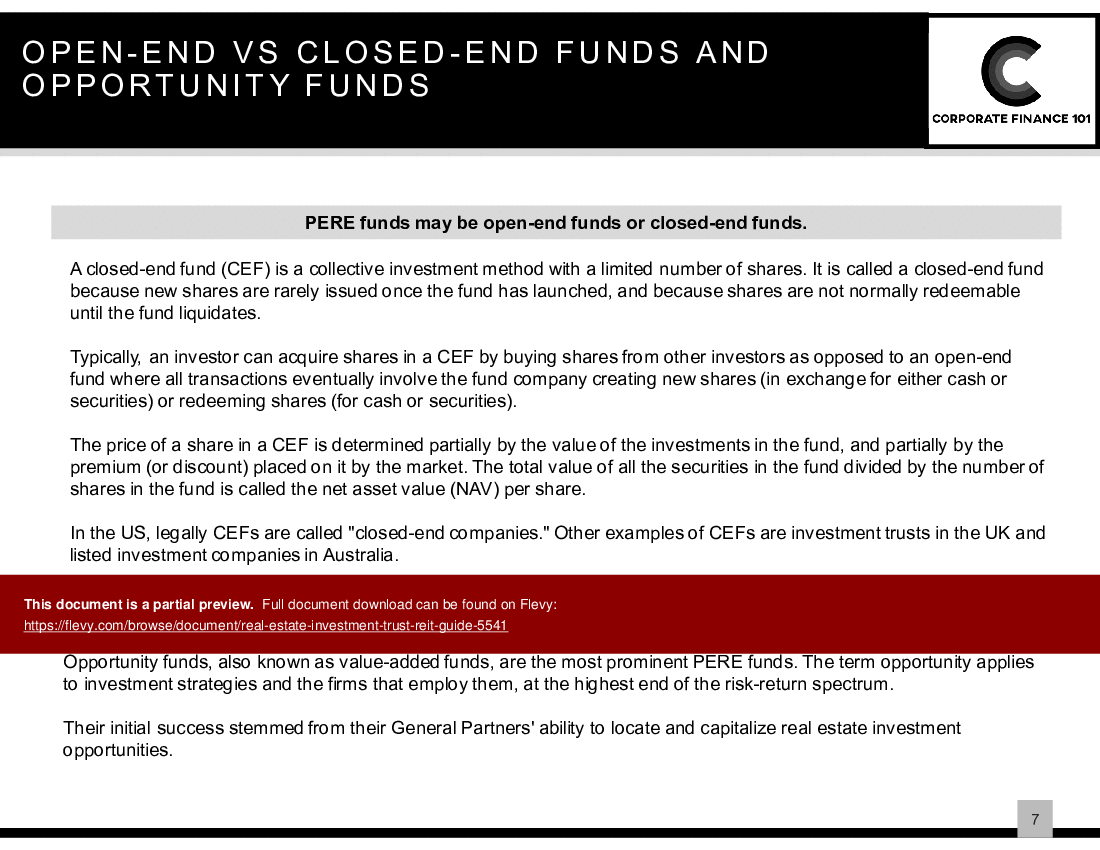
• Open-End vs Closed-End Funds and Opportunity Funds (page 7)
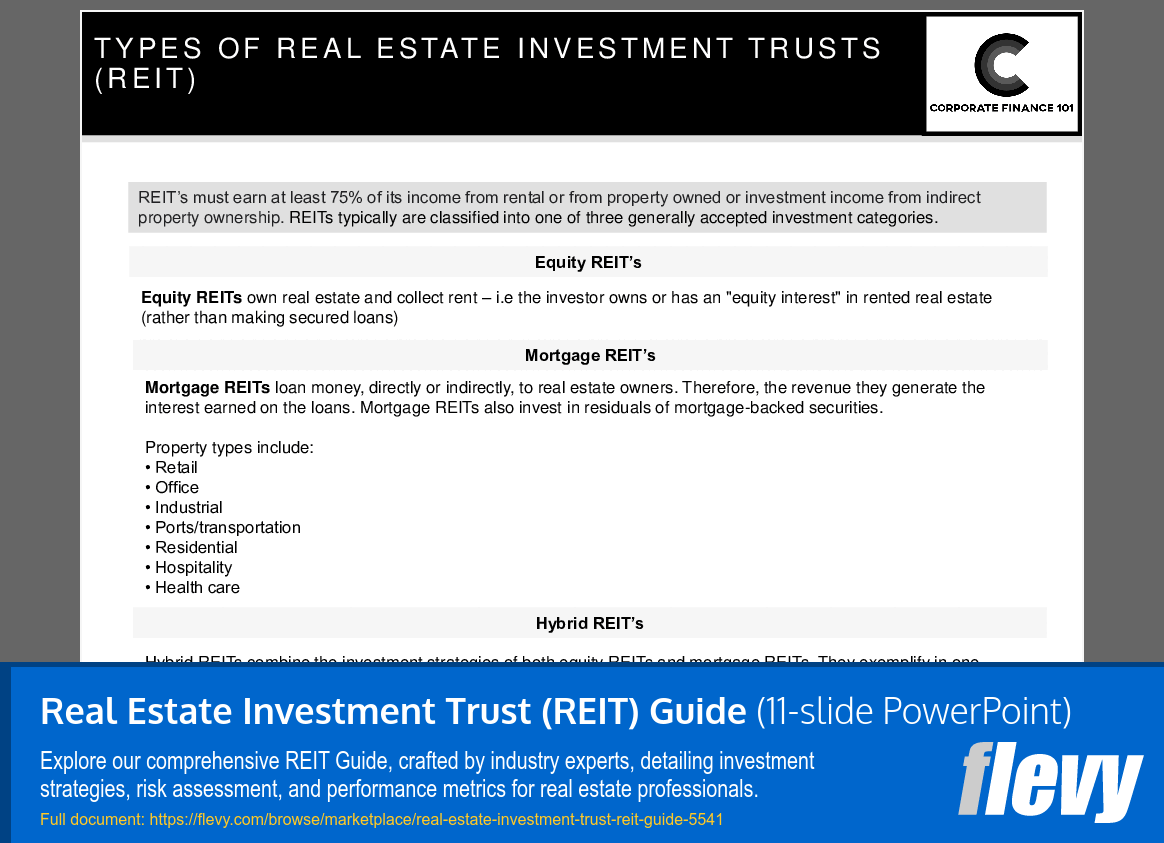
• Types of Real Estate Investment Trusts (REIT) (page 8)
• Other REIT Classifications (page 9)
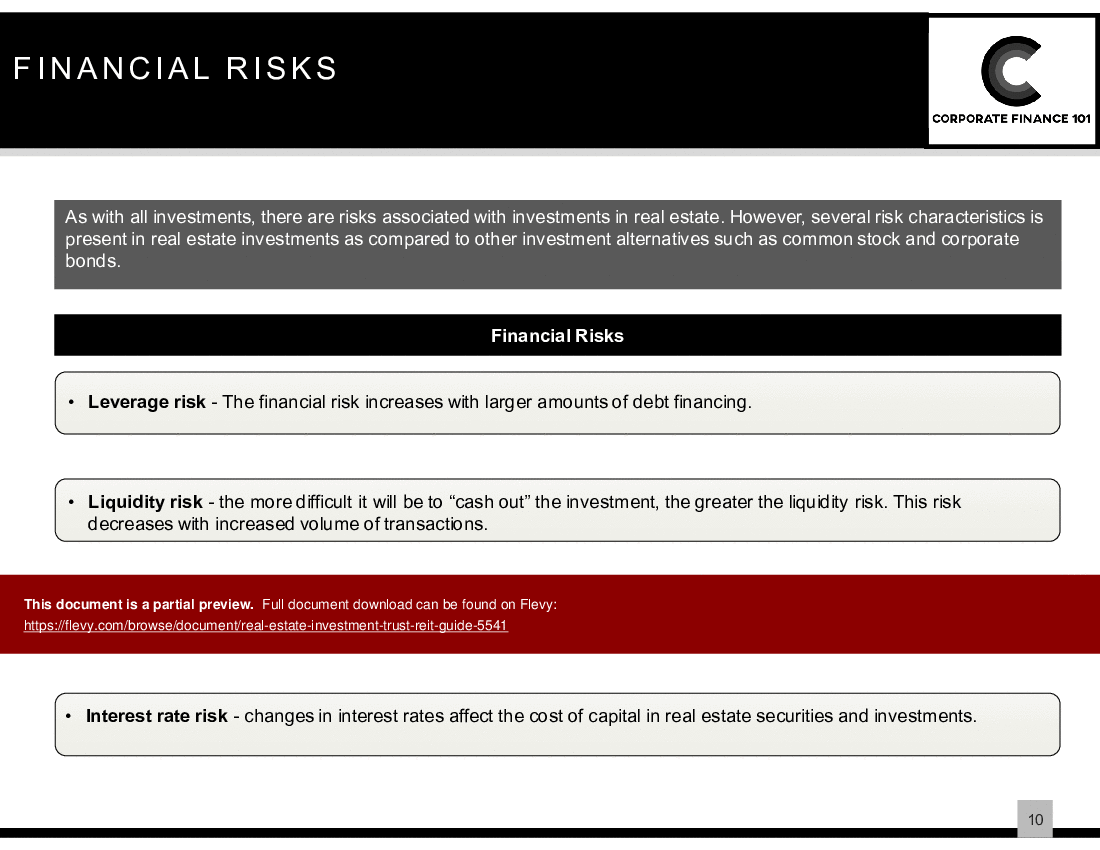
• Financial Risks (page 10)
• Performance Measurement of a REIT (page 11)
Primary Topics Covered
• Real Estate Entities - Overview of entities formed for real estate investment, including public and private companies, REITs, and private equity funds.
• Four-Quadrant Model - A framework illustrating the relationship between private vs. public and equity vs. debt in real estate investment.
• Real Estate Investment Options - Historical funding methods for real estate investments, including private debt and equity, whole loans, and mortgage-backed securities.
• Types of Private Equity Real Estate Funds - A spectrum of PERE fund categories based on risk profiles and return expectations, from core to opportunistic strategies.
• Open-End vs Closed-End Funds - Differences between fund structures, including share issuance and redemption processes.
• Types of REITs - Classification of REITs into equity, mortgage, and hybrid categories based on their investment strategies.
Deliverables, Templates, and Tools
• Framework for evaluating different real estate entities and their investment strategies
• Comparative analysis template for open-end vs closed-end funds
• Risk assessment model for evaluating financial risks in real estate investments
• Performance measurement template using Funds from Operations (FFO)
• Investment strategy guide for various types of REITs
• Overview of the four-quadrant model for real estate investment
Slide Highlights
• Visual representation of the four-quadrant model, clarifying the investment landscape
• Detailed breakdown of the types of REITs, highlighting their unique characteristics
• Risk assessment slide outlining key financial risks associated with real estate investments
• Performance measurement slide focusing on the FFO-per-share ratio as a critical metric
• Comparative analysis of open-end vs closed-end funds, showcasing their structural differences
Potential Workshop Agenda
Understanding REITs and Their Structures (90 minutes)
• Overview of real estate entities and their roles in investment
• Discussion on the types of REITs and their investment strategies
• Q&A session to clarify concepts and address specific inquiries
Financial Risks in Real Estate Investment (60 minutes)
• Presentation on the financial risks associated with real estate investments
• Group activity to assess risk factors in hypothetical investment scenarios
• Wrap-up discussion on risk mitigation strategies
Performance Measurement of REITs (60 minutes)
• Introduction to Funds from Operations (FFO) as a key performance metric
• Case study analysis of a REIT's performance using FFO
• Interactive session on applying performance metrics to real-world scenarios
Customization Guidance
• Tailor the investment strategy guide to reflect specific market conditions or regional focuses
• Adjust the risk assessment model to include local regulatory considerations
• Modify the performance measurement template to align with organizational reporting standards
Secondary Topics Covered
• Geographical focus of REIT investments
• Property types commonly associated with different REITs
• The role of public-private partnerships in real estate funding
• Historical trends in real estate investment financing
• The impact of economic conditions on real estate investment strategies
FAQ
What is a REIT?
A Real Estate Investment Trust (REIT) is a tax-advantaged entity that pools capital from multiple investors to acquire or finance income-producing real estate.
What are the different types of REITs?
REITs are typically classified into 3 categories: equity REITs, which own and operate income-generating properties; mortgage REITs, which provide financing for real estate by lending directly; and hybrid REITs, which combine both strategies.
How do you measure the performance of a REIT?
The performance of a REIT is commonly measured using the Funds from Operations (FFO) metric, which focuses on cash flow generated from operations rather than traditional earnings metrics.
What are the financial risks associated with real estate investments?
Key financial risks include leverage risk, liquidity risk, inflation risk, and interest rate risk, each affecting the stability and returns of real estate investments.
What is the difference between open-end and closed-end funds?
Open-end funds allow for continuous share issuance and redemption, while closed-end funds have a fixed number of shares and do not typically allow for redemption until liquidation.
What is the four-quadrant model?
The four-quadrant model categorizes real estate investments into private equity, private debt, public equity, and public debt, providing a framework for understanding different investment strategies.
What are opportunity funds?
Opportunity funds, also known as value-added funds, focus on higher-risk, higher-return investment strategies, typically involving underperforming assets that require improvements.
How does leverage impact real estate investments?
Increased leverage can amplify returns, but also heightens financial risk, making it crucial to manage debt levels carefully in real estate investments.
What types of properties do REITs typically invest in?
REITs invest in various property types, including retail, office, industrial, residential, hospitality, and healthcare properties.
Glossary
• REIT - A tax-advantaged entity that combines capital from multiple investors to acquire or finance real estate.
• Funds from Operations (FFO) - A performance metric used to measure cash flow generated from a REIT's operations.
• Private Equity Real Estate (PERE) - Investment funds that focus on direct ownership of real estate assets.
• Open-End Fund - A fund that allows for continuous share issuance and redemption.
• Closed-End Fund - A fund with a fixed number of shares that does not allow for redemption until liquidation.
• Leverage Risk - The financial risk associated with using debt to finance investments.
• Liquidity Risk - The risk of being unable to sell an investment quickly without a significant price discount.
• Inflation Risk - The risk that unexpected inflation will erode investment returns.
• Interest Rate Risk - The risk that changes in interest rates will affect the cost of capital for real estate investments.
• Equity REIT - A REIT that owns and operates income-generating real estate.
• Mortgage REIT - A REIT that provides financing for real estate by lending directly or investing in mortgage-backed securities.
• Hybrid REIT - A REIT that combines the investment strategies of both equity and mortgage REITs.
• Opportunity Fund - A fund that focuses on high-risk, high-return real estate investments.
• Collateralized Mortgage-Backed Security (CMBS) - A type of asset-backed security secured by a collection of mortgages.
• Residential Mortgage-Backed Security (RMBS) - A type of asset-backed security secured by residential mortgages.
• Net Asset Value (NAV) - The total value of a fund's securities divided by the number of shares outstanding.
• Public-Private Partnership (PPP) - A collaborative investment model between public and private entities for real estate funding.
• Core Fund - A low-risk real estate investment fund focused on stable, well-diversified markets.
• Value-Added Fund - A real estate investment fund that targets underperforming assets for improvement.
• Opportunistic Fund - A high-risk real estate investment fund that seeks significant returns through aggressive strategies.
• Financial Analyst - A professional who evaluates financial data to guide investment decisions.
• Real Estate Portfolio - A collection of real estate investments owned by an individual or organization.
Source: Best Practices in Real Estate PowerPoint Slides: Real Estate Investment Trust (REIT) Guide PowerPoint (PPTX) Presentation Slide Deck, Corporate Finance 101
|
Download our FREE Strategy & Transformation Framework Templates
Download our free compilation of 50+ Strategy & Transformation slides and templates. Frameworks include McKinsey 7-S Strategy Model, Balanced Scorecard, Disruptive Innovation, BCG Experience Curve, and many more. |










