
 Click main image to view in full screen. Unlock all 32 preview images:
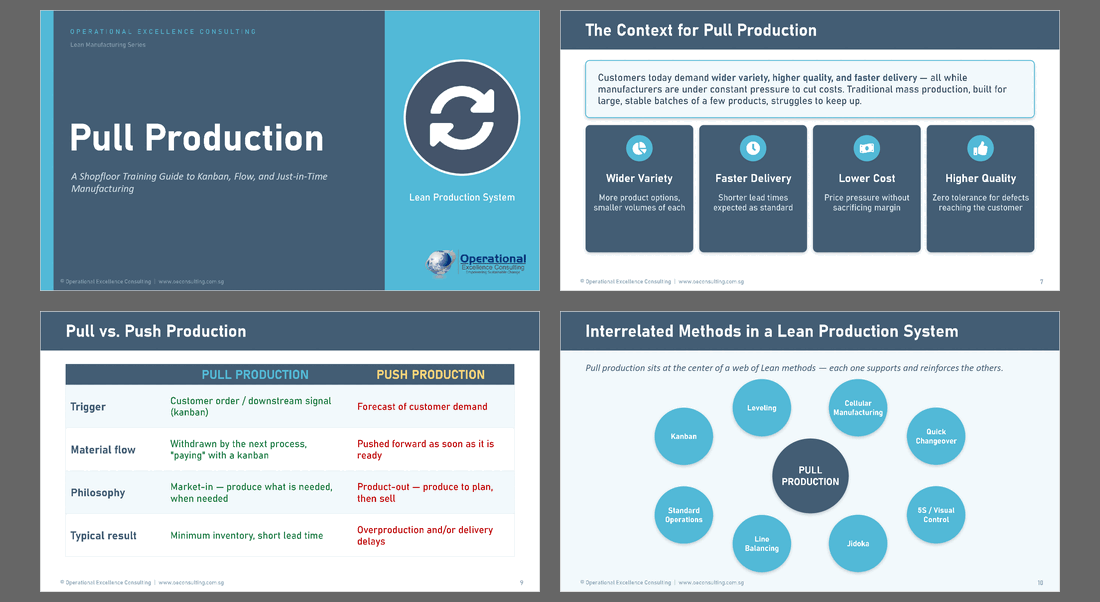
Pull Production Implementation Toolkit – PowerPoint PPTX Template
PowerPoint (PPTX) 129 Slides


BENEFITS OF THIS DOWNLOADABLE POWERPOINT DOCUMENT
- Slash Production Costs: Target hidden manufacturing costs by eliminating overproduction and excess inventory.
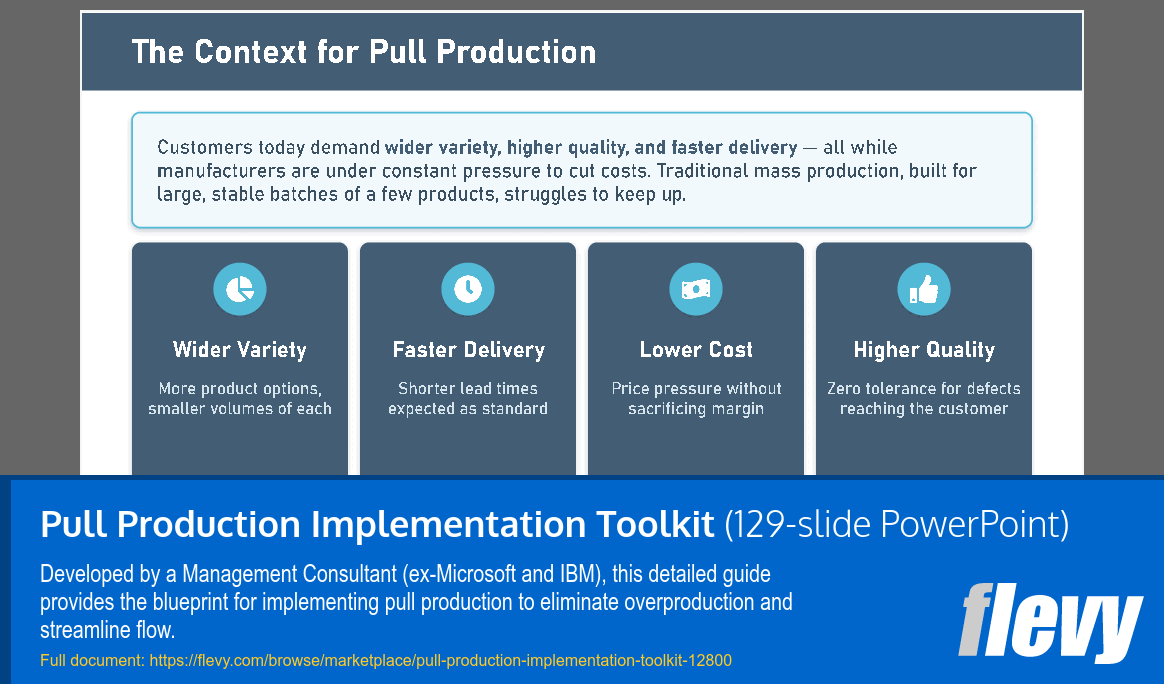
- Respond with Speed: Dramatically shorten lead times by focusing on the entire process rather than just warehouse transport.
- Expose Hidden Problems: Lower inventory levels to instantly surface equipment breakdowns, defects, and operational bottlenecks.
LEAN MANUFACTURING PPT TEMPLATE DESCRIPTION
PULL PRODUCTION TRAINING PRESENTATION & IMPLEMENTATION TOOLKIT
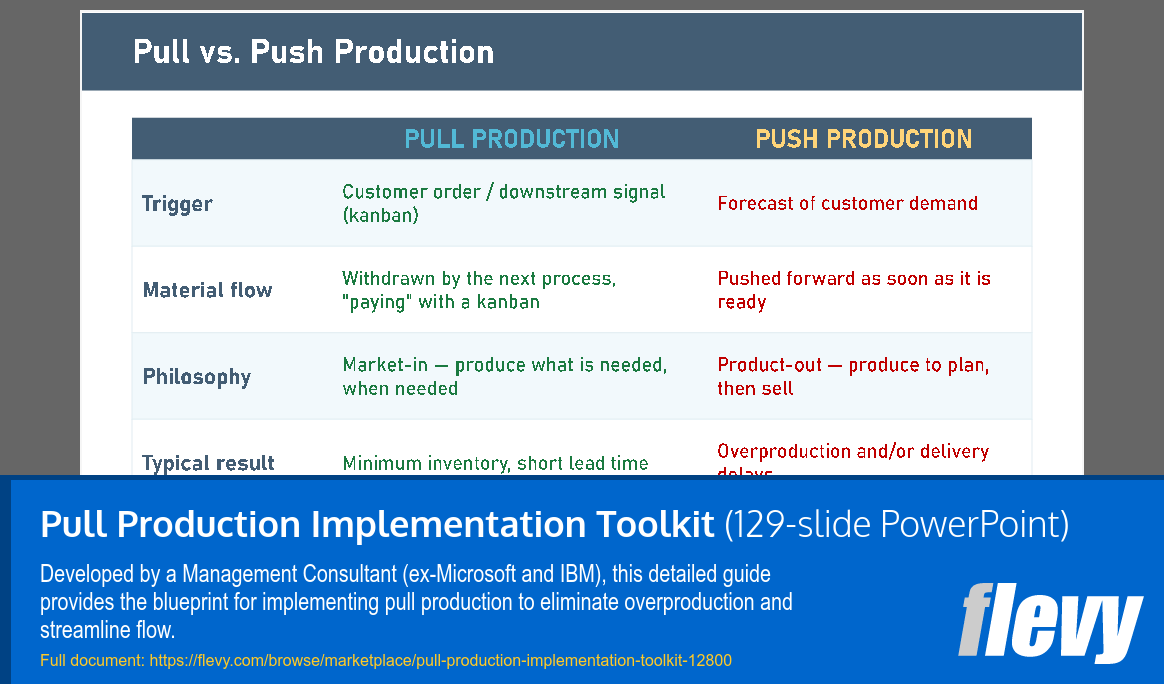
By replacing guesswork forecasting with precise triggers, pull production redefines manufacturing flow. In high-volume industrial environments, excessive inventory often acts as a burial ground concealing systemic process failures. This comprehensive master package supplies the actionable roadmap needed to pivot from a push-oriented "product-out" philosophy to a reactive "market-in" model, turning your plant into an agile, self-correcting operation where value flows strictly in response to actual customer demand.
KEY BENEFITS
★ Cut Production Expenses: Focus directly on the 80% of manufacturing costs obscured within process inefficiencies by eliminating excess inventory and overproduction.
★ Accelerate Response Times: Drastically shrink actual lead times by looking at the entire end-to-end process rather than just optimizing warehouse transport.
★ Uncover Latent Bottlenecks: Lower inventory levels to act like a receding waterline, instantly exposing equipment failures, quality defects, and operational bottlenecks.
★ Embed Quality Standards: Equip every team member with explicit quality guardrails to ensure defective parts are neither received nor passed down the line.
★ Enhance Operational Agility: Apply leveled production scheduling (Heijunka) to successfully manage high-mix, low-volume customer demands without sacrificing productivity.
TARGET AUDIENCE
• Plant & Operations Managers: Aiming to catalyze a behavioral transition toward demand-driven savings.
• Lean & Continuous Improvement Leads: Seeking a structured, five-stage methodology for deploying a plant-wide pull ecosystem.
• Supervisors & Line Leaders: Responsible for overseeing daily Kanban tracking loops and load-leveling tools.
• Frontline Operators: Requiring multi-tasking skills and cross-training to take ownership of the workflow.
WHAT'S INCLUDED IN THE BOX?
★ The Pull Production Masterclass (PPTX): A comprehensive training presentation consisting of more than 120 professional slides optimized for high-engagement workshops.
★ Leveling & Takt Time Data Library: Handy templates designed to simplify takt time calculations and load-leveling box designs.
★ Kanban Sizing & Logic Tools: Documentation and calculation frameworks to accurately determine Kanban quantities based on safety buffers, lead times, and container sizes.
★ Nine Interactive Team Exercises: Pre-built workshop activities covering topics like cell configuration, lead time mapping, and tracing Kanban feedback loops.
★ 90-Day Implementation Roadmap: A step-by-step timeline taking projects from initial pull adoption out to extending signals to upstream suppliers.
LEARNING OBJECTIVES
By the completion of this masterclass, attendees will be capable of:
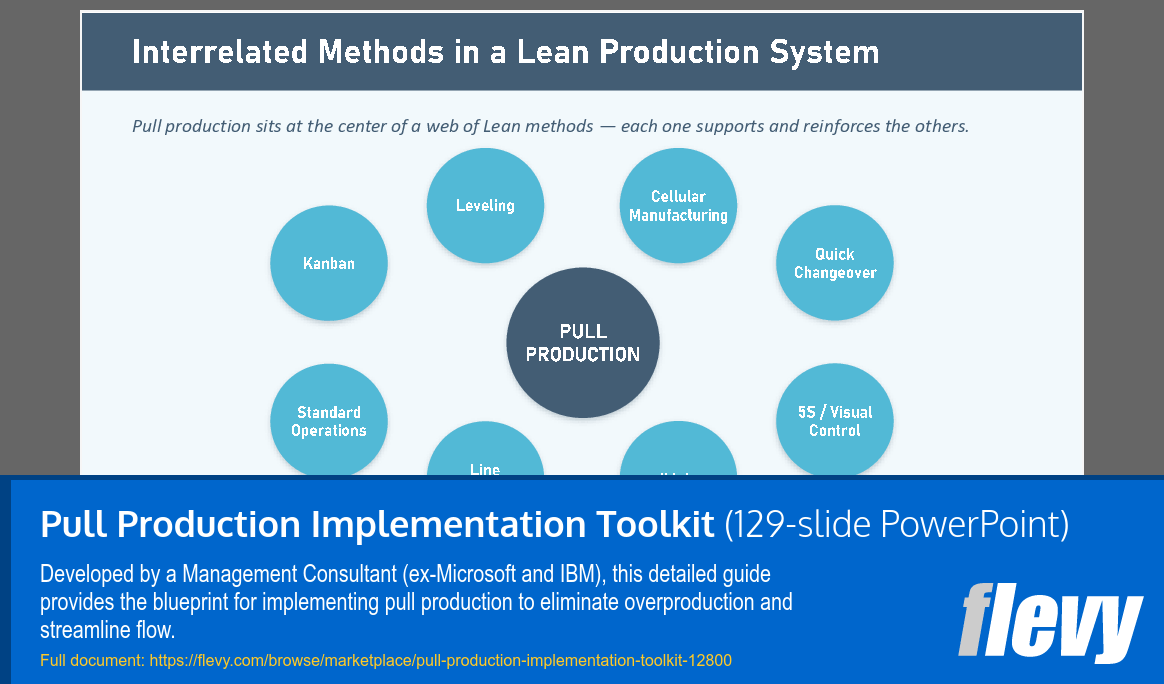
• Articulating the definition of pull production and contrasting its market-driven logic with conventional push systems.
• Recognizing the seven essential prerequisites—such as 5S compliance, rapid changeovers, and a versatile workforce—vital for pull success.
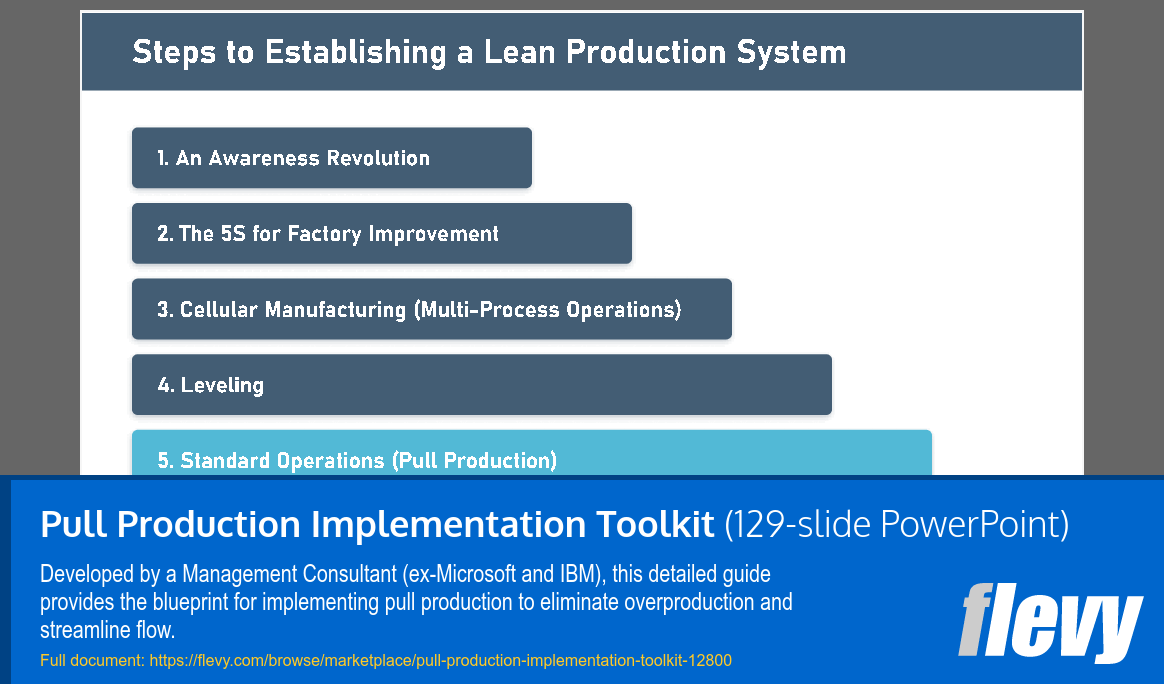
• Executing the five-phase implementation process to physically and procedurally transform a production line into a pull cell.
• Computing takt time and leveling production through advanced scheduling and load-leveling mechanisms.
• Designing and administering comprehensive Kanban networks, including production and transport triggers.
• Expanding pull methodologies outward to suppliers utilizing supermarket buffers, regular delivery routes, and vertical integration.
DETAILED TRAINING CONTENTS
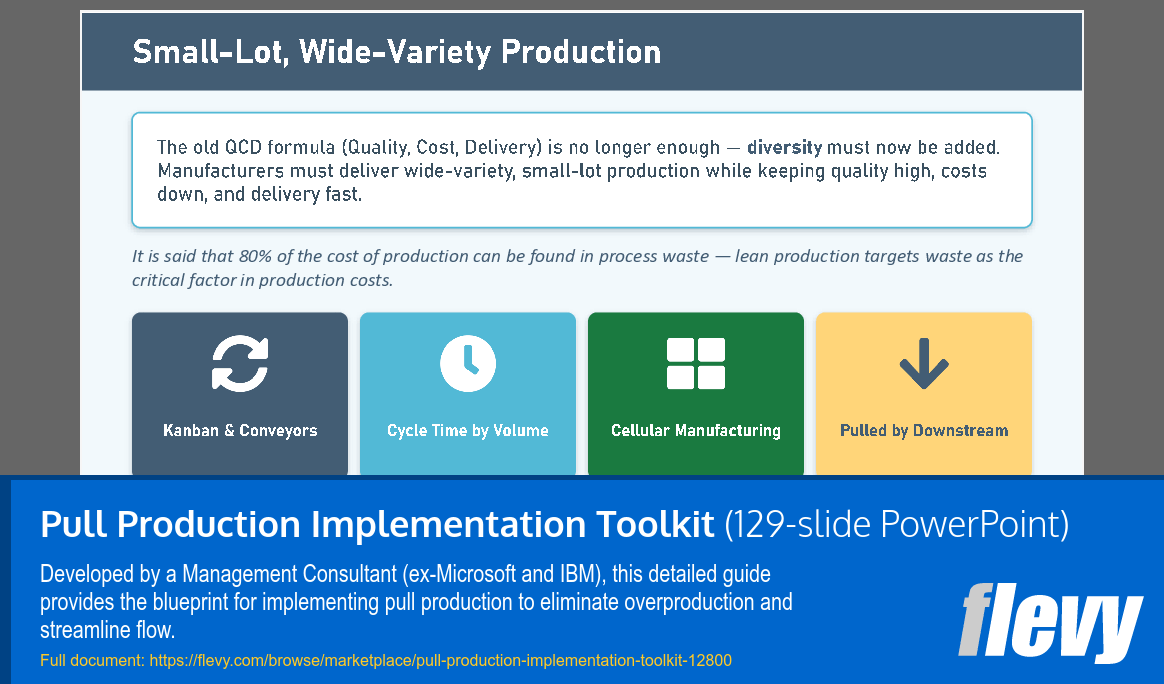
• Module 1: Choosing Pull Production: Core definitions, push versus pull concepts, the QCD-D metrics formula, and the seven foundational prerequisites.
• Module 2: Understanding and Preparing for Pull: Contrasting physical and paperwork systems, evaluating true lead times, and reviewing the seven requirements for smooth flow.
• Module 3: Implementing Pull Production: The five-stage deployment framework, alternative cell designs (U-shape, L-shape, S-shape), line balancing, and production leveling (Heijunka).
• Module 4: Managing Pull Production: Standard Kanban rules, feedback circuits, inventory sizing formulas, and single versus multi-stage supermarket models.
• Module 5: Extending Pull Production: Realizing continuous one-piece flow, reconfiguring production lines, creating feeder cells, and linking external suppliers via milk runs.
• Module 6: Reflections and Conclusions: Summary of the 5-step implementation lifecycle, critical success factors, and establishing an ongoing continuous improvement cycle.
PROPOSED 1-DAY WORKSHOP AGENDA
• 09:00 – 10:30: The Logic of Pull: Comparing push and pull models, exploring the QCD-D formula, and auditing prerequisites.
• 10:45 – 12:30: Preparation & Flow: Analyzing value streams, understanding lead times, and mastering the seven flow conditions.
• 13:30 – 15:00: Implementation Mechanics: Walking through the 5-step roadmap, cell layout strategies, takt time calculations, and load leveling.
• 15:15 – 16:30: Running the System: Activating Kanban networks, managing supermarkets via material handlers ("Water Beetles"), and cascading signals upstream.
• 16:30 – 17:00: The 90-Day Commitment: Assessing facility readiness and defining immediate execution steps.
GLOSSARY OF KEY TERMS
• Pull Production: An operational approach where items are manufactured and moved exclusively when requested by customer demand.
• Heijunka: A production leveling technique used to balance volume and variety to mirror steady demand.
• Takt Time: The rate of customer demand which dictates the operational heartbeat of production.
• Kanban: A visual card or indicator used to authorize the production or transfer of specific component quantities.
• Water Beetle: A dedicated logistics operator who travels a fixed delivery route (milk run) to keep work cells stocked.
• Monument: Large, fixed, or capital-intensive equipment that cannot fit inside a standard cell and must be accommodated around it.
FREQUENTLY ASKED QUESTIONS (FAQ)
How does this differ from your Just-in-Time (JIT) deck? While the JIT deck centers on overarching strategy, this presentation offers a granular, five-phase tactical roadmap specifically dedicated to demand signals and material regulation.
Does pull necessitate a physical cell configuration? Yes, cellular layouts serve as a primary foundation; Step 3 of the framework explicitly targets the establishment of physical loops to enable signaling.
Can digital signals be utilized? Absolutely. While foundational logic relies on physical cards, the core principles adapt seamlessly to electronic Kanban systems, emails, or automated notifications.
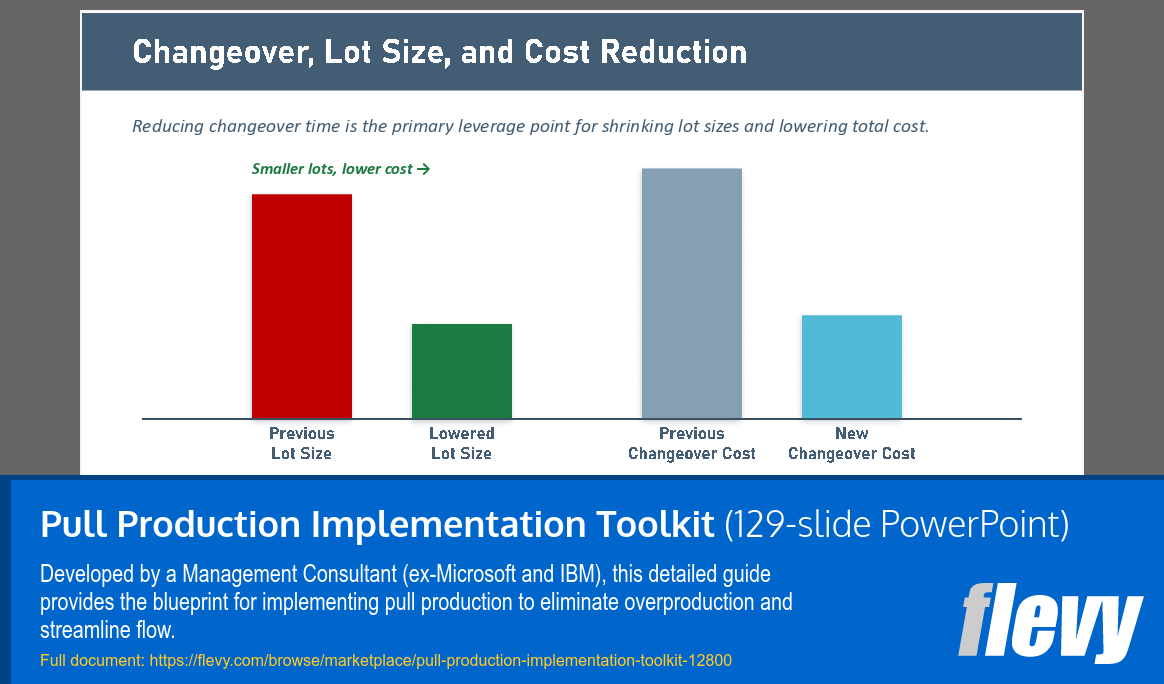
Is this framework restricted to high-volume manufacturing? Not at all. Through effective leveling and quick changeover practices, pull is explicitly crafted to make small-lot, high-variety manufacturing highly competitive.
Is the presentation file customizable? Yes, it is provided as a fully editable PowerPoint (PPTX) document compatible with Microsoft Office.
Got a question about the product? Email us at support@flevy.com or ask the author directly by using the "Ask the Author a Question" form. If you cannot view the preview above this document description, go here to view the large preview instead.
Source: Best Practices in Lean Manufacturing, Continuous Flow PowerPoint Slides: Pull Production Implementation Toolkit PowerPoint (PPTX) Presentation Slide Deck, Operational Excellence Consulting
ABOUT THE AUTHOR

Operational Excellence Consulting, founded in 2009 by Allan Ung, draws from extensive experience at Microsoft, IBM, and Underwriters Laboratories (UL). We specialize in strategy deployment, customer experience design, and operational excellence, applying Design Thinking, Lean, and Systems Thinking to maximize customer value and minimize waste.
Our
... [read more]
Ask the Author a Question
You must be logged in to contact the author.




























