
 Click main image to view in full screen. Unlock all 32 preview images:
Cellular Manufacturing: One-Piece Flow for Workteams Toolkit – PowerPoint PPTX Template
PowerPoint (PPTX) + Zip archive file (ZIP) 114 Slides


BENEFITS OF THIS DOWNLOADABLE POWERPOINT DOCUMENT
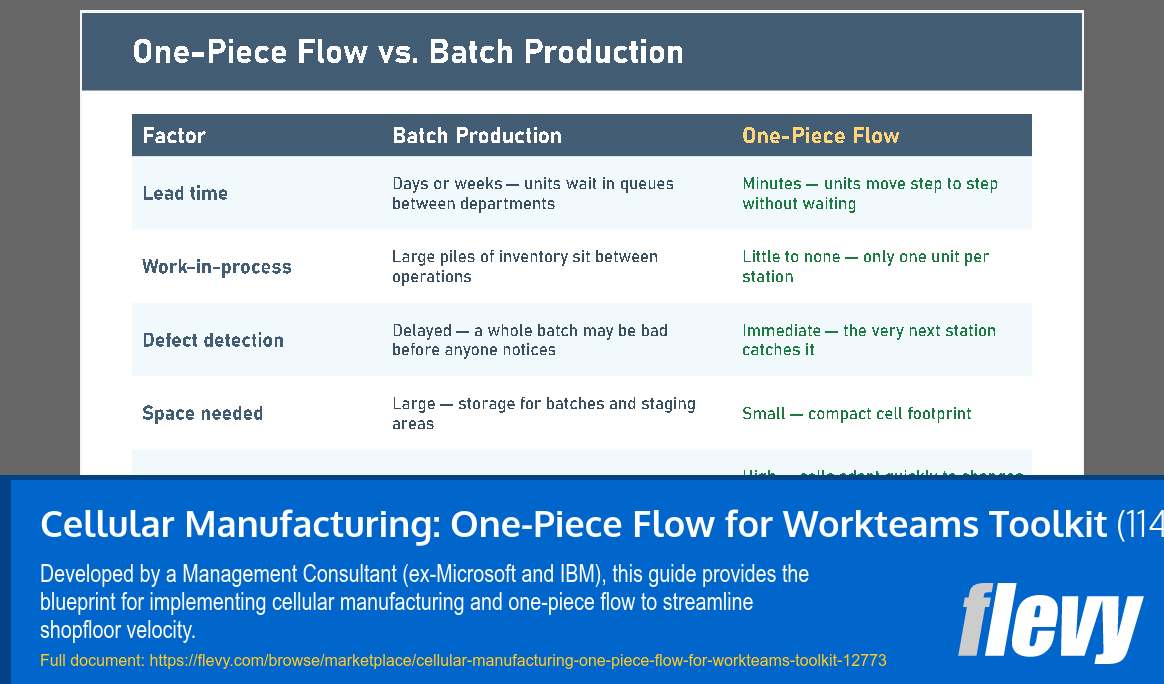
- Shrink lead times and inventory by transitioning from slow "batch and queue" piles to rapid one-piece flow.
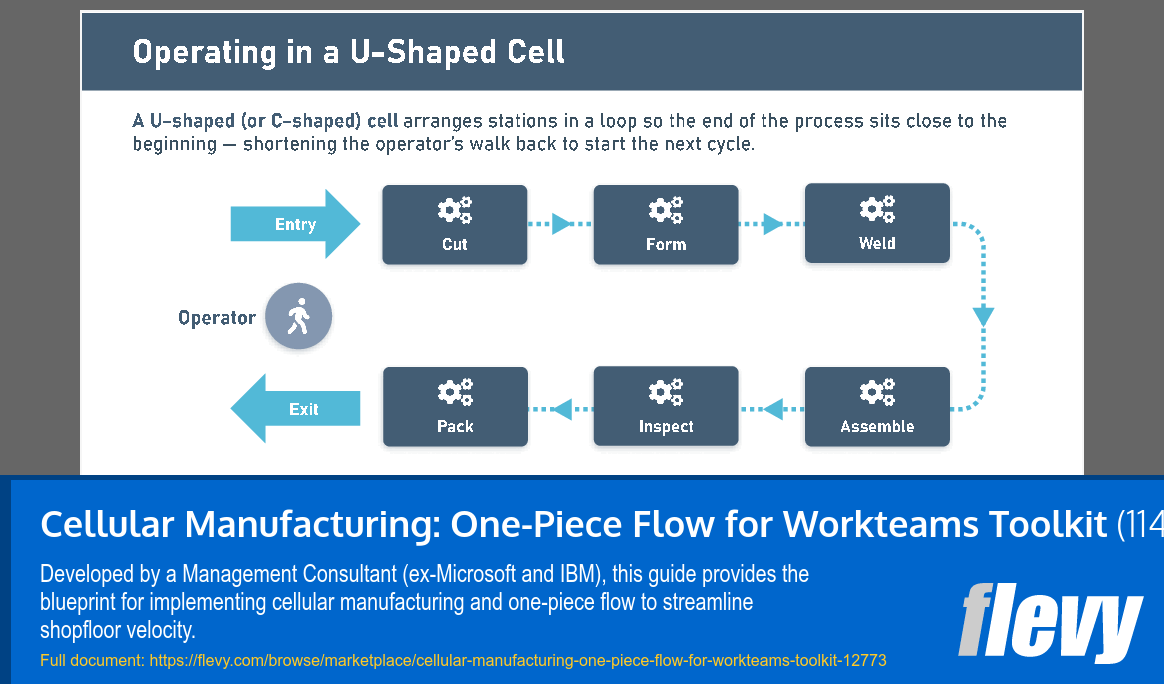
- Maximize your factory footprint by replacing scattered departments with compact, space-saving U-shaped cells.
- Build a more flexible workforce through cross-training that empowers operators to manage entire process flows.
LEAN MANUFACTURING PPT TEMPLATE DESCRIPTION
CELLULAR MANUFACTURING: ONE-PIECE FLOW FOR WORKTEAMS
At its core, cellular manufacturing serves as the tangible application of Lean flow principles right on the production floor. Traditional batch-and-queue systems tend to bury true value beneath mountains of inventory and excessive transport distances. This comprehensive master toolkit supplies the structural foundation required to reorganize workstations into sequential manufacturing cells—turning your workforce into cross-trained professionals and your facility into a high-speed engine of single-piece flow.
EXECUTIVE SUMMARY
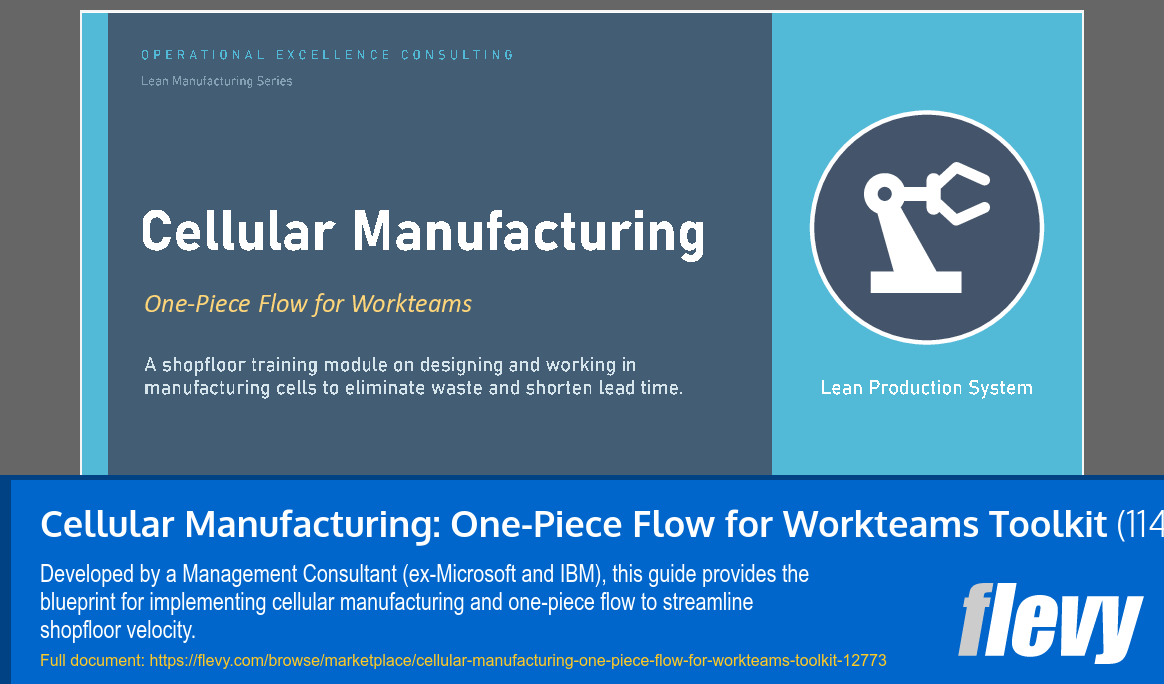
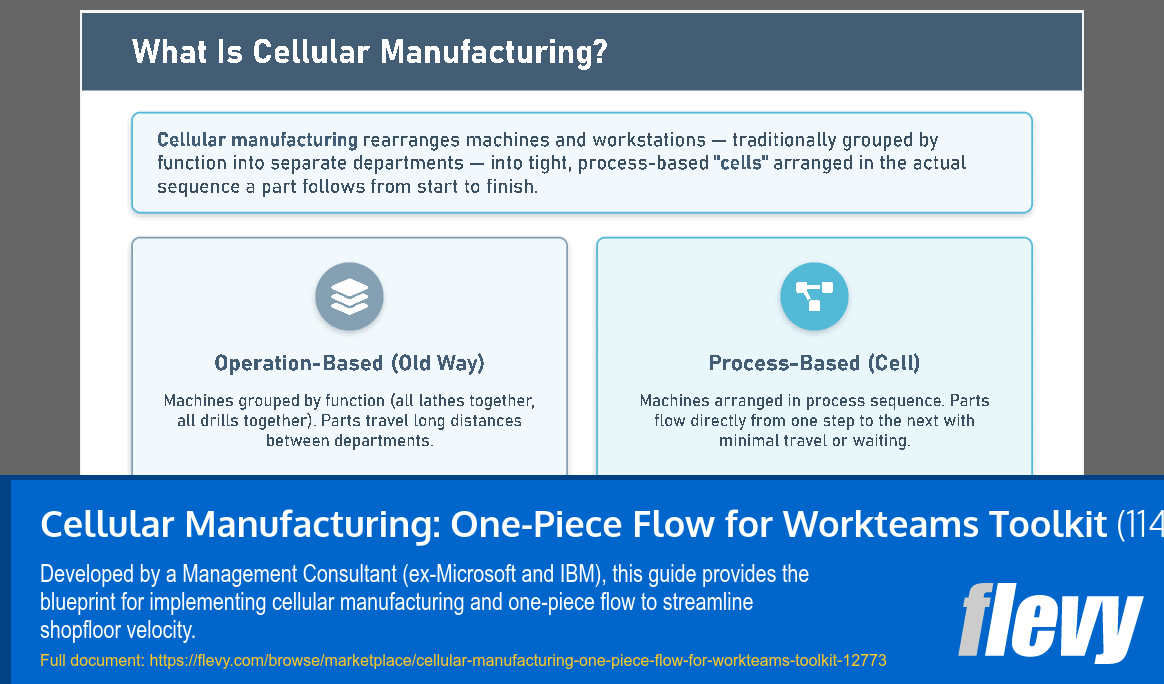
Cellular Manufacturing (CM) involves restructuring machinery and workstations—traditionally segregated by function—into cohesive, process-oriented cells. This practitioner-focused package outlines a clear, three-stage strategy for floor transformation: Assessing Present Conditions, Reconfiguring Layouts, and Driving Ongoing Optimization. Built for frontline empowerment, the framework offers standard tools to eradicate batch-processing waste and establish a genuine One-Piece Flow environment where components travel seamlessly through the workflow one unit at a time.
KEY BENEFITS
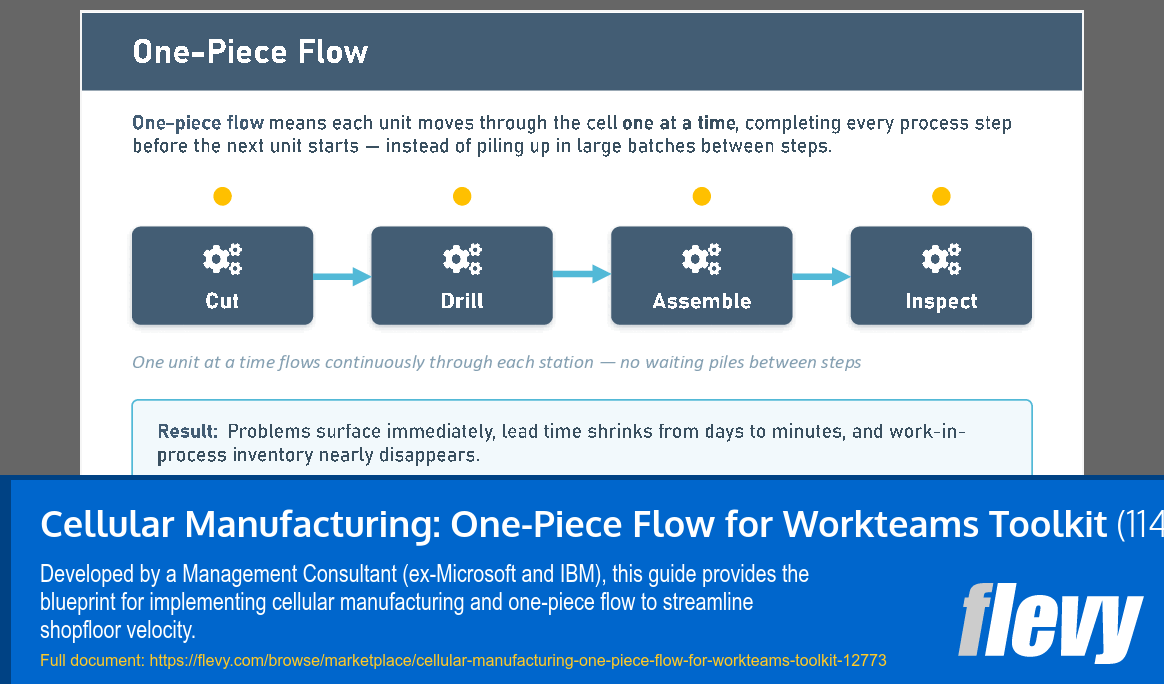
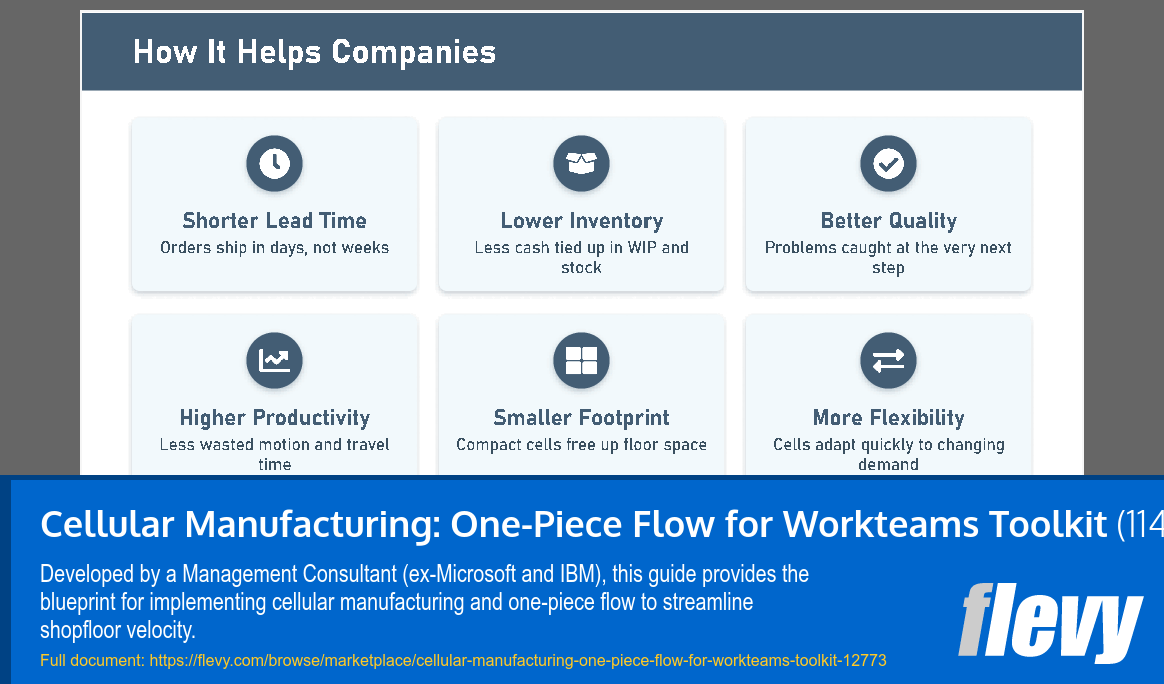
★ Cut Lead Times & WIP: Shift from multi-week queues to minutes of continuous progression, drastically minimizing work-in-progress inventory.
★ Optimize Floor Utilization: Leverage space-saving equipment configurations and U-shaped layouts to reclaim large amounts of production square footage.
★ Catch Defects Instantly: Move away from delayed batch testing toward immediate, station-to-station quality detection.
★ Develop a Cross-Trained Team: Upskill operators through multi-machine management, building an adaptable workforce that takes collective ownership of the entire process sequence.
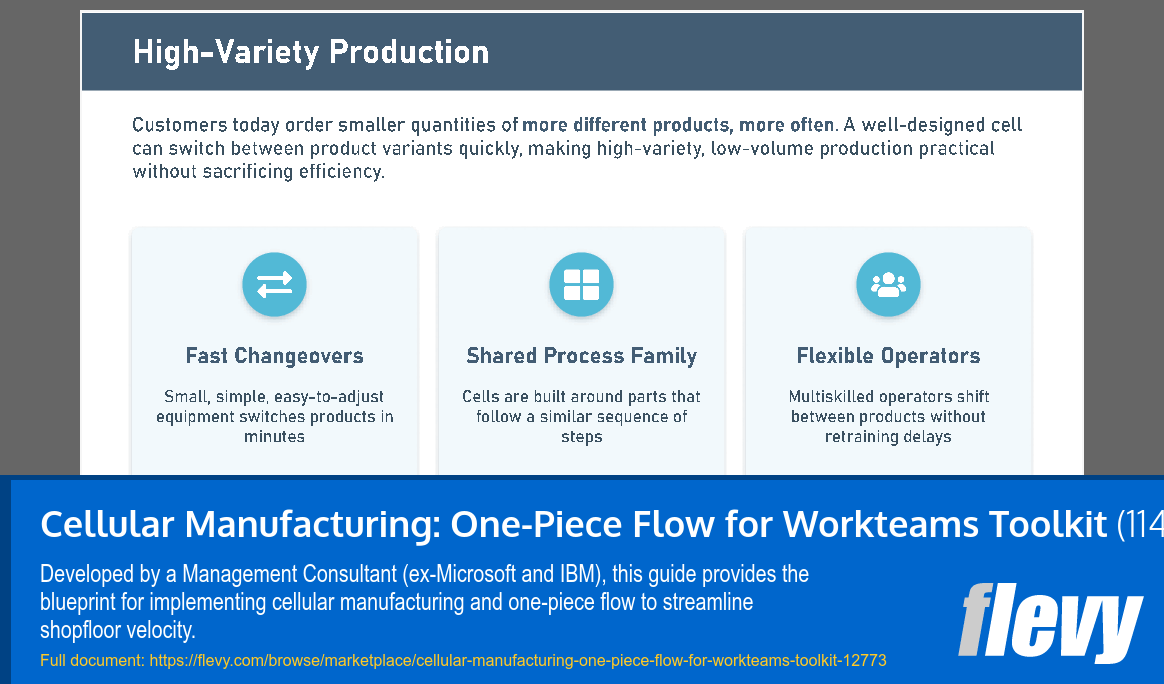
★ Boost Operational Agility: Cultivate a flexible environment capable of transitioning between diverse product variants within minutes without sacrificing efficiency.
TARGET AUDIENCE
• Plant & Production Managers: Ideal for optimizing facility footprint and driving down total manufacturing expenditures.
• Lean & Industrial Engineers: Provides a structured, evidence-based roadmap for physical floor redesign.
• Supervisors & Team Leaders: Perfect for managing multi-skilling tracking matrices and preserving cell performance via visual controls.
• Shopfloor Workteams: Empowers team members with the cross-functional competencies and problem-solving mechanisms needed to manage their own workflows.
WHAT'S INCLUDED IN THE BOX?
★ The Cellular Manufacturing Masterclass (PPTX): A professional, meticulously sequenced slide deck featuring 110+ slides equipped with comprehensive speaker notes.
★ Cell Design Data Library: Ready-to-implement templates covering Product-Quantity (PQ) Analysis, Process Route Analysis, and Process Capacity Charts.
★ Standard Work Documentation: Graphic and Excel templates including Standard Work Sheets and Combination Sheets to record newly established workflows.
★ Seven Interactive Team Activities: Engaging, pre-planned exercises such as "Design a Walk Path," "Spot the Flow, Spot the Waste," and "Build a One-Point Lesson."
★ 90-Day Pilot Action Plan: A chronological scheduling guide designed to help you Observe, Stabilize, and Launch your inaugural manufacturing cell.
LEARNING OBJECTIVES
Upon completing this masterclass, participants will be equipped to:
• Differentiate cellular manufacturing and single-piece flow from conventional batch processing methods.
• Articulate the dual advantages of cell-based manufacturing for both the organization and individual operators.
• Function efficiently inside a U-shaped cell as multi-machine, cross-functional operators.
• Maintain steady material movement through multi-skilling and synchronized work routines.
• Execute the three-phase methodology to plan, convert, and test a process-driven layout.
• Maintain high cell performance using foundational teamwork tools like 5S, Visual Management, and Autonomous Maintenance.
TRAINING CONTENTS
• Module 1: An Introduction to Cellular Manufacturing: Covers the definition of CM, the mechanics of single-piece flow, and the vital differences between an Operation and a Process.
• Module 2: Working in a Manufacturing Cell: Explores U-shaped layouts, cross-training, standing mobile workstations, and the foundations of Autonomation (Jidoka).
• Module 3: Basic Elements of Cell Design: Provides an in-depth breakdown of the three-phase conversion framework, Takt Time calculations, and bottleneck isolation techniques.
• Module 4: Teamwork Tools for Cellular Manufacturing: Focuses on workplace 5S organization, visual andon indicators, activity boards, and autonomous maintenance routines.
• Module 5: Reflections and Conclusions: Features a program summary alongside the creation of an actionable 90-day pilot deployment plan.
PROPOSED 1-DAY WORKSHOP AGENDA
• 09:00 – 10:30 The Logic of Flow: Exploring Process versus Operation definitions alongside single-piece flow advantages.
• 10:45 – 12:30 The Shopfloor Environment: Designing U-shaped transit pathways, cross-training staff, and applying Jidoka.
• 13:30 – 15:00 Engineering the Cell: Implementing the 3-Phase Design Strategy, calculating Takt Time, and spotting constraints.
• 15:15 – 16:30 Sustaining the Cell: Deploying 5S organization, Visual Controls, and One-Point Lessons.
• 16:30 – 17:00 Commitment to the Pilot: Evaluating your current workspace and finalizing the initial 30-day pilot milestone.
GLOSSARY OF KEY TERMS
• One-Piece Flow: Moving items through a sequence one unit at a time to eliminate batching delays and idle waiting.
• U-Shaped Cell: A workstation arrangement that positions the end of the process adjacent to the beginning, reducing operator movement.
• Multiskilled Operator: A staff member cross-trained to execute multiple machine operations in sequential order.
• Jidoka (Autonomation): Automated equipment capable of detecting abnormalities, stopping independently, and signaling for human intervention only when necessary.
• Process Route Analysis: An analytical mechanism used to group individual parts into product families based on shared production requirements.
• One-Point Lesson (OPL): A concise, highly visual instruction sheet designed for rapid knowledge sharing on the shop floor.
FREQUENTLY ASKED QUESTIONS (FAQ)
Does CM work for low-volume products? Yes. By employing flexible machinery and rapid changeovers, cells make high-mix, low-volume manufacturing financially viable.
Why do operators need to stand? Standing allows employees to "move with the work." Seating confines a worker to a single machine, whereas standing lets them cycle fluidly around the entire cell.
How does this differ from a Just-in-Time (JIT) toolkit? JIT concentrates on scheduling logic and Kanban pull signals, whereas CM focuses on the physical workstation design and operator cross-training that make true flow possible.
Can we convert our shop floor overnight? No. Transitioning requires a disciplined three-phase framework to guarantee data-backed planning and orderly equipment relocation.
Is the presentation completely editable? Yes, the package includes fully customizable PPTX files compatible with standard versions of Microsoft PowerPoint.
Got a question about the product? Email us at support@flevy.com or ask the author directly by using the "Ask the Author a Question" form. If you cannot view the preview above this document description, go here to view the large preview instead.
Source: Best Practices in Lean Manufacturing, Continuous Flow PowerPoint Slides: Cellular Manufacturing: One-Piece Flow for Workteams Toolkit PowerPoint (PPTX) Presentation Slide Deck, Operational Excellence Consulting
ABOUT THE AUTHOR

Operational Excellence Consulting, founded in 2009 by Allan Ung, draws from extensive experience at Microsoft, IBM, and Underwriters Laboratories (UL). We specialize in strategy deployment, customer experience design, and operational excellence, applying Design Thinking, Lean, and Systems Thinking to maximize customer value and minimize waste.
Our
... [read more]
Ask the Author a Question
You must be logged in to contact the author.




























