
This is a basic introductory course for those who would like to understand what Six Sigma is all about.

This presentation has 86 slides in all and covers the following topics:
Purpose of Six Sigma
Origins of Six Sigma
Six Sigma Benefits
Critical Elements of Six Sigma
Basic Concepts
COPQ ? Cost of Poor Quality
Process
CTQ ? Critical to Quality
Defect Opportunities
DPMO ? Defects per Million Opportunities
Variability
Limits
Six Sigma Process and Measurement
DMAIC (Define, Measure, Analyze, Improve & Control)
Six Sigma Training (MBB, BB, GB and YB)
Got a question about the product? Email us at support@flevy.com or ask the author directly by using the "Ask the Author a Question" form. If you cannot view the preview above this document description, go here to view the large preview instead.
Executive Summary
The "PSL - Six Sigma Introduction" presentation serves as a foundational guide to understanding Six Sigma principles and practices. Developed by a recognized leader in Lean methodologies and a certified LSS Master Black Belt, this presentation is designed for professionals seeking to enhance operational efficiency and customer satisfaction. It covers the essential elements of Six Sigma, including the DMAIC process, Cost of Poor Quality (COPQ), and training levels from Master Black Belt (MBB) to Yellow Belt (YB). By utilizing this resource, organizations can drive significant improvements in quality and profitability.
Who This Is For and When to Use
• Executives and senior management overseeing quality improvement initiatives
• Project managers and team leaders implementing Six Sigma methodologies
• Quality assurance professionals focused on reducing defects and enhancing processes
• Operations managers aiming to improve efficiency and customer satisfaction
Best-fit moments to use this deck:
• During Six Sigma training sessions for new team members
• As a reference for project kickoff meetings focused on quality improvement
• In strategy sessions aimed at aligning organizational goals with Six Sigma principles
Learning Objectives
• Define the core principles of Six Sigma and its purpose in enhancing customer satisfaction and profitability
• Identify the key elements of the DMAIC process and how to apply it to existing processes
• Analyze the impact of Cost of Poor Quality (COPQ) on organizational performance
• Establish metrics for measuring defects, including DPMO (Defects Per Million Opportunities)
• Develop an understanding of the roles within Six Sigma training (MBB, BB, GB, YB)
• Create a roadmap for implementing Six Sigma initiatives within an organization
Table of Contents
• Purpose of Six Sigma (page 3)
• Origins of Six Sigma (page 5)
• Six Sigma Benefits (page 7)
• Critical Elements of Six Sigma (page 9)
• Basic Concepts (page 11)
• Variability (page 15)
• Limits (page 17)
• Six Sigma Process and Measurement (page 19)
• DMAIC Overview (page 21)
• Six Sigma Training Levels (page 23)
Primary Topics Covered
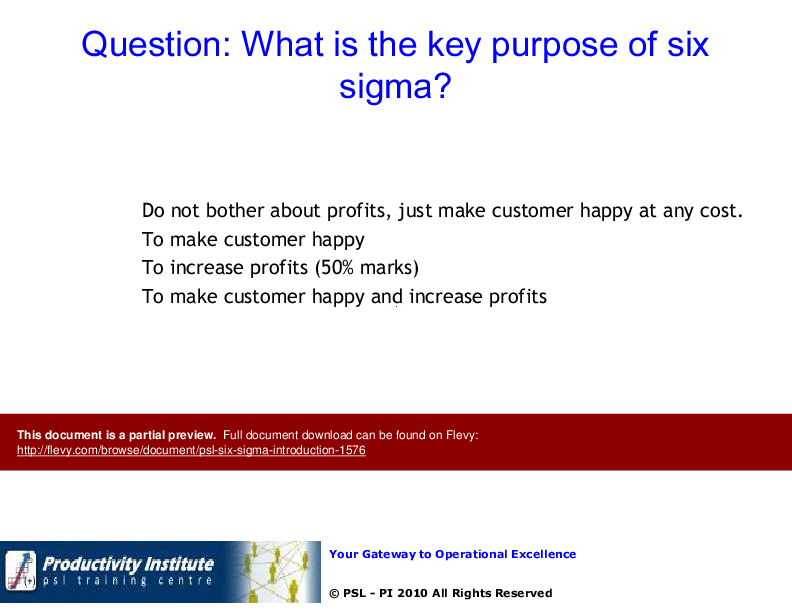
• Purpose of Six Sigma - The primary goal is to enhance customer satisfaction while increasing profits through improved quality.
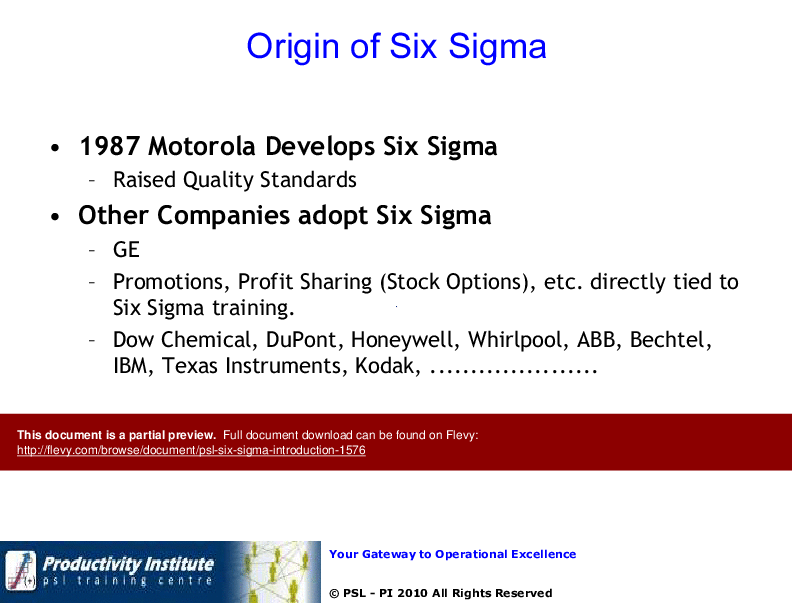
• Origins of Six Sigma - Developed by Motorola in 1987, Six Sigma has been adopted by major companies like GE and Honeywell to raise quality standards.
• Benefits of Six Sigma - Focused on generating sustained success through customer-centric projects tied to financial outcomes.
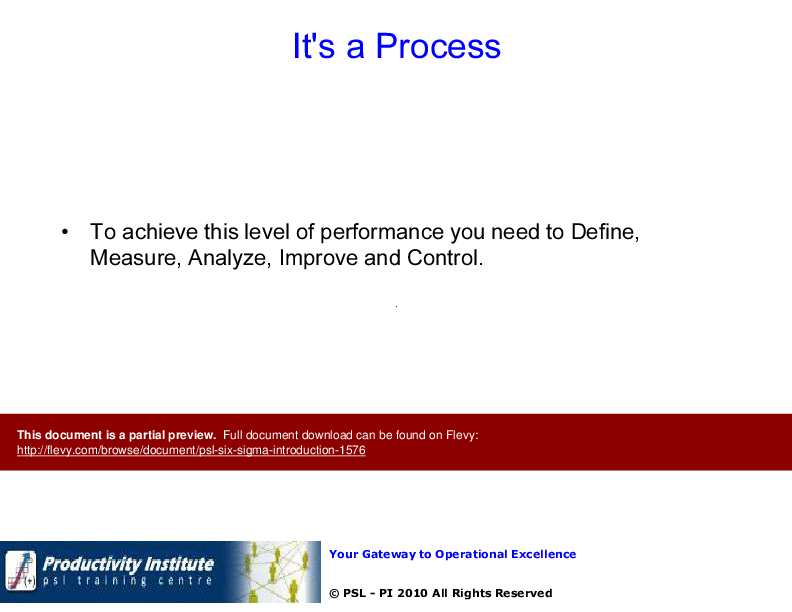
• DMAIC Process - A structured approach consisting of Define, Measure, Analyze, Improve, and Control to enhance existing processes.
• Cost of Poor Quality (COPQ) - Understanding and quantifying the costs associated with poor quality to drive improvement initiatives.
• Defects Per Million Opportunities (DPMO) - A key metric for measuring process performance and quality levels.
Deliverables, Templates, and Tools
• Six Sigma project charter template for defining project scope and objectives
• Data collection plan template to ensure reliable measurement systems
• Process mapping tools for visualizing and analyzing current processes
• Implementation plan template for executing improvements and maintaining gains
• Training materials for various Six Sigma roles (MBB, BB, GB, YB)
Slide Highlights
• Overview of Six Sigma's purpose and its dual focus on customer satisfaction and profitability
• Timeline illustrating the evolution of Six Sigma and its adoption by major corporations
• Visual representation of the DMAIC process, emphasizing its structured approach to problem-solving
• Graphical depiction of COPQ and its impact on overall sales and profitability
• Summary of the roles and responsibilities within Six Sigma training programs
Potential Workshop Agenda
Introduction to Six Sigma (60 minutes)
• Overview of Six Sigma principles and benefits
• Discussion on the origins and evolution of Six Sigma
DMAIC Process Workshop (90 minutes)
• Deep dive into each phase of the DMAIC process
• Group exercise to apply DMAIC to a sample project
Cost of Poor Quality Analysis (45 minutes)
• Identifying and quantifying COPQ in current processes
• Strategies for reducing COPQ and improving quality
Customization Guidance
• Tailor the project charter template to reflect specific organizational goals and metrics
• Adjust data collection plans based on the unique processes and challenges of your organization
• Modify training materials to align with the existing knowledge levels of team members
Secondary Topics Covered
• Variability and its impact on process performance
• Understanding process limits and specification limits
• The role of management in supporting Six Sigma initiatives
• The importance of a data-driven decision-making approach
FAQ
What is the primary goal of Six Sigma?
The primary goal is to enhance customer satisfaction while increasing profits through improved quality and reduced defects.
Who developed Six Sigma?
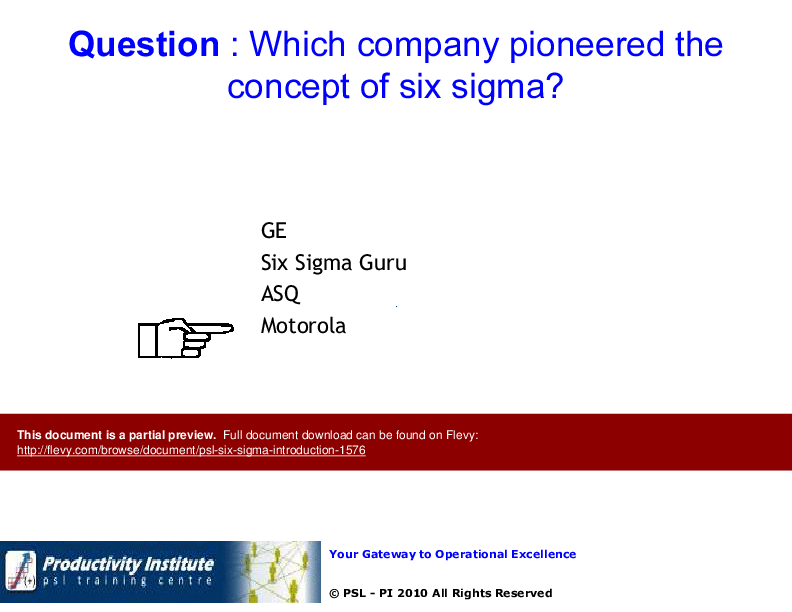
Six Sigma was developed by Motorola in 1987 and has since been adopted by numerous organizations worldwide.
What does DMAIC stand for?
DMAIC stands for Define, Measure, Analyze, Improve, and Control, which are the key phases in the Six Sigma process.
What is COPQ?
Cost of Poor Quality (COPQ) refers to the costs associated with defects and failures in a process, which can negatively impact profitability.
How is DPMO calculated?
DPMO (Defects Per Million Opportunities) is calculated by multiplying the Defects Per Opportunity (DPO) by one million.
What are the different training levels in Six Sigma?
The training levels include Master Black Belt (MBB), Black Belt (BB), Green Belt (GB), and Yellow Belt (YB), each with distinct roles and responsibilities.
Why is management involvement crucial in Six Sigma?
Management involvement is essential for driving the effort, securing resources, and ensuring alignment with organizational strategy.
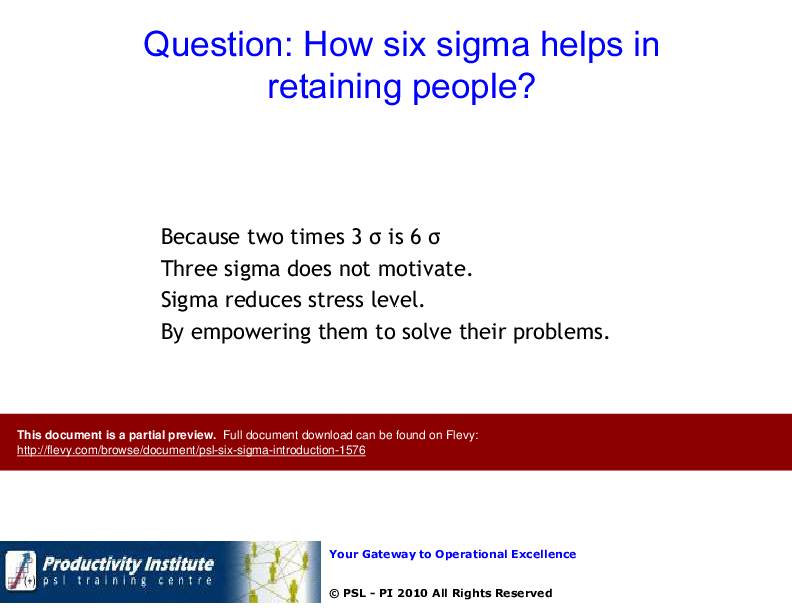
How can Six Sigma help in retaining employees?
By empowering employees to solve problems and improve processes, Six Sigma can enhance job satisfaction and reduce stress levels.
Glossary
• Six Sigma - A methodology focused on improving quality by reducing defects and variability in processes.
• DMAIC - A structured problem-solving process used in Six Sigma: Define, Measure, Analyze, Improve, Control.
• COPQ - Cost of Poor Quality; the costs associated with defects and failures in a process.
• DPMO - Defects Per Million Opportunities; a metric for measuring process performance.
• CTQ - Critical to Quality; characteristics that are essential to meeting customer needs.
• Variability - The degree of variation in a process, which can impact quality and performance.
• Specification Limits - The defined acceptable range of variation for a process.
• Process Capability - The ability of a process to produce output within specified limits.
• Black Belt - A Six Sigma professional who leads projects and teams in implementing Six Sigma methodologies.
• Green Belt - A Six Sigma professional who participates in projects and applies Six Sigma tools in their work.
• Master Black Belt - An expert in Six Sigma who mentors and trains others in the organization.
• Yellow Belt - A beginner in Six Sigma who learns and applies basic tools and concepts.
Source: Best Practices in Six Sigma Project PowerPoint Slides: PSL - Six Sigma Introduction PowerPoint (PPT) Presentation Slide Deck, OpEx Academy NZ
|
Receive our FREE presentation on Operational Excellence
This 50-slide presentation provides a high-level introduction to the 4 Building Blocks of Operational Excellence. Achieving OpEx requires the implementation of a Business Execution System that integrates these 4 building blocks. |