
PSL - Process Optimization Using Six Sigma Techniques   94-slide PPT PowerPoint presentation slide deck (PPT)
$59.00

PSL - Process Optimization Using Six Sigma Techniques (94-slide PPT PowerPoint presentation slide deck (PPT)) Preview Image
Log in to unlock full preview.
PSL - Process Optimization Using Six Sigma Techniques (94-slide PPT PowerPoint presentation slide deck (PPT)) Preview Image
Arrow   Click main image to view in full screen.

PSL - Process Optimization Using Six Sigma Techniques (PowerPoint PPT Slide Deck)

PowerPoint (PPT) 94 Slides

$59.00
This presentation is developed by a pioneer in Lean and certified LSS Master Black Belt who has trained over 5,000+ students globally, from Directors, CEOs, GMs, to shop floor staff. He's endorsed by CMI Consortium, NZTE, HERA, NZPICS, CBAFF.
Add to Cart


Immediate download
Fully editable PowerPoint
Free lifetime updates

SIX SIGMA PROJECT PPT DESCRIPTION

Six Sigma PPT: Learn DMAIC, DMADV, process optimization, root cause analysis, and control plans. Download this workshop presentation for Six Sigma project training. PSL - Process Optimization Using Six Sigma Techniques is a 94-slide PPT PowerPoint presentation slide deck (PPT) available for immediate download upon purchase.

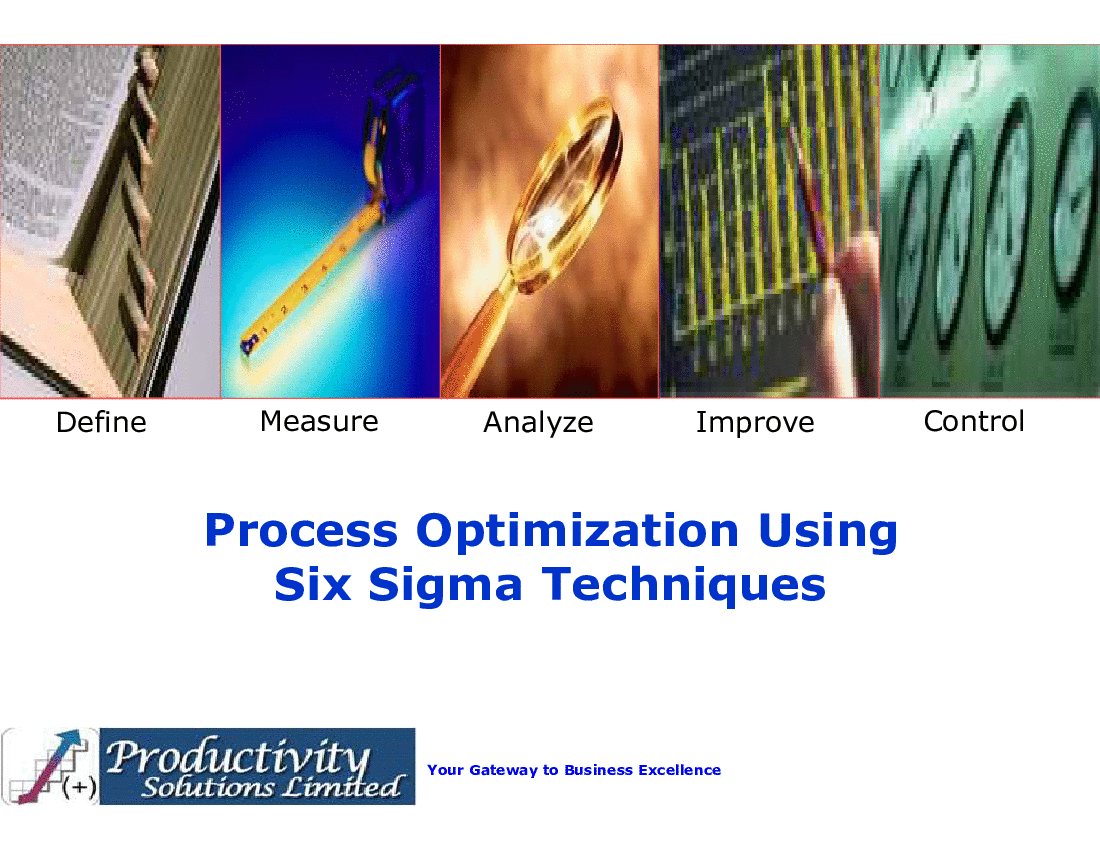
This is a 94-slide presentation for a workshop on Process Optimization using Six Sigma techniques.
It covers 3 sessions.

Session 1: Introduction to Six Sigma / Define / Measure Phase

•  Six Sigma Methodologies
•  Exercise : Catapult
•  Define Phase
•  Identification of Improvement Opportunities
•  Initiate workplace project
•  Introduction to Measure

Session 2: Measure and Analyze

•  Exercise: Catapult
•  Central Tendency/Variability/Normal Distribution
•  Control Charts
•  Process Capability
•  Introduction to Analyse
•  Root Cause Analysis (RCA)
•  Group Activities

Session 3: Improve and Control

•  Introduction to Improve
•  Exercise : Catapult
•  Improve phase
•  Improvement Action Plan
•  Introduction to Control
•  Process Control Plan
•  Group activities
•  Homework
•  Project Closeout Checkpoints
•  Project guidelines

Got a question about the product? Email us at support@flevy.com or ask the author directly by using the "Ask the Author a Question" form. If you cannot view the preview above this document description, go here to view the large preview instead.

MARCUS OVERVIEW

This synopsis was written by Marcus [?] based on the analysis of the full 94-slide presentation.


Executive Summary
This presentation titled "Process Optimization Using Six Sigma Techniques" provides a comprehensive overview of Six Sigma methodologies, focusing on the DMAIC (Define, Measure, Analyze, Improve, Control) framework. Developed by a certified LSS Master Black Belt with extensive training experience, this resource equips corporate executives, integration leaders, and consultants with the tools to identify improvement opportunities, measure process performance, and implement effective solutions. Participants will gain insights into critical concepts such as root cause analysis, process capability, and control plans, enabling them to drive operational excellence and enhance customer satisfaction.

Who This Is For and When to Use
•  Corporate executives seeking to implement process improvement initiatives
•  Integration leaders responsible for optimizing operational workflows
•  Consultants advising organizations on quality management and process efficiency
•  Project teams focused on data-driven decision-making and continuous improvement

Best-fit moments to use this deck:
•  During strategic planning sessions to identify process improvement opportunities
•  In training workshops aimed at enhancing team capabilities in Six Sigma methodologies
•  When initiating projects that require structured problem-solving approaches

Learning Objectives
•  Define the DMAIC framework and its application in process optimization
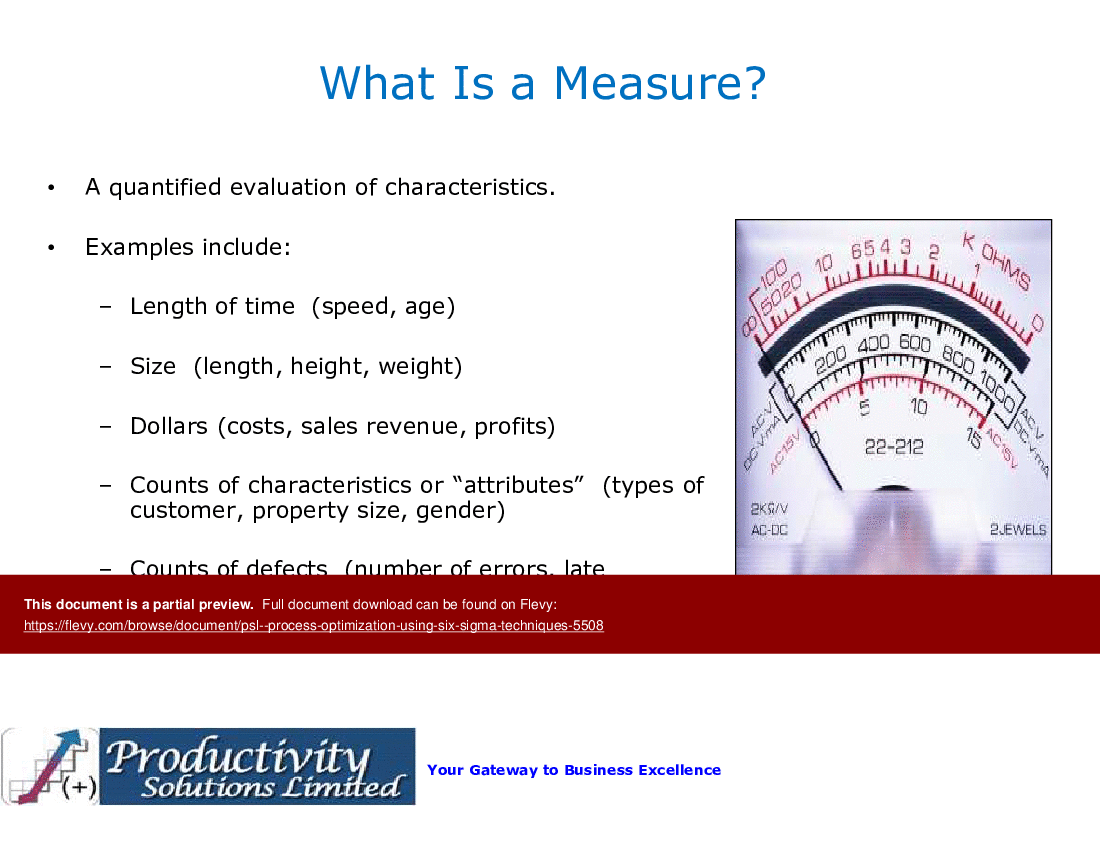
•  Measure current process performance and identify key metrics
•  Analyze data to uncover root causes of process inefficiencies
•  Develop and implement improvement plans based on data-driven insights
•  Establish control mechanisms to sustain process improvements over time
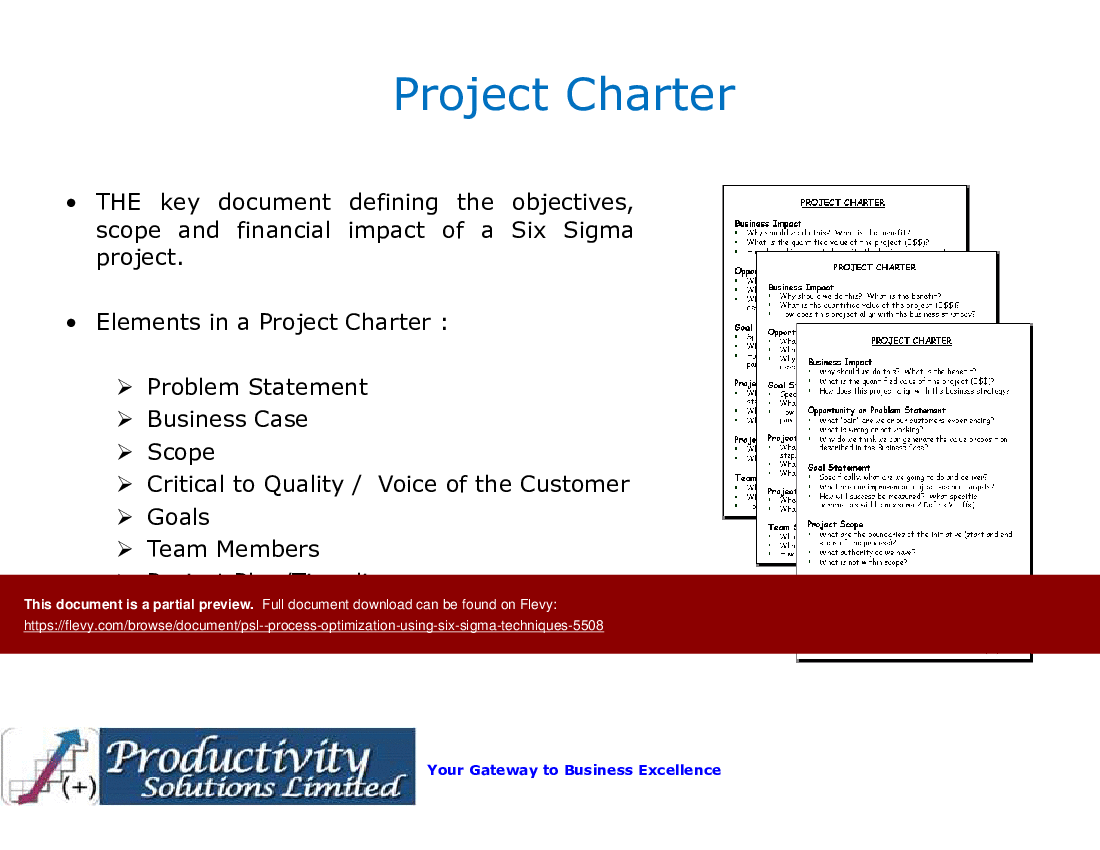
•  Create a project charter that outlines scope, goals, and team responsibilities

Table of Contents
•  Introduction to Six Sigma (page 3)
•  DMAIC Overview (page 5)
•  Define Phase Activities (page 10)
•  Measure Phase: Data Collection and Metrics (page 15)
•  Analyze Phase: Root Cause Analysis (page 20)
•  Improve Phase: Action Planning (page 25)
•  Control Phase: Sustaining Improvements (page 30)
•  Project Charter Template (page 35)
•  SIPOC Chart (page 40)
•  Process Control Plan (page 45)

Primary Topics Covered
•  Six Sigma Methodology - A structured approach to process improvement that focuses on reducing defects and enhancing quality through data-driven decision-making.
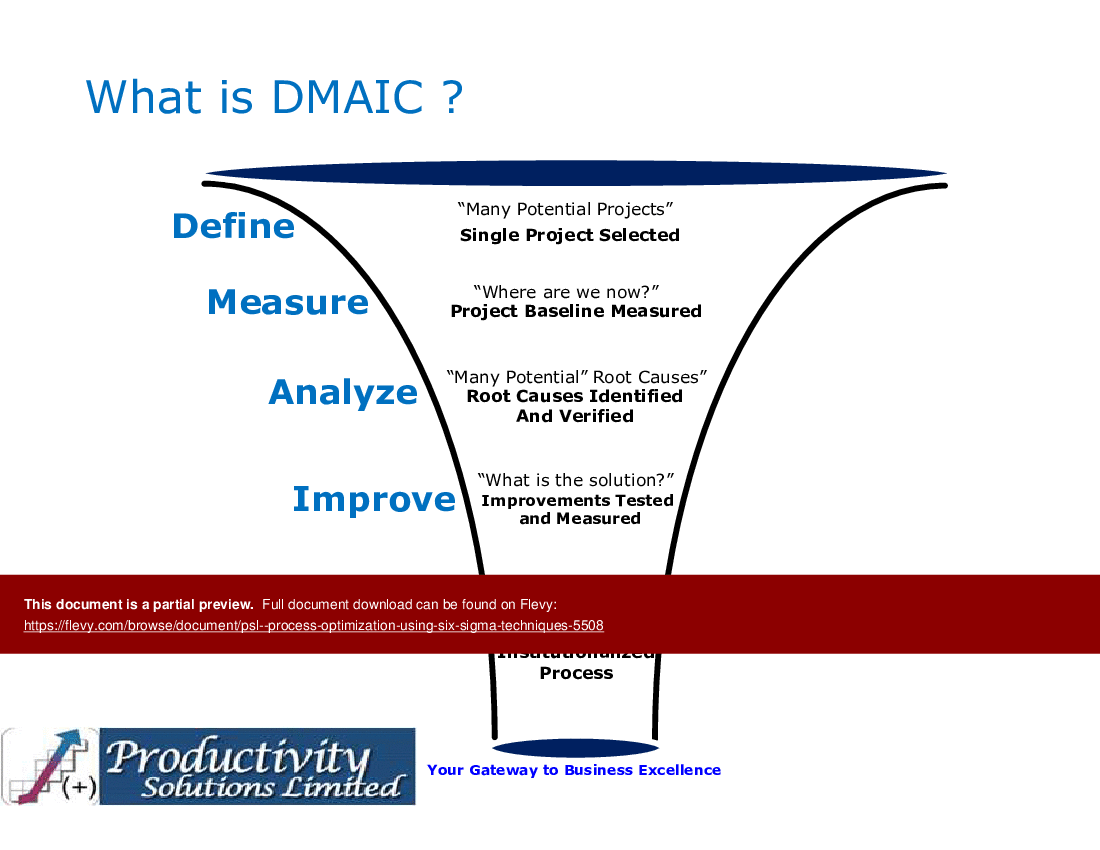
•  DMAIC Framework - The core methodology for problem-solving in Six Sigma, encompassing the phases of Define, Measure, Analyze, Improve, and Control.
•  Root Cause Analysis - Techniques such as the 5 Whys and Cause and Effect diagrams to identify underlying issues affecting process performance.
•  Process Capability - Measures the ability of a process to produce output within specified limits, evaluated through indices like Cpk.
•  Control Charts - Tools for monitoring process stability and variation over time, essential for maintaining improvements.
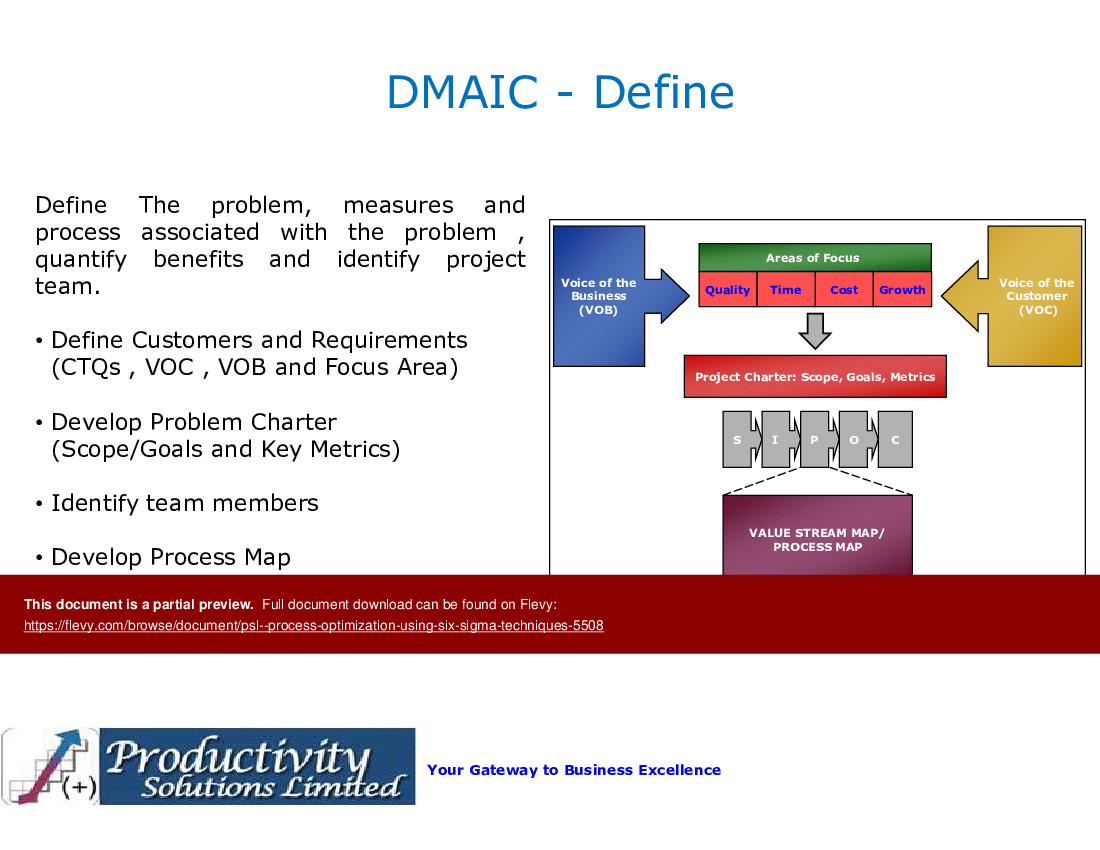
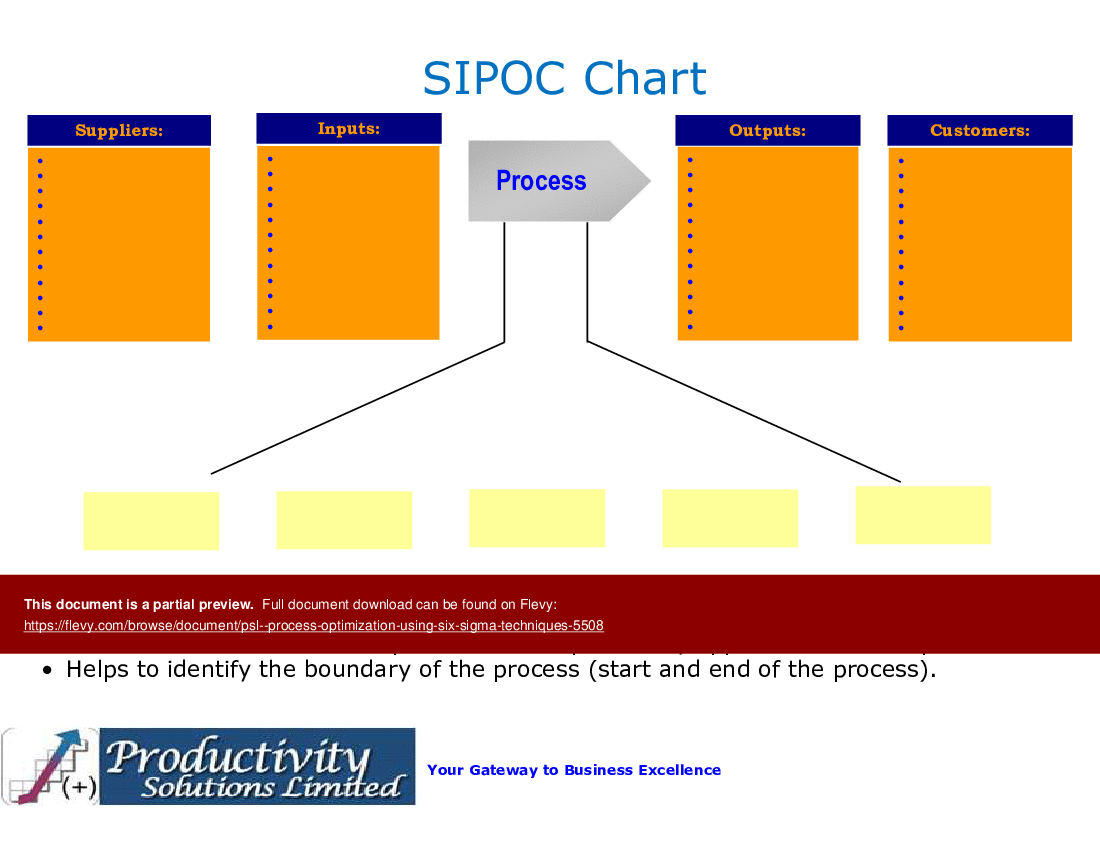
•  SIPOC Diagram - A visual representation of Suppliers, Inputs, Process, Outputs, and Customers to clarify project scope and focus areas.

Deliverables, Templates, and Tools
•  Project Charter template for defining project scope and goals
•  SIPOC chart for visualizing process elements and customer needs
•  Data Collection Plan to outline metrics and data sources
•  Cause and Effect Diagram for identifying potential root causes
•  Control Plan to ensure sustained process improvements
•  X-bar R chart for monitoring process variation

Slide Highlights
•  Overview of the DMAIC framework illustrating the structured problem-solving approach
•  Example of a SIPOC chart demonstrating the relationship between inputs and outputs
•  Control chart examples highlighting process stability and variation
•  Root Cause Analysis tools such as the Cause and Effect diagram and 5 Whys
•  Project Charter template showcasing essential elements for project planning

Potential Workshop Agenda
Introduction to Six Sigma (30 minutes)
•  Overview of Six Sigma methodologies and objectives
•  Discussion on the importance of process optimization

Define and Measure Phases (60 minutes)
•  Activities to identify improvement opportunities
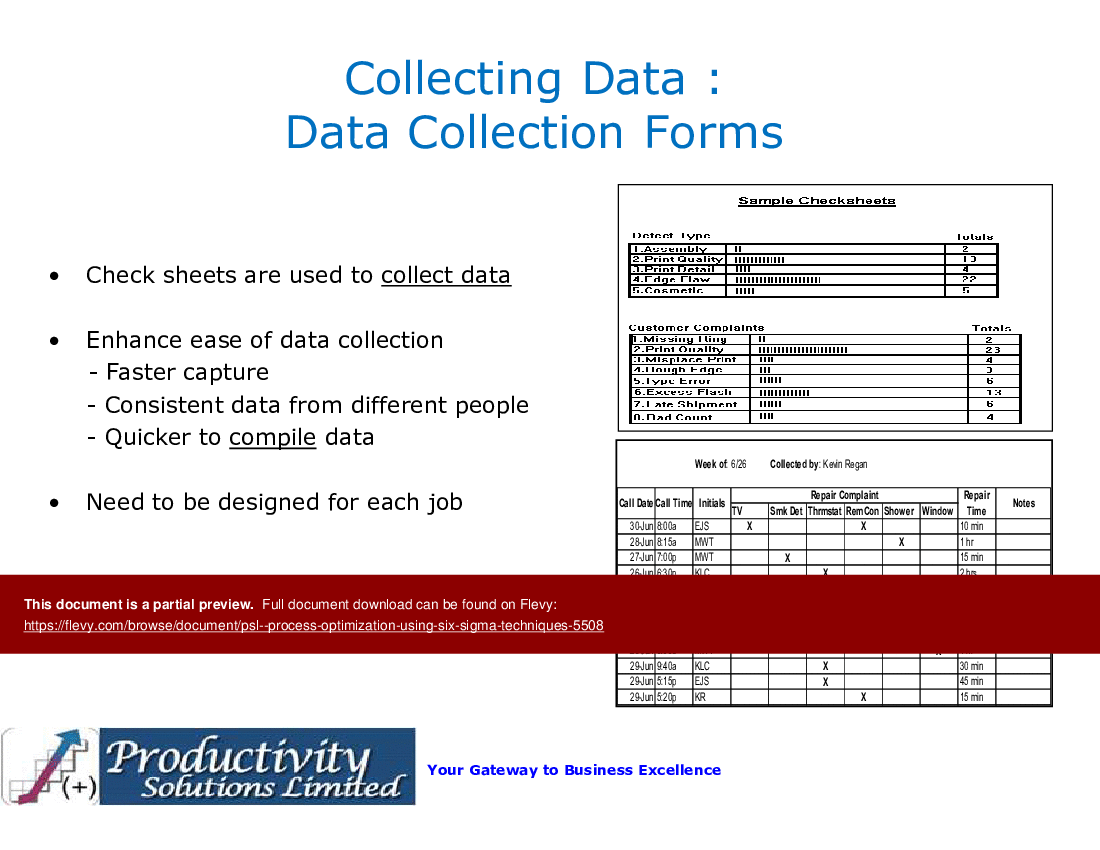
•  Data collection methods and metrics definition

Analyze and Improve Phases (60 minutes)
•  Techniques for root cause analysis
•  Development of improvement plans based on data insights

Control Phase and Wrap-Up (30 minutes)
•  Establishing control mechanisms to sustain improvements
•  Q&A session and feedback collection

Customization Guidance
•  Tailor the project charter to reflect specific organizational goals and metrics
•  Adjust the SIPOC chart to include relevant suppliers and customer requirements
•  Modify data collection plans to align with existing measurement systems and processes

Secondary Topics Covered
•  Cost of Poor Quality (COPQ) and its impact on business performance
•  Statistical Process Control (SPC) techniques for monitoring process variation
•  Importance of team dynamics and communication in Six Sigma projects
•  Best practices for sustaining process improvements over time

FAQ
What is Six Sigma?
Six Sigma is a data-driven methodology aimed at reducing defects and improving quality in processes by identifying and eliminating sources of variation.

What is the DMAIC framework?
DMAIC stands for Define, Measure, Analyze, Improve, and Control, and is a structured approach used in Six Sigma for problem-solving and process optimization.

How do I measure process capability?
Process capability is measured using indices like Cpk, which assess how well a process can produce output within specified limits.

What tools are used for root cause analysis?
Common tools include the 5 Whys technique and Cause and Effect diagrams, which help identify underlying issues affecting process performance.

How can I sustain improvements after implementing changes?
Establishing a Process Control Plan and using control charts to monitor ongoing performance are essential for sustaining improvements.

What is a SIPOC chart?
A SIPOC chart is a visual tool that outlines Suppliers, Inputs, Process, Outputs, and Customers, helping teams understand the scope and focus of their projects.

What is the Cost of Poor Quality (COPQ)?
COPQ refers to the costs associated with producing defective products or services, including visible and hidden costs that impact overall business performance.

How do I create a project charter?
A project charter should include a well-defined problem statement, business case, scope, critical to quality metrics, goals, and team member responsibilities.

Glossary
•  Six Sigma - A methodology for process improvement that focuses on reducing defects and enhancing quality.
•  DMAIC - A structured problem-solving framework used in Six Sigma.
•  Cpk - Process Capability Index that measures how well a process can produce output within specified limits.
•  SIPOC - A tool for visualizing Suppliers, Inputs, Process, Outputs, and Customers.
•  Root Cause Analysis - Techniques used to identify the underlying causes of process issues.
•  Control Chart - A statistical tool for monitoring process variation over time.
•  COPQ - Cost of Poor Quality, encompassing costs associated with defects and inefficiencies.
•  Data Collection Plan - A structured approach to gathering relevant data for analysis.
•  Project Charter - A document that outlines the objectives, scope, and team responsibilities for a project.
•  Statistical Process Control (SPC) - Techniques for monitoring and controlling process variation.
•  5 Whys - A root cause analysis technique that involves asking "why" multiple times to uncover underlying issues.
•  Cause and Effect Diagram - A visual tool for categorizing potential causes of a problem.
•  Process Control Plan - A document that outlines the procedures for maintaining process improvements.
•  X-bar R Chart - A control chart used to monitor the mean and range of a process.
•  Value Stream Mapping - A visual tool for analyzing the flow of materials and information in a process.
•  Key Performance Indicators (KPIs) - Metrics used to evaluate the success of a process or project.
•  Critical to Quality (CTQ) - Characteristics that are essential for meeting customer requirements.
•  Voice of the Customer (VOC) - Feedback from customers that informs product and service improvements.
•  Voice of the Business (VOB) - Business requirements that guide process improvements.

Source: Best Practices in Six Sigma Project, DMAIC PowerPoint Slides: PSL - Process Optimization Using Six Sigma Techniques PowerPoint (PPT) Presentation Slide Deck, OpEx Academy NZ


$59.00
This presentation is developed by a pioneer in Lean and certified LSS Master Black Belt who has trained over 5,000+ students globally, from Directors, CEOs, GMs, to shop floor staff. He's endorsed by CMI Consortium, NZTE, HERA, NZPICS, CBAFF.
Add to Cart
  

ABOUT THE AUTHOR

Author image
Additional documents from author: 88

Vishnu Rayapeddi is an experienced management consultant and trainer specializing in implementing continuous process improvements. Vishnu is a pioneer in Lean Management which combines the power of Lean Thinking, TOC, Six Sigma, TQM, TWI, Balanced Scorecard, cGMP and other best-class methodologies such as, DMAIC, Value Stream Mapping, Root Cause Analysis, 5S, Quick Changeovers, Quality and ... [read more]

Ask the Author a Question

You must be logged in to contact the author.

Click here to log in Click here register

Did you know?
The average daily rate of a McKinsey consultant is $6,625 (not including expenses). The average price of a Flevy document is $65.



Trusted by over 10,000+ Client Organizations
Since 2012, we have provided business templates to over 10,000 businesses and organizations of all sizes, from startups and small businesses to the Fortune 100, in over 130 countries.
AT&T GE Cisco Intel IBM Coke Dell Toyota HP Nike Samsung Microsoft Astrazeneca JP Morgan KPMG Walgreens Walmart 3M Kaiser Oracle SAP Google E&Y Volvo Bosch Merck Fedex Shell Amgen Eli Lilly Roche AIG Abbott Amazon PwC T-Mobile Broadcom Bayer Pearson Titleist ConEd Pfizer NTT Data Schwab


Read Customer Testimonials

 
"FlevyPro provides business frameworks from many of the global giants in management consulting that allow you to provide best in class solutions for your clients."

– David Harris, Managing Director at Futures Strategy
 
"I have used Flevy services for a number of years and have never, ever been disappointed. As a matter of fact, David and his team continue, time after time, to impress me with their willingness to assist and in the real sense of the word. I have concluded in fact "

– Roberto Pelliccia, Senior Executive in International Hospitality
 
"As a small business owner, the resource material available from FlevyPro has proven to be invaluable. The ability to search for material on demand based our project events and client requirements was great for me and proved very beneficial to my clients. Importantly, being able to easily edit and tailor "

– Michael Duff, Managing Director at Change Strategy (UK)
 
"As a consultant requiring up to date and professional material that will be of value and use to my clients, I find Flevy a very reliable resource.

The variety and quality of material available through Flevy offers a very useful and commanding source for information. Using Flevy saves me time, enhances my expertise and ends up being a good decision."

– Dennis Gershowitz, Principal at DG Associates
 
"FlevyPro has been a brilliant resource for me, as an independent growth consultant, to access a vast knowledge bank of presentations to support my work with clients. In terms of RoI, the value I received from the very first presentation I downloaded paid for my subscription many times over! The "

– Roderick Cameron, Founding Partner at SGFE Ltd
 
"[Flevy] produces some great work that has been/continues to be of immense help not only to myself, but as I seek to provide professional services to my clients, it gives me a large "tool box" of resources that are critical to provide them with the quality of service and outcomes they are expecting."

– Royston Knowles, Executive with 50+ Years of Board Level Experience
 
"My FlevyPro subscription provides me with the most popular frameworks and decks in demand in today’s market. They not only augment my existing consulting and coaching offerings and delivery, but also keep me abreast of the latest trends, inspire new products and service offerings for my practice, and educate me "

– Bill Branson, Founder at Strategic Business Architects
 
"I am extremely grateful for the proactiveness and eagerness to help and I would gladly recommend the Flevy team if you are looking for data and toolkits to help you work through business solutions."

– Trevor Booth, Partner, Fast Forward Consulting


Customers Also Bought These Documents


Customers Also Like These Documents

Explore Related Management Topics


Your Recently Viewed Documents
Receive our FREE presentation on Operational Excellence

This 50-slide presentation provides a high-level introduction to the 4 Building Blocks of Operational Excellence. Achieving OpEx requires the implementation of a Business Execution System that integrates these 4 building blocks.