
 Click main image to view in full screen. Unlock all 13 preview images:
Project Management Quick Reference Guide (QRG) – Word DOCX
Word (DOCX) 79 Pages


BENEFITS OF THIS DOWNLOADABLE WORD DOCUMENT
- Provides a step-by-step framework for planning, executing, and delivering projects successfully across any industry.
- Equips you with proven tools, checklists, and methodologies to eliminate risks, control scope, and hit deadlines with confidence.
- Empowers you to manage stakeholders, lead teams, and drive measurable project outcomes that align with business goals.
PROJECT MANAGEMENT WORD DESCRIPTION
Curated by McKinsey-trained Executives
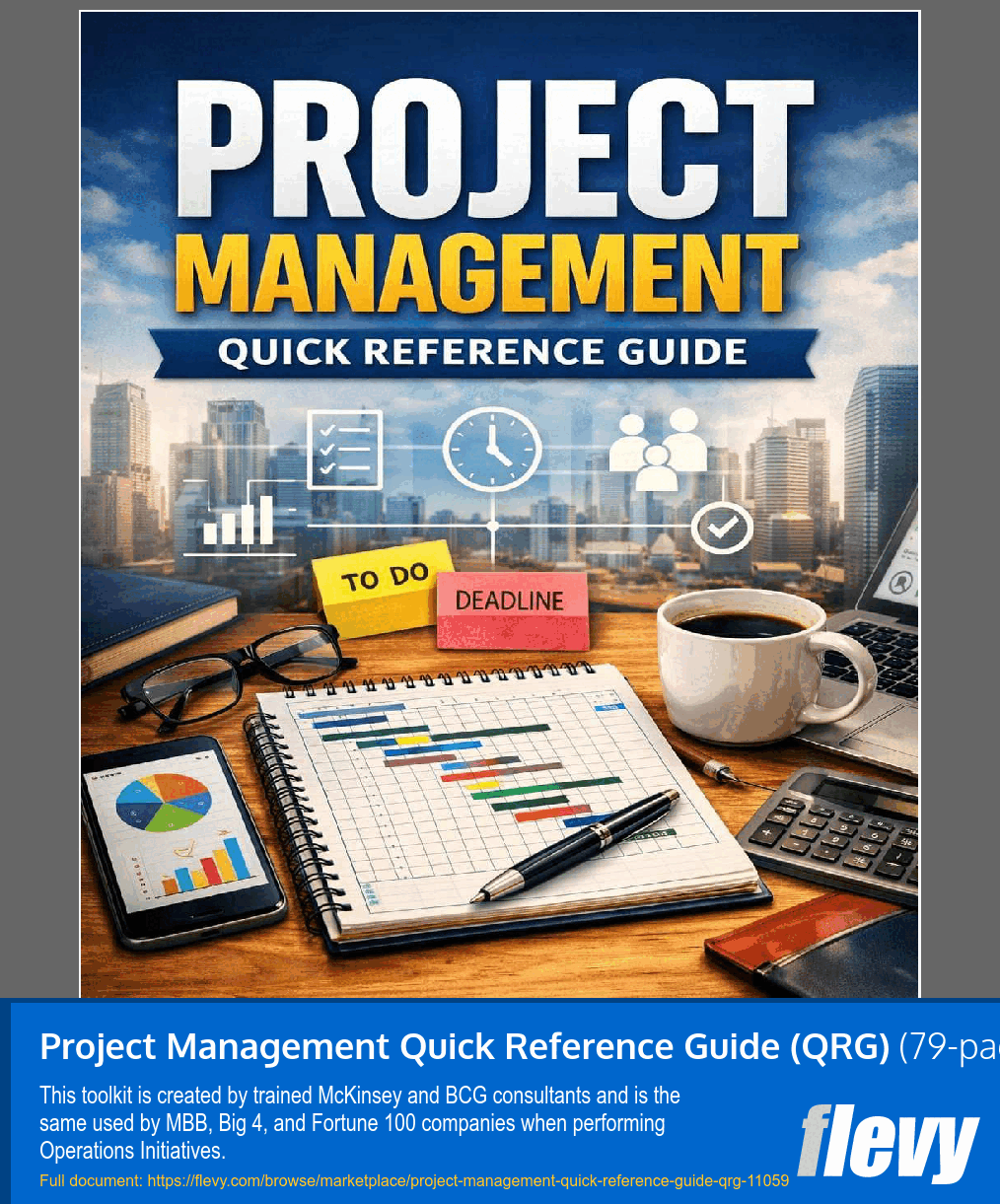
Project Management Quick Reference Guide (QRG)
The Ultimate Shortcut to Flawless Project Delivery, Faster Promotions, and Zero Chaos
🚀 Stop Guessing. Start Delivering Like a Pro.
If you're tired of missed deadlines, scope creep, confused stakeholders, and endless meetings that go nowhere—this Project Management Quick Reference Guide (QRG) is your unfair advantage.
This is not another bloated textbook.
This is a high-impact, action-focused, instantly usable playbook designed to help you:
• Deliver projects on time, on budget, every time
• Master Agile, Scrum, Waterfall & Hybrid without overwhelm
• Speak the language of senior stakeholders and executives
• Instantly boost your credibility and career trajectory
Whether you're a new project manager, team lead, consultant, or experienced PM, this guide compresses years of experience into a powerful, easy-to-scan format.
💡 Why This QRG Dominates Everything Else
✔ Laser-focused summaries – no fluff, just what works
✔ Checklists for every phase – never miss a critical step again
✔ Battle-tested frameworks – real-world, not theory
✔ Decision guides – know exactly what to do in any situation
✔ Quick lookup tables – answers in seconds, not hours
This is your go-to desk companion for every project you'll ever run.
📘 What You Get
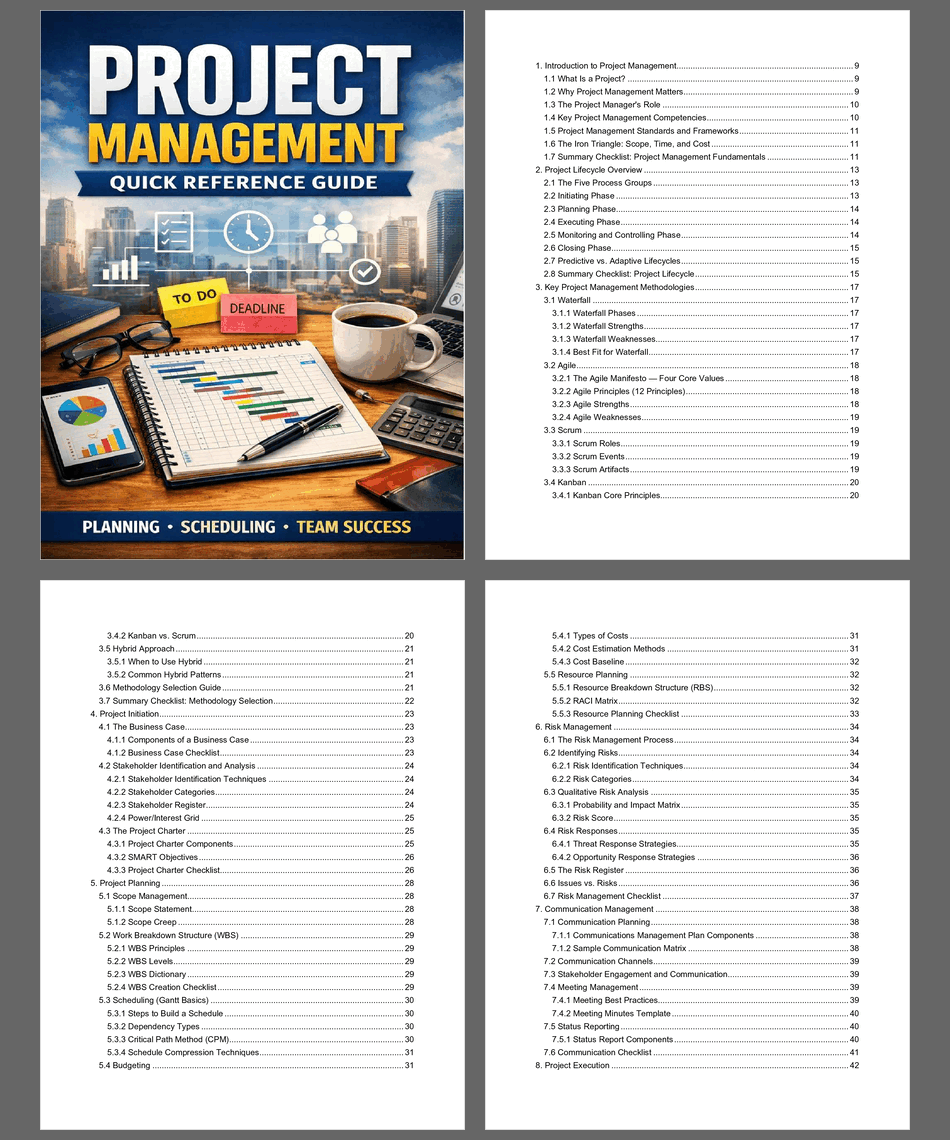
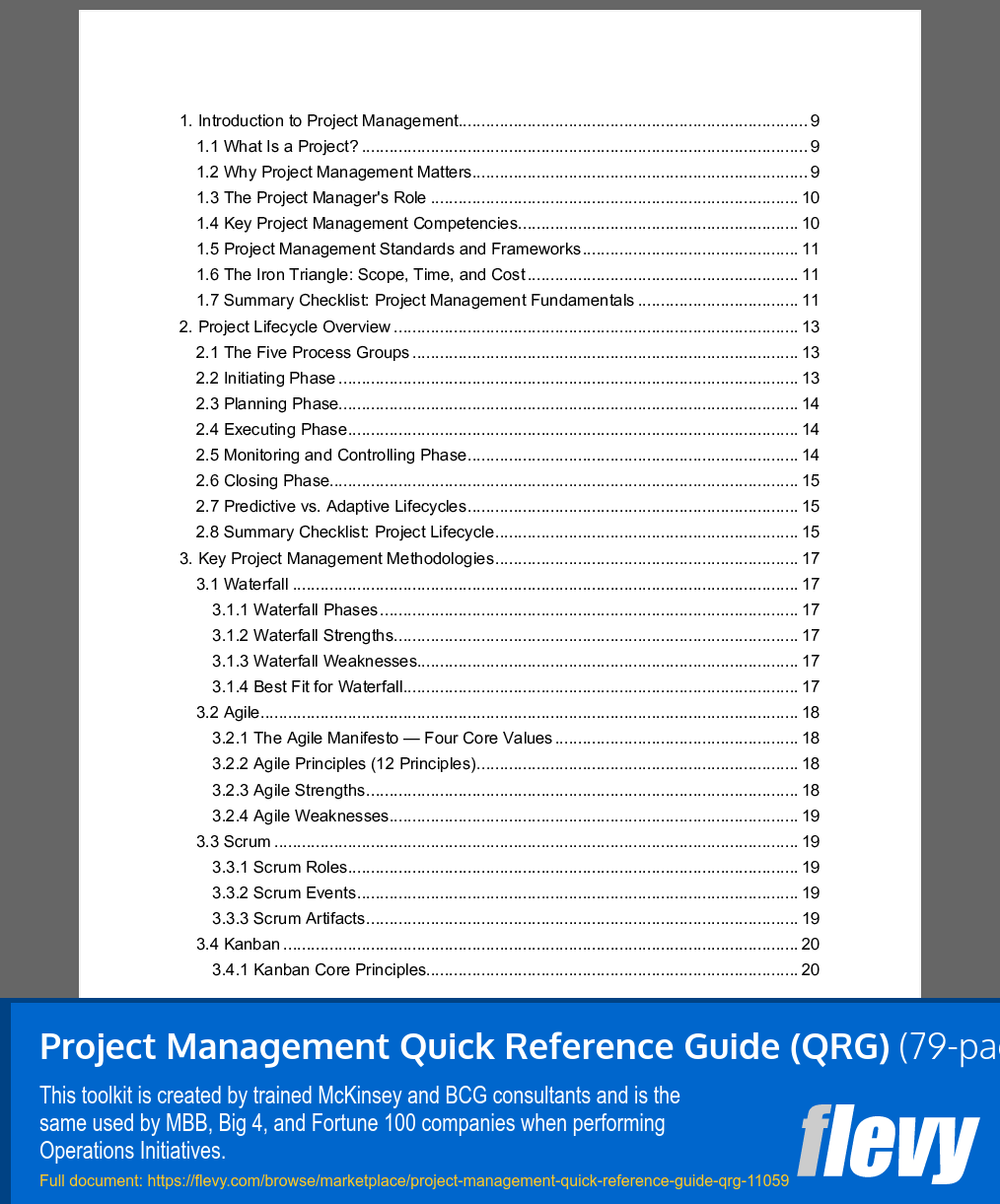
1. Introduction to Project Management
1.1 What Is a Project?
1.2 Why Project Management Matters
1.3 The Project Manager's Role
1.4 Key Project Management Competencies
1.5 Project Management Standards and Frameworks
1.6 The Iron Triangle: Scope, Time, and Cost
1.7 Summary Checklist: Project Management Fundamentals
2. Project Lifecycle Overview
2.1 The Five Process Groups
2.2 Initiating Phase
2.3 Planning Phase
2.4 Executing Phase
2.5 Monitoring and Controlling Phase
2.6 Closing Phase
2.7 Predictive vs. Adaptive Lifecycles
2.8 Summary Checklist: Project Lifecycle
3. Key Project Management Methodologies
3.1 Waterfall
3.1.1 Waterfall Phases
3.1.2 Waterfall Strengths
3.1.3 Waterfall Weaknesses
3.1.4 Best Fit for Waterfall
3.2 Agile
3.2.1 The Agile Manifesto – Four Core Values
3.2.2 Agile Principles (12 Principles)
3.2.3 Agile Strengths
3.2.4 Agile Weaknesses
3.3 Scrum
3.3.1 Scrum Roles
3.3.2 Scrum Events
3.3.3 Scrum Artifacts
3.4 Kanban
3.4.1 Kanban Core Principles
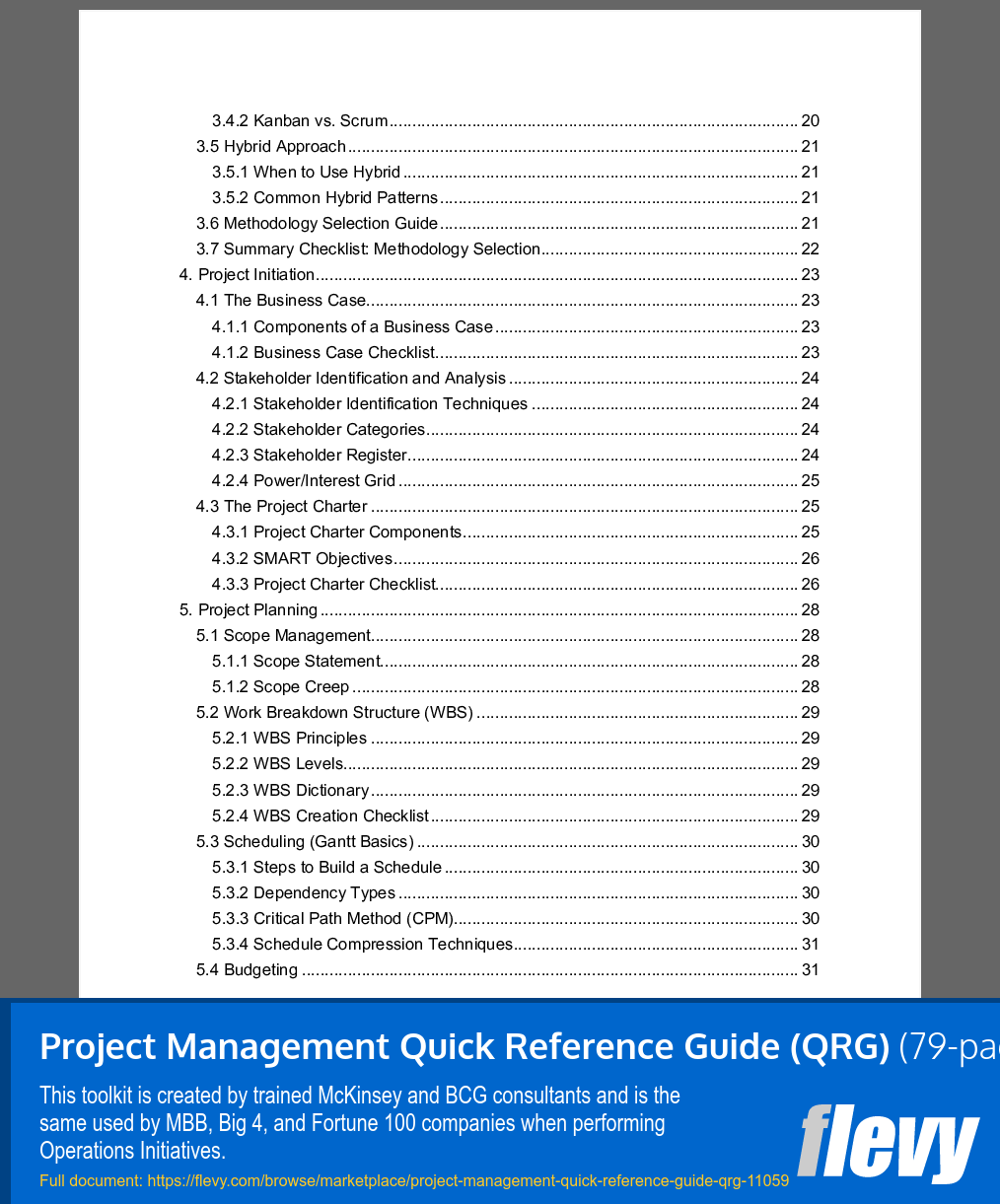
3.4.2 Kanban vs. Scrum
3.5 Hybrid Approach
3.5.1 When to Use Hybrid
3.5.2 Common Hybrid Patterns
3.6 Methodology Selection Guide
3.7 Summary Checklist: Methodology Selection
4. Project Initiation
4.1 The Business Case
4.1.1 Components of a Business Case
4.1.2 Business Case Checklist
4.2 Stakeholder Identification and Analysis
4.2.1 Stakeholder Identification Techniques
4.2.2 Stakeholder Categories
4.2.3 Stakeholder Register
4.2.4 Power/Interest Grid
4.3 The Project Charter
4.3.1 Project Charter Components
4.3.2 SMART Objectives
4.3.3 Project Charter Checklist
5. Project Planning
5.1 Scope Management
5.1.1 Scope Statement
5.1.2 Scope Creep
5.2 Work Breakdown Structure (WBS)
5.2.1 WBS Principles
5.2.2 WBS Levels
5.2.3 WBS Dictionary
5.2.4 WBS Creation Checklist
5.3 Scheduling (Gantt Basics)
5.3.1 Steps to Build a Schedule
5.3.2 Dependency Types
5.3.3 Critical Path Method (CPM)
5.3.4 Schedule Compression Techniques
5.4 Budgeting
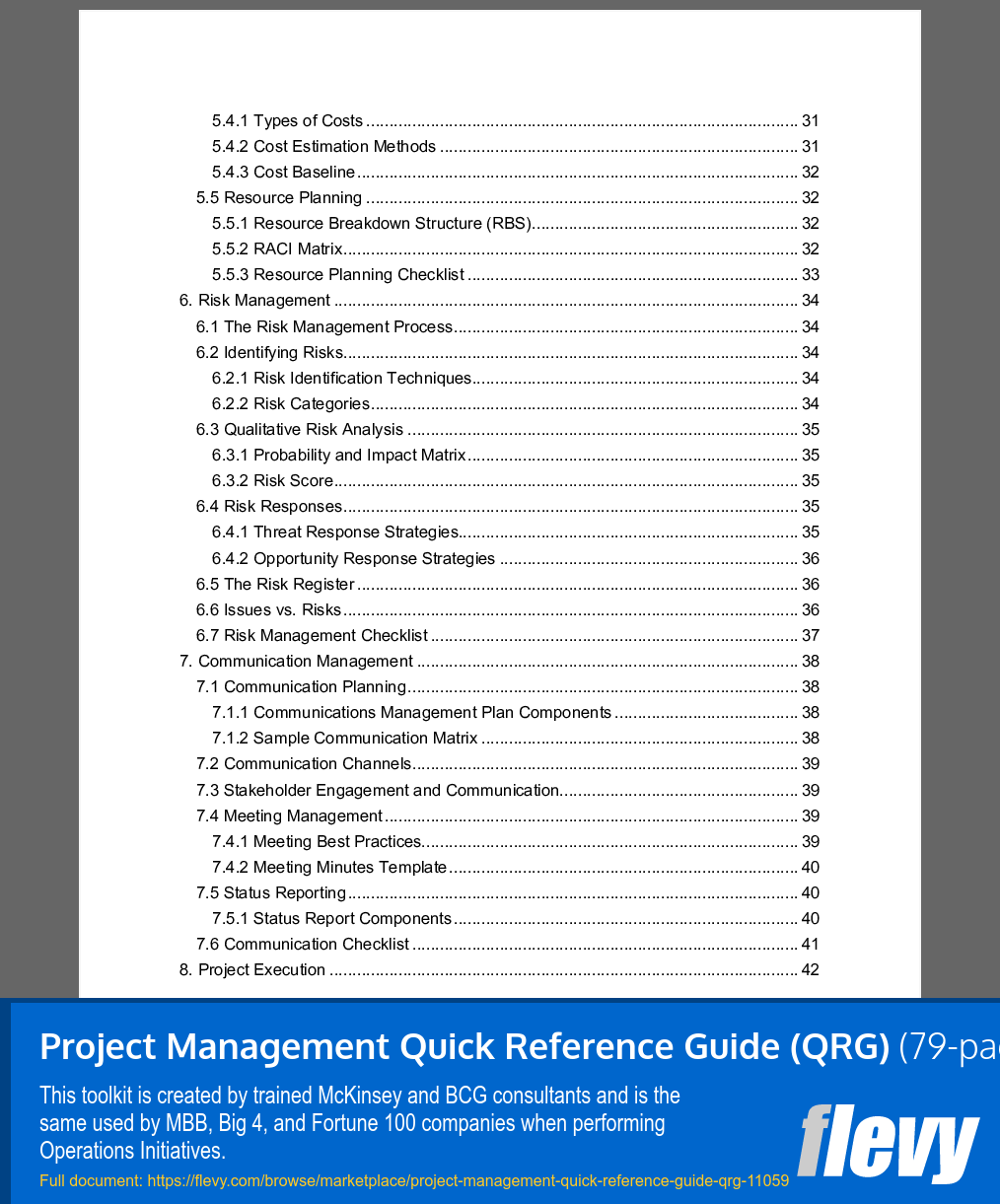
5.4.1 Types of Costs
5.4.2 Cost Estimation Methods
5.4.3 Cost Baseline
5.5 Resource Planning
5.5.1 Resource Breakdown Structure (RBS)
5.5.2 RACI Matrix
5.5.3 Resource Planning Checklist
6. Risk Management
6.1 The Risk Management Process
6.2 Identifying Risks
6.2.1 Risk Identification Techniques
6.2.2 Risk Categories
6.3 Qualitative Risk Analysis
6.3.1 Probability and Impact Matrix
6.3.2 Risk Score
6.4 Risk Responses
6.4.1 Threat Response Strategies
6.4.2 Opportunity Response Strategies
6.5 The Risk Register
6.6 Issues vs. Risks
6.7 Risk Management Checklist
7. Communication Management
7.1 Communication Planning
7.1.1 Communications Management Plan Components
7.1.2 Sample Communication Matrix
7.2 Communication Channels
7.3 Stakeholder Engagement and Communication
7.4 Meeting Management
7.4.1 Meeting Best Practices
7.4.2 Meeting Minutes Template
7.5 Status Reporting
7.5.1 Status Report Components
7.6 Communication Checklist
8. Project Execution
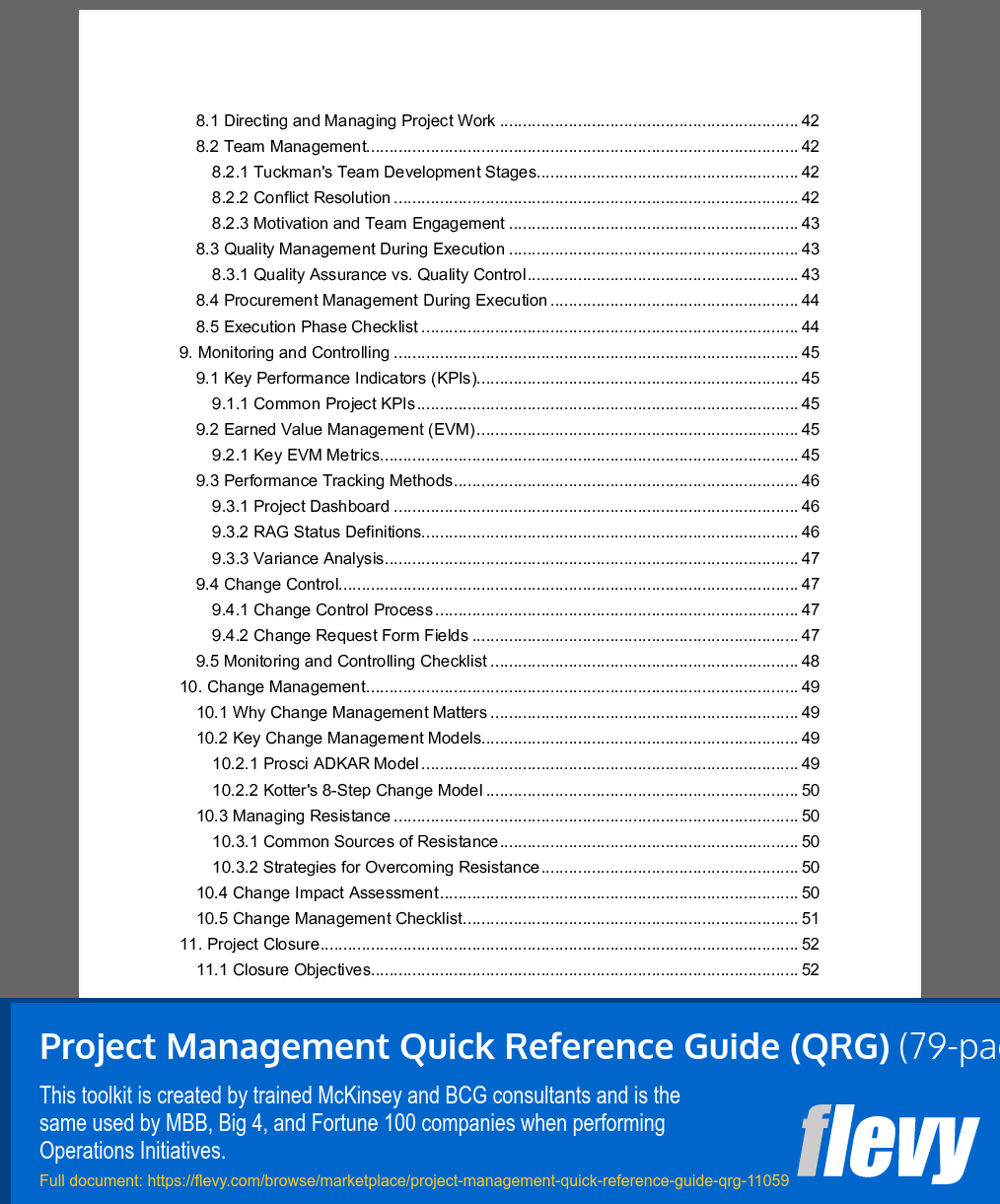
8.1 Directing and Managing Project Work
8.2 Team Management
8.2.1 Tuckman's Team Development Stages
8.2.2 Conflict Resolution
8.2.3 Motivation and Team Engagement
8.3 Quality Management During Execution
8.3.1 Quality Assurance vs. Quality Control
8.4 Procurement Management During Execution
8.5 Execution Phase Checklist
9. Monitoring and Controlling
9.1 Key Performance Indicators (KPIs)
9.1.1 Common Project KPIs
9.2 Earned Value Management (EVM)
9.2.1 Key EVM Metrics
9.3 Performance Tracking Methods
9.3.1 Project Dashboard
9.3.2 RAG Status Definitions
9.3.3 Variance Analysis
9.4 Change Control
9.4.1 Change Control Process
9.4.2 Change Request Form Fields
9.5 Monitoring and Controlling Checklist
10. Change Management
10.1 Why Change Management Matters
10.2 Key Change Management Models
10.2.1 Prosci ADKAR Model
10.2.2 Kotter's 8-Step Change Model
10.3 Managing Resistance
10.3.1 Common Sources of Resistance
10.3.2 Strategies for Overcoming Resistance
10.4 Change Impact Assessment
10.5 Change Management Checklist
11. Project Closure
11.1 Closure Objectives
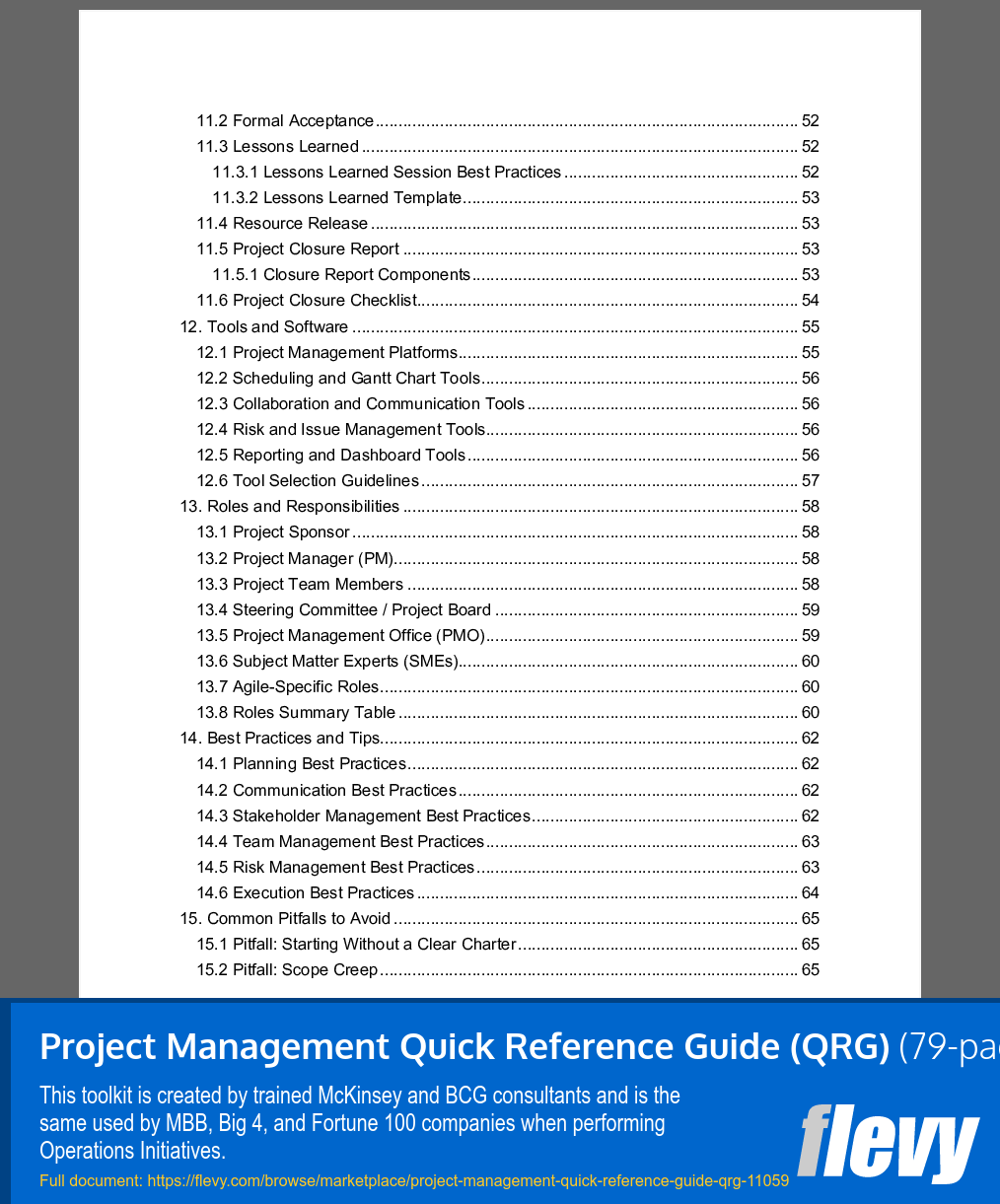
11.2 Formal Acceptance
11.3 Lessons Learned
11.3.1 Lessons Learned Session Best Practices
11.3.2 Lessons Learned Template
11.4 Resource Release
11.5 Project Closure Report
11.5.1 Closure Report Components
11.6 Project Closure Checklist
12. Tools and Software
12.1 Project Management Platforms
12.2 Scheduling and Gantt Chart Tools
12.3 Collaboration and Communication Tools
12.4 Risk and Issue Management Tools
12.5 Reporting and Dashboard Tools
12.6 Tool Selection Guidelines
13. Roles and Responsibilities
13.1 Project Sponsor
13.2 Project Manager (PM)
13.3 Project Team Members
13.4 Steering Committee / Project Board
13.5 Project Management Office (PMO)
13.6 Subject Matter Experts (SMEs)
13.7 Agile-Specific Roles
13.8 Roles Summary Table
14. Best Practices and Tips
14.1 Planning Best Practices
14.2 Communication Best Practices
14.3 Stakeholder Management Best Practices
14.4 Team Management Best Practices
14.5 Risk Management Best Practices
14.6 Execution Best Practices
15. Common Pitfalls to Avoid
15.1 Starting Without a Clear Charter
15.2 Scope Creep
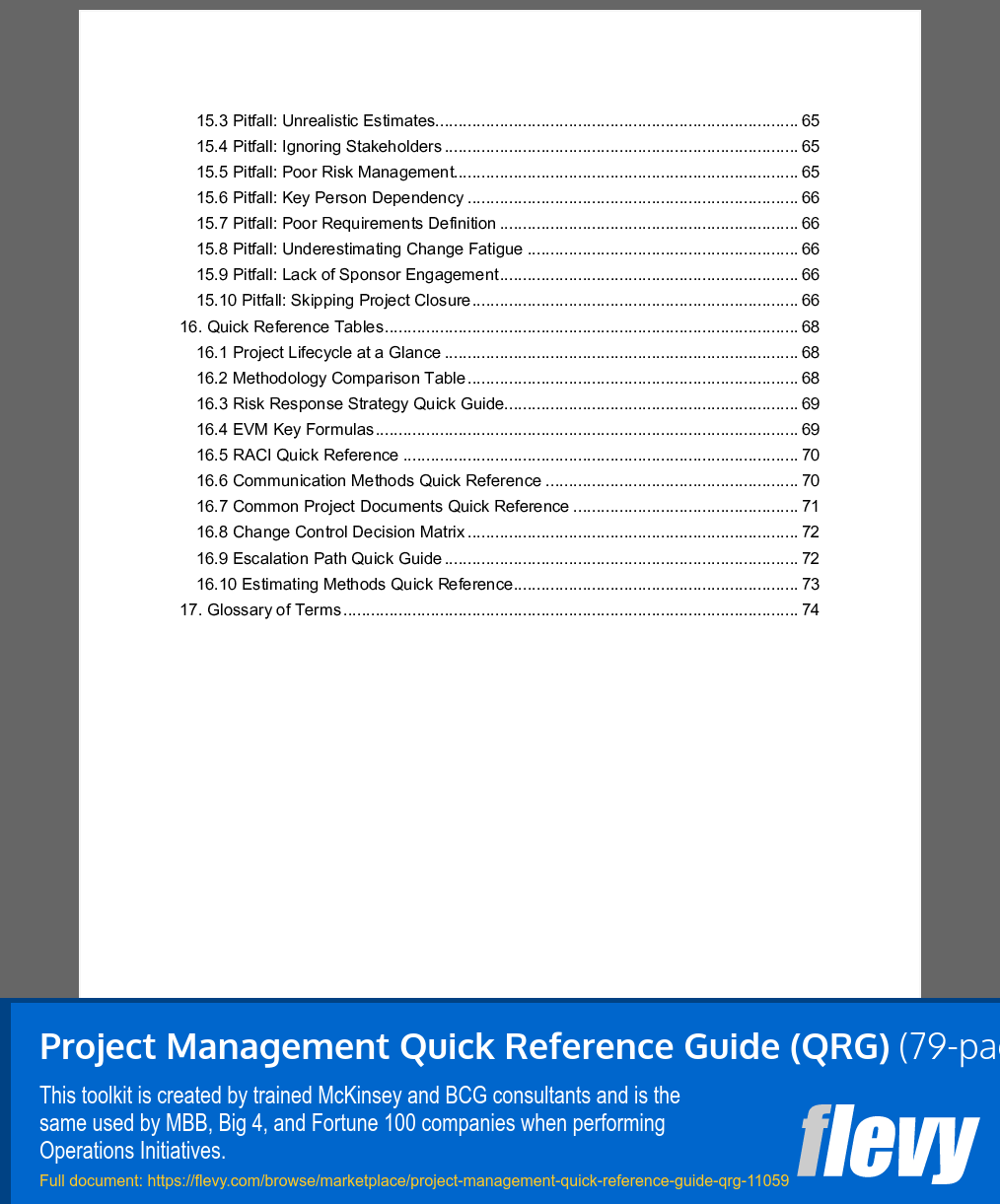
15.3 Unrealistic Estimates
15.4 Ignoring Stakeholders
15.5 Poor Risk Management
15.6 Key Person Dependency
15.7 Poor Requirements Definition
15.8 Underestimating Change Fatigue
15.9 Lack of Sponsor Engagement
15.10 Skipping Project Closure
16. Quick Reference Tables
16.1 Project Lifecycle at a Glance
16.2 Methodology Comparison Table
16.3 Risk Response Strategy Quick Guide
16.4 EVM Key Formulas
16.5 RACI Quick Reference
16.6 Communication Methods Quick Reference
16.7 Common Project Documents Quick Reference
16.8 Change Control Decision Matrix
16.9 Escalation Path Quick Guide
16.10 Estimating Methods Quick Reference
17. Glossary of Terms
🔥 This Isn't Optional—It's Your Competitive Edge
Every successful project manager has one thing in common:
They don't rely on memory—they rely on systems.
This QRG becomes your:
• Daily execution guide
• Meeting prep weapon
• Stakeholder confidence booster
• Career acceleration tool
💰 The Bottom Line
If you manage projects—even occasionally—this guide will:
• Save you hours every week
• Prevent costly mistakes
• Help you deliver consistently
• Position you as the go-to expert
👉 Get It Now & Start Running Projects Like a Top 1% PM
Don't waste another project learning the hard way.
Grab your Project Management QRG today and turn complexity into clarity—instantly.
Key Words:
Strategy & Transformation, Growth Strategy, Strategic Planning, Strategy Frameworks, Innovation Management, Pricing Strategy, Core Competencies, Strategy Development, Business Transformation, Marketing Plan Development, Product Strategy, Breakout Strategy, Competitive Advantage, Mission, Vision, Values, Strategy Deployment & Execution, Innovation, Vision Statement, Core Competencies Analysis, Corporate Strategy, Product Launch Strategy, BMI, Blue Ocean Strategy, Breakthrough Strategy, Business Model Innovation, Business Strategy Example, Corporate Transformation, Critical Success Factors, Customer Segmentation, Customer Value Proposition, Distinctive Capabilities, Enterprise Performance Management, KPI, Key Performance Indicators, Market Analysis, Market Entry Example, Market Entry Plan, Market Intelligence, Market Research, Market Segmentation, Market Sizing, Marketing, Michael Porter's Value Chain, Organizational Transformation, Performance Management, Performance Measurement, Platform Strategy, Product Go-to-Market Strategy, Reorganization, Restructuring, SWOT, SWOT Analysis, Service 4.0, Service Strategy, Service Transformation, Strategic Analysis, Strategic Plan Example, Strategy Deployment, Strategy Execution, Strategy Frameworks Compilation, Strategy Methodologies, Strategy Report Example, Value Chain, Value Chain Analysis, Value Innovation, Value Proposition, Vision Statement, Corporate Strategy, Business Development, Business plan pdf, business plan, PDF, Business Plan DOC, Business Plan Template, PPT, Market strategy playbook, strategic market planning, competitive analysis tools, market segmentation frameworks, growth strategy templates, product positioning strategy, market execution toolkit, strategic alignment playbook, KPI and OKR frameworks, business growth strategy guide, cross-functional strategy templates, market risk management, market strategy PowerPoint doc, guide, ebook, e-book ,McKinsey Change Playbook, Organizational change management toolkit, Change management frameworks 2025, Influence model for change, Change leadership strategies, Behavioral change in organizations, Change management PowerPoint templates, Transformational leadership in change, supply chain KPIs, supply chain KPI toolkit, supply chain PowerPoint template, logistics KPIs, procurement KPIs, inventory management KPIs, supply chain performance metrics, manufacturing KPIs, supply chain dashboard, supply chain strategy KPIs, reverse logistics KPIs, sustainability KPIs in supply chain, financial supply chain KPIs, warehouse KPIs, digital supply chain KPIs, 1200 KPIs, supply chain scorecard, KPI examples, supply chain templates, Corporate Finance SOPs, Finance SOP Excel Template, CFO Toolkit, Finance Department Procedures, Financial Planning SOPs, Treasury SOPs, Accounts Payable SOPs, Accounts Receivable SOPs, General Ledger SOPs, Accounting Policies Template, Internal Controls SOPs, Finance Process Standardization, Finance Operating Procedures, Finance Department Excel Template, FP&A Process Documentation, Corporate Finance Template, Finance SOP Toolkit, CFO Process Templates, Accounting SOP Package, Tax Compliance SOPs, Financial Risk Management Procedures.
NOTE: Our digital products are sold on an "as is" basis, making returns and refunds unavailable post-download. Please preview and inquire before purchasing. Please contact us before purchasing if you have any questions! This policy aligns with the standard Flevy Terms of Usage.
Got a question about the product? Email us at support@flevy.com or ask the author directly by using the "Ask the Author a Question" form. If you cannot view the preview above this document description, go here to view the large preview instead.
Source: Best Practices in Project Management Word: Project Management Quick Reference Guide (QRG) Word (DOCX) Document, SB Consulting
ABOUT THE AUTHOR
SB Consulting is dedicated to empowering businesses to communicate their ideas with impact. This consulting firm specializes in teaching organizations how to create effective corporate and management presentations. With training from top-tier global consulting firms, including McKinsey, BCG, and Porsche Consulting, extensive expertise in presentation design and ... [read more]
Ask the Author a Question
You must be logged in to contact the author.




























