

 Click main image to view in full screen. Unlock all 19 preview images:
Predictive Weather Infrastructure Shift – PDF
PDF document 21 Pages


BENEFITS OF THIS DOWNLOADABLE PDF DOCUMENT
- Provides a strategic framework for understanding how AI-driven weather intelligence can reshape operational decision-making across weather-sensitive industries.
- Translates advances in AI weather forecasting into practical architectures for risk management, optimization, resilience, and physical-world operations.
- Helps executives identify where faster, more granular, and probabilistic weather intelligence can create economic value and where organizational capability must evolve.
ARTIFICIAL INTELLIGENCE PDF DESCRIPTION
The Predictive Weather Infrastructure Shift™ is a strategic intelligence asset examining how advances in AI-based weather forecasting are transforming weather from a periodic information product into continuously refreshed decision infrastructure for the physical economy.
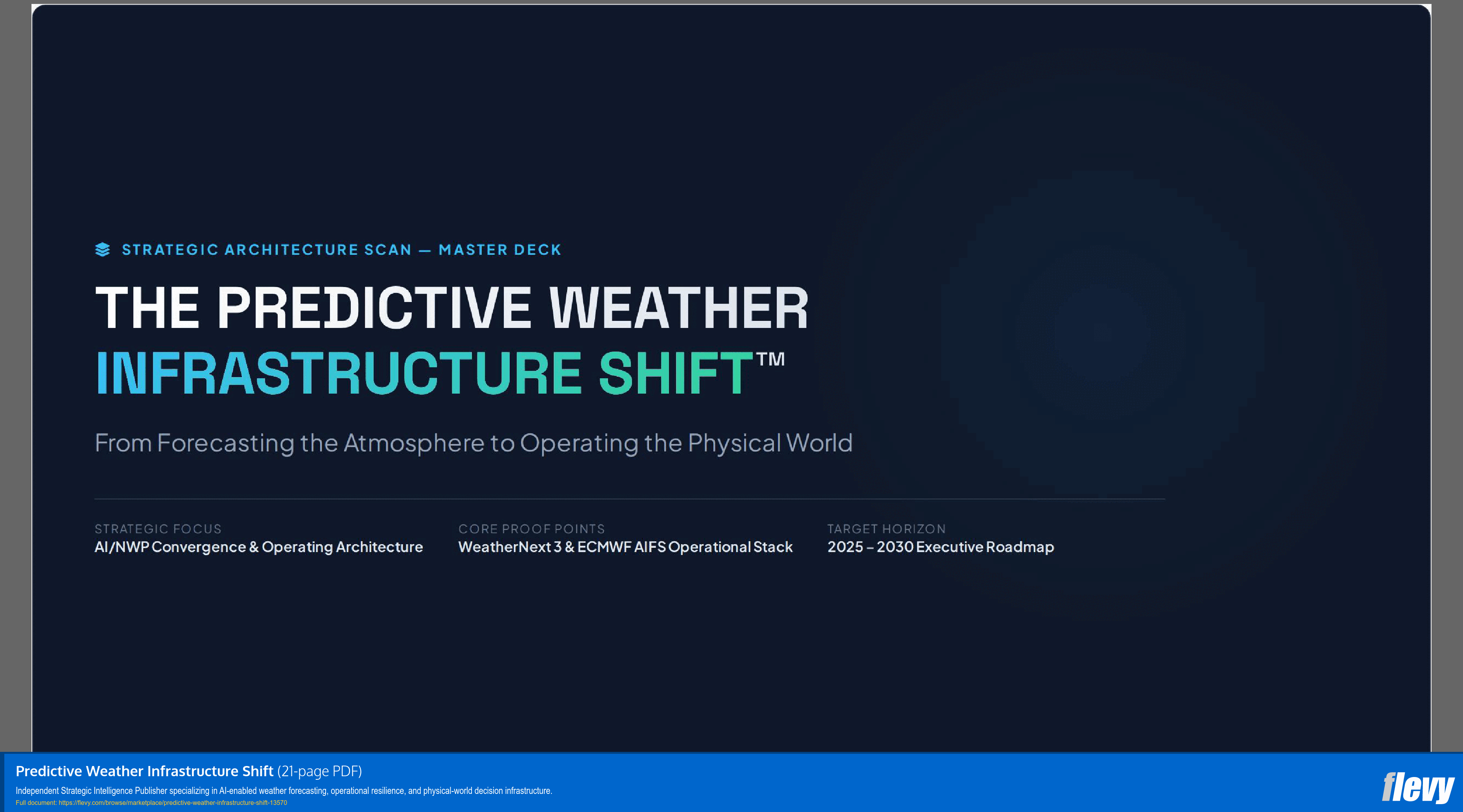
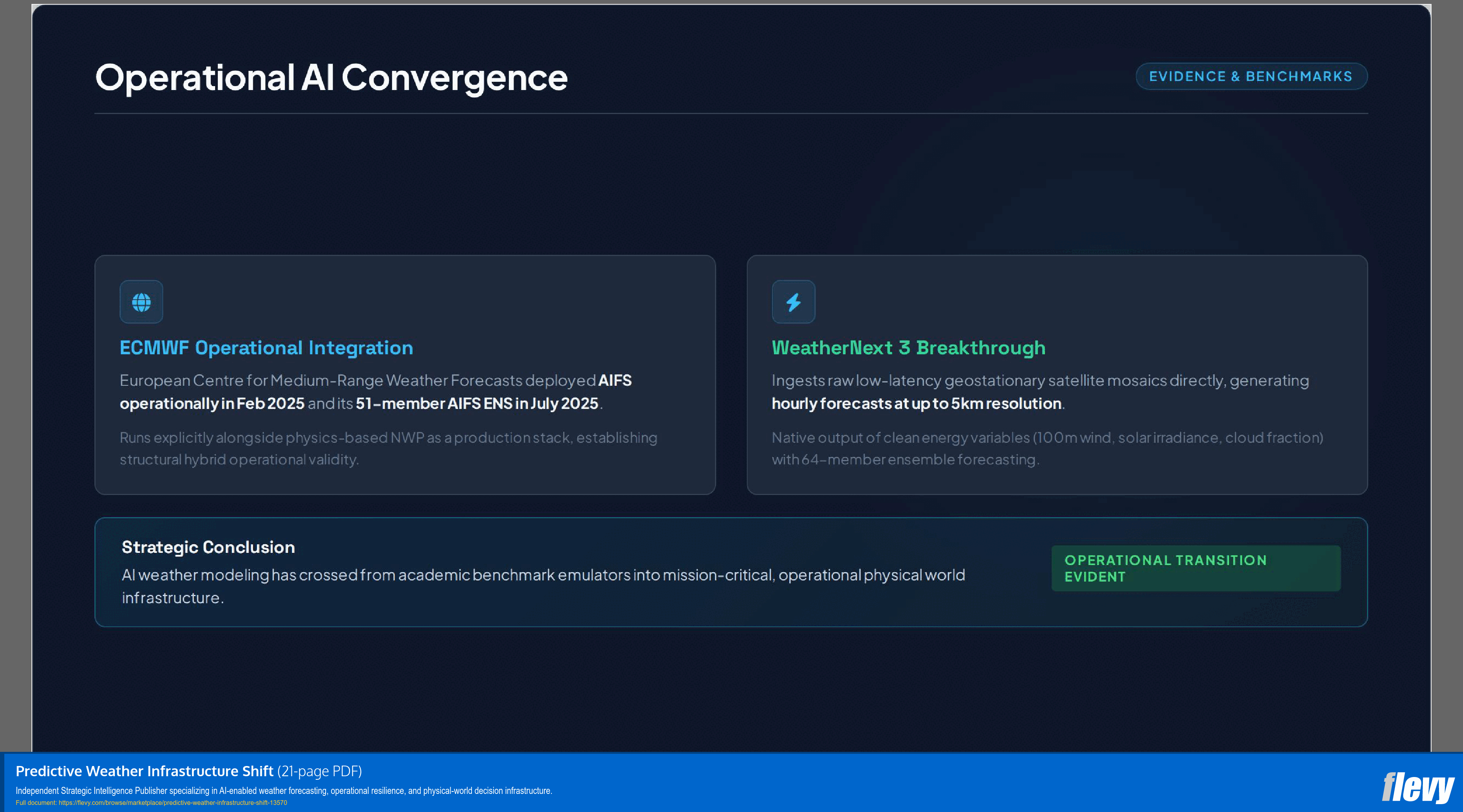
The intelligence examines the convergence of AI weather models, live observation feeds, probabilistic ensembles, higher-resolution forecasting, sector-specific variables, and increasingly integrated decision systems. It uses operational developments from ECMWF's AI Forecasting System and Google's WeatherNext 3 as core evidence points for a broader industry transition rather than treating either technology as the subject of the analysis.
Inside, executives will find:
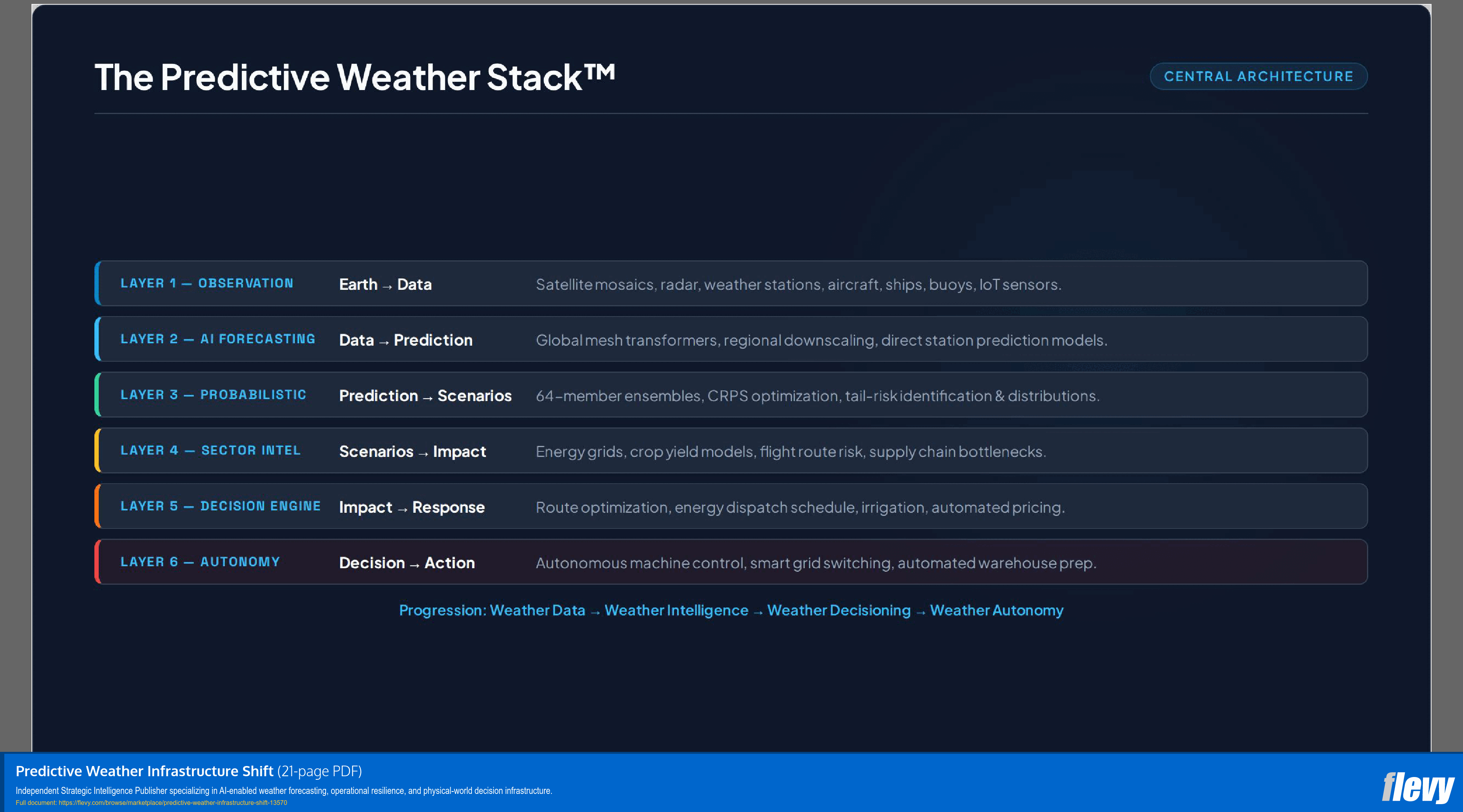
• The Predictive Weather Stack™ – a six-layer architecture spanning observation, AI forecasting, probabilistic intelligence, sector intelligence, decision engines, and physical-world action.
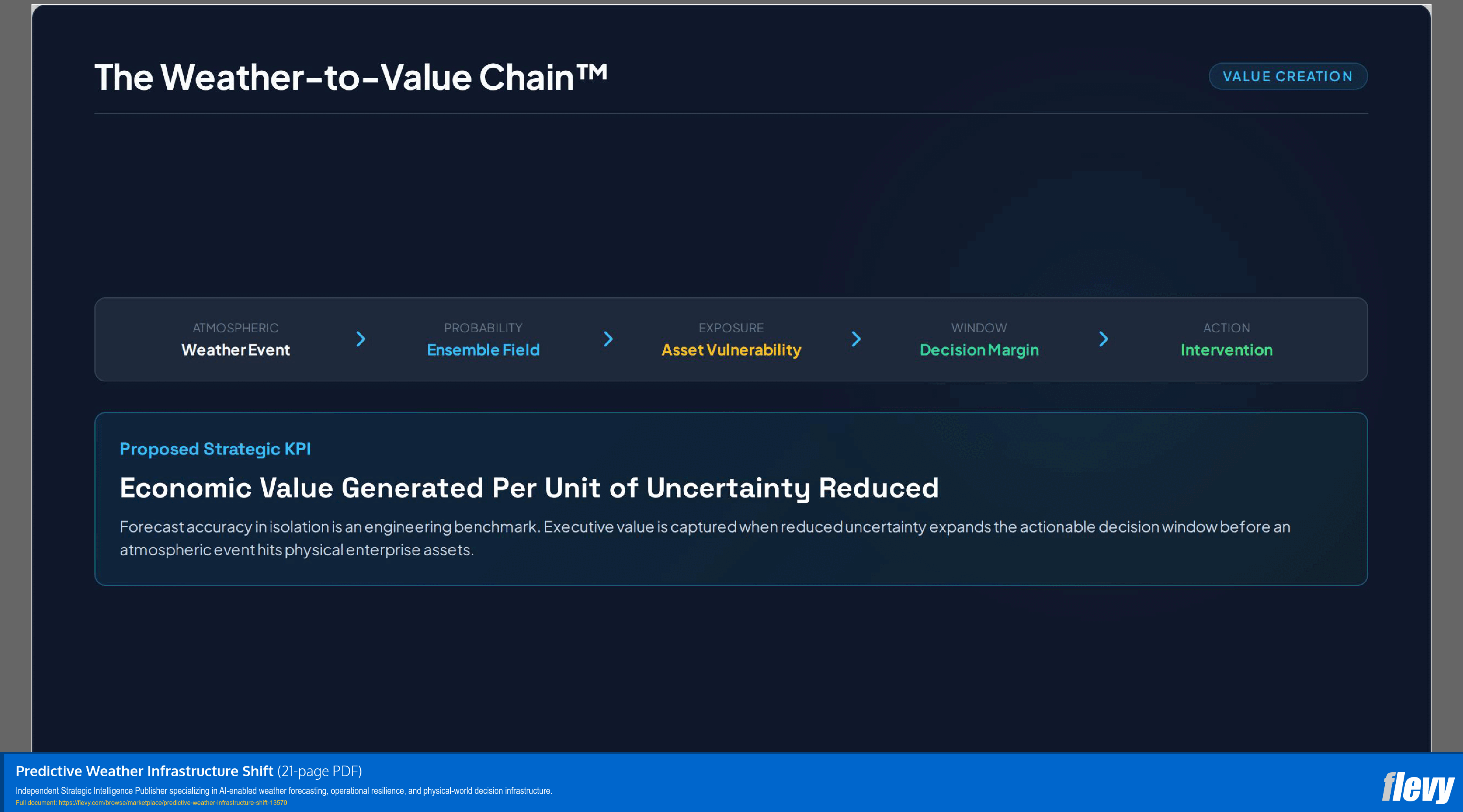
• The Weather-to-Value Chain™ – a framework connecting atmospheric events to ensemble probability fields, asset vulnerability, decision margins, intervention, and economic value.
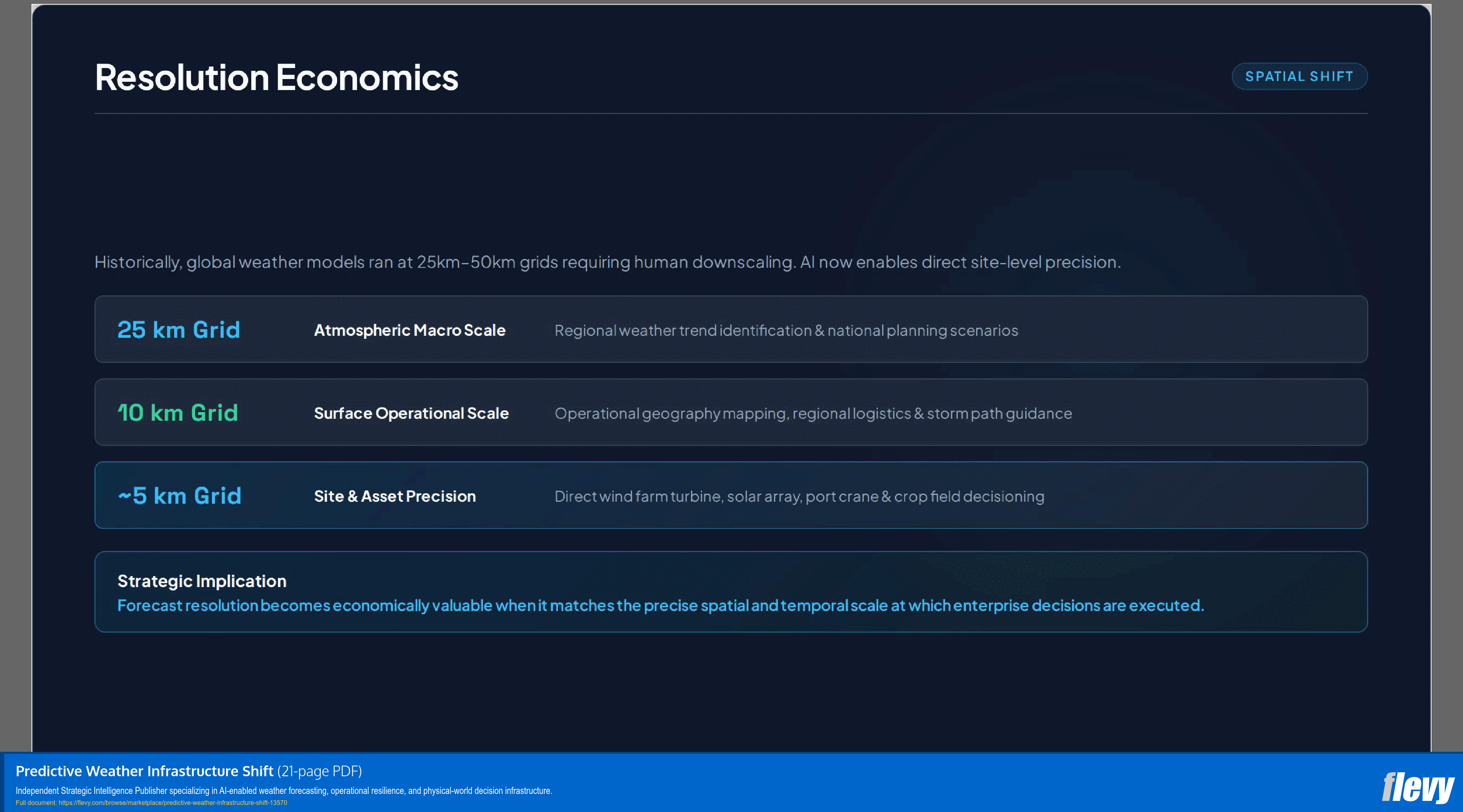
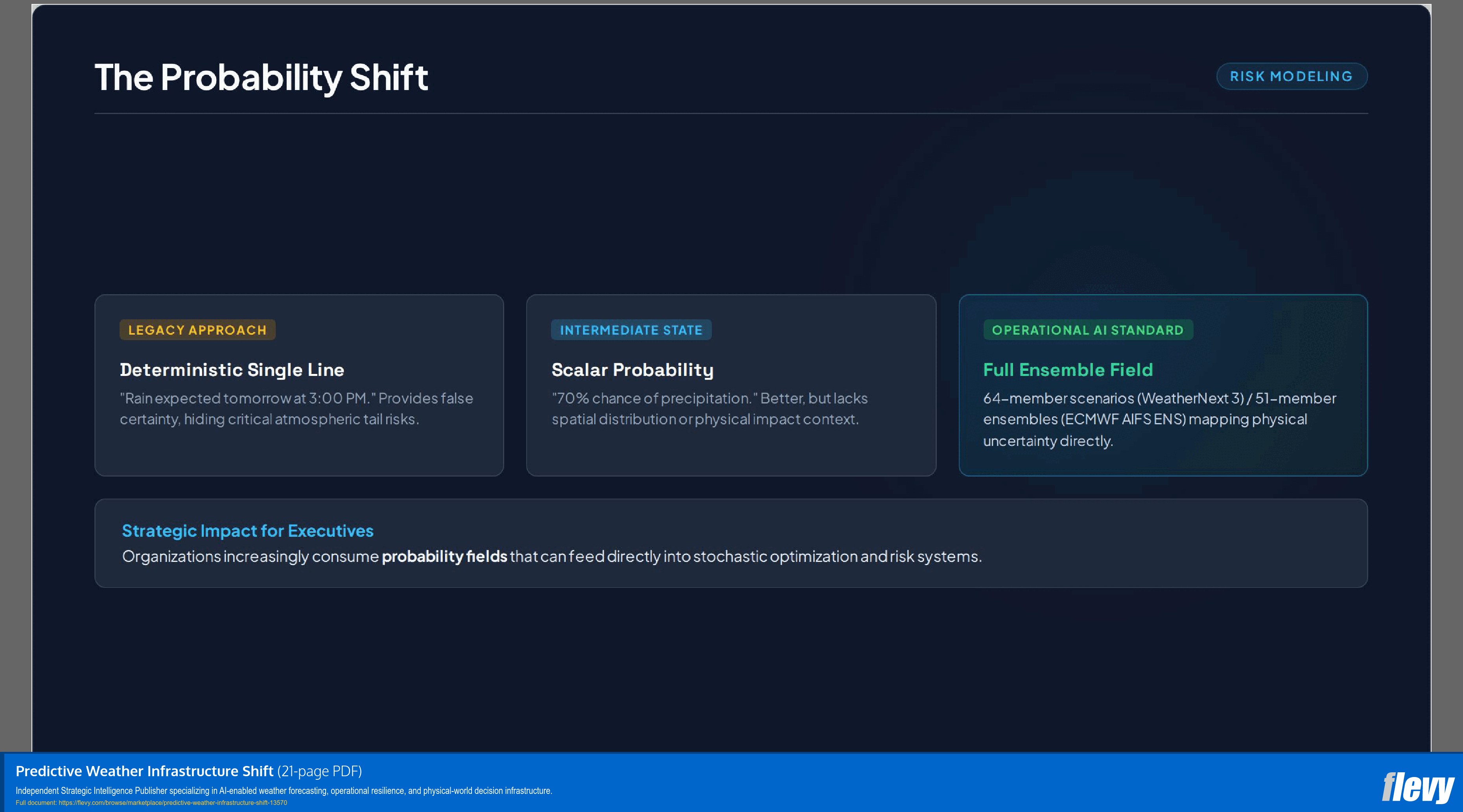
• The Resolution Economics, Compute Economics, and Probability Shift analyses – showing why spatial precision, forecasting speed, refresh frequency, and uncertainty representation increasingly matter to operational decision-making.
• The Weather → Decision Loop – a system architecture connecting continuous observation and sensing with AI ensemble inference, sector exposure, optimization, operational execution, and feedback.
• The economic value map – identifying five mechanisms through which weather intelligence can create value: loss avoidance, productivity improvement, asset utilization, resource efficiency, and market arbitrage.
• Energy as a leading case, demonstrating how weather intelligence can become an operating input to renewable generation forecasting, grid balancing, storage dispatch, and power-market optimization.
• The Structural Transition – comparing traditional numerical weather prediction, emerging AI-hybrid systems, and the future trajectory toward increasingly autonomous environmental response.
• The Hybridization Principle – explaining why the future is not AI versus physics, but AI combined with atmospheric physics, live observations, and decision engines.
• Weather Intelligence Absorption Capacity™ – the signature strategic insight that identifies organizational capacity to absorb and act on increasingly abundant weather intelligence as an emerging competitive capability.
The intelligence concludes that competitive advantage is migrating from access to weather information toward the ability to convert weather uncertainty into superior operational decisions. It provides executives with a practical framework for identifying weather-sensitive exposure, assessing integration gaps, building probabilistic decision capabilities, and preparing for increasingly adaptive physical-world operations.
Got a question about the product? Email us at support@flevy.com or ask the author directly by using the "Ask the Author a Question" form. If you cannot view the preview above this document description, go here to view the large preview instead.
Source: Best Practices in Artificial Intelligence, Energy Industry PDF: Predictive Weather Infrastructure Shift PDF (PDF) Document, Wisnu Pandega Wardana
ABOUT THE AUTHOR

I am an independent Industrial Intelligence and Strategic Innovation Publisher focused on developing structured business intelligence, innovation frameworks, and opportunity-oriented research for decision-makers.
My work focuses on translating emerging technologies, industrial transformation, sustainability, resource efficiency, and market shifts into structured intelligence assets that
... [read more]
Ask the Author a Question
You must be logged in to contact the author.




























