
 Click main image to view in full screen. Unlock all 13 preview images:
Post-OBBBA 48E and ITC Monetization Model – Excel XLSX
Excel (XLSX) + supplemental PDF


BENEFITS OF THIS DOWNLOADABLE EXCEL DOCUMENT
- Integrates BOC, FEOC/MACR, technology and adders eligibility with the actual §48E credit and project-return calculations.
- Compares tax equity, §6418 transfer and §6417 elective payment using consistent credit values, timing and transaction costs.
- Strengthens decision-making through recapture analysis, sensitivities, dashboards, audit controls and a primary-source assumptions log.
INTEGRATED FINANCIAL MODEL EXCEL DESCRIPTION
⚡ Post-OBBBA Safe Harbour, FEOC & ITC Transfer Model
Integrated §48E eligibility, credit sizing, monetization and risk-allocation framework for U.S. clean-energy projects
The Post-OBBBA Safe Harbour, FEOC & ITC Transfer Model is an advanced Excel framework for evaluating whether a U.S. clean-energy project qualifies for the Clean Electricity Investment Credit and how the resulting credit may be monetized.
The model connects project technology, construction timing, placed-in-service requirements, component sourcing, prohibited foreign entity exposure, credit adders and transaction assumptions to project cash flows, sponsor returns and route-selection analysis.
It is designed for:
Renewable-energy developers and sponsors.
Solar, wind and battery-storage project teams.
Tax-equity investors and credit buyers.
Infrastructure and energy-transition funds.
Project-finance lenders.
Transaction advisers and consultants.
Corporate finance and investment teams.
Legal, tax and accounting teams using a supporting analytical model.
🎯 What can the model be used for?
Assess construction-start qualification under the applicable beginning-of-construction rules.
Compare the Physical Work Test with a conditionally available 5% safe-harbour route.
Track continuous construction and placed-in-service deadlines.
Separate the compressed solar/wind timeline from storage eligibility and phase-down mechanics.
Analyse supplier and component exposure under FEOC/MACR requirements.
Apply an eligibility switch when construction, sourcing or entity gates fail.
Calculate the §48E base or alternative rate and applicable bonus adders.
Compare tax-equity partnership flip, §6418 transfer and §6417 elective-payment economics.
Model transfer discounts, fees, timing delays and net proceeds.
Evaluate ITC recapture, indemnity, insurance and retained-risk costs.
Forecast project operating cash flows, debt service, DSCR, IRR and NPV.
Run base, upside, downside, FEOC-failure and deadline-miss scenarios.
Present results through executive and risk dashboards.
Maintain a traceable source and assumption register.
🧭 Deadline-driven project and technology selector
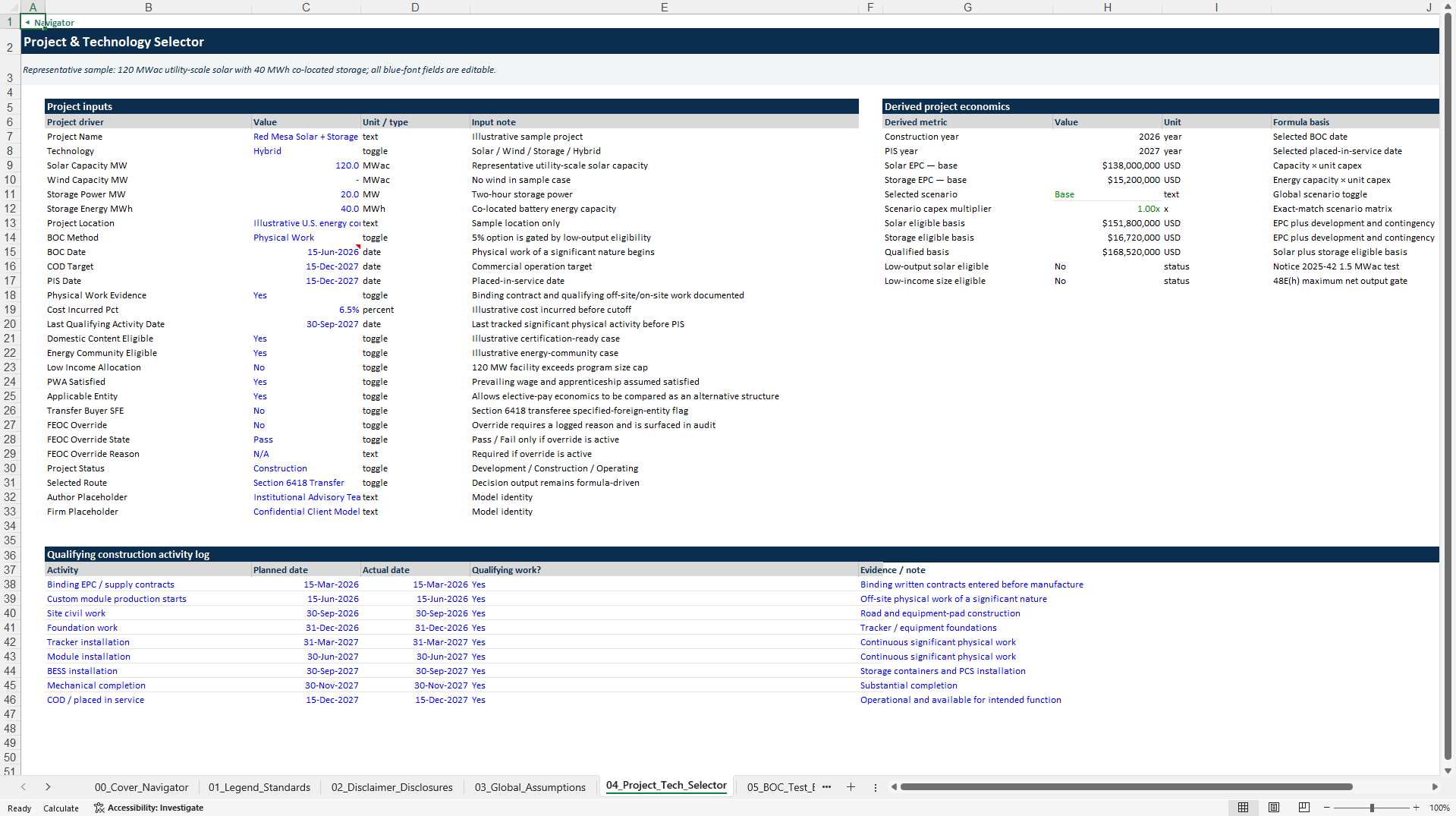
The Project and Technology Selector centralises the inputs that determine the project's tax-credit and monetization pathways.
Users can configure:
Project name and status.
Solar, wind, storage or hybrid technology.
Solar and wind capacity.
Storage power and energy capacity.
Project location.
Beginning-of-construction method and date.
Commercial-operation and placed-in-service dates.
Physical-work evidence.
Cost incurred before the applicable date.
Domestic-content and energy-community eligibility.
Low-income allocation.
Prevailing-wage and apprenticeship compliance.
Applicable-entity status.
Transfer-buyer foreign-entity status.
FEOC override controls and supporting reason.
Selected monetization route.
The workbook also contains a qualifying construction-activity log for contracts, manufacturing, civil work, foundations, installation, mechanical completion and commercial operation.
🏗️ Beginning-of-construction test engine
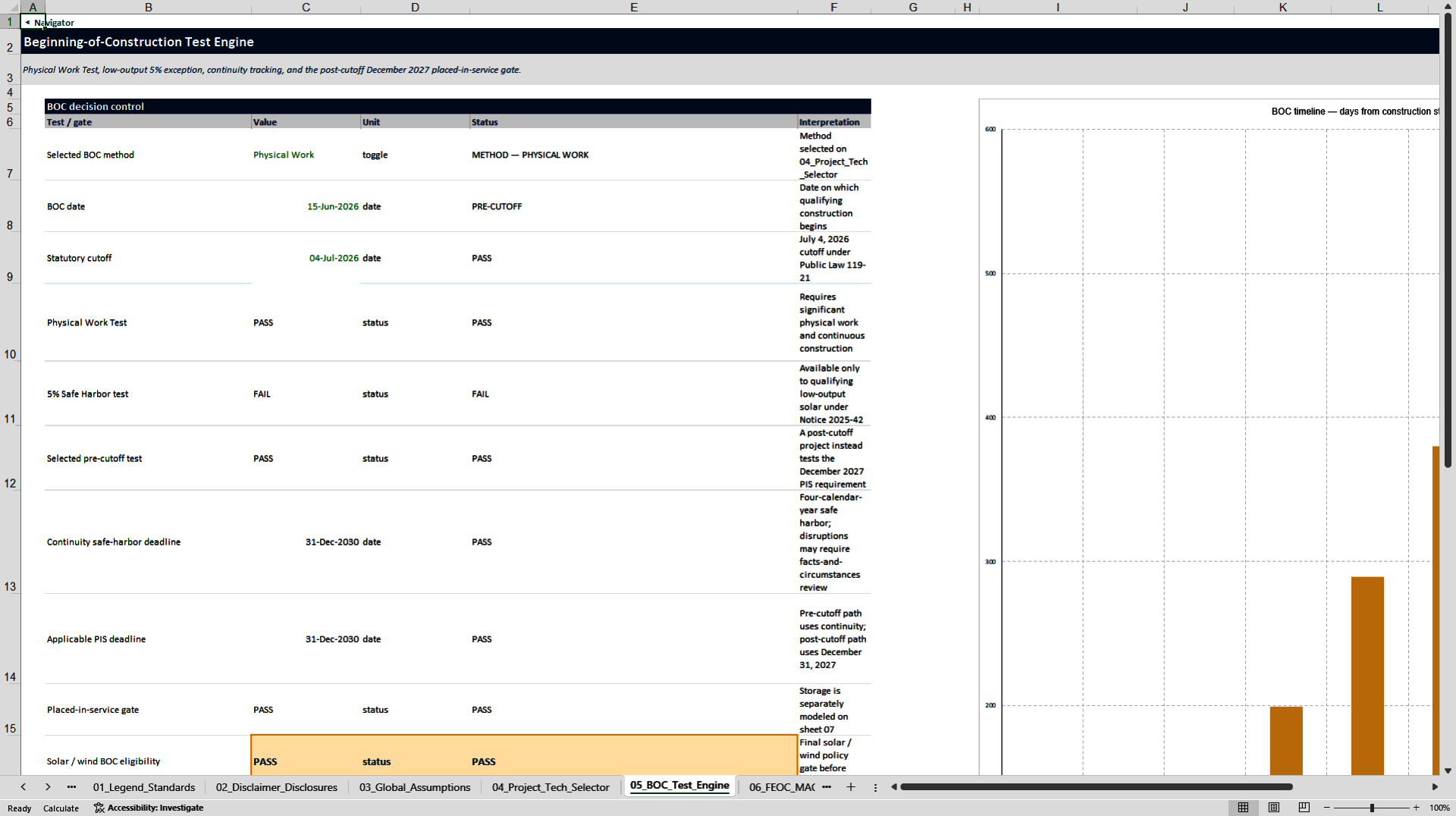
The BOC engine translates project dates and evidence into a visible decision framework.
It evaluates:
Selected construction-start method.
Construction-start date relative to the statutory cutoff.
Physical Work Test status.
Conditional 5% Safe Harbor eligibility.
Low-output solar exception.
Continuous construction requirement.
Four-calendar-year continuity safe harbour.
Significant activity gaps.
Applicable placed-in-service deadline.
Solar/wind eligibility switch.
Post-cutoff compressed placed-in-service pathway.
Storage treatment on the separate technology-divergence module.
Under current IRS Notice 2025-42, the Physical Work Test is generally the applicable method for determining whether wind and solar construction began before July 5, 2026, while the Five Percent Safe Harbor is limited to specified low-output solar facilities. The model reflects this distinction instead of treating both methods as universally interchangeable.
All outputs remain analytical and must be reviewed against the latest statutes, IRS guidance and transaction facts.
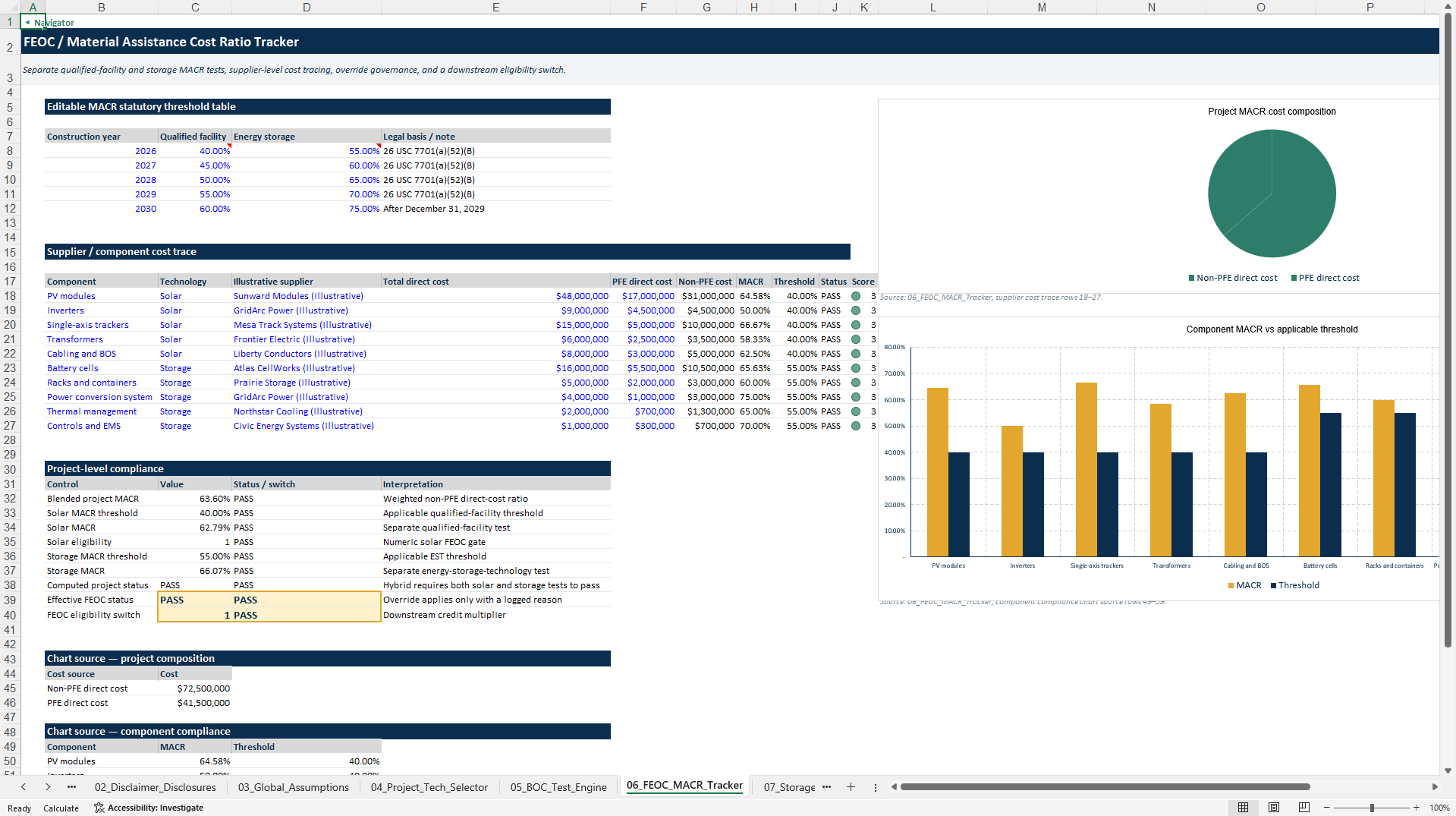
🔗 FEOC and Material Assistance Cost Ratio tracker
The FEOC/MACR module tracks equipment and component sourcing at the supplier level.
Users can review:
Component category.
Supplier name and country.
Total direct cost.
PFE- or FEOC-attributable cost.
Non-PFE cost.
Applicable MACR category.
Required threshold.
Calculated cost ratio.
Threshold buffer.
Component status.
Technology-level eligibility.
The model aggregates component information into solar, wind and storage eligibility gates and applies pass/fail switches to the credit calculation and monetization outputs.
The tracker is particularly valuable for teams that need to understand how sourcing decisions may affect credit eligibility, project economics and transaction execution.
🔋 Solar, wind and storage divergence
The workbook separates the treatment of storage from the accelerated wind and solar termination framework.
The technology-divergence module compares:
Construction-start year.
Placed-in-service year.
Solar or wind eligibility.
Storage eligibility.
Applicable storage phase-down year.
Technology-specific credit percentage.
Technology-specific FEOC/MACR gate.
Qualified basis and credit value.
This is important for hybrid solar-plus-storage projects because the solar and storage components may follow different eligibility timelines and credit outcomes.
➕ §48E rate and adders stack
The Adders module develops the headline investment-credit rate through separate, visible components:
Base or alternative rate.
Prevailing-wage and apprenticeship gate.
Domestic-content bonus.
Energy-community bonus.
Low-income communities bonus where applicable.
Project-size and allocation gates.
BOC eligibility.
FEOC/MACR eligibility.
The model calculates credit value separately for solar and storage before consolidating the gross ITC amount used by every monetization route.
This prevents the tax-equity, transfer and elective-payment modules from using inconsistent credit values.
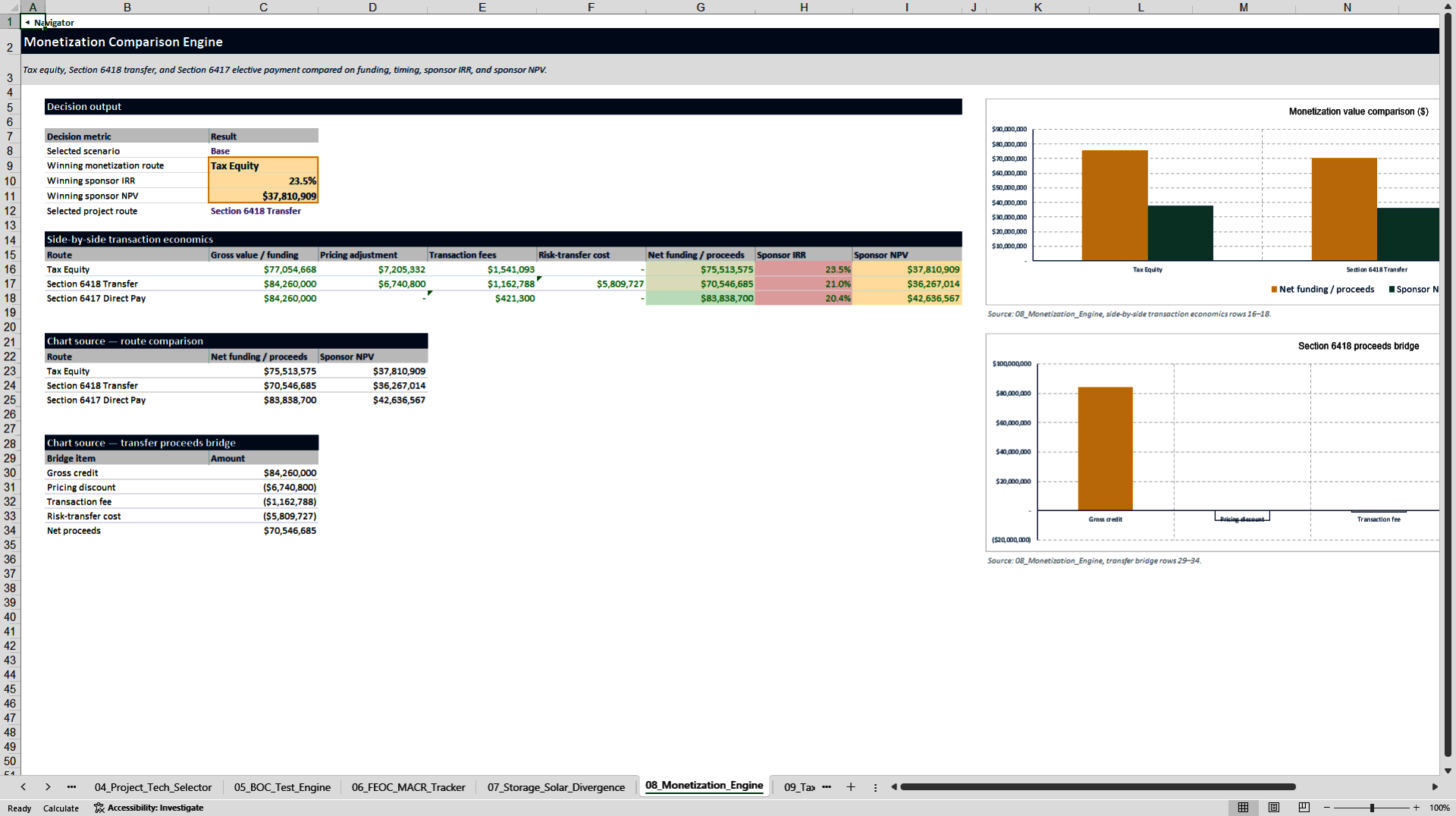
💰 Monetization comparison engine
The model compares three principal monetization structures:
Tax-equity partnership flip.
§6418 transfer of eligible credits.
§6417 elective payment for eligible applicable entities.
The route comparison includes:
Gross credit value.
Upfront or delayed proceeds.
Transfer discount.
Tax-equity pricing factor.
Transaction and advisory fees.
Insurance and risk-transfer cost.
Timing-adjusted proceeds
Sponsor equity requirement.
Sponsor IRR and NPV.
Route eligibility.
Recommended or winning route.
The model does not assume every project or entity can use every route. Entity, transferee, FEOC, BOC and other eligibility gates feed directly into the comparison.
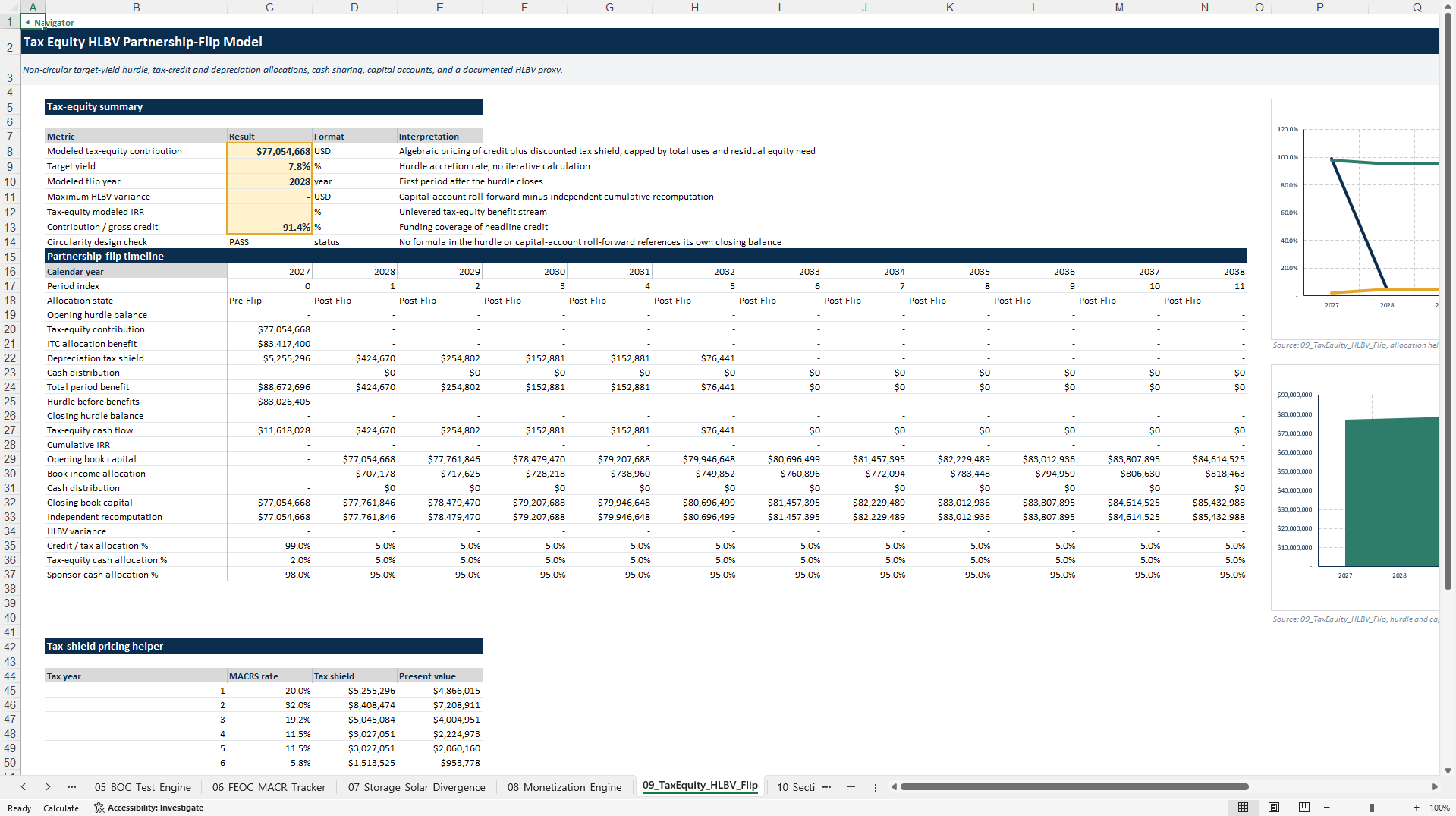
🤝 Tax-equity partnership flip and HLBV
The tax-equity module models a partnership-flip structure with configurable economics.
Inputs and outputs include:
Tax-equity target IRR.
HLBV target yield.
Maximum contribution as a percentage of project uses.
Tax-equity pricing factor.
Pre-flip and post-flip cash shares.
Pre-flip and post-flip credit or tax allocation.
Transaction fee.
Tax-equity contribution.
Annual benefit allocation.
Hurdle accretion.
Flip timing.
Capital-account and HLBV-style allocation support.
Sponsor-retained cash flow.
Tax-equity return metrics.
The module is designed for comparative structuring analysis. It is not a substitute for partnership agreements, tax-basis analysis, capital-account maintenance or transaction-specific HLBV accounting prepared by qualified advisers.
🔄 §6418 credit-transfer analysis
The transfer module evaluates the sale of eligible credits to a third-party buyer.
The analysis includes:
Gross transferable credit.
Transfer price per dollar of credit.
Gross cash proceeds.
Processing and advisory fees.
Insurance and risk-transfer costs.
Payment timing.
Timing-adjusted NPV.
Net transfer proceeds.
Transferor and transferee eligibility gates.
Specified foreign entity restriction for the buyer.
Recapture and indemnity implications.
The transfer price is an editable market assumption and should be updated using current bids, term sheets or market evidence.
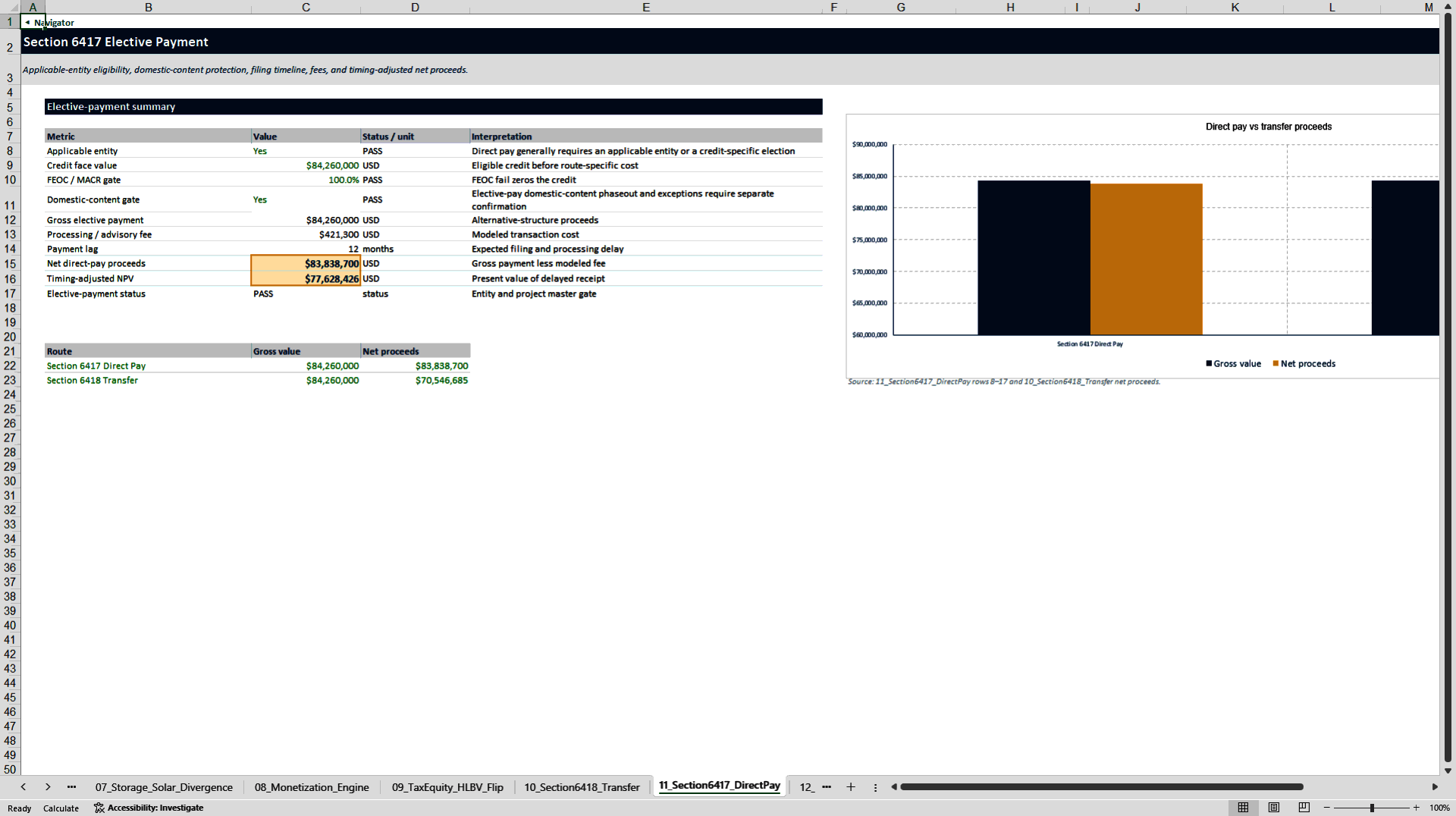
🏛️ §6417 elective-payment analysis
The elective-payment module evaluates direct-pay economics for an eligible applicable entity.
It considers:
Applicable-entity eligibility.
Gross credit amount.
Domestic-content protection or phase-out considerations.
Filing and processing delay.
Advisory or processing fees.
Net elective-payment proceeds.
Timing-adjusted NPV.
Comparison with §6418 transfer proceeds.
The route is automatically gated when the project sponsor does not meet the modelled applicable-entity requirement.
🛡️ Recapture, indemnity and insurance
The model includes a dedicated risk-allocation module for the five-year ITC recapture period.
Users can configure:
Recapture period.
Indemnity cap.
Basket or deductible.
Insured percentage of the credit.
Insurance premium rate.
Retention layer.
Underwriting and advisory cost.
Claims basis.
Recapture trigger.
Indemnity availability.
The module develops:
Declining annual recapture exposure.
Trigger probabilities.
Expected loss.
Indemnifiable exposure.
Insurance premium.
Retention provision.
Expected uninsured loss.
Blended risk-transfer cost.
Risk-transfer cost as a percentage of credit.
Indemnity gap.
The resulting cost feeds into the §6418 transfer economics rather than remaining a disconnected risk schedule.
📈 Project cash flow, debt and returns
The model includes a 20-year project cash-flow and returns engine covering:
Solar generation.
Storage revenue.
PPA pricing and escalation.
Capacity factor and degradation.
Operating and maintenance expenses.
Project capital costs.
Development costs and contingency.
Debt share and interest.
Debt fees and reserves.
Debt service.
DSCR.
Sponsor cash flows.
ITC monetization proceeds.
Sponsor IRR.
Sponsor NPV.
The operating and financing model provides a complete economic context for the tax-credit analysis.
🔍 Scenarios and sensitivities
The model includes the following scenarios:
Base.
Upside.
Downside.
FEOC-Fail.
Deadline-Miss.
Scenario drivers include:
Capital expenditure.
PPA price.
Capacity factor.
O&M cost.
Transfer price.
FEOC eligibility.
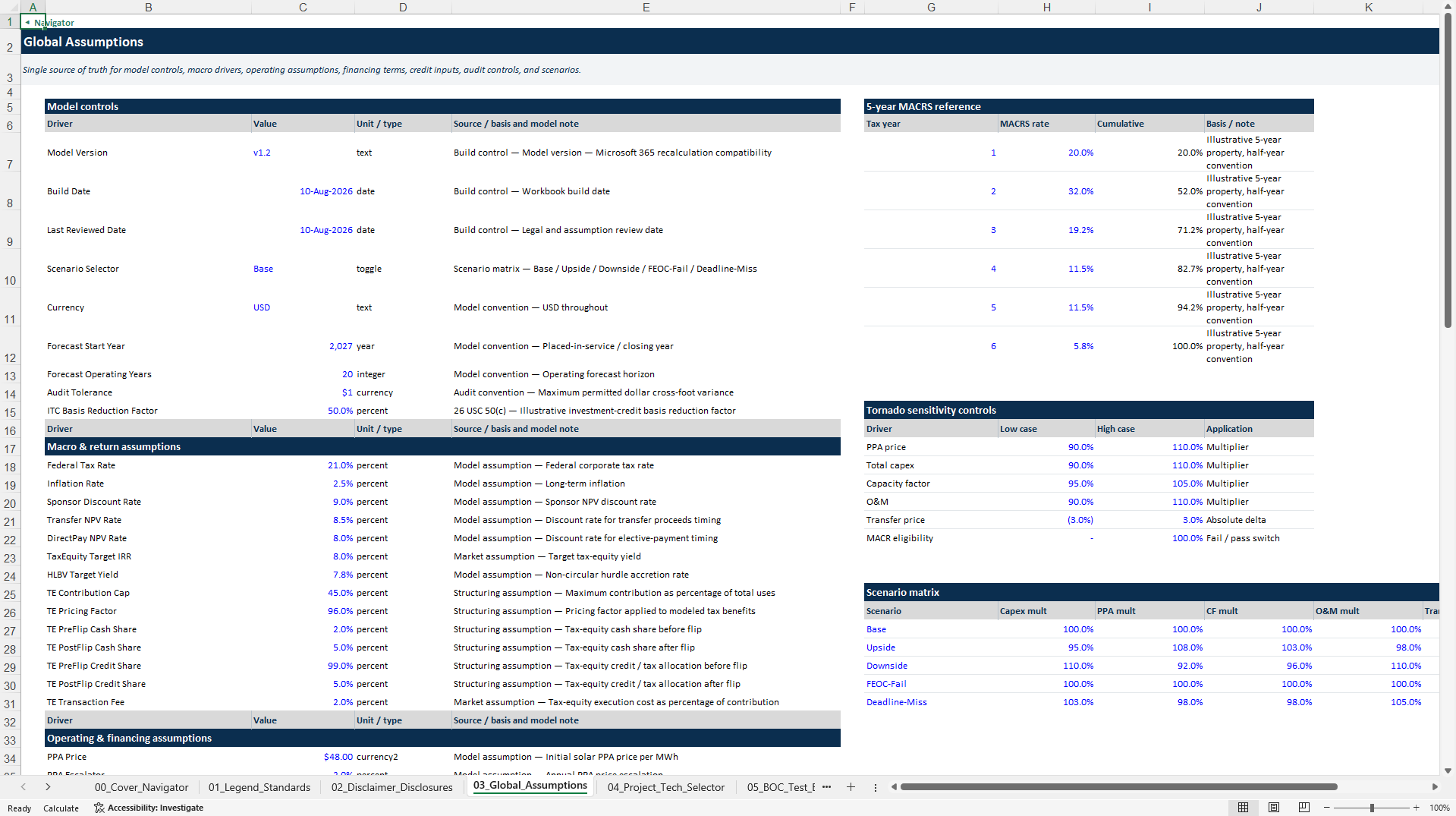
Deadline eligibility.
The sensitivity module also includes tornado analysis and recalculated return comparisons to show which assumptions have the greatest impact on sponsor IRR and NPV.
📊 Executive and risk dashboards
Two dashboard sheets provide decision-ready summaries.
The Executive Dashboard presents:
Winning monetization route.
Sponsor IRR and NPV.
Gross ITC value.
Tax-equity, transfer and direct-pay proceeds.
Project cash flows.
DSCR and debt trends.
Route comparison.
Credit composition.
The Risk Dashboard presents:
FEOC and BOC status.
MACR buffer.
Recapture exposure.
Risk-transfer cost.
Scenario downside.
Sensitivity outputs.
Audit status.
✅ Audit, controls and source register
The model includes an Audit and QA Panel covering formula errors, key reconciliations, eligibility gates, route consistency and model-status reporting.
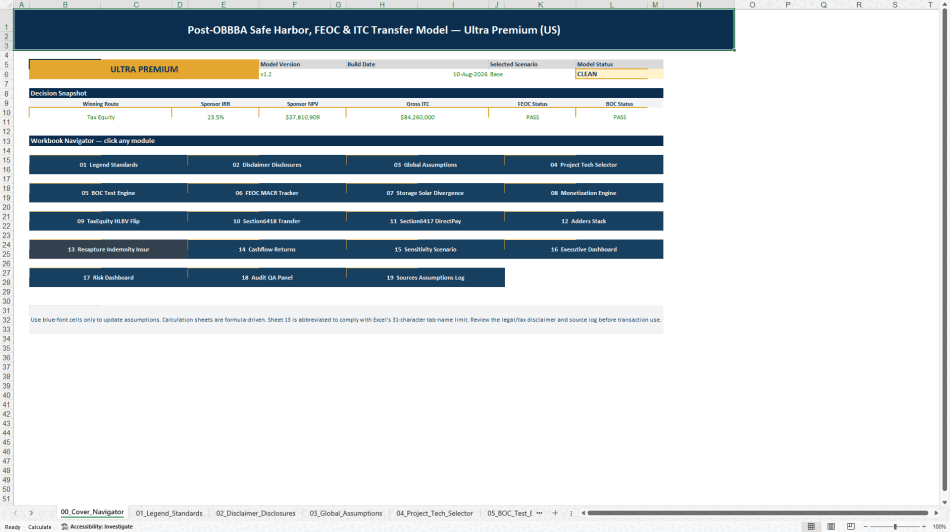
The illustrative workbook currently displays a CLEAN model status with BOC and FEOC gates passing under its sample assumptions.
A separate Sources and Assumptions Log records:
Legal or guidance category.
Modelled rule or driver.
Modelled value.
Unit.
Last-reviewed date.
Source URL.
Basis and audit note.
Primary-source references include the Internal Revenue Code, IRS guidance and other official U.S. government materials. Market and internal modelling assumptions are labelled separately.
🗂️ Workbook structure
The workbook contains 20 worksheets:
Cover & Navigator.
Legend & Standards.
Disclaimer & Disclosures.
Global Assumptions.
Project & Technology Selector.
Beginning-of-Construction Test Engine.
FEOC/MACR Tracker.
Storage/Solar Divergence.
Monetization Engine.
Tax-Equity HLBV Flip.
§6418 Transfer.
§6417 Elective Payment.
Adders Stack.
Recapture, Indemnity & Insurance.
Cash Flow & Returns.
Sensitivity & Scenario Analysis.
Executive Dashboard.
Risk Dashboard.
Audit & QA Panel.
Sources & Assumptions Log.
🧭 How to use the model
Save a working copy and read the disclaimer.
Review the source register and last-reviewed dates.
Update the project technology, capacity, location and schedule.
Enter construction-start evidence and placed-in-service dates.
Populate supplier and component costs in the FEOC/MACR tracker.
Confirm PWA, domestic-content, energy-community and other adders.
Review the solar/wind and storage eligibility results separately.
Update tax-equity, transfer and elective-payment assumptions.
Configure recapture, indemnity and insurance terms.
Review cash flows, DSCR, IRR and NPV.
Run downside, FEOC-failure and deadline-miss scenarios.
Confirm the audit panel reads CLEAN before using the outputs.
Obtain transaction-specific review from qualified tax, legal and accounting advisers.
Got a question about the product? Email us at support@flevy.com or ask the author directly by using the "Ask the Author a Question" form. If you cannot view the preview above this document description, go here to view the large preview instead.
Source: Best Practices in Integrated Financial Model Excel: Post-OBBBA 48E and ITC Monetization Model Excel (XLSX) Spreadsheet, PDMM Financial Models
ABOUT THE AUTHOR

PDMM Financial Models develops professional, decision-ready Excel models for business owners, entrepreneurs, investors, consultants, analysts, and finance teams. Our objective is to transform complex business assumptions into clear, structured analysis that supports better planning and investment decisions.
Our models cover business planning, forecasting, budgeting, feasibility analysis,
... [read more]
Ask the Author a Question
You must be logged in to contact the author.




























