
 Click main image to view in full screen. Unlock all 12 preview images:
Passive Thermal Infrastructure Architecture™ – PDF
PDF document 25 Pages


BENEFITS OF THIS DOWNLOADABLE PDF DOCUMENT
- Provides an end-to-end framework for designing and evaluating layered passive thermal infrastructure before committing to additional mechanical cooling capacity.
- Translates passive thermal technologies into climate-, asset-, and load-specific deployment decisions rather than treating them as standalone technology options.
- Connects thermal-load reduction with energy, peak-demand, water, asset-protection, and potential cooling-capacity value.
SUSTAINABILITY PDF DESCRIPTION
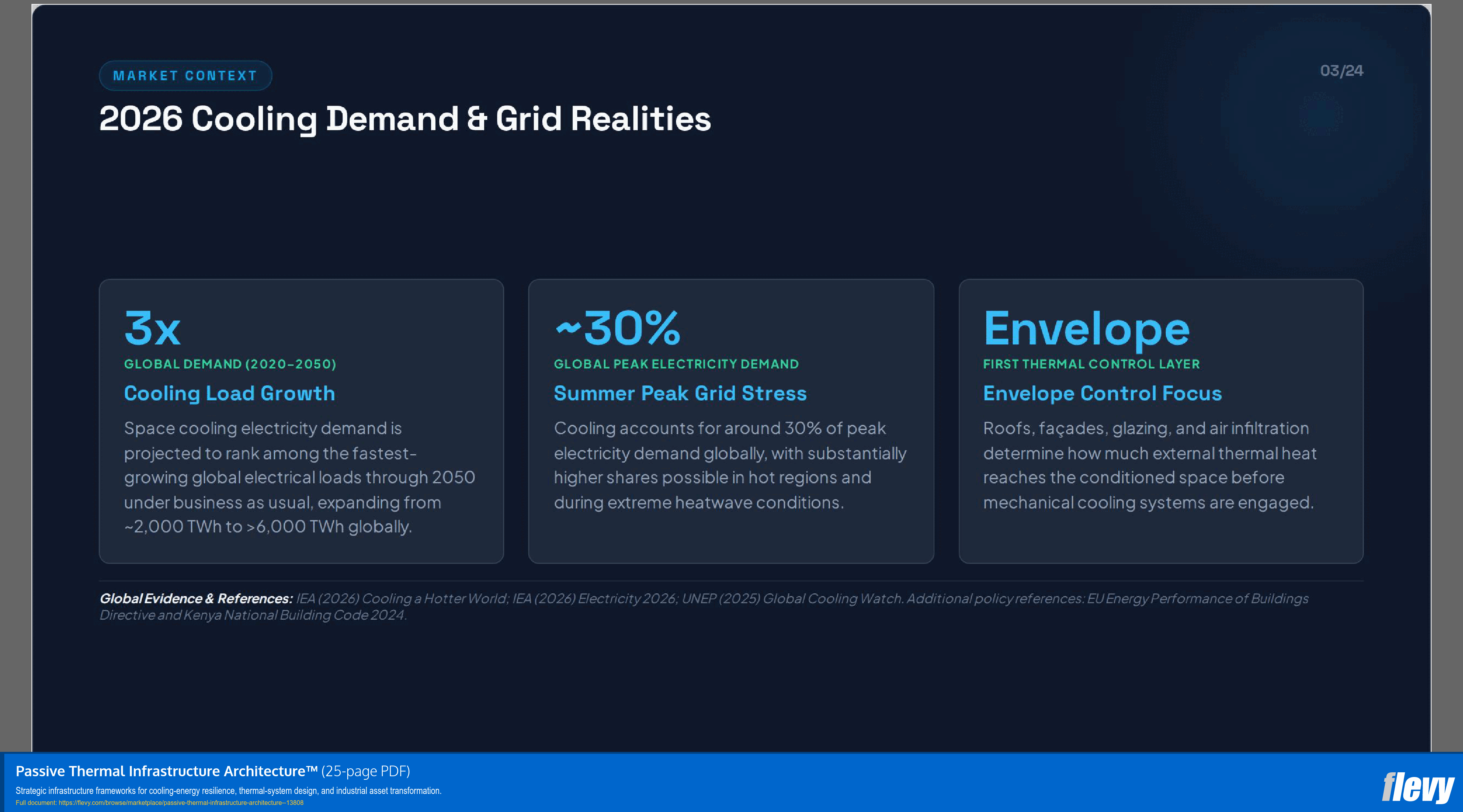
The Passive Thermal Infrastructure Architecture™ is a 25-page executive intelligence playbook for organizations evaluating how cooling infrastructure should evolve as rising temperatures, electricity demand, grid constraints, water stress, and industrial heat loads reshape thermal-system economics.
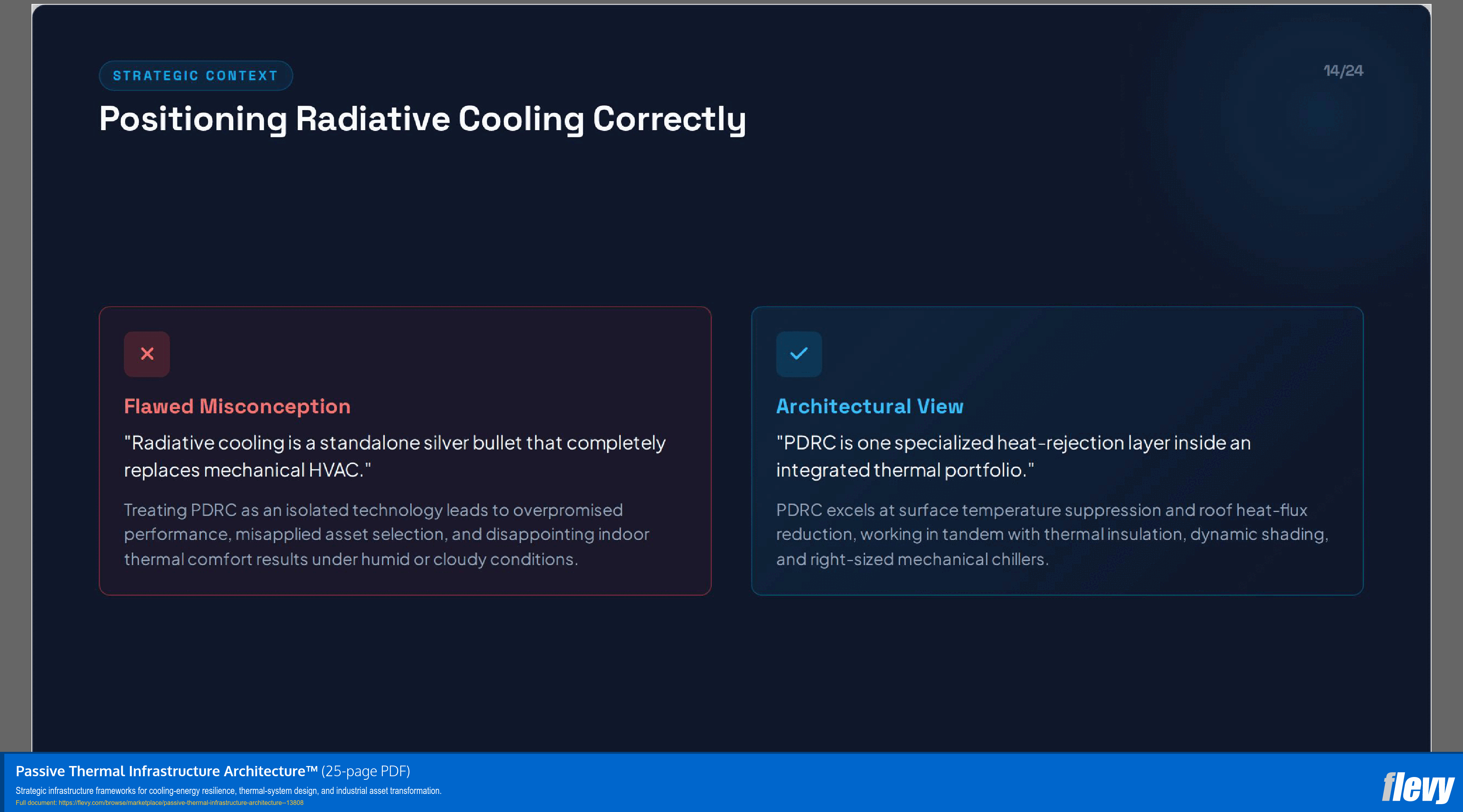
The core thesis is simple: do not mechanically cool all the heat that reaches an asset. First prevent it, then reflect or reject it, then buffer what remains, and only mechanically cool the residual load.
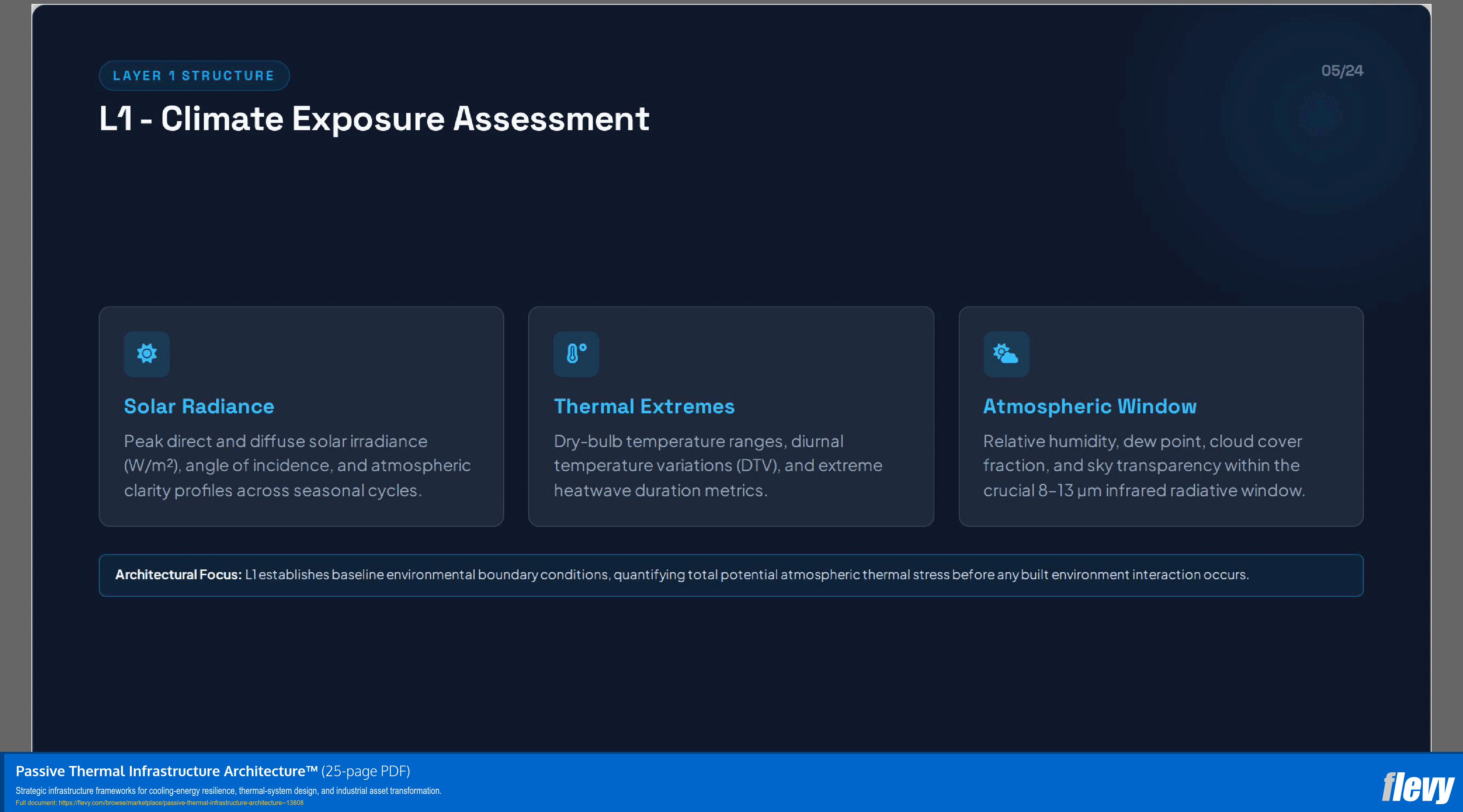
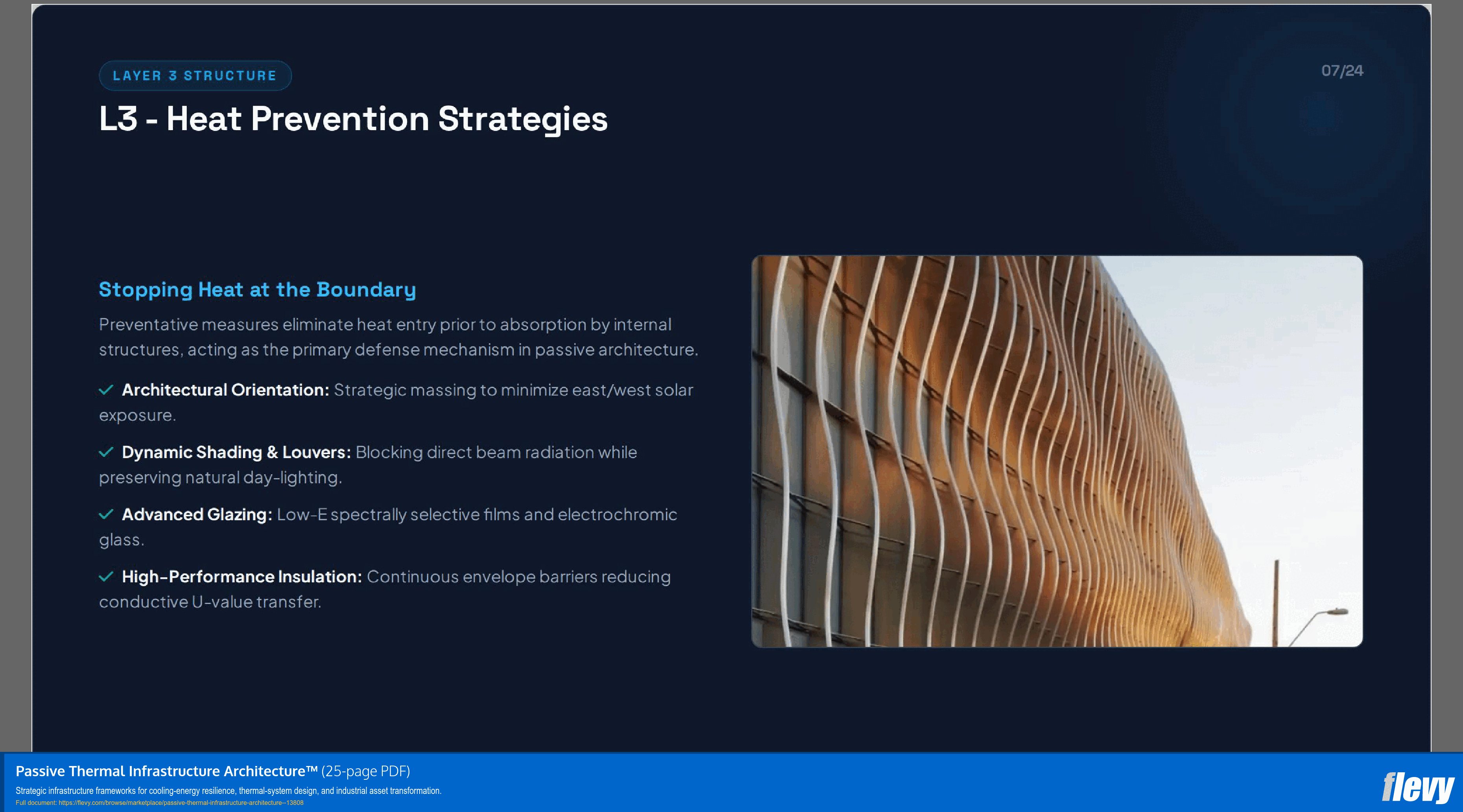
Rather than treating passive cooling technologies as isolated products, this playbook introduces an 8-Layer Passive Thermal Infrastructure Model spanning Climate Exposure, Heat Load Mapping, Heat Prevention, Passive Thermal Rejection, Thermal Buffering, Active Cooling, Resource Optimization, and Infrastructure Value.
The framework maps six technology families – Prevent, Reflect, Radiate, Buffer, Ventilate, and Evaporate – and shows how they can operate as complementary layers within a broader thermal infrastructure architecture.
Inside, decision-makers will find:
• 8-Layer Infrastructure Model™ – a structured hierarchy for moving from climate exposure and heat-load diagnosis to infrastructure value capture.
• 6 Core Passive Technology Families – a taxonomy covering insulation, shading, low-E glazing, reflective coatings, passive daytime radiative cooling, phase-change materials, thermal mass, natural ventilation, and evaporative approaches.
• Conceptual Thermal Step-Down Model – a decision logic for reducing thermal load before residual demand reaches active mechanical cooling.
• Passive Thermal Deployment Matrix™ – climate- and asset-specific deployment logic across hot-dry warehouses and logistics facilities, hot-humid factories and commercial buildings, industrial process assets, and high-density data-center environments.
• Critical Evidence Ladder – separates material-scale laboratory evidence, asset-surface evidence, building-level empirical evidence, and system/financial validation.
• Industrial Field Validation – including a documented Singapore factory field study and a separately identified operator-reported chemical-tank case whose commercial claims require independent engineering validation.
• Failure Boundary Framework – identifies conditions involving high humidity and cloud cover, cold-climate heating penalties, and poor envelope coupling where passive approaches may underperform.
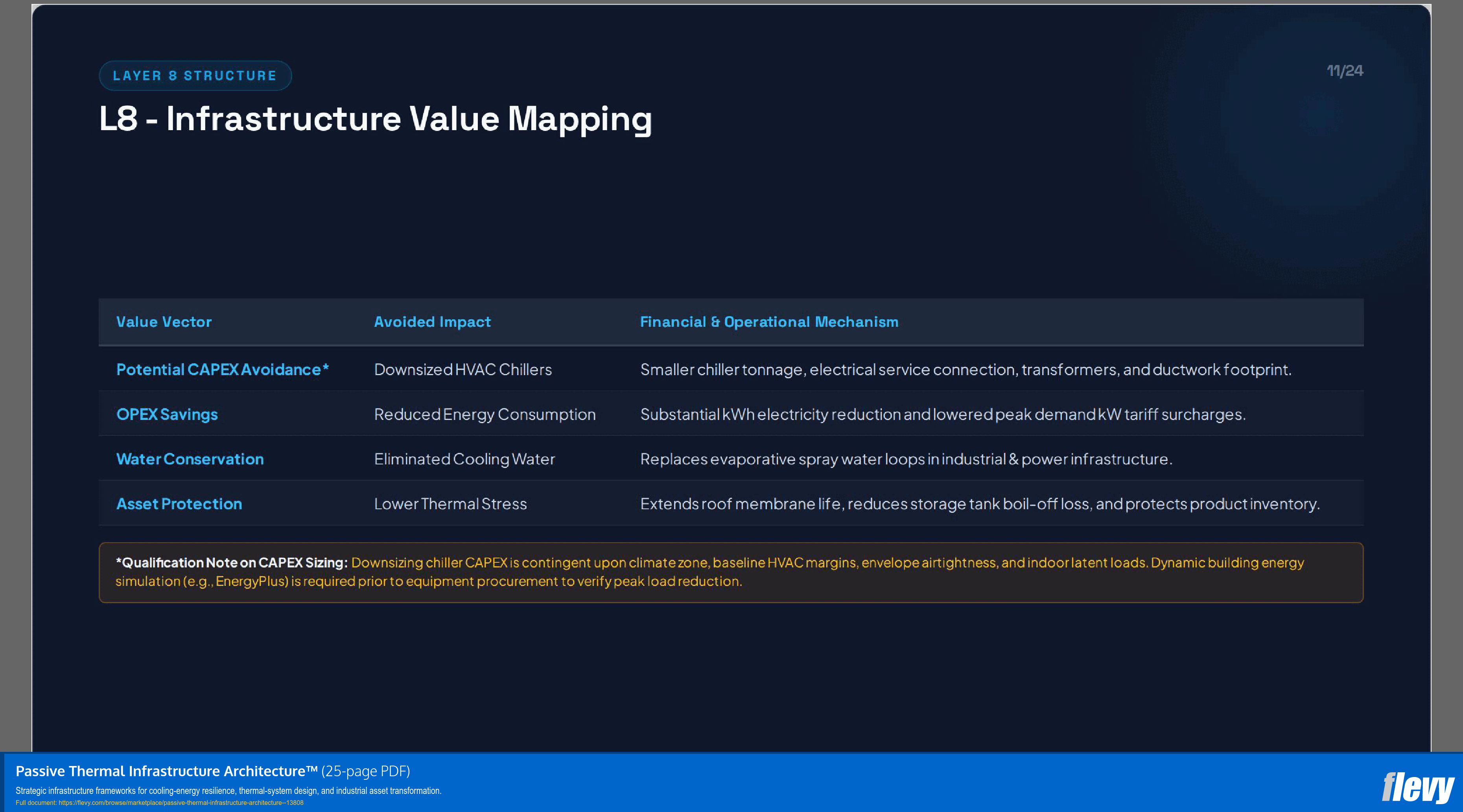
• Cascading Avoided Thermal Load Model – connects avoided solar heat gain to reduced energy consumption, peak-demand shaving, and the potential for smaller active cooling systems.
The playbook is designed for strategy, operations, infrastructure, sustainability, engineering, and capital-allocation leaders who need a structured way to evaluate passive thermal measures as part of integrated cooling infrastructure rather than as standalone technology investments.
Its central strategic insight is that the next generation of cooling infrastructure may not depend primarily on larger mechanical systems. It may depend on smarter thermal envelopes and layered control architectures that reduce the cooling burden before mechanical systems are engaged.
Evidence is explicitly differentiated by validation level, and project-level deployment is positioned as requiring climate-specific engineering analysis and dynamic building simulation rather than generic performance assumptions.
Got a question about the product? Email us at support@flevy.com or ask the author directly by using the "Ask the Author a Question" form. If you cannot view the preview above this document description, go here to view the large preview instead.
Source: Best Practices in Sustainability, Facility Management PDF: Passive Thermal Infrastructure Architecture™ PDF (PDF) Document, Wisnu Pandega Wardana
ABOUT THE AUTHOR

I am an independent Industrial Intelligence and Strategic Innovation Publisher focused on developing structured business intelligence, innovation frameworks, and opportunity-oriented research for decision-makers.
My work focuses on translating emerging technologies, industrial transformation, sustainability, resource efficiency, and market shifts into structured intelligence assets that
... [read more]
Ask the Author a Question
You must be logged in to contact the author.




























