
 Click main image to view in full screen. Unlock all 10 preview images:
OKR Implementation Handbook – Word DOCX
Word (DOCX) 67 Pages


BENEFITS OF THIS DOWNLOADABLE WORD DOCUMENT
- Provides a complete system for designing and implementing high-impact OKRs that drive measurable business results.
- Delivers a structured approach to aligning strategy, teams, and execution across the entire organization.
- Equips leaders with proven frameworks to scale performance management and accelerate outcome-driven growth.
OBJECTIVES AND KEY RESULTS WORD DESCRIPTION
Curated by McKinsey-trained Executives
OKR Implementation Handbook – The Ultimate Operating System for High-Performance Organizations
If your organization is still drowning in disconnected goals, vague KPIs, and endless activity without measurable impact, this is your wake-up call.
The OKR Implementation Handbook is not just another management book—it's a battle-tested, enterprise-grade blueprint for designing, deploying, and scaling a high-performance OKR system that drives real, measurable business outcomes.
Built for executives, strategy leaders, transformation teams, and high-growth companies, this handbook delivers a step-by-step, deeply structured, and aggressively practical framework to turn strategy into execution—fast.
🚀 Why This Handbook Is a Game-Changer
• Eliminate strategy-execution gaps instantly
• Align every team, function, and individual to measurable outcomes
• Install a scalable performance system across your entire organization
• Drive accountability without killing culture
• Integrate OKRs with strategy, finance, and AI-driven insights
This is the complete OKR operating system used by modern, high-performing organizations to out-execute competitors and dominate their markets.
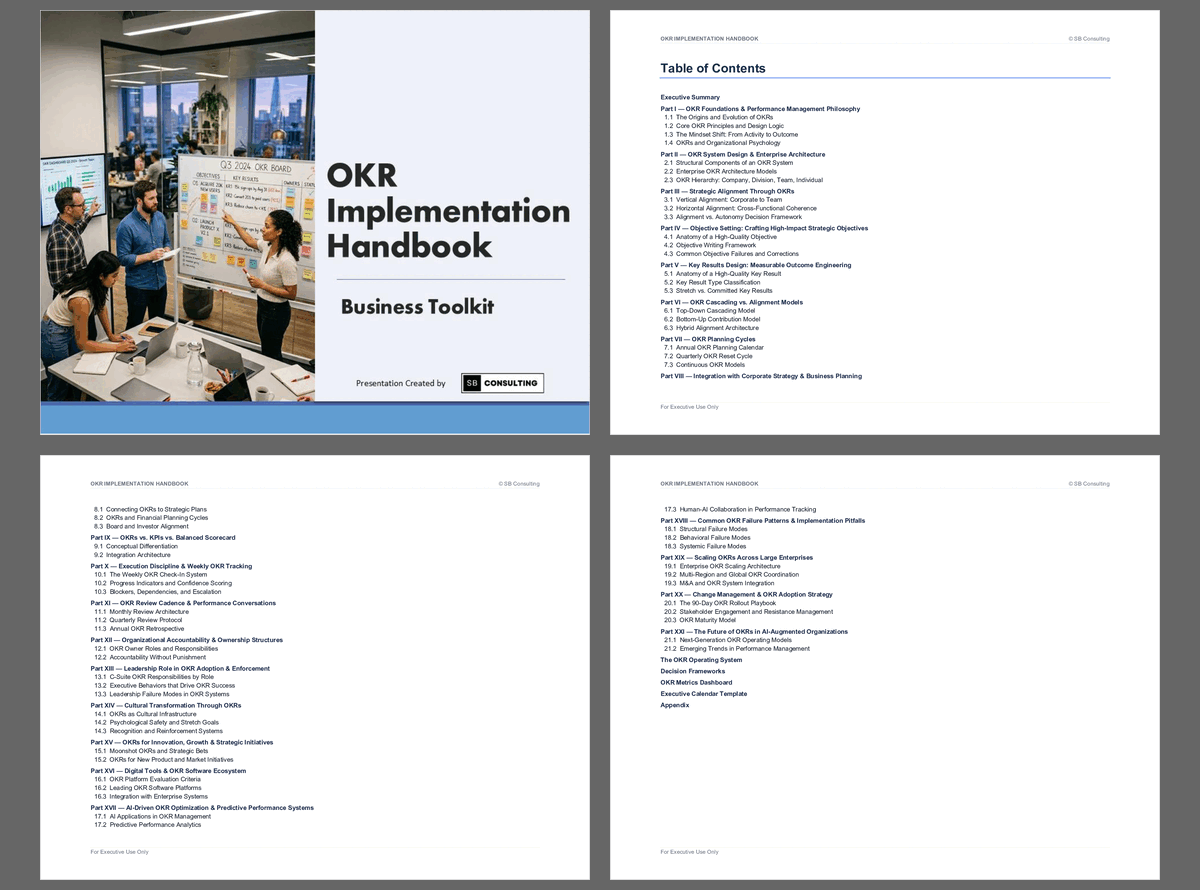
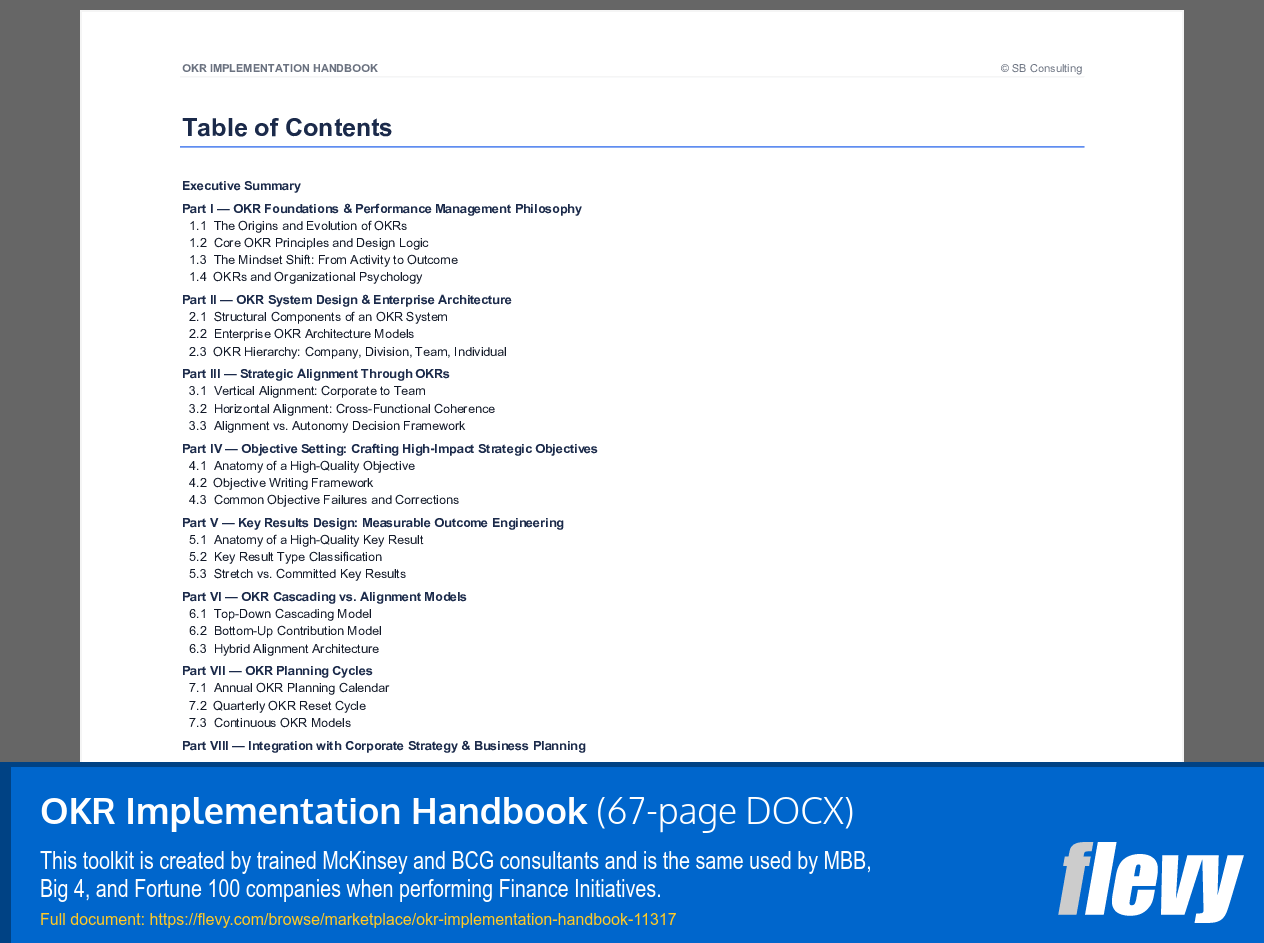
📘 What You Get Inside (Full Table of Contents)
Part I – OKR Foundations & Performance Management Philosophy
1.1 The Origins and Evolution of OKRs
1.2 Core OKR Principles and Design Logic
1.3 The Mindset Shift: From Activity to Outcome
1.4 OKRs and Organizational Psychology
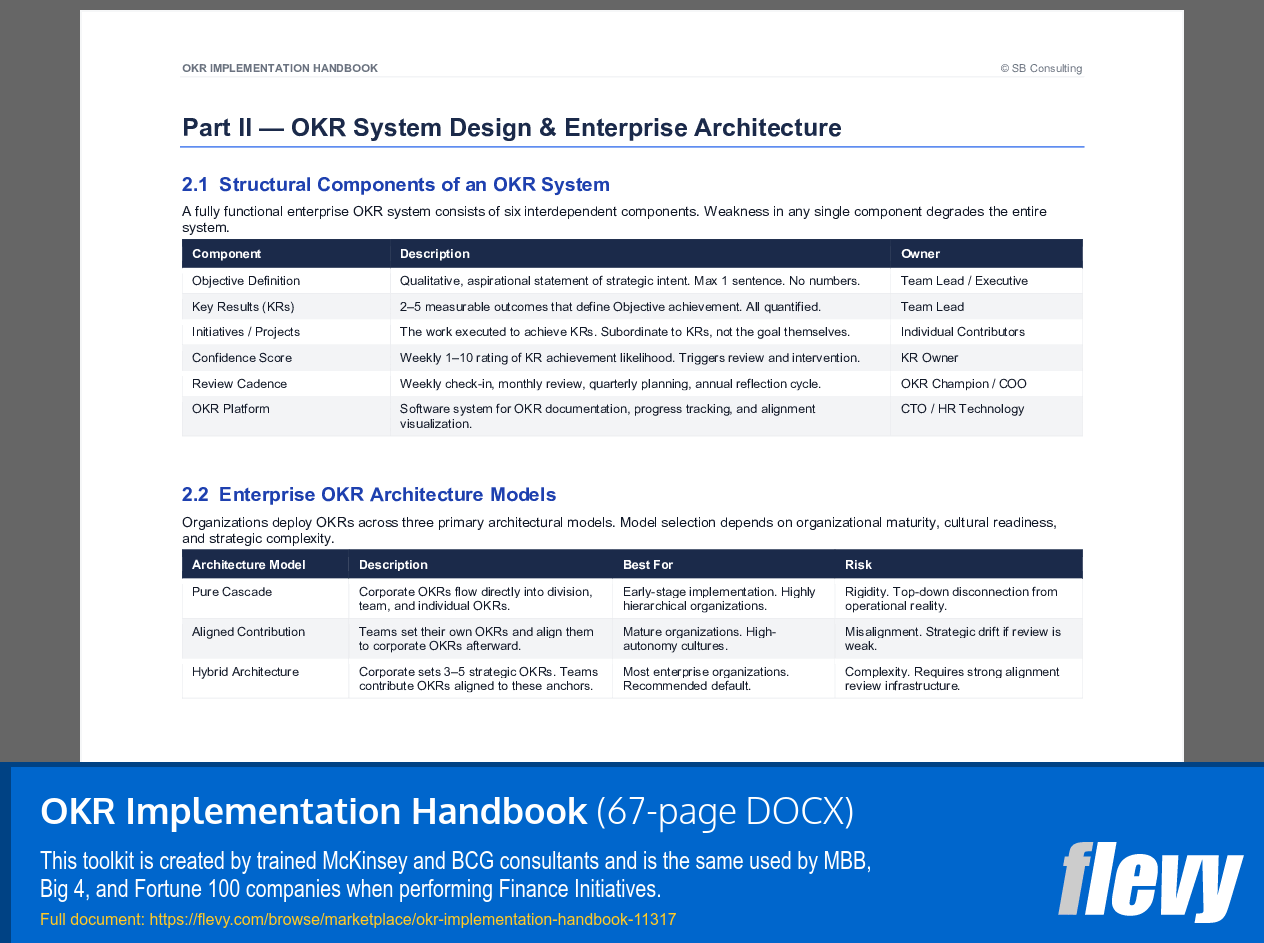
Part II – OKR System Design & Enterprise Architecture
2.1 Structural Components of an OKR System
2.2 Enterprise OKR Architecture Models
2.3 OKR Hierarchy: Company, Division, Team, Individual
Part III – Strategic Alignment Through OKRs
3.1 Vertical Alignment: Corporate to Team
3.2 Horizontal Alignment: Cross-Functional Coherence
3.3 Alignment vs. Autonomy Decision Framework
Part IV – Objective Setting: Crafting High-Impact Strategic Objectives
4.1 Anatomy of a High-Quality Objective
4.2 Objective Writing Framework
4.3 Common Objective Failures and Corrections
Part V – Key Results Design: Measurable Outcome Engineering
5.1 Anatomy of a High-Quality Key Result
5.2 Key Result Type Classification
5.3 Stretch vs. Committed Key Results
Part VI – OKR Cascading vs. Alignment Models
6.1 Top-Down Cascading Model
6.2 Bottom-Up Contribution Model
6.3 Hybrid Alignment Architecture
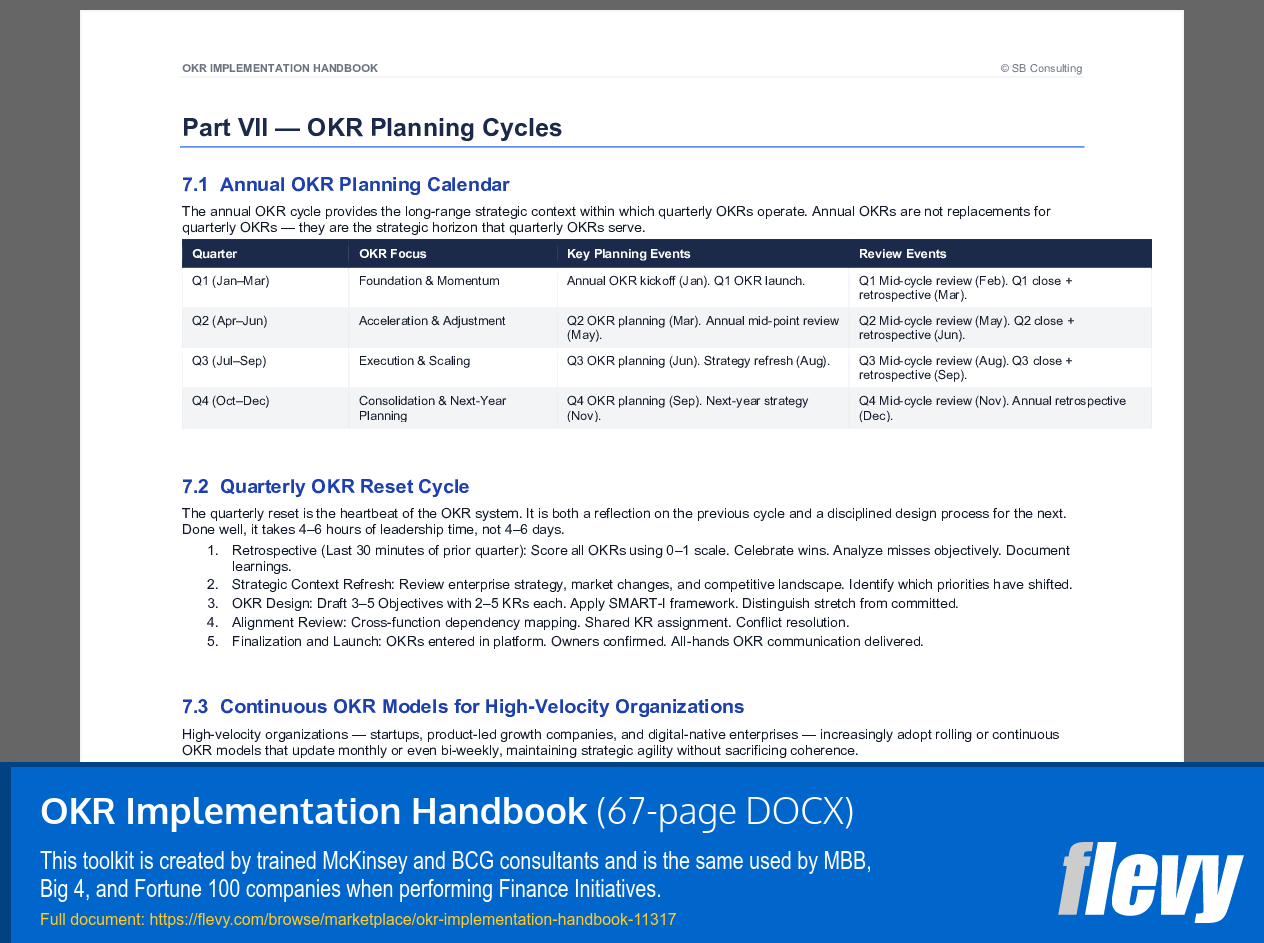
Part VII – OKR Planning Cycles
7.1 Annual OKR Planning Calendar
7.2 Quarterly OKR Reset Cycle
7.3 Continuous OKR Models
Part VIII – Integration with Corporate Strategy & Business Planning
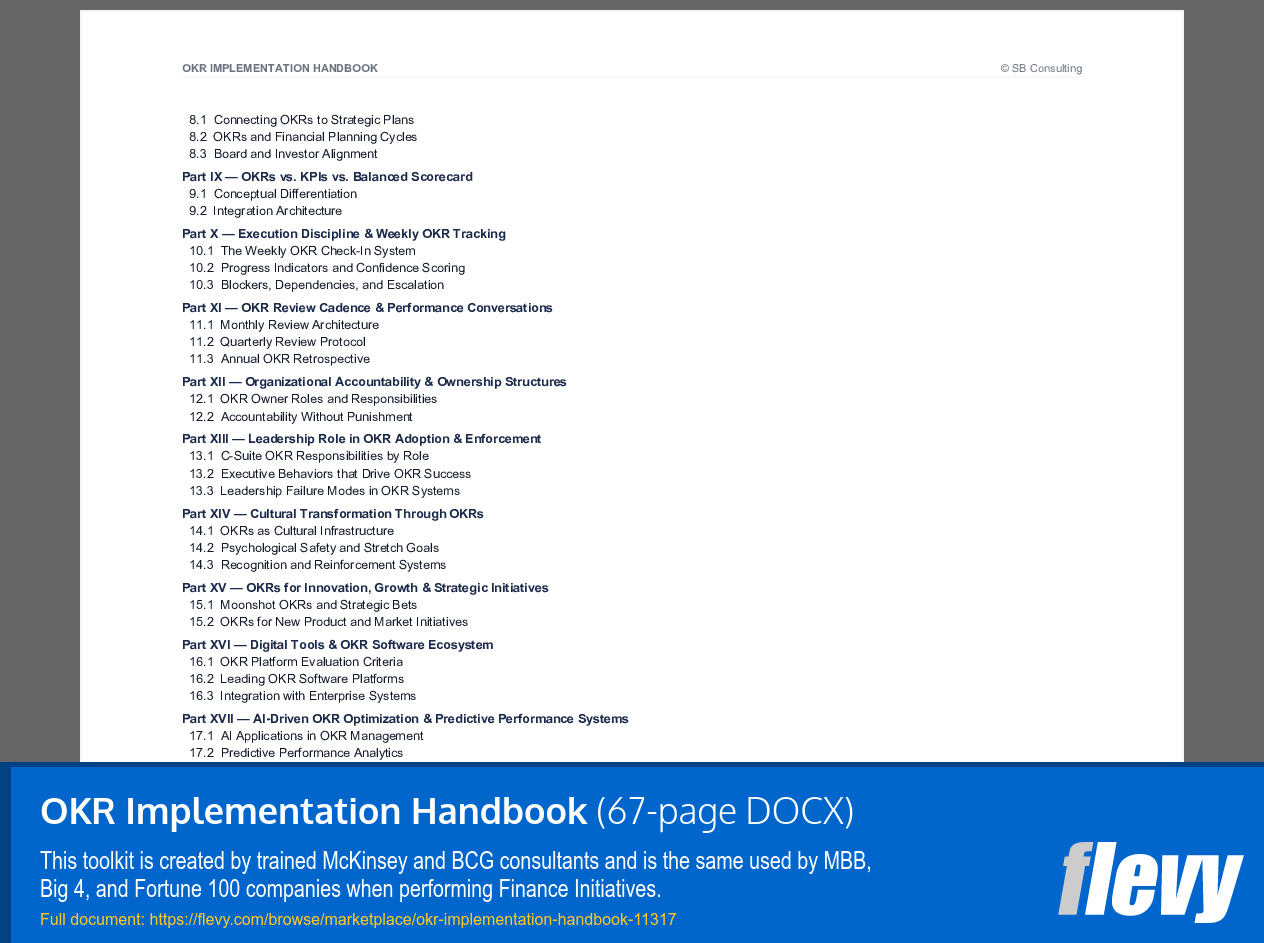
8.1 Connecting OKRs to Strategic Plans
8.2 OKRs and Financial Planning Cycles
8.3 Board and Investor Alignment
Part IX – OKRs vs. KPIs vs. Balanced Scorecard
9.1 Conceptual Differentiation
9.2 Integration Architecture
Part X – Execution Discipline & Weekly OKR Tracking
10.1 The Weekly OKR Check-In System
10.2 Progress Indicators and Confidence Scoring
10.3 Blockers, Dependencies, and Escalation
Part XI – OKR Review Cadence & Performance Conversations
11.1 Monthly Review Architecture
11.2 Quarterly Review Protocol
11.3 Annual OKR Retrospective
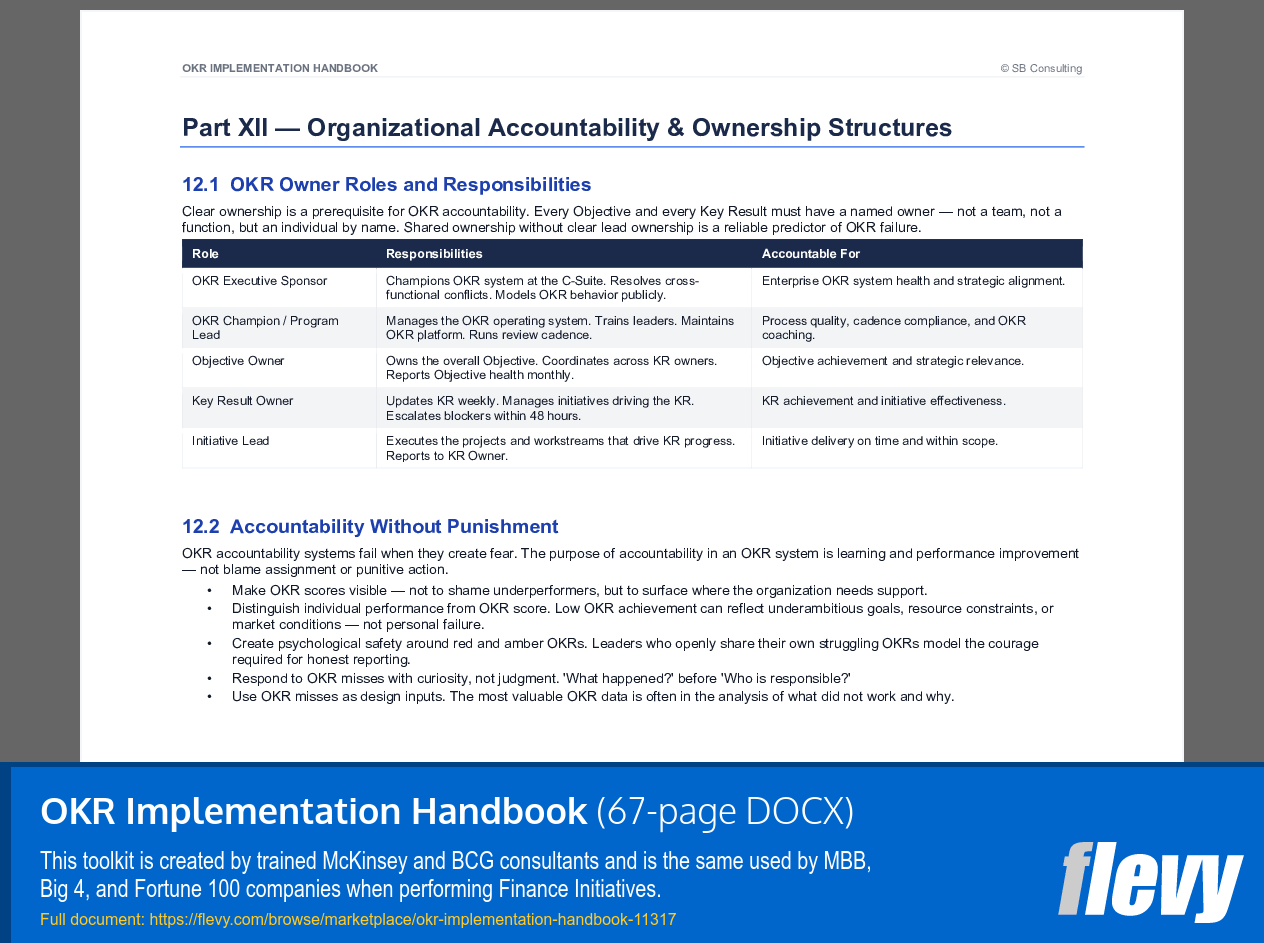
Part XII – Organizational Accountability & Ownership Structures
12.1 OKR Owner Roles and Responsibilities
12.2 Accountability Without Punishment
Part XIII – Leadership Role in OKR Adoption & Enforcement
13.1 C-Suite OKR Responsibilities by Role
13.2 Executive Behaviors that Drive OKR Success
13.3 Leadership Failure Modes in OKR Systems
Part XIV – Cultural Transformation Through OKRs
14.1 OKRs as Cultural Infrastructure
14.2 Psychological Safety and Stretch Goals
14.3 Recognition and Reinforcement Systems
Part XV – OKRs for Innovation, Growth & Strategic Initiatives
15.1 Moonshot OKRs and Strategic Bets
15.2 OKRs for New Product and Market Initiatives
Part XVI – Digital Tools & OKR Software Ecosystem
16.1 OKR Platform Evaluation Criteria
16.2 Leading OKR Software Platforms
16.3 Integration with Enterprise Systems
Part XVII – AI-Driven OKR Optimization & Predictive Performance Systems
17.1 AI Applications in OKR Management
17.2 Predictive Performance Analytics
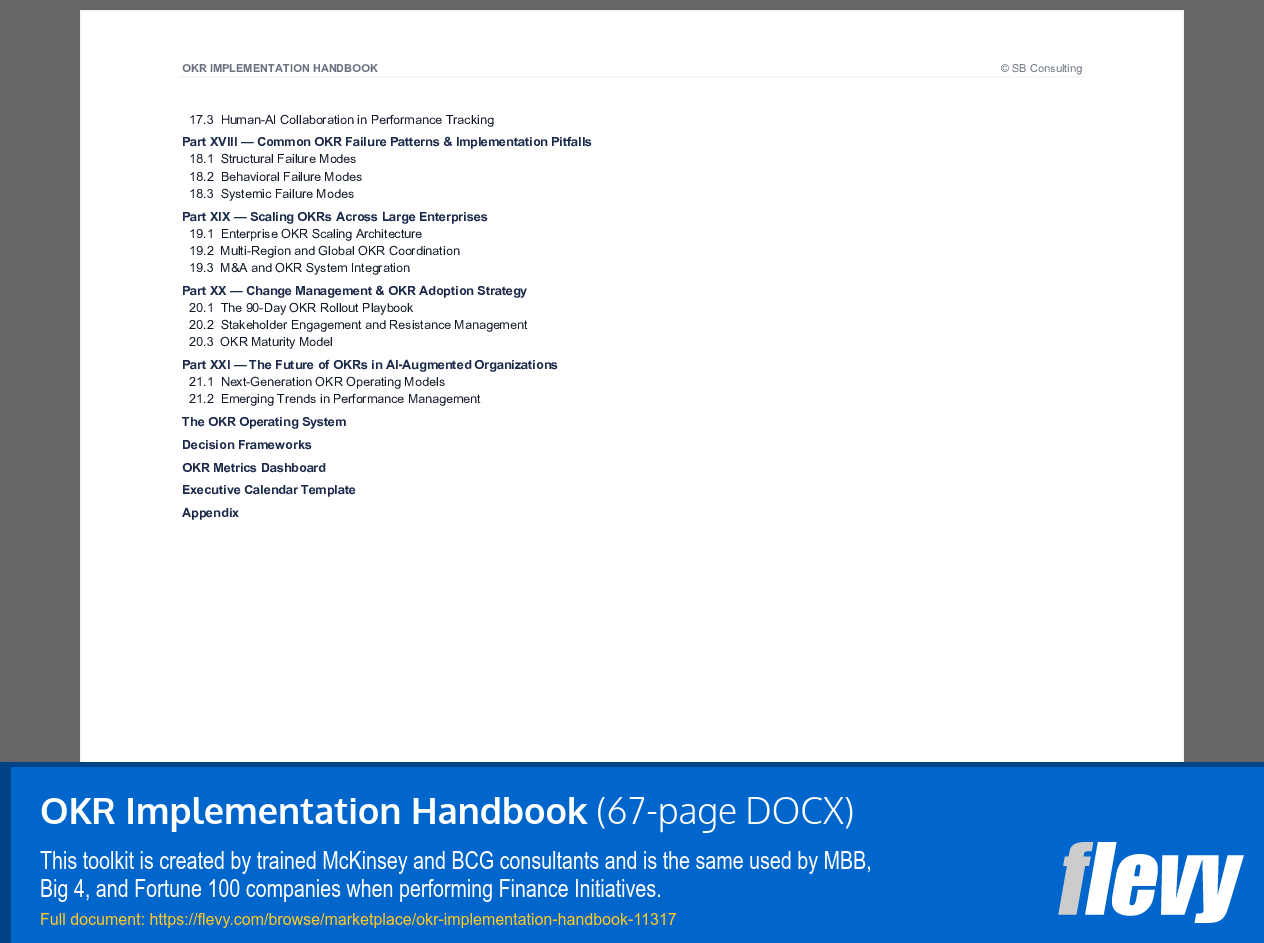
17.3 Human-AI Collaboration in Performance Tracking
Part XVIII – Common OKR Failure Patterns & Implementation Pitfalls
18.1 Structural Failure Modes
18.2 Behavioral Failure Modes
18.3 Systemic Failure Modes
Part XIX – Scaling OKRs Across Large Enterprises
19.1 Enterprise OKR Scaling Architecture
19.2 Multi-Region and Global OKR Coordination
19.3 M&A and OKR System Integration
Part XX – Change Management & OKR Adoption Strategy
20.1 The 90-Day OKR Rollout Playbook
20.2 Stakeholder Engagement and Resistance Management
20.3 OKR Maturity Model
Part XXI – The Future of OKRs in AI-Augmented Organizations
21.1 Next-Generation OKR Operating Models
21.2 Emerging Trends in Performance Management
💡 Plus Exclusive Strategic Assets
• The OKR Operating System
• Decision Frameworks
• OKR Metrics
• Executive Calendar Template
🔥 Who This Is For
• CEOs, COOs, and C-Level leaders driving transformation
• Strategy, Operations, and PMO professionals
• Scale-ups and enterprises implementing OKRs at scale
• Consultants and performance coaches
• Teams tired of busywork without results
⚡ The Bottom Line
If you want clarity, alignment, execution speed, and measurable growth, this handbook gives you the exact system to make it happen.
Stop guessing.
Stop misaligning.
Stop tracking vanity metrics.
Start building a performance machine.
👉 Get the OKR Implementation Handbook Now
Transform your organization into a high-performance, outcome-driven system—with a framework designed for real-world execution, not theory.
This isn't just a book. It's your competitive advantage.
Key Words:
Strategy & Transformation, Growth Strategy, Strategic Planning, Strategy Frameworks, Innovation Management, Pricing Strategy, Core Competencies, Strategy Development, Business Transformation, Marketing Plan Development, Product Strategy, Breakout Strategy, Competitive Advantage, Mission, Vision, Values, Strategy Deployment & Execution, Innovation, Vision Statement, Core Competencies Analysis, Corporate Strategy, Product Launch Strategy, BMI, Blue Ocean Strategy, Breakthrough Strategy, Business Model Innovation, Business Strategy Example, Corporate Transformation, Critical Success Factors, Customer Segmentation, Customer Value Proposition, Distinctive Capabilities, Enterprise Performance Management, KPI, Key Performance Indicators, Market Analysis, Market Entry Example, Market Entry Plan, Market Intelligence, Market Research, Market Segmentation, Market Sizing, Marketing, Michael Porter's Value Chain, Organizational Transformation, Performance Management, Performance Measurement, Platform Strategy, Product Go-to-Market Strategy, Reorganization, Restructuring, SWOT, SWOT Analysis, Service 4.0, Service Strategy, Service Transformation, Strategic Analysis, Strategic Plan Example, Strategy Deployment, Strategy Execution, Strategy Frameworks Compilation, Strategy Methodologies, Strategy Report Example, Value Chain, Value Chain Analysis, Value Innovation, Value Proposition, Vision Statement, Corporate Strategy, Business Development, Business plan pdf, business plan, PDF, Business Plan DOC, Business Plan Template, PPT, Market strategy playbook, strategic market planning, competitive analysis tools, market segmentation frameworks, growth strategy templates, product positioning strategy, market execution toolkit, strategic alignment playbook, KPI and OKR frameworks, business growth strategy guide, cross-functional strategy templates, market risk management, market strategy PowerPoint doc, guide, ebook, e-book ,McKinsey Change Playbook, Organizational change management toolkit, Change management frameworks 2025, Influence model for change, Change leadership strategies, Behavioral change in organizations, Change management PowerPoint templates, Transformational leadership in change, supply chain KPIs, supply chain KPI toolkit, supply chain PowerPoint template, logistics KPIs, procurement KPIs, inventory management KPIs, supply chain performance metrics, manufacturing KPIs, supply chain dashboard, supply chain strategy KPIs, reverse logistics KPIs, sustainability KPIs in supply chain, financial supply chain KPIs, warehouse KPIs, digital supply chain KPIs, 1200 KPIs, supply chain scorecard, KPI examples, supply chain templates, Corporate Finance SOPs, Finance SOP Excel Template, CFO Toolkit, Finance Department Procedures, Financial Planning SOPs, Treasury SOPs, Accounts Payable SOPs, Accounts Receivable SOPs, General Ledger SOPs, Accounting Policies Template, Internal Controls SOPs, Finance Process Standardization, Finance Operating Procedures, Finance Department Excel Template, FP&A Process Documentation, Corporate Finance Template, Finance SOP Toolkit, CFO Process Templates, Accounting SOP Package, Tax Compliance SOPs, Financial Risk Management Procedures.
NOTE: Our digital products are sold on an "as is" basis, making returns and refunds unavailable post-download. Please preview and inquire before purchasing. Please contact us before purchasing if you have any questions! This policy aligns with the standard Flevy Terms of Usage.
Got a question about the product? Email us at support@flevy.com or ask the author directly by using the "Ask the Author a Question" form. If you cannot view the preview above this document description, go here to view the large preview instead.
Source: Best Practices in Objectives and Key Results Word: OKR Implementation Handbook Word (DOCX) Document, SB Consulting
ABOUT THE AUTHOR

SB Consulting is dedicated to empowering businesses to communicate their ideas with impact. This consulting firm specializes in teaching organizations how to create effective corporate and management presentations. With training from top-tier global consulting firms, including McKinsey, BCG, and Porsche Consulting, extensive expertise in presentation design and ... [read more]
Ask the Author a Question
You must be logged in to contact the author.




























