
π― Drive Focus, Alignment, and Results with the OKR PowerPoint Slide Deck
Based on the world-renowned system championed in Measure What Matters by John Doerr, this professionally crafted OKR (Objectives and Key Results) slide package empowers leaders, teams, and organizations to set bold goals—and achieve them with clarity and discipline.
Used by Google, Intel, LinkedIn, and countless high-performing companies, OKRs help you track what really moves the needle. This deck makes it easy to teach, apply, and scale the OKR methodology across your organization.
π 5 Reasons Why the OKR Framework Is So Powerful
1. π― Laser-Focused Goals That Matter
OKRs push teams to define clear, ambitious objectives—paired with measurable key results. It keeps everyone focused on what truly drives success.
2. π€ Creates Radical Transparency and Alignment
With OKRs, everyone knows what everyone else is working on. Teams stay aligned, silos break down, and cross-functional collaboration improves.
3. π Boosts Accountability and Ownership
Because key results are specific and trackable, individuals and teams are more motivated to take ownership and deliver outcomes—not just activity.
4. π Promotes Agility and Iteration
OKRs are set and reviewed regularly—usually quarterly—helping teams adjust fast, learn from results, and stay agile in a fast-moving world.
5. π Used by the World's Most Innovative Companies
OKRs aren't a theory—they're a proven execution system behind the growth of Google, YouTube, Spotify, and many more.
*
β
5 Reasons to Get This PowerPoint Slide Package
1. π Complete, Practical OKR Training Deck
Covers all essentials: What OKRs are, how to write them, how to set cadence, how to score, and how to implement them in any organization. Built for clarity and impact.
2. π§ Designed for Leaders, HR, Consultants, and Trainers
Whether you're rolling out OKRs to your team, coaching executives, or leading a company-wide training, this slide deck gives you the structure and credibility you need.
3. π‘ Includes Examples, Case Studies, and Templates
Real OKRs from companies like Google, Intel, and startups—plus blank templates for your own use. Bring theory to life with concrete examples.
4. π¨ Clean, Professional Visuals
Engaging layout, modern typography, and thoughtful visuals make complex ideas easy to digest—perfect for boardrooms, workshops, or webinars.
5. β³ Save Hours of Work, Deliver Results Instantly
No need to start from scratch. This slide deck helps you teach or implement OKRs immediately—with confidence and professionalism.
*
π 5 Benefits for You and Your Organization
1. π§ Create Clarity and Strategic Focus
Eliminate distractions. Use OKRs to align every team and project with what matters most.
2. π Improve Performance and Results
When goals are measurable and public, performance rises. OKRs drive output, momentum, and smart execution.
3. π₯ Build a Culture of Ownership and Trust
OKRs encourage autonomy with accountability—empowering people to do their best work while staying aligned.
4. π Accelerate Agility and Learning
Frequent check-ins and scoring help teams learn from progress, adapt fast, and grow stronger each cycle.
5. π Scale Leadership and Impact
From startups to enterprises, OKRs help leaders scale purpose, metrics, and mission—without losing focus.
Ready to turn bold ideas into measurable results?
Download the OKR PowerPoint Slide Deck today—and bring focus, alignment, and accountability to every level of your organization. ππ₯πΌ
π Real Testimonials from Professionals Around the World
π¬ "This OKR slide deck helped us align 200+ employees with crystal-clear goals. It's strategic, simple, and practical."
— David Nguyen, Head of Strategy, NexusPoint Global (USA)
π¬ "I've taught OKRs for years—this is hands-down the best slide kit I've used. Clean visuals, strong logic, and ready to present."
— Juliette Arnaud, Senior Agile Coach, LeanFrame Consulting (France)
π¬ "Our teams finally understand the difference between OKRs and KPIs thanks to this deck. It brought clarity and excitement."
— Ravi Menon, Performance Consultant, Align360 (India)
π¬ "We ran a company-wide OKR onboarding using this deck. It sparked focused conversations and team accountability right away."
— Nina BergstrΓΆm, HR Director, NovaWorks Group (Sweden)
π¬ "This deck helped our executive team cascade OKRs effectively. Easy to adapt, and the design quality is top-tier."
— Carlos Rivera, Organizational Excellence Lead, ProVision LATAM (Mexico)
β
Why You Must Get This OKR Slide Deck
π― Goal Alignment Made Simple β Break down OKRs into understandable, actionable steps for any team.
π Strategy Meets Execution β Show how OKRs drive focus, accountability, and results—not just planning.
π§° Complete Training Tool β Perfect for leadership workshops, onboarding, or company-wide rollout.
π¨ Professional & Editable β Visuals, frameworks, and templates you can customize freely.
π Proven Across Industries β Tech, finance, startups, corporates—OKRs work everywhere with this deck.
π₯ Want to Drive Focus and Measurable Impact?
Don't let vague goals slow your growth.
π This powerful slide deck gives you everything to train, implement, and optimize OKRs across your team or organization.
π Buy now and get instant access β fully editable, beautifully crafted, and workshop-ready.
Set bold goals. Track real results. Master OKRs. ππ
^^^^^^^^^^^^^^^^^^^^^^^
Got a question about the product? Email us at support@flevy.com or ask the author directly by using the "Ask the Author a Question" form. If you cannot view the preview above this document description, go here to view the large preview instead.
Executive Summary
The "Drive Focus, Alignment, and Results with the OKR" presentation provides a structured approach to implementing the OKR (Objectives and Key Results) framework, essential for enhancing organizational performance. This deck is designed for corporate executives, integration leaders, and consultants who aim to foster alignment and accountability within their teams. By utilizing proven strategies and templates, users will be equipped to establish measurable objectives, track progress, and achieve desired outcomes effectively.
Who This Is For and When to Use
• Corporate executives seeking to enhance strategic alignment across departments
• HR leaders focused on performance management and employee engagement
• Integration leaders managing cross-functional teams during organizational changes
• Consultants advising clients on performance improvement strategies
Best-fit moments to use this deck:
• During strategic planning sessions to define organizational goals
• When launching new initiatives that require clear objectives and measurable outcomes
• In performance review meetings to assess progress and recalibrate strategies
Learning Objectives
• Define the OKR framework and its significance in driving business performance
• Develop measurable objectives that align with corporate goals
• Create actionable plans to achieve defined objectives
• Monitor progress through performance dashboards and regular reviews
• Foster a culture of accountability and continuous improvement within teams
• Link OKR achievements to incentive structures to motivate employees
Table of Contents
• Introduction to OKR (page 3)
• Formulating OKRs for Work Units (page 11)
• Developing Action Plans (page 19)
• Monitoring OKR Progress (page 26)
• Linking OKR to Bonus Systems (page 36)
Primary Topics Covered
• OKR Framework - An overview of the Objectives and Key Results framework, emphasizing its role in enhancing focus and alignment.
• Formulating OKRs - Guidelines for creating effective OKRs tailored to each work unit's needs and challenges.
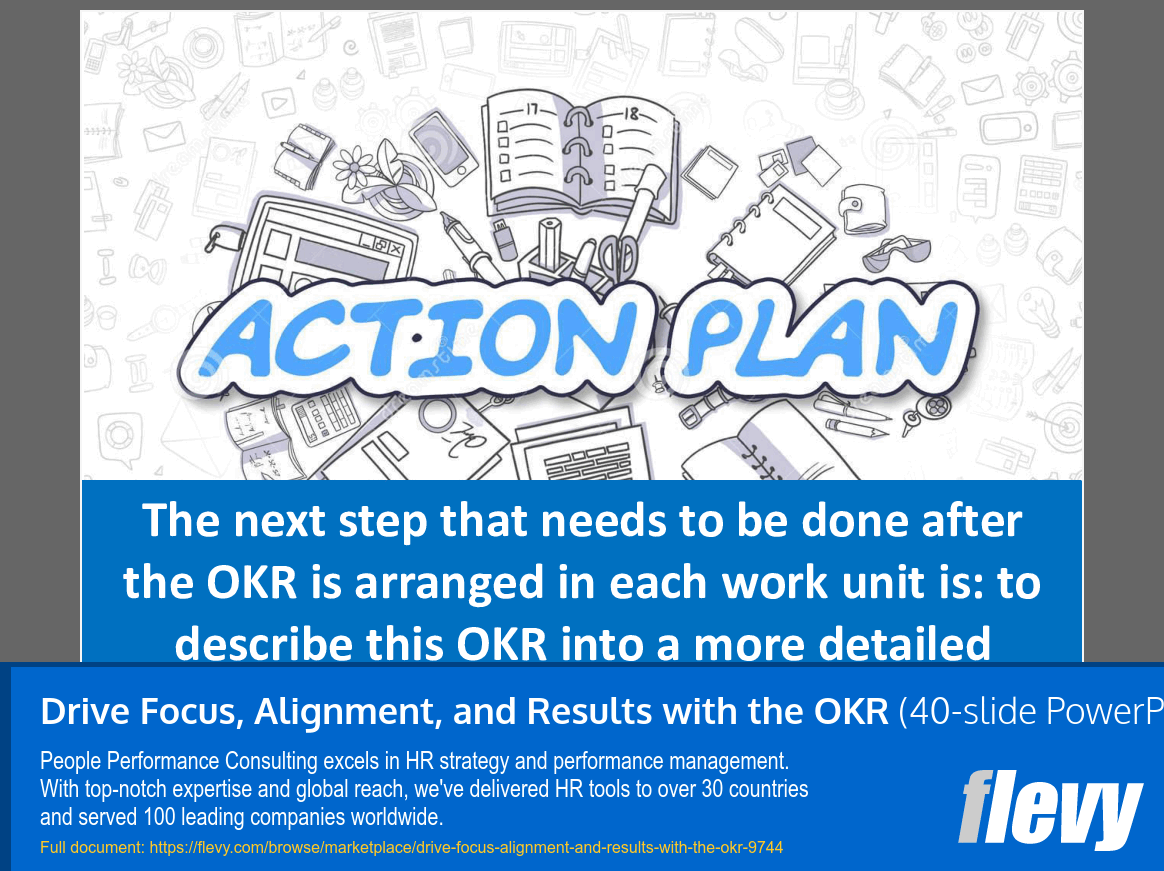
• Action Planning - Steps to translate OKRs into detailed action plans that outline key activities, timelines, and responsibilities.
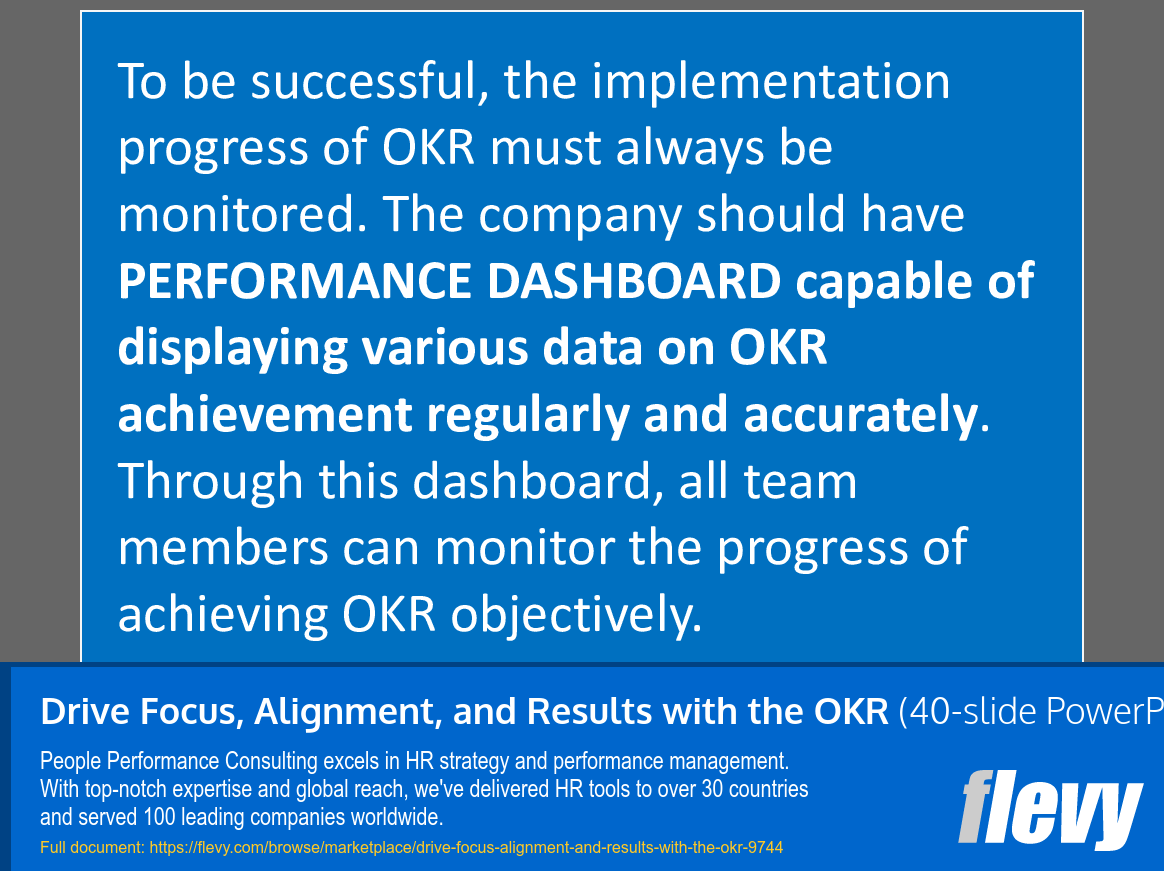
• Performance Monitoring - Techniques for tracking OKR progress through performance dashboards and regular review meetings.
• Incentive Alignment - Strategies for linking OKR achievements to bonus systems to drive motivation and accountability.
Deliverables, Templates, and Tools
• OKR formulation templates for various work units
• Action plan templates detailing key activities and timelines
• Performance dashboard examples for tracking progress
• Bonus structure guidelines linked to OKR achievements
Slide Highlights
• Overview of the OKR framework and its importance in business performance
• Step-by-step guide for formulating OKRs at different organizational levels
• Sample action plans illustrating how to achieve specific objectives
• Visual examples of performance dashboards for monitoring progress
• Guidelines for creating a bonus system tied to OKR success
Potential Workshop Agenda
OKR Introduction Session (60 minutes)
• Overview of the OKR framework and its benefits
• Discussion on aligning OKRs with corporate goals
Action Planning Workshop (90 minutes)
• Breakout sessions for teams to formulate their OKRs
• Development of detailed action plans for each objective
Monitoring and Review Session (60 minutes)
• Training on using performance dashboards
• Establishing a regular review cadence for OKR progress
Customization Guidance
• Tailor OKR templates to reflect specific departmental goals and metrics
• Adjust action plans to align with unique timelines and resource availability
• Modify performance dashboard metrics to suit organizational priorities
Secondary Topics Covered
• Best practices for fostering a culture of accountability
• Techniques for facilitating effective performance review meetings
• Strategies for overcoming common challenges in OKR implementation
Topic FAQ
Document FAQ
These are questions addressed within this presentation.
What are OKRs?
OKRs stand for Objectives and Key Results, a goal-setting framework that helps organizations define measurable goals and track their outcomes.
How do I formulate effective OKRs?
Effective OKRs should be specific, measurable, and aligned with the overall corporate strategy. Each work unit should develop 3-5 objectives with 1-3 key results each.
What is the importance of monitoring OKRs?
Regular monitoring of OKRs ensures accountability and allows teams to make necessary adjustments to stay on track toward achieving their goals.
How can performance dashboards enhance OKR tracking?
Performance dashboards provide a visual representation of progress toward OKRs, enabling teams to quickly assess performance and identify areas for improvement.
What role do bonuses play in achieving OKRs?
Linking bonuses to OKR achievements incentivizes teams to meet their objectives, fostering a culture of accountability and motivation.
How often should OKR progress be reviewed?
OKR progress should be reviewed at least once a month to discuss achievements, challenges, and necessary adjustments.
Can OKRs be adjusted mid-cycle?
Yes, OKRs can be adjusted if circumstances change or if the initial objectives are no longer relevant.
What tools can assist in implementing OKRs?
Tools such as performance dashboards and action planning templates can facilitate the effective implementation and tracking of OKRs.
Glossary
• OKR - Objectives and Key Results, a framework for defining and tracking goals.
• Performance Dashboard - A visual tool for monitoring progress toward objectives.
• Action Plan - A detailed outline of activities required to achieve specific objectives.
• Alignment - Ensuring that individual and team goals support overall corporate objectives.
• Incentive Structure - A system linking rewards to the achievement of specific goals.
• Vertical Alignment - Ensuring that lower-level OKRs support the goals of higher-level units.
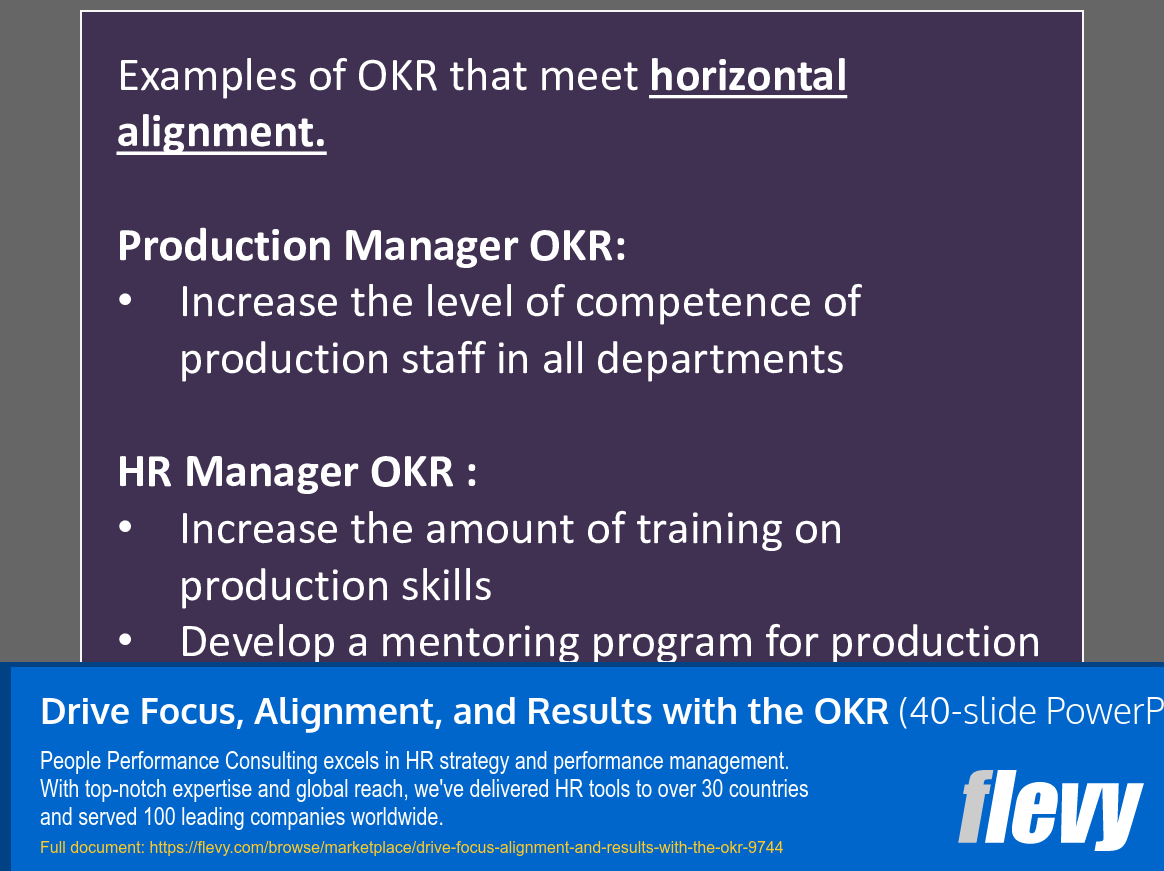
• Horizontal Alignment - Ensuring that OKRs across different units support each other.
• Performance Review - A meeting to assess progress and discuss improvements.
• Key Results - Measurable indicators that demonstrate success in achieving objectives.
• Corporate Goals - The overarching objectives set by an organization to guide its strategy.
• Review Cadence - The regularity of performance review meetings.
• Measurable Objectives - Goals that can be quantified to assess progress.
• Accountability - The responsibility of individuals or teams to meet their objectives.
• Continuous Improvement - Ongoing efforts to enhance processes and outcomes.
• Synergy - The combined effect of multiple units working together toward common goals.
• Performance Improvement Plan - A strategy for addressing performance gaps.
• Motivation - The drive to achieve goals, often influenced by incentives.
• Corporate Strategy - The overall plan guiding an organization's direction and goals.
• Work Unit - A specific team or department within an organization.
• Challenge - An obstacle that may impede the achievement of objectives.
• Goal Setting - The process of defining objectives to be achieved.
• Engagement - The level of commitment and involvement of employees in their work.
Source: Best Practices in Objectives and Key Results PowerPoint Slides: Drive Focus, Alignment, and Results with the OKR PowerPoint (PPTX) Presentation Slide Deck, People Performance Consulting
|
Download our FREE Strategy & Transformation Framework Templates
Download our free compilation of 50+ Strategy & Transformation slides and templates. Frameworks include McKinsey 7-S, Balanced Scorecard, Disruptive Innovation, BCG Curve, and many more. |










