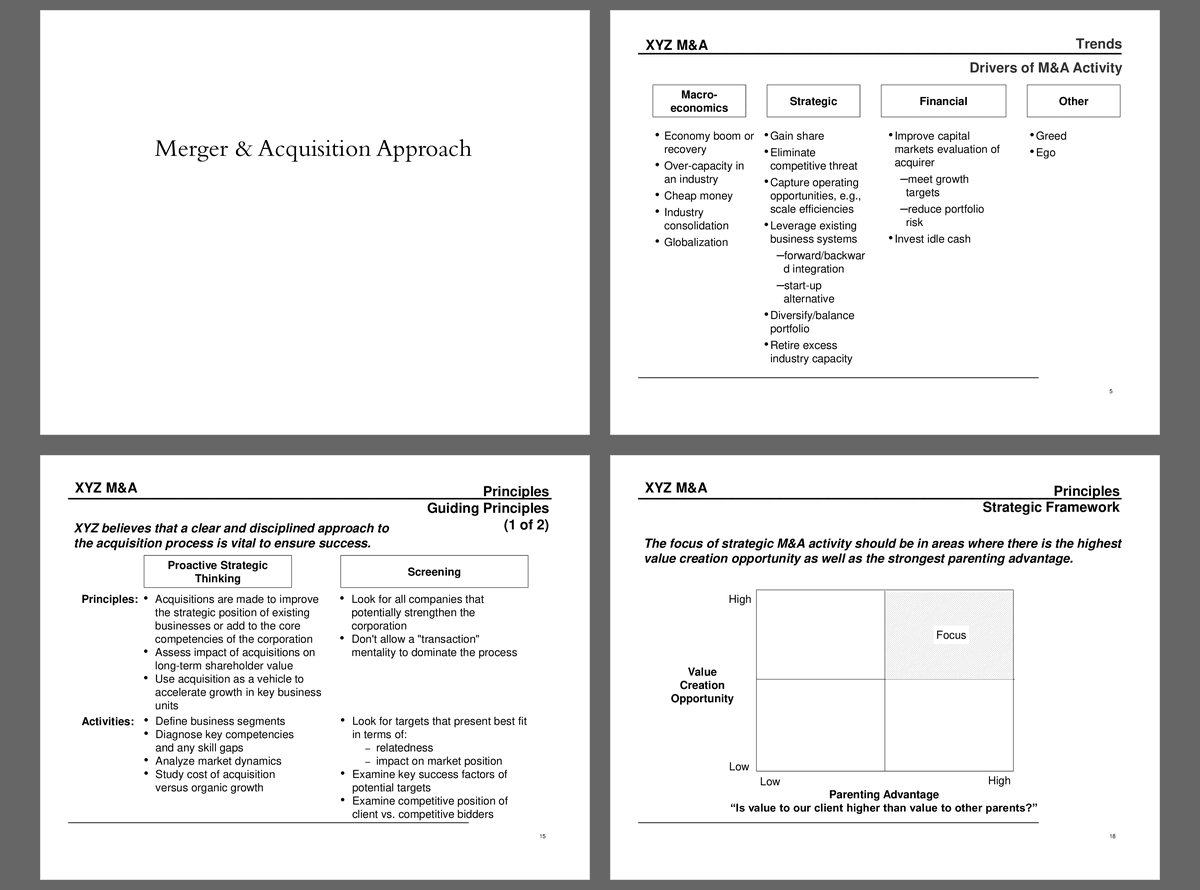

This is a training material used for merger and acquisition projects.
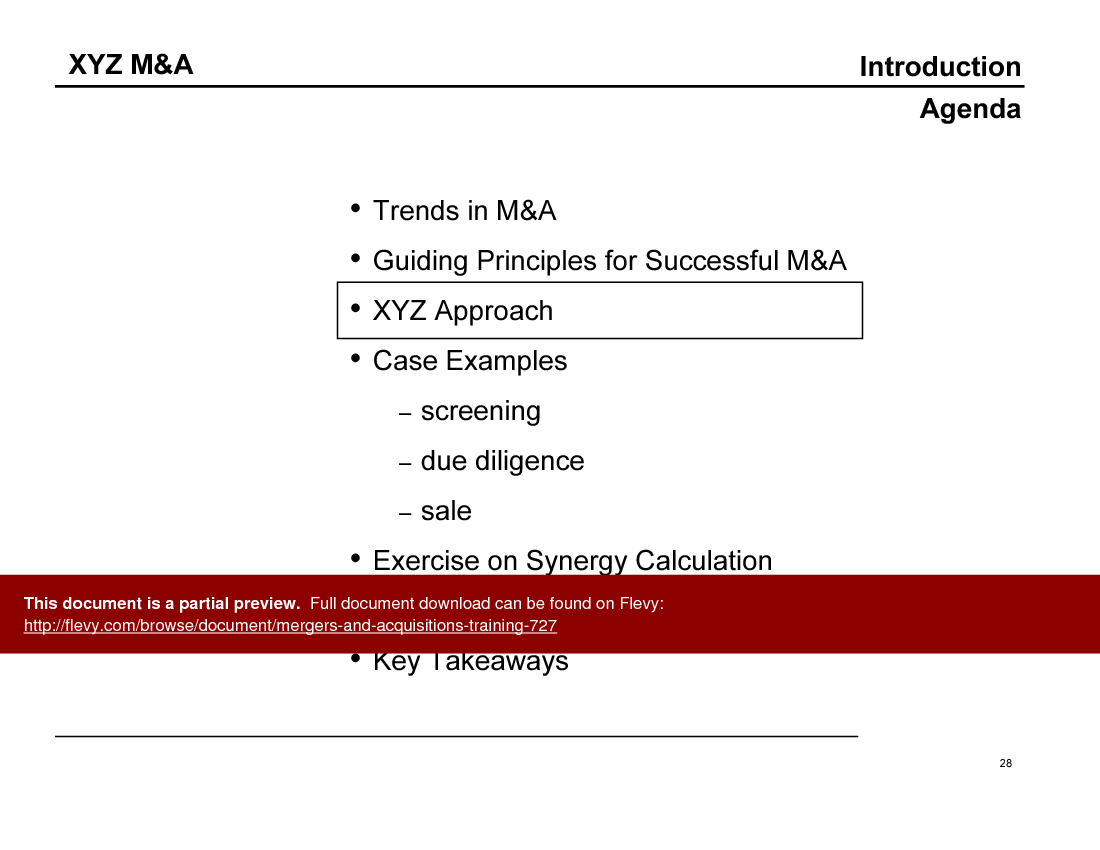
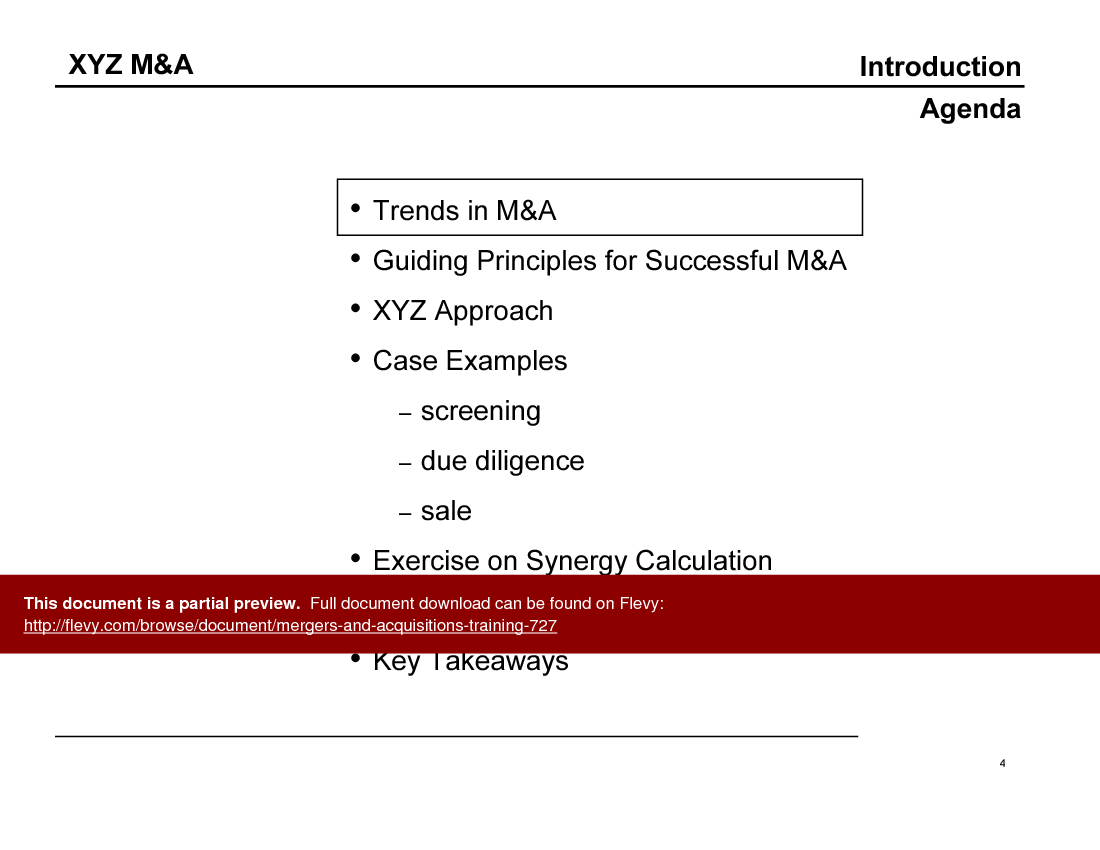
It includes:
• Guiding Principles For Successful M&A
• The Firms M&A Approach
• Case Examples
• How to Calculate Synergies
• Typical Watchouts
• Key Takeaways
It contains many useful frameworks and tools that can be adapted for use in M&A deals.
merger & acquisition, M&A, due diligence, consulting, tools, approach, synergies,
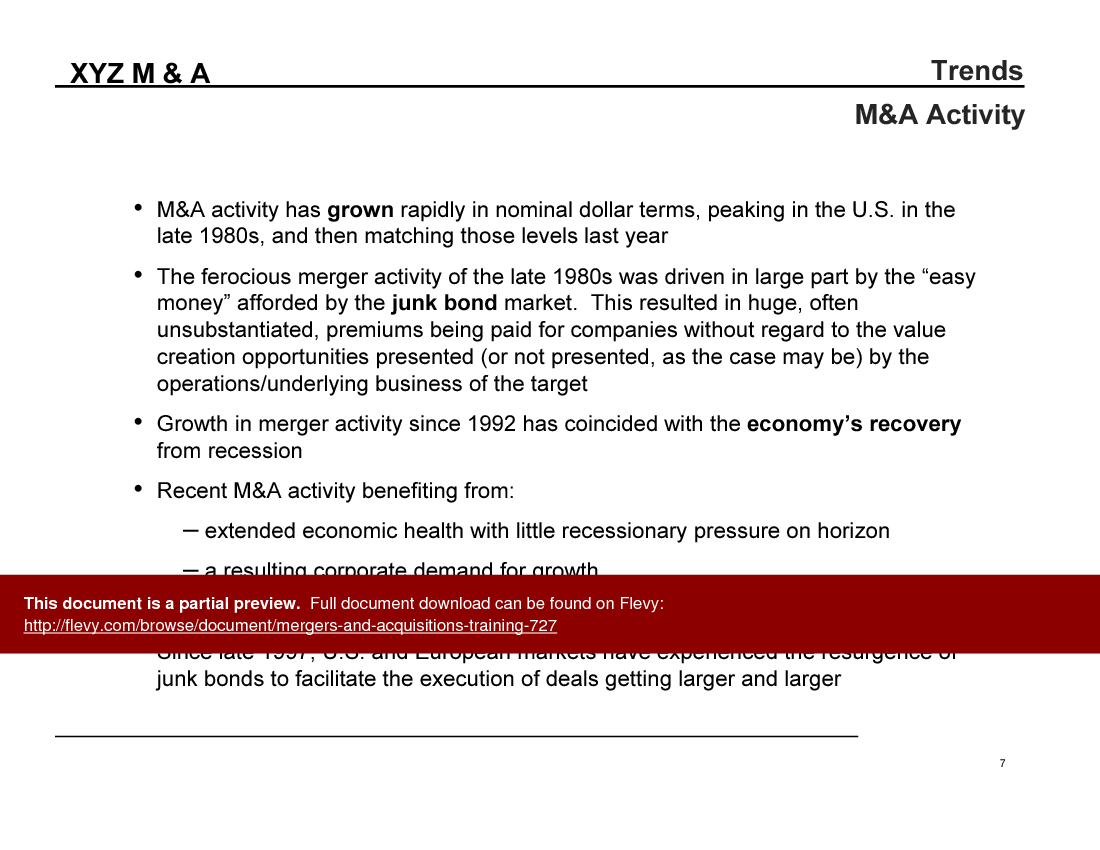
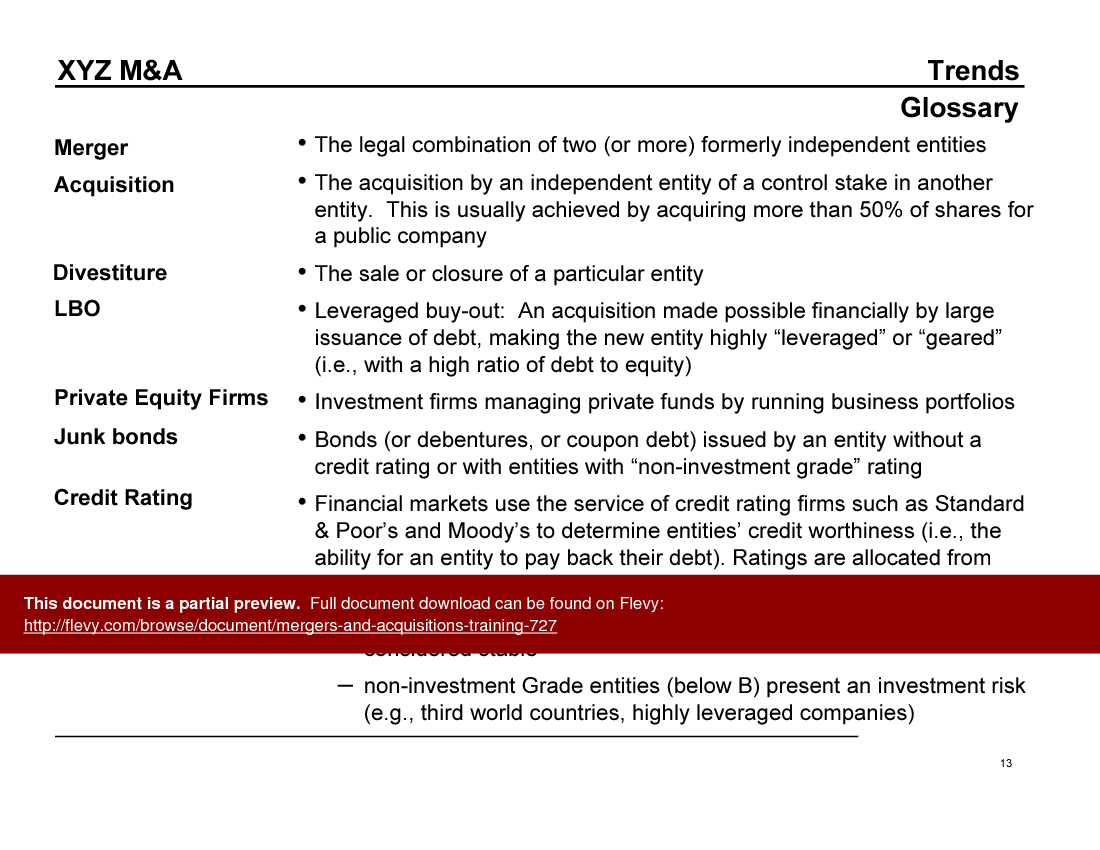
This training material delves into the intricacies of M&A activities, highlighting the rapid growth in nominal dollar terms and the significant role of the junk bond market in the late 1980s. It examines how economic recovery has influenced recent M&A activity, emphasizing the importance of thorough due diligence and strategic analysis to ensure fair pricing. The document provides a detailed glossary of key terms, ensuring clarity and understanding of essential concepts.
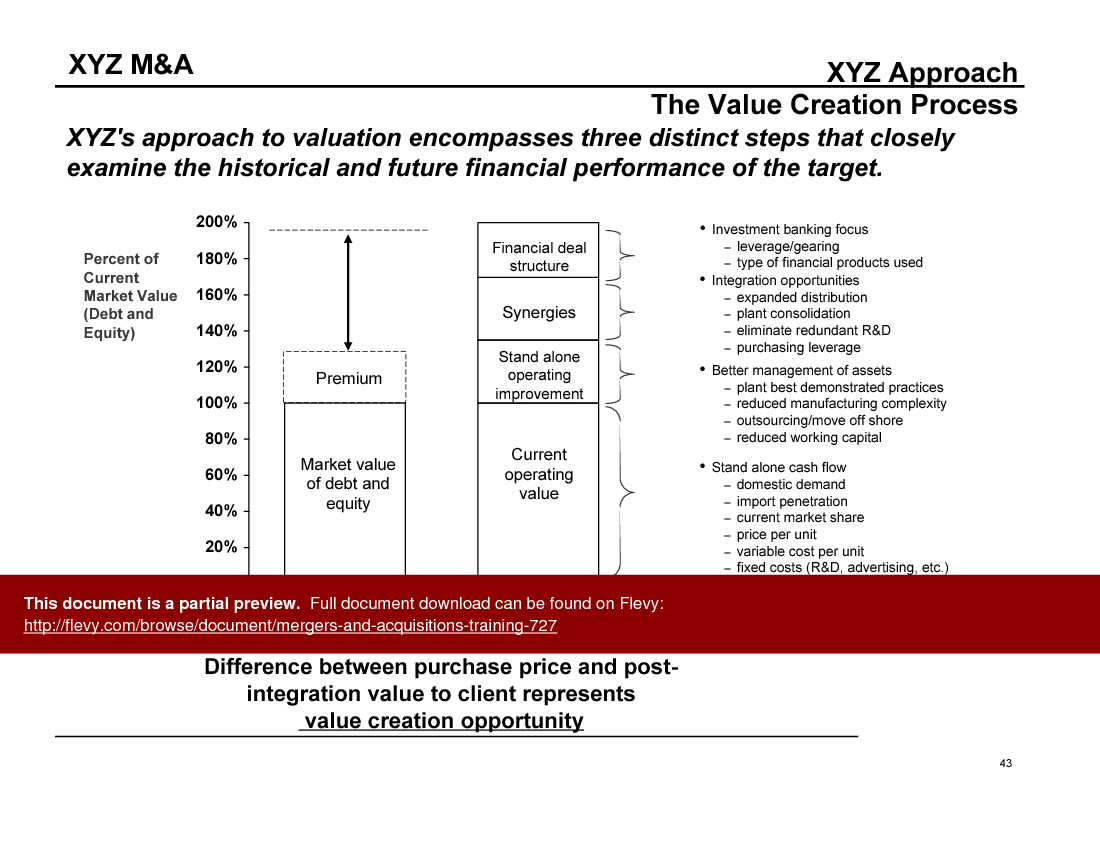
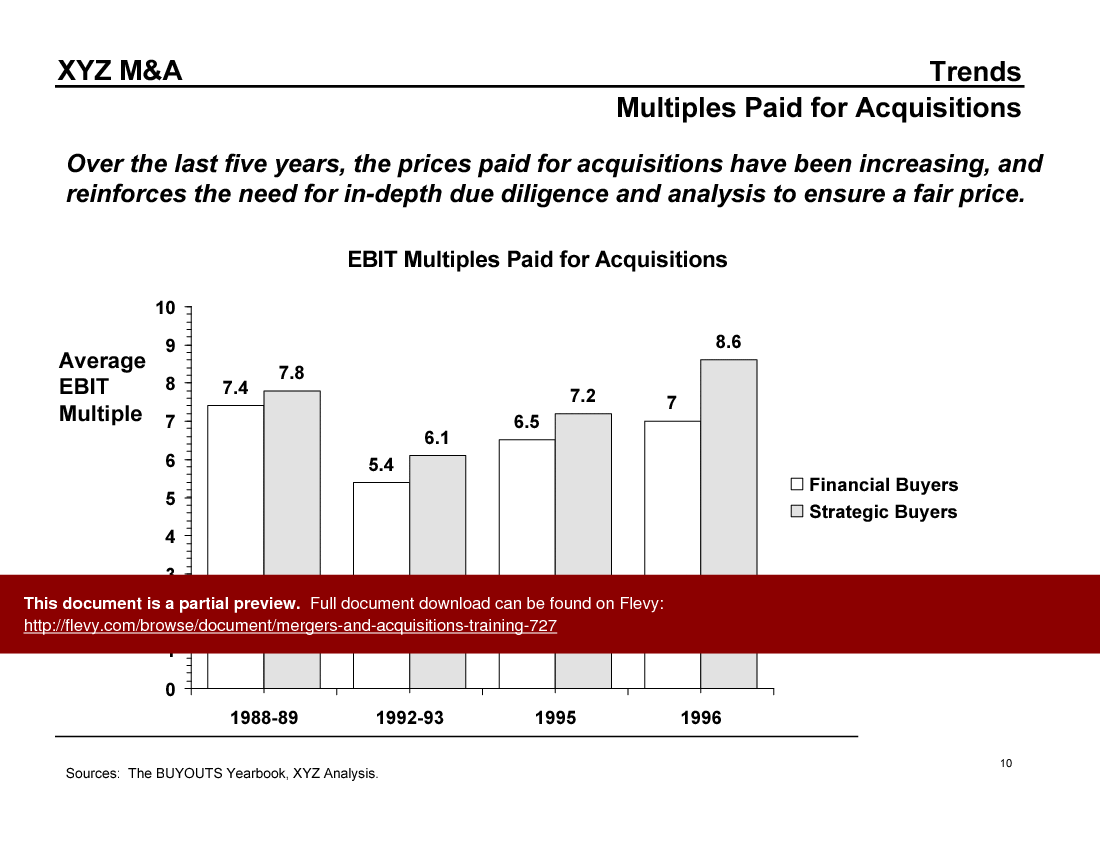
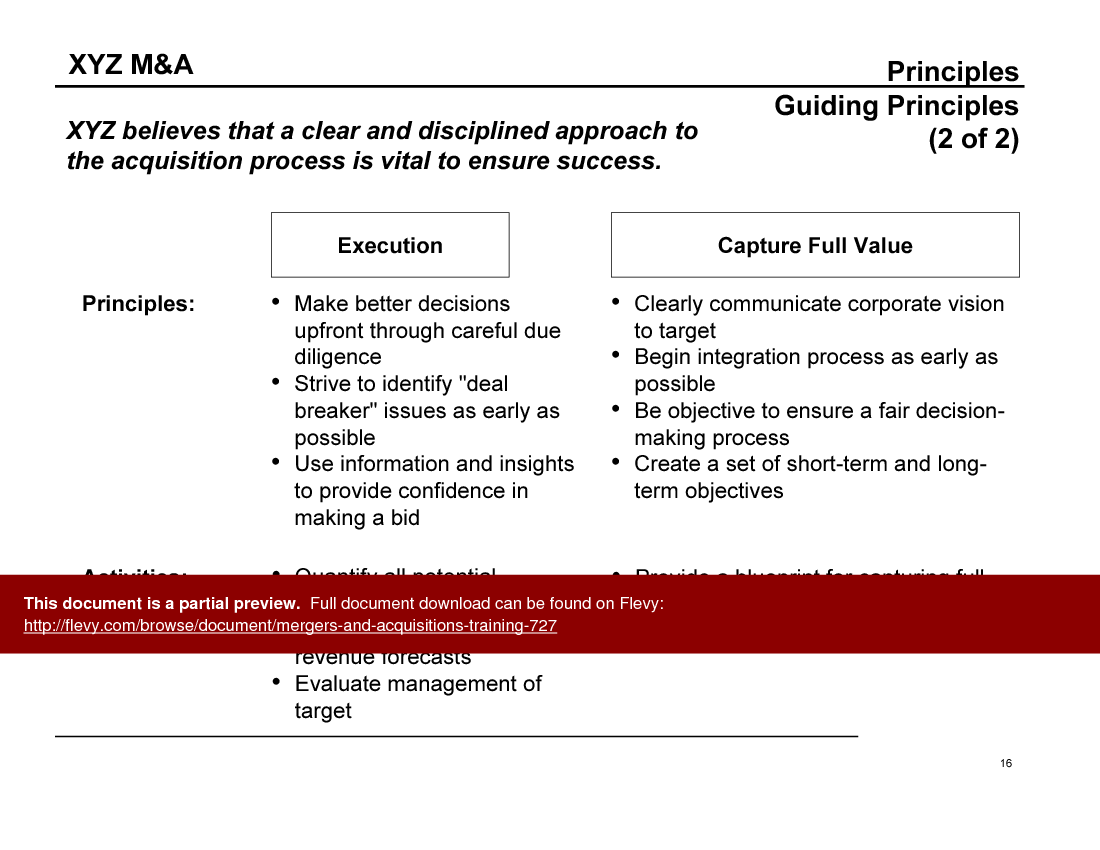
The document also includes a comprehensive analysis of multiples paid for acquisitions over the years, underscoring the rising prices and the necessity for in-depth due diligence. It offers a structured approach to valuation, focusing on historical and future financial performance. The training material emphasizes the importance of identifying deal-breaker issues early and using information to build confidence in making bids.
Case examples are provided to illustrate the application of M&A principles in real-world scenarios. These examples cover various industries, showcasing the evaluation of potential acquisition candidates, market segment analysis, and the impact of strategic decisions on business growth and value realization. The document also includes exercises on synergy calculation, encouraging practical application of the concepts discussed.
The training material concludes with key takeaways, summarizing the major steps in the M&A process, from strategy development to integration. It highlights the complementary role of XYZ in the M&A process, focusing on strategic issues and value quantification. This document is an invaluable resource for executives looking to navigate the complexities of M&A and maximize the value of their transactions.
Got a question about the product? Email us at support@flevy.com or ask the author directly by using the "Ask the Author a Question" form. If you cannot view the preview above this document description, go here to view the large preview instead.
Executive Summary
This Mergers & Acquisitions (M&A) training presentation provides a structured approach to understanding the complexities of M&A processes, tailored for new acquisition consultants and corporate executives. Crafted with the rigor expected from a McKinsey, Bain, or BCG-quality framework (consulting-grade; not affiliated), this deck covers essential analytical tools, guiding principles, and case examples that enhance decision-making in M&A projects. Participants will learn to identify strategic opportunities, assess potential synergies, and navigate common pitfalls, ultimately enabling them to execute successful M&A transactions.
Who This Is For and When to Use
• Corporate executives overseeing M&A strategy and execution
• Acquisition consultants seeking foundational knowledge in M&A processes
• Integration leaders responsible for post-acquisition integration
• Financial analysts involved in valuation and due diligence
Best-fit moments to use this deck:
• During pre-acquisition strategy sessions to align on objectives
• In training sessions for new consultants entering the M&A field
• When preparing for due diligence and valuation discussions
• As a reference during integration planning post-acquisition
Learning Objectives
• Define the key phases of the M&A process and their significance
• Identify trends and drivers influencing M&A activity
• Analyze potential acquisition targets using screening criteria
• Conduct thorough due diligence to uncover risks and opportunities
• Quantify synergies and assess their impact on valuation
• Develop a structured integration plan to maximize value post-acquisition
Table of Contents
• Introduction to M&A (page 2)
• Trends in M&A (page 5)
• Guiding Principles for Successful M&A (page 15)
• XYZ Approach (page 29)
• Case Examples (page 53)
• Exercise on Synergy Calculation (page 86)
• Typical Watchouts (page 113)
• Key Takeaways (page 116)
Primary Topics Covered
• Trends in M&A - Overview of current M&A activity, including economic drivers and industry-specific trends influencing mergers and acquisitions.
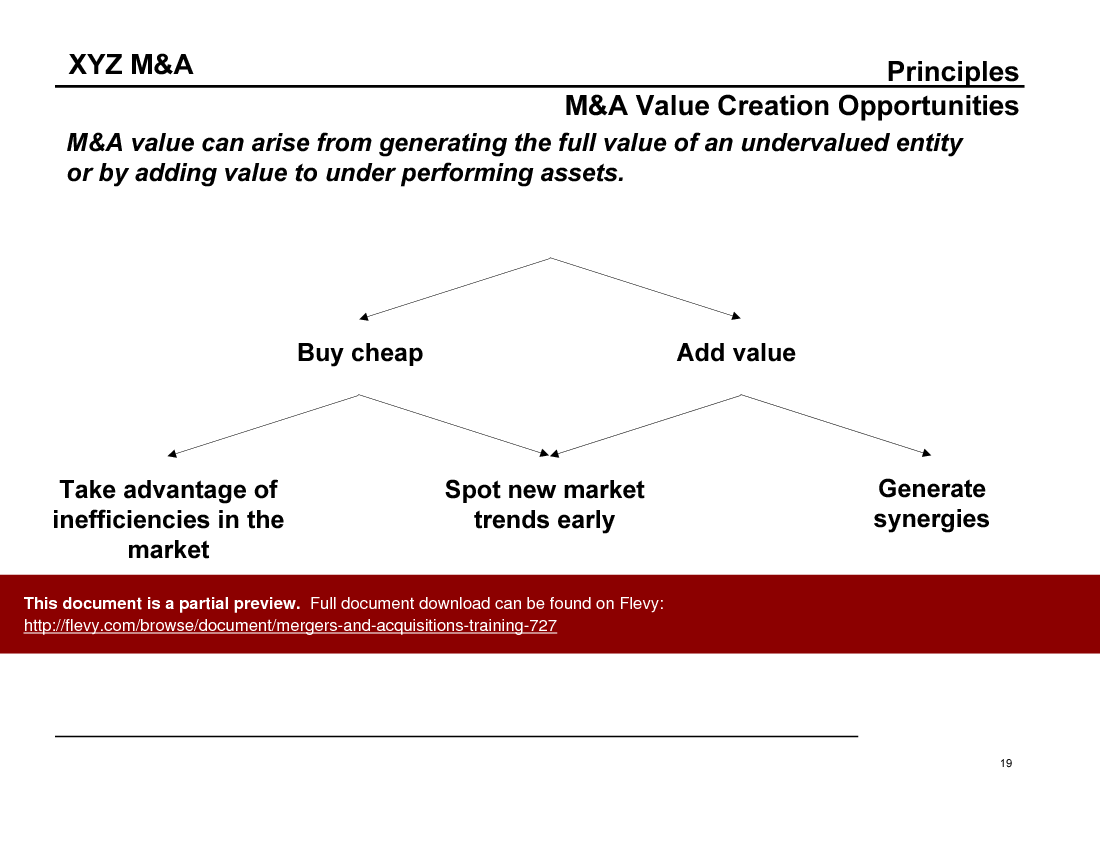
• Guiding Principles - Core principles that guide successful M&A strategies, emphasizing strategic fit and value creation.
• XYZ Approach - A structured methodology for screening targets, conducting due diligence, and executing integration plans.
• Case Examples - Real-world examples illustrating the application of M&A principles and strategies in various industries.
• Synergy Calculation - Techniques for quantifying synergies derived from mergers, including hard and soft synergies.
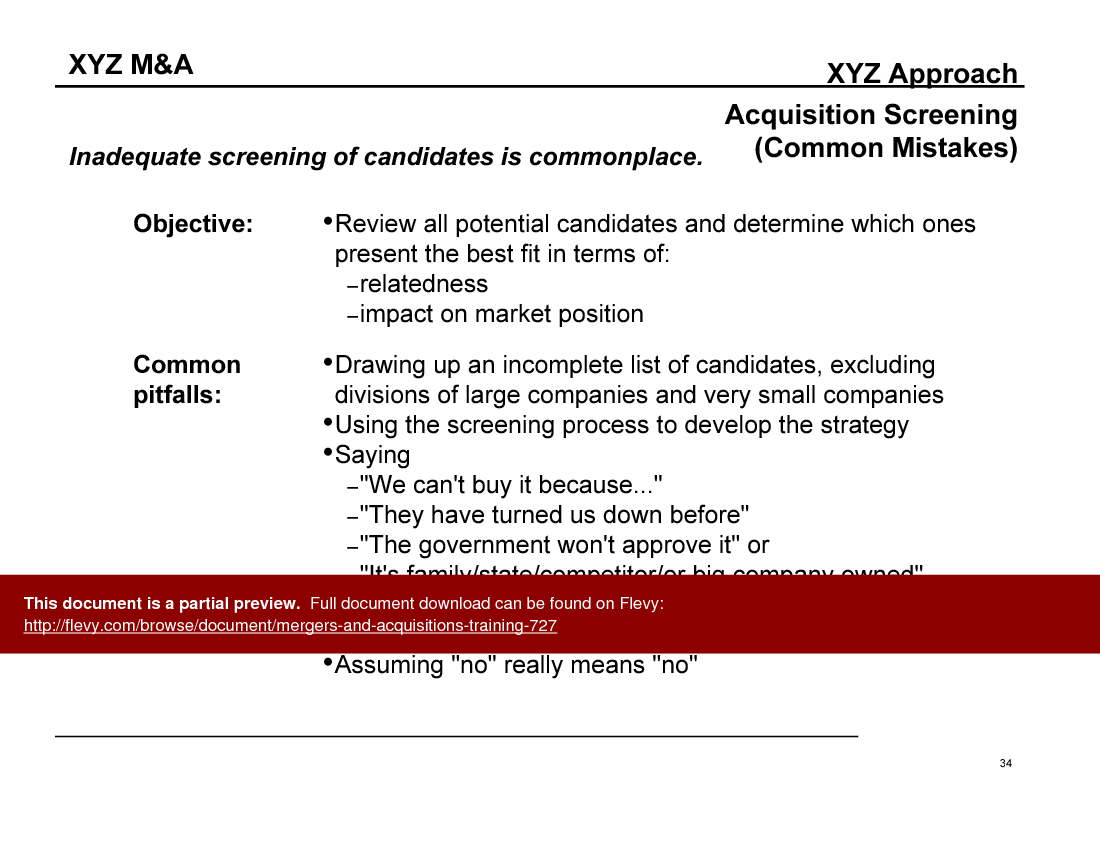
• Common Pitfalls - Identification of frequent mistakes in the M&A process and strategies to avoid them.
Deliverables, Templates, and Tools
• Target screening checklist to evaluate potential acquisition candidates
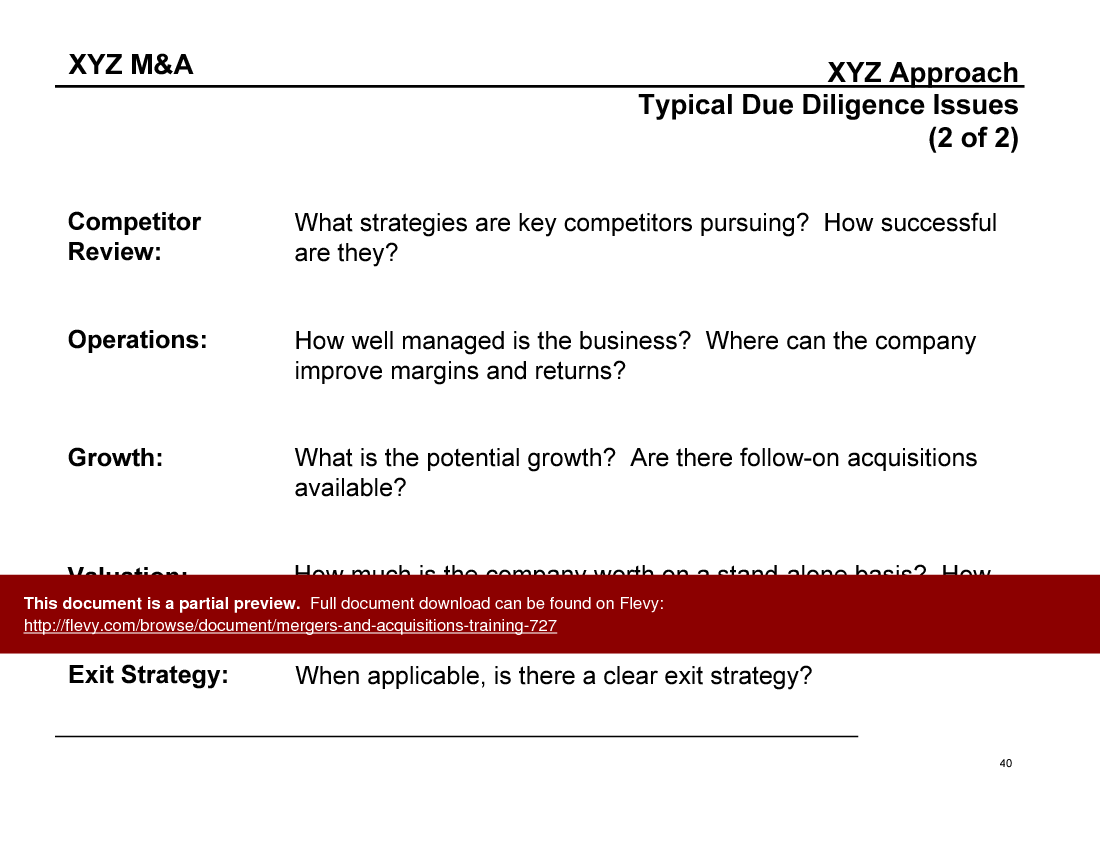
• Due diligence framework for assessing operational and financial risks
• Valuation model for estimating the fair price of acquisition targets
• Integration planning template to outline key actions and timelines
• Synergy quantification worksheet for calculating potential cost and revenue synergies
• Communication plan template for stakeholder engagement during the M&A process
Slide Highlights
• Overview of M&A trends showcasing historical data and future projections
• Guiding principles slide emphasizing the importance of strategic alignment
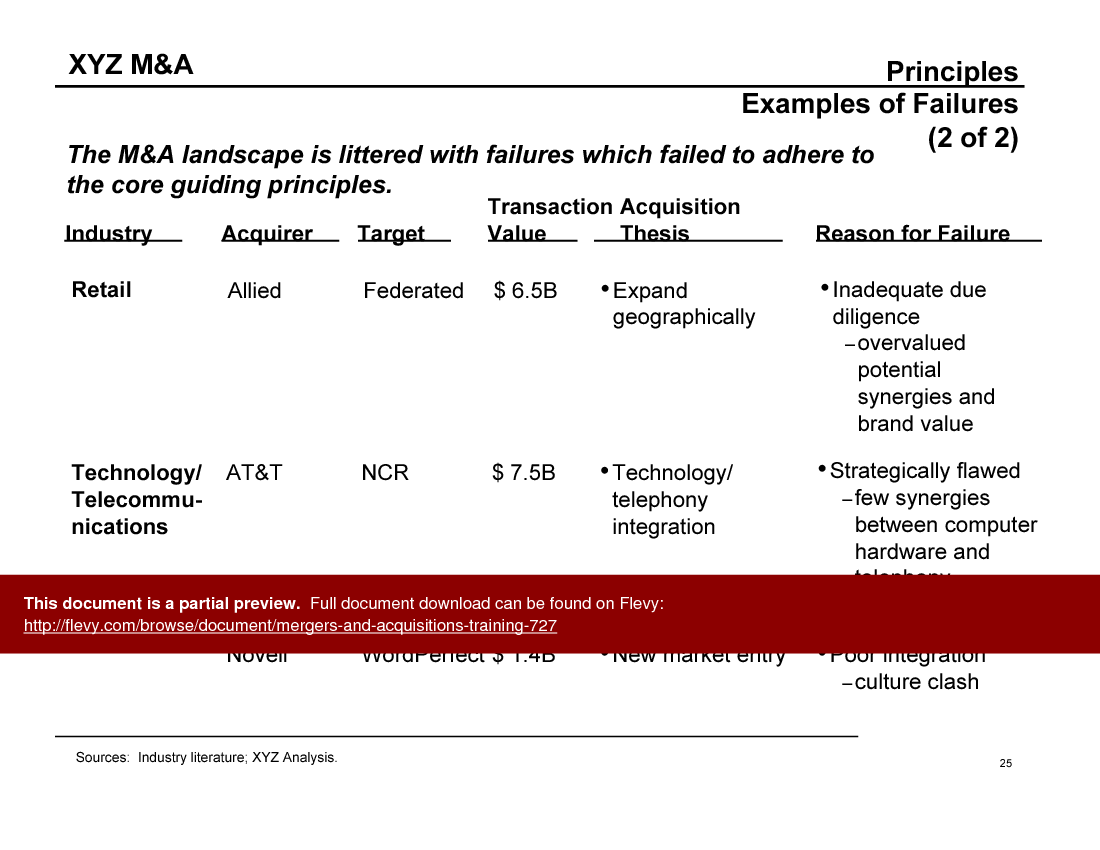
• Case example slides that detail successful and failed acquisitions, highlighting lessons learned
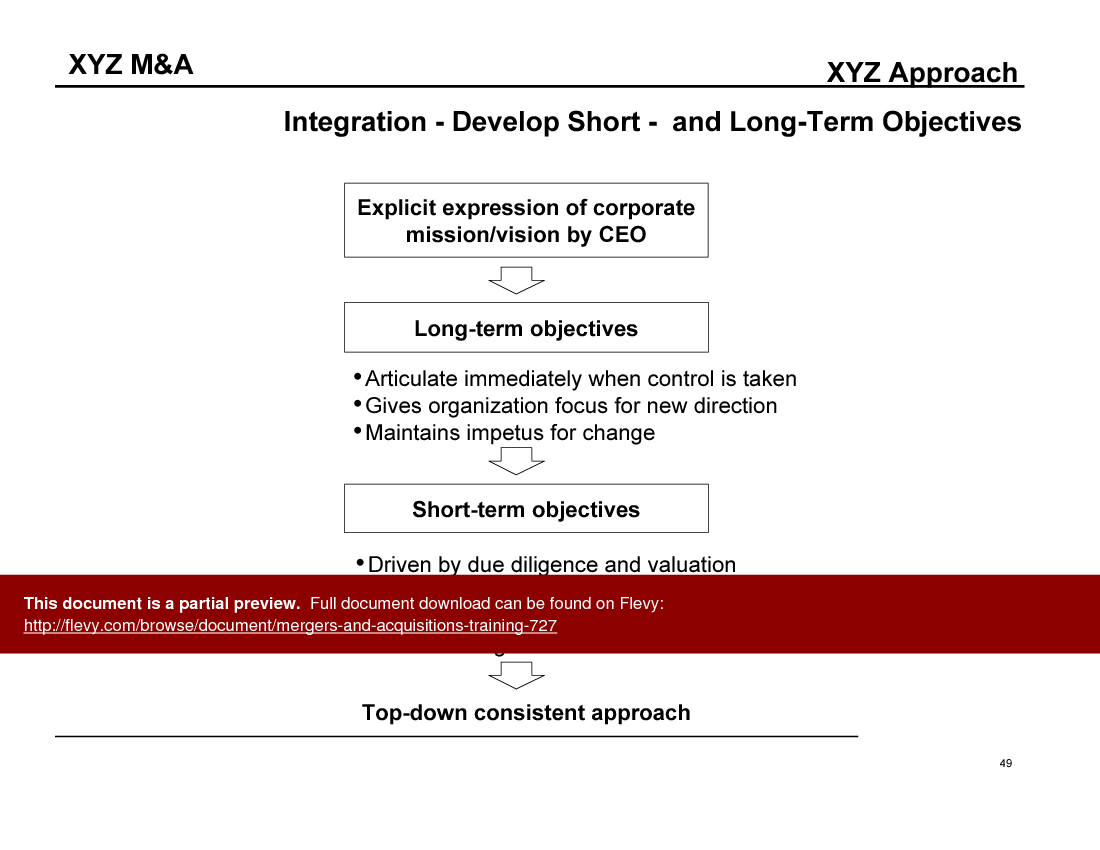
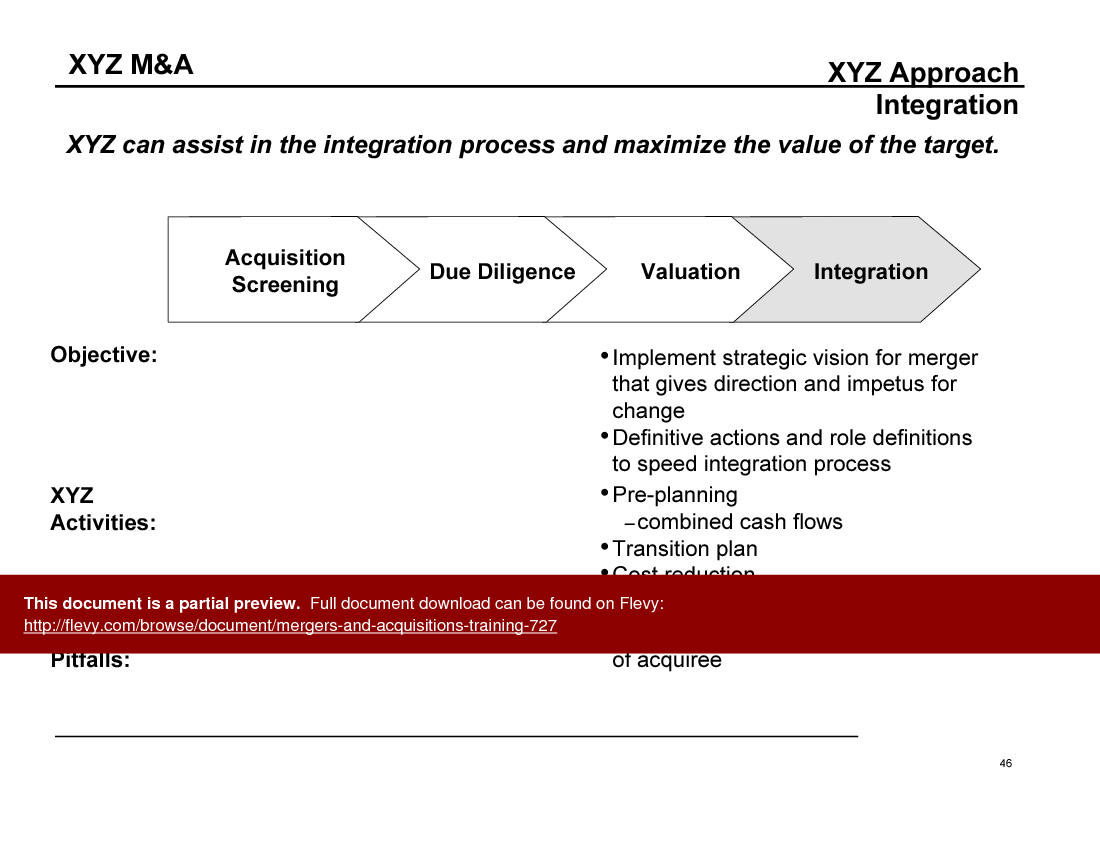
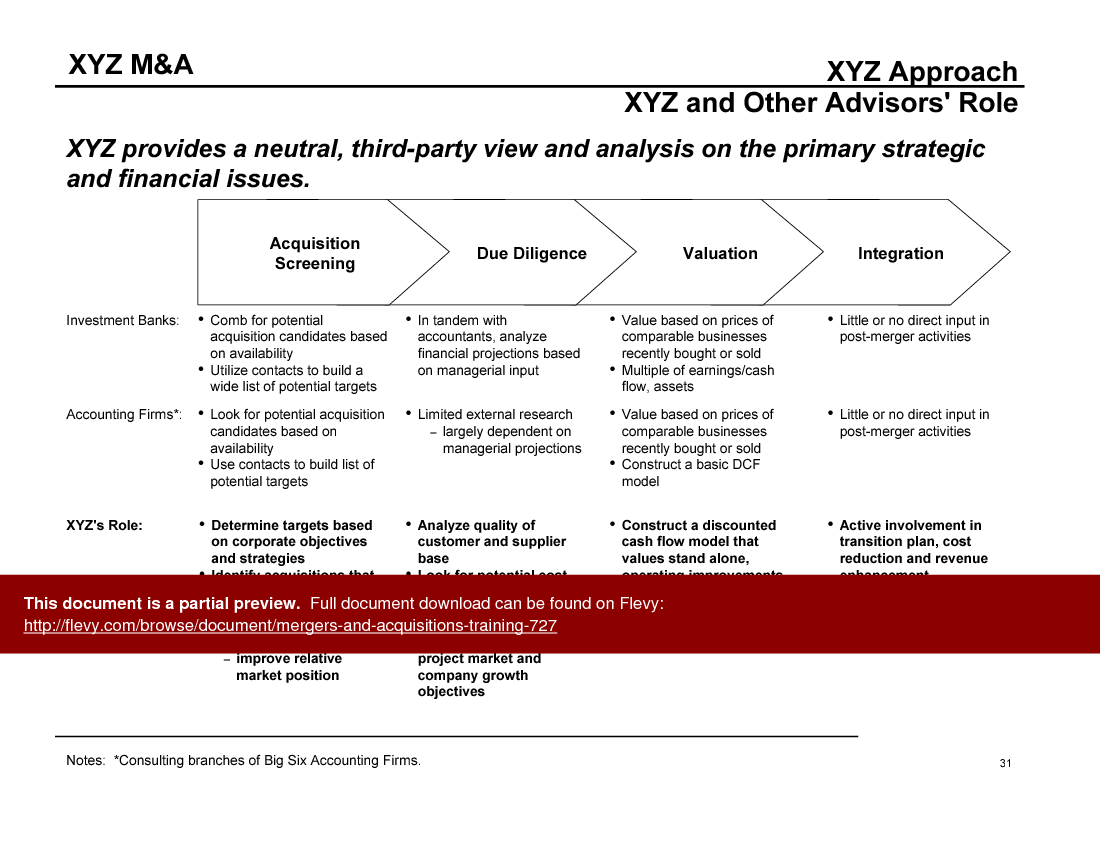
• Visual representation of the XYZ approach to M&A, outlining key activities and roles
• Synergy calculation slide illustrating methods for quantifying potential benefits
Potential Workshop Agenda
M&A Overview Session (90 minutes)
• Introduce key M&A concepts and trends
• Discuss guiding principles for successful acquisitions
• Review case examples of M&A successes and failures
Synergy Calculation Workshop (60 minutes)
• Conduct a hands-on exercise to quantify synergies
• Discuss methodologies for estimating cost and revenue synergies
• Share best practices for integrating acquired entities
Integration Planning Session (90 minutes)
• Develop a structured integration plan using provided templates
• Identify key stakeholders and communication strategies
• Outline short-term and long-term objectives for post-acquisition success
Customization Guidance
• Tailor the target screening criteria to align with specific industry dynamics and strategic goals
• Adjust the due diligence framework to focus on unique operational risks relevant to the acquisition
• Modify the integration planning template to reflect organizational culture and management styles
Secondary Topics Covered
• Market dynamics affecting M&A activity
• Financial metrics and valuation techniques for assessing acquisition targets
• Cultural considerations in post-merger integration
• Regulatory and compliance issues in M&A transactions
• Strategies for managing stakeholder expectations during the M&A process
FAQ
What are the key phases of the M&A process?
The M&A process typically includes strategy development, target screening, due diligence, valuation, and integration planning. Each phase is critical for ensuring a successful acquisition.
How do I identify potential acquisition targets?
Use a structured screening process that evaluates candidates based on market attractiveness, strategic fit, and potential synergies. This involves analyzing industry trends and competitive positioning.
What common pitfalls should I avoid in M&A?
Common pitfalls include inadequate due diligence, overestimation of synergies, and poor integration planning. Awareness of these issues can help mitigate risks.
How can I quantify synergies from an acquisition?
Synergies can be quantified by assessing cost savings (hard synergies) and revenue enhancements (soft synergies). Use a synergy calculation worksheet to estimate potential benefits.
What role does due diligence play in the M&A process?
Due diligence is essential for uncovering risks and validating assumptions about the target company. It involves a thorough analysis of financial, operational, and market factors.
How important is integration planning post-acquisition?
Integration planning is crucial for realizing the full value of an acquisition. A well-structured plan ensures that synergies are captured and that the combined entity operates effectively.
What are the guiding principles for successful M&A?
Key principles include ensuring strategic alignment, conducting thorough due diligence, and maintaining clear communication throughout the process.
How do I assess the cultural fit between merging companies?
Evaluate cultural compatibility by analyzing management styles, employee engagement, and organizational values. Conduct interviews and surveys to gather insights from both organizations.
Glossary
• M&A - Mergers and Acquisitions, the process of consolidating companies or assets.
• Synergy - The potential financial benefit achieved through the combination of 2 companies.
• Due Diligence - The investigation and evaluation of a potential investment or acquisition.
• Valuation - The process of determining the current worth of an asset or company.
• Integration - The process of combining 2 companies into one cohesive entity.
• Hard Synergies - Cost savings that can be directly quantified from an acquisition.
• Soft Synergies - Revenue enhancements that arise from improved market positioning or operational efficiencies.
• Screening Criteria - The set of standards used to evaluate potential acquisition targets.
• Market Dynamics - The forces that impact the supply and demand of goods and services in a market.
• Stakeholder - Any individual or group that has an interest in the outcome of a project or transaction.
• Strategic Fit - The degree to which an acquisition aligns with the acquirer's strategic goals.
• Competitive Position - The relative standing of a company in its industry compared to its competitors.
• Portfolio Management - The process of managing a collection of investments or business units.
• Acquisition Thesis - The rationale behind pursuing a specific acquisition.
• Exit Strategy - A plan for how an investor or company intends to divest from an investment or business.
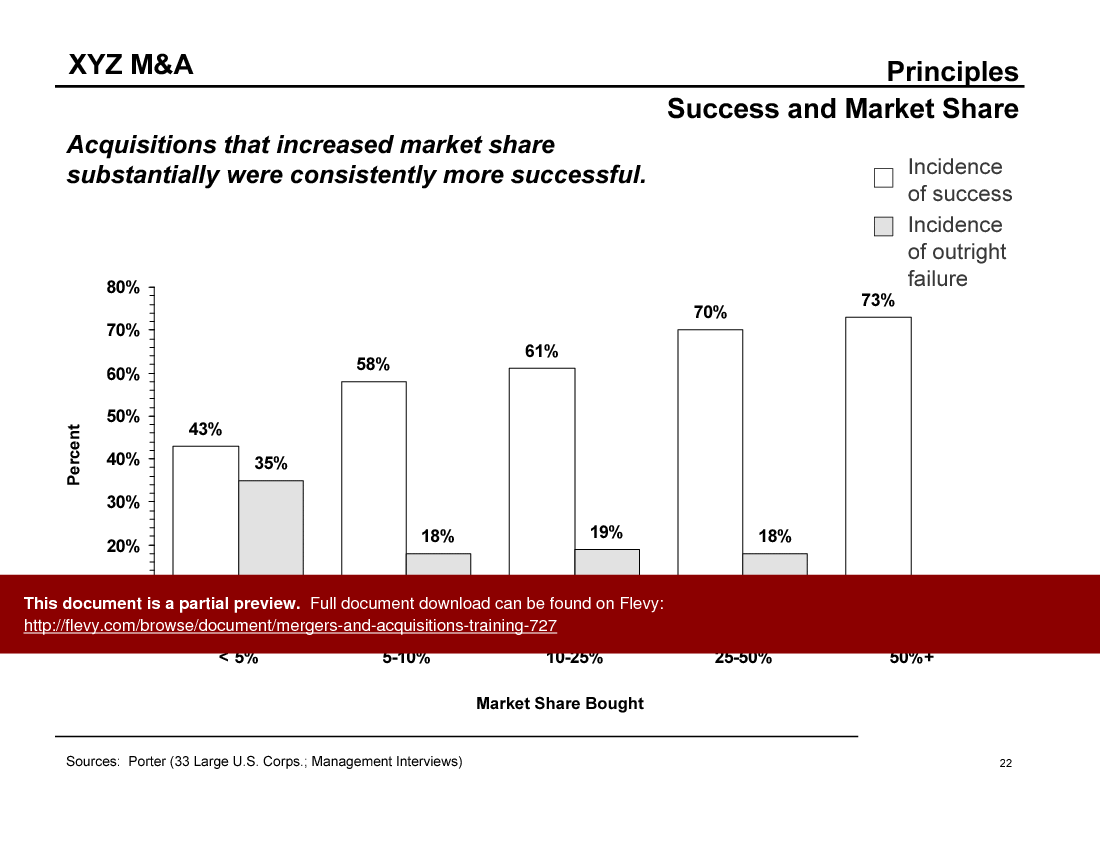
• Market Share - The portion of a market controlled by a particular company or product.
• EBIT - Earnings Before Interest and Taxes, a measure of a firm's profitability.
• DCF - Discounted Cash Flow, a valuation method used to estimate the value of an investment based on its expected future cash flows.
• NPV - Net Present Value, a financial metric used to assess the profitability of an investment.
• ROI - Return on Investment, a measure used to evaluate the efficiency of an investment.
Source: Best Practices in M&A, Synergy PowerPoint Slides: Mergers & Acquisitions Training PowerPoint (PPT) Presentation Slide Deck, Documents & Files
This document is available as part of the following discounted bundle(s):
Save %!
Mergers and Acquisitions Toolkit
This bundle contains 7 total documents. See all the documents to the right.
|
Download our FREE Strategy & Transformation Framework Templates
Download our free compilation of 50+ Strategy & Transformation slides and templates. Frameworks include McKinsey 7-S, Balanced Scorecard, Disruptive Innovation, BCG Curve, and many more. |