
"The life of a typical entrant is nasty, brutish, and short." – Paul Geroski, London Business School.
Companies can boost their odds of success by tackling cognitive biases head-on. Market entry strategy is a useful tool for getting clarity on what you aim to achieve and how you are going to achieve it while entering a new market. Creating an effective strategy before entering the new market is one of the main questions that arise in the mind of an investor. In order to enter the market as comfortably as possible, simple, and with minimal risks, it is necessary to examine the target niche.
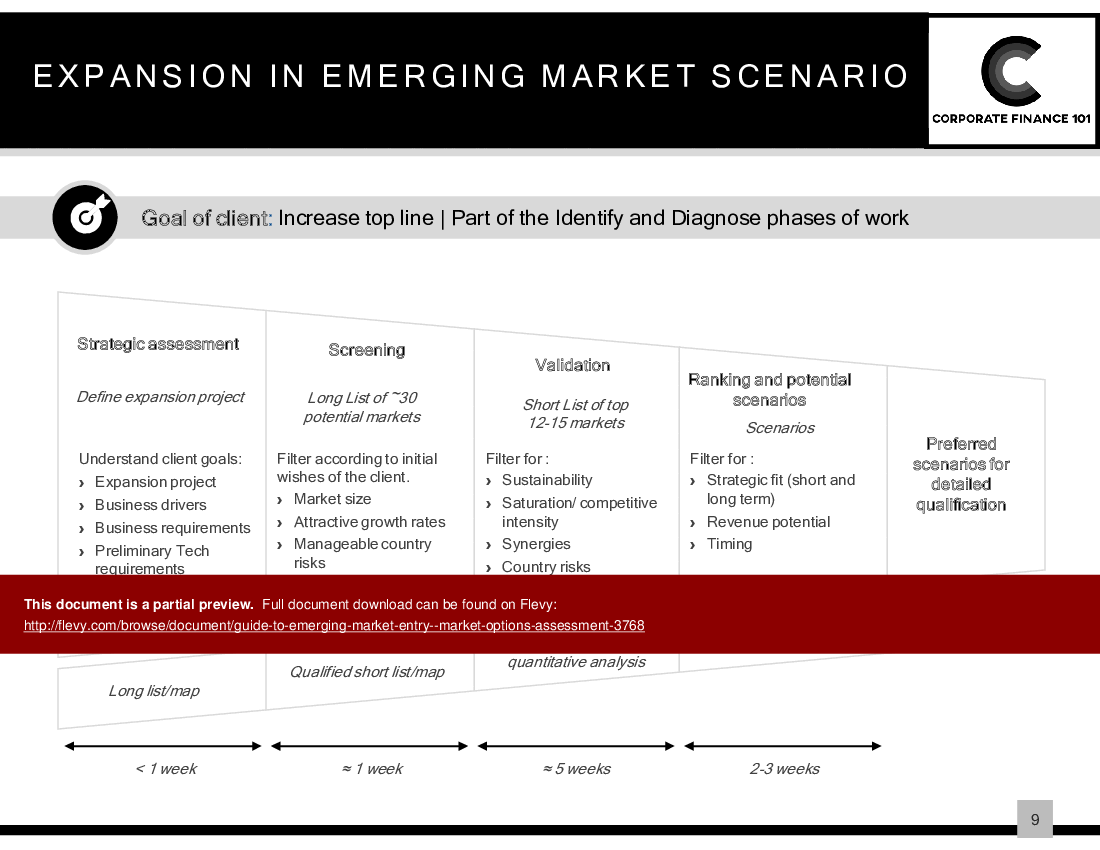
At the start of the options assessment process, a long list of options exists. This guide provides a process that involves narrowing down the list of options through a filtering process and provides a structured approach to performing the assessment of market entry selection. A phased approach is recommended to assess and narrow down options:
Stage 1: Strategic Assessment
Stage 2: Screening
Stage 3: Validation
Stage 4: Ranking and potential scenarios
Stage 5: Preferred scenarios for detailed qualification
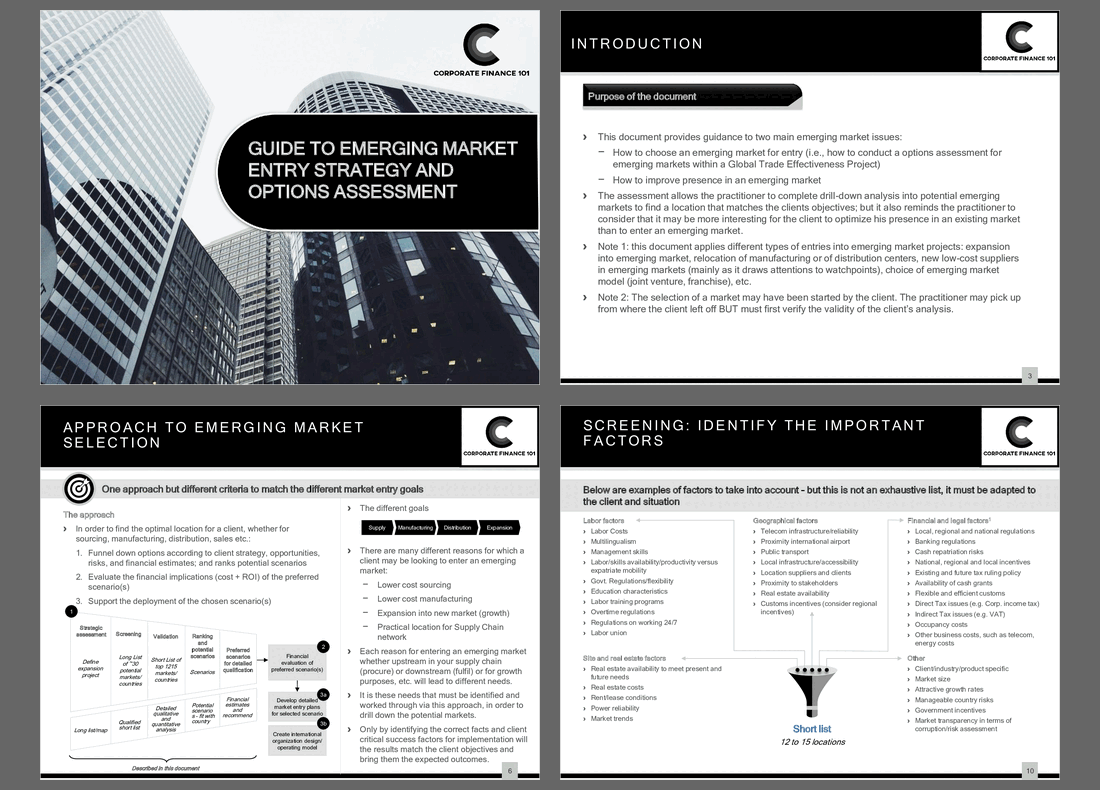
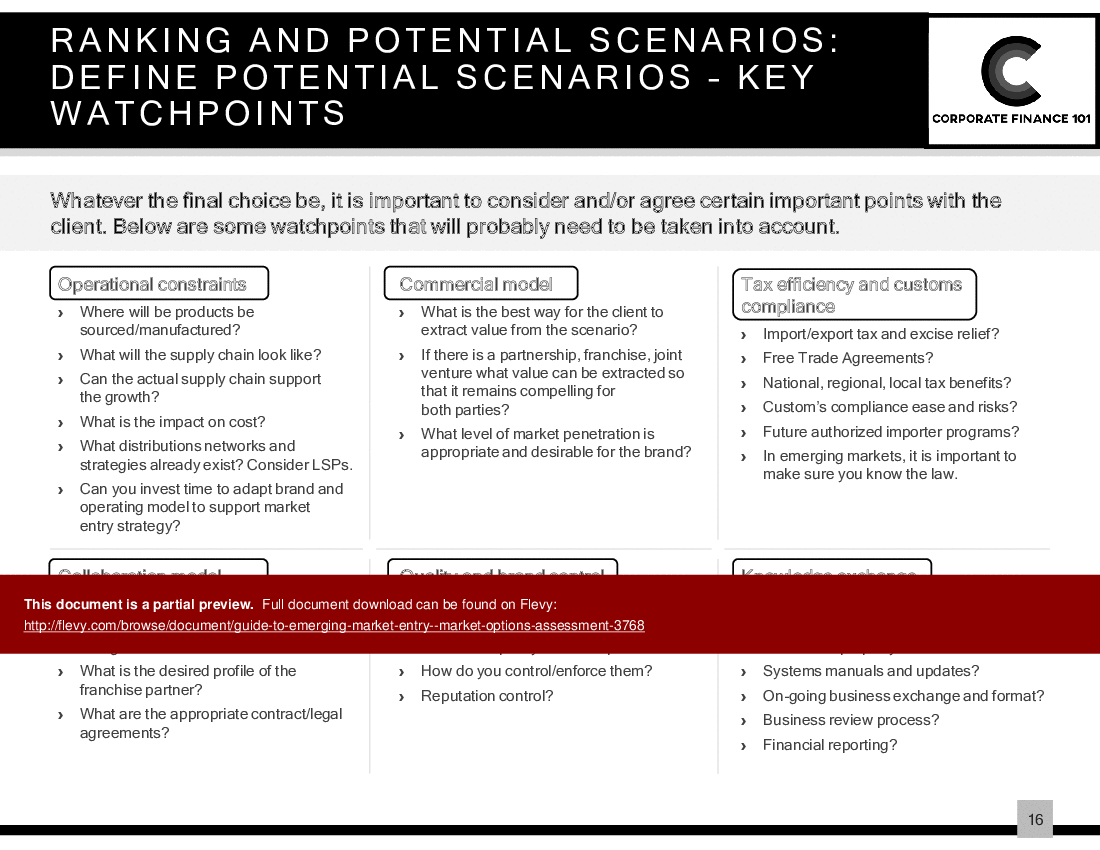
This guide delves into the intricacies of emerging market selection, providing a comprehensive walkthrough using a practical example of location and market entry scenario. It addresses upstream and downstream challenges, offering additional factors for consideration. The PPT also highlights effectiveness opportunities and risks in emerging markets, ensuring you are well-prepared for potential pitfalls.
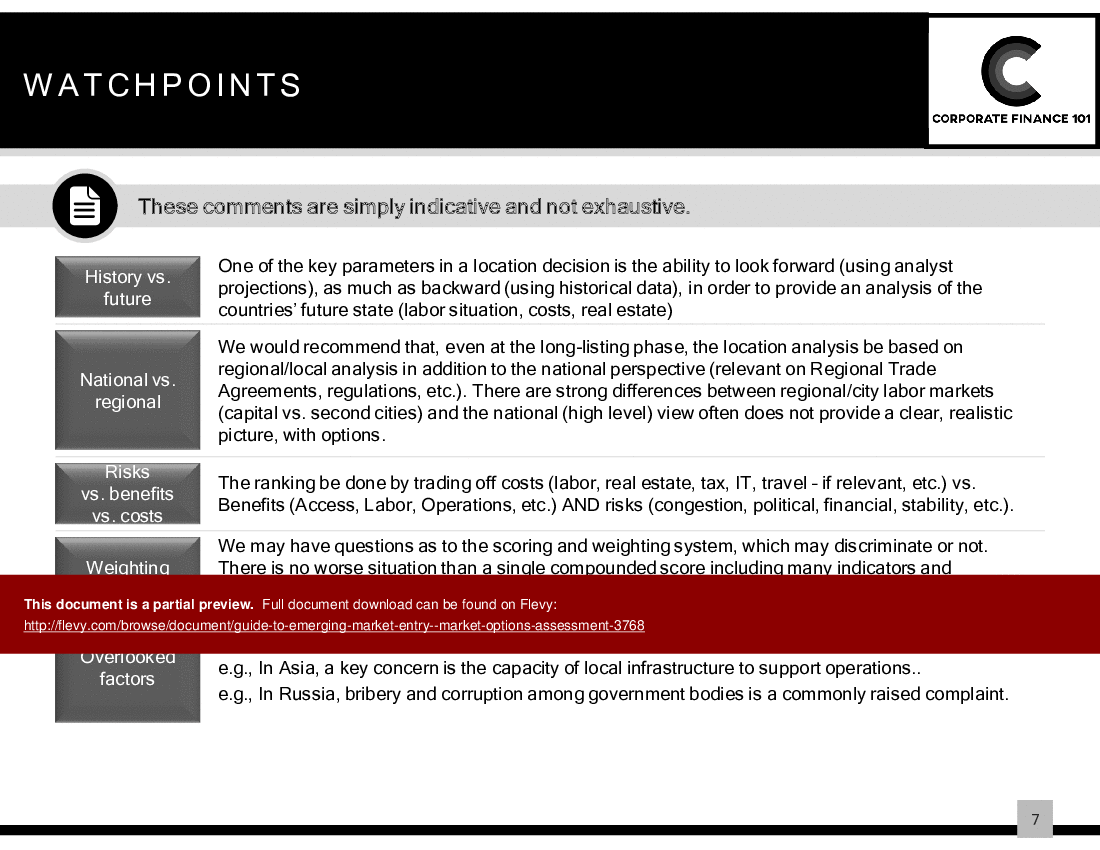
Key parameters such as historical data, national vs. regional analysis, and risk vs. benefit trade-offs are thoroughly examined. The guide emphasizes the importance of a phased approach, from strategic assessment to detailed qualification of preferred scenarios. It also includes practical advice and real-world examples to support your decision-making process.
Got a question about the product? Email us at support@flevy.com or ask the author directly by using the "Ask the Author a Question" form. If you cannot view the preview above this document description, go here to view the large preview instead.
Executive Summary
The Guide to Emerging Market Entry Strategy and Options Assessment is a consulting-grade resource designed to assist practitioners in navigating the complexities of entering emerging markets. This tool provides a structured approach to assess potential markets, identify strategic entry options, and optimize existing market presence. It is crafted to deliver insights comparable to McKinsey, Bain, or BCG-quality frameworks (consulting-grade; not affiliated). Users will be able to conduct thorough analyses, evaluate risks, and develop tailored market entry strategies that align with client objectives.
Who This Is For and When to Use
• Corporate executives seeking to expand into emerging markets
• Integration leaders responsible for market entry assessments
• Consultants advising clients on global trade effectiveness
• Business development teams exploring new market opportunities
Best-fit moments to use this deck:
• During the Diagnose phase of a Global Trade Effectiveness project
• When evaluating potential markets for expansion or optimization
• To assess the feasibility of relocating manufacturing or distribution centers
Learning Objectives
• Define the criteria for selecting emerging markets based on client objectives
• Conduct a comprehensive options assessment for market entry
• Evaluate financial implications and risks associated with potential scenarios
• Develop tailored market entry strategies that align with client goals
• Identify upstream and downstream challenges in emerging markets
• Formulate remedial actions to mitigate risks once operational
Table of Contents
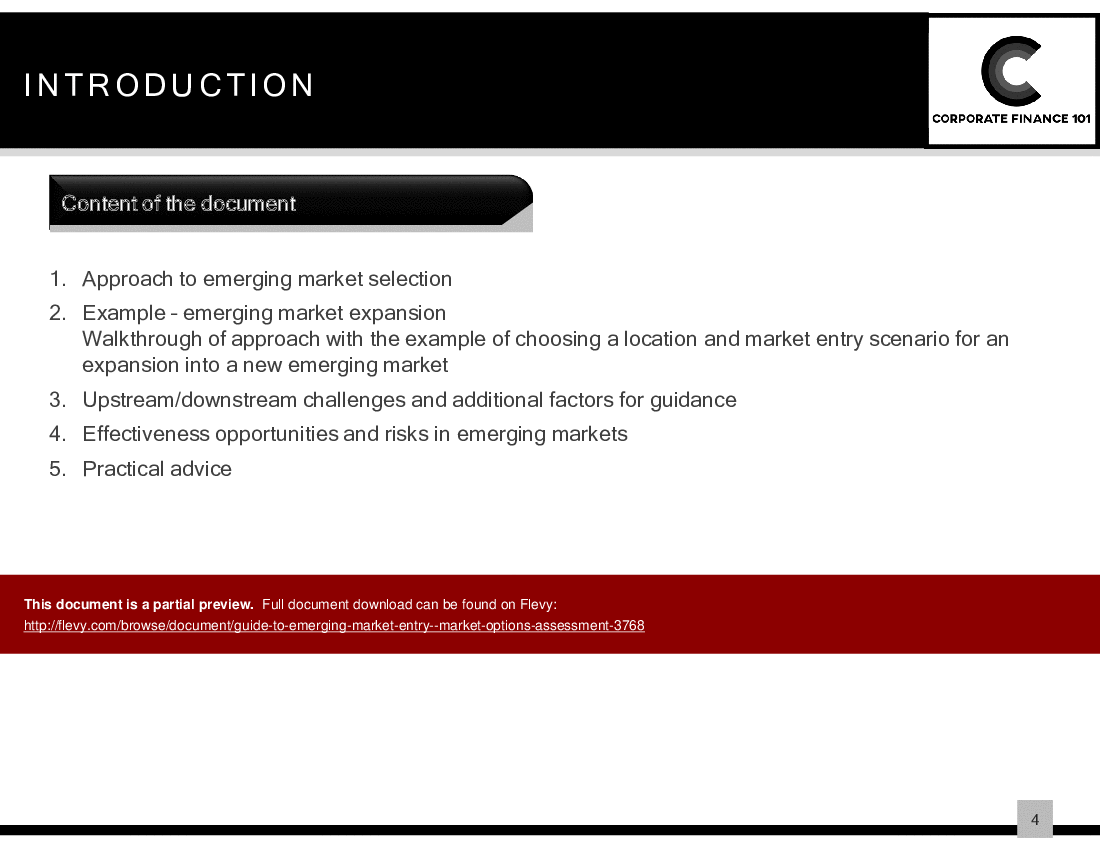
• Approach to Emerging Market Selection (page 6)
• Example – Market Expansion (page 9)
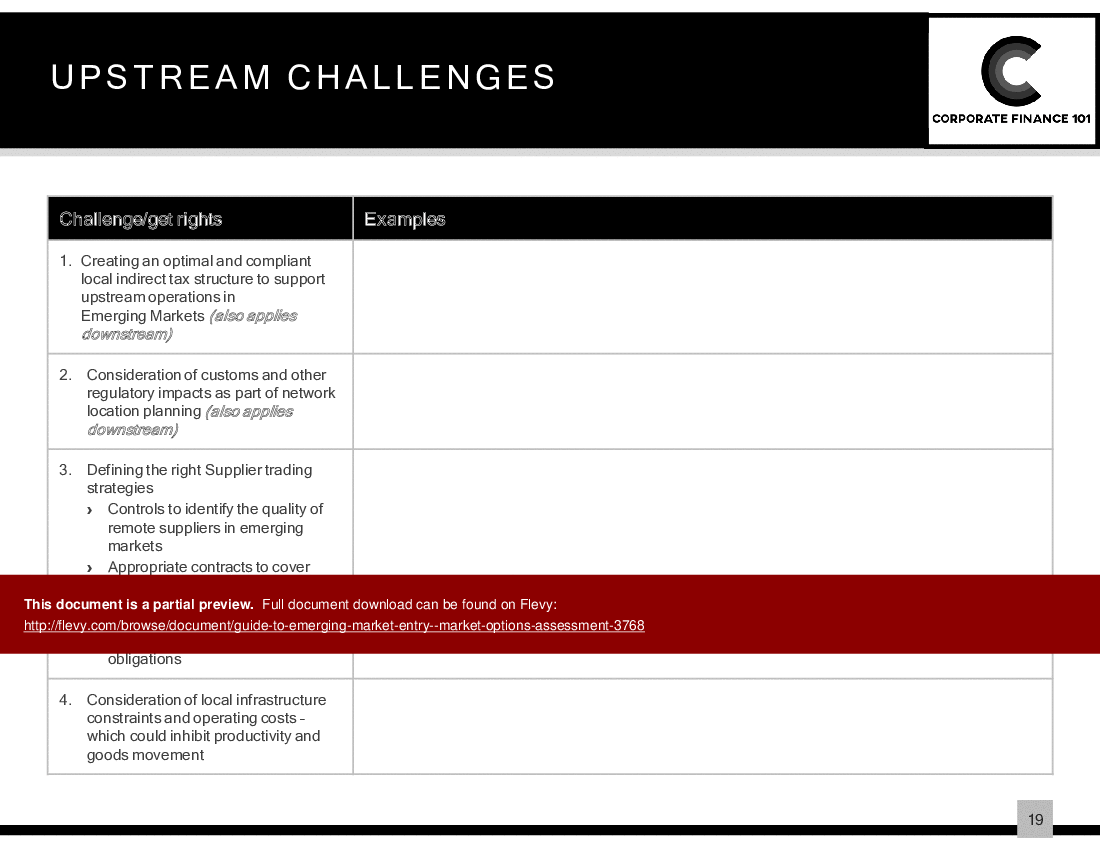
• Upstream/Downstream Challenges (page 19)
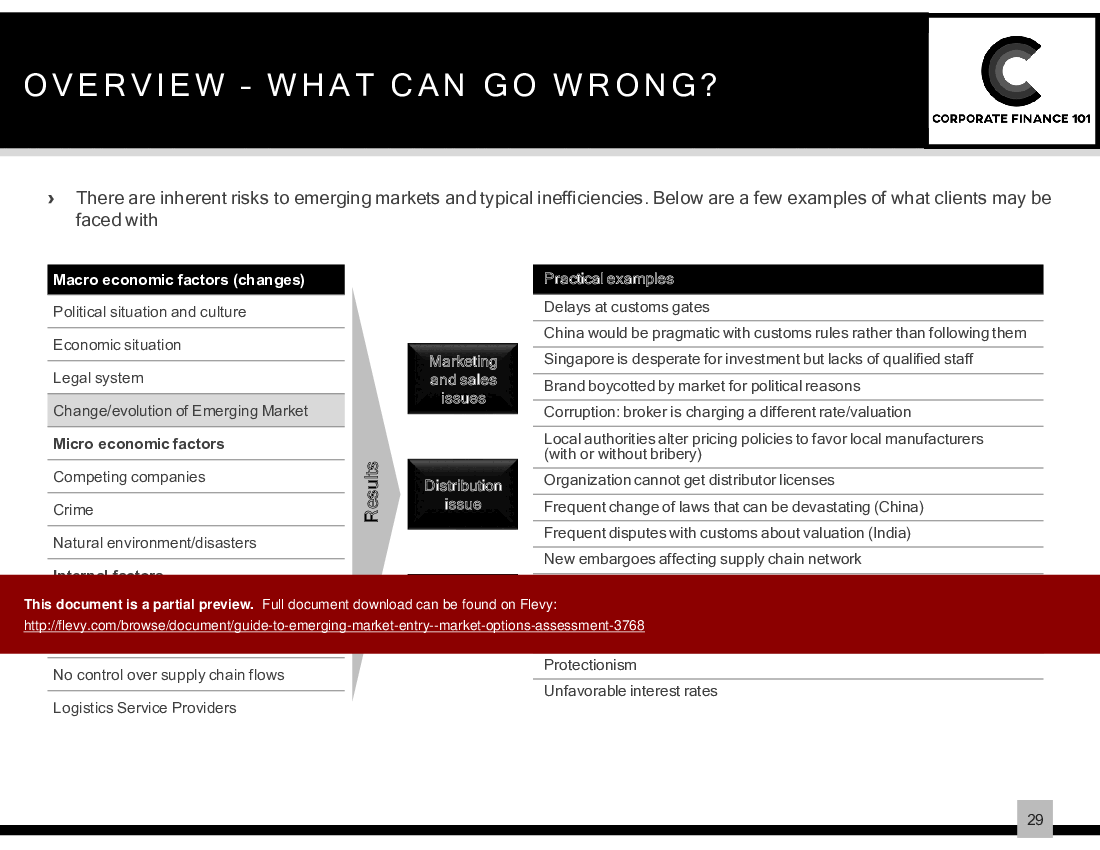
• Effectiveness Opportunities and Risks in Emerging Markets (page 29)
• Remedial Actions to Optimize Emerging Market Entry (page 30)
Primary Topics Covered
• Emerging Market Selection - A structured approach to assess and rank potential markets based on client strategies, risks, and financial estimates.
• Market Expansion Example - A walkthrough of assessing a new market entry scenario, including strategic assessments and validation processes.
• Upstream/Downstream Challenges - Identification of key challenges faced when entering emerging markets, including regulatory and operational hurdles.
• Effectiveness Opportunities - Insights into the risks and inefficiencies inherent in emerging markets, along with practical examples.
• Remedial Actions - Strategies for mitigating risks and optimizing market entry, including compliance and supply chain adjustments.
Deliverables, Templates, and Tools
• Market selection criteria template for assessing emerging markets
• Financial evaluation models for preferred market entry scenarios
• Risk assessment framework for evaluating country-specific challenges
• Remedial action plan template for addressing operational issues
• Market entry strategy development guide
Slide Highlights
• Overview of the market selection approach, detailing the funneling process for potential markets
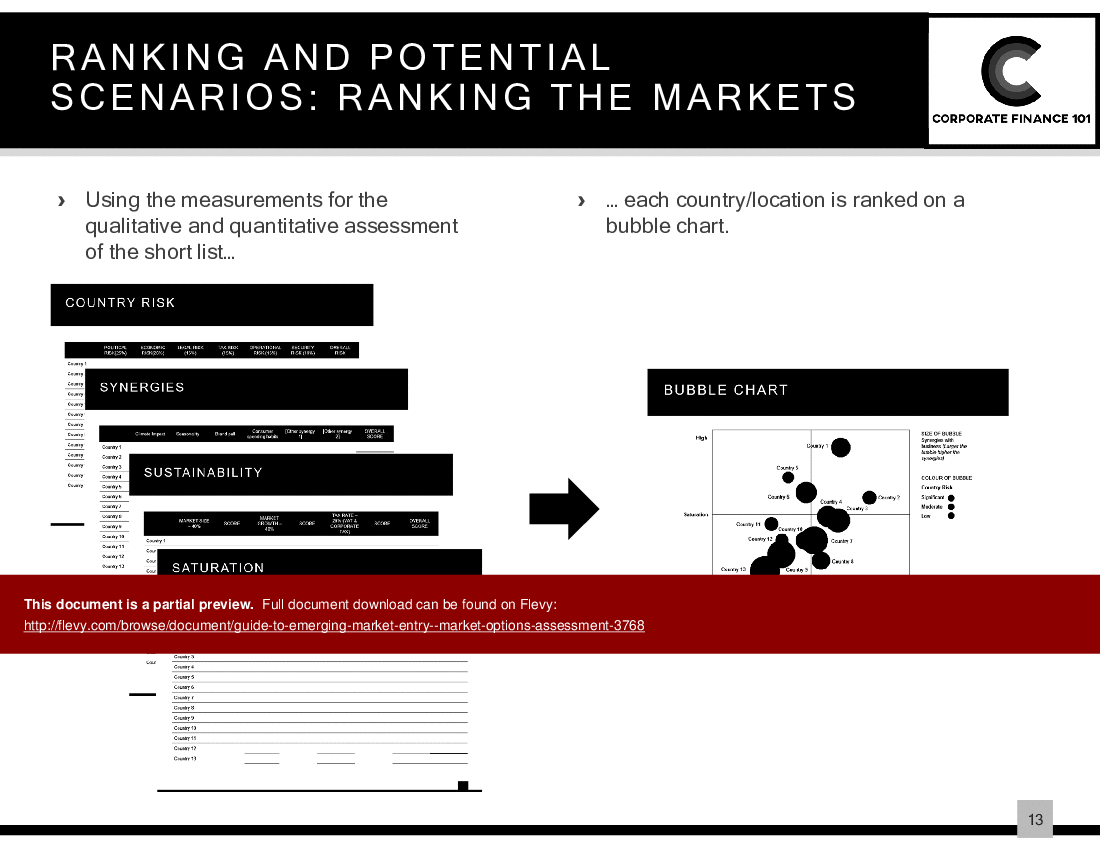
• Example of a bubble chart ranking countries based on risk and synergy
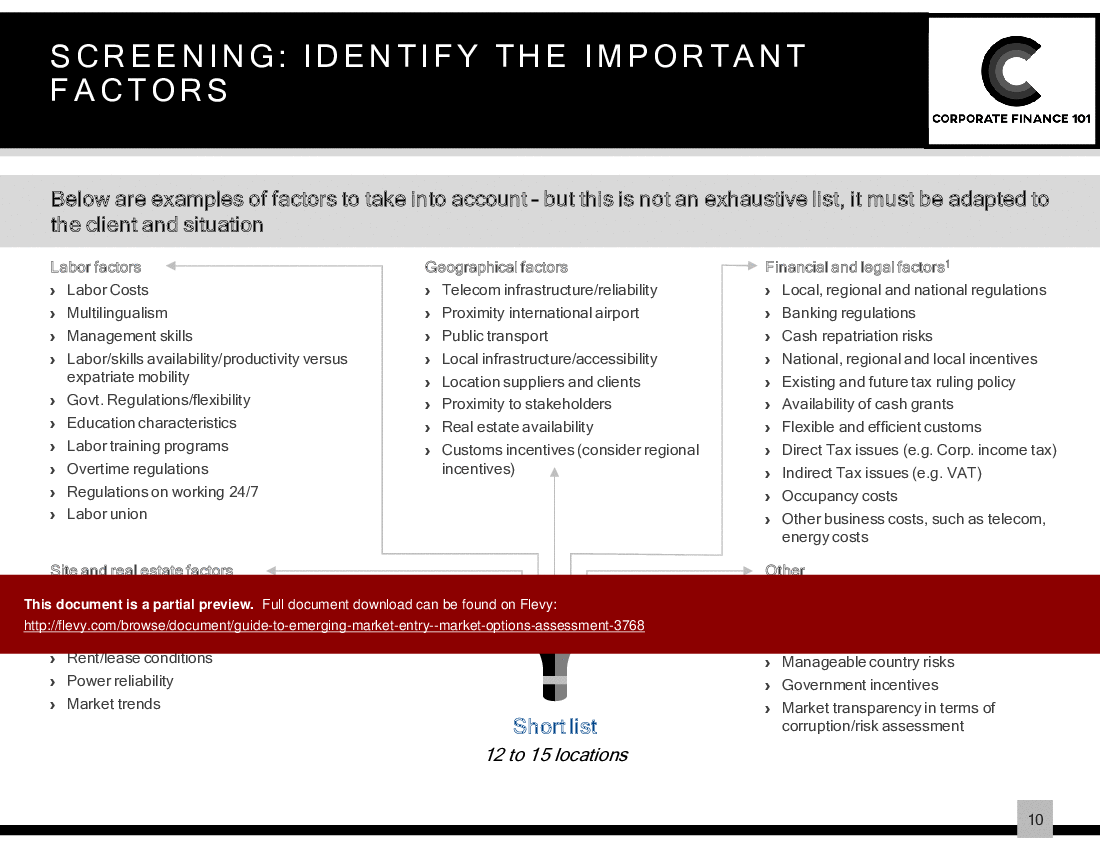
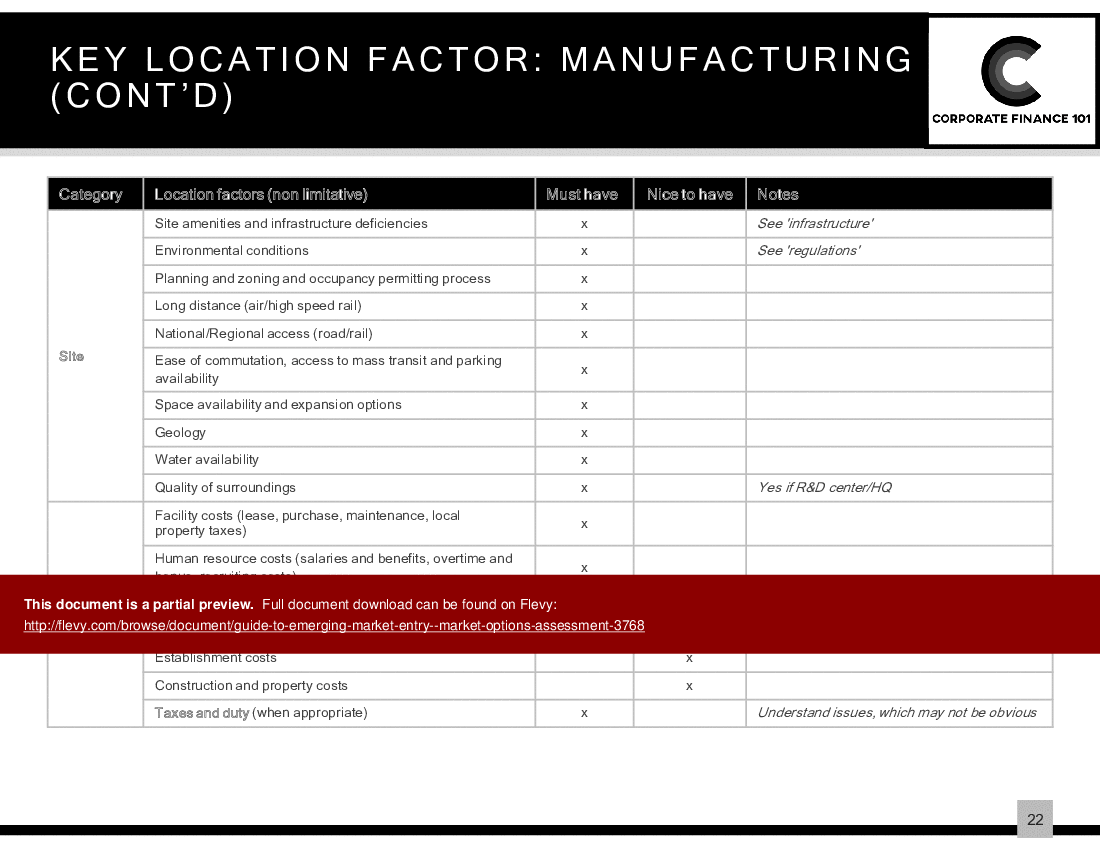
• Key location factors for manufacturing and logistics, emphasizing must-have and nice-to-have criteria
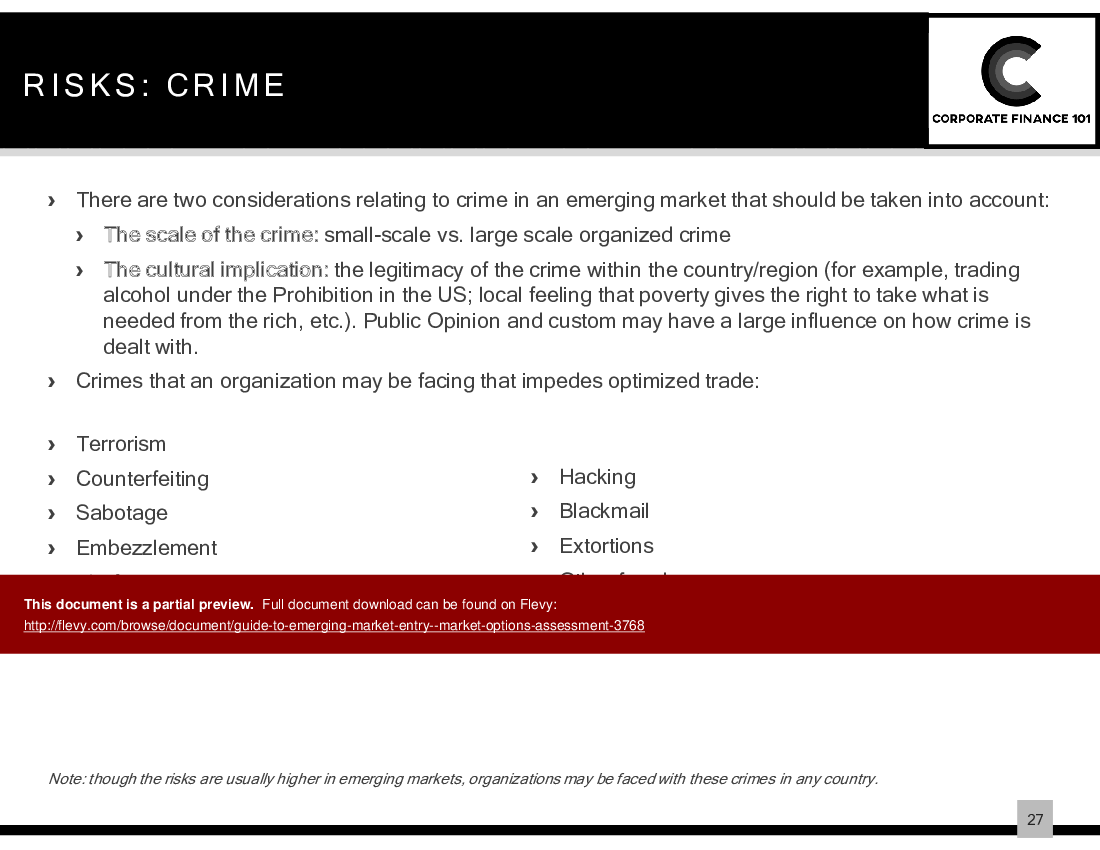
• Challenges and risks associated with entering emerging markets, including crime and political instability
• Remedial actions for optimizing market entry, illustrated with practical examples
Potential Workshop Agenda
Market Entry Strategy Overview (60 minutes)
• Introduce the emerging market entry framework and objectives
• Discuss key selection criteria and evaluation methods
• Review case studies of successful market entries
Challenges and Risks Session (90 minutes)
• Identify upstream and downstream challenges in selected markets
• Analyze country-specific risks and develop mitigation strategies
• Group discussion on real-world examples and lessons learned
Remedial Actions Workshop (60 minutes)
• Explore practical strategies for optimizing market entry
• Develop action plans for addressing identified risks
• Share insights and best practices among participants
Customization Guidance
• Tailor market selection criteria based on specific client objectives and industry needs
• Adapt financial evaluation models to reflect client-specific data and assumptions
• Modify risk assessment frameworks to include local regulatory considerations and market dynamics
Secondary Topics Covered
• Country risk assessment methodologies
• Compliance and regulatory considerations in emerging markets
• Market saturation and competitive intensity analysis
• Labor availability and cost factors in target markets
• Infrastructure and logistics considerations for market entry
FAQ
What is the main objective of this guide?
The guide aims to provide structured guidance on assessing emerging markets and developing effective entry strategies tailored to client objectives.
When should this tool be used?
This tool is best used during the Diagnose phase of a Global Trade Effectiveness project when evaluating potential market entries or optimizing existing operations.
How does the market selection process work?
The process involves funneling down options based on client strategies, evaluating financial implications, and ranking potential scenarios for detailed qualification.
What are the key challenges when entering emerging markets?
Challenges include regulatory compliance, political instability, infrastructure limitations, and local market dynamics that may affect operational efficiency.
What types of deliverables can be expected from this guide?
Deliverables include templates for market selection, financial evaluations, risk assessments, and remedial action plans tailored to specific market entry scenarios.
How can risks be mitigated once in an emerging market?
Mitigation strategies include proactive compliance programs, supply chain adjustments, and continuous monitoring of local market conditions.
What factors should be considered in the evaluation criteria?
Key factors include sustainability, saturation, synergies, and country-specific risks, which should be weighed and measured consistently.
How can this guide assist in optimizing existing market presence?
The guide provides strategies for enhancing operational effectiveness, identifying growth opportunities, and addressing challenges in current markets.
Glossary
• Emerging Market - A country with a developing economy, often characterized by rapid growth and potential investment opportunities.
• Market Entry Strategy - A plan for entering a new market, including the selection of entry methods and assessment of risks.
• Synergy - The potential benefits gained from combining resources or operations in a new market.
• Country Risk - The economic and political risks associated with operating in a specific country.
• Upstream Challenges - Issues related to sourcing and supply chain management in emerging markets.
• Downstream Challenges - Issues related to distribution and customer engagement in emerging markets.
• Regulatory Compliance - Adhering to local laws and regulations when operating in a new market.
• Financial Evaluation - An assessment of the financial implications of entering a new market, including costs and potential returns.
• Saturation - The level of competition and market penetration in a given market, affecting growth potential.
• Operational Efficiency - The effectiveness of processes and systems in delivering products and services in a market.
• Remedial Actions - Strategies implemented to address challenges and optimize performance in emerging markets.
• Market Dynamics - The factors that influence market behavior, including competition, consumer preferences, and economic conditions.
Source: Best Practices in Emerging Market Entry, Cognitive Bias, Market Entry PowerPoint Slides: Market Entry Assessment Guide PowerPoint (PPTX) Presentation Slide Deck, Corporate Finance 101
|
Download our FREE Strategy & Transformation Framework Templates
Download our free compilation of 50+ Strategy & Transformation slides and templates. Frameworks include McKinsey 7-S, Balanced Scorecard, Disruptive Innovation, BCG Curve, and many more. |