
 Click main image to view in full screen. Unlock all 12 preview images:
M&A Negotiation, LOI & Definitive Agreement SOP – Word DOCX
Word (DOCX) 14 Pages


BENEFITS OF THIS DOWNLOADABLE WORD DOCUMENT
- Provides a structured framework for executing high-value M&A negotiations from initial deal strategy through LOI and definitive agreement.
- Covers valuation mechanics, negotiation leverage, transaction structure, indemnification economics, R&W insurance, closing conditions, and deal execution.
- Designed to help transaction teams protect deal value, strengthen negotiating positions, reduce execution risk, and improve closing certainty.
M&A (MERGERS & ACQUISITIONS) WORD DESCRIPTION
Curated by McKinsey-trained Executives
M&A Negotiation, LOI & Definitive Agreement Standard Operating Procedure (SOP)
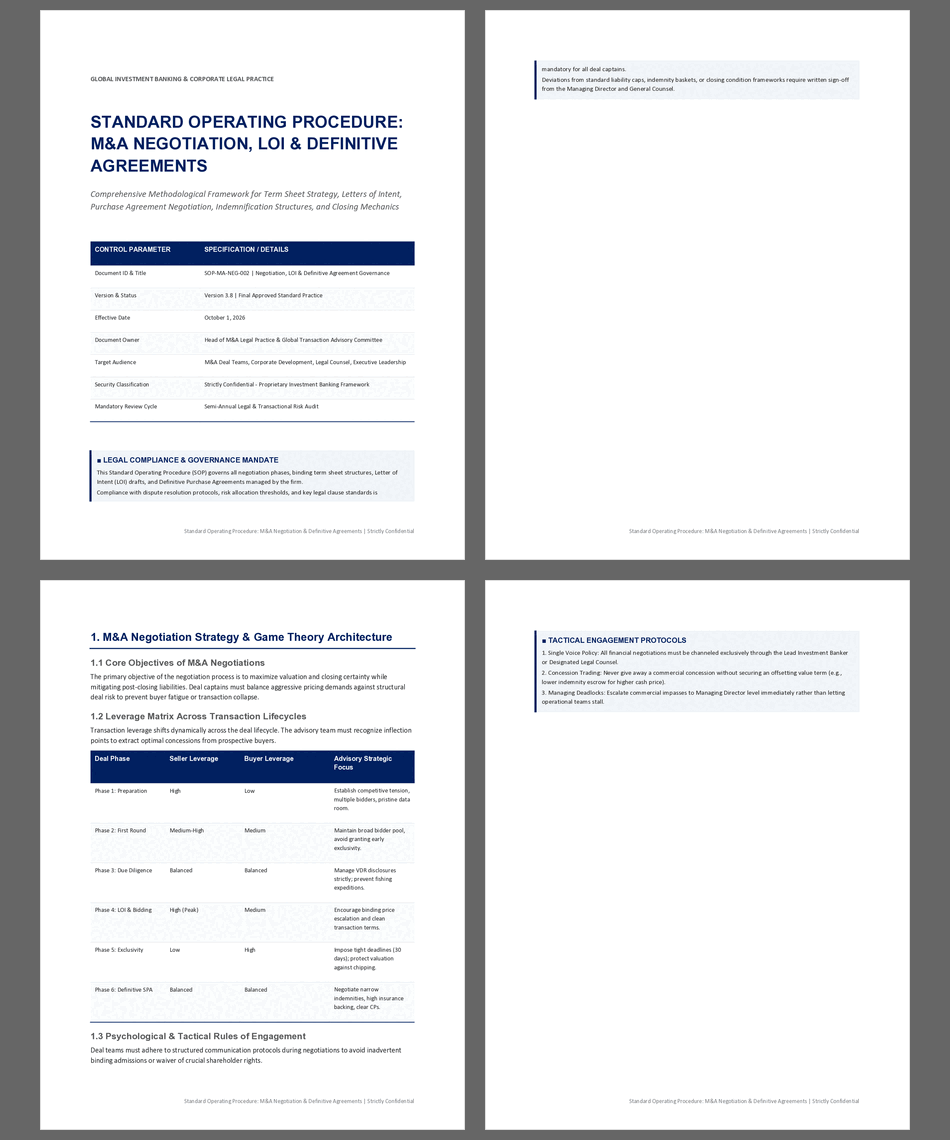
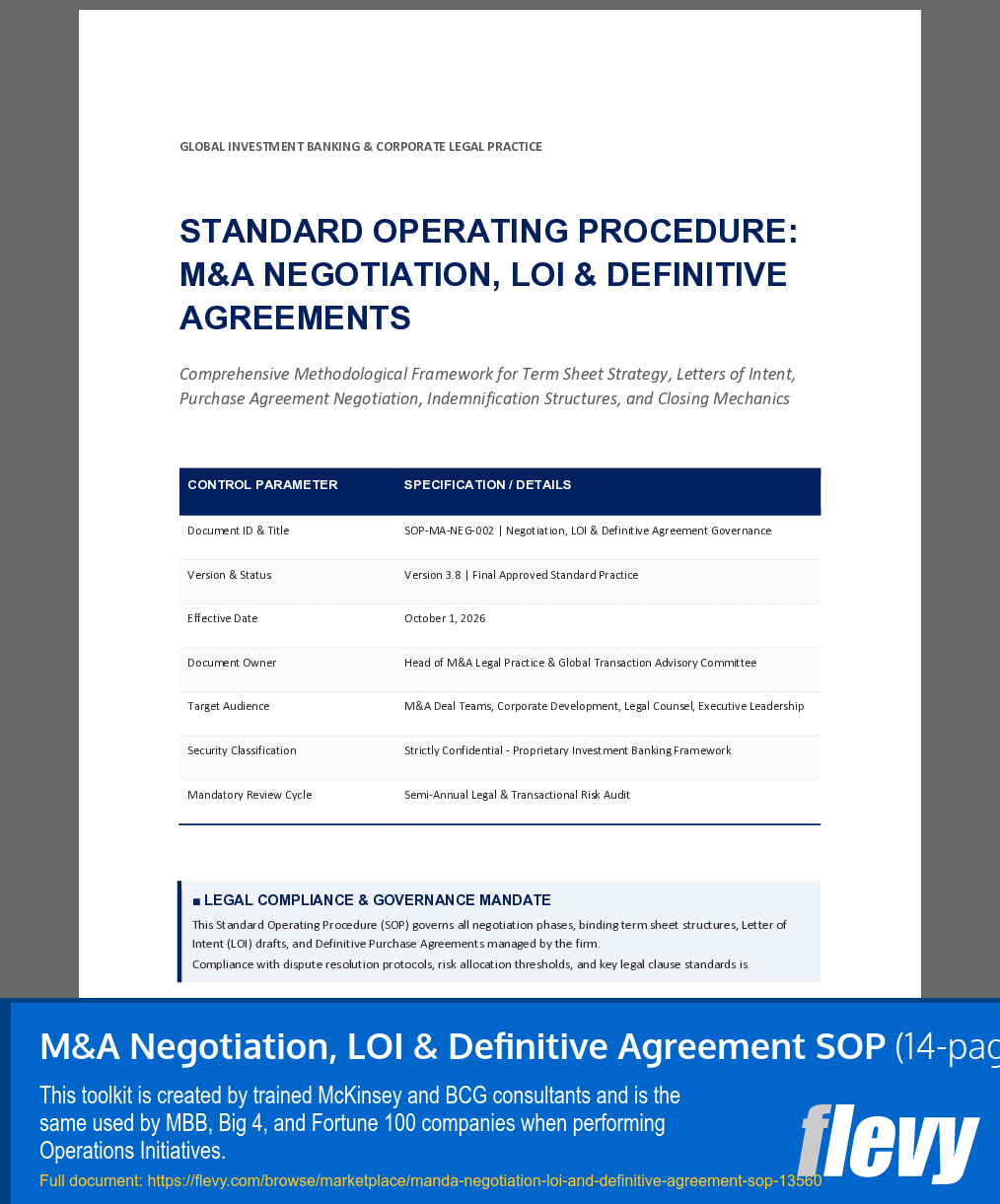
This downloadable Microsoft Word document provides an institutional-grade, end-to-end M&A Negotiation, Letter of Intent (LOI), Term Sheet & Definitive Agreement Execution Framework covering transaction leverage, negotiation strategy, competitive tension, valuation mechanics, purchase price structures, exclusivity, fiduciary outs, earn-outs, working capital adjustments, Stock Purchase Agreements (SPAs), Asset Purchase Agreements (APAs), representations and warranties, disclosure schedules, indemnification structures, Reps & Warranties Insurance (RWI), pre-closing covenants, closing conditions, Material Adverse Effect (MAE) provisions, termination mechanics, break-up fees, dispute resolution, funds flow, escrow releases, and closing execution.
Built specifically for M&A Managing Directors, Investment Banking Deal Teams, Corporate Development Leaders, Private Equity Professionals, Transaction Advisors, CEOs, CFOs, Deal Captains, Financial Advisors, and senior transaction executives, this SOP establishes a repeatable framework for navigating the most commercially sensitive stages of an M&A transaction—from initial negotiation leverage and bidder management through LOI execution, exclusivity, definitive agreement negotiation, economic risk allocation, and final closing mechanics. It is designed to help transaction teams protect valuation, preserve negotiating leverage, minimize unnecessary concessions, improve deal certainty, and execute transactions with greater commercial discipline.
Section 1 – M&A Negotiation Strategy, Leverage & Deal Architecture
• Comprehensive M&A Negotiation Strategy Framework designed to maximize transaction value while balancing price, structure, certainty of closing, timing, and post-closing economic exposure.
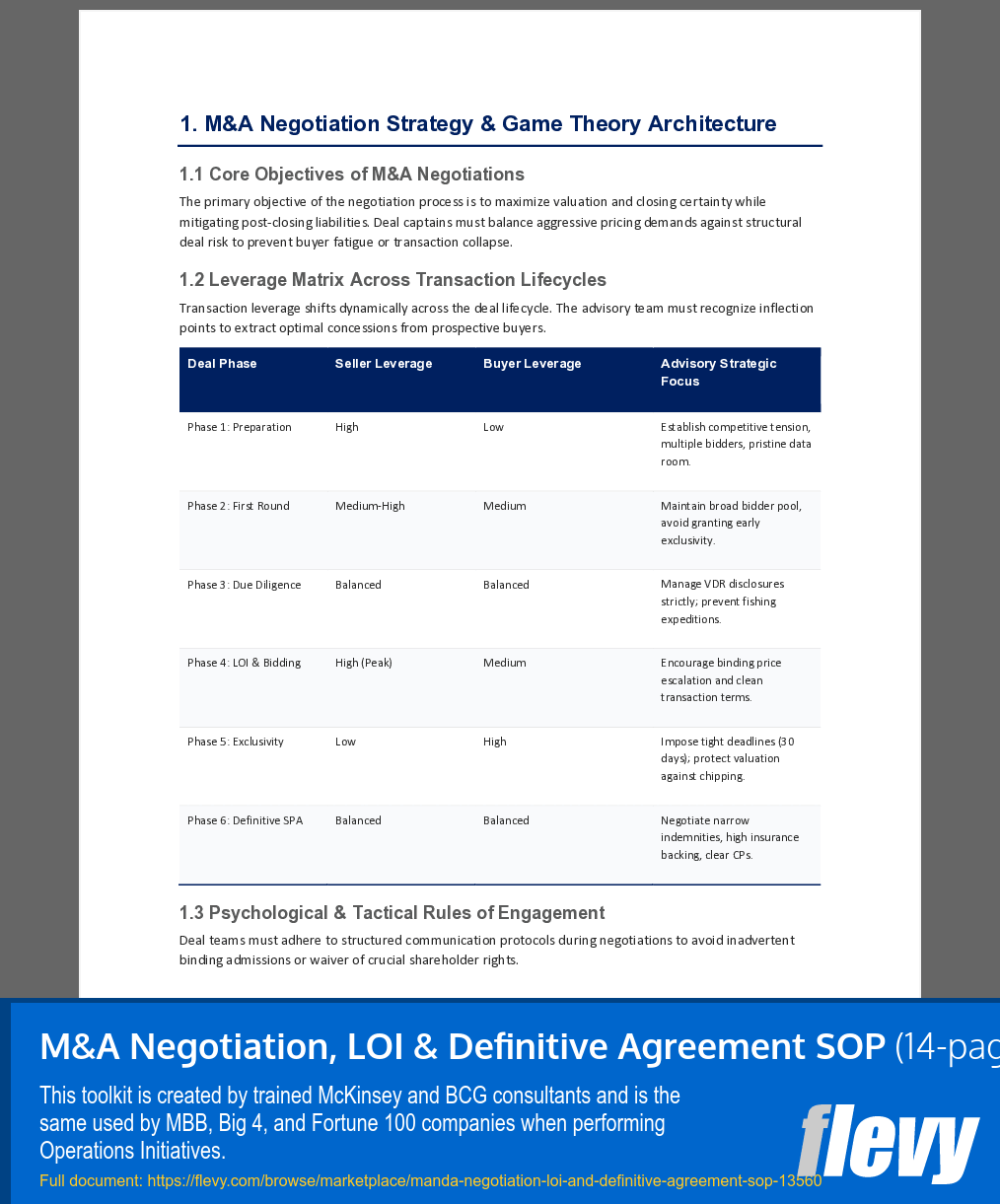
• Institutional Transaction Leverage Matrix mapping the evolution of seller and buyer negotiating power across Preparation, First Round, Due Diligence, LOI, Exclusivity, and Definitive Agreement phases.
• Competitive Tension Management Framework designed to preserve multiple-bidder dynamics, prevent premature exclusivity, and create controlled pressure for improved economics.
• Structured Negotiation Inflection-Point Analysis identifying the moments in a transaction where pricing, structure, diligence access, exclusivity, and contractual concessions can be exchanged for maximum value.
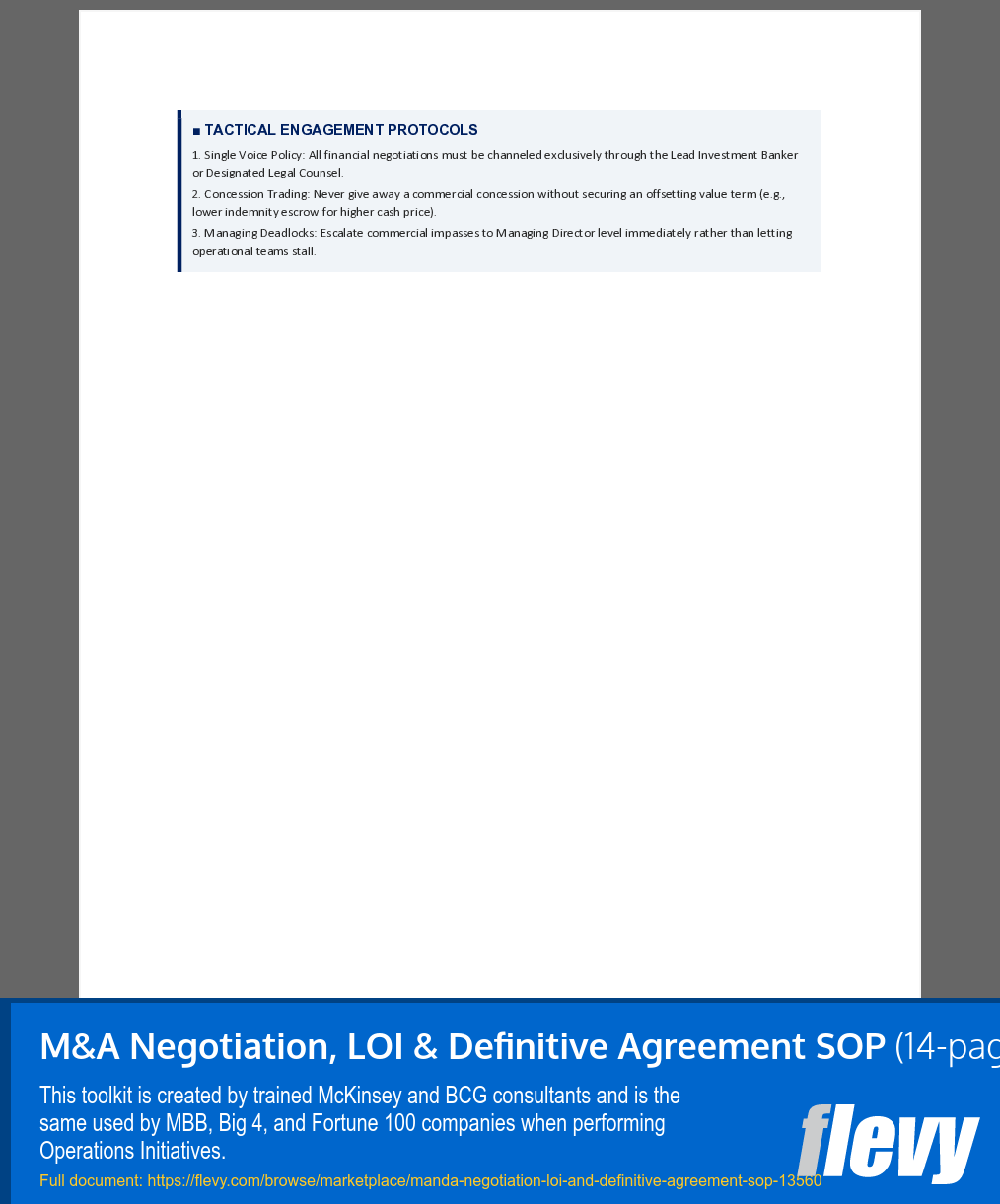
• Dedicated Concession Trading Methodology requiring every material economic concession to be exchanged for a corresponding improvement in price, structure, certainty, timing, or risk allocation.
• Single-Voice Negotiation Framework establishing disciplined communication channels between bankers, advisors, executives, and counterparties.
• Buyer Fatigue & Transaction Momentum Framework designed to prevent excessive negotiation friction while maintaining pressure for favorable economics.
• Deadlock Escalation Methodology designed to identify stalled negotiation points and rapidly elevate high-impact commercial issues for senior decision-making.
• Comprehensive Negotiation Preparation Matrix covering target price, walk-away price, preferred structure, fallback positions, concession hierarchy, leverage points, and priority issues.
• Deal Architecture Framework connecting valuation, consideration mix, conditions, indemnities, escrow, insurance, earn-outs, and closing mechanics into a unified transaction strategy.
Section 2 – Letter of Intent, Term Sheet & Transaction Economics
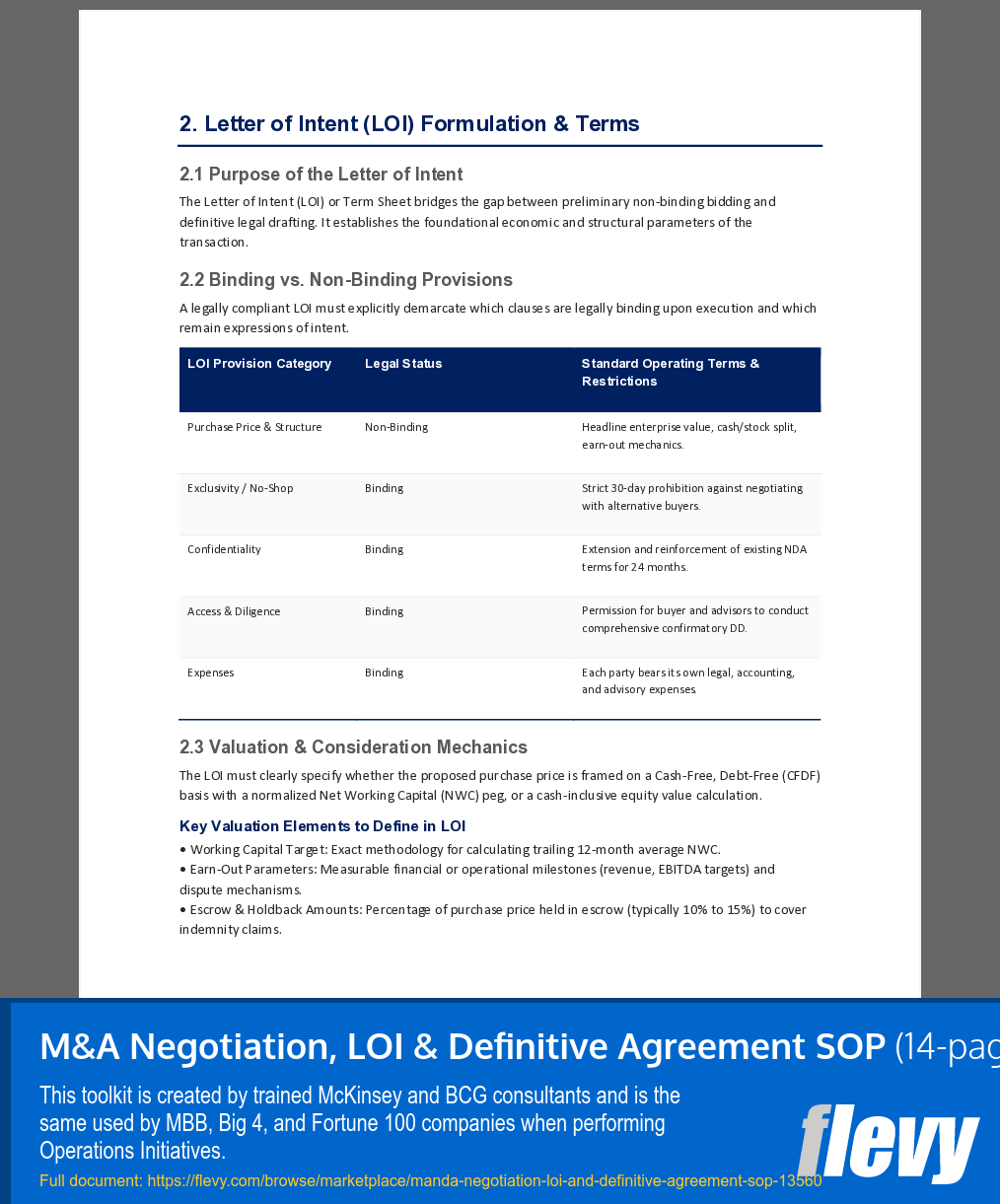
• Comprehensive LOI & Term Sheet Structuring Framework designed to establish the principal economic and structural terms before definitive agreement negotiations begin.
• Purchase Price & Consideration Framework covering headline enterprise value, equity value, cash consideration, stock consideration, rollover equity, deferred consideration, earn-outs, and contingent purchase price structures.
• Cash-Free / Debt-Free Transaction Framework defining enterprise-value-to-equity-value mechanics and the treatment of cash, debt, debt-like items, transaction expenses, and other balance-sheet adjustments.
• Dedicated Normalized Net Working Capital (NWC) Framework designed to establish the working-capital peg, calculation methodology, historical reference period, and post-closing adjustment mechanics.
• Earn-Out Structuring Framework covering financial milestones, operational targets, measurement periods, payment mechanics, performance definitions, and dispute procedures.
• Comprehensive Purchase Price Adjustment Architecture designed to identify the treatment of working capital, indebtedness, cash, transaction expenses, leakage, and other purchase-price adjustments.
• Consideration Mix Optimization Framework evaluating cash versus stock, rollover equity, deferred consideration, and contingent payments based on transaction objectives.
• Structured LOI Negotiation Checklist covering valuation, transaction structure, exclusivity, diligence access, expenses, timing, financing, conditions, and definitive agreement expectations.
• Binding vs. Non-Binding Term Framework designed to clearly distinguish commercial intent from terms intended to become operative upon signing.
• Dedicated Transaction Milestone Framework establishing expectations for definitive agreement drafting, diligence completion, financing progress, third-party approvals, and closing preparation.
Section 3 – Exclusivity, No-Shop & Competitive Tension Management
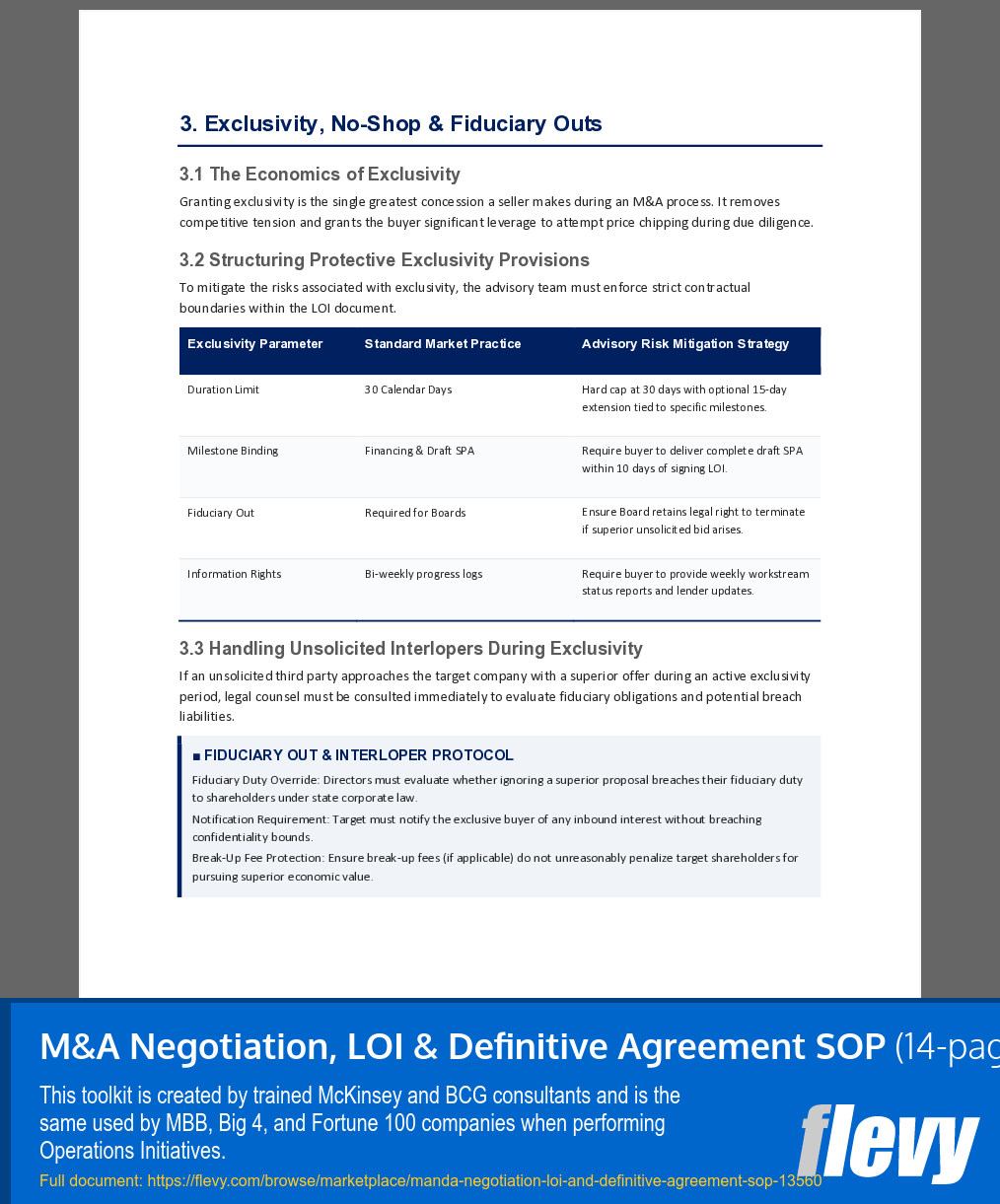
• Institutional Exclusivity Strategy Framework designed to evaluate the economic cost of removing competing bidders from the transaction process.
• 30-Day Exclusivity Structuring Framework designed to prevent prolonged periods in which the seller loses competitive leverage while the buyer continues diligence and negotiation.
• Exclusivity Milestone Framework linking continued exclusivity to measurable buyer progress, including definitive agreement drafting, financing, diligence completion, and transaction readiness.
• Buyer Progress Monitoring Framework designed to track diligence activity, financing status, document turnaround, open issues, and transaction momentum throughout the exclusivity period.
• Competitive Tension Preservation Strategy designed to prevent premature concessions and minimize opportunities for post-LOI price chipping.
• Superior Proposal Response Framework covering the commercial implications of unsolicited third-party interest during an active transaction process.
• Break-Up Fee Economics Framework evaluating transaction fees against the economic value of alternative offers and the expected cost of terminating an existing process.
• Exclusivity Extension Decision Matrix designed to determine whether additional time should be granted based on buyer performance, outstanding issues, financing certainty, and transaction probability.
• Dedicated Price-Chipping Defense Framework designed to distinguish legitimate diligence findings from opportunistic attempts to renegotiate previously agreed economics.
• Transaction Momentum Scorecard providing a structured method for evaluating whether a buyer is progressing toward signing and closing or creating unnecessary execution risk.
Section 4 – Definitive Purchase Agreement & Transaction Structure
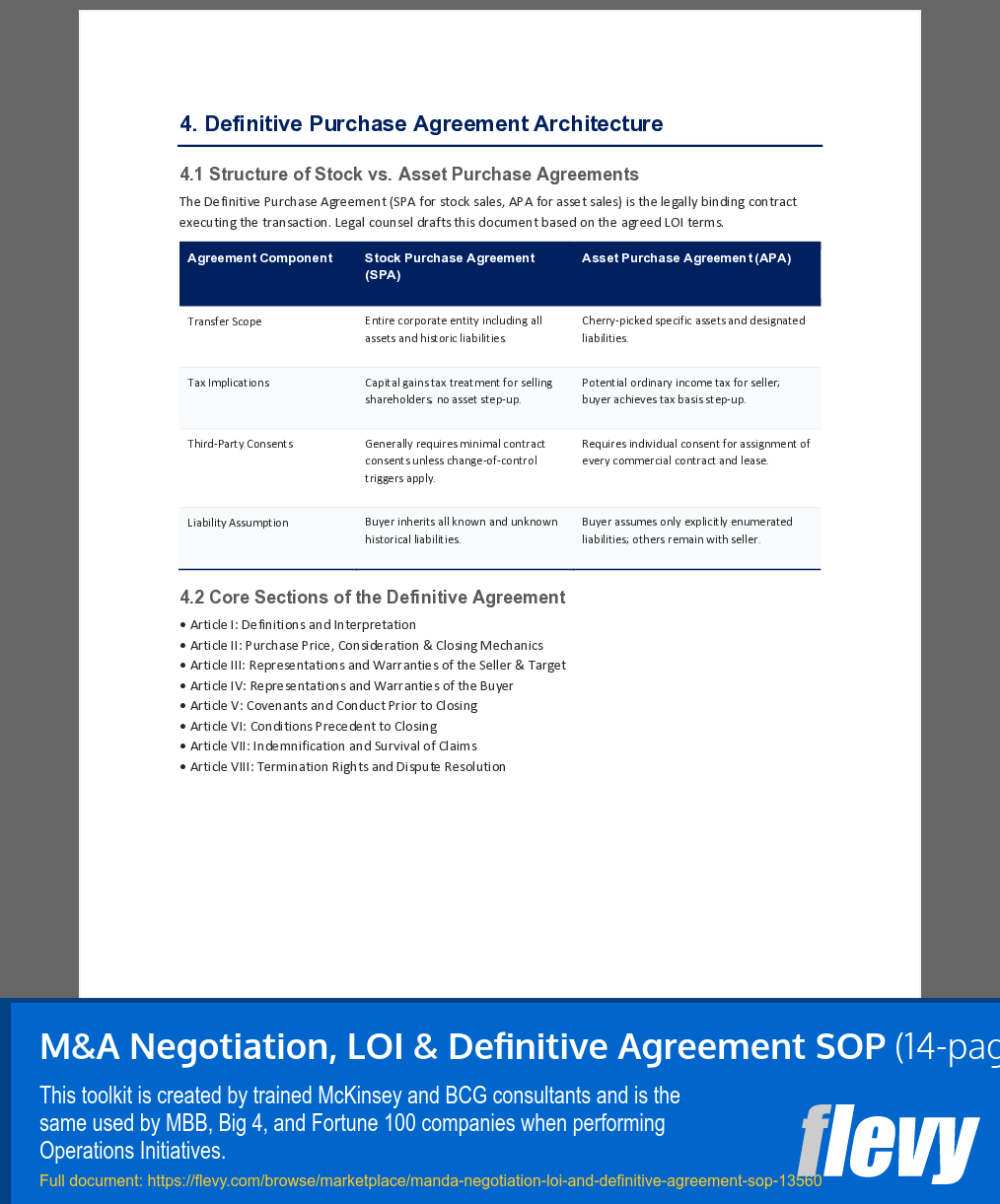
• Comprehensive Definitive Agreement Architecture covering Stock Purchase Agreements, Asset Purchase Agreements, purchase price mechanics, representations, covenants, closing conditions, indemnification, termination, and closing deliverables.
• Stock Purchase Agreement Framework designed for transactions involving acquisition of the corporate entity, including its assets, operations, contracts, and historical liabilities.
• Asset Purchase Agreement Framework covering selected assets, assumed liabilities, excluded assets, retained liabilities, contract assignments, and transaction-specific transfer mechanics.
• SPA vs. APA Transaction Structure Matrix comparing transfer scope, liability allocation, contract consent requirements, tax considerations, and execution complexity.
• Dedicated Purchase Price & Closing Mechanics Framework connecting transaction consideration to funds flow, escrow, purchase price adjustments, and closing deliverables.
• Agreement Section-by-Section Negotiation Framework covering definitions, consideration, seller representations, buyer representations, covenants, conditions, indemnification, termination, and closing mechanics.
• Transaction Definition Architecture designed to eliminate ambiguity surrounding enterprise value, indebtedness, working capital, material contracts, losses, fundamental representations, and other key transaction concepts.
• Closing Deliverables Matrix identifying required certificates, transfer documents, payoff letters, escrow arrangements, funds flow approvals, and other closing requirements.
• Definitive Agreement Issue Tracker designed to prioritize open commercial points and distinguish high-impact economic issues from drafting-level negotiations.
• SPA/APA Negotiation Prioritization Framework designed to focus senior deal-team attention on provisions capable of materially changing transaction economics or closing certainty.
Section 5 – Representations, Warranties & Disclosure Schedules
• Comprehensive Representations & Warranties Framework covering corporate authority, capitalization, financial statements, taxes, intellectual property, contracts, employees, compliance, litigation, assets, and other transaction-specific representations.
• Fundamental vs. General Representation Framework designed to differentiate provisions requiring enhanced protection from ordinary business representations.
• Dedicated R&W Survival Framework establishing differentiated survival periods based on representation type and transaction risk.
• Financial Statement Representation Framework covering historical financial statements, accounting principles, consistency, material changes, and financial reporting accuracy.
• Tax Representation Framework addressing tax returns, payment of taxes, audits, assessments, withholding, and other historical tax exposures.
• Intellectual Property Representation Framework covering ownership, registration, infringement, licenses, and third-party IP claims.
• Material Contract Representation Framework addressing contract validity, defaults, termination rights, change-of-control provisions, and material commercial relationships.
• Comprehensive Disclosure Schedule Framework designed to connect disclosed exceptions directly to corresponding representations and identify transaction-specific risks.
• Materiality Scrape Negotiation Framework analyzing the impact of materiality qualifiers on breach determinations and indemnifiable losses.
• Disclosure Quality-Control Matrix designed to identify incomplete disclosures, overly broad exceptions, cross-reference issues, and potential post-closing claim exposure.
Section 6 – Indemnification, Baskets, Caps & R&W Insurance
• Institutional Indemnification Economics Framework designed to allocate post-closing risk between buyer and seller while minimizing unnecessary seller exposure.
• Basket Structure Analysis comparing tipping baskets and true deductibles and evaluating their effect on aggregate indemnification exposure.
• General Liability Cap Framework designed to establish appropriate limits on seller liability relative to purchase price and transaction risk.
• Fundamental Representation Carve-Out Framework addressing enhanced treatment for authority, capitalization, ownership, title, taxes, and other fundamental transaction matters.
• Survival Period Optimization Framework designed to align claim periods with the commercial and operational significance of individual representations.
• Escrow & Holdback Structuring Framework covering escrow percentages, release timing, claim procedures, and interaction with indemnification obligations.
• Reps & Warranties Insurance (RWI) Framework designed to integrate buyer-side insurance into the transaction structure and reduce seller post-closing exposure.
• RWI Policy Economics Framework covering policy limits, retention, exclusions, underwriting considerations, and interaction between insurance coverage and contractual indemnification.
• Seller Liability Optimization Framework designed to reduce unnecessary escrow, lower general indemnity exposure, shorten survival periods, and maximize clean cash proceeds at closing.
• Risk Allocation Negotiation Matrix comparing price, escrow, indemnity cap, basket, survival period, insurance, and specific indemnities as interchangeable negotiation variables.
Section 7 – Covenants, Closing Conditions & MAE Negotiation
• Comprehensive Pre-Closing Covenant Framework defining operating restrictions between signing and closing while preserving the target's ability to conduct ordinary-course business.
• Ordinary-Course Operations Framework covering capital expenditures, hiring, compensation, debt, dividends, equity issuance, contracts, acquisitions, and other material operating decisions.
• Buyer Consent Threshold Framework designed to distinguish genuinely material actions requiring approval from ordinary commercial decisions that should remain under seller control.
• Conditions Precedent Framework covering regulatory approvals, third-party consents, absence of injunctions, financing requirements, required deliverables, and other closing conditions.
• Material Adverse Effect (MAE) Negotiation Framework designed to establish a commercially appropriate threshold for events that could permit a buyer to refuse to close.
• MAE Carve-Out Framework addressing general economic conditions, industry-wide downturns, financial-market disruption, political events, pandemics, and other broad-based risks.
• MAE Qualifier Analysis designed to evaluate materiality, disproportionate impact standards, duration requirements, and causation thresholds.
• Regulatory Approval Tracking Framework covering antitrust, foreign investment, sector-specific approvals, and other transaction-related clearances.
• Third-Party Consent Matrix designed to identify required customer, landlord, lender, supplier, licensing, and contractual approvals.
• Closing Readiness Scorecard consolidating outstanding conditions, approvals, consents, deliverables, financing, funds flow, and transaction documentation.
Section 8 – Termination, Break-Up Fees, Dispute Resolution & Closing Execution
• Comprehensive Transaction Termination Framework defining outside dates, material breaches, mutual termination rights, financing failures, and other circumstances permitting termination.
• Outside Date & Long-Stop Framework designed to establish commercially appropriate deadlines while allowing targeted extensions for regulatory or financing processes.
• Buyer Financing Failure Framework addressing financing conditions, reverse break-up fees, funding certainty, and buyer execution risk.
• Seller Breach & Buyer Termination Framework identifying the commercial consequences of material pre-closing breaches and failed closing conditions.
• Break-Up Fee & Reverse Break-Up Fee Economics Framework designed to calibrate termination payments against transaction value, execution risk, and financing certainty.
• Fiduciary-Out Economics Framework addressing the financial and commercial consequences associated with accepting a superior transaction opportunity.
• Governing Law & Dispute Resolution Framework covering governing-law selection, arbitration, litigation alternatives, confidentiality, and transaction-specific dispute mechanisms.
• Closing Day Execution Framework designed to synchronize signature pages, regulatory clearance, funds flow, escrow, transfer documents, and final transaction approvals.
• Funds Flow Reconciliation Protocol requiring final verification of purchase price, debt payoff, transaction expenses, escrow funding, seller proceeds, and all closing wires.
• Wire Verification & Closing Control Framework designed to reduce execution errors through independent confirmation of bank instructions and final funds-flow schedules.
• Post-Closing Transaction Completion Framework covering transfer filings, escrow administration, purchase price adjustments, surviving obligations, and final transaction documentation.
Section 9 – Negotiation Checklists, Clause Index & Deal-Team Execution Tools
• Definitive Agreement Negotiation Master Checklist consolidating the major commercial and structural provisions requiring review during SPA and APA negotiations.
• Comprehensive Purchase Price Negotiation Checklist covering enterprise value, equity value, working capital, debt, cash, earn-outs, escrow, and purchase price adjustments.
• Indemnification Negotiation Checklist covering baskets, caps, survival periods, carve-outs, specific indemnities, escrow, and RWI.
• Exclusivity & LOI Checklist covering duration, milestones, diligence access, financing, definitive agreement timing, and competitive-process protections.
• Covenant & Closing Condition Checklist covering ordinary-course restrictions, consent requirements, regulatory approvals, MAE provisions, and closing deliverables.
• Dedicated Negotiation Issue-Prioritization Matrix classifying open points by economic impact, transaction risk, closing significance, and negotiation priority.
• Clause-by-Clause Negotiation Reference Framework designed to provide deal teams with a structured method for evaluating key transaction provisions.
• M&A Negotiation Glossary defining critical transaction concepts including baskets, caps, carve-outs, earn-outs, MAE, survival periods, escrow, RWI, conditions precedent, and purchase price adjustments.
• Deal-Team Sign-Off Checklist designed to confirm that major economic, structural, negotiation, and closing issues have been reviewed before execution.
• Comprehensive Transaction Execution Tracker designed to maintain visibility across LOI, diligence, definitive agreement drafting, signing, conditions precedent, and closing.
• Senior Negotiation Summary Framework providing decision-makers with a concise view of key open issues, economic trade-offs, counterparty positions, and recommended negotiation strategy.
Designed as a complete M&A transaction-execution playbook—not simply a collection of legal clauses or contract checklists—this SOP gives investment banking, corporate development, private equity, and transaction advisory teams a structured framework for managing the commercial negotiation lifecycle from initial leverage analysis through LOI, exclusivity, definitive agreement negotiation, risk allocation, and closing. It connects valuation, transaction structure, competitive tension, purchase price mechanics, earn-outs, working capital, representations, indemnification, RWI, covenants, MAE provisions, termination economics, and closing execution into one integrated methodology. The result is a practical framework for protecting transaction value, improving negotiating leverage, minimizing unnecessary concessions, reducing execution friction, strengthening deal certainty, and helping transaction teams consistently convert negotiation strategy into better M&A outcomes.
Keywords: Process Audit SOPs, Internal Audit Standard Operating Procedures, Process Audit Framework, Control Testing Procedures, Risk Assessment Methodologies, Audit Governance, Process Audit Strategy, Audit Evidence Collection, Compliance Audit SOPs, Continuous Auditing, Process Mapping, Audit Documentation Standards, Audit Quality Assurance, Process Risk Management, Operational Risk Audit, Enterprise Audit Management, Audit Committee Reporting, Audit Analytics, Process Mining, AI-Assisted Auditing, Audit Technology SOPs, Global Process Audit, Audit Playbooks, Audit Templates, Audit Training Programs, Audit Remediation Management, Audit Excellence, Process Audit Toolkit, McKinsey Audit Framework, Audit Best Practices, Enterprise Governance, Internal Control Assessment, Audit Procedures Manual, Audit Program Design, Audit Resource Planning, Audit Scheduling, Audit Efficiency, Audit Effectiveness, Audit Performance Metrics, Audit KPIs, Audit ROI, Audit Value Creation, Process Optimization, Operational Excellence, Business Process Audit, Functional Audit, Departmental Audit, Transactional Audit, Service Audit, Administrative Process Audit, Supply Chain Process Audit, Finance Process Audit, IT Process Audit, HR Process Audit, Procurement Process Audit, Sales Process Audit, Customer Service Audit, Production Audit, Quality Audit, Compliance Testing, Regulatory Audit, Policy Compliance, Procedure Audit, Documentation Audit, Audit Trail Review, Exception Management, Control Design, Control Effectiveness, Control Testing, Preventive Controls, Detective Controls, Corrective Actions, Root Cause Analysis, Finding Classification, Audit Report Writing, Executive Summaries, Audit Communication, Stakeholder Engagement, Process Owner Engagement, Management Accountability, Audit Committee Governance, Audit Charter, Audit Independence, Auditor Ethics, Professional Skepticism, Audit Competency, Audit Training, Audit Certification, Audit Standards (IIA, IAASB), Audit Best Practices, Audit Methodology, Audit Framework, Audit Operating Model, Process Audit Excellence, Audit Mastery, Fortune 500 Audit, Enterprise Audit Operations, Corporate Audit Function, Strategic Audit Planning, Transformation Audit, Digital Audit, Innovation Audit, Benchmarking Audit, Maturity Assessment, Audit Scaling, Audit Outsourcing, Co-Sourcing Models, Vendor Management, Audit Technology Stack, Audit Tools, Audit Software, Continuous Monitoring, Predictive Analytics, Anomaly Detection, Data Quality, Process Intelligence, Workflow Analytics, Business Process Management, Process Automation, RPA Audit, AI Governance, Responsible AI Audit, Cybersecurity Audit, Data Governance Audit, Privacy Audit, Information Security, Audit Evidence Standards, Working Papers, Audit Documentation, Audit File Management, Audit Records Retention, Audit Trail Integrity, Audit Report Confidentiality, Multi-Site Audit Coordination, Global Audit Strategy, International Audit Standards, Regional Audit Compliance, Cultural Considerations in Audit, Localization of Audit Procedures, Process Transformation Audit, Business Reengineering Audit, Change Audit, Operational Change, Audit Change Management, Audit Communication Plan, Audit Stakeholder Communication, Audit Performance Review, Audit Function Review, Strategic Review Process, Audit Leadership Development, Audit Team Development, Audit Coaching, Audit Supervision, Audit Career Progression, Audit Knowledge Management, Audit Playbook Development, Audit Template Library, Audit Standards Documentation, Audit Policy Manual, Lessons Learned Capture, Best Practice Sharing, Audit Continuous Improvement, Audit Methodology Enhancement, Audit Process Optimization, Audit Efficiency Improvement, Audit Effectiveness Enhancement, Audit Quality Improvement, Audit Risk Management, Audit Risk Register, Audit Issue Management, Audit Action Tracking, Audit Metrics Dashboard, Audit Performance Dashboard, Audit Scorecard, Audit Balanced Scorecard, KPI Framework for Audit, Audit Success Factors, Critical Success Factors in Audit, Audit Strategic Objectives, Audit Vision Statement, Audit Mission Statement, Audit Values and Ethics, Audit Culture, Audit Maturity Model, Audit Capability Model, Audit Competency Framework, Professional Development in Audit, Audit Certification Programs, Internal Audit Standards, Audit Best Practices Guide, Audit Reference Manual, Audit Operating Manual, Audit Procedures Manual, Audit Program Manual, McKinsey Audit Excellence, Deloitte Audit Framework, EY Audit Approach, KPMG Audit Methodology, Big 4 Audit Standards, Audit Industry Benchmarks, Audit Industry Standards, Audit Thought Leadership, Audit Innovation, Audit Transformation Program, Audit Digital Transformation, Audit Process Transformation, Audit Service Transformation, Audit Operating Model Transformation, Audit Function Evolution, Audit Future-Proofing, Emerging Trends in Audit, Audit 2025 Roadmap, Audit Strategic Priorities, Audit Strategic Planning, Audit Strategic Execution, Audit Implementation Plan, Audit Deployment Strategy, Audit Rollout Plan, Audit Quick-Start Guide, Audit Implementation Guide, Audit User Guide, Audit Handbook, Audit Manual, Audit Documentation Standard, Audit Work Standards, Audit Quality Standards, Audit Performance Standards, Audit Excellence Standards, Enterprise Audit Excellence, Audit Mastery Program, Audit Excellence Initiative, Audit Excellence Framework, Audit Excellence Culture, Audit Excellence Mindset, Strategic Audit Excellence, Operational Audit Excellence, Financial Audit Excellence, Compliance Audit Excellence, Quality Audit Excellence, Process Audit Excellence, Audit Excellence ROI, Audit Excellence Value Creation, Audit Excellence Competitive Advantage, Audit Excellence Strategic Advantage, Audit Excellence Performance Advantage, Audit Excellence Organizational Advantage, Inventory Management, Demand Planning, Inventory Optimization, Inventory Control, Supply Chain Management, Warehouse Operations, Replenishment Strategy, Inventory Analytics, WIP Reduction, Inventory Accuracy, Distribution Network, Inventory Forecasting, Supply Chain Excellence, Working Capital, Inventory KPIs, Procurement Strategy, Inventory Governance, Inventory SOPs, Continuous Improvement, Supply Chain Transformation, GenAI deployment SOPs, generative AI operating model, enterprise AI governance framework, AI Center of Excellence, responsible AI, AI risk management, AI use case prioritization, GenAI implementation roadmap, AI vendor selection, prompt engineering standards, AI compliance, AI adoption strategy, generative AI across value chain, AI strategy, enterprise transformation, AI implementation, AI scaling framework
Strategy & Transformation, Growth Strategy, Strategic Planning, Strategy Frameworks, Innovation Management, Pricing Strategy, Core Competencies, Strategy Development, Business Transformation, Marketing Plan Development, Product Strategy, Breakout Strategy, Competitive Advantage, Mission, Vision, Values, Strategy Deployment & Execution, Innovation, Vision Statement, Core Competencies Analysis, Corporate Strategy, Product Launch Strategy, BMI, Blue Ocean Strategy, Breakthrough Strategy, Business Model Innovation, Business Strategy Example, Corporate Transformation, Critical Success Factors, Customer Segmentation, Customer Value Proposition, Distinctive Capabilities, Enterprise Performance Management, KPI, Key Performance Indicators, Market Analysis, Market Entry Example, Market Entry Plan, Market Intelligence, Market Research, Market Segmentation, Market Sizing, Marketing, Michael Porter's Value Chain, Organizational Transformation, Performance Management, Performance Measurement, Platform Strategy, Product Go-to-Market Strategy, Reorganization, Restructuring, SWOT, SWOT Analysis, Service 4.0, Service Strategy, Service Transformation, Strategic Analysis, Strategic Plan Example, Strategy Deployment, Strategy Execution, Strategy Frameworks Compilation, Strategy Methodologies, Strategy Report Example, Value Chain, Value Chain Analysis, Value Innovation, Value Proposition, Vision Statement, Corporate Strategy, Business Development, Business plan pdf, business plan, PDF, Business Plan DOC, Business Plan Template, PPT, Market strategy playbook, strategic market planning, competitive analysis tools, market segmentation frameworks, growth strategy templates, product positioning strategy, market execution toolkit, strategic alignment playbook, KPI and OKR frameworks, business growth strategy guide, cross-functional strategy templates, market risk management, market strategy PowerPoint doc, guide, ebook, e-book ,McKinsey Change Playbook, Organizational change management toolkit, Change management frameworks 2025, Influence model for change, Change leadership strategies, Behavioral change in organizations, Change management PowerPoint templates, Transformational leadership in change, supply chain KPIs, supply chain KPI toolkit, supply chain PowerPoint template, logistics KPIs, procurement KPIs, inventory management KPIs, supply chain performance metrics, manufacturing KPIs, supply chain dashboard, supply chain strategy KPIs, reverse logistics KPIs, sustainability KPIs in supply chain, financial supply chain KPIs, warehouse KPIs, digital supply chain KPIs, 1200 KPIs, supply chain scorecard, KPI examples, supply chain templates, Corporate Finance SOPs, Finance SOP Excel Template, CFO Toolkit, Finance Department Procedures, Financial Planning SOPs, Treasury SOPs, Accounts Payable SOPs, Accounts Receivable SOPs, General Ledger SOPs, Accounting Policies Template, Internal Controls SOPs, Finance Process Standardization, Finance Operating Procedures, Finance Department Excel Template, FP&A Process Documentation, Corporate Finance Template, Finance SOP Toolkit, CFO Process Templates, Accounting SOP Package, Tax Compliance SOPs, Financial Risk Management Procedures.
NOTE: Our digital products are sold on an "as is" basis, making returns and refunds unavailable post-download. Please preview and inquire before purchasing. Please contact us before purchasing if you have any questions! This policy aligns with the standard Flevy Terms of Usage.
Got a question about the product? Email us at support@flevy.com or ask the author directly by using the "Ask the Author a Question" form. If you cannot view the preview above this document description, go here to view the large preview instead.
Source: Best Practices in M&A (Mergers & Acquisitions), Contract Word: M&A Negotiation, LOI & Definitive Agreement SOP Word (DOCX) Document, SB Consulting
ABOUT THE AUTHOR
SB Consulting is dedicated to empowering businesses to communicate their ideas with impact. This consulting firm specializes in teaching organizations how to create effective corporate and management presentations. With training from top-tier global consulting firms, including McKinsey, BCG, and Porsche Consulting, extensive expertise in presentation design and ... [read more]
Ask the Author a Question
You must be logged in to contact the author.




























