
Lean Startup: Transforming the Way We Do Business   136-slide PPT PowerPoint presentation slide deck (PPTX)
$79.00

Lean Startup: Transforming the Way We Do Business (136-slide PPT PowerPoint presentation slide deck (PPTX)) Preview Image
Log in to unlock full preview.
Lean Startup: Transforming the Way We Do Business (136-slide PPT PowerPoint presentation slide deck (PPTX)) Preview Image
Arrow   Click main image to view in full screen.

Lean Startup: Transforming the Way We Do Business (PowerPoint PPTX Slide Deck)

PowerPoint (PPTX) 136 Slides

$79.00
Developed by a seasoned Design Thinking Consultant with a global track record at industry giants like Microsoft and IBM, this presentation is your key to mastering Lean Startup principles for unparalleled innovation and business success.
Add to Cart


Immediate download
Fully editable PowerPoint
Free lifetime updates

BENEFITS OF THIS POWERPOINT DOCUMENT

  1. Provides a clear and structured overview of the principles and practices of Lean Start-up methodology.
  2. Offers practical tools and techniques for implementing the Lean Start-up methodology, including the Build-Measure-Learn iterative cycle.
  3. Provides step-by-step guidance for implementing the Lean Start-up methodology in your organization.

LEAN PPT DESCRIPTION

Editor Summary Lean Startup: Transforming the Way We Do Business is a 136-slide PowerPoint presentation by Operational Excellence Consulting, developed with input from a seasoned Design Thinking Consultant with experience at Microsoft and IBM. Read more

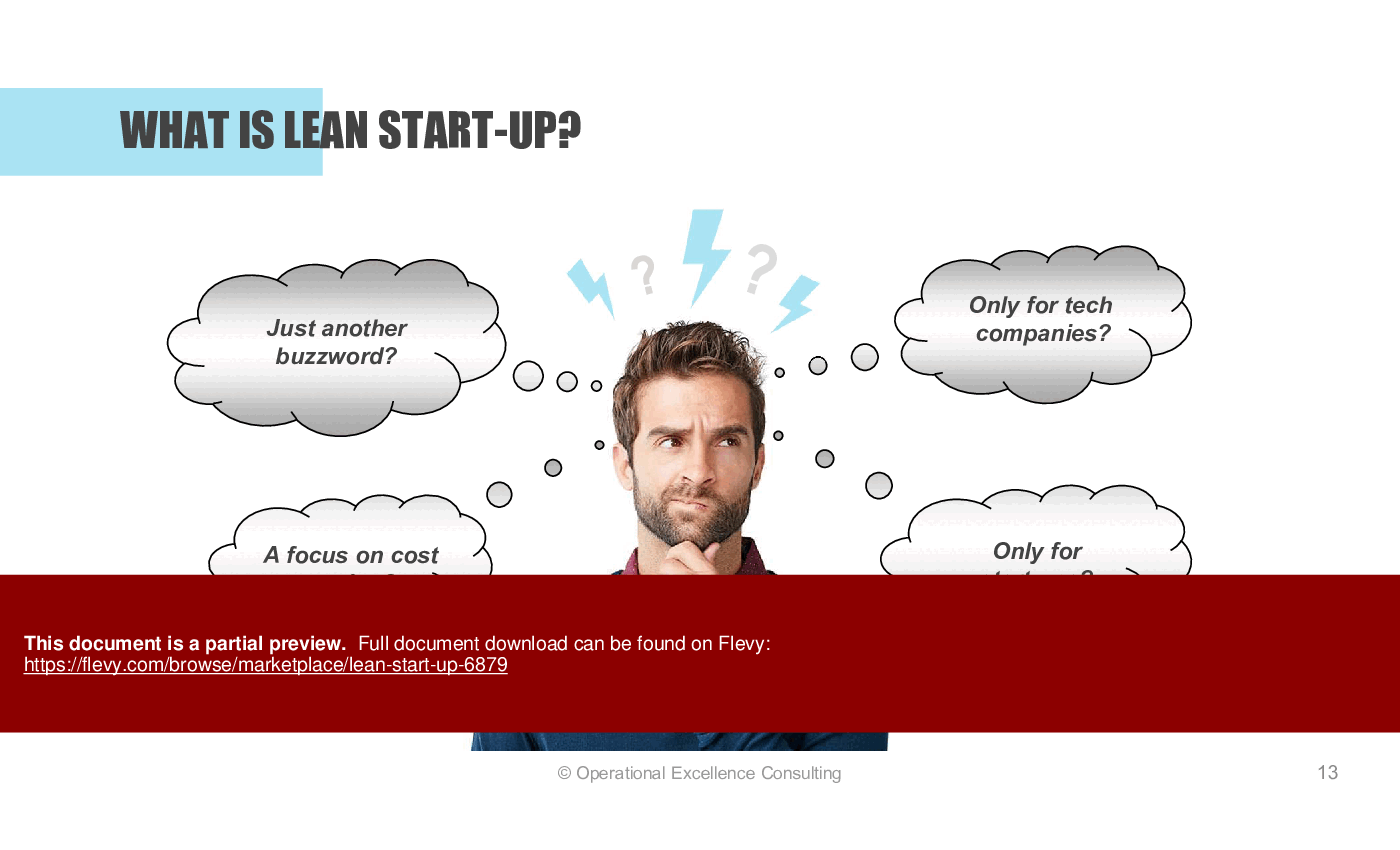
In this Lean Startup presentation, we address the high failure rates among startups and how the Lean Startup approach is transforming the way companies are built and new products are launched globally.

Initially rooted in Lean manufacturing practices, the Lean Startup methodology is not limited to startups; established companies like Dropbox, Airbnb, Uber, and more have successfully adopted it for innovation. Industry giants such as General Electric, Toyota, Microsoft, Intuit, and Ericsson have also used Lean Startup principles to stay competitive.

This presentation provides a comprehensive introduction to Lean Startup, covering its principles, practices, mindsets, and benefits. It equips you with the knowledge and tools to apply Lean Startup in your own projects or businesses, highlighting its compatibility with Lean Thinking and Design Thinking.

You'll learn about the history, definition, and importance of Lean Startup in today's business landscape. Key principles such as customer-centricity, rapid experimentation, Minimum Viable Product (MVP), and pivot and persevere are explored, along with practical practices like the business model canvas, customer development, agile development, and lean analytics.

Throughout the presentation, you'll discover the benefits of Lean Startup, including reduced risk of failure, faster time-to-market, improved customer satisfaction, and increased innovation. It also offers guidance on overcoming common challenges, fostering a Lean Startup culture, and implementing the methodology effectively.

By the end of this presentation, you'll be equipped with the skills and mindset needed to apply Lean Startup principles, emphasizing customer-centricity, continuous learning, and rapid experimentation, for launching successful businesses or products.

LEARNING OBJECTIVES

1. Understand the principles and practices of Lean Start-up methodology.
2. Identify the benefits of adopting a Lean Start-up approach.
3. Acquire knowledge on the Lean Start-up tools and techniques to validate assumptions, test hypotheses, and improve their product or service.
4. Develop a Lean Start-up mindset that emphasizes customer-centricity, rapid experimentation, and continuous learning.
5. Apply the Lean Start-up methodology to launch a successful business or product or service.

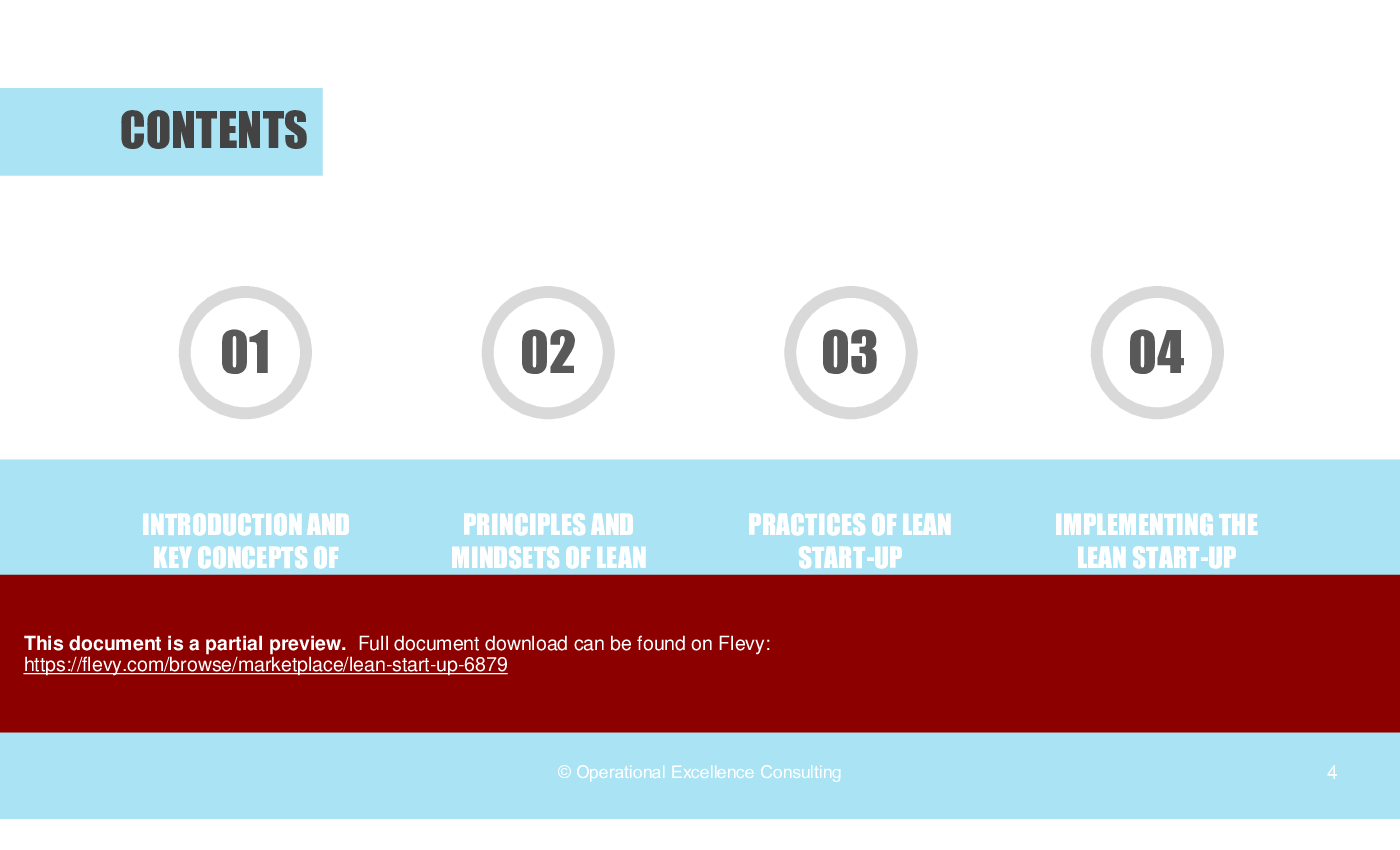
CONTENTS

1. Introduction and Key Concepts of Lean Start-up
•  Definition of Lean Start-up
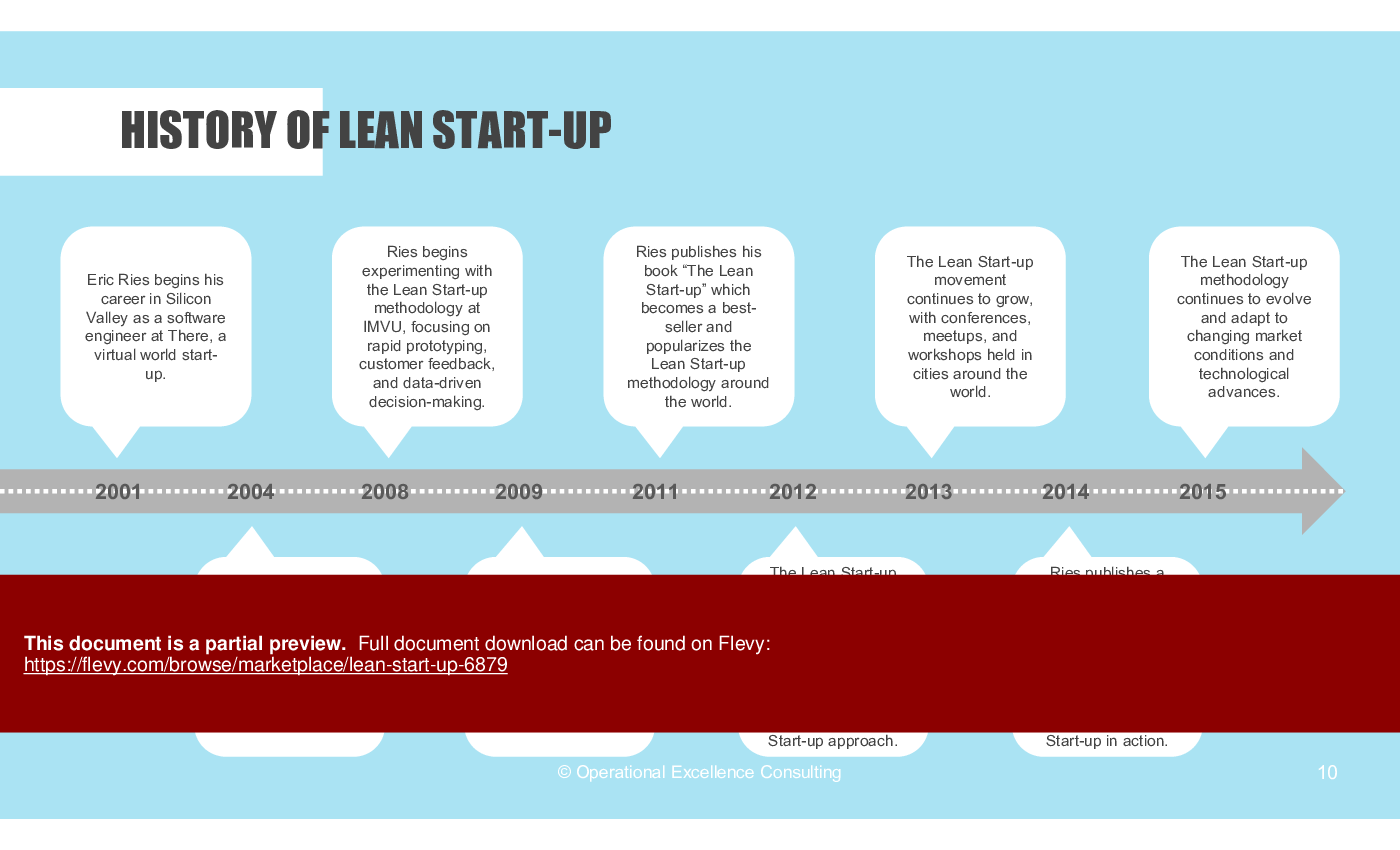
•  History of Lean Start-up Methodology
•  Myths of Lean Start-up
•  Why Lean Start-up is Important in Today's Business Landscape
•  Benefits of Lean Start-up

2. Principles and Mindset of Lean Start-up
•  Adopting a Lean Start-up Mindset
•  Principles of Lean Start-up
•  Customer-centricity
•  Rapid Experimentation
•  Minimum Viable Product (MVP)
•  Pivot and Persevere

3. Practices of Lean Start-up
•  Business Model Canvas
•  Customer Development
•  Agile Development
•  Build-Measure-Learn
•  Lean Analytics
•  Lean Canvas

4. Implementing the Lean Start-up Methodology
•  Key Roles in a Lean Start-up Project Team
•  Applying Lean Start-up Methodology to Launch a Business or Product or Service
•  Common Challenges and Roadblocks
•  Best Practices of Lean Start-up
•  Creating a Lean Start-up Culture

Got a question about the product? Email us at support@flevy.com or ask the author directly by using the "Ask the Author a Question" form. If you cannot view the preview above this document description, go here to view the large preview instead.

MARCUS OVERVIEW

This synopsis was written by Marcus [?] based on the analysis of the full 136-slide presentation.


Executive Summary
This presentation titled "Lean Startup: Transforming the Way We Do Business" offers a comprehensive exploration of the Lean Startup methodology, crafted by Operational Excellence Consulting. It is designed to equip corporate executives, integration leaders, and consultants with the tools and insights necessary to foster innovation and agility within their organizations. By leveraging principles such as customer-centricity, rapid experimentation, and continuous improvement, this presentation guides users through the process of developing and launching products that meet market needs while minimizing waste and risk.

Who This Is For and When to Use
•  Corporate executives seeking to drive innovation in their organizations
•  Integration leaders looking to implement Lean Startup principles in their projects
•  Consultants aiming to enhance client offerings with proven methodologies
•  Product managers focused on developing customer-centric solutions

Best-fit moments to use this deck:
•  During strategic planning sessions to align on innovation goals
•  In workshops aimed at fostering a culture of experimentation
•  When launching new products or services to ensure market fit
•  For training sessions on Lean methodologies for teams

Learning Objectives
•  Understand the key concepts, principles, and mindset of Lean Startup
•  Identify challenges and best practices for implementing Lean Startup methodology
•  Develop a Minimum Viable Product (MVP) to test market assumptions
•  Apply customer feedback to iterate on product development
•  Foster a culture of continuous learning and adaptation within teams
•  Utilize Lean Analytics to measure and improve business performance

Table of Contents
•  Introduction and Key Concepts of Lean Startup (page 5)
•  Principles and Mindsets of Lean Startup (page 41)
•  Practices of Lean Startup (page 51)
•  Implementing the Lean Startup Methodology (page 104)

Primary Topics Covered
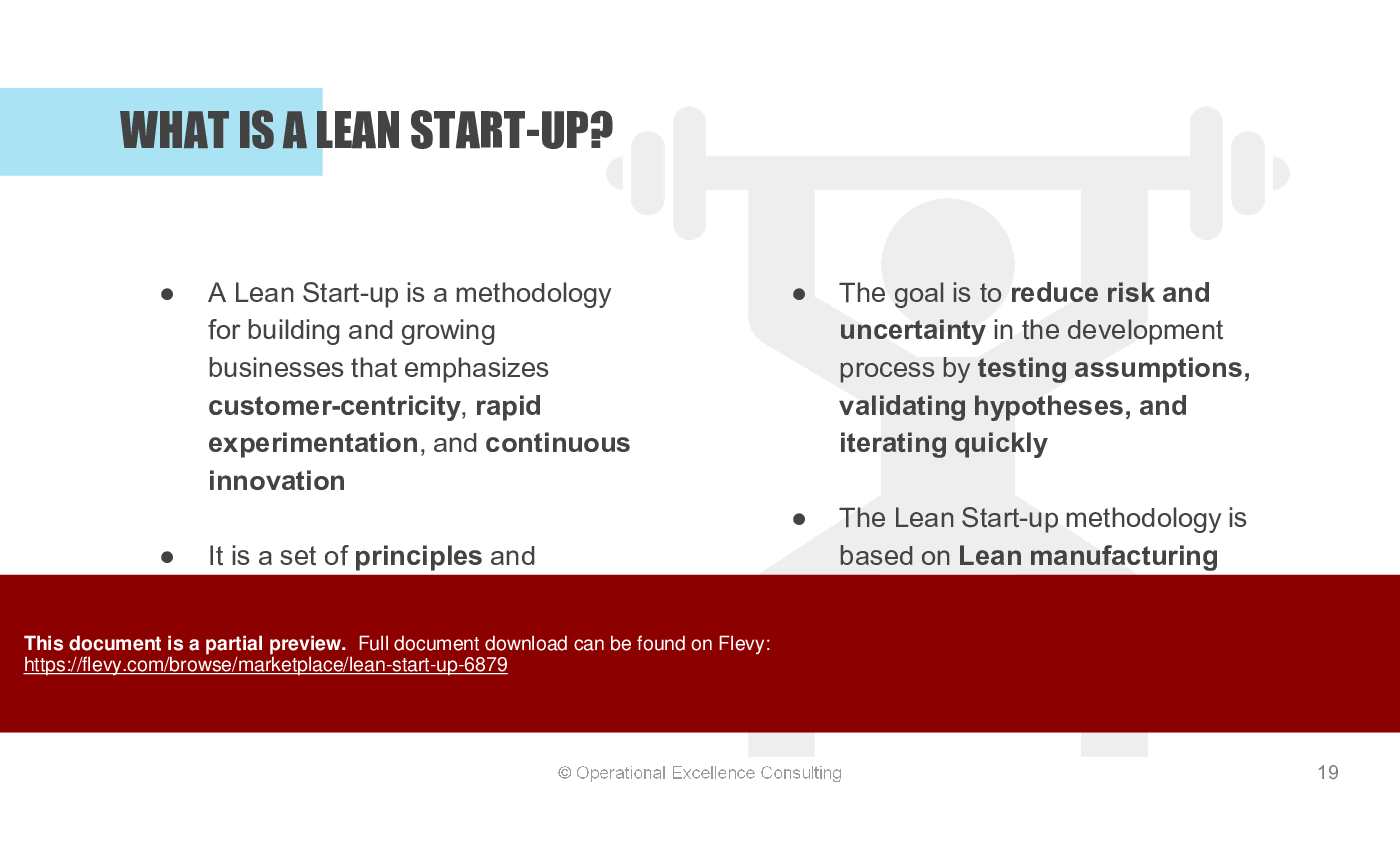
•  Lean Startup Definition - A Lean Startup is a methodology for building and growing businesses that emphasizes customer-centricity, rapid experimentation, and continuous innovation.
•  Key Principles - Core principles include customer-centricity, rapid experimentation, Minimum Viable Product (MVP), and the ability to pivot based on feedback.
•  Business Model Canvas - A strategic tool that helps describe, design, and evaluate business models, focusing on key components like customer segments and value propositions.
•  Customer Development - Engaging with potential customers to understand their needs, preferences, and pain points through interviews and surveys.
•  Agile Development - An iterative approach to product development that emphasizes flexibility and responsiveness to customer feedback.
•  Lean Analytics - A data-driven approach to measuring and improving business performance, focusing on key metrics that drive success.

Deliverables, Templates, and Tools
•  Business Model Canvas template for strategic planning
•  Lean Canvas for capturing key business elements
•  Persona and Empathy Map templates for customer understanding
•  User Feedback and Journey Map templates for gathering insights
•  Prototype Evaluation template for assessing product iterations

Slide Highlights
•  Introduction to Lean Startup concepts and their relevance in today’s business landscape
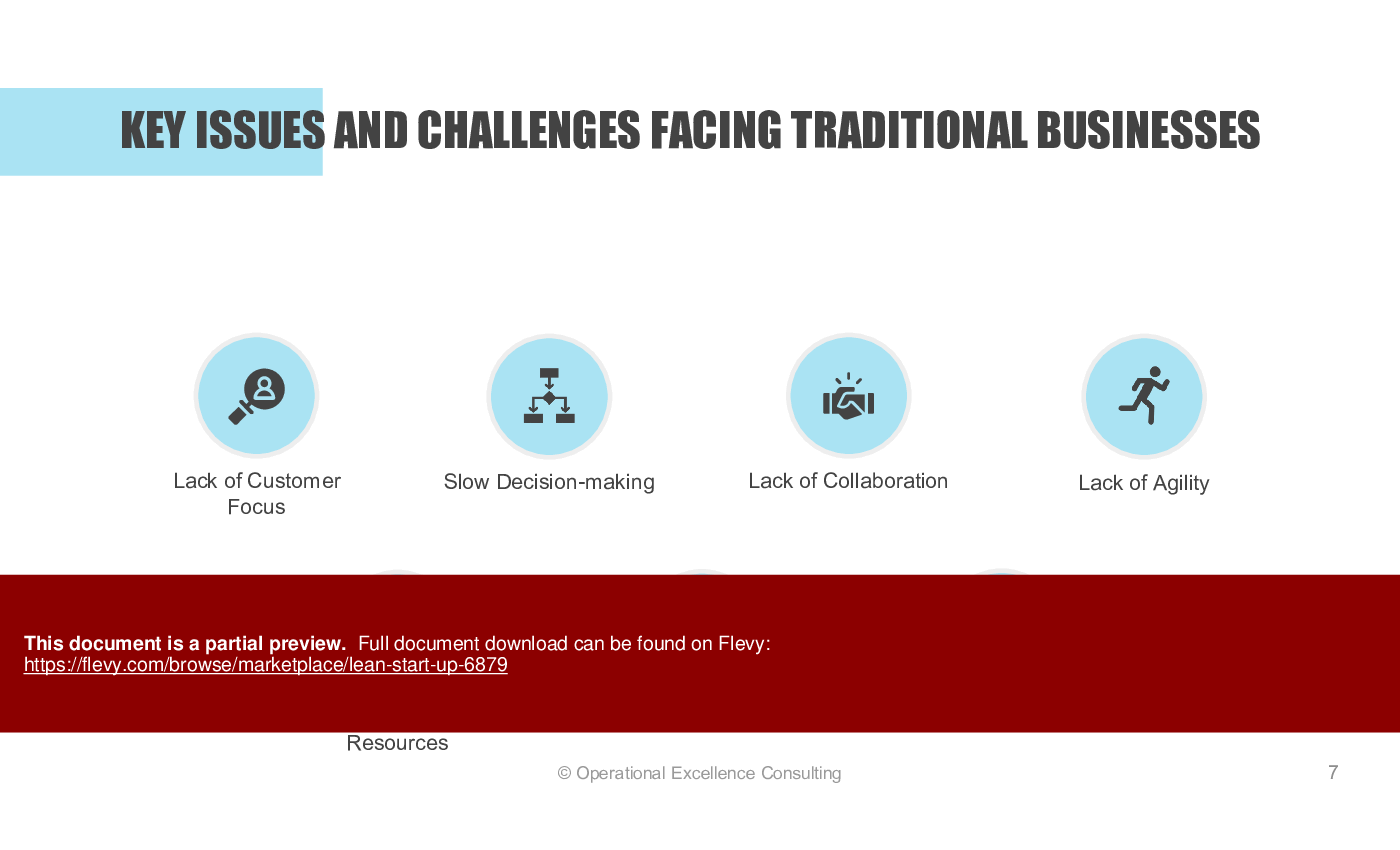
•  Key challenges faced by traditional businesses and how Lean Startup addresses them
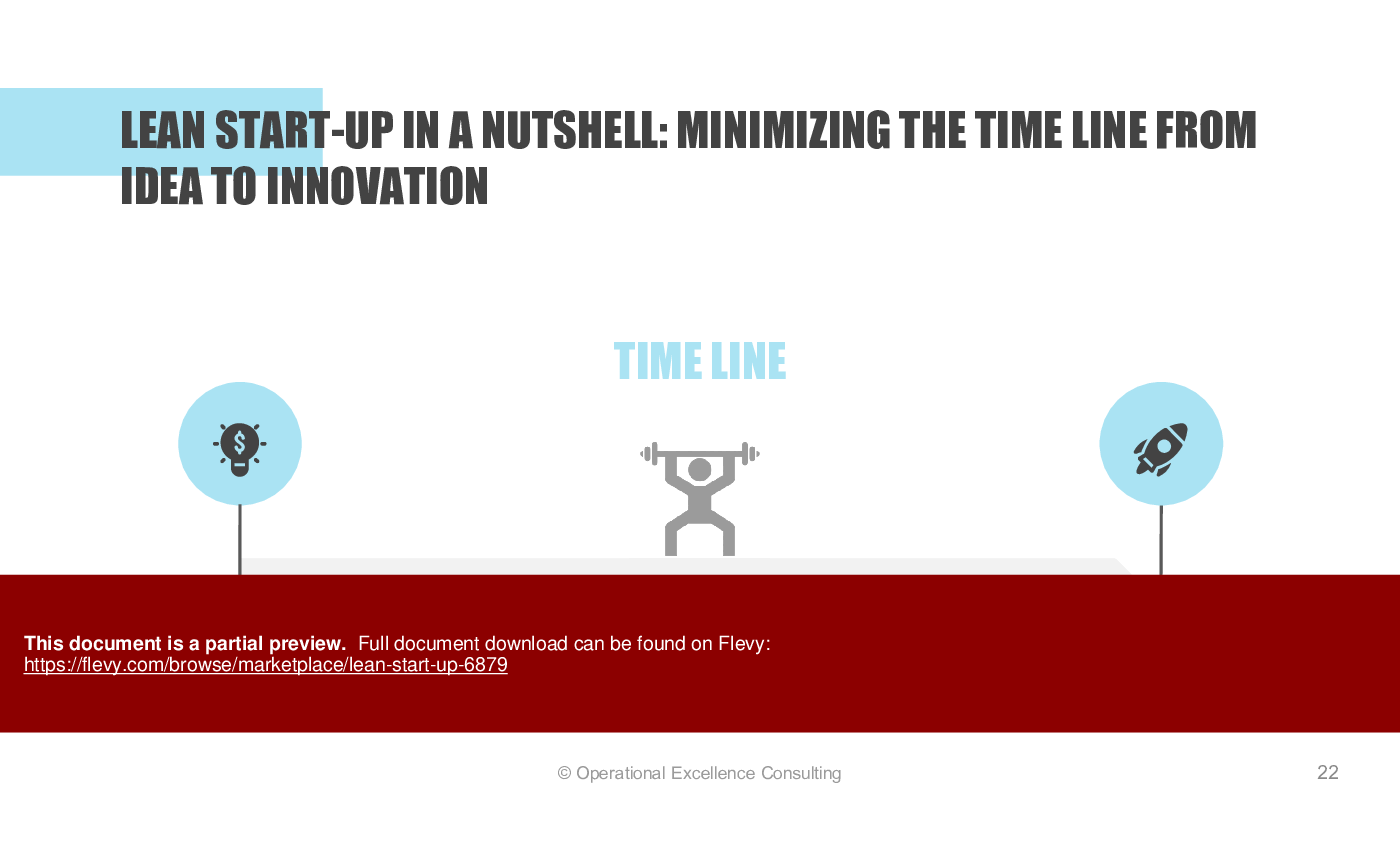
•  The iterative Build-Measure-Learn process as a core component of Lean Startup
•  Case studies of successful companies that have implemented Lean Startup principles
•  Best practices for fostering a Lean Startup culture within organizations

Potential Workshop Agenda
Lean Startup Overview Session (90 minutes)
•  Introduce Lean Startup principles and methodologies
•  Discuss the importance of customer-centricity and rapid experimentation
•  Engage participants in identifying market needs

MVP Development Workshop (120 minutes)
•  Guide teams in creating a Minimum Viable Product
•  Facilitate feedback sessions to refine MVP concepts
•  Discuss strategies for measuring success and gathering insights

Lean Analytics Deep Dive (60 minutes)
•  Explore key metrics for tracking business performance
•  Discuss tools and techniques for data-driven decision-making
•  Engage participants in analyzing case studies

Customization Guidance
•  Tailor the presentation to reflect specific industry challenges and opportunities
•  Incorporate case studies relevant to the audience's business context
•  Adjust the workshop agenda to focus on particular areas of interest or need

Secondary Topics Covered
•  The role of design thinking in Lean Startup
•  Strategies for overcoming resistance to change
•  The importance of collaboration and teamwork in Lean initiatives
•  Techniques for effective communication with stakeholders

Topic FAQ

What are the core phases of the Lean Startup process I should teach teams?

Lean Startup centers on iterative cycles where teams build hypotheses, develop a Minimum Viable Product, measure customer response, and learn to iterate or pivot. Core practices include Customer Development, Agile development, and Lean Analytics, with the Build-Measure-Learn loop as the central process.

How should I define an MVP and when is it appropriate to release one?

A Minimum Viable Product (MVP) is the simplest version of a product that tests key market assumptions and customer needs. Teams release an MVP to validate hypotheses quickly, gather feedback, and guide iteration; Flevy's Lean Startup: Transforming the Way We Do Business focuses on MVP development and testing.

Which metrics matter most when applying Lean Analytics to a new product?

Lean Analytics emphasizes metrics that reflect customer value and growth, such as customer acquisition cost, lifetime customer value, churn rate, user engagement, cohort analysis, and Net Promoter Score, with focus on the few metrics that drive decision-making like customer acquisition cost and lifetime customer value.

What should I check when evaluating a Lean Startup training deck before buying?

Look for coverage of core principles (customer-centricity, rapid experimentation), practical tools (Business Model Canvas, Lean Canvas), templates for personas and journey maps, sample workshop agendas, and guidance on Lean Analytics and MVPs—concrete deliverables such as a Business Model Canvas template are key.

We have 2–3 days to run an internal Lean Startup workshop—what agenda elements are most useful?

A compact agenda includes an overview of Lean Startup principles, a hands-on MVP development session to build and test assumptions, and a Lean Analytics deep dive to define metrics. The product’s suggested agenda lists a 90-minute overview, a 120-minute MVP workshop, and a 60-minute analytics deep dive.

Are packaged templates like Business Model Canvas and Empathy Maps worth purchasing for training?

Templates standardize activities like customer interviews, value-proposition design, and prototype evaluation, speeding workshop preparation and ensuring repeatable outputs. The presentation includes ready-to-use deliverables such as Business Model Canvas, Lean Canvas, Persona and Empathy Map templates.

How can established enterprises adapt Lean Startup differently than early-stage startups?

Established companies apply Lean Startup by embedding rapid experimentation and customer development within existing processes, using MVPs to de-risk projects and Lean Analytics to measure impact. The approach reduces time-to-market and guides iterative launches using tools like the Minimum Viable Product (MVP).

What role does the Business Model Canvas play in Lean Startup planning?

The Business Model Canvas is used to describe, design, and evaluate business models by mapping customer segments, value propositions, channels, and revenue streams; it helps teams frame hypotheses to test with MVPs and customer development and is provided as a template in the deck.

Document FAQ
These are questions addressed within this presentation.

What is the Lean Startup methodology?
The Lean Startup methodology is a framework for developing businesses and products that emphasizes customer-centricity, rapid experimentation, and continuous innovation to reduce risk and uncertainty.

Who can benefit from using Lean Startup principles?
Any organization, whether a startup or an established business, can benefit from Lean Startup principles to innovate and stay competitive in their market.

What is a Minimum Viable Product (MVP)?
An MVP is a simplified version of a product that includes only the essential features needed to meet customer needs and test market assumptions.

How can customer feedback be effectively gathered?
Customer feedback can be gathered through interviews, surveys, user testing, and analytics to inform product development and iterations.

What are the key metrics to track in Lean Analytics?
Key metrics include customer acquisition cost, lifetime customer value, churn rate, and user engagement metrics to assess product performance.

How does Lean Startup differ from traditional business models?
Lean Startup focuses on hypothesis-driven experimentation and customer feedback, while traditional models often rely on extensive planning and fixed business plans.

What challenges might organizations face when implementing Lean Startup?
Common challenges include resistance to change, lack of resources, inadequate metrics, and difficulty in pivoting based on feedback.

How can organizations foster a Lean Startup culture?
Organizations can foster a Lean Startup culture by emphasizing continuous learning, encouraging experimentation, and maintaining a customer-centric approach.

Glossary
•  Lean Startup - A methodology for developing businesses that emphasizes customer-centricity and rapid experimentation.
•  Minimum Viable Product (MVP) - The simplest version of a product that can be released to test assumptions.
•  Business Model Canvas - A strategic tool for visualizing and designing business models.
•  Customer Development - The process of engaging with customers to validate needs and preferences.
•  Agile Development - An iterative approach to product development that emphasizes flexibility.
•  Lean Analytics - A data-driven approach to measuring business performance.
•  Pivot - A fundamental change in strategy based on feedback and insights.
•  Customer-Centricity - Focusing on the needs and wants of customers in product development.
•  Feedback Loop - The process of using customer feedback to inform product iterations.
•  Iteration - The process of making incremental changes based on feedback and data.
•  Scrum - An agile framework for managing product development.
•  Design Thinking - A problem-solving approach focused on understanding customer needs.
•  Value Proposition - The unique value a product or service offers to customers.
•  Key Metrics - The critical data points used to measure success and inform decisions.
•  Unfair Advantage - A unique advantage that makes it difficult for competitors to replicate a business model.
•  Cohort Analysis - Analyzing groups of users based on shared characteristics over time.
•  Net Promoter Score (NPS) - A metric used to gauge customer loyalty and satisfaction.
•  Empathy Map - A tool used to understand customer thoughts, feelings, and behaviors.
•  Journey Map - A visual representation of the customer experience over time.
•  Prototype - An early model of a product used for testing and feedback.

Source: Best Practices in Lean, Entrepreneurship, Lean Startup PowerPoint Slides: Lean Startup: Transforming the Way We Do Business PowerPoint (PPTX) Presentation Slide Deck, Operational Excellence Consulting


$79.00
Developed by a seasoned Design Thinking Consultant with a global track record at industry giants like Microsoft and IBM, this presentation is your key to mastering Lean Startup principles for unparalleled innovation and business success.
Add to Cart
  

ABOUT THE AUTHOR

Author image
Additional documents from author: 257
Terms of usage (for all documents from this author)

Operational Excellence Consulting, founded in 2009 by Allan Ung, draws from extensive experience at Microsoft, IBM, and Underwriters Laboratories (UL). We specialize in strategy deployment, customer experience design, and operational excellence, applying Design Thinking, Lean, and Systems Thinking to maximize customer value and minimize waste.

Our ... [read more]

Ask the Author a Question

You must be logged in to contact the author.

Click here to log in Click here register

Did you know?
The average daily rate of a McKinsey consultant is $6,625 (not including expenses). The average price of a Flevy document is $65.


Trusted by over 10,000+ Client Organizations
Since 2012, we have provided business templates to over 10,000 businesses and organizations of all sizes, from startups and small businesses to the Fortune 100, in over 130 countries.
AT&T GE Cisco Intel IBM Coke Dell Toyota HP Nike Samsung Microsoft Astrazeneca JP Morgan KPMG Walgreens Walmart 3M Kaiser Oracle SAP Google E&Y Volvo Bosch Merck Fedex Shell Amgen Eli Lilly Roche AIG Abbott Amazon PwC T-Mobile Broadcom Bayer Pearson Titleist ConEd Pfizer NTT Data Schwab


Read Customer Testimonials

 
"As a young consulting firm, requests for input from clients vary and it's sometimes impossible to provide expert solutions across a broad spectrum of requirements. That was before I discovered Flevy.com.

Through subscription to this invaluable site of a plethora of topics that are key and crucial to consulting, I "

– Nishi Singh, Strategist and MD at NSP Consultants
 
"I have used FlevyPro for several business applications. It is a great complement to working with expensive consultants. The quality and effectiveness of the tools are of the highest standards."

– Moritz Bernhoerster, Global Sourcing Director at Fortune 500
 
"Flevy is now a part of my business routine. I visit Flevy at least 3 times each month.

Flevy has become my preferred learning source, because what it provides is practical, current, and useful in this era where the business world is being rewritten.

In today's environment where there are so "

– Omar Hernán Montes Parra, CEO at Quantum SFE
 
"Last Sunday morning, I was diligently working on an important presentation for a client and found myself in need of additional content and suitable templates for various types of graphics. Flevy.com proved to be a treasure trove for both content and design at a reasonable price, considering the time I "

– M. E., Chief Commercial Officer, International Logistics Service Provider
 
"As an Independent Management Consultant, I find Flevy to add great value as a source of best practices, templates and information on new trends. Flevy has matured and the quality and quantity of the library is excellent. Lastly the price charged is reasonable, creating a win-win value for "

– Jim Schoen, Principal at FRC Group
 
"As a consultant requiring up to date and professional material that will be of value and use to my clients, I find Flevy a very reliable resource.

The variety and quality of material available through Flevy offers a very useful and commanding source for information. Using Flevy saves me time, enhances my expertise and ends up being a good decision."

– Dennis Gershowitz, Principal at DG Associates
 
"If you are looking for great resources to save time with your business presentations, Flevy is truly a value-added resource. Flevy has done all the work for you and we will continue to utilize Flevy as a source to extract up-to-date information and data for our virtual and onsite presentations!"

– Debbi Saffo, President at The NiKhar Group
 
"As a niche strategic consulting firm, Flevy and FlevyPro frameworks and documents are an on-going reference to help us structure our findings and recommendations to our clients as well as improve their clarity, strength, and visual power. For us, it is an invaluable resource to increase our impact and value."

– David Coloma, Consulting Area Manager at Cynertia Consulting


Customers Also Bought These Documents


Customers Also Like These Documents

Explore Templates on Related Management Topics


Your Recently Viewed Documents
Receive our FREE presentation on Operational Excellence

This 50-slide presentation provides a high-level introduction to the 4 Building Blocks of Operational Excellence. Achieving OpEx requires the implementation of a Business Execution System that integrates these 4 building blocks.