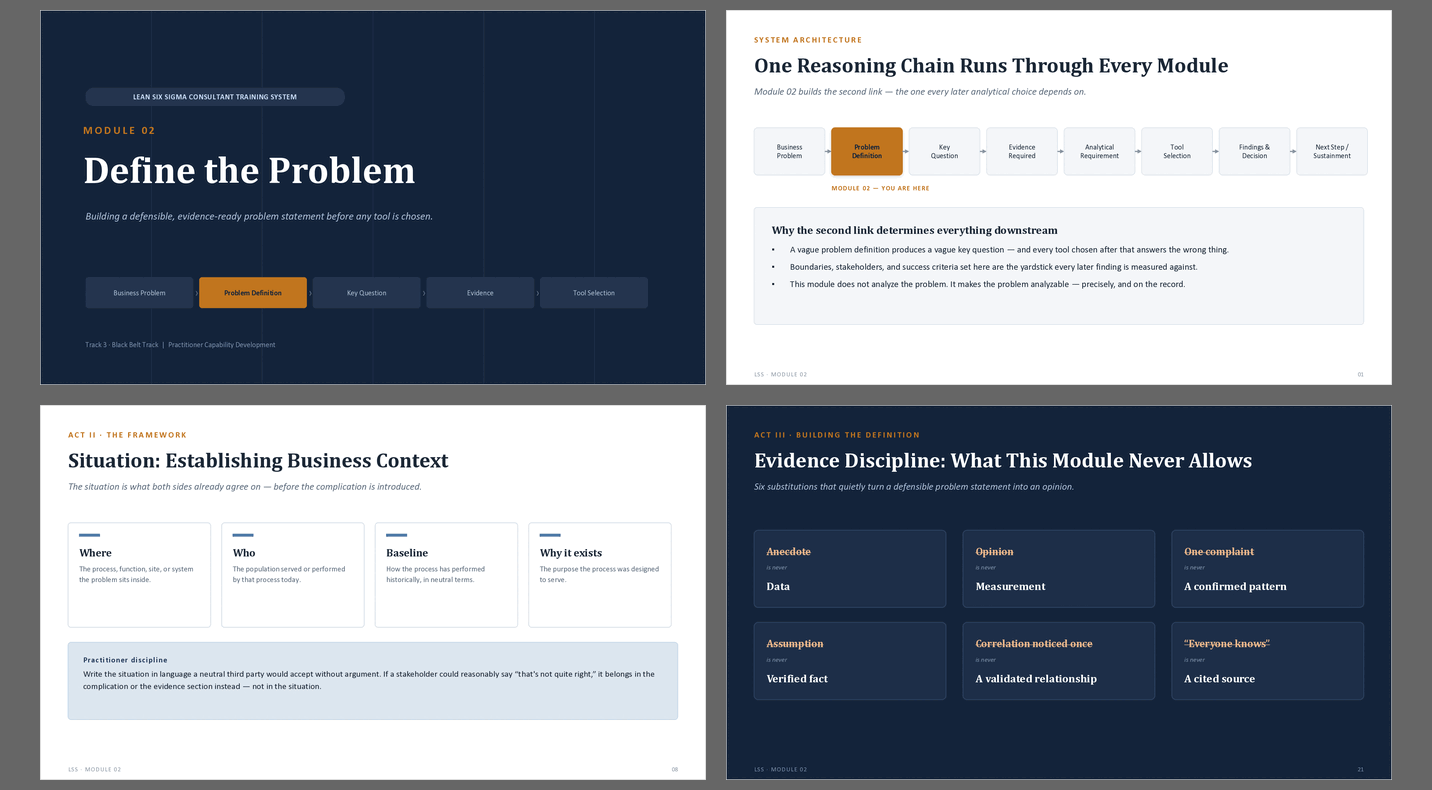
 Click main image to view in full screen.
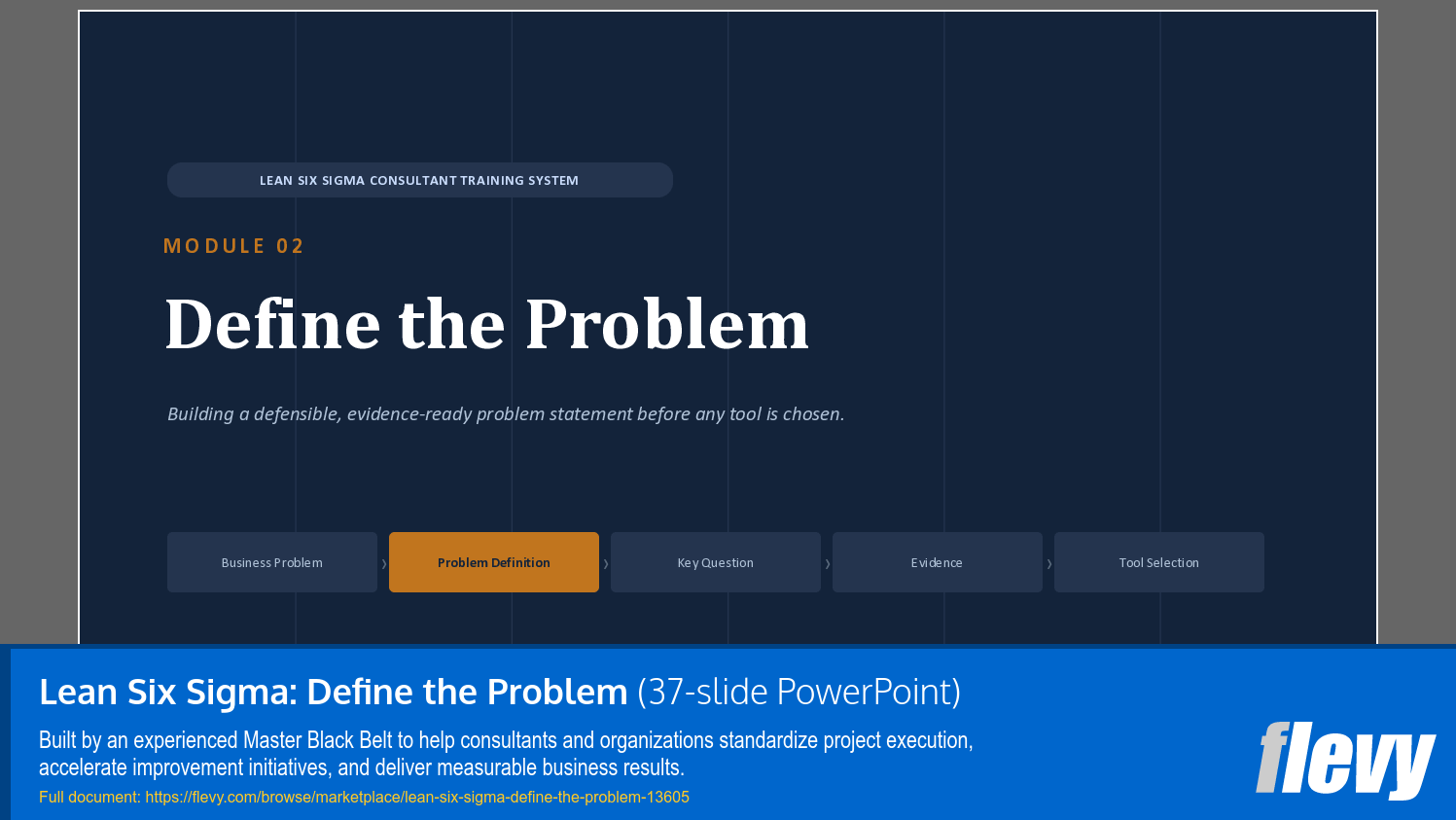
Lean Six Sigma: Define the Problem – PowerPoint PPTX Template
PowerPoint (PPTX) 37 Slides


BENEFITS OF THIS DOWNLOADABLE POWERPOINT DOCUMENT
- Establishes a repeatable method for converting ambiguous business situations into bounded, measurable, evidence-ready problem definitions before analytical tools are selected.
- Gives Lean consultants practical facilitation structures, exercises, diagnostic questions, and a Problem Definition Canvas that can be reused across client engagements.
- Creates a formal readiness gate that helps prevent premature root-cause assumptions, embedded solutions, uncontrolled scope, and weak evidence from propagating into downstream analysis.
PROBLEM SOLVING PPT TEMPLATE DESCRIPTION
Define the Problem: Consultant Problem-Solving System
Most problem-solving projects do not fail because the team lacks analytical tools. They fail because the team begins with an unclear, poorly bounded, or assumed problem.
This practitioner-focused Lean Six Sigma training module teaches consultants how to establish a defensible, measurable, evidence-ready problem definition before analysis or tool selection begins.
The core discipline is simple:
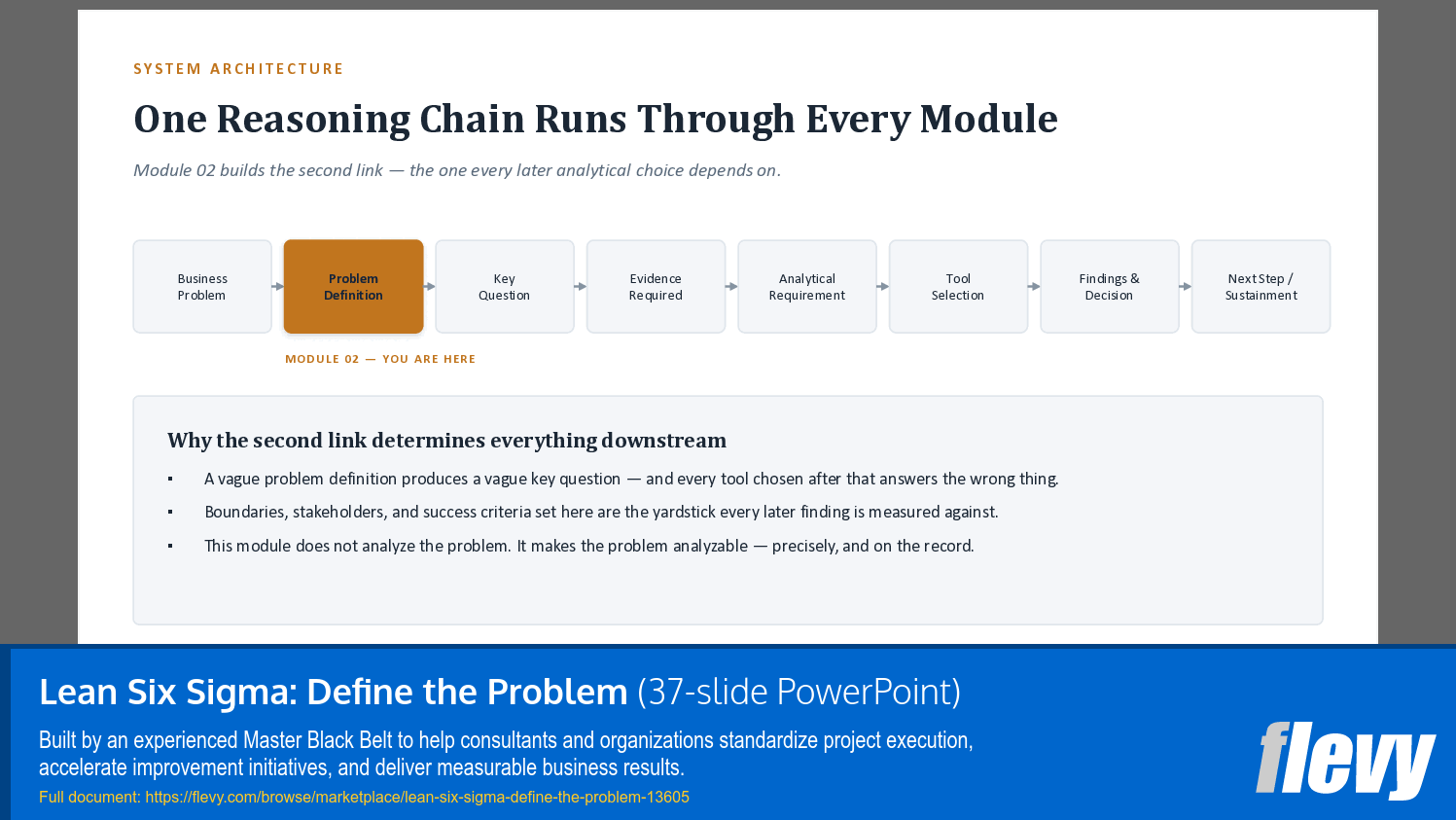
Business Problem → Problem Definition → Key Question → Evidence Required → Analytical Requirement → Tool Selection → Findings & Decision
The module teaches consultants to convert ambiguous business signals into a structured problem that can be analyzed, challenged, and acted upon.
What You Will Learn
Define the problem correctly, distinguish the business problem from symptoms, causes, assumptions, and proposed solutions.
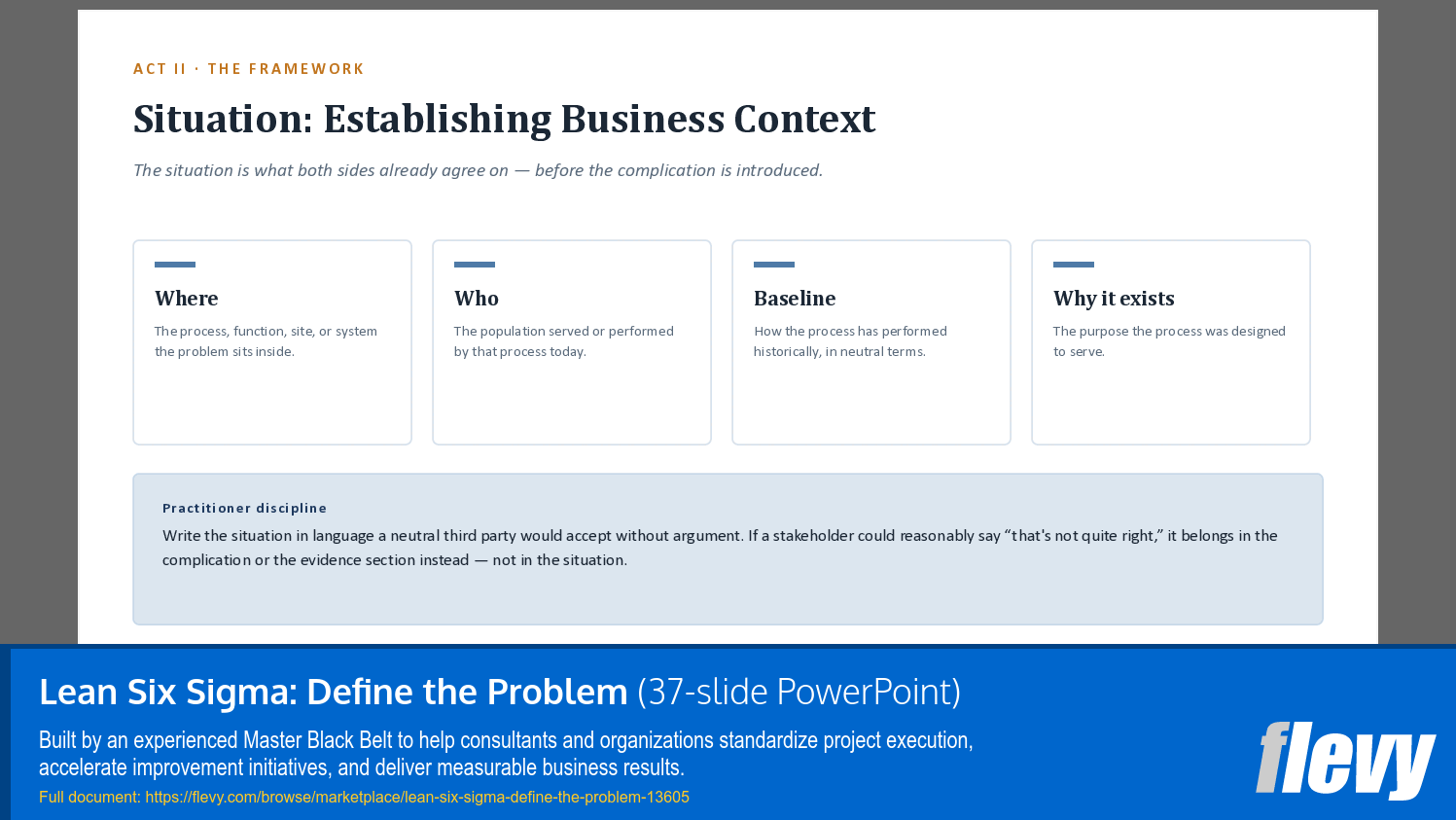
Build a strong problem statement using Situation → Complication → Key Question.
Apply SMART criteria to create specific, measurable, bounded, and evidence-answerable problems.
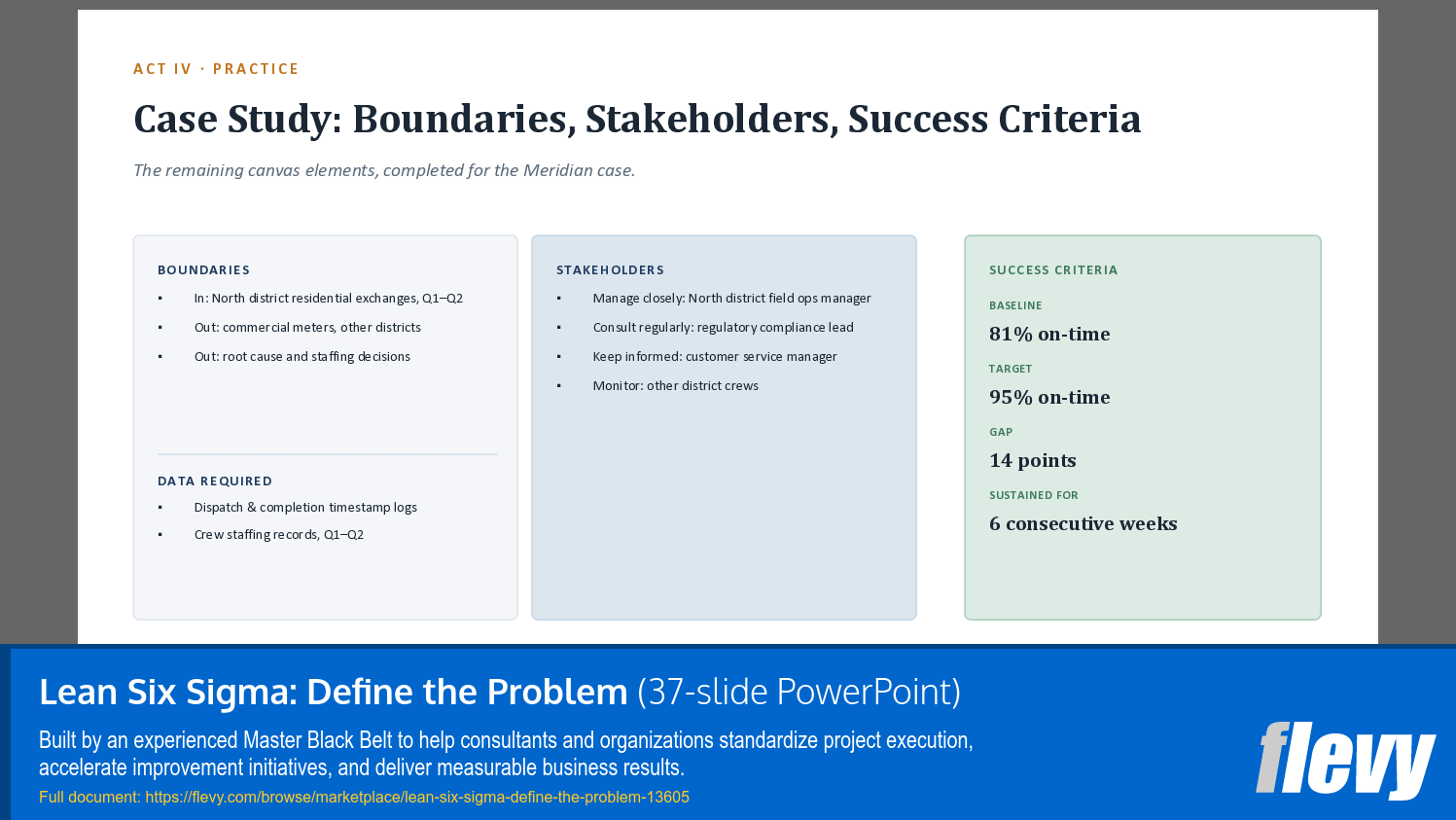
Control scope using defined process, time, geography, and population boundaries.
Map stakeholders and constraints that can affect problem-solving execution.
Establish success criteria using baseline, target, gap, and sustainment requirements.
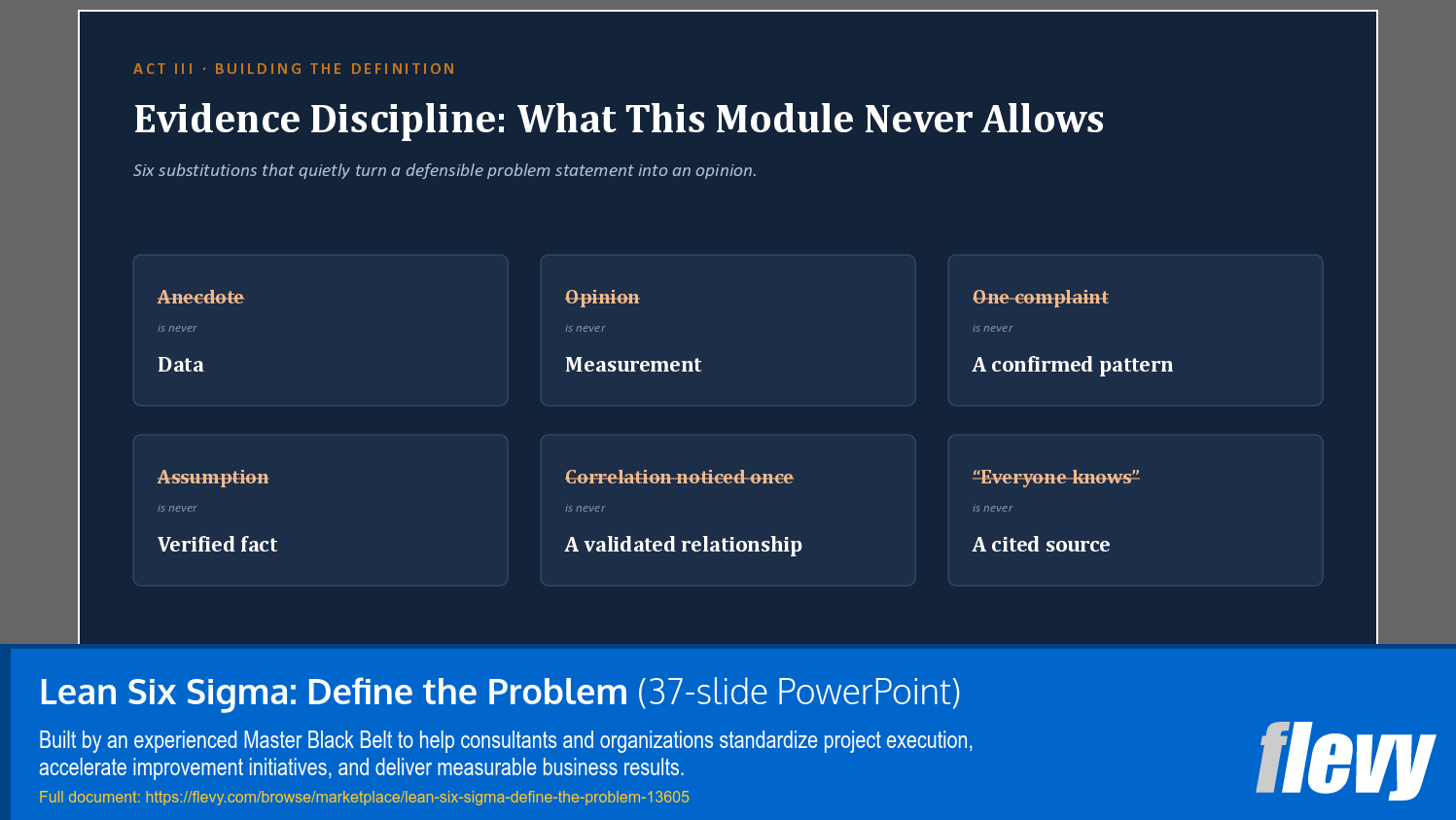
Strengthen evidence discipline by separating observations, interpretations, hypotheses, evidence, and validation.
Use the Problem Definition Canvas to consolidate the problem into an actionable consulting artifact.
Apply a readiness decision gate before advancing into downstream analysis.
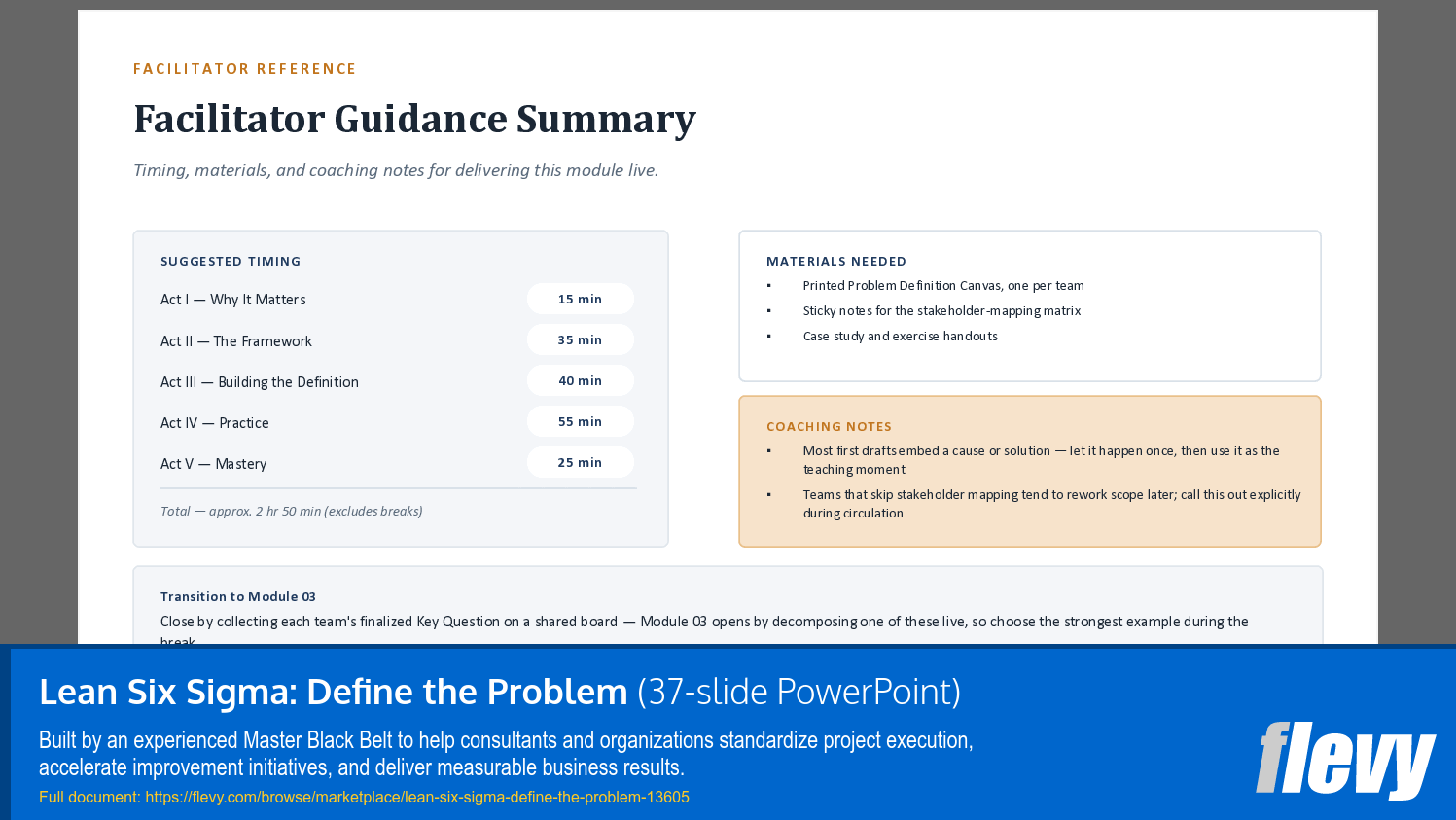
Practice the method through individual exercises, team exercises, knowledge checks, and a generalized utility case.
Consultant Application
Use this module to support:
Project kickoffs and problem-framing workshops
Client and stakeholder interviews
Lean Six Sigma coaching
Project charter development
Scope and alignment discussions
Problem-solving reviews and quality gates
Consultant capability development
Executive discussions where the problem itself is unclear
The module also establishes the foundation for downstream issue trees, hypothesis development, and analytical work—while deliberately preventing premature causal conclusions.
The result: consultants gain a repeatable system for controlling the problem before the tool is chosen, reducing scope drift, solution jumping, weak assumptions, and poorly directed analysis.
This is not simply training on how to write a problem statement. It is a consultant operating discipline for turning uncertainty into an analyzable problem.
Got a question about the product? Email us at support@flevy.com or ask the author directly by using the "Ask the Author a Question" form. If you cannot view the preview above this document description, go here to view the large preview instead.
Source: Best Practices in Problem Solving, Six Sigma Project PowerPoint Slides: Lean Six Sigma: Define the Problem PowerPoint (PPTX) Presentation Slide Deck, EDS SYSTEMS
ABOUT THE AUTHOR
EDS SYSTEMS develops practical business frameworks, professional training, and enterprise toolkits that help organizations solve complex problems, improve operational performance, strengthen project execution, and build lasting organizational capability.
Our products transform proven engineering, project management, operational excellence, and continuous improvement practices into structured,
... [read more]
Ask the Author a Question
You must be logged in to contact the author.




























